South Korea AI Race Cuts Naver Cloud and NC AI, Sparking Backlash Over Wild Card Entry


3 Sources
3 Sources
[1]
Korea Cuts Naver and NCSoft Units From Intense Sovereign AI Race
South Korea dropped teams led by units of Naver Corp. and NCSoft Corp. from its closely watched competition to develop the nation's first sovereign AI model, narrowing the field to three groups. The advancing teams are led by LG AI Research, which achieved the highest overall score in the latest part of the competition, as well as SK Telecom Co. and Upstage, the Ministry of Science and ICT said on Thursday. It added that it would select an additional team to compete in the next phase after two teams dropped out, instead of the single elimination it expected. Naver slid as much as 5.4% and NCSoft fell 7% on Thursday in Seoul. The decision marks the first cuts in a multiyear contest that started with 15 applicants and is designed to identify Korea's national AI foundation models that will secure technological autonomy and protect domestic industries from dependence on foreign models. Under the program, the teams face evaluation and elimination roughly every six months until only two winners remain by 2027. In August, five finalistsBloomberg Terminal were announced. Controversy surrounding the use of foreign technology has highlighted intense public interest in the initiative. Rival firms and some industry experts questioned whether some teams -- Naver Cloud, Upstage and SK Telecom -- used non-Korean components, sparking debates over whether they truly satisfied the project's requirement to build their open-source models "from scratch." The government conducted a comprehensive evaluation across technical, policy and ethical dimensions, Science and ICT Minister Bae Kyung-Hoon wrote on social media hours ahead of the announcement. He emphasized that the ultimate objective is to achieve world-class status and serve as a source of national pride. Related Story: Rookie Minister Gets $7 Billion to Catch US, China in AI Arena
[2]
National AI model project faces backlash over 'hasty wild card entry' - The Korea Times
Attendees visit Naver Cloud's booth during a presentation for the national artificial intelligence foundation model project at Coex in Seoul, Dec. 30, 2025. Yonhap Korea's government project to build a homegrown artificial intelligence (AI) foundation model is facing mounting criticism after the government tore up its own competition rule, abruptly deciding to allow "a wild card entry" for a consortium that had been eliminated in earlier selection rounds or had not been participated in the process in the first place. The Ministry of Science and ICT on Thursday announced that three consortia -- led by LG AI Research, SK Telecom and Upstage -- advanced to the second phase of the national foundation model project, dropping two teams led by Naver Cloud and NC AI. The project selected five consortia for the first phase after dropping big-name tech firms such as Kakao and KT. The ministry had originally planned to eliminate one team at each stage across three phases, leaving only two teams by the end of the year. However, it eliminated two consortia in the evaluation for the second phase and abruptly announced it would recruit one additional consortium to join the project from the second phase, while guaranteeing the same supports such as graphics processing units (GPUs) to the newcomer. The move has raised concerns over fairness, consistency and administrative preparedness for the separate selection process for a new team. Companies that were eliminated appear to have already concluded that the project carries more costs than benefits. Naver Cloud and NC AI said they "respect the government's decision" but "will not reapply for the project." Kakao, which has been offered a second chance, also said that it "will not take part in the wild card selection" adding that it believes it is better not to pursue another bid. KT is yet to make a decision. "If things are not handled fairly, trust in the process and in the results could be undermined later on," an industry official said, noting that the wild card selection might cause an inevitable disadvantage to existing teams. "That is something the government must have considered carefully before making this decision. ... If the process is not carried out in a fair manner, people will not accept or acknowledge the outcome. And if that is the case, trust in the entire initiative may not be guaranteed in the long run." A second AI industry official said the project succeeded in drawing public attention by taking the form of a competition, but the risk of being eliminated proved excessive for participating companies. "If the rules change like this, it is inevitable to see all kinds of suspicions," the official said. "As soon as the wild card entry was announced, people began suspecting that it is aimed at salvaging Naver Cloud. From Naver's perspective, there would be little reason to reapply while facing such suspicions. The moment the rules are changed, this kind of competitive model loses its trustworthiness." The move may also raise questions of fairness regarding which teams apply for the wild card spot. Any newly selected team will have to compete with rivals that have already secured GPU resources and datasets with a head start in developing their foundation models in line with the project's criteria, which are advantages that are difficult to offset in the project's compressed timeline. The ministry defended the decision, saying it is an attempt to open the opportunity to participate to as many domestic AI firms as possible, rather than simply eliminate teams on a fixed schedule. "Our goal is to make the best use of the resources the government has secured now, so that as many companies as possible can benefit from them and accelerate their technology development," Second Vice Science Minister Ryu Je-myung said during a press briefing at Government Complex Seoul. He noted that it wasn't a hastily decided approach to favor any particular company. "We are designing the process so that, while we will compress the administrative procedures as much as possible and move ahead with an additional selection, the overall project period and the amount of GPU resources provided will be kept the same as for the three companies that started earlier."
[3]
Naver Cloud, NC AI cut from national AI foundation model race - The Korea Times
Two consortia, led by Naver Cloud and NC AI, have been eliminated from the government-led national artificial intelligence (AI) foundation model project after the first round of evaluation. Ministry of Science and ICT announced the results of the first evaluation on Thursday, revealing that only three teams -- LG AI Research, SK Telecom and Upstage -- advanced to the second round. The ministry said that Naver Cloud was disqualified for failing to meet the project's critical requirement for technology originality. After the five consortia unveiled their models last month ahead of the evaluation, some teams faced plagiarism controversies over the use of open-source code and encoders from other models. The ministry explained that the technology's originality was assessed with three criteria: technical, policy and ethical perspectives. Technically, it defined an independent model must be trained end-to-end from scratch with self-developed architectures, data and learning processes, even when open-source tools are used. From a policy and ethical perspective, the model must guarantee sovereign control without any external licensing constraints while ensuring transparency and compliance with open-source licensing rules. The ministry explained that although Naver Cloud used licensing-free open-source video and audio encoders, the company failed to meet the minimum requirement to train and develop the model with newly initialized weights. Weights are the learned settings that determine how an AI processes information and makes decisions. "Even if an existing open model was used, there should have been concrete, demonstrable efforts to completely reset the weights and rebuild them using data secured independently by the team, with such experience proven and verified," Second Vice Science Minister Ryu Je-myung said during a press briefing at the government complex in Seoul, Thursday. The ministry said the two eliminated teams will have 10 days to file an appeal and announced plans to recruit an additional team for the second round, as only three teams advanced -- short of the four originally planned. The ministry added that, in addition to Naver Cloud and NC AI, all consortia that initially applied for the project, as well as other qualified companies, are eligible to compete for the open spot.
Share
Share
Copy Link
South Korea eliminated Naver Cloud and NC AI from its sovereign AI competition, narrowing the field to LG AI Research, SK Telecom, and Upstage. The Ministry of Science and ICT's decision to allow a wild card entry has triggered industry criticism over fairness and rule changes in the multiyear national AI foundation model project.
South Korea Narrows National AI Model Competition to Three Teams
South Korea AI development took a decisive turn as the Ministry of Science and ICT eliminated two major players from its closely watched national AI foundation model project. Teams led by Naver Cloud and NC AI were dropped from the competition, leaving LG AI Research, SK Telecom, and Upstage to advance to the second phase
1
. Naver shares slid as much as 5.4% and NCSoft fell 7% following the announcement1
. LG AI Research achieved the highest overall score in the latest evaluation round, positioning itself as a frontrunner in South Korea's government-led AI project to build a homegrown AI foundation model.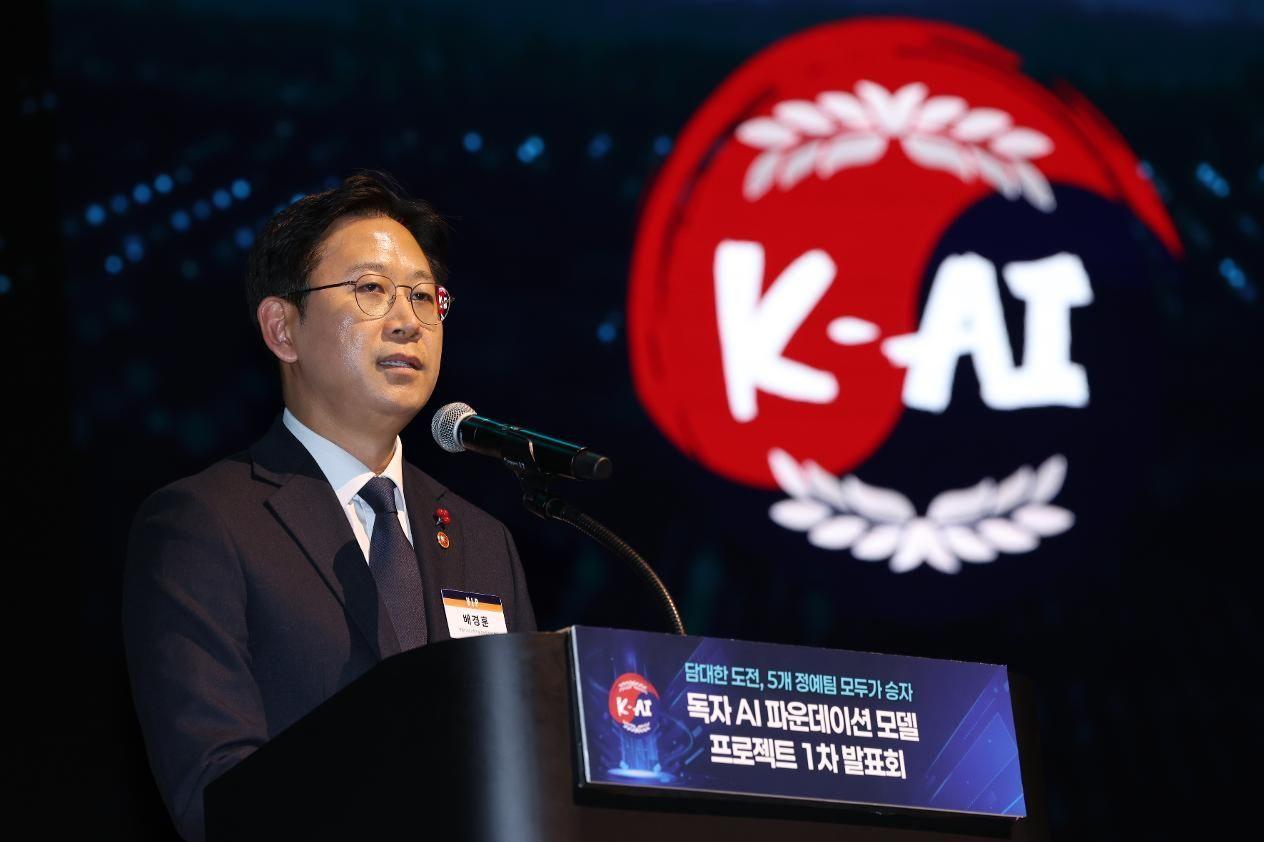
Source: Korea Times
Technology Originality Requirements Trigger Naver Cloud and NC AI Elimination
The Ministry of Science and ICT disqualified Naver Cloud for failing to meet critical technology originality requirements, specifically around training from scratch
3
. Although Naver Cloud used licensing-free open-source components for video and audio encoders, the company failed to demonstrate that it trained and developed the model with newly initialized weights. Second Vice Science Minister Ryu Je-myung explained that even when using existing open models, teams must show "concrete, demonstrable efforts to completely reset the weights and rebuild them using data secured independently"3
. The evaluation assessed technological autonomy across technical, policy, and ethical dimensions, with Science and ICT Minister Bae Kyung-Hoon emphasizing the objective is achieving world-class status and serving as a source of national pride1
.
Source: Korea Times
Wild Card Entry Decision Sparks Industry Backlash
The ministry's abrupt decision to recruit an additional consortium through a wild card entry has triggered mounting criticism over fairness and consistency
2
. Originally, the project planned to eliminate one team at each stage across three phases, leaving only two teams by the end of 2027. Instead, the government eliminated two consortia and announced it would allow one additional team to join, guaranteeing the same support including graphics processing units (GPUs)2
. Industry officials expressed concerns that changing rules mid-competition undermines trust. "If things are not handled fairly, trust in the process and in the results could be undermined later on," one industry official noted2
.Related Stories

Major Tech Firms Decline Second Chance at Sovereign AI Competition
Despite being offered another opportunity, eliminated companies have concluded the project carries more costs than benefits. Both Naver Cloud and NC AI stated they "respect the government's decision" but "will not reapply for the project"
2
. Kakao, which was eliminated in earlier rounds and now has a second chance, also declined to participate in the wild card selection, stating it believes it is better not to pursue another bid. KT has yet to make a decision . The reluctance highlights concerns about competing against rivals who have already secured GPU resources and datasets with a head start in developing their foundation models.Sovereign Control and Data Security Drive National AI Model Initiative
The multiyear contest started with 15 applicants and aims to identify Korea's sovereign AI models that will secure technological autonomy and protect domestic industries from dependence on foreign models
1
. Under the program, teams face evaluation and elimination roughly every six months until only two winners remain by 2027. The government's comprehensive evaluation framework requires models to guarantee sovereign control without external licensing constraints while ensuring transparency and compliance with open-source licensing rules3
. Controversy surrounding the use of foreign technology has highlighted intense public interest, with rival firms questioning whether some teams truly satisfied the requirement to build their models from scratch. The ministry defended its approach, stating its goal is "to make the best use of the resources the government has secured now, so that as many companies as possible can benefit from them and accelerate their technology development" .
Source: Bloomberg
References
Summarized by

Navi
[2]
Related Stories
South Korea launches AI Squid Game to build homegrown models and compete with US, China
20 Jan 2026•Policy and Regulation

Rebel Startups Challenge SK and LG in South Korea's 'AI Squid Game' for National AI Dominance
25 Feb 2026•Technology

Nvidia Forges Historic AI Partnership with South Korea, Deploying 260,000 GPUs Across Major Industries
31 Oct 2025•Business and Economy

Recent Highlights
1
AI chatbots validate you too much, making you less kind to others, Stanford study reveals
Science and Research
2
Anthropic's Claude Code Source Leak Reveals Hidden AI Agent Plans and Extensive System Access
Technology

3
Judge blocks Pentagon from branding Anthropic a security risk over AI safety guardrails dispute
Policy and Regulation

Recent Highlights
Today's Top Stories










Your Daily Dose of Curated AI News
Don’t drown in AI news. We cut through the noise - filtering, ranking and summarizing the most important AI news, breakthroughs and research daily. Spend less time searching for the latest in AI and get straight to action.

