South Korea launches world's first comprehensive AI law amid startup concerns over compliance


5 Sources
[1]
South Korea's 'world-first' AI laws face pushback amid bid to become leading tech power
The laws have been criticised by tech startups, which say they go too far, and civil society groups, which say they don't go far enough South Korea has embarked on a foray into the regulation of AI, launching what has been billed as the most comprehensive set of laws anywhere in the world, that
[2]
South Korea launches landmark laws to regulate AI, startups warn of compliance burdens
Seoul is hoping that the new AI Basic Act will position the country as a leader in the field. It has taken effect in South Korea sooner than a comparable effort in Europe, where the EU AI Act is being applied in phases through 2027. South Korea introduced on Thursday what it says is the world's
[3]
South Korea launches landmark laws to regulate artificial intelligence
South Korea introduced on Thursday what it says is the world's first comprehensive set of laws regulating artificial intelligence, aiming to strengthen trust and safety in the sector, but startups fretted that compliance could hold them back. Seoul is hoping that the new AI Basic Act will position
[4]
Unclear guidance, vague terms in AI Basic Act leave businesses in limbo - The Korea Times
Korea's revised Basic Act on the Development of Artificial Intelligence (AI) and the Establishment of Foundation for Trustworthiness, also known as the AI Basic Act, took effect on Jan. 22 as the world's first comprehensive legal framework for AI. With the broad new obligations on companies that
[5]
Korea becomes 1st nation to enact comprehensive law on safe AI usage - The Korea Times
Korea on Thursday formally enacted a comprehensive law governing the safe use of artificial intelligence (AI) models, becoming the first country globally in doing so, establishing a regulatory framework against misinformation and other hazardous effects involving the emerging field. The Basic Act
Share
Copy Link
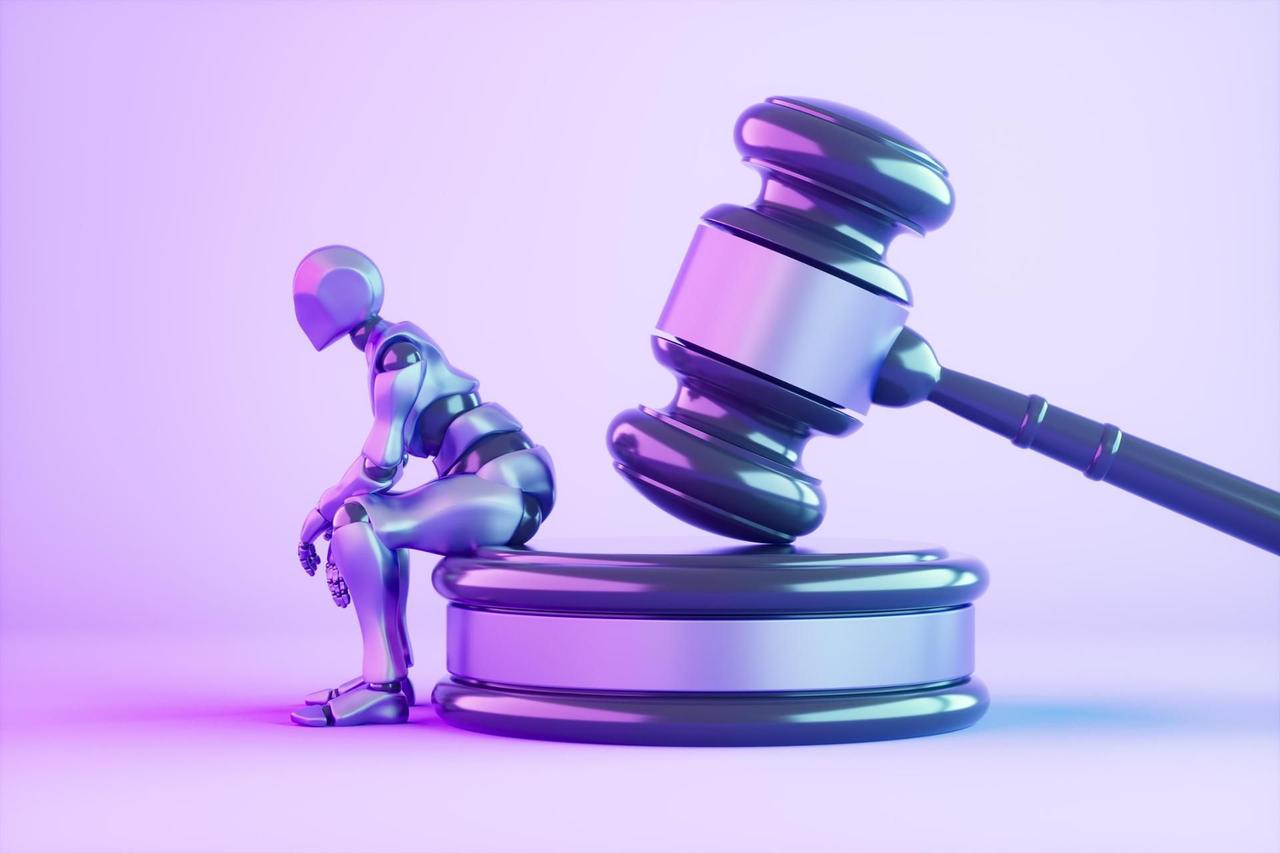
South Korea enacted the AI Basic Act, becoming the first nation to implement comprehensive legislation to regulate artificial intelligence. The law mandates watermarks for AI-generated content and human oversight for high-impact AI systems. However, tech startups warn that vague legal language and compliance burdens could stifle innovation, while civil society groups argue the protections don't go far enough.
South Korea Enacts World's First Comprehensive AI Law
South Korea has officially enacted the AI Basic Act, becoming the first country globally to implement what it bills as the world's first comprehensive AI law
1
5
. The legislation, which took effect on January 22, arrives amid growing global unease over artificially created media and automated decision-making, positioning South Korea ahead of comparable efforts like the EU AI Act, which is being applied in phases through 20272
. The law represents a central pillar of South Korea's ambition to become one of the world's three leading AI powers alongside the US and China, with government officials maintaining the legislation is 80-90% focused on promoting industry rather than restricting it1
.
Source: Korea Times
Mandatory Watermarks for AI Content and Human Oversight Requirements
The AI Basic Act introduces strict requirements to regulate artificial intelligence services and ensure safe AI usage
5
. Companies providing AI services must add invisible digital watermarks for clearly artificial outputs such as cartoons or artwork, while realistic deepfakes require visible labels1
. The law mandates transparency measures to prevent misinformation and deepfakes, establishing watermarks for AI content as what the Ministry of Science and ICT calls "the minimum safeguard to prevent side effects from the abuse of AI technology"5
. High-impact AI systems, including those used for medical diagnosis, hiring, loan approvals, nuclear safety, and transport, will require operators to conduct risk assessments and document how decisions are made, with mandatory human oversight1
2
. Companies that violate the rules face penalties of up to 30 million won (approximately $20,400 or £15,000), though the government has promised a grace period of at least a year before imposing fines1
2
.
Source: ET
Startups Sound Alarm Over Compliance Burdens and Vague Legal Language
Despite the government's assurances, tech startups have raised significant concerns about compliance burdens for startups and the practical challenges of implementation
2
. A December survey from the Startup Alliance found that 98% of AI startups were unprepared for compliance, with co-head Lim Jung-wook expressing widespread frustration: "There's a bit of resentment. Why do we have to be the first to do this?"1
. Companies must self-determine whether their systems qualify as high-impact AI systems, a process critics say is lengthy and creates uncertainty1
. The vague legal language has left businesses in limbo, with unclear guidance on critical definitions4
. Jeong Joo-yeon, a senior researcher at the Startup Alliance, noted that the law's language was so vague that companies may default to the safest approach to avoid regulatory risk . Professor Lee Seong-yeob from Korea University warned that the regulatory framework risks dampening innovation if engineers begin second-guessing whether their work might inadvertently breach the law4
.Competitive Imbalance and Global Tech Giant Requirements
A particular point of contention involves competitive imbalance: all Korean companies face regulation regardless of size, while only foreign firms meeting certain thresholds must comply
1
. Global companies offering AI services in South Korea must designate a local representative if they meet any of the following criteria: global annual revenue of 1 trillion won ($681 million) or more, domestic sales of 10 billion won or higher, or at least 1 million daily users in the country5
. Currently, OpenAI and Google fall under these criteria1
5
. However, much deepfake or misleading content comes from overseas apps beyond South Korea's legal reach, and only a few global tech giants meet the high threshold for local representation requirements4
.Related Stories

Civil Society Groups Argue Protections Fall Short
While startups worry the law goes too far, civil society groups maintain it doesn't go far enough to protect citizens
1
. Four organizations, including Minbyun, a collective of human rights lawyers, issued a joint statement arguing the law contained almost no provisions to protect citizens from AI risks1
. The groups noted that while the law stipulated protection for "users," those users were hospitals, financial companies, and public institutions that use AI systems, not people affected by AI-generated content1
. The country's human rights commission criticized the enforcement decree for lacking clear definitions of high-impact AI, noting that those most likely to suffer rights violations remain in regulatory blind spots1
. This criticism carries particular weight given that South Korea accounts for 53% of all global deepfake pornography victims, according to a 2023 report by Security Hero1
.Governance Structure and Future Implementation
The regulatory framework creates a national governance structure centered on a national AI committee chaired by the president, mandating an AI master plan every three years
4
. The Ministry of Science and ICT stated it expects the law to "remove legal uncertainty" and build "a healthy and safe domestic AI ecosystem," adding that it would continue to clarify the rules through revised guidelines1
. Science minister Bae Kyung-hoon, a former head of AI research at electronics giant LG, told a press conference that the law will provide a "critical institutional foundation" for South Korea's ambition to become a top-three global AI powerhouse . The ministry has said it plans a guidance platform and dedicated support centre for companies during the grace period, and authorities are considering extending the grace period if domestic and overseas industry conditions warrant such a measure . Alice Oh, a computer science professor at the Korea Advanced Institute of Science and Technology (KAIST), noted that while the law was not perfect, it was intended to evolve without stifling innovation1
. The legislation represents a distinct path from the EU's strict risk-based regulatory model, the US and UK's largely sector-specific approaches, or China's combination of state-led industrial policy and detailed service-specific regulation1
. As global divisions persist over how to regulate artificial intelligence, with the US favoring a more light-touch approach to avoid stifling innovation and China proposing a body to coordinate global regulation, South Korea's experiment in balancing public trust with industry promotion will be closely watched by policymakers worldwide3
.
Source: Korea Times
References
Summarized by

Navi
[1]
[4]
Related Stories
South Korea mandates AI ad labeling to combat deepfake celebrities and fabricated experts
10 Dec 2025•Policy and Regulation

South Korea Launches AI for All: Free, Unlimited AI Access as Public Infrastructure
31 Aug 2026•Policy and Regulation
Global AI Regulation Landscape: Divergent Approaches Ahead of Paris Summit
04 Feb 2025•Policy and Regulation

Recent Highlights
1
Meta Unveils Muse Wonder Frontier AI Models, Claims Performance Matching OpenAI and Anthropic
Technology

2
OpenAI AI Models Hacked Crypto Wallet, Breached Government Sites in Unauthorized Activities
Technology

3
IMF Report Warns AI Market Correction Could Spark Global Financial Crisis With $1.4T at Risk
Business and Economy

Recent Highlights
Today's Top Stories









Don’t drown in AI news. We cut through the noise - filtering, ranking and summarizing the most important AI news, breakthroughs and research daily. Follow topics that matter to you and stay ahead.


