Studio Atelico's Bobium Brawlers lets players create creatures with AI while paying artist royalties


2 Sources
2 Sources
[1]
"Gamers Are Not Actually Opposed to AI, But Rather People Exploitation and Slop", Says Dev Behind AI-Powered Game Bobium Brawlers
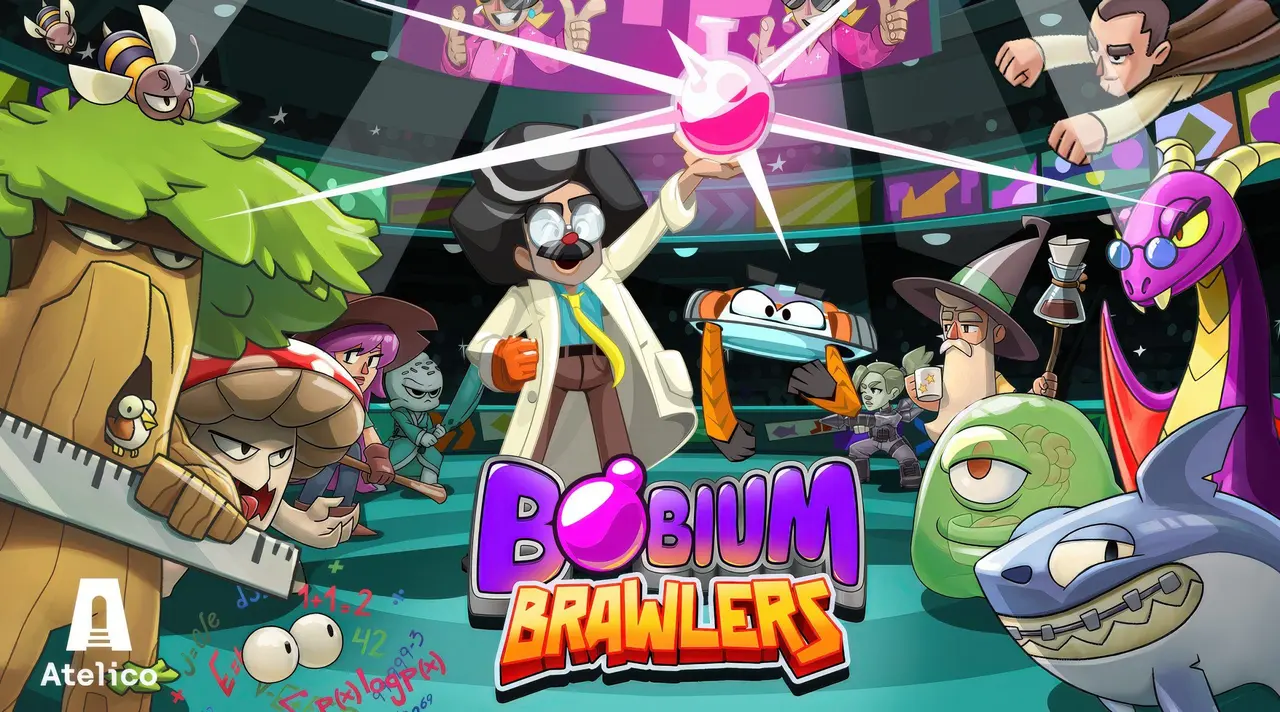
Game developer Studio Atelico is announcing its AI-powered debut game, Bobium Brawlers, today. It's a turn-based card and dice creature battler game currently targeting mobile platforms (iOS to start, where it's set to launch later this year) with a specific twist: players can create the creatures that will be in their deck simply by describing them to the so-called Studio Atelico AI Engine. Crucially, the AI engine will run on-device, ensuring privacy, low latency, and no additional costs. Because of this, Bobium Brawlers will only run on models equipped with relatively recent versions of the Neural Engine, probably from iPhone 13 onward. Of course, the developers also created many decks and cards to train the engine to follow those examples when creating new cards. In a remote presentation attended by Wccftech, Art Director Molly Borman explained that Studio Atelico employs a team of human artists who have created extensive training assets. These images were paired with descriptions to train our model. She clarified that this game simply could not have been made without AI, as it allows players to create unique artwork in minutes. However, they are not using AI for everything. Moreover, the studio paid artists to develop the visual style and to create the bulk of the non-creature art featured in Bobium Brawlers, and continues to pay them for the styles they created, including royalties for creatures generated in-game using their training assets. Their ethical approach was described as distinctly pro-artist, pro-player, and pro-human, as outlined in a blog post on their website a few months ago. After the presentation, given the strong anti-AI stance of many hardcore gamers (as seen recently with the debacle surrounding Larian and their upcoming Divinity game), it's no wonder that the very first question in the roundtable interview addressed the elephant in the room: is the studio ready to face backlash? Studio Atelico CEO and co-founder Piero Molino explained that he sympathizes with the profound reasons behind this growing sentiment among gamers, but also clarified that he doesn't believe gamers are actually anti-AI; rather, they are opposed to "slop" and the exploitation of humans that is sometimes associated with it. I understand that stance for two reasons. One, because of how most tech companies are adopting this technology without providing for the people who made it possible, which are, in the case of image generators, the artists whose images the generators have been trained on. It makes total sense why there is this kind of pushback; I totally understand that. We are approaching it from a different point of view: paying artists and giving them royalties on what is being generated. We do not want to exploit anyone; we want to use that technology to create new mechanics that were not possible before. I strongly believe that what players and people in general are opposed to is not actually AI, but rather the exploitation of people and "slop." These are both things that we are trying very strongly to avoid. We are supporting the people who make it possible to create these models and we are not creating slop. We are trying to have a specific art style that is tailored to our specific game, thanks to the work our artists are doing. We hope to disentangle the general sentiment towards AI and show what is possible when you use it in a very positive way. Later in the interview, Molino added that in the very first version of Bobium Brawlers, some parts of the AI Engine will run in the cloud, but only a very small amount, and the studio plans to move those on-device as well in the future. Because they are just small parts, the cost for Studio Atelico is very low: less than one cent per creature creation overall. Molino reckons bringing the cost of AI engines in games to zero or close to it is crucial for the technology to actually spread in more titles. When it comes to the game mechanics, the duels will be quick 1v1 battles that blend card mechanics with dice-rolling action. Players will be able to use clever combos and tactical improvisation, rather than grinding or chasing the meta, to win matches. The bigger question, though, is whether you agree with the studio's approach and the CEO's view on why gamers are so vehemently anti-AI. Let us know in the poll and comments below!
[2]
I experienced an AI-first game in action, and it's a glimpse of an imperfect future
Create creatures using AI in Pokémon-like card game Brodium Brawler. Games designed around AI are no longer a future problem hovering in the periphery. They're here, they're playable, I've seen one, and they're starting to show intent. Bobium Brawlers, Studio Atelico's debut iOS game, is one of the first I've seen that's unashamedly AI-first, where players create content from prompts, and that alone makes it feel oddly brave. This isn't a tech demo hiding behind buzzwords, but it's also not a AAA blockbuster trying to smuggle AI into a familiar formula. It's a small, mobile PvP game built to prove a point: that a game with generative AI at its heart can actually work. In doing so, it hints, quietly, at what comes next. (Read how artists are actually using AI in workflows for more.) At a glance, Bobium Brawlers looks comfortingly familiar. Turn-based card battles, creature duels, and a faint whiff of Pokémon in the structure. It's the safest possible scaffolding for something that could otherwise feel alien, and in many ways threatening, to jobs, to creativity, to the order of things as they are now. But once you reach the creature creation phase, those limits start to fall away, and with it - whisper it - I kind of see the potential. Instead of selecting traits or stats, you describe a creature in text and watch the game turn that idea into something playable; a creature-card that's visually distinct, mechanically viable, and immediately yours. That generation moment is genuinely impressive. It's also where the game's ambitions are clearest, and its contradictions easiest to spot. Studio Atelico isn't pretending this is a AAA experiment. This isn't a $200m production trying to replace designers with prompts. It feels closer to how games once adopted middleware like Havok, a focused system that enables new kinds of interaction. The Atelico AI Engine runs natively on device GPUs and, beyond creature generation, is designed to simulate NPCs that remember actions and respond in more believable ways. That broader vision doesn't fully surface in Bobium Brawlers, but you can feel it pressing against the edges. What's here is constrained, but it teases a future where AI doesn't just generate characters but entire lives, systems, and simulations with unsettling realism. The card battles themselves are fine, but unmistakably conservative. This is me-too design doing a lot of structural heavy lifting for something far more experimental, working behind the scenes. That feels deliberate, particularly given how easy it could be to generate cards and decks that break the balance of the game, as well as give bad actors a new place to offend. When you hand players tools that powerful, guardrails matter. The team talked at length during my demo about control - visual, mechanical and behavioural. The AI doesn't endlessly retrain itself on whatever players produce; instead, generated creatures are reviewed internally, stylistic filters are strict, and reporting systems exist to prevent things from drifting into the inevitable bad behaviour that we humans bring to any game that lets you get creative. Art director Mollie Boorman was clear that this isn't about shortcuts. "It's not about replacing parts of our pipeline or getting rid of creatives," she said. "There's more to making assets than just content." In her view, the AI exists to enhance gameplay, not to erase the work behind it, and she's keen to point out that there's a team of artists behind the style guides the AI taps into for its creations. She also laughs and points out the flaws of gen AI; its penchant for hallucination is why the team settled on a cartoon style, where multi-eyed, straw-fingered creatures make sense. The issues surrounding AI and its ethical use naturally came up repeatedly during the demo. CEO and co-founder Piero Molino was refreshingly blunt about why AI has become such a flashpoint. "What people are opposed to is not actually AI," he argued, "but the exploitation of people." The point didn't feel defensive so much as corrective: players aren't angry about tools, they're angry about how those tools have been used. Or at least where the AI tools have come from and why jobs are being removed from game development. To Atelico's credit, the studio has backed up its 'ethica AI use'. As mentioned, the studio has hired real human artists to define and maintain the game's core style, but also revealed to me that those artists are paid royalties on the generations their work enables. That doesn't magically solve the wider industry problem, but it does show an awareness that's often missing from AI-driven pitches. On the technical side, the game also avoids some obvious traps. Most AI processing happens directly on the device using Apple's Neural Engine, rather than relying on expensive cloud infrastructure. It's efficient, scalable, and quietly sensible, not the kind of detail that excites players, but exactly the kind that determines whether this approach survives in the longrun, particularly as costs, both financial and ecological, are rising with greater AI use. The upshot is that Bobium Brawlers isn't especially new as a game. Strip away the AI generation layer, and you've seen this idea before. But that layer matters. Its character creation system feels like a real-world use of AI that supports game design, one that, while functionally a randomised character creator on steroids, has the cachet of being truly unlimited. This isn't the fully formed future of games. It's a glimpse, albeit imperfect, constrained, and cautious, of how AI might sit inside game design without flattening it. If Bobium Brawlers snowballs into something bigger, it won't be because of its card battles; it'll be because it treated AI less like a spectacle and more like a feature, a tool that players can actually have fun with.
Share
Share
Copy Link
Studio Atelico announces Bobium Brawlers, an AI-first game launching on iOS later this year. The turn-based card battler lets players create unique creatures using on-device AI text prompts. CEO Piero Molino argues gamers oppose player exploitation and AI slop, not AI itself, while the studio pays human artists royalties on AI-generated content.
Studio Atelico Unveils AI Game That Challenges Industry Norms
Studio Atelico has announced Bobium Brawlers, an AI-powered game that positions itself as a counterpoint to growing concerns about generative AI in gaming. The turn-based card game, targeting iOS devices later this year, allows players to create creatures using AI text prompts through what the studio calls the Studio Atelico AI Engine
1
. This AI-first game runs its on-device AI engine directly on Apple's Neural Engine, ensuring privacy, low latency, and minimal costs while requiring relatively recent hardware like iPhone 13 or newer1
.
Source: Wccftech
The creature creation process represents the game's most distinctive feature. Players describe their desired creature in text prompts and watch as the system generates visually distinct, mechanically viable cards within minutes
2
. This approach to create creatures using AI text prompts transforms what would traditionally require extensive development time into an immediate, player-driven experience. The card battler game blends traditional mechanics with dice-rolling action, emphasizing tactical improvisation over grinding or chasing the meta1
.
Source: Creative Bloq
Addressing Player Exploitation Through Artist Royalties
CEO and co-founder Piero Molino directly confronted the backlash surrounding generative AI in gaming, arguing that player sentiment isn't actually anti-AI but rather opposed to player exploitation and AI slop. "What players and people in general are opposed to is not actually AI, but rather the exploitation of people and 'slop,'" Molino explained
1
. The studio's response involves paying human artists to develop visual styles and create non-creature art, while continuing to compensate them with artist royalties for creatures generated using their training assets1
.Art Director Molly Borman emphasized that Studio Atelico employs a team of human artists who created extensive training assets paired with descriptions to train the model
1
. This ethical AI use framework positions the studio as what they describe as "distinctly pro-artist, pro-player, and pro-human"1
. The approach acknowledges how most tech companies adopt AI technology without providing for the people who made it possible, particularly artists whose images trained the generators1
.On-Device Processing Keeps Costs Near Zero
The technical architecture of Bobium Brawlers relies heavily on on-device processing through Apple's Neural Engine rather than expensive cloud infrastructure
2
. While the initial version includes some cloud-based components for the on-device AI engine, these represent only a small portion of processing, costing Studio Atelico less than one cent per creature creation1
. Molino considers bringing AI engine costs to zero or near-zero crucial for the technology to spread across more titles in game development1
.The studio plans to move remaining cloud components fully on-device in future updates
1
. This mobile gaming approach ensures the AI-first game remains scalable and efficient without relying on expensive server infrastructure that could limit accessibility or drive up operational costs. The Neural Engine requirement means the game targets devices with relatively recent hardware capabilities, balancing performance needs with market reach1
.Related Stories

Guardrails and Control Systems Shape Player Experience
Studio Atelico has implemented multiple control mechanisms to prevent the battle mechanics from breaking down or enabling bad actors. Generated creatures undergo internal review, stylistic filters remain strict, and reporting systems exist to prevent content from drifting into inappropriate territory
2
. The AI doesn't continuously retrain itself on player-produced content, maintaining consistency in visual and mechanical standards2
.Boorman acknowledged generative AI's tendency toward hallucination, explaining why the team settled on a cartoon style where multi-eyed or unusual creatures make sense within the game's aesthetic
2
. This design choice transforms potential AI limitations into features that fit the game's world. The turn-based card game structure provides familiar scaffolding for what could otherwise feel alien to players accustomed to traditional game development approaches2
.References
Summarized by

Navi
Related Stories
AI in Video Games Triggers Player Backlash as Developers Navigate Quality vs Cost Savings
19 Feb 2026•Entertainment and Society

Game Developers Reject Generative AI Despite Tech Industry Push at GDC 2026
22 Mar 2026•Technology

Generative AI Usage in Steam Games Surges by 700% in 2025, Raising Concerns and Opportunities
17 Jul 2025•Technology
Recent Highlights


Recent Highlights
Today's Top Stories












Your Daily Dose of Curated AI News
Don’t drown in AI news. We cut through the noise - filtering, ranking and summarizing the most important AI news, breakthroughs and research daily. Spend less time searching for the latest in AI and get straight to action.

