Supermicro Revenue Growth Soars 123% as AI Boom Drives Record Q2 Results


5 Sources
5 Sources
[1]
Supermicro has dodged drama and delivered datacenters
On Tuesday, the company delivered something pleasingly different: a no-dramas update in which it reported that AI infrastructure builders are queuing up to buy its products with pens poised over chequebooks, and revenue is therefore growing fast. In its report on Q2 2026 revenue, Supermicro revealed $12.7 billion revenue, $7 billion up from Q2 2025 and $7.7 billion higher than Q1's haul. GPU-based systems used for AI applications delivered 84 percent of Q2 revenue, up up 151 percent year-over-year, and accounted for 90 percent of revenue. A single un-named customer delivered 63 percent of revenue, but founder, CEO and president Charles Liang said Supermicro has won comparable clients and isn't worried it's too reliant on a single buyer. "We are very happy that now we have many more large-scale customers," he said. Gross margins fell to 6.3 percent, an outcome Liang attributed in part to the need to pay top dollar to transport new Nvidia Blackwell parts to Supermicro's factories. Liang said those costs will ease, and that tariffs have also become less of a concern. The CEO thinks better days lie ahead, because builders of AI infrastructure are in a hurry to bring their systems online and Supermicro's Data Center Building Block Solutions (DCBBS) offering - a modular system that sees the company deliver racked-and-ready-to-run compute, storage, networking, power, and cooling systems - is designed for fast implementation. Liang said DCBBS accounted for just four percent of Q2 revenue, but said it is the company's big growth prospect, and Supermicro is therefore developing new modules including transformers, next-generation power generators, an energy backup device, and grid power replacement. Supermicro has four new factories ramping up, and Liang said they'll help to meet demand for DCBBS and to reduce costs. The CEO forecast Q3 revenue of $12.3 billion, and full year revenue of "at least $40 billion." That figure suggests Q4 revenue could be just $10 billion, a dip he didn't explain but which didn't spook investors who sent Supermicro's share price up 6.5 percent in after-hours trading. ®
[2]
Super Micro Boosts Sales Outlook, Easing Data Center Delay Fears
The company said it will have sales of at least $40 billion in the current fiscal year, and Chief Executive Officer Charles Liang said it is "scaling rapidly to support large AI and enterprise deployments while continuing to strengthen our operational and financial execution". Super Micro Computer Inc. shares gained in late trading after the company gave a forecast for sales in the current quarter that signaled strong demand for its gear to run AI data centers. Revenue will be at least $12.3 billion in the period ending March 31, the San Jose, California-based company said Tuesday in a statementBloomberg Terminal. Fiscal third-quarter earnings, excluding some items, will be at least 60 cents a share. Analysts polled by Bloomberg had projected, on average, profit of 52 cents on sales of $10.2 billion. Super Micro's outlook suggests it's taking advantage of its strong position as a maker of servers that house the powerful chips running AI workloads. The company appears to have made progress in its effort to control the costs of getting those machines into customers' hands and accurately predicting when contracts will close. In October, Super Micro unexpectedly issued preliminary results for the fiscal first quarter that fell far short of expectations, citing delayed contracts. Instead those contracts bolstered fiscal second-quarter results. "We are scaling rapidly to support large AI and enterprise deployments while continuing to strengthen our operational and financial execution," Chief Executive Officer Charles Liang said in the statement. The company said it will have sales of at least $40 billion in the current fiscal year. It had previously forecast revenue of at least $36 billion. The shares jumped about 5% in extended trading following the report, after closing at $29.67 in New York. The stock has increased 11% in the past 12 months. Sales more than doubled to $12.7 billion in the quarter that ended Dec. 31, the company said in the statement. Profit, excluding some items, was 69 cents a share. Analysts, on average, projected earnings of 49 cents a share on revenue of $10.4 billion. "Better AI sales execution led to Super Micro's 21% fiscal 2Q sales beat vs. guidance and a 2026 revenue outlook boost," Woo Jin Ho, an analyst with Bloomberg Intelligence, said in a note. "Yet the company's margin isn't improving, and the EPS projection implies a sub-7% gross margin for 3Q and potentially the year." Super Micro has been trying to figure out how to improve margins amid pressure to win AI server deals and speedily deliver the latest products to customers. "The demand for AI servers and racks remain strong and SMCI can benefit from growth at existing customers, and from the addition of new customers," Bank of America analysts wrote in a note before the results were released. "However, the market remains very competitive and future large deals could come with low margins in a competitive bidding process." Super Micro has also been working to recover from accounting woes since it missed an August 2024 deadline to file its annual financial report. Its auditor, Ernst & Young LLP, then resigned, citing concerns about the company's governance and transparency. Super Micro was eventually able to file financial statements -- only to warn once again last year that it had uncovered issues with its financial controls. The company said in August that it had started remediation efforts to address the "material weakness" in controls, but added that additional issues may arise in the future.
[3]
Super Micro Computer raises annual revenue forecast amid strong demand for its servers
Feb 3 (Reuters) - Super Micro Computer (SMCI.O), opens new tab raised its annual revenue forecast on Tuesday, anticipating a continued robust demand for its AI-optimized servers as companies expand their data center capacity. Shares of the San Jose, California-based company rose over 5% in extended trading. The server maker has established itself as a primary beneficiary of the generative artificial intelligence boom, working closely with chip designers like Nvidia (NVDA.O), opens new tab and Advanced Micro Devices (AMD.O), opens new tab to quickly bring servers to market. "Super Micro's growth is tied to its importance as the integrator to large cloud and AI customers, said Gadjo Sevilla, technology analyst at Emarketer. Sevilla added that by securing long-term engagements and aligning inventory to their rollout timelines, the company ensures demand is met before production and minimizes volatility. Its ability to quickly deliver fully integrated systems featuring Nvidia's latest GPUs has been critical to its success. The company now sees revenue of at least $40 billion for fiscal year 2026, compared with its earlier projection of $36 billion. "Order strength remains strong from large global data center and enterprise customers," CFO David Weigand said on a post-earnings call. Despite near-term pressures on margins from tariffs, facility costs and component shortages, Super Micro's enterprise strategy, operational improvements and growth in the Datacenter Building Block Solution will support margin expansion over time, CEO Charles Liang said. It reported revenue of $12.68 billion for the second quarter ended December 31, surpassing analysts' average estimate of $10.23 billion, according to data compiled by LSEG. The revenue included about $1.5 billion in delayed first-quarter shipments due to customer readiness. For the third quarter, Super Micro expects revenue of about $12.3 billion, also ahead of an estimate of $10.17 billion. Reporting by Juby Babu in Mexico City; Editing by Vijay Kishore Our Standards: The Thomson Reuters Trust Principles., opens new tab
[4]
Supermicro knocks it out of the park, as AI server sales drive 120% revenue increase - SiliconANGLE
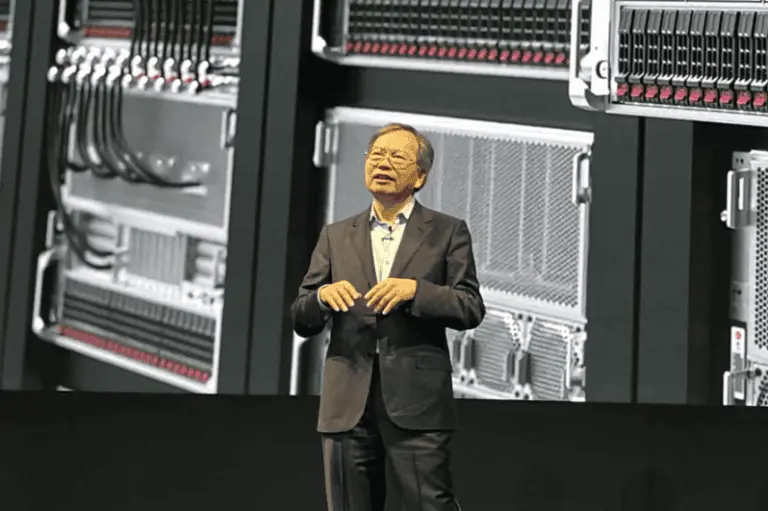
Supermicro knocks it out of the park, as AI server sales drive 120% revenue increase Super Micro Computer Inc.'s stock was gaining ground in late trading today after it delivered stellar second-quarter financial results and issued a forecast that indicates massive demand for its artificial intelligence data center server hardware. The company reported adjusted earnings per share of 69 cents, easily beating the 49 cent-per-share consensus estimate. Revenue for the period jumped by an impressive 123% to $12.7 billion, miles ahead of the $10.42 billion analyst forecast. The results meant a significant bump in Supermicro's bottom line, with the company recording a net profit of $401 million, up from $168 million in the year-ago period. For the current quarter, Supermicro said it's anticipating revenue of at least $12.3 billion, way ahead of the Street's target of $10.2 billion. It's also looking for earnings of 60 cents per share, in comparison to the 52 cent consensus estimate. The strong outlook indicates that Supermicro is making progress in its efforts to control the costs associated with getting its high-powered servers into customers' hands and getting better at predicting when its deals will close. In October, the company upset investors when it issued preliminary first-quarter results that fell short of expectations, blaming the shortfall on delayed contracts. But those contracts rolled into the second quarter, boosting its results this time around. Supermicro founder, President and Chief Executive Charles Liang (pictured) told analysts that the company is well placed to capture the next wave of AI and information technology infrastructure demand. "We are scaling rapidly to support large AI and enterprise deployments while continuing to strengthen our operational and financial execution," he added. The company is now expecting its full-year revenue to top $40 billion, up from its earlier guidance of $36 billion. The market reacted positively to the report, and Supermicro's stock rose more than 7% in the after-hours trading session. Along with Dell Technologies Inc., Supermicro has become one of the main beneficiaries of the AI boom. Emarketer analyst Gadjo Sevilla told Reuters that its growth is due to the fact that it works so closely with chip designers like Nvidia Corp. and Advanced Micro Devices Inc. to bring powerful integrated servers to market. He said it has secured multiple long-term engagements and carefully aligned its inventory to those customer's rollout timelines, ensuring demand is met before production in order to minimize volatility. However, the company has struggled with its margins amid intense competition from other server makers that are all competing for a piece of the AI market pie. "The market remains very competitive and future large deals could come with low margins in a competitive bidding process," Bank of America analysts wrote in a note before the latest results were released. Woo Jin Ho, an analyst with Bloomberg Intelligence, said Supermicro's revenue beat was primarily due to better sales execution than before. "Yet, the company's margin isn't improving, and the earnings per share projection implies a sub-7% gross margin for quarter three and potentially the year," he added. The company has not yet fully recovered from the controversy that emerged when it missed an August 2024 deadline to file its annual financial report. It failed to do so because its auditor Ernst & Young LLP resigned, citing concerns over the server maker's governance and transparency. Faced with the threat of a delisting, the company did ultimately manage to file its financial statements just hours before an extended deadline was up. But last year, it warned shareholders that it had uncovered yet more issues with its financial controls. In August, officials revealed that they had begun remediation efforts to address a "material weakness" in its controls, but warned that it may see additional accounting problems arise in future.
[5]

Accelerating AI Boom Drives Supermicro to Record Q2 Revenue Growth
'Based on our broad customer back-order forecast and commitment, we believe demand for AI and IT infrastructure remains unprecedentedly strong. Our DCBBS solution is exactly what customers need to build out their AI and cloud much faster, cleaner, and [with] lower total cost,' says Supermicro Founder, President, and CEO Charles Liang. Continued acceleration of AI infrastructure demand across every major customer segment helped propel Supermicro to a strong fiscal second quarter 2026 and is laying the path for continued growth going forward, said Supermicro Founder, President, and CEO Charles Liang. Liang Tuesday used his prepared remarks during the San Jose, Calif.-based company's second fiscal quarter 2026 financial conference call highlight year-over-year revenue growth 123 percent to a record $12.68 billion in revenue. "This strong performance reflects the sustained momentum of our AI solutions and rack-scale systems as customers build out next-generation AI factories," he said. [Related: Supermicro CEO: Ready To Grow As Nvidia Ramps Blackwell Production] Supermicro has been developing some of the largest and most complex AI clusters ever built, highlighting the company's unmatched capability in large-scale manufacturing and integration, Liang said. He highlighted the company's new data center building block solutions or DCBBS, first introduced in 2024, and said they have started to gain some key customers' preference as they look for quicker time to deployment and quicker time to online while reducing costs via better workload optimization and minimal power and water consumption. DCBBS has helped Supermicro gain share in large, medium, and small AI infrastructure deployments with Nvidia GB300, B200, and B300 and AMD MI350 platforms, Liang said. The company is also preparing for the upcoming Nvidia Vera Rubin and AMD Helios solutions for the second half of this year, he said. While Supermicro continues to grow its AI factory build-out, customer and product mix are shifting more towards large model builders with pricing leverage that are pressuring the company's margins, Liang said. During the second fiscal quarter, he said, increased transportation costs and ongoing component shortages and associated pricing volatility are impacting Supermicro's short-term gross margins. Supermicro is addressing these issues with a couple of strategies aimed at strengthening the company's long-term profitability, Liang said. First, Supermicro has entered its next phase of product evolution with DCBBS as its key focus. As data centers scale, DCBBS is and will become an increasingly important part of our value, Liang said. "In the first half of fiscal year '26, DCBBS solutions accounted for 4 percent of our profit," he said. "We expect this part of our profit to grow and meaningfully contribute to the second half of fiscal '26. And we see that growth accelerate to at least double this contribution by the end of calendar 2026. With compressed GPU and CPU lifecycles, DCBBS becomes critical and helpful to the value of our server and storage products by enhancing the data center infrastructure time to delivery and time to online, reducing power and water consumption, and simplifying data center management and maintenance." In just over one year, the DCBBS product line grew to more than 10 key subsystems including coolant distribution units, rear door heat exchangers, power cells, battery backup, water towers, drive towers, high speed switching, data center management software, and services, Liang said. "We are expecting this product line to include more new categories such as transformers, next-generation power generators, devices for energy backup, and green power [technologies], further strengthening customer value, accelerating deployment, and supporting long-term profit margin improvements for Supermicro," he said. Supermicro is also sharpening its focus on traditional enterprise cloud and edge IoT customers to further diversify revenue with higher margins, Liang said. In addition, the company introduced our X14 and H14 servers featuring pre-configured systems that ship directly from its factory to enable rapid deployment, he said "Optimized specifically for AI, cloud storage, and telco edge workloads, these servers are ready to power and immediately reinforce Supermicro's core time-to-market advantage for enterprise customers, channel partners, and SMB end users," he said. Supermicro is also driving meaningful cost improvements through enhanced design for manufacturing, including more modularized subsystems and expanded automation across its facilities to bring new platforms to volume production even faster and with higher quality, Liang said. "As product cycles shorten and technical complexity increases, these designs for manufacturing advancements are essential for scale, efficiency and long-term margin improvement," he said. Supermicro also continues to expand its global manufacturing aggressively and strategically, Liang said. "Our Silicon Valley facility remains the cornerstone of our U.S. operations, delivering faster time-to-market, strong security, and higher quality integration," he said. "Internationally, new production sites in Taiwan, Malaysia, and Netherlands, and soon in the Middle East, are ramping to increase capacity, support regional [customers], solve AI requirements, and, most importantly, optimize our overall cost structure." Supermicro, as the only company with over 32 years of robust server and storage focus, is quickly evolving into a leading AI platform and data center infrastructure total solution provider, Liang said. Strong Q2 performance, rapid expansion of DCBBS product lines, deeper and more customer engagement, and increased global capacity investment position Supermicro well for long-term growth in the face of near-term margin pressures, he said. The company's focus on enterprise business, design for manufacturing improvements, and the fast-growing DCBBS portfolio all help support higher growth and net margins going forward, he said. "Lastly, based on our broad customer back-order forecast and commitment, we believe demand for AI and IT infrastructure remains unprecedentedly strong," he said. "Our DCBBS solution is exactly what customers need to build out their AI and cloud much faster, cleaner, and [with] lower total cost." Supermicro By The Numbers For its second fiscal quarter 2026, which ended December 31, Supermicro reported total revenue of $12.68 billion, up 123.2 percent over the $5.68 billion the company reported for its second fiscal quarter 2025. Revenue for the quarter beat analyst expectations by a whopping $2.34 billion, according to Seeking Alpha. Supermicro also reported GAAP net income for the quarter of $400.6 million or 60 cents per share, up from last year's $320.6 million or 51 cents per share. On a non-GAAP basis, the company reported net income of $486.5 million or 69 cents per share, up from last year's $383.6 million or 59 cents per share. Non-GAAP earnings beat analyst expectations by 20 cents per share, according to Seeking Alpha. Looking ahead, Supermicro expects third fiscal revenue of $12.3 billion, GAAP net income of at least 52 cents per share, and non-GAAP net income of at least 60 cents per share. For all of fiscal 2026, Supermicro expects to report revenue of at least $40 billion, up significantly over the $22.0 billion the company reported for fiscal 2025.
Share
Share
Copy Link
Supermicro delivered a stellar second quarter with revenue jumping 123% to $12.7 billion, fueled by surging demand for AI infrastructure. The company raised its annual revenue forecast to at least $40 billion as GPU-based systems accounted for 84% of quarterly revenue. Despite margin pressures, CEO Charles Liang sees strong growth ahead with Data Center Building Block Solutions.
Supermicro Reports Record Q2 Revenue Growth Amid AI Boom
Supermicro has emerged from a period of accounting controversies with a compelling turnaround story, posting record Q2 revenue of $12.7 billion—a 123% increase compared to $5.7 billion in Q2 2025
1
. The San Jose-based server maker also reported revenue up $7.7 billion from Q1's haul, delivering adjusted earnings per share of 69 cents against analyst expectations of just 49 cents4
. This performance reflects sustained momentum in AI infrastructure deployment as companies race to expand data center capacity. GPU-based systems used for AI applications delivered 84 percent of Q2 revenue, up 151 percent year-over-year, and accounted for 90 percent of total revenue1
. The company's ability to quickly deliver fully integrated systems featuring Nvidia's latest GPUs has proven critical to its success in capturing the generative artificial intelligence wave.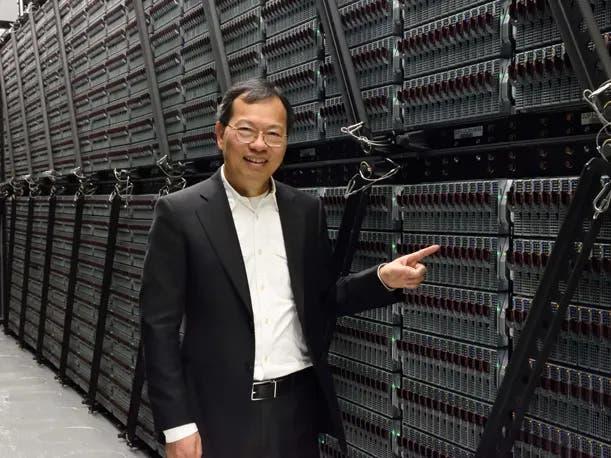
Source: CRN
Strong Demand for AI Servers Drives Annual Revenue Forecast Higher
Supermicro raised its annual revenue forecast to at least $40 billion for fiscal year 2026, up from its earlier projection of $36 billion
2
. For the third quarter ending March 31, the company expects revenue of at least $12.3 billion with earnings of 60 cents per share, significantly ahead of analyst estimates of $10.2 billion in sales and 52 cents per share2
. CEO and founder Charles Liang emphasized the company is "scaling rapidly to support large AI and enterprise deployments while continuing to strengthen our operational and financial execution"3
. The strong demand for servers stems from Supermicro's position as a primary integrator for large cloud and AI customers, working closely with chip designers like Nvidia and AMD to bring powerful rack-scale systems to market quickly3
. CFO David Weigand noted that "order strength remains strong from large global data center and enterprise customers"3
.
Source: SiliconANGLE
Data Center Building Block Solutions Position for Future Growth
While current results impress, Liang pointed to Data Center Building Block Solutions (DCBBS) as the company's key growth prospect moving forward. The modular solution, designed for fast implementation, accounted for just 4 percent of Q2 revenue but represents Supermicro's strategic focus for AI data centers requiring rapid deployment
1
. DCBBS delivers racked-and-ready-to-run compute, storage, networking, power, and cooling systems that help customers build out AI infrastructure faster with lower total costs5
. Supermicro is developing new modules including transformers, next-generation power generators, energy backup devices, and grid power replacement to expand the DCBBS product line1
. The company expects DCBBS contribution to at least double by the end of calendar 2026, with compressed GPU and CPU lifecycles making these modular solutions increasingly critical for customers5
.
Source: Reuters
Related Stories

Margin Pressures and Customer Concentration Remain Concerns
Despite impressive revenue growth, gross margins fell to 6.3 percent during the quarter—a development that raised eyebrows among analysts. Liang attributed the margin compression partly to elevated transport costs for moving new Nvidia Blackwell parts to Supermicro's factories, though he expects these costs to ease
1
. Component shortages and associated pricing volatility also impacted short-term profitability5
. Bloomberg Intelligence analyst Woo Jin Ho noted that while better AI sales execution led to the 21% fiscal second-quarter sales beat versus guidance, "the company's margin isn't improving, and the EPS projection implies a sub-7% gross margin for 3Q and potentially the year"2
. Adding to concentration risk, a single unnamed customer delivered 63 percent of revenue, though Liang expressed confidence that Supermicro has won comparable clients and isn't overly reliant on one buyer1
. The company is addressing margin pressures through enhanced design for manufacturing, expanded automation across facilities, and sharper focus on traditional enterprise cloud customers with higher margins5
.Recovery From Accounting Troubles Shows Operational Progress
The positive results mark a significant turnaround for Supermicro, which faced delisting threats after missing an August 2024 deadline to file its annual financial report when auditor Ernst & Young resigned over governance and transparency concerns
4
. The company managed to file financial statements just hours before an extended deadline expired, but subsequently warned of additional issues with financial controls2
. In October, Supermicro upset investors with preliminary first-quarter results that fell short due to delayed contracts, but those contracts rolled into the second quarter and bolstered current results2
. The revenue included approximately $1.5 billion in delayed first-quarter shipments due to customer readiness3
. Supermicro has four new factories ramping up to meet demand for AI infrastructure and reduce costs, while continuing remediation efforts to address material weaknesses in controls1
. The market responded positively to the report, with Supermicro's stock jumping over 6.5 percent in after-hours trading, signaling renewed investor confidence in the company's operational execution1
.References
Summarized by

Navi
[1]
[4]
Related Stories
Super Micro Computer's AI Ambitions and Financial Challenges: A Tale of Growth and Uncertainty
06 Feb 2025•Business and Economy

Super Micro Computer Faces Setback as Revenue Forecast Cut Sparks AI Spending Concerns
30 Apr 2025•Business and Economy
Super Micro Computer's Stock Surges Amid AI Boom and Financial Reporting Challenges
13 Feb 2025•Technology

Recent Highlights



Recent Highlights
Today's Top Stories








Your Daily Dose of Curated AI News
Don’t drown in AI news. We cut through the noise - filtering, ranking and summarizing the most important AI news, breakthroughs and research daily. Spend less time searching for the latest in AI and get straight to action.

