Tata Communications launches AI platform suite to help enterprises scale distributed workloads


3 Sources
3 Sources
[1]
Tata Communications launches AI platform suite
Mumbai: Tata Communications has launched a new suite of platforms designed to support enterprises scaling artificial intelligence (AI) workloads across distributed environments. The three new digital infrastructure platforms launched under an "AI-first" theme, could add upto $1 million to the company's topline, chief executive Amur S Lakshminarayanan told ET. "These are designed for an AI world, where data, models and applications will sit across different clouds and networks," Lakshminarayanan said. In the near term, these fast-growing digital categories will outpace traditional connectivity services and drive the next phase of Tata Communications' growth, he said. "They may start with a $100,000 monthly run rate, but we expect them to reach $1 million quickly." These include 1) a multicloud networking platform to connect data and AI models across fragmented cloud environments, 2) a unified network visibility and management platform across LAN, WAN and cloud and 3) an edge distribution platform, similar to Cloudflare, combining CDN, DDoS protection and security for web-facing applications. The company is also designing special fast-track internet paths across India to skip slow intermediate stops by directly connecting major hubs like Mumbai and Delhi for better latency for users and other different applications, its chief technology officer Genius Wong said. The company's Multi Cloud Network provides connectivity and optimisation for workloads spread across multiple clouds to offer control over data movement, performance, and costs while the Edge Distribution Platform uses content delivery, security, and compute at the edge. According to the company, the platforms were developed in India, while the market is global, allowing them to scale domestically and generate better margins internationally. Executives said that India's adoption is comparable to global levels, but international expansion allows better pricing, thus enabling better revenue margins. "As AI moves from pilot projects to the core of business decision-making, enterprises are discovering a hard truth: yesterday's infrastructure was never built for today's AI ambitions," a press release by the company said. As digital infrastructure becomes more complex and AI actually amplifies this challenge, the company aims to provide a secure, unified, and intelligent foundation, the CEO said.
[2]
Tata Communications Unveils AI-Ready Infrastructure Suite to Power Enterprise AI
Tata Communications IZO+TM Multi Cloud Network In the age of distributed AI, connectivity is no longer a utility -- it is a strategic advantage. As enterprises spread workloads across clouds, complexity and cost quickly become barriers to scale. Tata Communications IZO+TM Multi Cloud Network removes that friction, giving organisations control over how data moves, performs and costs. Intelligent policy, built-in optimisation and a single view of performance make scaling AI simpler, faster and more predictable. Tata Communications Edge Distribution Platform Tata Communications' Edge Distribution Platform brings intelligence closer to where data is created, enabling faster responses and real-time digital experiences. By combining content delivery, security and compute at the edge, the platform reduces latency while ensuring enterprise applications remain protected and resilient. The integrated approach goes beyond faster delivery -- it creates the foundation required to run real-time AI applications at global scale. The need is for platforms that deliver millisecond-level performance, protect AI models and APIs, and scale efficiently across regions. ThreadSpan™ brings clarity and control to complex digital environments by providing a unified, single-pane view across hybrid and multi-vendor networks. It combines visibility, manageability, security, and automation across network, cloud and security domains. Powered by AI-driven orchestration, it enables enterprises to enforce consistent policies, intelligent resource coordination and early identification of potential issues -- shifting operations from reactive firefighting to proactive autonomy, improving security audit readiness and efficiency at scale.
[3]
Before AI takes over, fix the wiring: Tata Communications' infrastructure warning
ThreadSpan positions AI ops as actionable, not observational "Despite all the excitement around AI, people aren't paying enough attention to the digital foundation that is required for it to scale effectively," said A.S. Lakshminarayanan, MD & CEO, Tata Communications at a press briefing in Mumbai. Standing in front of a Powerpoint parade of buzzwords, he was making a rare, honest admission about the current state of the digital enterprise stack. How it's like a Jenga tower that's teetering on the edge of the living room table, with AI as the new clumsy kid flirting with disaster while trying to win the game. In his opening keynote, A.S. Lakshminarayanan framed the next wave of AI adoption as a stress test for everything enterprises already duct-taped together over the last decade. "What happened in the enterprise world before AI is that transactions scaled with humans making decisions. In the world of AI, it's the AI that's going to make more decisions at a faster cadence, and AI is going to help scale those decisions as well," said A.S. Lakshminarayan or Lakshmi, as he's fondly called. This ultimately explains why Tata Communications is pitching infrastructure as the real AI battleground. The company's argument is that if machine-to-machine decisioning becomes normal very soon, especially with agentic AI workflows, the east-west traffic between clouds, devices, and services becomes a multiplier problem. In order to address this growing digital reality, Tata Communications rolled out what it's calling an AI-ready suite. It's essentially three platforms meant to help enterprises deploy and scale AI with what the company kept returning to as the three essentials: confidence, control, and clarity. The suite stitches together a multi-cloud network layer, an edge distribution layer, and an orchestration layer (called ThreadSpan), all built on the company's broader "Digital Fabric" narrative which combines connectivity + cloud + edge + security as a unified architectural foundation. But the real story wasn't the product list. It was the context. Lakshmi gave a crisp example from voice AI to further illustrate what's happening. "In every voice AI interaction, the voice AI is making a number of tool calls and API calls back and forth. It's what we call in the network world as east-west traffic of communication between machines between clouds, and that is really going to explode," he underlined in a calm and measured tone. Modern digital infrastructure is still "an assembly of several OEM-based technologies and islands," according to Lakshmi, which already exhibit three key pain points: 1) Infrastructure fragmentation, 2) Costs that spike as complexity spikes, and 3) Security and governance that can't keep up with machine speed. "So the key thing to remember here is, AI is going to expose the vulnerabilities of islands of technologies and domains," Lakshmi said. "Once you infuse AI and people start using AI at scale, it's truly going to test the limits of these digital enterprises, and it can no longer manage their infrastructure as disparate islands." Tata Communications is essentially saying to large enterprises that before you teach machines to think faster, make sure your systems can survive that speed. And they are offering a solution to make distributed AI environments run like a system, not a collection of mismatched dashboards. In plain English, Tata Communications' AI suite will help enterprises connect better, run faster, while not losing control. The company formally positions the suite as three complementary offerings: IZO+ Multi Cloud Network (MCN), an Edge Distribution Platform, and ThreadSpan - all tied into the Digital Fabric approach. Multi-cloud networking becomes complex because every cloud has different nuances. But the MCN "abstracts all the complexity, it makes multi-cloud networks work as though you are dealing with one cloud," suggested Lakshmi. Edge matters in AI workloads because latency and security are now user experience problems. The "always-on" security angle is especially critical when AI-assisted attacks can scale too. "With AI, DDoS attacks can really suck up all your compute power and make it not work," warned Lakshmi. Also read: Hackers trick ChatGPT and Grok to install malware onto devices: Report But ThreadSpan is where the penny really dropped, because it's the piece that claims to turn the chaos of AI orchestration into something operable. ThreadSpan is presented as the orchestration and control layer, the pièce de résistance that none of Tata Communications' competitors has, according to their CEO. Beyond just visibility, ThreadSpan introduces agentic workflows both at the edge and across hybrid clouds, making all the pieces work together like one overarching system. "ThreadSpan reduces the complexity, so you can not only do visibility and observability across these domains, but you can also configure and manage," noted the CEO of Tata Communications. That "configure and manage" bit is the real differentiator, according to Tata Communications representatives I spoke with. Plenty of enterprise tools out there will show you your mess in 4K, fewer will actually help you fix it, across vendors, without a week or more of anxiety. Natarajan Sivasamban, EVP & Global Operations Head at Tata Communications, didn't sugarcoat the modern enterprise stack. "If you look at any large enterprise today, it will typically be a museum of tools and platforms," suggested Sivasamban. "Such numbers of tools and platforms creates complexity in terms of managing... and security is the biggest problem. So, it leads to security issues, interoperability issues, integration issues, which leads to increased lead time for solving the problem," Sivasamban noted further. This is the typical digital environment in which ThreadSpan steps in and shines, not trying to rip out all the disparate parts, but just trying to sit above everything. "We don't want to replace each of these tools and we can't, as all of those are native to their respective technologies." But ThreadSpan will sit on top and not only let you see your enterprise IT infrastructure, but also manage it dynamically, with agentic tasks allocated wherever required (with oversight). Sivasamban offered the most relatable example to explain ThreadSpan's abilities - propagating policy changes across a large enterprise or organisation. "If there is a policy change that I need to do, security policy change, I'll do it at one place and it disseminates across all of the regions, countries, devices, etc, seamlessly," he said. ThreadSpan is being sold as AI-assisted operations, not AI theatre. Agentic models within ThreadSpan allow tasks to be automated to a large degree, but Sivasamban also acknowledged the trust-building phase, where automation is still controlled to arrive at the desired remediation. Then Sivasamban connected the dots to the operational KPI that matters most in enterprise: cost per revenue, and speed. For a UK-based logistic firm, which did an acquisition of an entity with 16 odd locations across the globe, with ThreadSpan the firm was able to integrate the entity being acquired - their entire infrastructure - in just a couple of hours. Which otherwise would have been a three-four week exercise, noted Sivasamban. "I keep telling my Threadspan team that we have to change the definition of MTR, not mean time to repair, but mean time to revenue," Sivasamban stated. And yes - this is where the AI angle becomes tangible, where AI will help you close tickets faster, deploy policy changes consistently, and integrate new infra without months of pain. ThreadSpan's agentic AI capabilities allow CISOs to "talk to their infrastructure platform," Sivasamban claimed. "If you are the CISO of the enterprise, you can just ask ThreadSpan something like tell me my vulnerabilities of the day, spurring AI agents to sprawl across all of your infrastructure and report back all the vulnerabilities they have seen. And he can further say, you know what, just go fix this SNMP issue. It will go and fix the SNMP issue. So this is nothing but a voice prompt." This is where ThreadSpan is less "chatbot" and more "ops brain." If ThreadSpan was the operational hook, sovereign AI was the geopolitical one, something that wasn't tacked on as an afterthought. It came up naturally, because data residence and compliance are now part of AI architecture conversations, not just legal footnotes. In the roundtable, Lakshminarayanan made a blunt point about how the market misuses the term sovereign. "Today, many people are on cloud and public cloud hyperscalers to an extent that is not sovereign. So they might have a cloud instance in India, but not necessarily sovereign." That line hits harder in a world where India's privacy and governance framework is tightening. The DPDP Act and subsequent rules push minimisation, purpose limitation, user control, and breach notifications - exactly the kind of regulatory pressure that makes jurisdiction and governance more than just compliance tick-boxes. Lakshminarayanan also contrasted Tata Communications with global edge/CDN giants, specifically the likes of Akamai and Cloudflare, which are controlled by the US Cloud Act. It's a strategic statement, signalling Tata Communications' India roots, not just an overlay service. His bigger sovereign AI argument was more nuanced, pointing out how the model might not be sovereign, but the enterprise intelligence lives in the context layer. Which is why India's sovereign AI efforts need to have an AI operating system. Lakshmi also acknowledged the uncomfortable reality of how many frontier LLMs are built and trained outside India and how achieving full-stack sovereignty is complicated. But he redirected sovereignty to where enterprise differentiation lives: "For an enterprise, the context is where the intelligence is and adding that context and bringing that context to a model is where the true benefit will come from. So all of that can be sovereign," noted Lakshmi. When it comes to infrastructure sovereignty, he connected it to their cloud and network control. "In Tata Communications, our attempt is to say, if you look at the full stack that we are offering, our networks we manage and operate are sovereign. The cloud we manage and operate is sovereign. The entire AI operating system, if you see how we can bring that entire context layer and how we bring the agentic and we bring the voice, all of this is sovereign. We are the most sovereign player in India when it comes to digital interactions," highlighted Tata Communications CEO A.S. Lakshminarayanan. He was careful to define sovereignty as layered - not absolute. "Are we manufacturing chips? We are not sovereign. So we can never be end-to-end sovereign right down to the chip level," Lakshmi pointed out. That's the most refreshingly honest framing of sovereign AI. Sovereignty is about what you can practically control - data, context, workflows, network paths, jurisdictional exposure - even if the silicon isn't yours. Our conversation ended where it began, on the premise that enterprises are sprinting toward AI without stabilising what's underneath. "The normal AI itself in the enterprise world, we are only starting to scratch the surface," Lakshmi noted, rounding up how AI doesn't just scale enterprise capabilities, but it also scales enterprise fragility. And when "things happen at machine speed," the infrastructure will come under tremendous stress, and everyone will have to prepare for the eventuality sooner or later in their AI adoption curve.
Share
Share
Copy Link
Tata Communications unveiled a new AI platform suite designed to support enterprises scaling artificial intelligence workloads across distributed environments. The three platforms—developed in India with a global market focus—could add up to $1 million to the company's topline. CEO Amur S Lakshminarayanan warns that existing digital infrastructure wasn't built for today's AI ambitions, as machine-to-machine decisioning exposes vulnerabilities in fragmented enterprise systems.
Tata Communications Unveils AI Infrastructure Suite to Address Enterprise Scaling Challenges
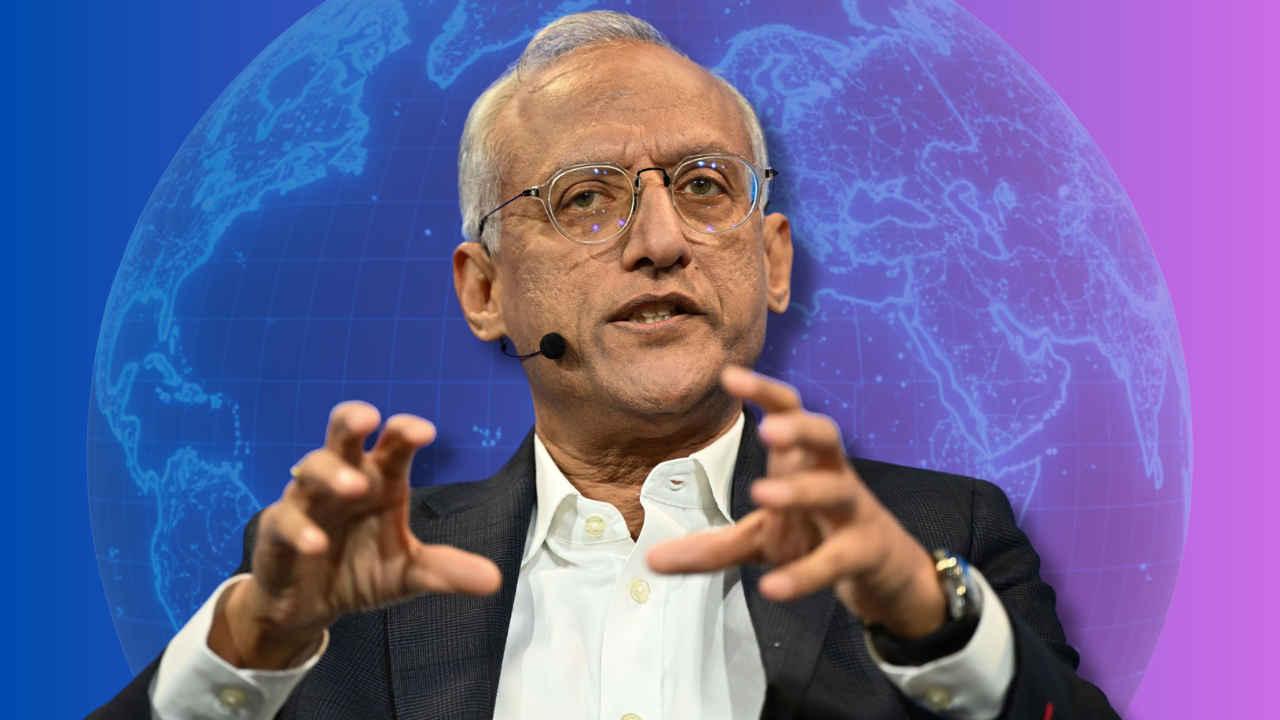
Tata Communications has launched a comprehensive AI platform suite designed to help enterprises scale AI workloads across increasingly complex digital environments. The three new platforms, unveiled under an "AI-first" theme, could add up to $1 million to the company's topline, according to CEO Amur S Lakshminarayanan . "These are designed for an AI world, where data, models and applications will sit across different clouds and networks," Lakshminarayanan explained, positioning the suite as critical enterprise digital infrastructure for the artificial intelligence era.
Source: Digit
The Mumbai-based company's strategic move addresses a fundamental problem: yesterday's infrastructure wasn't built for today's AI ambitions. As AI moves from pilot projects to core business decision-making, enterprises face a hard truth about their fragmented systems. "Despite all the excitement around AI, people aren't paying enough attention to the digital foundation that is required for it to scale effectively," Lakshminarayanan said at a press briefing . The CEO emphasized that in the near term, these fast-growing digital categories will outpace traditional connectivity services and drive the next phase of Tata Communications' growth, potentially starting with a $100,000 monthly run rate before reaching $1 million quickly .
Three Platforms Target Multicloud Networking and Edge Computing Needs
The AI infrastructure suite comprises three complementary platforms addressing distinct enterprise AI challenges. The IZO+ Multi Cloud Network provides connectivity and optimization for workloads spread across multiple clouds, offering control over data movement, performance, and costs . "MCN abstracts all the complexity, it makes multi-cloud networks work as though you are dealing with one cloud," Lakshminarayanan explained . This multicloud networking platform connects data and AI models across fragmented cloud environments, addressing what the company identifies as infrastructure fragmentation—one of three key pain points in modern digital systems.
The Edge Distribution Platform brings intelligence closer to where data is created, enabling faster responses and real-time digital experiences. Similar to Cloudflare, it combines content delivery, DDoS protection, and security for web-facing applications . By reducing latency while ensuring enterprise applications remain protected and resilient, the platform creates the foundation required to run real-time AI applications at global scale . "With AI, DDoS attacks can really suck up all your compute power and make it not work," Lakshminarayanan warned, highlighting the security imperative .
ThreadSpan Delivers AI-Driven Orchestration Across Hybrid Environments
ThreadSpan, the suite's orchestration layer, brings clarity and control to complex digital environments by providing unified network visibility across hybrid and multi-vendor environments. The platform combines visibility, manageability, security, and automation across network, cloud and security domains . Powered by AI-driven orchestration, ThreadSpan enables enterprises to enforce consistent policies, coordinate resources intelligently, and identify potential issues early—shifting operations from reactive firefighting to proactive autonomy .
"ThreadSpan reduces the complexity, so you can not only do visibility and observability across these domains, but you can also configure and manage," the CEO noted . This positions ThreadSpan as the competitive differentiator that turns chaos into something operable, introducing agentic workflows both at the edge and across hybrid clouds. The platform provides a unified, single-pane view across LAN, WAN and cloud, addressing the challenge of managing distributed AI workloads across what Lakshminarayanan described as "an assembly of several OEM-based technologies and islands" .
Related Stories

Machine-to-Machine Decisioning Drives Infrastructure Urgency
The urgency behind Tata Communications' AI infrastructure push stems from a fundamental shift in how enterprise systems operate. "What happened in the enterprise world before AI is that transactions scaled with humans making decisions. In the world of AI, it's the AI that's going to make more decisions at a faster cadence," Lakshminarayanan explained . This machine-to-machine decisioning creates what he called a "multiplier problem" in east-west traffic between clouds, devices, and services.
Voice AI interactions illustrate this challenge clearly. "In every voice AI interaction, the voice AI is making a number of tool calls and API calls back and forth. It's what we call in the network world as east-west traffic of communication between machines between clouds, and that is really going to explode," the CEO underlined . As agentic AI workflows become normal, AI will expose vulnerabilities in islands of technologies and domains, testing the limits of digital enterprises that can no longer manage infrastructure as disparate systems .
India Development, Global Markets Drive Revenue Strategy
The platforms were developed in India while targeting global markets, allowing Tata Communications to scale domestically and generate better margins internationally . Executives noted that India's adoption is comparable to global levels, but international expansion enables better pricing and revenue margins. Chief Technology Officer Genius Wong revealed the company is designing special fast-track internet paths across India to skip slow intermediate stops by directly connecting major hubs like Mumbai and Delhi for better latency for users and applications .
This infrastructure investment addresses three critical pain points enterprises face: infrastructure fragmentation, costs that spike as complexity increases, and security and governance that can't keep up with machine speed . The suite's unified approach combining connectivity, cloud, edge, and security as a single architectural foundation aims to help enterprises deploy and scale enterprise AI with confidence, control, and clarity. As digital infrastructure becomes more complex and artificial intelligence amplifies this challenge, the company positions itself to provide what it calls a secure, unified, and intelligent foundation for the next wave of AI adoption .
References
Summarized by

Navi
Related Stories
OpenAI partners with Tata Group for 100MW AI data center in India, plans 1GW expansion
19 Feb 2026•Technology

Tata Communications and CoRover.ai Partner to Deliver Sovereign AI Solutions for Indian Enterprises and Government
04 Feb 2025•Technology

Tata Communications and AWS Partner to Build Advanced AI-Ready Network in India
22 Jul 2025•Technology
Recent Highlights
1
Tennessee Teens Sue Elon Musk's xAI Over Grok AI-Generated Child Abuse Images
Policy and Regulation

2
Pentagon designates Palantir Maven AI as core US military system in major defense shift
Technology

3
Supermicro Co-Founder Indicted in $2.5 Billion Nvidia AI Chip Smuggling Scheme to China
Policy and Regulation
Recent Highlights
Today's Top Stories











Your Daily Dose of Curated AI News
Don’t drown in AI news. We cut through the noise - filtering, ranking and summarizing the most important AI news, breakthroughs and research daily. Spend less time searching for the latest in AI and get straight to action.

