Tesla launches unsupervised robotaxi rides in Austin with no human safety driver


4 Sources
4 Sources
[1]
Tesla launches robotaxi rides in Austin with no human safety driver
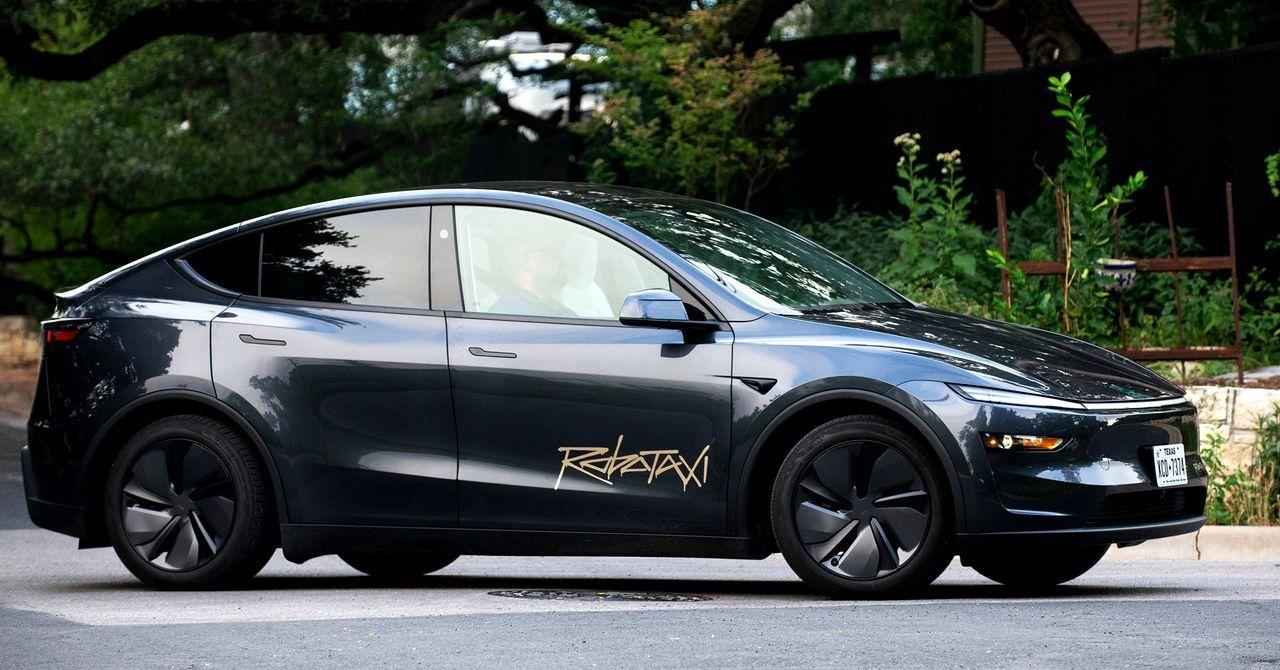
Tesla is offering passengers robotaxi rides in Austin without a human safety driver in the front seat. CEO Elon Musk on Thursday posted on X, his social media platform: "Just started Tesla Robotaxi drives in Austin with no safety monitor in the car. Congrats to the Tesla AI team!" He then made a recruitment pitch for engineers interested in "solving real-world AI," which he says will "likely lead to AGI" to join the Tesla AI team. The automaker launched its robotaxis in the Texas city last June in a limited deployment with a safety operator in the front passenger seat. Tesla initially offered those first rides to influencers and hand-picked customers. In December, Tesla began testing its robotaxis in Austin without a safety driver in the front seat - a precaution in case the vehicle needs a human to take over. Not all of Tesla's fleet in Austin will be fully driverless. Per Tesla's AI lead Ashok Elluswamy: "Starting with a few unsupervised vehicles mixed in with the broader robotaxi fleet with safety monitors, and the ratio will increase over time." It's not clear whether the rides are free or if Tesla is charging a fare. Some of Tesla's rivals, like Zoox and Waymo, did not immediately charge for driverless rides upon initial deployment. TechCrunch has attempted to reach out to Tesla for clarification.
[2]
Tesla is finally doing unsupervised robotaxi rides
Tesla is finally doing unsupervised robotaxi trips in Austin, Texas, according to a video posted on X. Elon Musk reposted the video, congratulating Tesla's AI team for the milestone. For months, Tesla's robotaxis in Austin and San Francisco have included safety monitors with access to a kill switch in case of emergency -- a fallback that Waymo currently doesn't need for its commercial robotaxi service. The safety monitor sits in the passenger seat in Austin and in the driver seat in San Francisco. Neither service is fully open to the public yet, relying instead on customer waitlists. Musk has said that the human monitors are only there because Tesla is being "paranoid about safety," and not because of some deficiency in the company's technology. He later predicted that the company would remove the safety monitors by the end of 2025. It seems like he was off by a couple weeks. Ashok Elluswamy, Tesla's VP for autonomy, provided some more context on X, saying the company was "starting with a few unsupervised vehicles mixed in with the broader robotaxi fleet with safety monitors, and the ratio will increase over time." Whether this demonstration represents progress or perhaps a disaster waiting to happen, time will tell. Tesla still uses a waitlist for its robotaxi service, and is rumored to only have a couple dozen vehicles operating in Texas. And even with the safety monitors, Tesla's robotaxis have crashed approximately eight times in just five months, according to Eletrek. Fans are obviously thrilled by Tesla's progress, while critics call it a con designed to highlight a capability that doesn't exist. To some extent, this mirrors Waymo's phased rollout strategy of starting with a handful of vehicles with safety monitors and a customer waitlist before gradually removing the monitors and opening up the list to everyone. The difference, of course, is that Waymo has driven over 100 million miles with its fully driverless, unsupervised cars. Tesla says its customers have driven 7.4 billion miles using Full Self-Driving, which is a Level 2 system that requires constant driver supervision. These are not comparable stats. Meanwhile, Waymo continues to widen its lead over Tesla, reporting over 14 million paid rides in 2025 alone and plans to expand to 20 new cities in the coming year. Despite that, Musk has continued to insist that Tesla holds the advantage over the Alphabet-owned robotaxi operator due to its vast customer fleet that he insists will soon become fully autonomous. This, of course, ignores the reality that most Teslas on the road lack the necessary hardware to support fully autonomous driving.
[3]
Tesla Starts Public Robotaxi Rides in Austin With Ex-Employee
Tesla's CEO Elon Musk announced the development, sharing a video from an ex-Tesla artificial intelligence engineer and congratulating the Tesla AI team. Tesla Inc. is beginning to offer actual robotaxi rides in Austin, a milestone for the carmaker that launched a service seven months ago with vehicles that have relied on human supervisors sitting in front seats. Chief Executive Officer Elon Musk touted the development in an X post Thursday, sharing a video from an ex-Tesla artificial intelligence engineer. The CEO announced last month that testing without any occupants in the company's cars was underway. Tesla's head of AI, Ashok Elluswamy, wrote in a separate post that "a few" of the vehicles in the company's Robotaxi fleet will be unsupervised. The ratio of vehicles without safety monitors will increase over time, he said. Musk has increasingly emphasized Tesla's work on AI and its robotaxi ambitions as the company has struggled with declining vehicle sales. While taking customers for rides without human backups is likely to boost sentiment about the capability of its driving system, Tesla has told regulators that its small fleet of cars operating in the Texas capitol were involved in eight crashes in six months last year. Tesla's stock rose to session highs after the post, climbing as much as 4% as of 2:30 p.m. in New York. Shares of Uber Technologies Inc. and Lyft Inc. dropped more than 3% in intraday trading before paring declines. Musk said repeatedly in 2025 that Tesla would offer unsupervised rides before the end of the year. Other predictions were much further off the mark: In July, he estimated that half the US population might have access to autonomous Tesla rides by year-end. Austin is the only city where Tesla is offering Robotaxi rides. While the company started a taxi service in the San Francisco Bay area last year, it has yet to apply for a permit to test autonomous vehicles without safety drivers in California. Tesla is lagging far behind Alphabet Inc.'s Waymo, which started offering driverless rides in the Phoenix area in late 2018. The company also is charging fares for driverless rides in thousands of vehicles across Austin, Los Angeles, San Francisco, Atlanta and Miami.
[4]
Elon Musk says Tesla taking safety supervisors out of some Robotaxi vehicles in Austin
Musk said in July that Tesla would likely have "autonomous ride hailing in probably half the population of the U.S. by the end of the year." The company fell far shy of that goal. However, Tesla drummed up excitement with the launch of its Robotaxi ride-hailing app, and its initial services in Austin and the San Francisco Bay area. In Texas, Tesla obtained a permit to run a transportation networking company, which allowed it to use "automated driving systems," or driverless vehicles, there. But in California, Tesla has yet to obtain permits that would allow it to conduct driverless testing or robotaxi rides without a human at the wheel, ready to steer or brake at any time. Speaking at the World Economic Forum in Davos on Thursday, Musk said, "I think self-driving cars is essentially a solved problem at this point," adding that he expects his company's Robotaxi service will be "very widespread by the end of this year within the U.S." Musk is notorious for missing his self-imposed timelines for grand technical or business achievements. In 2019, he told investors that he was "very confident" the company would be able to turn its existing vehicles into robotaxis with a software update by the end of the following year. With its EV sales sliding, Tesla's ability to keep investors enthused may hinge on whether it can scale a driverless, ride-hailing service in the U.S. this year and upgrade the partially automated driving systems in its cars to a fully automated driving system. Today, its premium system is marketed as FSD (Supervised), and the company plans to sell an FSD Unsupervised system in the future. Surveys by the Electric Vehicle Intelligence Report found a majority of U.S. consumers polled late last year did not want to ride in robotaxis, with particular concerns around safety. Deutsche Bank analysts wrote in a note this week that they anticipated "muted underlying volume growth" for Tesla and EV maker Rivian this year with "autonomy and physical AI driving the narrative." They also said, "Tesla will have to prove out FSD unsupervised and the scaling up of robotaxi (which in our view has been clearly tracking behind schedule) before garnering incremental valuation credit." Tesla didn't respond to a request for comment on Thursday. Late last year, California regulators found that Tesla had engaged in deceptive marketing and false advertising around their vehicles' driverless capabilities. And the National Highway Traffic Safety Administration is currently investigating Tesla to determine how often the company's FSD systems may have caused traffic safety violations. According to TeslaDeaths.com, which draws on NHTSA data, legal filings and press reports to track fatal Tesla collisions, 65 people have died in Tesla crashes that involved the use of Autopilot, including two in which the company's FSD systems were engaged in the seconds leading up to the crash. Tesla is scheduled to report fourth-quarter results on Wednesday.
Share
Share
Copy Link
Tesla has begun offering driverless rides in Austin without safety monitors, seven months after launching with human supervisors. Elon Musk announced the milestone while the company faces regulatory scrutiny and trails Waymo, which has completed over 14 million paid rides in 2025. The move comes as Tesla's EV sales decline and investor enthusiasm hinges on autonomous driving success.
Tesla Robotaxi Begins Unsupervised Operations in Austin
Tesla has started offering driverless rides in Austin with no human safety driver present, marking a significant shift in the company's approach to public robotaxi operations in Austin. CEO Elon Musk announced the development on X, congratulating the Tesla AI team and promoting recruitment for engineers interested in solving real-world artificial intelligence challenges
1
. The automaker initially launched its robotaxi service in the Texas city last June with safety monitors sitting in the front passenger seat, offering rides to influencers and hand-picked customers1
.
Source: TechCrunch
Phased Rollout Strategy for Fully Driverless Vehicles
Ashok Elluswamy, Tesla's VP for autonomy, clarified that the company is taking safety supervisors out gradually, starting with a few unsupervised vehicles mixed in with the broader robotaxi fleet that still includes safety monitors
2
. The ratio of unsupervised robotaxi rides will increase over time as the company gains confidence in its system3
. Musk had previously stated that human monitors were only present because Tesla was being "paranoid about safety," not due to technology deficiencies, and predicted removal by the end of 20252
.
Source: Bloomberg
Regulatory Landscape and Driverless Operations in Texas
In Texas, Tesla obtained a permit to run a transportation networking company, which allowed it to use automated driving systems and conduct driverless operations in Texas
4
. However, in California, where Tesla also operates a ride-hailing app service in the San Francisco Bay area, the company has yet to obtain permits that would allow driverless testing or rides without a human at the wheel4
. Austin remains the only city where Tesla is offering actual robotaxi rides without safety monitors.Safety Record Raises Public Safety Concerns
Tesla's small fleet operating in Austin was involved in eight crashes in six months last year, according to information the company provided to regulators
3
. These incidents occurred even with safety monitors present2
. The National Highway Traffic Safety Administration (NHTSA) is currently investigating Tesla to determine how often the company's Full Self-Driving systems may have caused traffic safety violations4
. According to TeslaDeaths.com, which draws on NHTSA data, 65 people have died in Tesla crashes involving Autopilot, including two where FSD systems were engaged seconds before impact4
.Related Stories
Waymo Maintains Significant Lead in Autonomy Race
Tesla trails far behind Alphabet's Waymo, which started offering driverless rides in Phoenix in late 2018 and has driven over 100 million miles with fully driverless vehicles
2
. Waymo reported over 14 million paid rides in 2025 alone and charges fares for driverless rides across thousands of vehicles in Austin, Los Angeles, San Francisco, Atlanta, and Miami2
3
. The company plans to expand to 20 new cities in the coming year2
. Competitors like Zoox also did not immediately charge for driverless rides upon initial deployment1
.Investor Enthusiasm Hinges on Autonomous Success
With EV sales sliding, Tesla's ability to maintain investor enthusiasm may depend on whether it can scale a driverless ride-hailing service in the U.S. this year
4
. Tesla's stock rose as much as 4% following Musk's announcement, while shares of Uber Technologies and Lyft dropped more than 3% in intraday trading before paring declines3
. Deutsche Bank analysts anticipated "muted underlying volume growth" for Tesla this year, stating the company "will have to prove out FSD unsupervised and the scaling up of robotaxi" before garnering incremental valuation credit4
. Surveys by the Electric Vehicle Intelligence Report found a majority of U.S. consumers polled late last year did not want to ride in robotaxis, with particular concerns around safety4
. California regulators found late last year that Tesla had engaged in deceptive marketing around their vehicles' driverless capabilities4
.References
Summarized by

Navi
[2]
Related Stories
Tesla's Robotaxi Trial Set for Austin Launch Amid AI Advancements and Regulatory Scrutiny
21 May 2025•Technology
Tesla's Robotaxi Launch: A Pivotal Moment for Autonomous Driving and Musk's Vision
11 Jun 2025•Technology

Tesla Launches Robotaxi Service in Austin: Promises and Challenges
21 Jun 2025•Technology

Recent Highlights


Recent Highlights
Today's Top Stories





Your Daily Dose of Curated AI News
Don’t drown in AI news. We cut through the noise - filtering, ranking and summarizing the most important AI news, breakthroughs and research daily. Spend less time searching for the latest in AI and get straight to action.

