Tesla ends Model S and Model X production to make way for Optimus humanoid robots


24 Sources
24 Sources
[1]
Tesla Sunsetting Model S and X Next Quarter to Refocus on Optimus Robot
Tesla sends the Model S and Model X to live on a farm upstate, canceling its two longest-running EVs to make way for an autonomous, robotic future. Tesla is putting the brakes on production of the Model S and Model X. The automaker plans to end production of the large, electric sedan and SUV next quarter, effectively retiring its two longest-running electric vehicles. The news was shared by CEO Elon Musk during the company's earnings call with investors and analysts earlier this week. After launching the original Roadster, Tesla introduced the Model S in 2012, followed by the Model X SUV in 2015. Both vehicles helped establish Tesla as the brand to beat in the premium EV market. However, over time the company's focus shifted toward the more affordable Model 3 and Model Y, which now dominate Tesla's lineup. Together, the two smaller vehicles accounted for roughly 97% of Tesla's 1.6 million vehicle deliveries in 2025. "We expect to wind down S and X production next quarter and basically stop production," Musk said during the call. "That is slightly sad, but it's time to bring the S and X programs to an end, and it's part of our overall shift to an autonomous future." The decision is not entirely surprising. The Model S and Model X are Tesla's oldest models and also among its slowest sellers. (Tesla's own financial reports don't specify how many were sold last quarter, lumping them into an ever-shrinking "Other Models" line item shared with the Cybertruck and Semi.) Most automakers would have refreshed, replaced or canceled vehicles of this age multiple times by now. Tesla's software-focused approach has helped keep both models technologically relevant, but with the company reporting declining revenue and sales this year, trimming the lineup and focusing resources elsewhere appears to be part of a broader cost-cutting and strategic shift. In its latest shareholder update, Tesla emphasized that it is continuing its transition away from being a traditional hardware-focused automaker toward what it calls a "physical AI" company. The company outlined plans to scale up new production lines across vehicles, robotics, energy storage and battery manufacturing, signaling where its priorities are headed. With the large sedan and SUV exiting the lineup, Tesla is increasingly framing its future around driverless technology and robotics. Musk says the Fremont, California, factory, where the Model S and Model X are currently built, will be repurposed to produce the company's planned Optimus humanoid robot. Musk claims that Tesla will ramp up Optimus production to 1 million units per year, but considering those robots are not yet available for sale and Tesla/Musk's history of overly optimistic tech predictions, I won't hold my breath.
[2]
Tesla throws in the towel on car sales
Is Tesla still a car company? It's a question we've been asking ourselves more frequently over the past year, especially as the company's car business shrinks and Elon Musk continues to push the message that Tesla should be seen more as an AI and robotics leader and less so as a mere seller of four-wheeled conveyance. Last night during Telsa's quarterly earnings call, the question of whether Tesla still wants to sell cars was seemingly answered by Musk and his lieutenants. In one fell swoop, the company killed off its original flagship EVs, the Model S and Model X, to make room for the mass production of a humanoid robot that, as we've seen numerous times, struggles with basic tasks. A top Tesla executive said that the company should be viewed more as "transportation as a service" than as an automaker. And Musk repeated his assertion that Tesla didn't need to make more mass-market vehicles because, in the future, all cars will be autonomous. "The vast majority of miles traveled will be autonomous in the future," Musk said. "You know, I would say probably less than -- I'm just guessing -- but probably less than 5 percent of miles driven will be where somebody's actually driving the car themselves in the future, maybe as low as 1 percent." And a bit later, Musk doubled down. "So, you know, I think long-term... the only vehicles that we'll make will be autonomous vehicles." To be sure, Tesla still makes and sells cars, but based on Musk's comments and actions, it feels like Tesla is a car company in name only. In 2025, Tesla brought in $94.8 billion in revenue, $69.5 billion -- or 73 percent -- of which was from car sales. Its automotive revenues have been in free fall, down 10 percent year over year, while its other revenue streams -- energy generation and storage; and services and other revenue -- are on the upswing. This year, Tesla lost its title as the global leader in EV sales to BYD. Its two main vehicle programs, the Model 3 and Model Y, are in decline, despite efforts to introduce more affordable versions of both vehicles. Globally, EV tax credits and other incentive programs that helped bring down costs and make these vehicles affordable to more people are going away -- which Musk had a hand in, thanks to his donations and support for Donald Trump. And Musk's political activities, and his divisive public persona, have turned the Tesla brand toxic for a broad swath of the company's progressive customer base. Like many tech companies before it, Tesla is pinning its hopes on a future driven by subscription revenue. For the first time, the company disclosed the number of active Full Self-Driving (Supervised) subscriptions -- 1.1 million -- which Musk claimed was a 38 percent increase over the fourth quarter 2024. Musk recently said that Tesla would stop selling its Full Self-Driving feature as a standalone package and shift to subscription only. FSD allows for hands-free driving on highways and urban areas, but drivers are required to keep their eyes on the road and be ready to take control if something goes wrong. Tesla has faced numerous lawsuits and investigations over the years related to the safety and marketing of FSD. But to Musk, FSD and robotaxis are the future. He predicted that Tesla's autonomous taxis will be available in "dozens" of US cities this year, after falling short of his previously stated expansion plans. And he touted the imminent reveal of a "Gen 3" version of Tesla's Optimus robot, which he said would be ready for mass production at the end of 2027. Autonomy isn't just key to Tesla's future; it's also key to Musk unlocking a pay package worth up to $1 trillion for himself. Musk made a bet with shareholders: give me control over a robot army, and I'll make you all rich. Under the deal, he would need to meet a series of ambitious milestones to receive the compensation, including producing over a million robots, a million robotaxis, and creating $7.5 trillion in value for Tesla's shareholders. But look at the requirements in the agreement, someone who doubts the premise of this article might say. Tesla still needs to sell millions of cars in order for Musk to become the world's first trillionaire, right? The vehicle sales milestone is actually a pretty easy layup. If Tesla sells 1.2 million cars a year over the next decade, on average, Musk earns $8.2 billion in stock -- as long as Tesla's market value grows from $1.4 trillion today to $2 trillion in 2035. That's a half-million fewer cars per year than Tesla sold in 2024. The decline in Tesla's vehicle-selling business appears to be baked into the premise of Musk's pay package. It's important to note that the death of Tesla's car business has been enabled every step of the way by Tesla's board and its shareholders. They completely buy Musk's vision of a future dominated by AI, self-driving cars, and humanoid robots. This in spite of Tesla's difficulty in keeping pace with Waymo's robotaxis and the clear shortcomings of its Optimus robots. Its robotaxis are crashing at a higher rate than human drivers, even with safety drivers in the vehicle, according to federal crash data reported by Electrek. And its robots are mostly remote operated and struggle with basic tasks. Musk himself admitted in the earnings call that Optimus is not currently working in Tesla's factories "in a material way." But Tesla's moves to pivot away from the quotidian business of making and selling cars is not happening in isolation. Broadly, the long-term goal for many automakers is to build so-called software-defined vehicles, an industry term that describes connected vehicles that can continuously improve over time through over-the-air software updates. And the companies' main goal is to get its customers to pay for those upgrades through subscriptions. And why not? Making cars is a brutal, labor intensive, low-margin business. Who wouldn't want some of that sweet, sweet recurring revenue you get from subscription services? But Tesla isn't going to sell enough FSD subscriptions to make up for main source of its revenue, which is selling cars -- not in the near term, and probably not in the long term either, given the slow pace of autonomy development. And now, with the death of the Model S and Model X, it has two fewer cars in its lineup to rely on. Chasing the robot/robotaxi dream is enormously expensive: Tesla estimates it will spend $20 billion in capital expenditures in 2026, more than double the $8.5 billion it spent last year. Most of the record investment will be spent on production lines for the Cybercab, a fully autonomous vehicle without a steering wheel and pedals, the long-promised Tesla semi-truck, Optimus robots, and plants for battery and lithium production, chief financial officer Vaibhav Taneja said. Toward the end of the earnings call, Musk admitted that a lot of that spending will be "out of desperation." "Like, why do we have to build these things?" he said, citing lithium and cathode refineries as among the things Tesla needs to build to fuel its transformation. "Can someone else build these things? I mean, it's very hard to build these things."
[3]
Tesla to Stop Making Model S and X, Plans to Focus on Optimus Robots
With over a decade of experience reporting on consumer technology, James covers mobile phones, apps, operating systems, wearables, AI, and more. Tesla is discontinuing some of its most iconic vehicles over the next six months. The electric car brand used its latest earnings results to tell investors production of the Model S sedan and Model X SUV would shut down during Q2 2026. It tells customers, "If you'd like to own one of them, now's a good time to place your order." Tesla CEO Elon Musk spoke on the earnings call, where he confirmed current owners will see support "for as long as people have the vehicles." Musk said, "It's time to basically bring the Model S and X programs to an end with an honorable discharge, because we're really moving into a future that is based on autonomy." The brand confirmed in the same call that its factory in Fremont, California, where the Model S and Model X are currently produced, will be used to make its upcoming Optimus robots. The humanoid robots were first shown in 2022, and Tesla has continued to develop them further. Tesla confirmed it plans to unveil a third-generation version of Optimus in the coming months. It says the upcoming robot is its first designed for mass production and will see "major upgrades from version 2.5, including our latest hand design." Musk has previously said Tesla aims to begin producing Optimus units at scale by the end of 2026 and begin selling them in 2027. It eventually plans to make a million robots per year, but it hasn't provided a timeline for reaching that target. Tesla will continue to sell its other car models, including the Model 3, Model Y, and its Cybertruck. The brand saw an 11% year-over-year drop in sales in 2025, so it is now refocusing on its other ambitions, such as robotics. The Tesla Model S was first released in 2012 and made electric vehicles more appealing to the average car buyer. The Model X debuted in 2015, and both models saw internal and external tweaks over the years to keep them competitive as Tesla's rivals gained steam.
[4]
Tesla is killing off its Model S and X cars to make robots
Tesla will "basically stop the production" of its Model S and X electric vehicles next quarter, CEO Elon Musk has announced at the automaker's earnings call for the 2025 fiscal year. "It's time to bring the Model S and X program to a end with an honorable discharge, because we're really moving into a future that's based on autonomy," Musk said. You can still buy the vehicles as long as there are units to be sold, and Tesla promises to support them for as long as people have them. Once they're gone, though, they're gone for good, because Tesla is converting their production space in the company's Fremont factory into a space for the manufacturing of Optimus humanoid robots. Model S is Tesla's second vehicle and has been in production since 2012, while the Model X SUV has been in production since 2015. Their shine has faded over the years, however, and the newer Model 3 and Y now make up the bulk of the company's sales. For the entirety of 2025, for instance, Tesla delivered 1,585,279 Model 3 and Y vehicles but only sold 418,227 Model S and X units. The company also had to stop selling Model S and X in China in mid-2025, because they were being imported from the US and were subject to China's tariffs that were put in place in response to US President Donald Trump's tariffs on imported goods. In the call, Musk said that Tesla's long-term goal is to be able to manufacture 1 million Optimus robots in the current Model S and X production space. At the World Economic Forum in Davos, Switzerland a few days ago, the CEO announced that Tesla will start selling Optimus to the public by the end of next year. Musk has big plans for Optimus and once said that it's bound to become the "biggest product of all time," bigger than cellphones, "bigger than anything." But the humanoid robot has been failing to live up to the hype during demonstrations, and Musk is known for his overly optimistic timelines. The company's earnings report has also revealed that Tesla invested $2 billion in Musk's other company, xAI. Tesla's shareholders notably sued Musk in 2024 for starting xAI, which they argued is a direct competition to the automaker. The CEO has been claiming for years, after all, that Tesla is an AI company and not just an EV-maker. Still, Tesla's shareholders approved Musk's $1 trillion pay package in late 2025 on the condition that the company reaches a market value of $8.5 trillion.
[5]

Tesla Just Killed the Most Important Car of the 21st Century
Before Elon Musk, most electric vehicles seemed less like an alternative to gasoline than an argument in its favor. The sad state of affairs for EVs for many years was that they were slow, impractical, and largely enticing only if you lived with copious guilt over your carbon emissions. Then Tesla came out with the Tesla Model S. The speedy, high-tech sedan didn't just leave other EVs in the dust; it could compete with the likes of BMW and Mercedes-Benz. "EVs went from 'eating your vegetables' to getting you super-car performance in a vehicle that's luxurious and quiet," Jake Fisher, the senior director of auto testing at Consumer Reports, told me. The Model S proved something that's now easy to take for granted: EVs can work, and ordinary people might actually want one. A year after the Model S's 2012 debut, Musk personally drove one coast to coast to prove that it was just as capable as a gas car. Now the Model S is going away. During Tesla's earnings call yesterday, Musk announced that his company will soon stop manufacturing the car that launched his empire. "That is slightly sad," he acknowledged on the call. In a sense, it was inevitable. Tech products get killed off all the time to make way for something better; Apple no longer sells the iPhone 4. Indeed, the Tesla Model S has become irrelevant and overpriced compared with the company's newer cars. (As a Road & Track headline put it in 2023, "The Tesla Model S Has Lived Long Enough to See Itself Become a Villain.") Nearly all of Tesla's global sales come from the more affordable Model Y and Model 3, leaving the original Model S unceremoniously lumped in with "Other Models" in the company's financial reports. But Tesla is not phasing out the Model S to focus on making even better cars. The move is part of a retreat from the car business. Tesla will stop producing the Model S and another one of its less popular cars, the gull-winged Model X SUV, in order to free up space at its California factory to build the human robot Optimus. "It is time to bring the S and X programs to an end and shift to an autonomous future," Musk said yesterday. He's made very clear that he wants to reposition Tesla as an AI company. The promise of robotaxis that can take you to work and robots that water your plants is why Tesla's investors recently offered Musk a $1 trillion pay package even as the company's car sales are slumping and slumping. If cars like the Model S changed the world, the investors would argue, then there's no reason to believe that Musk's vision for robots can't do something even grander. (Tesla did not respond to a request for comment.) Read: Tesla wants out of the car business This plan had better work. Now that Tesla seems largely done with making new car models, the company is throwing away a lot in order to go all in on autonomy. The irony is that in canceling the Model S, Tesla is effectively walking away from a business that it helped create. Even at its apex, the Model S never sold as well as something like the Toyota Camry. (The Tesla's initial starting price of about $100,000 immediately put it out of reach for most car buyers.) But it is undoubtedly the most important car of the 21st century. The global EV industry would not be what it is today without it. Perhaps the biggest legacy of the Model S is that it turned cars into gadgets. From the get-go, Tesla owners enjoyed a parade of new features rolled out via software downloads. Until the Model S, whatever features your car had at purchase were essentially all you ever got, unless you modified it yourself or paid a shop to do it. Tesla pioneered the idea of a car that could, like a smartphone, get better over time with digital upgrades. At times, software updates can be a nuisance for drivers: Some features are now locked behind a subscription paywall. This kind of approach has made Tesla a tech company, with a stock price more reminiscent of Silicon Valley than of Detroit. Tesla is now worth more than most other car companies combined. Naturally, other automakers were eager to replicate the Tesla playbook. By the late 2010s, the rest of the industry was scrambling to chase Tesla's progress and innovation (and that stock price). Other companies have since sunk billions of dollars into EVs, batteries, and software, all to varying degrees of success. Software updates are something the sector is still struggling with. Even last year, when Tesla's profits and sales sank, most Americans who bought an EV were opting for Teslas. And when Tesla set up its factory in China, it kicked that country's auto industry into high gear. Now electric cars from companies such as Geely and Xiaomi handily outclass many of Tesla's cars; the auto giant BYD just eclipsed Tesla to become the world's biggest seller of EVs. Perhaps that's why Tesla is moving away from making cars; it's now up against dozens of other Teslas that have government support and considerable financial resources. Read: The firewall against Chinese cars is cracking The Model S may have another enduring legacy: In addition to turning Tesla into an EV juggernaut, it also laid the groundwork for Musk's eventual obsession with robots and robotaxis. Tesla's "Autopilot" feature, which allows drivers to take their hands off the wheel on the highway and while parallel parking, debuted as a software upgrade on the Model S. Over time, this evolved into "Full Self-Driving," for hands-free driving in cities. It's the basis for Tesla's AI-powered autonomous-car dreams and its hopes for robotics: A humanoid robot like Optimus should theoretically "see" and operate in the world much the same way. Even so, Tesla is racing toward a totally unproven concept. The technology behind humanoid robots remains in its infancy, and there's no guarantee that fully autonomous cars can be deployed safely at scale. Musk's company proved that people could want electric cars. It might be a much taller order to prove that they'd want humanlike robots and cars without steering wheels.
[6]

Tesla to phase out Model S and Model X so it can focus on robots
Serving tech enthusiasts for over 25 years. TechSpot means tech analysis and advice you can trust. What just happened? Tesla's Fremont, California, factory - once home to the Model S and Model X - will soon build humanoid robots instead of cars. Elon Musk confirmed during Tesla's fiscal 2025 earnings call that production of the company's two oldest electric vehicles will "basically stop" next quarter, as engineers refit the facility for the Optimus program, Tesla's most ambitious robotics effort to date. The decision ends a major chapter in Tesla's history. The Model S, introduced in 2012, and the Model X, launched in 2015, helped define the premium electric vehicle segment and positioned Tesla as a pioneer in modern automotive design. Over time, however, sales of the higher-priced models fell sharply as the Model 3 and Model Y - Tesla's simpler, more affordable EVs - came to dominate production and deliveries. In 2025, Tesla sold just over 418,000 Model S and X vehicles, compared with more than 1.5 million Model 3 and Y units. The decline was compounded by a trade dispute that halted Model S and X sales in China, their largest overseas market, due to retaliatory tariffs between Beijing and Washington. With global demand tapering and Tesla's strategic focus shifting toward artificial intelligence and automation, winding down the older product lines became increasingly inevitable. Musk framed the move as a forward-looking transition rather than a retreat. He described the end of production as an "honorable discharge," stressing that Tesla will continue to support existing vehicles while redirecting resources toward autonomy. The Fremont facility, once optimized for large-scale EV assembly, is now slated to become the manufacturing base for Musk's humanoid robot, Optimus. Tesla's long-term target is to produce as many as one million units at the site. Optimus remains an early-stage technology. First unveiled in prototype form in 2022, the humanoid robot has been shown performing simple manual tasks, but live demonstrations have also exposed its limitations in mobility and dexterity. Despite those shortcomings, Musk insists Optimus will eventually surpass the smartphone in market impact. Speaking at the World Economic Forum in Davos earlier this month, he reiterated that Tesla plans to begin selling the robot by the end of next year. For Musk, the pivot from EVs to autonomous hardware and humanoid robotics reflects what he has long described as Tesla's ultimate purpose: deploying artificial intelligence at massive industrial scale. Retiring the Model S and X clears legacy ground for that experiment to begin.
[7]

Tesla sees first annual revenue drop as it shifts to AI and robots
Tesla says its annual revenue has fallen for the first time as the electric vehicle (EV) maker shifts it focus to artificial intelligence (AI) and robotics. The company, which is run by multi-billionaire Elon Musk, reported a 3% decline in total revenues in 2025, while profits fell 61% in the last three months of the year. Tesla also announced plans to end production of its Model S and Model X vehicles. It will now use the manufacturing plant in California that made those cars to produce its line of humanoid robots - known as Optimus. In January, China's BYD overtook Tesla as the world's biggest EV maker, while Musk's involvement in politics both in the US and abroad has proved controversial. Tesla also revealed a $2bn (£1.45bn) investment in Musk's artificial intelligence venture, xAI. "A lot of investors asked us to do this," Musk said of Tesla's participation in xAI's latest funding round. "They say we should invest in xAI, so we're just doing what shareholders asked us to do pretty much." The move comes despite a recent vote taken by Tesla shareholders on a proposal to invest in xAI. Abstentions and votes against the idea outnumbered those who approved. Last year, investors overwhelmingly voted to grant Musk - the world's richest person - a record-breaking pay package that could be worth nearly $1tn. To collect that payout he must drastically raise the firm's market value over the next 10 years. The company is also due to significantly ramp up spending, by an estimated $20bn. "It's going to be a very big [capital expenditure] next year," Musk said on a call with analysts. "We're making big investments for an epic future." Tesla shares rose by about 2% in extended trading. It comes after Musk's entry into politics, including a high-profile cost-cutting role in the administration of US President Donald Trump. His political activities alienated parts of Tesla's customer base, with some protesting at its dealerships around the world. The shift away from its EV roots also coincides with Trump rescinding some US government subsidies for non-fossil fuel cars. Tesla, which was once one of the world's most profitable car companies, has also been pushing deeper into robotaxis. It said last week that human safety drivers were no longer supervising rides in a few cars operating in Austin, Texas where the company has been experimenting with driverless rides. The company's shift into newer businesses also comes as it contends with a dated line of electric vehicle, analysts say. "The Model S and Model X have been low-volume vehicles for Tesla for a while now," said Jessica Caldwell, Head of Insights at Edmunds. "From a portfolio and focus standpoints, it makes sense to drop them and concentrate on higher-volume products like the Model 3 and Model Y, along with other business expansion bets," Caldwell added. Sign up for our Tech Decoded newsletter to follow the world's top tech stories and trends. Outside the UK? Sign up here.
[8]

Tesla is veering away from its legacy EVs toward building robots
The Optimus bot is being designed to help with household chores and manufacturing tasks, and is expected to cost $30,000 each Tesla just wrapped up its earnings call for the 2025 fiscal year, in which it recorded that its year-on-year profits dropped by nearly half. Its GAAP net income came to US$3.8 billion, down from $7.1 billion in 2024, representing a 46% decline. Oof. That's rough stuff to weather for any automaker, but Tesla believes it's got the path forward figured out. The company plans to shift from a focus on electric vehicle (EV) production to a broader mandate of realizing total autonomy through AI and robotics. The move is predicated on optimism about a future driven by these technologies driving down prices for goods and services, and becoming increasingly more prevalent and valuable. We can see the company heading in that direction through a number of major changes, the first of which will be felt soon by Tesla owners. Earlier this month, CEO Elon Musk said Tesla's Full Self-Driving suite of driving assistance features (currently mostly Level 2 capabilities) will no longer be sold for a one-time fee; from February 14, it'll only be available via a monthly subscription. That might be priced similar to the existing $99 per month/$999 annual fee option initially, but it may increase as more functionality is unlocked. Next, it's ending production of the Model S luxury sedan and Model X crossover SUV (both of which are priced around the $100,000 mark) - which Musk referred to as an "honorable discharge" - to focus entirely on autonomy. The production space at the Fremont, California, factory previously used for these models is being converted into a dedicated Optimus humanoid robot factory. That's big, but also somewhat inevitable. These legacy models have been around for over a decade, and have seen sales figures drop to less than a third of the more recent Model 3 and Model Y vehicles through 2025. If you're still keen on them, you'll want to snap one up while the current lot is still available. Tesla won't make any more of these, but will continue to support them as long as they're operable. Now for the robotics bit. We've seen the Optimus shown off in various stages of development over the past few years, but it hasn't yet really blown people away. At a company event in October 2024, these robots were walking, talking with guests, and making drinks - but it turned out they were being remotely controlled by humans the whole time. So while these bipedal bots are being touted as capable of performing chores around the house, carrying loads of up to 45 lb (20 kg), assisting factory workers, and eventually being shipped off to space, there's still a long way to go before they're ready for prime time. Tesla aims to reach a production capacity of one million Optimus units per year at the Fremont factory, achieve significant production volume by the end of 2026, and begin selling them in 2027. That's a tall order, to say nothing of hitting the $30,000 price point Musk has in mind for it. Beyond this, Tesla is gearing up to begin manufacturing the Cybercab, a two-seater robotaxi with no steering wheel in the cabin. The concept was shown off in 2024, and it's set to begin production this year. To that end, the company is currently in the tooling phase; Musk previously noted production would begin this April. It's already testing self-driving taxi services using repurposed Model Ys in Austin, Texas, so it'll at least have logged some miles ferrying passengers around without a driver behind the wheel by the time the Cybercab is ready. The company's also working on advanced AI compute capabilities and its own chips to power autonomous operations in its products, and it's building its own lithium refineries in the US to support its battery production efforts. So if everything goes to plan, we'll see a vastly transformed Tesla in the near future. I just wouldn't hold it to those timelines, though.
[9]

Elon Musk to end Model S and Model X as Tesla targets 1 million humanoid robots yearly
Tesla signaled a major shift in its business as CEO Elon Musk told investors the company will end production of its longest-running premium electric vehicles. During a Wednesday investor call, he said the automaker will discontinue the Model S sedan and Model X SUV, marking a decisive move away from legacy car programs and toward artificial intelligence and robotics. The announcement came alongside the company's latest quarterly earnings, which showed falling vehicle sales but stronger-than-expected profits. The timing underscored how sharply the company's priorities are changing as Musk pushes a future built around robots, autonomy, and AI-powered systems rather than traditional electric cars. The chief executive made the decision clear during the call. "It's time to basically bring the Model S and X programs to an end," he said. "We expect to wind down S and X production next quarter." The Model S and Model X are among the automaker's oldest vehicles. The Model S launched more than a decade ago and helped establish the company as a serious automaker in the US market. The Model X followed with its distinctive Falcon-wing doors and premium positioning. Musk said the Fremont, California, factory that currently produces the two models will be repurposed. Instead of building cars, the facility will be converted to manufacture the company's humanoid Optimus robot. Fremont has been central to Tesla's US operations, making the change a symbolic break from the company's earlier focus on high-end electric vehicles. The long-term goal, as per the tech billinare is to produce 1 million robots per year at the Fremont facility. The earnings report showed a company in transition. The firm described the past year as a "transition from a hardware-centric business to a physical AI company." While vehicle sales declined, investor enthusiasm around AI helped lift the stock. The automaker reported fourth-quarter earnings per share of $0.50, beating Wall Street expectations of $0.45. Revenue reached $24.9 billion, slightly above analyst forecasts of $24.79 billion. Despite the beat, total revenue fell 3 percent year over year, marking the company's first annual decline. Automotive revenue dropped 11 percent in 2025. Earlier this month, the company said vehicle deliveries fell 16 percent year over year in the fourth quarter. Demand weakened most sharply in Europe. After the earnings release, Tesla shares rose as much as 4 percent in after-hours trading before giving back some gains. As car sales slow, Musk is doubling down on AI-driven projects. These include Optimus humanoid robots and autonomous Robotaxis. None of these products is widely available or profitable yet, but executives argue they will define the firm's future. The CEO has repeatedly described Optimus as the "biggest product of all time." He has also said robots and autonomous vehicles could create "a world where there is no poverty." According to the earnings report, the company plans to start producing Optimus before the end of 2026. The tech mogul has said sales to the public could begin in 2027. The automaker also disclosed a $2 billion investment in xAI, the chief executive's artificial intelligence company. On the same call, chief financial officer Vaibhav Taneja said capital expenditures are expected to reach about $20 billion, far above many analysts' predictions. The company's stock has been volatile over the past year. Shares fell during his time in government but rebounded sharply in December, reaching a record high amid intense market interest in AI. In November, shareholders approved a pay package that could eventually award him up to $1 trillion if the company meets a series of ambitious targets. Not all of Tesla's products are thriving. The Cybertruck, which Musk recently called "the best vehicle Tesla has ever made," saw sales fall 48 percent last year, according to Kelley Blue Book data. Competition is also intensifying. China's BYD overtook Tesla last year to become the world's largest electric carmaker. BYD's sales grew 28 percent in 2025, driven by lower-priced vehicles that appeal to cost-conscious buyers in multiple markets.
[10]

'It's an awesome robot. It looks like a human. People could be easily confused that it's a human' -- Tesla exec on why Optimus 3 is a game changer
Lost among the shock news that Tesla would be shifting away from Model S and Model X production to building a million robots a year in its Fremont factory were the company's wild aspirations and promises for its upcoming Optimus 3 humanoid robot. Built on the same Full Self Driving technology (FSD) you'd find in a Tesla Model 3 or Model Y EV, Tesla's Optimus robot has been on a development fast track for almost four years, quickly graduating from embarrassingly halting locomotion to impressive dance moves. Now, though, Elon Musk and Tesla are promising something more - and possibly more disturbing. During an earnings call in which execs did their best to put a positive spin on declining sales and extreme EV competition in one of their biggest markets (China), Tesla robotics engineer, and the guy leading its AI efforts, Ashok Elluswamy, claimed, "Yeah, it's an awesome robot that minimizes any differences... It looks like a human. People could be easily confused that it's a human." Naturally, I have questions. Sure, there is a movement now among humanoid robotics engineers to make their robots look a little more lifelike, like the oddly feminized Xpeng robot, but no one would mistake it for a real woman. I'm struggling to imagine how someone might confuse the upcoming Optimus 3 with a person, especially if it still has that smooth, all-black featureless plastic face. On the other hand, no one really wants an humanoid robot with an uncanny valley face walking around their living room. This is a conversation, though, about more than looks. Musk also made some bold claims during the call, insisting that we're heading into an age of "amazing abundance" (a new company motto) and that AI and robotics would be the driving force behind us all having "a future of universal high income. Not universal basic income, but universal high income." Tesla's plan to use its Freemont manufacturing facility to churn out one million Optimus robots a year could mean, in Musk's view, that "Everyone can have whatever they want, including great medical care." None of this seems remotely possible - certainly not based on Tesla's timeline of delivering Optimus 3 in March 2026 and consumer-grade robots at scale by 2027 or 2028, especially if they cost in the range of $30,000. Musk's commitment to this idea is deep, and his comments during the earnings call - in which he claimed that his Optimus robot will be an economic force big enough to move the US GDP - align with statements he made at the Davos World Economic Forum a week or so ago. There he told an audience: "I think everyone on earth is going to have one, to want one," adding that people will want his robots to watch over children, pets, and, yes, the elderly ("assuming it's very safe"). Musk isn't wrong about the elder care crisis we're facing. The aging population is essentially outpacing the birthrate. Musk noted in Davos that there are not enough young people to take care of the elderly. Robots assisting in eldercare isn't a new idea or unique to Musk and Tesla. I've encountered it for almost as long as I've covered robotics and certainly humanoid robots. Honda's long-term goal for its revolutionary ASIMO humanoid robot was eldercare, but the car company eventually stopped pouring money into the ill-fated research project. Interestingly, it's now another car company, Hyundai, at the forefront of humanoid robotics development with its significant Boston Dynamics Atlas funding. The problem I see with Musk, Tels, and Optimus 3 is that even with the rapid advancements being made as a result of AI training, his timeline is off. So little is known right now about the interaction between humans and humanoid robots. I'd assume years of testing will be required before we can safely leave any of them home alone with grandma. $30,000 is out of range for all but the most wealthy, 1%-ers who will likely treat Optimus like a toy, not a utility. Humanoid robots do not become universal until they're $500 a piece and accept payment plans (I know some companies are looking at leases, but the monthly costs on those will be at least as much as luxury car payments). The technology for making these robots look and act human is still far from perfected. And then there's China. Even Musk admitted that while people often underestimate that nation, it may offer the toughest robot competition. On the other hand, Musk showed few doubts about his ability to beat the global superpower, saying "We think Optimus will be much more capable than any robot that we are aware of under development in China." Musk pointed to the strides it's made in dexterity, real-world AI, and scaling. "Those are the three hardest problems by far for humanoid robots. I think Tesla is the only company that actually has all three of those components." In the end, I think Musk and Elluswamy were blowing a little smoke for investors, trying to keep them excited as the company makes a massive shift away from EVs as the core business and to a future of AI and robotics. Optimus 3 might be the shiny thing that Musk points to at future events and on future earnings calls, but it will be AI, and the promised Tesla AI chips, that will have the largest impact on their business, if not the world. And if anyone mistakes Optimus 3 for a person, I'll eat my hat.
[11]

Elon Musk Shutting Down Tesla Car Factory to Manufacture Robots Instead
Tesla CEO Elon Musk has made good on his threats to steer his EV maker away from his core business to focus instead on AI and its humanoid robot, Optimus. During the company's fourth-quarter earnings call this week, the mercurial CEO announced that "it's time to basically bring the Model S and X programs to an end with an honorable discharge" -- the clearest sign yet that Tesla is looking to get out of the car business as sales continue to circle the drain. "We expect to wind down S and X production next quarter and basically stop production," Musk explained. "That is slightly sad, but it's time to bring the S and X programs to an end, and it's part of our overall shift to an autonomous future." "If you're interested in buying a Model S and X, now would be the time to order it," he added, promising that existing owners would continue to receive support from the company as long as they're still on the road. Most provocatively, Musk revealed that the company's factory in Fremont, California, would be transformed into a production facility for Optimus, an abrupt end to well over a decade of automotive manufacturing at the facility. Both the Model S and X, a luxury sedan and SUV respectively, currently start at very close to the $100,000 mark, almost three times as much as the Model 3's starting price, making them a major -- and questionable -- investment in 2026. Tesla's far more affordable Model 3 and Model Y, however, have become the company's biggest sellers by a huge margin, responsible for a combined 1.6 million deliveries last year, compared to sales of "other models" of just 50,850. In other words, the Model S and X were already dead in the water. The news comes amid a broader slate of genuinely disastrous sales figures at the company. Tesla reported its first-ever decline in annual revenue, with sales faltering across three of the past four quarters. It's the second consecutive year of overall decline, posting a steep 61 percent decrease in profits in Q4 of last year, compared to the same period the year before. Now that Musk has massively tarnished the brand with his public embrace of far-right ideologies, putting a major dent in its cars' desirability, and competition in the space is stronger than ever, particularly from China, the richest man in the world is ready to move on to his next shiny obsession. It's a major fall from grace, considering Tesla established itself as an EV pioneer early on, playing a major role in the popularization of electrification across the globe. But with its core business incurring devastating losses -- and a major whiff in the form of the Cybertruck -- Musk likely saw the writing on the wall. Besides, Wall Street's infatuation with AI was likely too hard to resist. For now, investors are more than ready to play along with Musk's promises of transforming Tesla from a carmaker into an AI and robotics company. Despite a calamitous financial outlook, its share price has shown resiliency -- soaring to an all-time high of almost $500 last month before falling back to around $422 this morning after the Q4 reveal. Musk has some enormously optimistic plans in mind for Optimus. The executive has previously claimed that 80 percent of Tesla's value will come from the robot. But considering the current state of the bipedal android, which is currently still struggling to walk on its own, let alone complete any useful tasks without any human intervention, the company still has a lot to prove. During this week's call, Musk claimed that the plant in Fremont will produce one million units per year as a "long-term goal." However, if reports citing insiders last year are to be believed, the company struggled to even meet its much more realistic goal of producing just 5,000 of them last year. Musk also promised to show off a third generation as early as this quarter, the "first design meant for mass production." What the robot will be capable of in a real-world setting remains to be seen. Musk has previously promised that Optimus will eventually be even better than having a "personal R2-D2" or "C3PO," referring to the fictional androids from the "Star Wars" franchise -- a lofty goal, to say the very least. But given the continued, unwavering support from investors, Musk and Tesla will likely be given plenty of leeway as the company continues to pull away from its core business.
[12]

Tesla reveals $2 billion investment in Elon Musk's xAI and officially kills the Model S and Model X | Fortune
The moves, remarkable even in the context of Musk's unfettered management style, underscore the profound transformation underway at the car maker as it loses ground in the EV market to Chinese rivals. In place of the discontinued car models, Musk said that Tesla will use the freed up factory space to build Optimus robots, a still largely experimental line of humanoid robots that Musk says will eventually perform everything from household chores to surgery. Tesla executives emphasized that the investment in xAI would build efficiencies for Tesla, as it wouldn't have to expend similar resources on AI, and Musk said it would ultimately help Tesla manage the enormous fleets of autonomous vehicles and Optimus robots. "We're just doing what shareholders asked us to do, pretty much," Musk said Wednesday evening on the call, noting that "a lot" of investors had asked for the investment in xAI. Shares of Tesla were up about 1.8% in after-hours trading on Wednesday following the results. Revenue was down 3% year-over-year in the fourth quarter, which some analysts have cited due to a slowdown in EV sales because of the end of federal tax credits. Still, Tesla beat Wall Street targets, posting $24.9 billion in revenue versus $24.8 billion estimates. Musk highlighted that Tesla had changed its mission to "build a world of amazing abundance," from "to accelerate the world's transition to sustainable energy," and spoke about how the most likely path of AI was to help all humans obtain "universal high income" and better medical care. The language used on the call, which included mention of a hypothetical rare earth refinery, which "we do desperately need in America" hinted at the time he has spent with President Trump over the last year. Tesla has been pulling away from its roots as a carmaker recently, in favor of autonomous software and robotics. "It's time to basically bring the Model S and X programs to an end with an honorable discharge, because we're really moving into a future that is based on autonomy," Musk said. Musk said that Tesla was operating 500 robotaxis across both Austin and San Francisco, and he said that it was conducting "randomly selected paid rides" with no safety driver in Austin, though it's unclear at this time how many unsupervised rides have taken place. For the first time, Tesla shared this quarter how many of its customers were purchasing its Full Self Driving (FSD) software. There were 1.1 million subscriptions in 2025, up from 800,000 in 2024. Musk has been making promises on autonomy for over a decade, though he has been far behind in his timelines and the company has yet to deliver much profit from this line of its business. On Wednesday's earnings call, CFO Vaibhav Taneja said of Tesla's robotaxi fleet that, because Tesla was still in the "early phase" of its fleet deployment and still doing a lot of validation and testing, the "revenue and cost per mile metrics are not meaningful to discuss at the moment." Taneja also talked up the investment in xAI, noting that Grok, the chatbot made by xAI, was already in use across Tesla's fleet. "Today, if you look at Tesla vehicles, we are using Grok in there," he said. During his appearance at the World Economic Forum in Davos earlier this month, Musk said that Tesla planned to begin selling Optimus robots by the end of next year. By repurposing the space in its Fremont factory, Tesla said Wednesday, it will be able to build 1 million Optimus robots each year.
[13]

The Tesla Model S And X Are Dying Next Quarter To Make Room For Robots
It's the end of the road for two of Tesla's longest-running electric vehicles. The Model S sedan and Model X SUV will be discontinued next quarter, CEO Elon Musk said on the company's earnings call on Wednesday. Tesla plans to convert the space at its Fremont, California, factory where the Model S and Model X were built into a facility to produce Optimus humanoid robots instead. "It's time to basically bring the Model S and X programs to an end with an honorable discharge, because we're really moving into a future that is based on autonomy," he said. Musk said it was a "sad" moment, but said it's part of the company's transition from an EV company into an AI and robotics firm. The production space where the Model S and X are currently produced will eventually churn out 500,000 Optimus robots annually, Musk said. The Model S launched in 2012 as Tesla's first mass-produced vehicle after the Roadster, which was more of a proof of concept. It won numerous accolades and helped put electric cars on the map as a long-range, high-performance option. Tesla followed that up with the Model X, a three-row SUV with flashy gull-wing doors, in 2015. This story is developing. Check back for updates.
[14]

Tesla discontinues flagship EV models in Optimus robot and AI U-turn
Elon Musk's electric vehicle company is trading two of its models for a new model: The humanoid robot kind. Tesla will discontinue two of its electric vehicle models and instead focus on the production of its upcoming Optimus humanoid robot, in the clearest sign that Elon Musk's company is shifting gears and pulling away from the EV business. The billionaire said in an earnings call on Wednesday that it would discontinue production of its Model X SUV and Model S full-size sedan. "It's time to basically bring the Model S and X programs to an end," Musk said. "We expect to wind down S and X production next quarter." Humanoid robots have accelerated thanks to the development of physical artificial intelligence (AI). Tesla also said earlier this month it willinvest $2 billion (€1.6 billion) into xAI, Musk's AI company. Optimus has been years in the making and Musk has said the robot would be the "biggest product of all time". While it may appear that electric vehicles are taking a back seat, this is not the case, argues Dan Coatsworth, head of markets at the investment platform AJ Bell. "Tesla still needs this part of its business to tick over smoothly as it helps fund Musk's robot vision, which is getting bigger by the day," he said. Last week at the Davos conference, he said that his could raise living standards globally, including eliminating poverty. "If you have ubiquitous AI that is essentially free or close to it and ubiquitous robotics, you will have an explosion in the global economy that is truly beyond all precedent," he said. Tesla announced that it would begin production of Optimus before the end of 2026. Musk has said the robot will be for sale to the public in 2027. However, the release date for the robot has previously varied. Optimus was designed to be used in Tesla factories and on production lines. It weighs about 56 kg and is about 170 cm tall. Musk has previously said his aim is for the robot to be mass-produced and cost less than $20,000 (€18,000) each.
[15]
Tesla is no longer an EV company - Elon Musk says pioneer has killed off the Model S and Model X to make room for robots
Elon Musk used Tesla's quarterly earnings call to announce that the company will stop producing the Model S sedan and Model X SUV later this year, stating that the move would free up space at its Fremont, California factory to produce the Optimus humanoid robot. Launched in 2012, the Model S arguably established Tesla as the pioneering electric vehicle company it is today, proving that it was possible to blend cutting-edge technology and impressive performance with sleek styling and a useable all-electric range. The enormous Model X then followed in 2015, breaking the SUV mould with Falcon-Wing doors and masses of space inside. Again, it was accompanied by class-leading battery technology and access to a seamless charging network. "It's time to basically bring the Model S and X programs to an end with an honorable discharge, because we're really moving into a future that is based on autonomy," Musk said during the earnings call. The 'autonomy' Tesla's CEO speaks of is in reference to the Optimus Humanoid robot, which is planned to be produced on the line the Model S and Model X currently occupy. Humanoids aside, sales of Tesla's expensive Model S and Model X have slowed over recent years, with the company lumping them into an "Other Models" category when reporting figures. This category also includes the Cybertruck and Tesla Semi truck. As a result, it has been difficult to get an accurate view of overall sales, but Electrek has been following the decline of Tesla's once-pioneering vehicles for years, suggesting Model S and X deliveries had dropped over 30% year-over-year since 2023. By late 2024, sales were estimated below 50,000 units globally, although the website believes this could be as low as 30,000 units in 2025. Tesla also failed to refresh the Model S and Model X to the extent that it did with the best-selling Model 3 and Model Y recently, adding some new paint options and slightly improved range to the pair last year, but bumping up the price by $5,000. This pushed the cost of the Model S to $84,990 (around £62,000 / AU$120,000) and the Model X to $89,990 (about £65,000 / AU$128,000) in the US. With a plethora of premium rivals from the likes of Rivian and Lucid, as well as legacy automakers and emerging Chinese brands, Tesla customers have been shopping elsewhere. With most of Tesla's messaging now surrounding autonomous driving, advances in AI and humanoid robots, have we reached a point where Elon Musk has finally lost interest in the EV market altogether? It certainly looks that way, as its most recent roll of the dice, the divisive Cybertruck, is bombing... hard. According to a recent report by Business Insider, Tesla sold just 20,237 Cybertrucks in the US last year, which is nearly half the number Tesla sold in 2024 and a long way off the 250,000 a year Musk predicted when the electric pick-up rolled off production lines in 2023 - despite Musk claiming it was "the best vehicle Tesla has ever made" at the time. Way back in 2019, Musk referred to the Model S and Model X as "niche" vehicles, claiming that they were of "minor importance to our future" at the time, despite them selling tens of thousands each quarter. By that logic, the Cybertruck is likely to face a similar fate to Model S and Model X in the not-so distant future, leaving Tesla with just two cars to sell: the Model 3 and Model Y. Aside from start-ups and niche manufacturers, such as Lucid and Rivian, it is difficult to find another global player with a model line-up lacking such depth. However, investors continue to support Musk's pivot into advanced humanoid robots and his determination to bring fully autonomous driving to the masses. This is despite the fact that Tesla's overall EV sales, its core business, were down 9% globally in 2025, compared to the previous year, while sales in Europe plunged by about 28%, according to CBS News. A lot now rides on the shoulders of Optimus, which Musk says will go on sale to the public in 2027. But if it's anything like Tesla's Roadster, we could be waiting much longer for it to arrive.
[16]

Tesla axes EV models in drive for robotics revenue
Investors liked what they heard about the future following the company's latest results, but Elon Musk is under huge pressure to deliver on his vision as a series of targets have been missed. Tesla is to axe production of two electric vehicle (EV) models as part of a shift towards robotics after the company reported its first ever decline in annual revenue. Chief executive Elon Musk told analysts on a conference call that the company would stop selling its older Model S and Model X vehicles and convert factory space to manufacture its Optimus robots instead. Tesla revealed that investment would more than double this year to $20bn (£14.5bn), with $2bn of that sum going to his artificial intelligence division xAI. Money latest: Check how much your water bill is due to rise The spending seeks to make good on a series of promises by Mr Musk relating to Tesla's transition towards self-driving cars and robotics that have, so far, fallen short of targets. Mr Musk's plans to build Cybercabs - robotaxis - have been hampered to date by a lack of capacity and regulatory clearances. He has previously warned that a shortage of memory chips amid the wider rush for AI globally, risks hampering production as it ramps up later this year. Tesla is looking to new revenue streams as its traditional EV space becomes ever more crowded, with China's BYD overtaking the company last year to become the world's biggest EV maker. The US company's revenues and profits suffered in 2025 as core EV sales were battered by a backlash against Mr Musk for his cost-cutting role at the heart of the Trump administration and interventions in foreign elections. The sales Tesla did make were on the back of steep discounts, reflecting not only the often violent boycott of Tesla by political opponents but also the fact that vehicles made by Tesla's competitors are cheaper. A US tax incentive for electric vehicles was also ended by the Trump administration amid Mr Musk's on-off relationship with the president. Read more from Sky News: Man given Musk's Neuralink brain chip in UK Driverless cars coming to London 'this year Tesla shares were up by 2% in after-hours trading - building on cautious gains of last year that have been largely explained by the AI-driven turnaround plans promised by Mr Musk. He is under pressure to meet a share price-based incentive plan, potentially worth up to $1trn over 10 years, but there are fears among some investors that his focus is spread too thin. Mr Musk plans to take his rocket company SpaceX public, possibly in June.
[17]

Tesla to scrap S and X models to make room for Musk's robots
London | San Francisco | Tesla on Wednesday (Thursday AEDT) said it will scrap its S and X models and invest $US2 billion ($2.8 billion) into Elon Musk's xAI as the company shifts focus from cars to AI and robotics, after reporting its first-ever fall in annual profits. Revenue decreased by 3 per cent to $US24.9 billion in the fourth quarter from the year before, in line with the average $US24.8 billion analyst estimate. That meant its 2025 revenues of $US94.8 billion came in 3 per cent lower than the previous year.
[18]

Elon Musk Just Slashed 2 of Tesla's Car Models to Double Down on Robots
"If you're interested in buying a model S and X, now would be the time to order it, because we expect to wind down S and X production next quarter," he said, adding that, "we'll obviously continue to support the model S and X programs for as long as people have the vehicles." The Optimus is Tesla's humanoid robot -- and a key part of Musk's plan to transform Tesla from an electric vehicle maker into a robotics and autonomy company. Musk has previously stated on the social media platform that he owns, X, that "80% of Tesla's value will be Optimus," eventually. Many have been awaiting the release of the third generation of Optimus robots, after Salesforce CEO Marc Benioff released a video of a robot. Musk announced on the call that he expected the robot will debut "in a few months," although he has earned a reputation for being overly ambitious with timelines. "We'll probably unveil Optimus 3 in a few months. And I think it's going to be quite surprising to people," he said on the call. "It's an incredibly capable robot." Musk also noted that he aims to eventually scale up production at the Fremont factory to one million units per year of the next generation of Optimus robots. Tesla CFO Vaibhav Taneja said on the investor call that shareholders should anticipate capital expenditures "in excess of $20 billion" in the coming year tied to investment in Optimus, as well as manufacturing facilities, AI infrastructure and robotaxi fleet expansion. Tesla's ambitions are also tied to Musk's $1 trillion compensation package -- which shareholders voted to approve in November, contingent on requirements like growing Tesla's market value to $8.5 trillion.
[19]

Tesla parks models S and X to bet big on humanoid robots
Tesla is phasing out its Model S and Model X electric cars. Production is expected to end soon. This move frees up factory space for Optimus, Tesla's humanoid robot. Elon Musk believes robots will become the company's main business. Customers interested in these models should order now. Owners will still receive support. Elon Musk-led Tesla is preparing to retire two of the vehicles that defined its early rise, as the electric carmaker reshapes its manufacturing priorities around humanoid robotics. "It's time to basically bring the Model S and X programs to an end with an honorable discharge," said the tech mogul. "If you're interested in buying a Model S and X, now would be the time to order it." Speaking during the company's latest earnings call on Wednesday, CEO Musk said production of the Model S and Model X would be phased out, potentially beginning next quarter. Also Read | Tesla plots $20 billion spending spree to build Elon Musk's AI future As such, Tesla said customers will still be able to purchase the vehicles for a limited period, and that owners will continue to receive support after production ceases. The decision marks the end of Tesla's longest-running car lines, both of which played a formative role in turning the company into a global electric vehicle pioneer. Introduced more than a decade ago, the Model S set new benchmarks for electric performance and range, while the Model X followed with distinctive design features and premium positioning. Over time, however, their relevance has diminished as Tesla's focus shifted to higher-volume, lower-cost vehicles. Also Read | AI could be smarter than all of humanity in five years, says Elon Musk The retirement of the two models will free up space at Tesla's Fremont, California factory, which the company plans to convert into a dedicated facility for Optimus, its humanoid robot programme. According to the CEO, the dismantling of the Model S and Model X assembly line at its Fremont facility and subsequent replacement of it with a dedicated Optimus production line will lead to one million units annually. Tesla's decision comes at a moment of financial strain, with the company reporting its first-ever annual decline in revenue. Musk has argued that driverless vehicles and humanoid robots will eventually eclipse traditional automobiles as the company's core business. (You can now subscribe to our Economic Times WhatsApp channel)
[20]

Tesla is ditching car models to focus more on robots and AI
The Model S and Model X vehicles will soon be out of production. Elon Musk's Tesla has shared its latest financial results, and while we'll get to the figures in a moment, right now the key bit of information for anyone thinking this company is still a car brand is that it'll soon be shifting more heavily to focus on robotics and AI. Via the BBC, Tesla's California production plant will soon be shifting away from making Model X and Model S vehicles. Those models will be effectively ditched, as they're no longer going to be in production. In their stead we'll see more development on Tesla's humanoid robot, known as Optimus. In Tesla's financials, we see that the company's profits fell 61% in the last three months of 2025, with total revenues falling 3%. The company is set to ramp up spending in the near future, by an estimated $20 billion. This comes shortly after it confirmed it was investing $2 billion in Musk's xAI.
[21]

Elon Musk Says Tesla Model S, X Production To End, Cybertruck To Transition To An Autonomous Vehicle With Fleet Future: 'It's Time To Bring...' - Tesla (NASDAQ:TSLA)
Tesla Inc. (NASDAQ:TSLA) will stop producing the Model S, as well as the Model X, CEO Elon Musk confirmed during the company's fourth-quarter earnings call. Tesla Ends Model S, Model X Production During Tesla's Q4 earnings call on Wednesday, Musk relayed the news to investors and analysts that the automaker would be scrapping its two premium offerings. "It's time to bring the Model S and X programs to an end with an honorable discharge," Musk said, adding that Tesla intends to "basically stop production" of the vehicles next quarter. The company has delivered an estimated 730,000 to 740,000 units of both cars since their introduction in 2012 and 2016. Musk also outlined that the Model S and X production at the Fremont, California, facility would be converted to produce the Optimus humanoid robot as Tesla shifts "to an autonomous future." Speaking of which, Musk also shared that the Cybertruck would be converted to a "fully autonomous line" in the future, adding that it could be used for transporting cargo autonomously. The Cybertruck has been a miss for Tesla so far, with the company struggling to move units off the showroom lots and sales declining consistently. In 2025, the Cybertruck experienced a 48% plunge in sales. It Is Still A Little Sad, Says Elon Musk Responding to a post on the social media platform X on Wednesday, Musk shared that it was sad to see the two models being pulled out of the automaker's lineup. "S and X will always continue to exist in the fleet, just not in production, but it is still a little sad," he said. Tesla Q4 Earnings, xAI Investment The company also announced a $2 billion investment into Musk's artificial intelligence company xAI, with the deal expected to be finalized in the first quarter of 2026, provided it clears regulatory hurdles. According to Benzinga Edge Rankings, Tesla scores well on the Momentum metric and offers a favorable price trend in the Long term. Price Action: TSLA jumped 2.01% to $440.13 during Overnight trading on Wednesday. Check out more of Benzinga's Future Of Mobility coverage by following this link. Photo courtesy: Del Harper via Shutterstock Market News and Data brought to you by Benzinga APIs
[22]

Elon Musk's Tesla halts production of Model X, Y to focus on 'autonomous future' in 2026
Tesla will halt production of the Model X and Model S, two of their most popular models. Elon Musk announced on Wednesday that Tesla will halt production of the Model X and Model S, two of their most popular models, to focus on the "autonomous future." The announcement was made as part of the Q4 2025 Shareholders' update, during which the company reported its quarterly earnings and plans for 2026. "As we shift to an autonomous future, Model S & X production will wind down next quarter. If you'd like to own one of them, now's a good time to place your order," the company said in a statement. "Tesla wouldn't be what it is today without Model S & X and their (early) owners - thank you for your support over the last decade," it added. This comes as Tesla posted an 11% year-over-year drop in total revenue, from $19 billion in Q4 2024 to $17 billion in Q4 2025, while it reported increases in revenue from energy generation and storage and other services, with a $1.1 billion gross profit in the energy sector. It also reported a 39% increase in operating expenses, largely in line with its goal of transitioning from a primarily automotive and hardware manufacturer to what it calls "a physical AI company." Robots, AI in Tesla's future Tesla is now aiming for new markets beyond its autonomous electric cars, battery systems, energy production, and related services, with robotics as its main focus, according to its quarterly report. "We laid the foundation for the future of Tesla by further advancing FSD Supervised, launching our Robotaxi service, beginning to install production lines for Cybercab, and fine-tuned our production-primed Optimus design while expanding our AI training infrastructure," read their release for Q4. "In 2026, we will further invest in the infrastructure needed to support clean energy and transport and autonomous robots, including the ramp of six new production lines across vehicle, robots, energy storage, and battery manufacturing, while further leveraging our existing factory, charging, and service center footprint to support future growth," they added. According to a report brief published in X, the roadmap includes the official release of Optimus Gen 3, the third-generation humanoid autonomous robot developed by Tesla, and the first intended for mass production. With a starting date in 2026, the objective is to have a total capacity of one million robots per year, according to their estimates. The other main pillar appears to be AI processing capacity, with the primary objective of doubling the computing power currently available at the Tesla Texas Giga factory while continuing to improve its self-driving software. Finally, their other main production goal for 2026 will be to gain further approval for their "Robo-taxi" service, in which self-driving vehicles operate without supervision. Alongside this, Tesla announced that it continues to expand regulatory approvals in China and Europe for its self-driving software.
[23]

Elon Musk says Tesla ending production of Model X and Model S, shifting toward humanoid robots
LOS ANGELES -- Tesla plans to more than double capital spending to a record high of more than US$20 billion this year - but little of it will go to its traditional business of selling electric vehicles to human drivers. The company, which last year lost its global EV sales crown to China's BYD, is instead shifting investment to yet-unproven business lines such as fully autonomous vehicles and humanoid robots, based on executive comments on Wednesday's earnings call. Highlighting the change, CEO Elon Musk said Tesla would end production of its Model X SUV and Model S sedans and instead use the space in its California factory to make humanoid robots. "This is going to be a very big capex year," he said. "We're making big investments for an epic future." Most of the record investment will be spent on production lines for the Cybercab, a fully autonomous vehicle without a steering wheel and pedals, the long-promised Tesla semi-truck, Optimus robots and plants for battery and lithium production, Chief Financial Officer Vaibhav Taneja said. Tesla is still reliant on human-driven EVs for most of its sales, but its valuation far exceeds any other automaker, putting it more in league with major tech companies. Much of that value hangs on investors' beliefs that Musk will deliver on lofty promises of delivering robotaxis and humanoid robots backed by the company's investment in artificial intelligence. It joins Facebook-parent Meta Platforms, Microsoft and Alphabet in planning sharp increases in capital spending this year, as those companies invest heavily in hardware and data centers to support AI model training and customer demand. Tesla shares were up 2.8 per cent in premarket trading on Thursday. Scott Acheychek, chief operating officer of REX Financial, which manages ETFs with exposure to Tesla stock, argued that Tesla's car business was no longer the main focus. "The bigger story," he said, "is the business model transition now underway" as Tesla focuses on autonomous driving. Andrew Rocco, stock strategist at Zacks Investment Research, said he viewed the $20 billion as "necessary spending." "If Optimus is going to be a best-selling product, the AI must be trained as well as possible," he said, adding the planned spending gives him confidence that Musk's "sometimes loose timelines will actually be honored." The $20 billion is more than double the $8.5 billion in capital spending last year, and significantly above the prior record of $11.3 billion in 2024. Taneja said on the call that Tesla has more than $44 billion in cash and investments on the books that it can use to fund the investments. He signaled this year was not likely to be the end of increased spending, adding the company could look to pay for the investments "through more debt or other means." Musk said Tesla was embarking on some of the spending projects not for fun, but rather "out of desperation." "Can other people, please, for the love of God, in the name of all that is holy, can others please build this stuff?" Musk said, referring to spending on cathode and lithium refining. "It's very hard to build these things."
[24]

Numbers don't lie. Why Tesla is trading S and X lines for Optimus By Investing.com
Investing.com -- In Tesla's earnings call on Wednesday Elon Musk told analysts the company will stop selling its Model S sedans and Model X SUVs. These cars once defined the company's early success but now account for a small share of revenue. Tesla Inc (NASDAQ:TSLA) is pivoting from EV to AI and robotics, with a $2 billion investment in Musk's AI startup xAI. William Blair analyst Jed Dorsheimer says the transition to AI and robotics is becoming tangible. According to Dorsheimer, Tesla is "trading S and X for Optimus," as the economics favours the shift. The Fremont factory space used for these models will be repurposed to build Optimus humanoid robots. William Blair estimates Tesla sold about 30000 Model S and X vehicles in 2025, generating roughly $3 billion in revenue. While even half of Musk's stated goal of producing 1 million Optimus robots annually would imply about $25 billion in revenue at a $50000 average selling price. The decision to retire the S and X is in congruence to the broader trends of how capital and factory capacity are being redirected toward AI-related projects. Optimus version 3 is expected to debut this year, with production starting in 2027. William Blair says Tesla's fourth-quarter margins surprised to the upside, helped by higher full self-driving purchases and resilient regulatory credit revenue, though rising capital spending is expected to weigh on free cash flow. On the $2 billion investment in xAI was disclosed during Tesla's earnings presentation, Dorsheimer said, the deal should benefit shareholders given the overlap between the two companies, given xAI's Grok model is already integrated into Tesla vehicles. William Blair kept a Market Perform rating, saying the stock already has already baked in robotics, autonomy, energy and chip design, while risks remain around execution and higher capital intensity. Tesla shares are up 1.8% in Thursday premarket trading.
Share
Share
Copy Link
Tesla will stop producing its Model S sedan and Model X SUV next quarter, ending production of its two longest-running electric vehicles. CEO Elon Musk announced the decision during the company's earnings call, stating it's part of a strategic shift to an autonomous future. The Fremont factory will be repurposed for manufacturing Optimus humanoid robots, with plans to produce 1 million units annually.
Tesla Discontinues Its Flagship Electric Vehicles
Tesla is discontinuing production of Model S and Model X next quarter, effectively retiring the electric sedan and SUV that helped establish the company as a premium EV leader
1
. CEO Elon Musk confirmed the decision during the company's earnings call with investors, describing it as "slightly sad" but necessary for the automaker's evolution1
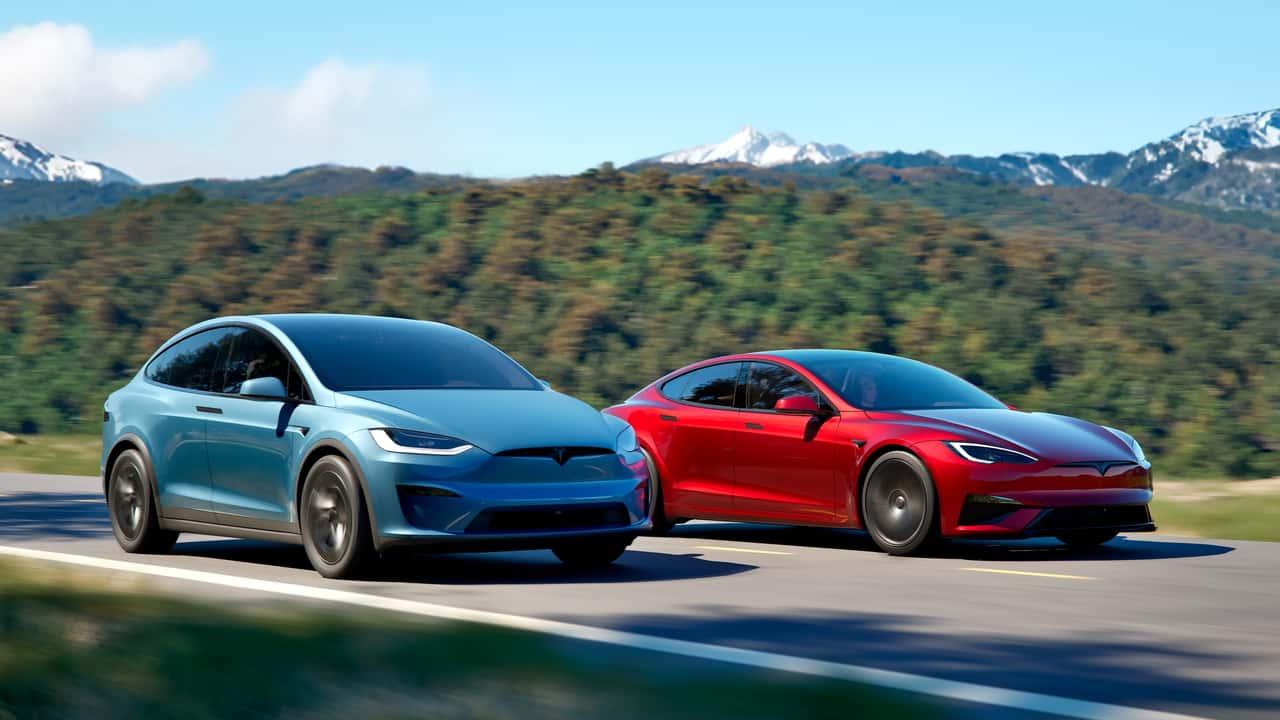
. The Model S, which launched in 2012, and the Model X, introduced in 2015, represented a turning point for electric vehicles, proving that EVs could compete with luxury brands like BMW and Mercedes-Benz5
.
Source: InsideEVs
The decision comes as both vehicles have become increasingly marginal to Tesla's business. Together, the Model 3 and Model Y accounted for roughly 97% of Tesla's 1.6 million vehicle deliveries in 2025
1
. For the entirety of 2025, Tesla delivered 1,585,279 Model 3 and Y vehicles but only sold 418,227 Model S and X units4
. Current owners will continue to receive support "for as long as people have the vehicles," Musk assured during the earnings call3
.Strategic Shift to an Autonomous Future and AI Company
The move signals a dramatic strategic shift to an autonomous future as Tesla repositions itself away from traditional car manufacturing. "It's time to bring the S and X programs to an end with an honorable discharge, because we're really moving into a future that is based on autonomy," Musk explained
3
. This transition into a physical AI company reflects Tesla's broader ambitions beyond vehicle sales1
.
Source: Inc.
During the earnings call, a top Tesla executive described the company as "transportation as a service" rather than a traditional automaker
2
. Musk doubled down on this vision, predicting that "the vast majority of miles traveled will be autonomous in the future" and that "probably less than 5 percent of miles driven will be where somebody's actually driving the car themselves in the future, maybe as low as 1 percent"2
. He went further, stating that "long-term... the only vehicles that we'll make will be autonomous vehicles"2
.The pivot from car manufacturer is evident in Tesla's financial performance. In 2025, Tesla brought in $94.8 billion in revenue, with $69.5 billion—or 73 percent—coming from car sales
2
. However, automotive revenues have been in free fall, down 10 percent year over year, while other revenue streams including energy generation and storage are growing2
.Fremont Factory Repurposed for Manufacturing Optimus
The Fremont factory in California, where phasing out older EV models currently takes place, will be repurposed for manufacturing Optimus humanoid robots
1
. Musk claims Tesla will ramp up production to 1 million Optimus units per year, though the humanoid robot is not yet available for sale1
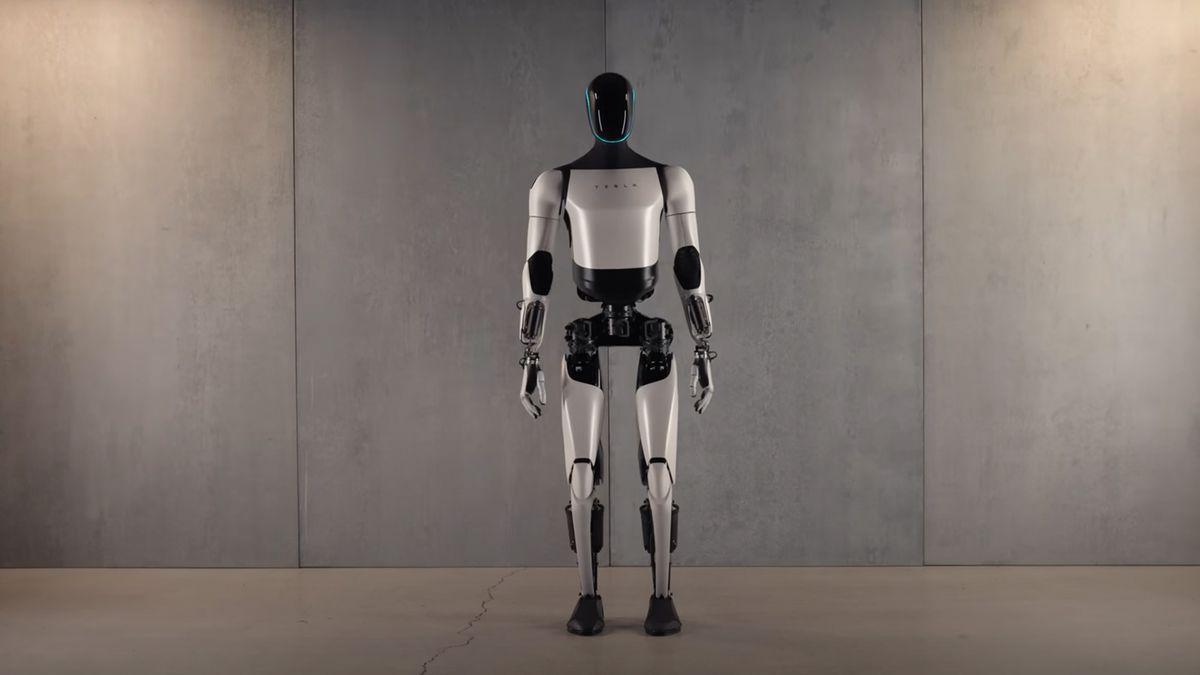
.Tesla confirmed it plans to unveil a third-generation version of the Optimus robot in the coming months, describing it as the first designed for mass production with "major upgrades from version 2.5, including our latest hand design"
3
. Musk has previously stated that Tesla aims to begin producing Optimus units at scale by the end of 2026 and begin selling them in 20273
.
Source: TechRadar
Related Stories
Focus on Autonomy and Robotics Raises Questions
Tesla's intensified focus on autonomy extends beyond robotics to its Full Self-Driving (FSD) technology. For the first time, the company disclosed 1.1 million active Full Self-Driving (Supervised) subscriptions, which Musk claimed represented a 38 percent increase over the fourth quarter 2024
2
. Musk recently announced that Tesla would stop selling FSD as a standalone package and shift to subscription only, signaling the company's bet on recurring revenue2
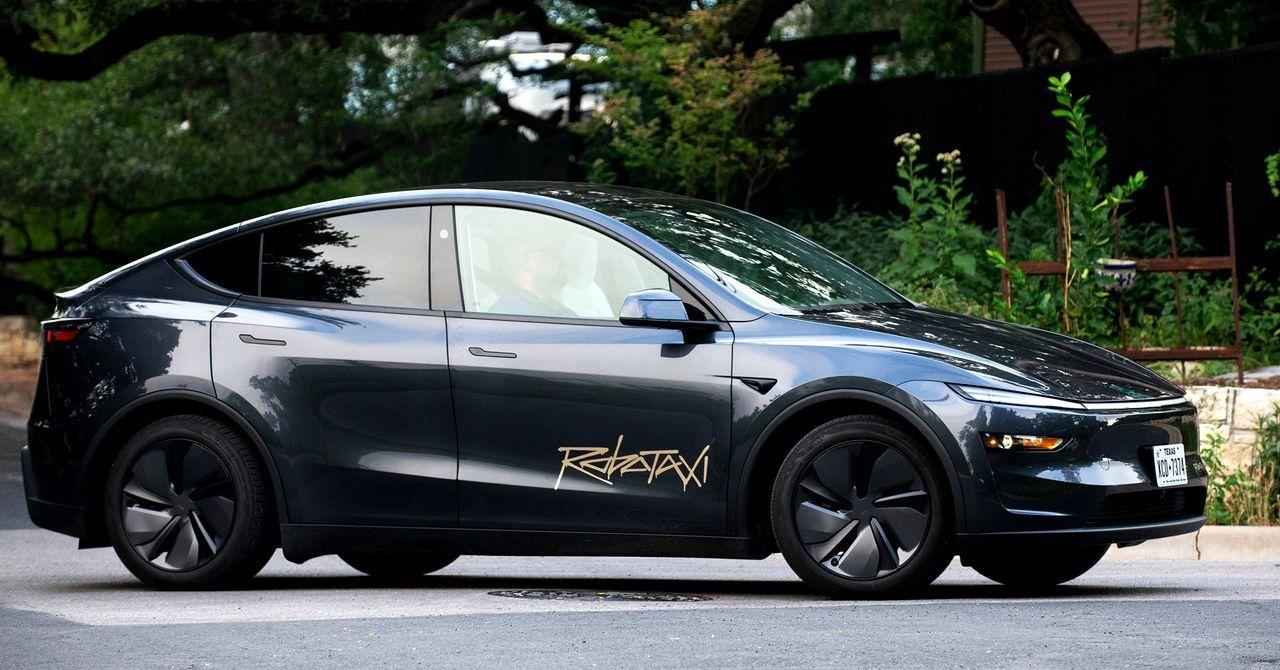
.The CEO predicted that robotaxis will be available in "dozens" of US cities this year, though he has fallen short of previously stated expansion plans
2
. This leader in AI and robotics positioning comes as Tesla lost its title as the global leader in EV sales to BYD, and the company saw an 11% year-over-year drop in car sales in 20253
2
.Shareholders Back Musk's Vision Despite Risks
The strategic pivot has been enabled by Tesla's board and shareholders, who approved Musk's $1 trillion pay package in late 2025
4
. Under the deal, Musk would need to meet ambitious milestones including producing over a million robots, a million robotaxis, and creating $7.5 trillion in value for shareholders2
. Notably, the vehicle sales milestone requires Tesla to sell just 1.2 million cars a year over the next decade on average—a half-million fewer cars per year than Tesla sold in 20242
.The earnings report also revealed that Tesla invested $2 billion in xAI, Musk's other AI company
4
. Tesla's shareholders notably sued Musk in 2024 for starting xAI, arguing it represents direct competition to the automaker4
. Yet shareholders continue to support his vision, even as the Cybertruck and other vehicle programs struggle to gain traction.The Model S pioneered the concept of cars as gadgets, introducing software updates that could improve vehicles over time—a feature now standard across the industry
5
. As Jake Fisher from Consumer Reports noted, "EVs went from 'eating your vegetables' to getting you super-car performance in a vehicle that's luxurious and quiet"5
. Now, as Tesla walks away from the business it helped create, the company bets its future on unproven robotics technology while competitors like BYD, Geely, and Xiaomi dominate the EV market it once led.References
Summarized by

Navi
[2]
[5]
Related Stories
Tesla's Q2 Earnings: Musk's Vision Meets Market Reality
24 Jul 2024

Tesla posts first revenue drop since 2010 as Musk shifts focus from EVs to robots and robotaxis
30 Jan 2026•Business and Economy

Tesla sales plunge 10% as self-driving ambitions fail to materialize in 2025
01 Jan 2026•Business and Economy

Recent Highlights
1
OpenAI Releases GPT-5.4, New AI Model Built for Agents and Professional Work
Technology
2
Anthropic sues Pentagon over supply chain risk label after refusing autonomous weapons use
Policy and Regulation

3
OpenAI secures $110 billion funding round as questions swirl around AI bubble and profitability
Business and Economy

Recent Highlights
Today's Top Stories





Your Daily Dose of Curated AI News
Don’t drown in AI news. We cut through the noise - filtering, ranking and summarizing the most important AI news, breakthroughs and research daily. Spend less time searching for the latest in AI and get straight to action.

