Tesla sales plunge 10% as self-driving ambitions fail to materialize in 2025


3 Sources
3 Sources
[1]
Tesla Sales Outlook Darkens Despite Musk's Self-Driving Euphoria
Tesla Inc. ended last year on a roll, with investors increasingly buying into Elon Musk's ebullience about autonomous vehicles. Winning over actual car buyers was another story. Shares in the world's most valuable auto company soared in the second half, largely on the basis of its chief executive officer touting advances in artificial intelligence and robotics. But the progress Musk trumpeted didn't translate to success in showrooms -- the company likely sold fewer vehicles in the last six months than a year earlier, despite record deliveries in the third quarter. On Friday, Tesla is expected to report that it delivered around 440,900 vehicles in the fourth quarter, down 11% from a year earlier, according to data compiled by Bloomberg. Tesla took the unusual step this week of publishing its own average of analyst estimates that was even more pessimistic, calling for a 15% decline. Wall Street has grown similarly gloomy about the outlook for 2026. This time two years ago, analysts were predicting Tesla would deliver more than 3 million vehicles. That average estimate for deliveries this year has plunged to roughly 1.8 million. "Tesla investors are focused on how the company might look five, 10, 15 years down the road, and really discounting what they see in the near term," Garrett Nelson, an equity analyst at CFRA Research, said by phone. "The question is, can they maintain that, especially when we think headwinds are going to become more apparent in the financials?" Topsy-Turvy Even by the standards of Musk and Tesla -- two names synonymous with turbulence -- 2025 was a tumultuous year. The carmaker's vehicle sales got off to a dismal start, partly due to the company retooling production lines at each of its auto plants for the redesigned Model Y, its most popular vehicle. Another major factor was the intense backlash against its CEO's work for US President Donald Trump. By early April, when Musk was publicly feuding with members of the administration over tariff policy, Tesla's stock had plummeted 45% for the year. Musk spurred the recovery by stepping back from government and returning to work on a longtime goal: starting a ride-hailing business with cars he's said will eventually be autonomous. In June, Tesla launched an invite-only Robotaxi service in Austin, with safety operators on board to supervise each of the Model Ys ferrying Musk fans around the Texas capital. While the vehicles violated traffic laws on day one -- drawing the attention of a federal regulator that's opened multiple investigations into the company's driving systems -- investors have shrugged off the safety concerns. Tesla's board then proposed a new compensation package for Musk in September, offering a payout potentially worth $1 trillion depending on milestones including delivering millions of robotaxis. Soon after, the comeback was complete -- Tesla shares were trading higher for the year. When the stock closed at a new all-time high on Dec. 16, the company had added more than $915 billion in market capitalization in just over eight months. Needing Convincing But while Tesla's robotaxi prospects have captivated investors, car buyers have been relatively circumspect. Musk himself has acknowledged challengesBloomberg Terminal persuading consumers to purchase what Tesla markets as Full Self-Driving, or FSD, a suite of features that still require human supervision. Allegations that Tesla is misleading Californians by exaggerating the automated-driving capabilities of its vehicles could lead to the state suspending the company's sales license for 30 days early this year. Tesla's attempt to distinguish itself in China's crowded electric vehicle market with driver-assistance functions also isn't working out, with companies including BYD Co. and Xiaomi Corp. offering similar systems as standard features. Due largely to BYD's far higher sales in China and surge of momentum in Europe -- where Tesla has been unable to obtain regulatory approval for FSD -- analysts expect the Shenzhen-based carmaker to have sold more battery-electric vehicles worldwide for a fifth quarter in a row. Moving Forward After a widely anticipated annual sales decline -- its second in a row -- Tesla has more hurdles to contend with in 2026. The US has ceased offering federal tax credits for EV purchases and leases, which Musk has warned could lead to "a few rough quarters." Some see a silver lining in the withdrawal of US policy support, which has led major manufacturers to pull back from EV investments. Ford Motor Co. said last month it expects to record about $19.5 billion in charges tied to abandoning EV and battery projects that were destined to lose money. Musk ended the year by building anticipation for Cybercab, a two-seat compact car with butterfly doors. While the prototype he first unveiled in late 2024 lacked a steering wheel or pedals, Tesla's board chair Robyn Denholm told Bloomberg News in October that the company will sell the car with those components if required by regulators. "Investors have fully bought into his autonomous vision, which comes at a good time, as Tesla's EV business will likely be flat to up 5 percent next year," said Gene Munster, managing partner at Deepwater Asset Management. "At this point, Elon only needs the car business to stabilize over the next year to satisfy investors."
[2]
Tesla slump burnishes Elon Musk's futurist cred
NEW YORK, Jan 5 (Reuters Breakingviews) - A Model S is not an iPhone, a fact less obvious back in 2022. Then, electric-vehicle pioneer Tesla (TSLA.O), opens new tab accounted for every dollar of profit generated from battery-powered rides. In that sense, it was similar to Apple, whose trailblazing smartphones became a recurring financial gift. The automaker's CEO, however, has been steering the $1.4 trillion company into artificial intelligence, self-driving and beyond, fantastical initiatives that look more prescient now. Like Apple, Tesla has lost a crown. The company delivered, opens new tab 1.6 million cars last year, a nearly 10% drop from its 2023 peak. China's BYD (002594.SZ), opens new tab eclipsed it by selling over 2 million battery-electric vehicles, Reuters reported. When the iPhone maker led by Tim Cook lost market share, however, it stayed immensely profitable. Apple accounts for 43% of worldwide handset revenue, Counterpoint Research reckons, opens new tab, despite slipping to 18% of shipments. Tesla is different. Automotive revenue in 2026 is expected to dip 16% below its high, according to estimates gathered by Visible Alpha. The corresponding gross margin sits at half of 2022's level. As subsidies for battery-powered rides shrink or vanish and EV growth stalls, the company's operating profitability looks unremarkable next to rivals. Even a futurist like Musk could not have envisioned all these shifts, especially ones instigated by Donald Trump's return to the White House. Other things were clearer. Tesla once held manufacturing advantages, like its giant die-casting machines, but they have since spread widely. Proprietary chargers are now accessible to rivals. The iPhone's secret sauce is a connection to differentiated services and undergirding other industries. Musk's noodling over machine-learning and Optimus robots while abandoning efforts at a more reasonably priced vehicle might seem a concession that making cars is just too tough a business. Yet the technological advancements also point to something bigger. Tesla's camera-reliant approach to self-driving diverges from competitors and depends on costly AI expertise. If successful, it would change what a car is. Meanwhile, the company's prodigious battery output powers electric grids. Energy storage is its most profitable business, with proliferating data centers bringing more potential customers. These are the building blocks of a harder-to-break stronghold. Tesla shares trading at an astronomical 376 times estimated 2025 earnings implies a high degree of confidence in success. Musk has not shown a propensity for carefully polishing products to perfection, a philosophy that may prove too reckless. What could once be construed as the whims of a mad scientist, however, are now shaping up to be a more worthwhile experiment. Follow Jonathan Guilford on X, opens new tab and LinkedIn, opens new tab. Context News* Tesla said on January 2 that it delivered 418,227 vehicles in the final three months of 2025, bringing the annual total to about 1.6 million, behind China's BYD, which sold more than 2 million battery-electric autos. * The full-year figure represents a second annual decline for Tesla, from a 2023 peak of approximately 1.8 million deliveries. Editing by Jeffrey Goldfarb; Production by Pranav Kiran * Suggested Topics: * Breakingviews * Sustainable & EV Supply Chain Breakingviews Reuters Breakingviews is the world's leading source of agenda-setting financial insight. As the Reuters brand for financial commentary, we dissect the big business and economic stories as they break around the world every day. A global team of about 30 correspondents in New York, London, Hong Kong and other major cities provides expert analysis in real time. Sign up for a free trial of our full service at https://www.breakingviews.com/trial and follow us on Twitter @Breakingviews and at www.breakingviews.com. All opinions expressed are those of the authors. Jonathan Guilford Thomson Reuters Jonathan Guilford is Breakingviews U.S. Editor, based in New York. He has covered financial news across Europe and the United States for 10 years. He joined Reuters Breakingviews in 2021 from Dealreporter, where he led risk arb coverage strategy from New York while covering the technology, media and telecommunications space. He previously covered the European healthcare services market. He studied English and Italian at Royal Holloway, University of London.
[3]
Tesla's Big Robotaxi Promises Fall Flat As 2025 Comes To A Close
"Teslas will be in the wild with no one in them, in June, in Austin," the automaker's CEO, Elon Musk, declared on Tesla's 2024 Q4 earnings call. "This is not some far-off mythical situation; it's five, six months away." While only a few words in those sentences turned out to be true, they were closer to reality than Musk's other promises about Tesla's self-driving ambitions in 2025. There was also the time he swore "half of the population of the U.S." would have Robotaxi access by the year's end. Or the many times he said that the safety driver, the human in the passenger's seat tasked with monitoring the car as it drives along, would no longer be needed. Or the time Musk said Tesla's Robotaxi service would operate in eight to 10 major metro areas by the end of 2025. Any way you want to look at it, Tesla's Robotaxi army failed to conquer the world in 2025. The idea worked like this: Tesla would be able to deploy Model Y Robotaxis in Austin and then throughout the U.S. They'd be very similar to any Model Y you can buy right now, but with a slightly more advanced Full Self-Driving (FSD) system -- the name for Tesla's camera-based autonomous driving setup. Riders could pay to hail the taxis, and while a human safety operator would be minding things from the passenger's seat, the car eventually wouldn't need that at all. And over time, using AI training, the Tesla Robotaxi fleet and consumer FSD would achieve full autonomy. If that happens, it won't be in 2025. Despite Musk's continual promises and predictions, the automaker's quest to solve self-driving by the end of this year -- whether it be its own private fleet of autonomously-operated robotaxis or private autonomy -- has come and gone again. To Musk's credit, Tesla did launch its Robotaxi service in Austin in June. However, it wasn't "with no one in them" as he claimed. Even today, safety riders remain with their fingers hovering over an emergency kill switch hidden in the door handle, despite Tesla trialing out driverless rides recently. The safety driver should be gone soon, of course -- just as Musk said in September, October and earlier this month. Granted, Musk said was able to be chauffeured around without a safety driver last week, and a few Cybercabs -- the company's two-seater taxis that supposedly don't need a steering wheel or pedals -- have been seen zooming around downtown Austin. But the Waymo-like scale that Musk promised will have to arrive in 2026, or later. Today, Tesla's Robotaxi service operates in Austin and San Francisco. Musk has said that the service would expand to Dallas, Houston, Phoenix, Miami and Las Vegas. Combined, that vision represents about 15.25 million people, or around 4.5% of the U.S. population. From the outside, the Robotaxi launch in Austin seems massive. Thanks to the hard work of influencers everywhere, it might seem like the service is as robust as Waymo, but that's just not the case on the ground. InsideEVs Editor-in-Chief Patrick George visited Austin last week and got to experience the current state of the fleet first-hand. He told me that wait times for a car downtown often hovered between 15 and 25 minutes, and that's if he wasn't presented with a "high-demand" ride denial. Visually, Waymo's autonomous taxis outnumber Tesla's Robotaxis by a massive margin. And a recent analysis cited by Electrek indicated that only about three dozen Robotaxis may be operating in the city right now. Musk said in October that Tesla would expand its Austin fleet to 500 cars by the end of 2025 and more than 1,000 cars in the Bay Area. "We're scaling up the number of cars," he said. "Probably we'll have a thousand cars or more in the Bay Area by the end of this year, probably 500 or more in the greater Austin area." Meanwhile, the Bay Area has fewer than 150 cars. So why did Musk claim that the Robotaxi fleet would "double" in November when it had not yet even reached 250 vehicles? FSD isn't where Tesla claimed it would be, either. During that same second-quarter earnings call, Musk predicted that Tesla would make unsupervised FSD available by the end of the year. We've heard that one before, and while Musk claims you can now text and drive (which is illegal in most states), it's still a far cry from unsupervised FSD -- or, you know, that hands-free coast-to-coast drive it promised back in 2017. The point here is, once again, that vehicle autonomy is a lot more complicated than any automaker has made it out to be. Whether it be the feat of personal autonomy or commercial, no company has been able to deliver on full autonomy with an unfettered operational design domain. There are limits, and being open about those limits is key to earning the public's trust. Musk's promises are important to investors. The company's stock, riding high on autonomy promises, has been trending at its most valuable price point ever in recent months. Tesla needs to eventually make good on its promises before investors get tired of missed deadlines, or it needs to be more forthcoming about the difficulties and timeline to launch. With just hours left on the clock, 2025 was not it. Maybe 2026 will be better.
Share
Share
Copy Link
Tesla delivered 1.6 million vehicles in 2025, marking a nearly 10% decline from 2023 and losing its EV sales crown to BYD. Despite stock prices hitting all-time highs fueled by Elon Musk's autonomous vehicle promises, the company's Robotaxi service remains limited to Austin and San Francisco with safety drivers still required. The gap between Musk's predictions and reality raises questions about investor confidence.
Tesla Sales Decline Sharply Despite Market Valuation Surge
Tesla ended 2025 on a contradictory note, with its stock reaching record highs even as vehicle deliveries tumbled. The company delivered approximately 1.6 million cars last year, representing a nearly 10% drop from its 2023 peak of 1.8 million vehicles
2
. This marks Tesla's second consecutive annual decline in EV sales, a concerning trend for what was once the undisputed leader in battery-electric vehicles. The fourth quarter proved particularly challenging, with deliveries of 418,227 vehicles falling short of expectations2
. China's BYD overtook Tesla by selling more than 2 million battery-electric vehicles worldwide, claiming the crown for a fifth consecutive quarter1
.The disconnect between Tesla sales performance and investor confidence reveals a fundamental shift in how markets perceive the company. Tesla's stock closed at an all-time high on December 16, adding more than $915 billion in market capitalization in just over eight months
1
. This surge came despite deteriorating automotive revenue, which is expected to dip 16% below its high in 2026, with gross margins sitting at half of 2022 levels2
.Elon Musk's Strategic Pivot to AI-Driven Initiatives Falls Short
Elon Musk's ambitious pivot toward Artificial Intelligence and vehicle autonomy has captivated investors but failed to deliver on concrete promises. In June 2025, Tesla launched its invite-only Robotaxi service in Austin with Model Y vehicles, but contrary to Musk's bold prediction of "Teslas in the wild with no one in them," safety operators remain necessary
3
. Musk had promised that half the U.S. population would have access to the service by year's end and that operations would expand to eight to 10 major metro areas3
. Instead, the service operates only in Austin and San Francisco with a fleet far smaller than anticipated.
Source: InsideEVs
The reality on the ground tells a sobering story about autonomous driving capabilities. Recent analysis suggests only about three dozen Robotaxis operate in Austin, despite Musk's October promise of 500 cars by year's end
3
. The Bay Area deployment fell similarly short with fewer than 150 cars instead of the promised 1,000 or more3
. Wait times downtown Austin often hover between 15 and 25 minutes, and Waymo's autonomous taxis visibly outnumber Tesla's fleet by a massive margin3
.Full Self-Driving Struggles to Convince Consumers and Regulators
Tesla's camera-reliant self-driving approach has encountered significant resistance from both consumers and regulators. Musk himself has acknowledged challenges persuading consumers to purchase what Tesla markets as Full Self-Driving (FSD), a suite of features that still requires human supervision
1
. Allegations that Tesla misleads Californians by exaggerating autonomous driving capabilities could lead to the state suspending the company's sales license for 30 days1
.The company's attempt to distinguish itself in China's crowded EV market with driver-assistance functions hasn't materialized as planned. Companies including BYD and Xiaomi Corp. now offer similar systems as standard features, eroding Tesla's competitive advantage
1
. Meanwhile, Tesla has been unable to obtain regulatory approval for FSD in Europe, where BYD has surged in momentum1
. Safety concerns persist as Tesla vehicles violated traffic laws on day one of the Robotaxi launch, drawing attention from federal regulators who have opened multiple investigations1
.Related Stories


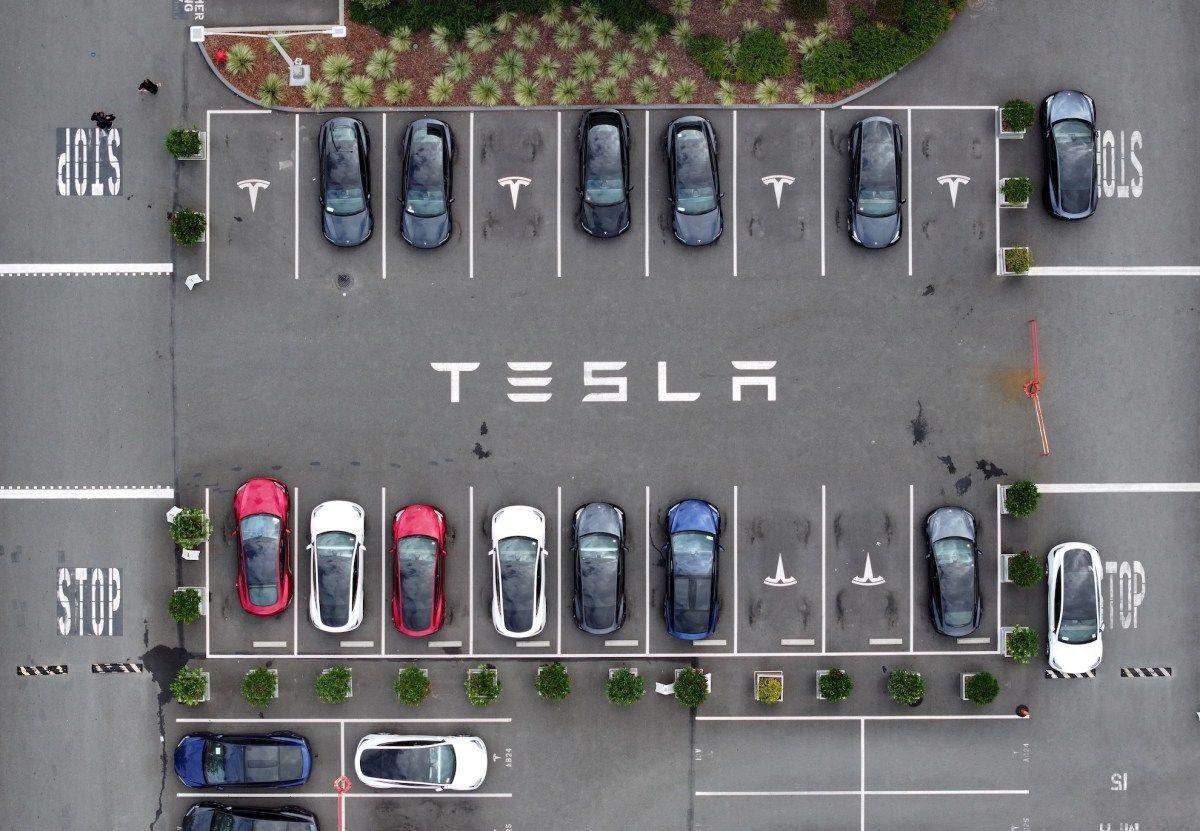

Financial Headwinds Mount as Tesla's Sales Outlook Darkens
Tesla faces mounting financial headwinds in 2026 that could further pressure vehicle deliveries. The U.S. has ceased offering federal tax credits for EV purchases and leases, which Musk warned could lead to "a few rough quarters"
1
. Wall Street's outlook has grown increasingly pessimistic, with analyst estimates for 2026 deliveries plunging to roughly 1.8 million vehicles from predictions of more than 3 million made two years ago1
.The decline in EV sales reflects broader challenges in Tesla's core automotive business. Automotive revenue and profitability look unremarkable compared to rivals as subsidies for battery-powered rides shrink or vanish and EV market growth stalls
2
. Manufacturing advantages Tesla once held, like giant die-casting machines, have spread widely among competitors, while proprietary chargers are now accessible to rivals2
.Investor Trust Hangs on Autonomy Promises and Future Tech
Investor confidence remains remarkably resilient despite missed autonomy promises and declining sales. Tesla shares trade at an astronomical 376 times estimated 2025 earnings, implying extraordinary faith in Elon Musk's vision
2
. "Tesla investors are focused on how the company might look five, 10, 15 years down the road, and really discounting what they see in the near term," said Garrett Nelson, an equity analyst at CFRA Research1
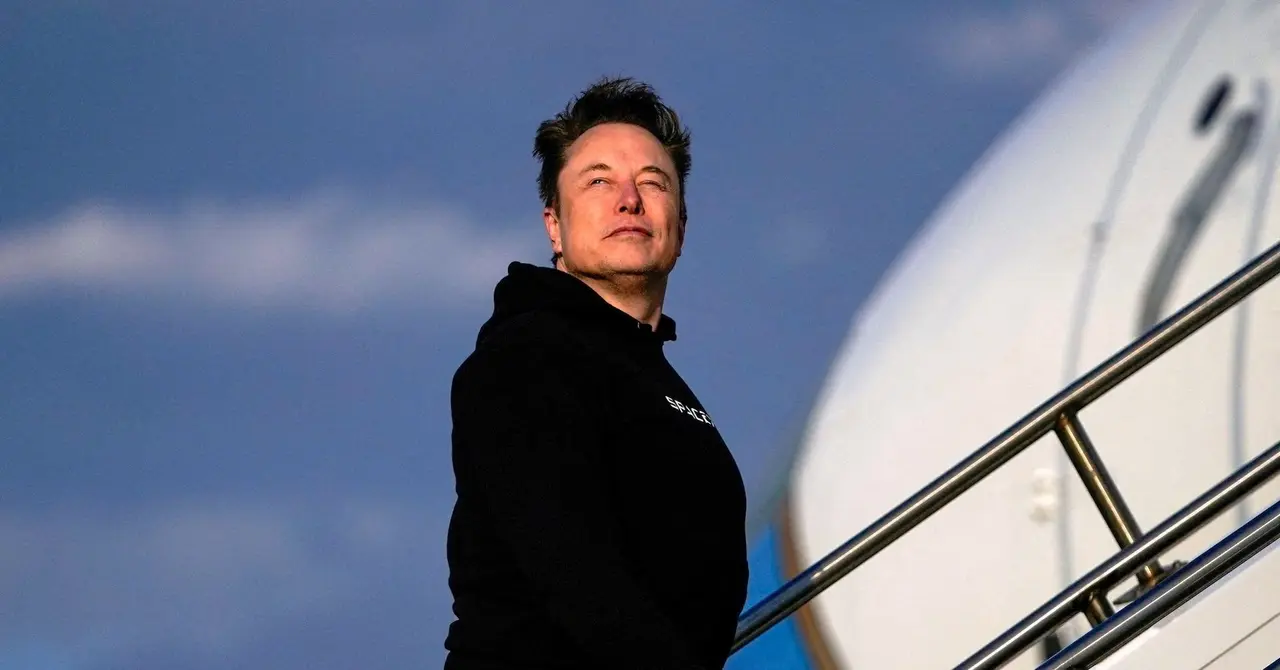
.
Source: Reuters
The company's board proposed a new compensation package for Musk in September, offering a payout potentially worth $1 trillion depending on milestones including delivering millions of robotaxis
1
. Beyond autonomous vehicles, Tesla's technological advancements point to broader ambitions. Energy storage has become the company's most profitable business, with proliferating data centers bringing more potential customers2
. Development of Optimus robots and the upcoming Cybercab—a two-seat compact car with butterfly doors—represent efforts to transform Tesla from an automaker into a technology company1
. Whether these building blocks create a sustainable competitive advantage or prove too reckless remains the critical question for 2026 and beyond.
Source: Bloomberg
References
Summarized by

Navi
Related Stories
Recent Highlights


Recent Highlights
Today's Top Stories





Your Daily Dose of Curated AI News
Don’t drown in AI news. We cut through the noise - filtering, ranking and summarizing the most important AI news, breakthroughs and research daily. Spend less time searching for the latest in AI and get straight to action.

