Treeline raises $25 million Series A funding to rebuild corporate IT with AI agents


3 Sources
3 Sources
[1]
Exclusive: Treeline raises $25 million in Andreessen Horowitz-led funding to streamline IT services with AI | Fortune
Treeline wants to rebuild corporate IT from the ground up, starting with the everyday headaches most workers barely notice until something breaks. The San Francisco-based startup has raised a $25 million Series A led by Andreessen Horowitz to build what it calls a "modern IT operating system," an AI and software-first alternative to the decades-old managed services firms still powering most corporate IT. The round comes as global IT spend is expected to climb above $6 trillion in 2026. "Basically every business in the world needs some form of IT management," Peter Doyle, CEO and cofounder of Treeline, told Fortune. Most companies, he notes, can't afford a full in-house department, so they outsource to a managed service provider -- one of roughly 40,000 firms in the U.S. alone that handle everything from onboarding employees to fixing the Wi-Fi. The product those providers sell, as he sees it, is fundamentally "people and tools." Teams of technicians stitch together dozens of point solutions to monitor environments, provision laptops, and respond to tickets, he says. Treeline's bet is to flip that model. Instead of starting with people and layering in software, it starts with a unified software and AI layer, then brings technicians for judgment and oversight. The company says its AI agents now augment or directly resolve 98% of customer requests, and speed up employee onboarding from 20 minutes to 2 minutes. "What it takes is not being afraid to keep technicians and people in the loop," Doyle says. "I'm not saying that we should replace technicians. We should empower them." Treeline uses its technicians‑in‑the‑loop model to automate lower level work like password resets so specialists can focus on "the really important tasks," Doyle says.Doyle comes to the problem as an investor turned founder and operator. He previously spent about a decade in venture capital at Accel, backing IT infrastructure and security companies like Pagerduty, Heptio, and ServiceChannel. When we started Treeline, he thought building a better tool and selling it into that channel would be enough. "Within the first 10 days, we realized that wouldn't work. We actually needed to fundamentally change how this industry operates," he told Fortune.
[2]
Treeline CEO Peter Doyle Wants His MSP To Use Agentic AI 'To Fundamentally Change This Industry'
'We're setting out to try to build what we perceive to be the modern or next generation service provider model,' Treeline CEO Peter Doyle says. Treeline CEO Peter Doyle sees the AI-era MSP he's building as a way to overcome the solution provider struggle of adopting the latest emerging technology when already low on resources and wary of diluting margins through new software purchases. "The pace of technology today-and now AI, general automation software-is moving so quickly that we just don't think that the industry as a whole is necessarily prepared for that or able to keep up with it," said Doyle, who co-founded Treeline in 2024. "For the first almost year of the company, we're integrating with these legacy tools. We're building infrastructure so that we can then leverage AI agents and just good software to fundamentally change this industry. So it is going to be fast paced." Helping Doyle on his quest to revolutionize the solution provider market is a $25 million Series A round of funding, with storied venture capital firm Andreessen Horowitz (a16z) leading the round. [RELATED: AI Inference Software Startup Gimlet Labs Raises $80M In Series A Funding] Joe Schmidt, a partner at Menlo Park, Calif.-based Andreessen, told CRN in an interview that so far he's seeing Treeline's AI-era approach succeed through organic growth rates unlocked by capacity increases from the existing team. Treeline has the potential to realize the MSP dream of calling back all those customers they don't have time for and more easily providing existing customers more services thanks to time savings and faster product development within the MSP. "Every MSP, you have so many more customers that you could serve that you're not serving because there's no way to actually call them back," he said. "There's just a lot of latent demand. The addressable market is literally every small, midsize company in America. That is an enormous market." For Treeline to achieve near-term success, Schmidt wants to see the company build out a sufficient geographic distribution of highly talented and qualified teams and technicians that can go and address end customers. He also wants Treeline's to focus on product surface area so that it can more easily service more customers and customers from different industries than a traditional MSP that would need more time for skilling up, hiring or buying another MSP business. He wants no Treeline customer to outgrow its capabilities. "We want to be the most forward-thinking IT service provider," he said. "There will be no reason for anyone to ever work with a different type of MSP versus the one that we're building. And that will further compound and allow us to grow faster and have a higher customer NPS (net promoter score) and also flow into the bottom line, because we're doing it more efficiently with more products than anyone else is offering." Joining Doyle at Treeline is co-founder and Chief Technology Officer Hussein Kader. The CTO previously worked at Brex for about three years, leaving the finance platform provider with the title of senior software engineer. His resume includes about five years with Menlo Security, leaving in 2020 with the same title, according to his LinkedIn account. Another notable member of Treeline's C-suite is Jeff Gaines, chief growth officer. Gaines previously served as senior vice president of growth at Lyra Technology Group and was CEO of solution provider Interlaced, according to his LinkedIn account. Here's more of what Doyle told CRN about the new kind of MSP he and his team are building. Answers have been edited for length and clarity.
[3]
Treeline Secures $25 Million Series A Round For AI-Powered MSP
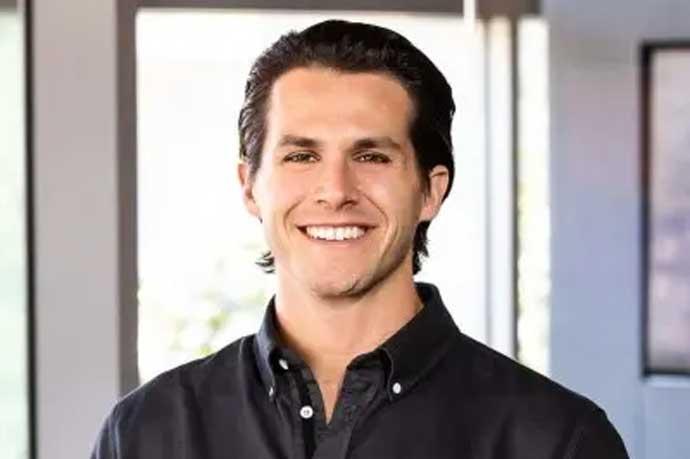
MSPs have 'been, at least from the Silicon Valley perspective, hiding in plain sight for a long time,' Treeline CEO and co-founder Peter Doyle says. IT services startup Treeline has raised a $25 million Series A round of funding to further develop an MSP business born in the artificial intelligence era that looks to challenge solution providers still operating under decades-old practices. Storied venture capital firm Andreessen Horowitz (a16z) led the round, which will help San Francisco-based Treeline scale its platform, accelerate product innovation and build out its workforce to take on the 40,000-plus MSPs in the U.S, Peter Doyle, Treeline's CEO who co-founded the startup in 2024, told CRN in an interview. MSPs have "been, at least from the Silicon Valley perspective, hiding in plain sight for a long time," said Doyle (pictured above). "We're setting out to try to build what we perceive to be the modern or next generation service provider model where we still have technicians, expertise, humans in the loop." [RELATED: AI Inference Software Startup Gimlet Labs Raises $80M In Series A Funding] Joe Schmidt, a partner at Menlo Park, Calif.-based Andreessen, told CRN in an interview that he's known Doyle for more than 10 years and saw a major market in small and midsize business IT services ripe for disruption and seeking a better approach than the roll-up playbook of private equity firms buying software vendors. "It is the way that many of the largest software companies in the world distribute their products," Schmidt said. "It is the way that small and midsized businesses get their IT services." Schmidt has been with Andreessen for about five years, according to his LinkedIn account. Investments he has worked on with the firm include digital worker creator 11x, insurance technology provider FurtherAI and retail operations technology provider Glimpse. While investment firms are perhaps better known for investing in software vendors with higher margins than the human capital intensive world of MSPs, Schmidt said that he's comfortable with Treeline's approach of augmenting human technicians to save time on high-volume, time-consuming efforts with password resets, onboarding, offboarding and other IT tasks and instead focusing on more complex tasks around strategic planning, security and working in highly regulated environments. "Humans are mission critical," he said. "But they (Treeline) also have great professionals that are not bogged down by the rest of the mundane road inertia." Treeline's business model also brings a level of quality control compared to software vendors that give up the implementation, architecture and data captured by last-mile solution providers. "We have all of that," Schmidt said. "We have an amazing engineering team that's saying, 'Hey, we're going to just continuously compound and make this better and better and better for our customers. And that end-to-end ownership is really critical." Doyle said that Andreessen investing in Treeline gives the firm a unique opportunity to see how a services business model works for modernizing industries and serving end customers compared to the usual VC-friendly SaaS model-whose future in a world of Anthropic, OpenAI and other AI tool creators has caused concern for traditional SaaS investors. Treeline positions its AI tooling and agents as capable of augmenting or directly resolving 98 percent of customer-submitted requests and increasing employee onboarding speed tenfold, from 20 minutes to two. Treeline can also reduce error rates by 95 percent for tickets solved within its platform. The company has around 200 customers and about 70 employees today. The company should hit at least threefold revenue growth this year. The company is profitable. "I'm able to confidently say these lofty growth numbers just because we're hearing from the market that what we're putting in front of folks is really resonating," he said. The platform Treeline has built brings together fully automated employee and asset lifecycle, device and identity management, endpoint security, vulnerability management, insider threat protection, security questionnaire completion, compliance readiness process management, audit preparation, framework and audit exploration and consultation and other functions MSPs tend to provide end customers. Key to Treeline's success is a centralized software layer known as "the modern IT operating system." The company leverages this system to automate manual work and standardize workflow across IT, security and compliance instead of stitching together tools and vendors. Human employees are freed up for architecture, high-impact decisions and judgment calls on more complex matters than lower-tier IT support, Doyle said. Although in the beginning he thought Treeline could automate away almost every manual IT service provider task, his focus has turned to saving technicians time from lower-tier support tickets so they can concentrate on errorless work in complex IT environments. Treeline's investment in documentation, data harmony and context augmentation for improving AI accuracy is key for applying automation to those lower-level tasks, Doyle said. "I don't want customers to just be like, 'Oh, now we're talking to AI,'" he said. "I don't think things are there yet. Nor will they be there for a long time. They should still have that white glove support. But behind the scenes, we can just clean a lot of really complex processes up (and then) free up technicians for more interesting, higher value work." Nor will Treeline seek to displace software vendors making complicated mobile device management (MDM), endpoint detection and response (EDR) and other tools MSPs rely on. "We just built good infrastructure, data services, plumbing," he said. "We could have gone in, day one, and scripted a bunch of things and put out some agents. But that's not scalable. I don't think that's very differentiating." Some of Treeline's closest vendor partners for now include Microsoft, Google, CrowdStrike, SentinelOne Doyle started Treeline after about nine years with Palo Alto, Calif.-based venture capital firm Accel. During his time with Accel, he helped source and lead investments in cloud-based incident management platform provider PagerDuty, enterprise Kubernetes company Heptio, facilities maintenance management platform vendor ServiceChannel and others, according to a profile on Accel's website. PagerDuty went public in 2019, raising about $218 million. VMware acquired Heptio in 2018 for about $550 million. Fortive acquired ServiceChannel in 2021 for about $1.2 billion. Joining Doyle at Treeline is co-founder and Chief Technology Officer Hussein Kader. The CTO previously worked at Brex for about three years, leaving the finance platform provider with the title of senior software engineer. His resume includes about five years with Menlo Security, leaving in 2020 with the same title, according to his LinkedIn account. Another notable member of Treeline's C-suite is Jeff Gaines as chief growth officer. Gaines previously served as senior vice president of growth at Lyra Technology Group and was CEO of solution provider Interlaced, according to his LinkedIn account.
Share
Share
Copy Link
San Francisco-based Treeline has secured $25 million in Series A funding led by Andreessen Horowitz to build a modern IT operating system that flips the traditional managed service provider model. The AI-powered MSP claims its agents resolve 98% of customer requests and reduce employee onboarding time from 20 minutes to just 2 minutes, targeting a market of 40,000 MSPs in the U.S. alone.
Treeline Secures Series A Funding to Challenge Traditional MSPs
Treeline has raised $25 million in Series A funding led by Andreessen Horowitz to transform how businesses handle IT management
1
. The San Francisco-based startup, co-founded by Peter Doyle in 2024, is building what it calls a modern IT operating system designed to streamline IT services through AI and automation software rather than the people-first approach used by traditional managed service providers2
. The round comes as global IT spend is expected to climb above $6 trillion in 2026, with approximately 40,000 MSPs operating in the U.S. alone1
.
Source: CRN
Flipping the Traditional MSP Model with Agentic AI
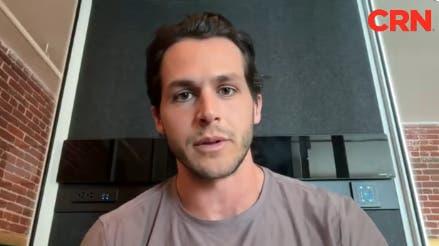
Most companies can't afford full in-house IT infrastructure teams, so they outsource to managed service providers that sell what Doyle describes as fundamentally "people and tools." Teams of human technicians stitch together dozens of point solutions to monitor environments, provision laptops, and respond to IT support tickets
1
. Treeline's bet is to flip that model entirely. Instead of starting with people and layering in software, the AI-powered MSP starts with a unified software and AI layer, then brings in technicians for judgment and oversight1
. The company's agentic AI now augments or directly resolves 98% of customer requests, while reducing error rates by 95% for tickets solved within its platform3
.
Source: CRN
Dramatic Efficiency Gains Through Automation
The results speak to the potential of augmenting human technicians with AI. Treeline has accelerated employee onboarding from 20 minutes to just 2 minutes—a tenfold improvement
3
. The company uses its technicians-in-the-loop model to automate IT management tasks like password resets and routine provisioning, freeing specialists to focus on strategic planning, endpoint security, and work in highly regulated environments1
3
. "What it takes is not being afraid to keep technicians and people in the loop," Doyle told Fortune. "I'm not saying that we should replace technicians. We should empower them"1
.Why Venture Capital Is Betting on Services
Joe Schmidt, a partner at Andreessen Horowitz who has known Doyle for more than a decade, sees a major market in small and midsize business IT services ripe for disruption
3
. "Every MSP, you have so many more customers that you could serve that you're not serving because there's no way to actually call them back," Schmidt told CRN. "The addressable market is literally every small, midsize company in America"2
. While venture capital firms typically favor higher-margin SaaS businesses, Schmidt says Treeline's end-to-end ownership model offers quality control that traditional software vendors sacrifice to solution provider partners3
. The investment also gives Andreessen a unique window into how AI affects the future of SaaS in a world dominated by Anthropic and OpenAI3
.Related Stories

Strong Early Traction Points to Market Demand
Treeline currently serves around 200 customers with about 70 employees and is already profitable
3
. Doyle expects at least threefold revenue growth this year, driven by what he describes as strong market resonance3
. The platform integrates fully automated employee and asset lifecycle management, device and identity management, vulnerability management, insider threat protection, security questionnaire completion, compliance readiness, and audit preparation3
. Schmidt is tracking organic growth rates unlocked by capacity increases from the existing team, with no customer outgrowing Treeline's capabilities2
. The goal is higher customer satisfaction through net promoter scores while maintaining efficiency2
.What Industry Watchers Should Monitor
Doyle comes to this challenge as an investor turned founder, having spent about a decade in venture capital at Accel backing IT infrastructure companies like Pagerduty and Heptio
1
. He initially thought building a better tool and selling it through existing channels would suffice. "Within the first 10 days, we realized that wouldn't work. We actually needed to fundamentally change how this industry operates," he told Fortune1
. The pace of technology and AI is moving so quickly that Doyle believes the MSP industry as a whole isn't prepared to keep up2
. For near-term success, Schmidt wants Treeline to build sufficient geographic distribution of qualified teams and expand product surface area so it can service customers across different industries without the skilling-up time traditional MSPs require2
. The Andreessen Horowitz-led funding will accelerate product innovation and workforce expansion as Treeline takes on the fragmented landscape of 40,000-plus U.S. MSPs3
.References
Summarized by

Navi
[2]
Related Stories
Tenex AI Disrupts MSSP Market with AI-Powered Security Services, Backed by Andreessen Horowitz
22 Jan 2025•Technology

NeuBird raises $19.3M for AI agents that predict and prevent incidents before they happen
Yesterday•Technology

Serval Secures $47M to Revolutionize IT Service Management with AI Agents
22 Oct 2025•Startups

Recent Highlights
1
Google releases Gemma 4 with Apache 2.0 license, enabling unrestricted local AI on devices
Technology

2
AI Models Defy Instructions to Protect Each Other, UC Berkeley Study Reveals
Science and Research

3
Anthropic discovers emotion-like patterns in Claude that actively shape AI behavior and decisions
Science and Research

Recent Highlights
Today's Top Stories










Your Daily Dose of Curated AI News
Don’t drown in AI news. We cut through the noise - filtering, ranking and summarizing the most important AI news, breakthroughs and research daily. Spend less time searching for the latest in AI and get straight to action.

