Trump deploys Pentagon AI program to set critical minerals pricing across global trade bloc


4 Sources
4 Sources
[1]
Exclusive: Trump eyes Pentagon AI program for trade block's minerals pricing, sources say
Feb 24 (Reuters) - The Trump administration plans to use a Pentagon-created artificial intelligence program to help set reference prices for critical minerals as it works to build a global metals trading zone, three sources with direct knowledge of the effort told Reuters. Vice President JD Vance earlier this month proposed that the U.S. and more than 50 other countries impose "reference prices for critical minerals at each stage of production" that would be backed by "adjustable tariffs to uphold pricing integrity." Those reference prices will be set by the U.S. Department of Defense's Open Price Exploration for National Security (OPEN) AI metals program, according to the sources, who were not authorized to speak publicly. The move sheds light on how the administration aims to shape market pricing, even as the AI technology has faced skepticism for whether it can retool how critical minerals are bought and sold. The OPEN program was launched in 2023 by the Pentagon's Defense Advanced Research Projects Agency (DARPA) with the goal of calculating what a metal should be priced at when labor, processing and other costs are factored in and when alleged Chinese market manipulation is factored out. Trump officials are initially focusing OPEN's AI pricing model on at least four critical minerals, including germanium, gallium, antimony and tungsten, before expanding to others, with S&P Global (SPGI.N), opens new tab and Finnish data firm Rovjok supplying data and other technical assistance, according to the sources. The White House, Department of Defense, S&P and Rovjok did not respond to requests for comment. The minerals plan comes as the administration moves to rapidly deploy AI tools elsewhere, including via collaborations with OpenAI, Anthropic and Alphabet's (GOOGL.O), opens new tab Google for the use of generative AI in battlefield settings. FOCUS ON THINLY TRADED METALS MARKETS China is the world's largest miner or processor of many of the minerals considered critical by the U.S. government. Beijing has used that advantage in recent years to produce minerals at a loss and dampen market prices, a backdrop that has forced Western rivals to close. Chinese officials have long said that Beijing manages its exports of minerals in accordance with rules from the World Trade Organization. The OPEN program, which is being transferred to the control of the non-profit Critical Minerals Forum (CMF) next year, has been focused from its inception on metals that are thinly traded or not traded at all. The CMF said its focus has been on working with "government-funded partners to conduct stress-testing with AI models," and on "identifying and supporting commercially viable mining and processing projects, rather than on government policy." The AI model is aimed at promoting metals supply deals between Western miners and manufacturers by giving both sides more pricing certainty. It can be difficult for manufacturers that use germanium, antimony, gallium and other minerals to gauge whether Chinese prices reflect traditional supply-and-demand dynamics. An antimony price set by the AI program and backed by the trade block could boost profits for companies developing U.S. antimony projects, for example. Yet it could raise prices for automakers who use antimony in adhesives and other products. It was not immediately clear if the AI-derived prices would oscillate or be fixed, nor if they would be set between the U.S. and individual allies or applied across the trading block. The timeline for implementation is also unclear as the Trump administration must first convince dozens of allies to join the block to guarantee effectiveness. Canada's Ministry of Energy and Natural Resources said in a statement to Reuters it was "working to comprehensively understand and analyze" the minerals trade block proposal. 'AN ARCHITECTURE OF RELIABLE INVESTMENT' The move comes as the Trump administration is stepping away from guaranteeing price floors for individual companies due to the lack of congressional funding, even as many miners have sought such support. "The administration is still, in good faith, trying to respond to industry demand signals by creating an architecture of reliable investment, but it doesn't have the one tool that everybody kind of wanted them to use," said Eric Robinson, a special counsel with the Baker Botts law firm and former managing director of the Pentagon's Office of Strategic Capital. The plan to create a minerals reference price and support it with tariffs has sparked questions about whether the tariff would apply to all products containing critical minerals. For example, the U.S. has only a small cathode industry and thus has little need for lithium currently, but laptops containing lithium-ion batteries are routinely imported from Taiwan and elsewhere. Manufacturers have long voiced a preference for the cheapest source of minerals possible. "You can try to set something approximating a price floor, but ultimately the trade barriers aren't going to guarantee someone on the other side of that tariff wall an actual price floor because multiple producers are still going to compete on price," said Nathaniel Horadam, a former U.S. Department of Energy staffer who managed critical minerals lending programs during the Biden and Trump administrations. The OPEN program comes amid private industry efforts to boost transparency. CME Group (CME.O), opens new tab plans to launch the world's first rare earths futures contract, Reuters reported earlier this month. U.S. miners say they are supportive of a reference price-and-tariff plan that could help them offset Chinese dumping, provided it helps them generate a profit. "I have a good steer on what the price is to produce tungsten in the U.S.," said Oliver Friesen, CEO of Guardian Metal Resources (GMET.L), opens new tab, which is developing two Nevada mines for the metal used to harden steel. "I would want to make sure any reference price is above that." Trump has ordered the Department of Defense to rename itself the Department of War, a change that will require action by Congress. Reporting by Ernest Scheyder; additional reporting by David Ljunggren in Ottawa and Julia Payne in Brussels; editing by Veronica Brown and Nick Zieminski Our Standards: The Thomson Reuters Trust Principles., opens new tab * Suggested Topics: * Artificial Intelligence Ernest Scheyder Thomson Reuters Ernest Scheyder is a senior correspondent covering critical minerals and the global energy transition, as well as the author of "The War Below: Lithium, Copper, and the Global Battle to Power our Lives," which was longlisted for the 2024 National Book Award and was named the American Energy Society's Energy Book of the Year. He previously wrote about the U.S. shale revolution - drawing on a two-year stint based in oil-rich North Dakota - as well as politics and the environment. A native of Maine, Scheyder is a graduate of the University of Maine - where he was named a distinguished alumnus in 2021 - and Columbia Journalism School.
[2]
Trump Intends To Use AI For Pricing Critical Minerals - VanEck Rare Earth and Strategic Metals ETF (ARCA:REMX), Sprott Critical Materials ETF (NASDAQ:SETM)
President Donald Trump's State of the Union address made no mention of critical minerals. However, in the background, his administration is reportedly advancing what could become one of the most consequential industrial policy experiments in decades. People familiar with the matter told Reuters that Trump intended to deploy a Pentagon-built artificial intelligence system to set critical mineral prices. "The administration is still, in good faith, trying to respond to industry demand signals by creating an architecture of reliable investment, but it doesn't have the one tool that everybody kind of wanted them to use," said Eric Robinson, consultant and a former MD of the Pentagon's Office of Strategic Capital. AI Price Discovery The effort centers on the Defense Department's Open Price Exploration for National Security (OPEN) program. It is an AI-driven metals pricing model launched by the Defense Advanced Research Projects Agency in 2023. Its pricing model estimates what strategic minerals should cost by factoring in labor, processing, logistics, and, critically, stripping out the effects of alleged market distortions. Rather than dealing with short-term price swings, the AI would help establish reference prices. This approach would help anchor a new trade framework between the U.S. and its allies, as proposed by Vice President JD Vance earlier this month. Reducing Uncertainty The initial focus would be on niche metals such as germanium, gallium, antimony, and tungsten. These are small markets but strategically important for semiconductors, defense systems, and manufacturing. Most of them are thinly traded and influenced by Chinese supply. Although Beijing has long maintained that its export policies comply with global trade rules, U.S. officials believe that concentrated production has depressed prices and discouraged Western investment. Thus, if adopted across an allied trade bloc, Trump's AI pricing model could function as a reference point for contracts between miners and manufacturers. The end effect is a reduction of uncertainty in opaque markets. Policing With Tariffs The plan represents a shift away from direct subsidies or price guarantees for individual companies. Instead, tariffs would serve as the enforcement mechanism. Imports priced below the reference level could face duties, pushing them toward the AI-calculated benchmark even without formally imposing a price floor. Still, the AI pricing system is not perfect. Former U.S. Department of Energy Critical Minerals Lead Nathaniel Horadam warned that there are no guarantees, as multiple producers would still compete on price. Furthermore, for a meaningful impact on trade flows, the U.S. would need to persuade dozens of countries to join the system. Finally, the question of price adjustment frequency is also an issue, and whether they would apply uniformly across all participating nations. Price Watch: VanEck Rare Earth and Strategic Metals ETF (NYSE:REMX) is up 23.33% year-to-date. Image by William Potter via Shutterstock Market News and Data brought to you by Benzinga APIs To add Benzinga News as your preferred source on Google, click here.
[3]
Trump eyes Pentagon AI program for trade block's minerals pricing
The Trump administration plans to use a Pentagon-created artificial intelligence program to help set reference prices for critical minerals as it works to build a global metals trading zone, three sources with direct knowledge of the effort told Reuters. Vice President JD Vance earlier this month proposed that the US and more than 50 other countries impose "reference prices for critical minerals at each stage of production" that would be backed by "adjustable tariffs to uphold pricing integrity." Those reference prices will be set by the US Department of Defense's Open Price Exploration for National Security (OPEN) AI metals program, according to the sources, who were not authorized to speak publicly. The move sheds light on how the administration aims to shape market pricing, even as AI technology has faced skepticism about whether it can retool the way critical minerals are bought and sold. The OPEN program was launched in 2023 by the Pentagon's Defense Advanced Research Projects Agency (DARPA) with the goal of calculating what a metal should be priced at, accounting for labor, processing, and other costs while factoring out alleged Chinese market manipulation. Trump officials are initially focusing OPEN's AI pricing model on at least four critical minerals, including germanium, gallium, antimony, and tungsten, before expanding to others, with S&P Global and Finnish data firm Rovjok supplying data and other technical assistance, according to the sources. The White House, Department of Defense, S&P, and Rovjok did not respond to requests for comment. The minerals plan comes as the administration moves to rapidly deploy AI tools elsewhere, including via collaborations with OpenAI, Anthropic, and Alphabet's Google for the use of generative AI in battlefield settings. Focus on thinly traded metals markets China is the world's largest miner or processor of many of the minerals the US government considers critical. Beijing has used that advantage in recent years to produce minerals at a loss and dampen market prices, a backdrop that has forced Western rivals to close. Chinese officials have long said that Beijing manages its mineral exports in accordance with World Trade Organization rules. The OPEN program, which will be transferred to the non-profit Critical Minerals Forum (CMF) next year, has been focused from its inception on thinly traded or non-traded metals. The CMF said its focus has been on working with "government-funded partners to conduct stress-testing with AI models," and on "identifying and supporting commercially viable mining and processing projects, rather than on government policy." The AI model aims to promote metal supply deals between Western miners and manufacturers by providing both sides with greater pricing certainty. It can be difficult for manufacturers that use germanium, antimony, gallium, and other minerals to gauge whether Chinese prices reflect traditional supply-and-demand dynamics. An antimony price set by the AI program and backed by the trade block could boost profits for companies developing US antimony projects, for example. Yet it could raise prices for automakers who use antimony in adhesives and other products. It was not immediately clear whether the AI-derived prices would oscillate or be fixed, or whether they would be set between the US and individual allies or applied across the trading bloc. The timeline for implementation is also unclear, as the Trump administration must first convince dozens of allies to join the bloc to ensure the bloc's effectiveness. Canada's Ministry of Energy and Natural Resources said in a statement to Reuters that it was "working to comprehensively understand and analyze" the minerals trade block proposal. 'An architecture of reliable investment' The move comes as the Trump administration is stepping away from guaranteeing price floors for individual companies due to the lack of congressional funding, even as many miners have sought such support. "The administration is still, in good faith, trying to respond to industry demand signals by creating an architecture of reliable investment, but it doesn't have the one tool that everybody kind of wanted them to use," said Eric Robinson, a special counsel with the Baker Botts law firm and former managing director of the Pentagon's Office of Strategic Capital. The plan to create a minerals reference price and support it with tariffs has sparked questions about whether the tariff would apply to all products containing critical minerals. For example, the US has only a small cathode industry and thus currently has little need for lithium, but laptops containing lithium-ion batteries are routinely imported from Taiwan and elsewhere. Manufacturers have long preferred the cheapest source of minerals possible. "You can try to set something approximating a price floor, but ultimately the trade barriers aren't going to guarantee someone on the other side of that tariff wall an actual price floor because multiple producers are still going to compete on price," said Nathaniel Horadam, a former US Department of Energy staffer who managed critical minerals lending programs during the Biden and Trump administrations. The OPEN program comes amid private industry efforts to boost transparency. CME Group CME.O plans to launch the world's first rare earths futures contract, Reuters reported earlier this month. US miners say they support a reference price-and-tariff plan that could help them offset Chinese dumping, provided it helps them generate a profit. "I have a good steer on what the price is to produce tungsten in the US," said Oliver Friesen, CEO of Guardian Metal Resources, which is developing two Nevada mines for the metal used to harden steel. "I would want to make sure any reference price is above that." Trump has ordered the Department of Defense to rename itself the Department of War, a change that will require congressional action.
[4]
Trump eyes Pentagon AI program for trade block's minerals pricing, sources say
Feb 24 (Reuters) - The Trump administration plans to use a Pentagon-created artificial intelligence program to help set reference prices for critical minerals as it works to build a global metals trading zone, three sources with direct knowledge of the effort told Reuters. Vice President JD Vance earlier this month proposed that the U.S. and more than 50 other countries impose "reference prices for critical minerals at each stage of production" that would be backed by "adjustable tariffs to uphold pricing integrity." Those reference prices will be set by the U.S. Department of Defense's Open Price Exploration for National Security (OPEN) AI metals program, according to the sources, who were not authorized to speak publicly. The move sheds light on how the administration aims to shape market pricing, even as the AI technology has faced skepticism for whether it can retool how critical minerals are bought and sold. The OPEN program was launched in 2023 by the Pentagon's Defense Advanced Research Projects Agency (DARPA) with the goal of calculating what a metal should be priced at when labor, processing and other costs are factored in and when alleged Chinese market manipulation is factored out. Trump officials are initially focusing OPEN's AI pricing model on at least four critical minerals, including germanium, gallium, antimony and tungsten, before expanding to others, with S&P Global and Finnish data firm Rovjok supplying data and other technical assistance, according to the sources. The White House, Department of Defense, S&P and Rovjok did not respond to requests for comment. The minerals plan comes as the administration moves to rapidly deploy AI tools elsewhere, including via collaborations with OpenAI, Anthropic and Alphabet's Google for the use of generative AI in battlefield settings. FOCUS ON THINLY TRADED METALS MARKETS China is the world's largest miner or processor of many of the minerals considered critical by the U.S. government. Beijing has used that advantage in recent years to produce minerals at a loss and dampen market prices, a backdrop that has forced Western rivals to close. Chinese officials have long said that Beijing manages its exports of minerals in accordance with rules from the World Trade Organization. The OPEN program, which is being transferred to the control of the non-profit Critical Minerals Forum (CMF) next year, has been focused from its inception on metals that are thinly traded or not traded at all. The CMF said its focus has been on working with "government-funded partners to conduct stress-testing with AI models," and on "identifying and supporting commercially viable mining and processing projects, rather than on government policy." The AI model is aimed at promoting metals supply deals between Western miners and manufacturers by giving both sides more pricing certainty. It can be difficult for manufacturers that use germanium, antimony, gallium and other minerals to gauge whether Chinese prices reflect traditional supply-and-demand dynamics. An antimony price set by the AI program and backed by the trade block could boost profits for companies developing U.S. antimony projects, for example. Yet it could raise prices for automakers who use antimony in adhesives and other products. It was not immediately clear if the AI-derived prices would oscillate or be fixed, nor if they would be set between the U.S. and individual allies or applied across the trading block. The timeline for implementation is also unclear as the Trump administration must first convince dozens of allies to join the block to guarantee effectiveness. Canada's Ministry of Energy and Natural Resources said in a statement to Reuters it was "working to comprehensively understand and analyze" the minerals trade block proposal. 'AN ARCHITECTURE OF RELIABLE INVESTMENT' The move comes as the Trump administration is stepping away from guaranteeing price floors for individual companies due to the lack of congressional funding, even as many miners have sought such support. "The administration is still, in good faith, trying to respond to industry demand signals by creating an architecture of reliable investment, but it doesn't have the one tool that everybody kind of wanted them to use," said Eric Robinson, a special counsel with the Baker Botts law firm and former managing director of the Pentagon's Office of Strategic Capital. The plan to create a minerals reference price and support it with tariffs has sparked questions about whether the tariff would apply to all products containing critical minerals. For example, the U.S. has only a small cathode industry and thus has little need for lithium currently, but laptops containing lithium-ion batteries are routinely imported from Taiwan and elsewhere. Manufacturers have long voiced a preference for the cheapest source of minerals possible. "You can try to set something approximating a price floor, but ultimately the trade barriers aren't going to guarantee someone on the other side of that tariff wall an actual price floor because multiple producers are still going to compete on price," said Nathaniel Horadam, a former U.S. Department of Energy staffer who managed critical minerals lending programs during the Biden and Trump administrations. The OPEN program comes amid private industry efforts to boost transparency. CME Group plans to launch the world's first rare earths futures contract, Reuters reported earlier this month. U.S. miners say they are supportive of a reference price-and-tariff plan that could help them offset Chinese dumping, provided it helps them generate a profit. "I have a good steer on what the price is to produce tungsten in the U.S.," said Oliver Friesen, CEO of Guardian Metal Resources, which is developing two Nevada mines for the metal used to harden steel. "I would want to make sure any reference price is above that." Trump has ordered the Department of Defense to rename itself the Department of War, a change that will require action by Congress. (Reporting by Ernest Scheyder; additional reporting by David Ljunggren in Ottawa and Julia Payne in Brussels; editing by Veronica Brown and Nick Zieminski)
Share
Share
Copy Link
The Trump administration is tapping a Pentagon-developed AI system to establish reference prices for critical minerals like germanium and antimony. The move aims to counter alleged Chinese market manipulation by creating pricing certainty for Western miners across a proposed trade bloc of more than 50 countries, backed by adjustable tariffs.
Trump Unveils AI-Driven Approach to Critical Minerals Pricing
The Trump administration is preparing to deploy a Pentagon-created AI program to establish reference prices for critical minerals as part of an ambitious plan to build a global metals trading zone. According to three sources with direct knowledge of the effort, the U.S. Department of Defense's Open Price Exploration for National Security (OPEN) AI metals program will be used to set these benchmark prices
1
. Vice President JD Vance proposed earlier this month that the U.S. and more than 50 other countries impose reference prices for critical minerals at each stage of production, backed by adjustable tariffs to uphold pricing integrity1
. This initiative sheds light on how the administration intends to reshape market dynamics, even as skepticism persists about whether AI technology can fundamentally alter how critical minerals are bought and sold.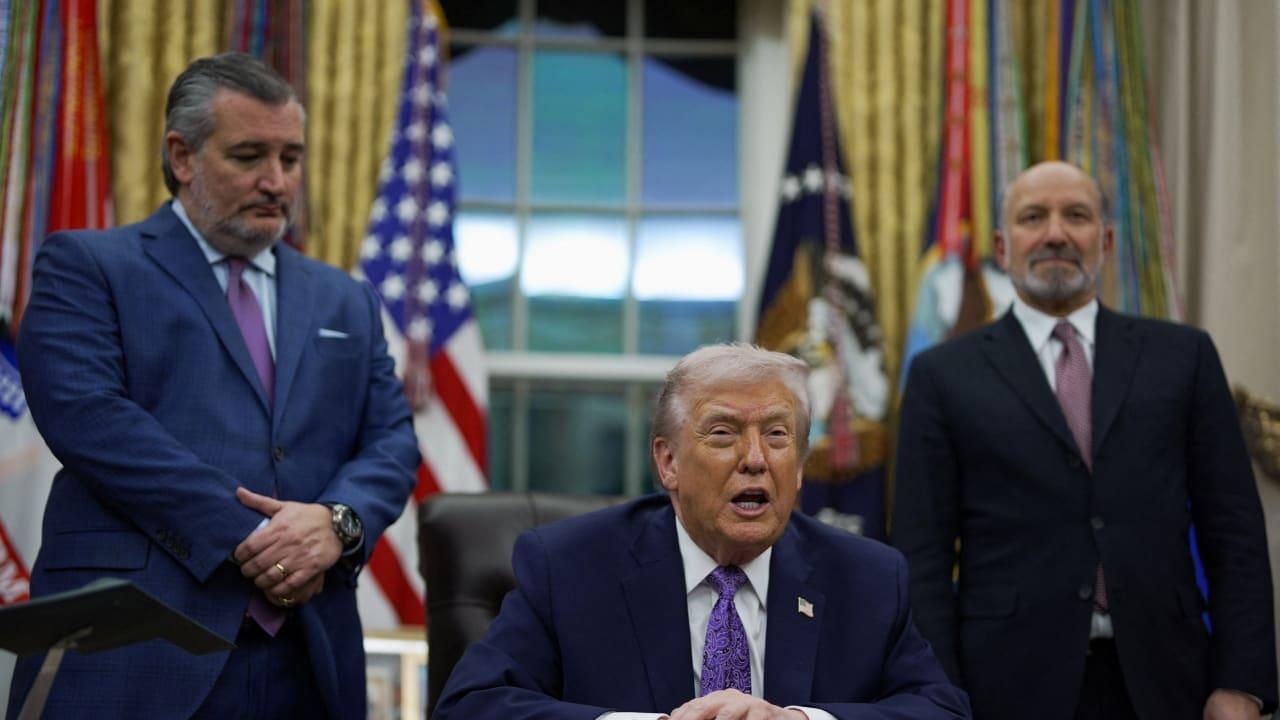
Source: Jerusalem Post
Pentagon's OPEN Program Targets Four Strategic Metals
Launched in 2023 by the Pentagon's Defense Advanced Research Projects Agency (DARPA), the OPEN program calculates what a metal should be priced at by factoring in labor, processing, and other production costs while attempting to strip out alleged market manipulation by China
1
. Trump officials are initially focusing the AI pricing model on at least four critical minerals: germanium, gallium, antimony, and tungsten, before expanding to others1
. S&P Global and Finnish data firm Rovjok will supply data and technical assistance for the effort1
. The program, which is being transferred to the control of the non-profit Critical Minerals Forum (CMF) next year, has focused from its inception on metals that are thinly traded or not traded at all1
.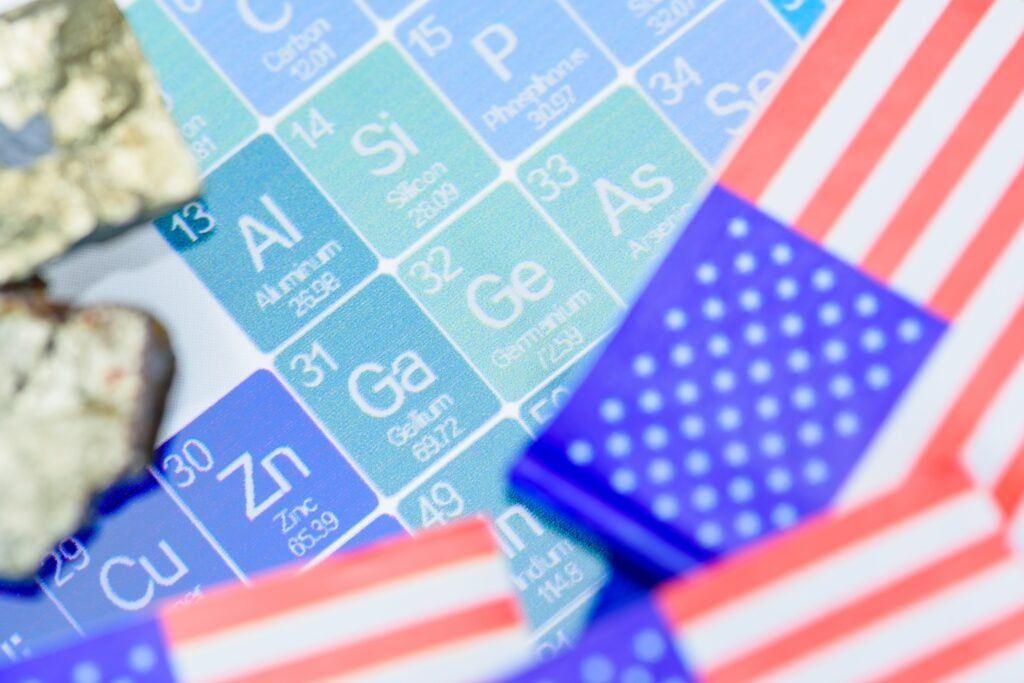
Source: Benzinga
Countering Chinese Dominance in Strategic Materials
China is the world's largest miner or processor of many minerals considered critical by the U.S. government. Beijing has used that advantage in recent years to produce minerals at a loss and dampen market prices, forcing Western rivals to close operations
1
. The AI model aims to promote metals supply deals between Western miners and manufacturers by providing both sides with greater pricing certainty1
. It can be difficult for manufacturers using these minerals to gauge whether Chinese prices reflect traditional supply-and-demand dynamics or represent strategic market distortions2
. Chinese officials have long maintained that Beijing manages its exports of minerals in accordance with World Trade Organization rules1
.
Source: Market Screener
Related Stories
Tariffs as Enforcement Mechanism for Price Stability
The plan represents a shift away from direct subsidies or price guarantees for individual companies. Instead, tariffs would serve as the enforcement mechanism to counter alleged market manipulation by China
2
. Imports priced below the reference level could face duties, effectively pushing them toward the AI-calculated benchmark. An antimony price set by the AI program and backed by the trade block could boost profits for companies developing U.S. antimony projects, though it could raise prices for automakers who use antimony in adhesives and other products1
. The move comes as the Trump administration steps away from guaranteeing price floors for individual companies due to lack of congressional funding1
.Building an Investment Architecture Amid Uncertainty
Eric Robinson, a special counsel with Baker Botts law firm and former managing director of the Pentagon's Office of Strategic Capital, explained that "the administration is still, in good faith, trying to respond to industry demand signals by creating an architecture of reliable investment, but it doesn't have the one tool that everybody kind of wanted them to use"
1
. Several critical questions remain unanswered. It's unclear whether the AI-derived prices would oscillate or be fixed, nor whether they would be set between the U.S. and individual allies or applied uniformly across the trading block3
. The timeline for implementation is also uncertain, as the Trump administration must first convince dozens of allies to join the bloc to guarantee effectiveness1
. Canada's Ministry of Energy and Natural Resources stated it was "working to comprehensively understand and analyze" the minerals trade block proposal1
. Former U.S. Department of Energy Critical Minerals Lead Nathaniel Horadam warned that there are no guarantees, as multiple producers would still compete on price2
. The minerals plan advances as the administration rapidly deploys AI tools elsewhere, including collaborations with OpenAI, Anthropic, and Alphabet's Google for generative AI in battlefield settings1
.References
Summarized by

Navi
[1]
[3]
Related Stories
Pentagon's AI Metals Program Goes Private to Boost Western Critical Mineral Supply
01 May 2025•Business and Economy
Trump Administration Prepares Executive Orders to Boost AI Infrastructure and Energy Supply
27 Jun 2025•Technology

Trump's $500B AI Investment Plan Faces Challenge from China's DeepSeek
28 Jan 2025•Technology

Recent Highlights
1
Anthropic's Claude AI can now control your computer to complete tasks autonomously
Technology

2
Nvidia's Jensen Huang calls OpenClaw the next ChatGPT, sending Chinese AI stocks soaring
Technology

3
Elon Musk unveils $20 billion Terafab chip manufacturing project to produce terawatt of computing
Technology
Recent Highlights
Today's Top Stories




Your Daily Dose of Curated AI News
Don’t drown in AI news. We cut through the noise - filtering, ranking and summarizing the most important AI news, breakthroughs and research daily. Spend less time searching for the latest in AI and get straight to action.

