Uber CEO predicts robotaxis could fulfill majority of rides within 20 years as AI reshapes gig economy


2 Sources
2 Sources
[1]
Uber CEO predicts most rides could be robot-operated within 20 years | Fortune
After its 2009 launch, Uber spread like wildfire across the U.S., revolutionizing the gig economy with its app-based model that connects consumers to independent contractors who use their own cars and set their own schedules. That approach has since attracted more than 9.5 million Uber contractors worldwide. But in cities like San Francisco, Los Angeles, Phoenix, and Atlanta, customers are increasingly turning to autonomous vehicles to get around town, with some even sending their teens to school in them. What once felt like science fiction has now become everyday reality across parts of the U.S. as Alphabet-backed Waymo, Tesla, and Amazon-backed Zoox expand the burgeoning market. As robotaxis continue to gain traction, they're putting increasing pressure on the millions of drivers who rely on the rideshare economy for income. "You can imagine the majority of our trips being fulfilled by robots of some kind," Uber CEO Dara Khosrowshahi said in a recent interview on The Diary of a CEO podcast. "Probably not 10 years from now, but you go 15 to 20 years from now, you're going to start getting there." Business leaders have sounded the alarm on AI's ability to replace a growing number of jobs, even those traditionally held by white-collar workers. Microsoft's AI chief Mustafa Suleyman even predicted all white-collar work could be replaced by automation in as little as a year. Job security in the short term In a response to a request for comment, an Uber spokesperson pointed to past remarks from the CEO emphasizing that the company expects the number of drivers and couriers on its platform to continue growing for several years. A 2025 Goldman Sachs report predicted the number of robotaxis in the U.S. will grow from 1,500 in 2025 to about 35,000 in 2030, capturing about 8% of the U.S. rideshare market -- a near 90% compound annual growth rate, but still a far cry from the 20 million robotaxis Khosrowshahi thinks will eventually comprise the rideshare market. During the podcast, Khosrowshahi said there are still many issues the company, and other rideshare firms, must contend with to scale up a wide-spanning driverless car fleet. "We don't operate in the virtual world, we operate in the physical world," he said. "You have to get the regulations up. You have to build the cars. You have to build the sensor stacks; the models have to get there." But Uber is aiming to accelerate this process, announcing Monday the launch of Uber Autonomous Solutions to commercialize robotaxis around the world, organizing development across AV infrastructure, user experience, and fleet operations. What will drivers do instead? AI is not just an issue for rideshare drivers. Khosrowshahi thinks that over the next 10 years AI will be able to replace the work that 70%-80% of humans can do. "Ten years is not a lot of time for society to adjust to that kind of an impact," he said. Uber is already looking to ease that adjustment by diversifying the type of work Uber contractors can do. For one, Uber offers delivery and shopping opportunities to contractors, work Khosrowshahi said he doesn't believe AI can replace anytime soon. And in October, the company launched a new AI Solutions initiative where contractors can train AI agents and models from their phones when they're not driving. Individuals can take on tasks ranging from evaluating AI responses to translating and reviewing content. Still, he believes retraining and the future of work is a big question business leaders will have to address within the next several years. "When you go five plus years [into the future], it's going to become more of an issue for society at large," Khosrowshahi said.
[2]
Uber CEO Dara Khosrowshahi Says 'Majority Of Our Trips' Could Be Fulfilled By Robots Within 20 Years: 'You Have To Get The Regulations Up' - Uber Technologies (NYSE:UBER)
Uber Technologies, Inc. (NYSE:UBER) chief executive officer Dara Khosrowshahi said he expects robotaxis to handle most trips on the platform within two decades as the company accelerates its push into autonomous vehicle technology. Robotaxi Expansion Push On Monday, Khosrowshahi said in a podcast on The Diary of a CEO interview that the majority of Uber rides could eventually be fulfilled by automated vehicles, though he acknowledged the shift will take 15 to 20 years. "You can imagine the majority of our trips being fulfilled by robots of some kind," he said, adding that the transition will not happen in the near term. He noted that scaling autonomous fleets requires regulatory approval, technological advancement and infrastructure development. "We don't operate in the virtual world, we operate in the physical world," Khosrowshahi said. He added, "You have to get the regulations up. You have to build the cars. You have to build the sensor stacks; the models have to get there." A 2025 Goldman Sachs report projected robotaxis in the U.S. could grow rapidly over the next several years but still represent a small portion of the broader ride-share market by 2030. Tech Giants Compete In Autonomous Vehicle Race Earlier, Tesla CEO Elon Musk said the company expected to maintain the largest fleet of autonomous vehicles as it expanded robotaxi testing and invested in AI and machine learning to improve self-driving systems. He said Tesla aimed to lead in scale for the foreseeable future, as competition with Waymo intensified. Tesla relied mainly on cameras for autonomy, while Waymo emphasized systems designed to surpass human driving performance. Separately, Waymo told Congress its robotaxis were not remotely driven on U.S. roads, addressing lawmakers' concerns about safety and overseas support teams. The company said remote staff provided guidance but did not control vehicles, which remained under the authority of onboard systems. Waymo operated remote assistance centers in multiple U.S. states and the Philippines with about 70 agents on duty and said any vehicle movement by staff had not occurred in commercial operations. Disclaimer: This content was partially produced with the help of AI tools and was reviewed and published by Benzinga editors. Photo courtesy: Shutterstock Market News and Data brought to you by Benzinga APIs To add Benzinga News as your preferred source on Google, click here.
Share
Share
Copy Link
Uber CEO Dara Khosrowshahi says most rides on the platform could be robot-operated within 15 to 20 years, as the company launches Uber Autonomous Solutions to accelerate robotaxi commercialization. The shift raises questions about the future of 9.5 million Uber contractors worldwide, though Goldman Sachs projects autonomous vehicles will capture just 8% of the U.S. rideshare market by 2030.
Uber CEO Maps Out Timeline for Robot-Operated Rides
Uber CEO Dara Khosrowshahi has outlined an ambitious vision where robotaxis could handle the majority of trips on the platform within the next 15 to 20 years. Speaking on The Diary of a CEO podcast, Khosrowshahi acknowledged the transformative shift ahead for the rideshare market. "You can imagine the majority of our trips being fulfilled by robots of some kind," he said. "Probably not 10 years from now, but you go 15 to 20 years from now, you're going to start getting there."
1
The prediction signals a fundamental change for Uber, which has built its business model around connecting consumers to more than 9.5 million independent contractors worldwide who use their own vehicles.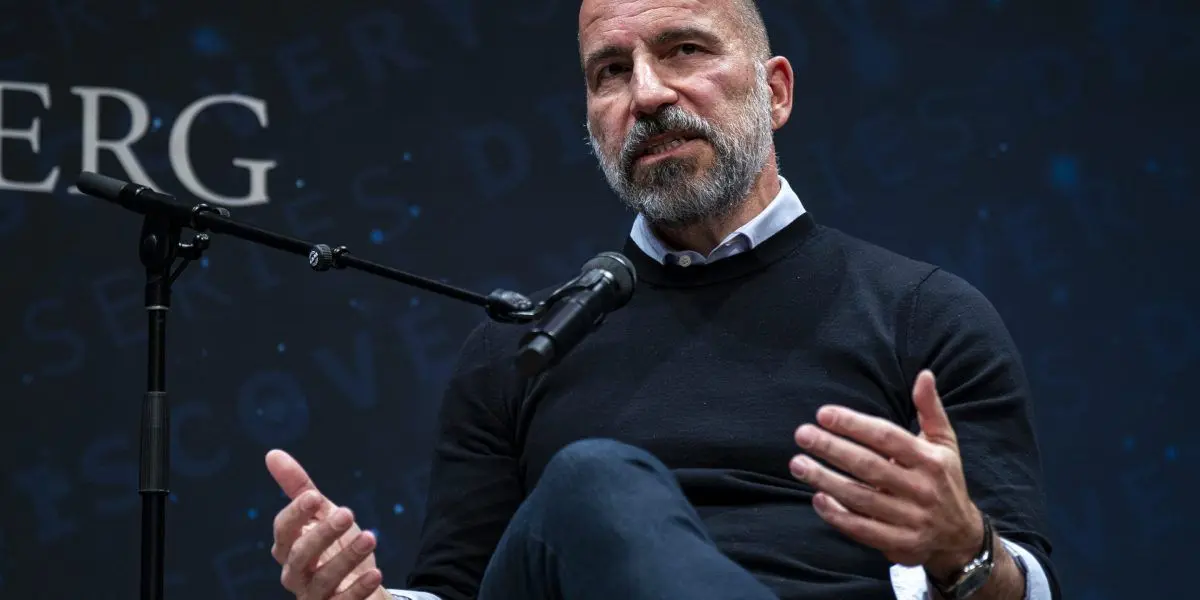
Source: Fortune
Autonomous Vehicles Gain Traction Across U.S. Cities
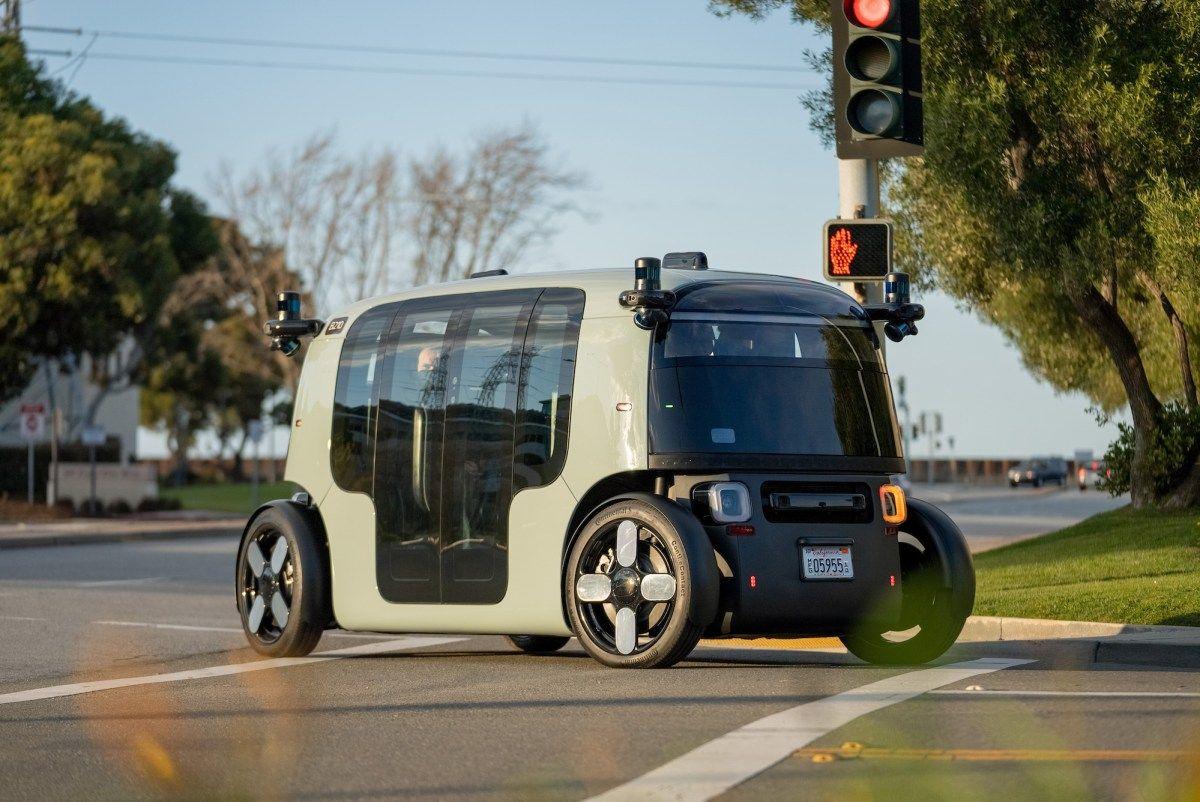
The rise of autonomous vehicles is already reshaping urban transportation in cities like San Francisco, Los Angeles, Phoenix, and Atlanta. Customers are increasingly turning to self-driving systems from companies like Alphabet-backed Waymo, Tesla, and Amazon-backed Zoox. What once seemed like science fiction has become everyday reality, with some parents even sending their teens to school in robotaxis.
1
A 2025 Goldman Sachs report projected that the number of robotaxis in the U.S. will grow from 1,500 in 2025 to approximately 35,000 by 2030, representing a near 90% compound annual growth rate. Despite this rapid expansion, autonomous vehicles are expected to capture only about 8% of the U.S. rideshare market by 2030—far from the 20 million robotaxis Khosrowshahi envisions will eventually comprise the market.1
Uber Launches Autonomous Solutions Initiative
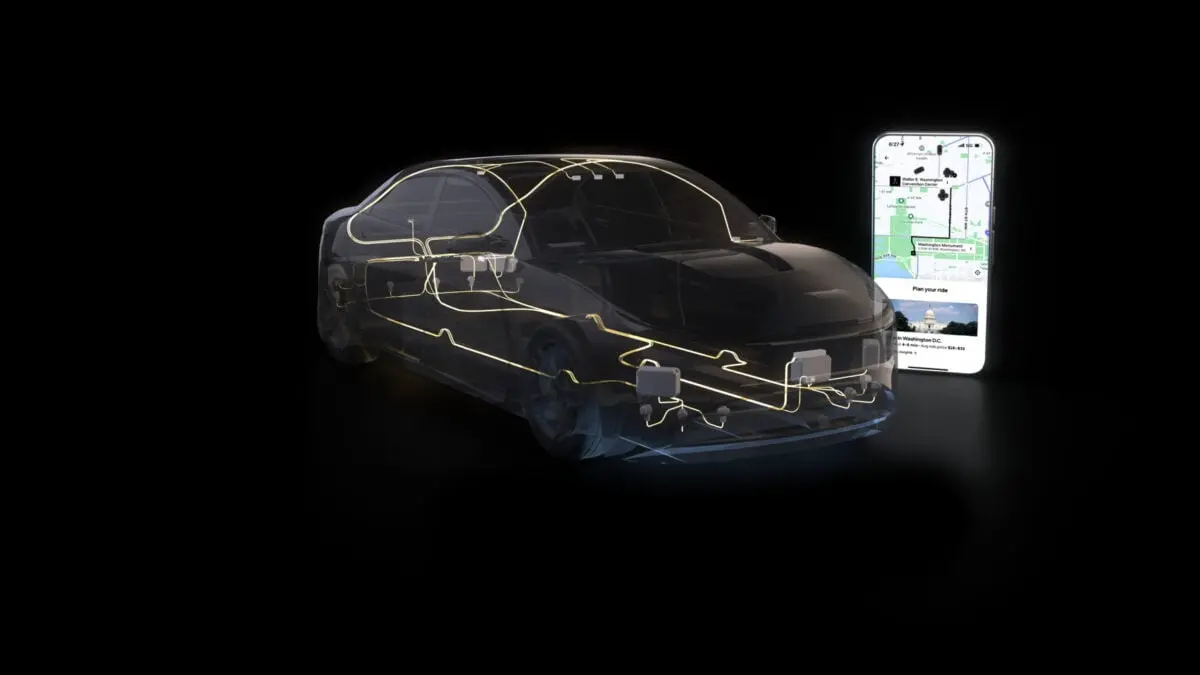
To accelerate the transition, Uber announced Monday the launch of Uber Autonomous Solutions, a new division aimed at commercializing robotaxis globally. The initiative will organize development across AV infrastructure, user experience, and fleet operations.
1
However, Khosrowshahi emphasized that significant hurdles remain before widespread deployment becomes feasible. "We don't operate in the virtual world, we operate in the physical world," he explained. "You have to get the regulations up. You have to build the cars. You have to build the sensor stacks; the models have to get there."2
Regulatory approval, technological advancement, and infrastructure development remain critical barriers to scaling autonomous fleets.Job Displacement Concerns for Rideshare Drivers
The shift toward automation raises pressing questions about job displacement for millions of rideshare drivers who depend on the gig economy for income. Khosrowshahi believes that over the next 10 years, AI will be capable of replacing the work that 70% to 80% of humans currently perform. "Ten years is not a lot of time for society to adjust to that kind of an impact," he warned.
1
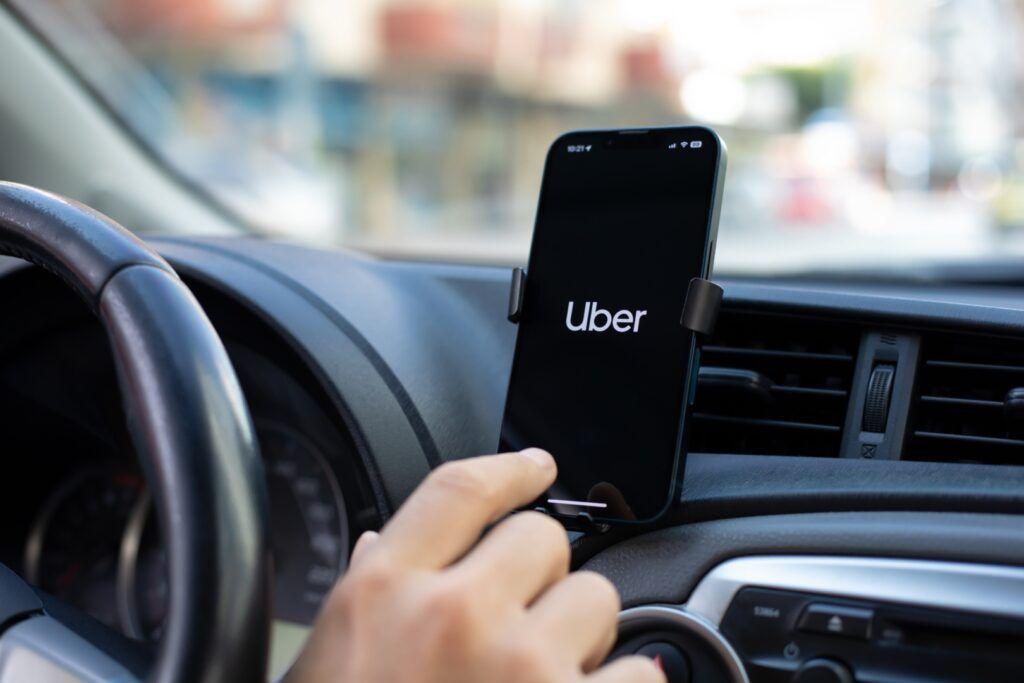
An Uber spokesperson pointed to past remarks from the CEO emphasizing that the company expects the number of drivers and couriers on its platform to continue growing for several years, suggesting job security in the short term.1
Source: Benzinga
Related Stories
Retraining and Alternative Work Opportunities
Uber is already taking steps to diversify income opportunities for contractors. The company offers delivery and shopping services, work that Khosrowshahi believes AI cannot replace anytime soon. In October, Uber launched an AI Solutions initiative allowing contractors to train AI agents and machine learning models from their phones during downtime. Tasks include evaluating AI responses, translating content, and reviewing outputs.
1
Despite these efforts, Khosrowshahi acknowledged that retraining workers and addressing the future of work will become increasingly critical. "When you go five plus years [into the future], it's going to become more of an issue for society at large," he said.1
Competition Intensifies in Autonomous Vehicle Race
Tesla CEO Elon Musk has stated that the company expects to maintain the largest fleet of autonomous vehicles as it expands robotaxi testing and invests heavily in AI and self-driving systems. Tesla relies primarily on cameras for autonomy, while Waymo emphasizes sensor stacks designed to surpass human driving performance.
2
Waymo recently told Congress its robotaxis are not remotely driven on U.S. roads, addressing lawmakers' safety concerns. The company operates remote assistance centers in multiple U.S. states and the Philippines with approximately 70 agents on duty, clarifying that remote staff provide guidance but do not control vehicles.2
As competition between tech giants intensifies, the timeline for mass adoption of autonomous vehicles will depend heavily on technological breakthroughs, regulatory frameworks, and public acceptance of automation in daily transportation.References
Summarized by

Navi
Related Stories
Uber Accelerates EV Adoption as Tesla's Robotaxi Day Looms
10 Oct 2024•Technology

Uber accelerates robotaxi expansion with Zoox and Nvidia partnerships across 28 cities
11 Mar 2026•Technology
Uber CEO Welcomes Tesla's Robotaxi Entry, Emphasizing Collaboration in Trillion-Dollar Autonomous Driving Market
07 Aug 2025•Technology
Recent Highlights


Recent Highlights
Today's Top Stories










Your Daily Dose of Curated AI News
Don’t drown in AI news. We cut through the noise - filtering, ranking and summarizing the most important AI news, breakthroughs and research daily. Spend less time searching for the latest in AI and get straight to action.

