UiPath beats Q3 expectations with first profitable quarter as AI orchestration gains traction


3 Sources
3 Sources
[1]
UiPath beats expectations as it doubles down on agentic AI orchestration - SiliconANGLE
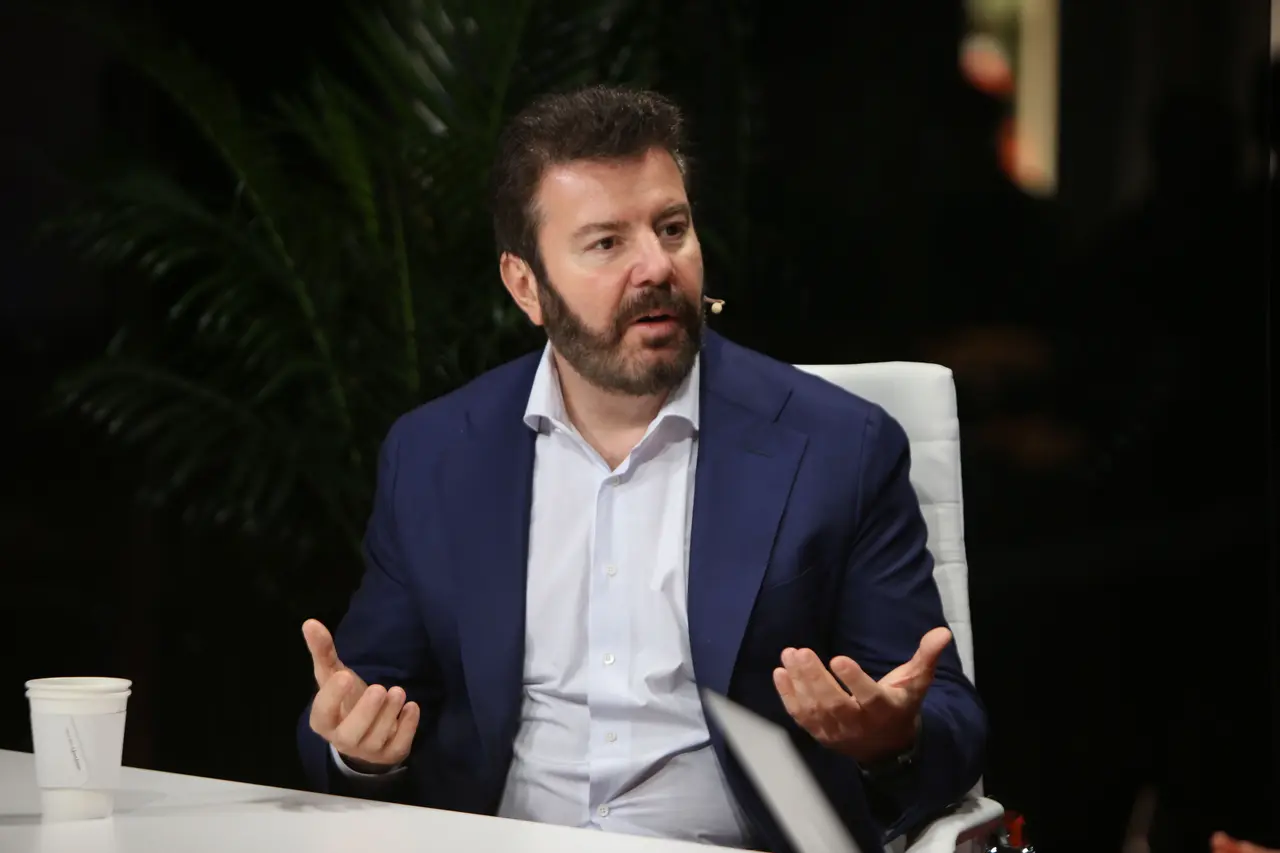
UiPath beats expectations as it doubles down on agentic AI orchestration Business automation software company UiPath Inc. beat expectations as it delivered its third-quarter financial results today and followed up with strong guidance for the current quarter. The company reported adjusted earnings of 16 cents per share, just edging past Wall Street's consensus estimate of 15 cents, while revenue rose 16% to $411.1 million, crushing the analysts' forecast of $392 million. Annual recurring revenue was also boosted, rising 11% from a year earlier to $1.78 billion, with the company landing new long-term deals worth $59 million. UiPath's stock rose more than 7% in extended trading on the strong results and its solid guidance. For the current quarter, the company is forecasting revenue of between $462 million and $467 million, ahead of the Street's target of $463.3 million. Chief Executive Daniel Dines (pictured) said the company is gaining momentum as customers accelerate their artificial intelligence automation strategies, where its software plays a pivotal role for them. "Our results are a testament to the team's focus, consistent execution and the momentum we are seeing as customers scale agentic automation across the enterprise," he said. The company made significant gains in terms of profitability during the quarter, too. For the first time, it ended the quarter with a positive operating income of $13 million, while its net income rose to $198.8 million, up from a $10.7 million loss in the year-ago period. UiPath made its name as a pioneer of robotic process automation, selling tools that can help businesses to lower costs and reduce operational errors by automating repetitive tasks such as data entry. This technology is powered by AI models that study how employees perform common tasks, such as data entry, so they can replicate that work with no mistakes. More recently, it has turned its attention to more sophisticated AI agents, sometimes known as "digital laborers," which utilize large language models to perform more complex tasks on behalf of users with minimal supervision. The company is particularly focused on agentic orchestration, selling software that allows enterprises to manage and secure large fleets of AI agents. During the quarter, UiPath held its annual customer conference, UiPath Fusion 2025, where it announced new integrations with Microsoft Corp.'s Azure AI Foundry, Google LLC's Gemini models, OpenAI Group PBC's GPT models and also Nvidia Corp. At the event, Dines stopped by theCUBE, SiliconANGLE Media's mobile livestreaming studio, where he laid out the company's vision for agentic automation, saying that orchestration is emerging as the critical layer that transforms AI agents into lasting enterprise value. "Our thesis is that you need to have a strong foundation of automation in order to bring intelligence into your processes," he explained. Today's after-hours gains means that UiPath's stock is now up just over 16% in the year to date, but there is still room for improvement, as it trails the broader Nasdaq index, which has gained 21% over the same period.
[2]
UiPath posts first profitable quarter. Here's why it thinks orchestration is the missing piece
There's a lot of speculation right now about whether enterprise AI investments are actually delivering returns. Against the backdrop of the constantly-referenced MIT survey, UiPath just posted its first GAAP profitable third quarter - and says it is on track to be GAAP profitable for the full fiscal year for the first time. For a company that has spent the past year in turnaround mode under returning co-founder and CEO Daniel Dines, that's a meaningful milestone. The numbers for Q3 fiscal 2026: revenue of $411 million, up 16% year-on-year (14% normalizing for currency). Annual Recurring Revenue (ARR) reached $1.78 billion, up 11%, with net new ARR of $59 million. Non-GAAP operating income hit $88 million, a 21% margin. The company beat guidance across the board. Not every problem needs an AI agent, and a lot of enterprises are figuring that out the hard way. The challenge is how to make it all work together, and that's the gap UiPath is going after. The pitch is that enterprises need three things. First, reliable, rules-based automation for well-defined tasks - what UiPath calls deterministic automation, built on its Robotic Process Automation (RPA) heritage. Second, Large Language Model (LLM)-powered agents for the messier stuff: complex documents, conversations, situations where rigid rules don't cut it. And third, something to co-ordinate between the two, keep humans in the loop where needed, and make sure the whole thing is governed and auditable. That's what UiPath's Maestro platform is designed to do. Dines explains: In every conversation with customers and partners, the message is clear. Automation and AI are stronger together. Our deterministic foundation - enterprise-grade RPA and API automation capabilities - delivers the trust, scale and reliability mission-critical processes demand. On top of that, our leading AI capabilities bring adaptability, intelligence and speed. What brings it all together is orchestration. The numbers suggest customers are buying in - over 950 companies are now developing agents on the platform, with more than 365,000 processes orchestrated through Maestro. Given how many enterprises are still waiting to see real Return on Investment (ROI) from AI, UiPath leans heavily on quantified customer outcomes on the call. A few examples: One of the world's largest investment management firms chose UiPath because Maestro can work with different AI models and systems rather than locking them into one stack. The firm has run multiple agentic proofs of concept, already showing a 95% reduction in time to value. It has identified over 40 use cases that it expects to generate more than $200 million in savings over three years. In another example, a US-managed care provider is using UiPath to tackle a backlog of more than 140,000 provider appeals. Agents classify forms, robots handle the processing, and Maestro orchestrates the workflow, pulling in humans only for exceptions. The target is 80% autonomy in year one. USI Insurance Services is running a similar multi-agent orchestration deployment and expects over $32 million in savings over three years. Dines acknowledges that customer expectations around agentic AI are starting to come back down to earth: In all fairness, there are customers that believe that AI agents will do everything. So they think very far-fetched in terms of swarms of agents that talk together. At the same time, I would say that the majority of our customers are starting to realize that their automation programs are actually quite important to power their agentic initiatives... Typically, they can come up with like 100 ideas that they call agentic. And then when we look deeply, we discuss that 50 of them are better suited for automation. This is the core of UiPath's argument. It's not that agentic AI doesn't work - it's that it works best for certain kinds of tasks. If a process is well-defined and rules-based, traditional RPA is faster, cheaper and more reliable. If it involves judgement, ambiguity, messy documents or conversation, that's where LLM-powered agents add value. The key is knowing which tool to use where - and having something in the middle to coordinate the handoffs. UiPath announced integrations with OpenAI, Microsoft Azure AI Foundry, Google Gemini, NVIDIA and Snowflake at its Fusion event earlier this year. UiPath maintains that this about interoperability, rather than commercial tie-ups. The logic behind this is one that has come up in numerous use case discussions - enterprises don't want to be locked into one AI vendor, especially when the model landscape is shifting so fast. UiPath is continuing to position itself as neutral ground, aiming to reassure customers and buyers that it doesn't matter which LLM you've chosen, Maestro will be able to orchestrate it alongside your existing automation. This is a solid quarter, and the turnaround under Dines is starting to show in the numbers. More interesting is how UiPath is carving out its position. While much of the market is chasing the 'AI agents will do everything' hype, Dines is making a more nuanced case - the future isn't pure agentic or pure deterministic, but a hybrid where orchestration does the heavy lifting. Rather than trying to out-agent the AI-native players, Dines is pointing to customers learning that half their 'agentic' ideas are better suited to traditional automation, which goes against the grain of vendor messaging in this space. The unspoken point is that UiPath has both tools in its kit, and Maestro to coordinate them. Whether that resonates depends on how many buyers have been burned by the 'agents will do everything' promise - and based on Dines's comments, that number is growing. At the FUSION event earlier this year, Dines uses the analogy of a hybrid car engine to explain this - the idea that different power sources work together, each optimised for different conditions. I recently spoke with UiPath's Taqi Jaffri, Senior Director, Product Management, to dig deeper into what that hybrid model looks like in practice and where the boundaries fall between deterministic and agentic automation. More on that soon.
[3]
Why UiPath Stock Surged Today
The agentic AI leader is seeing rising demand for its automation tools. Shares of UiPath (PATH +24.36%) popped on Thursday after the autonomous software provider reported solid third-quarter growth metrics. By the close of trading, UiPath's stock price was up more than 24%. AI agents are here UiPath is a leader in agentic automation, which uses artificial intelligence (AI) to complete complex processes that require decision-making and adaptation. Surging interest in AI agents is thus playing right into UiPath's wheelhouse. "Enterprises are accelerating their AI and automation strategies, and they're looking for a unified platform rather than stand-alone tools," CEO Daniel Dines said in a press release. UiPath's revenue rose 16% year over year to $411 million. The gains were driven by new customer wins and higher sales to existing clients, as shown by the company's dollar-based net retention rate of 107%. UiPath's annualized renewal run rate (ARR), in turn, grew 11% to nearly $1.8 billion. Moreover, the software specialist's profitability is improving as it scales its business. UiPath produced $13 million in operating income, compared to a loss of $43 million in the prior-year period. UiPath is set to profit from the AI boom Looking ahead to the fourth quarter, UiPath expects revenue of $462 million to $467 million and adjusted operating income of $140 million. During a conference call with analysts, Dines explained why he believes UiPath is well-positioned to benefit from the AI megatrend. "Our automation strategy, combining the reliability of deterministic automation with the intelligence and adaptability of agentic AI, continues to align with what customers want most: trusted enterprise-grade automation that delivers tangible ROI [return on investment] fast," Dines said.
Share
Share
Copy Link
UiPath delivered its first GAAP profitable quarter with revenue of $411 million, up 16% year-over-year, surpassing Wall Street expectations. The business automation software company is doubling down on agentic AI orchestration, positioning its Maestro platform as the critical layer that coordinates AI-powered agents with traditional automation to deliver enterprise value.
UiPath Delivers First Profitable Quarter with Strong Revenue Growth
UiPath reported third-quarter revenue of $411.1 million, up 16% year-over-year, crushing analyst expectations of $392 million
1
. The business automation software company also posted adjusted earnings of 16 cents per share, edging past the consensus estimate of 15 cents. Annual Recurring Revenue (ARR) reached $1.78 billion, climbing 11% from the prior year, with net new ARR of $59 million2
. For the first time, UiPath achieved positive operating income of $13 million, compared to a $43 million loss in the year-ago period, marking a significant profitability milestone3
. Net income surged to $198.8 million, reversing a $10.7 million loss from the previous year1
. The company is on track to achieve GAAP profitability for the full fiscal year, a meaningful accomplishment for a company that spent the past year in turnaround mode under returning co-founder and CEO Daniel Dines2
.
Source: Motley Fool
AI Orchestration Emerges as Critical Enterprise Layer
UiPath is positioning AI orchestration as the missing piece that transforms AI-powered agents into lasting enterprise value. CEO Daniel Dines explained that enterprises need three components: reliable, rules-based Robotic Process Automation (RPA) for well-defined tasks, Large Language Models (LLMs)-powered agents for complex situations involving ambiguity and judgment, and orchestration to coordinate between the two while keeping humans in the loop
2
. The company's Maestro platform serves this orchestration function, with over 950 companies now developing agents on the platform and more than 365,000 processes orchestrated through Maestro2
. Dines emphasized that "our thesis is that you need to have a strong foundation of automation in order to bring intelligence into your processes"1
. This agentic AI orchestration approach combines deterministic automation with the adaptability and intelligence of agentic AI automation tools, addressing what customers want most: enterprise-grade automation that delivers tangible Return on Investment (ROI) quickly3
.
Source: diginomica
Customer Expectations Recalibrate as Real-World Results Emerge
Dines acknowledged that customer expectations around agentic AI are becoming more realistic, noting that while some customers initially believed AI agents would handle everything, the majority are now recognizing that their automation programs are crucial for powering agentic initiatives
2
. He explained that when customers present 100 ideas they label as agentic, deeper analysis often reveals that 50 are better suited for traditional automation2
. This recalibration is driving demand for UiPath's unified platform strategy, with enterprises seeking integrated solutions rather than stand-alone tools3
. One of the world's largest investment management firms chose UiPath because Maestro can work with different AI models and systems, running multiple agentic proofs of concept that showed a 95% reduction in time to value and identifying over 40 use cases expected to generate more than $200 million in savings over three years2
. A US-managed care provider is using the platform to tackle a backlog of more than 140,000 provider appeals, targeting 80% autonomy in year one, while USI Insurance Services expects over $32 million in savings over three years2
.Related Stories
Strong Guidance and Market Position Signal Continued Momentum
UiPath issued fourth-quarter guidance of $462 million to $467 million in revenue, ahead of analyst expectations of $463.3 million, with adjusted operating income projected at $140 million
1
3
. The company's dollar-based net retention rate of 107% demonstrates success in expanding sales to existing clients3
. UiPath stock surged more than 24% following the earnings announcement, bringing year-to-date gains to over 16%1
3
. At its annual UiPath Fusion 2025 conference, the company announced integrations with Microsoft Azure AI Foundry, Google Gemini models, OpenAI GPT models, Nvidia, and Snowflake, positioning itself as neutral ground that allows enterprises to avoid vendor lock-in as the model landscape shifts rapidly1
2
. Dines stated that "our results are a testament to the team's focus, consistent execution and the momentum we are seeing as customers scale agentic automation across the enterprise"1
.References
Summarized by

Navi
[1]
[2]
[3]
Related Stories
UiPath Surpasses Expectations with Strong Q2 Results, Driven by AI-Powered Automation
05 Sept 2025•Technology

UiPath Beats Expectations with Strong Q1 Results, Driven by Agentic AI Momentum
30 May 2025•Business and Economy
UiPath's AI Ambitions Face Headwinds as Revenue Growth Slows and Stock Tumbles
13 Mar 2025•Business and Economy

Recent Highlights
1
Google releases Gemma 4 with Apache 2.0 license, enabling unrestricted local AI on devices
Technology

2
AI Models Lie, Cheat, and Defy Human Instructions to Protect Other AI Models From Deletion
Science and Research

3
Anthropic discovers functional emotions in Claude that actively shape AI behavior and decisions
Science and Research

Recent Highlights
Today's Top Stories








Your Daily Dose of Curated AI News
Don’t drown in AI news. We cut through the noise - filtering, ranking and summarizing the most important AI news, breakthroughs and research daily. Spend less time searching for the latest in AI and get straight to action.

