HHS unveils AI strategy to expand adoption across healthcare divisions amid data privacy concerns


4 Sources
4 Sources
[1]
US health department unveils strategy to expand its adoption of AI technology
HHS billed the plan as a "first step" focused largely on making its work more efficient and coordinating AI adoption across divisions. But the 20-page document also teased some grander plans to promote AI innovation, including in the analysis of patient health data and in drug development. "For too long, our Department has been bogged down by bureaucracy and busy-work," Deputy HHS Secretary Jim O'Neill wrote in an introduction to the strategy. "It is time to tear down these barriers to progress and unite in our use of technology to Make America Healthy Again." The new strategy signals how leaders across the Trump administration have embraced AI innovation, encouraging employees across the federal workforce to use chatbots and AI assistants for their daily tasks. As generative AI technology made significant leaps under President Joe Biden's administration, he issued an executive order to establish guardrails for their use. But when President Donald Trump came into office, he repealed that order and his administration has sought to remove barriers to the use of AI across the federal government. Experts said the administration's willingness to modernize government operations presents both opportunities and risks. Some said that AI innovation within HHS demanded rigorous standards because it was dealing with sensitive data and questioned whether those would be met under the leadership of Health Secretary Robert F. Kennedy Jr. Some in Kennedy's own "Make America Health Again" movement have also voiced concerns about tech companies having access to people's personal information. HHS's new plan calls for embracing a "try-first" culture to help staff become more productive and capable through the use of AI. Earlier this year, HHS made the popular AI model ChatGPT available to every employee in the department. The document identifies five key pillars for its AI strategy moving forward, including creating a governance structure that manages risk, designing a suite of AI resources for use across the department, empowering employees to use AI tools, funding programs to set standards for the use of AI in research and development and incorporating AI in public health and patient care. It says HHS divisions are already working on promoting the use of AI "to deliver personalized, context-aware health guidance to patients by securely accessing and interpreting their medical records in real time." Some in Kennedy's Make America Healthy Again movement have expressed concerns about the use of AI tools to analyze health data and say they aren't comfortable with the U.S. health department working with big tech companies to access people's personal information. HHS previously faced criticism for pushing legal boundaries in its sharing of sensitive data when it handed over Medicaid recipients' personal health data to Immigration and Customs Enforcement officials. Oren Etzioni, an artificial intelligence expert who founded a nonprofit to fight political deepfakes, said HHS's enthusiasm for using AI in health care was worth celebrating but warned that speed shouldn't come at the expense of safety. "The HHS strategy lays out ambitious goals -- centralized data infrastructure, rapid deployment of AI tools, and an AI-enabled workforce -- but ambition brings risk when dealing with the most sensitive data Americans have: their health information," he said. Etzioni said the strategy's call for "gold standard science," risk assessments and transparency in AI development appear to be positive signs. But he said he doubted whether HHS could meet those standards under the leadership of Kennedy, who he said has often flouted rigor and scientific principles. Darrell West, senior fellow in the Brooking Institution's Center for Technology Innovation, noted the document promises to strengthen risk management but doesn't include detailed information about how that will be done. "There are a lot of unanswered questions about how sensitive medical information will be handled and the way data will be shared," he said. "There are clear safeguards in place for individual records, but not as many protections for aggregated information being analyzed by AI tools. I would like to understand how officials plan to balance the use of medical information to improve operations with privacy protections that safeguard people's personal information." Still, West, said, if done carefully, "this could become a transformative example of a modernized agency that performs at a much higher level than before." The strategy says HHS had 271 active or planned AI implementations in the 2024 financial year, a number it projects will increase by 70% in 2025.
[2]
Robert F. Kennedy Jr. turns to AI to make America healthy again | Fortune
The U.S. Department of Health and Human Services on Thursday outlined a strategy to expand its use of artificial intelligence, building on the Trump administration's enthusiastic embrace of the rapidly advancing technology while raising questions about how health information would be protected. HHS billed the plan as a "first step" focused largely on making its work more efficient and coordinating AI adoption across divisions. But the 20-page document also teased some grander plans to promote AI innovation, including in the analysis of patient health data and in drug development. "For too long, our Department has been bogged down by bureaucracy and busy-work," Deputy HHS Secretary Jim O'Neill wrote in an introduction to the strategy. "It is time to tear down these barriers to progress and unite in our use of technology to Make America Healthy Again." The new strategy signals how leaders across the Trump administration have embraced AI innovation, encouraging employees across the federal workforce to use chatbots and AI assistants for their daily tasks. As generative AI technology made significant leaps under President Joe Biden's administration, he issued an executive order to establish guardrails for their use. But when President Donald Trump came into office, he repealed that order and his administration has sought to remove barriers to the use of AI across the federal government. Experts said the administration's willingness to modernize government operations presents both opportunities and risks. Some said that AI innovation within HHS demanded rigorous standards because it was dealing with sensitive data and questioned whether those would be met under the leadership of Health Secretary Robert F. Kennedy Jr. Some in Kennedy's own "Make America Health Again" movement have also voiced concerns about tech companies having access to people's personal information. HHS's new plan calls for embracing a "try-first" culture to help staff become more productive and capable through the use of AI. Earlier this year, HHS made the popular AI model ChatGPT available to every employee in the department. The document identifies five key pillars for its AI strategy moving forward, including creating a governance structure that manages risk, designing a suite of AI resources for use across the department, empowering employees to use AI tools, funding programs to set standards for the use of AI in research and development and incorporating AI in public health and patient care. It says HHS divisions are already working on promoting the use of AI "to deliver personalized, context-aware health guidance to patients by securely accessing and interpreting their medical records in real time." Some in Kennedy's Make America Healthy Again movement have expressed concerns about the use of AI tools to analyze health data and say they aren't comfortable with the U.S. health department working with big tech companies to access people's personal information. HHS previously faced criticism for pushing legal boundaries in its sharing of sensitive data when it handed over Medicaid recipients' personal health data to Immigration and Customs Enforcement officials. Oren Etzioni, an artificial intelligence expert who founded a nonprofit to fight political deepfakes, said HHS's enthusiasm for using AI in health care was worth celebrating but warned that speed shouldn't come at the expense of safety. "The HHS strategy lays out ambitious goals -- centralized data infrastructure, rapid deployment of AI tools, and an AI-enabled workforce -- but ambition brings risk when dealing with the most sensitive data Americans have: their health information," he said. Etzioni said the strategy's call for "gold standard science," risk assessments and transparency in AI development appear to be positive signs. But he said he doubted whether HHS could meet those standards under the leadership of Kennedy, who he said has often flouted rigor and scientific principles. Darrell West, senior fellow in the Brooking Institution's Center for Technology Innovation, noted the document promises to strengthen risk management but doesn't include detailed information about how that will be done. "There are a lot of unanswered questions about how sensitive medical information will be handled and the way data will be shared," he said. "There are clear safeguards in place for individual records, but not as many protections for aggregated information being analyzed by AI tools. I would like to understand how officials plan to balance the use of medical information to improve operations with privacy protections that safeguard people's personal information." Still, West, said, if done carefully, "this could become a transformative example of a modernized agency that performs at a much higher level than before." The strategy says HHS had 271 active or planned AI implementations in the 2024 financial year, a number it projects will increase by 70% in 2025.
[3]
US Health Department Unveils Strategy to Expand Its Adoption of AI Technology
NEW YORK (AP) -- The U.S. Department of Health and Human Services on Thursday outlined a strategy to expand its use of artificial intelligence, building on the Trump administration's enthusiastic embrace of the rapidly advancing technology while raising questions about how health information would be protected. HHS billed the plan as a "first step" focused largely on making its work more efficient and coordinating AI adoption across divisions. But the 20-page document also teased some grander plans to promote AI innovation, including in the analysis of patient health data and in drug development. "For too long, our Department has been bogged down by bureaucracy and busy-work," Deputy HHS Secretary Jim O'Neill wrote in an introduction to the strategy. "It is time to tear down these barriers to progress and unite in our use of technology to Make America Healthy Again." The new strategy signals how leaders across the Trump administration have embraced AI innovation, encouraging employees across the federal workforce to use chatbots and AI assistants for their daily tasks. As generative AI technology made significant leaps under President Joe Biden's administration, he issued an executive order to establish guardrails for their use. But when President Donald Trump came into office, he repealed that order and his administration has sought to remove barriers to the use of AI across the federal government. Experts said the administration's willingness to modernize government operations presents both opportunities and risks. Some said that AI innovation within HHS demanded rigorous standards because it was dealing with sensitive data and questioned whether those would be met under the leadership of Health Secretary Robert F. Kennedy Jr. Some in Kennedy's own "Make America Health Again" movement have also voiced concerns about tech companies having access to people's personal information. Strategy encourages AI use across the department HHS's new plan calls for embracing a "try-first" culture to help staff become more productive and capable through the use of AI. Earlier this year, HHS made the popular AI model ChatGPT available to every employee in the department. The document identifies five key pillars for its AI strategy moving forward, including creating a governance structure that manages risk, designing a suite of AI resources for use across the department, empowering employees to use AI tools, funding programs to set standards for the use of AI in research and development and incorporating AI in public health and patient care. It says HHS divisions are already working on promoting the use of AI "to deliver personalized, context-aware health guidance to patients by securely accessing and interpreting their medical records in real time." Some in Kennedy's Make America Healthy Again movement have expressed concerns about the use of AI tools to analyze health data and say they aren't comfortable with the U.S. health department working with big tech companies to access people's personal information. HHS previously faced criticism for pushing legal boundaries in its sharing of sensitive data when it handed over Medicaid recipients' personal health data to Immigration and Customs Enforcement officials. Experts question how the department will ensure sensitive medical data is protected Oren Etzioni, an artificial intelligence expert who founded a nonprofit to fight political deepfakes, said HHS's enthusiasm for using AI in health care was worth celebrating but warned that speed shouldn't come at the expense of safety. "The HHS strategy lays out ambitious goals -- centralized data infrastructure, rapid deployment of AI tools, and an AI-enabled workforce -- but ambition brings risk when dealing with the most sensitive data Americans have: their health information," he said. Etzioni said the strategy's call for "gold standard science," risk assessments and transparency in AI development appear to be positive signs. But he said he doubted whether HHS could meet those standards under the leadership of Kennedy, who he said has often flouted rigor and scientific principles. Darrell West, senior fellow in the Brooking Institution's Center for Technology Innovation, noted the document promises to strengthen risk management but doesn't include detailed information about how that will be done. "There are a lot of unanswered questions about how sensitive medical information will be handled and the way data will be shared," he said. "There are clear safeguards in place for individual records, but not as many protections for aggregated information being analyzed by AI tools. I would like to understand how officials plan to balance the use of medical information to improve operations with privacy protections that safeguard people's personal information." Still, West, said, if done carefully, "this could become a transformative example of a modernized agency that performs at a much higher level than before." The strategy says HHS had 271 active or planned AI implementations in the 2024 financial year, a number it projects will increase by 70% in 2025.
[4]
Health Department Debuts Plans for Integrating AI | PYMNTS.com
By completing this form, you agree to receive marketing communications from PYMNTS and to the sharing of your information with our sponsor, if applicable, in accordance with our Privacy Policy and Terms and Conditions. The new strategy, announced Monday (Dec. 8), is part of a broader plan to make artificial intelligence (AI) available to federal workers by integrating it into internal operations, research, and public health. "AI has the potential to revolutionize health care and human services, and HHS is leading that paradigm shift," Jim O'Neill, the department's deputy secretary, said in a news release. "By guiding innovation toward patient-focused outcomes, this Administration has the potential to deliver historic wins for the public -- wins that lead to longer, healthier lives." According to the release, the department's AI strategy follows the AI Action Plan from the Trump White House as well as the president's AI-related executive orders and guidance from the Office of Management and Budget (OMB). The release notes that the new project will see all of the department's divisions -- including the Centers for Disease Control and Prevention (CDC), the Centers for Medicare & Medicaid Services (CMS), the Food and Drug Administration (FDA) and the National Institutes of Health (NIH) -- invited to collaborate on a department-wide AI infrastructure. It's the first step of a larger plan, focused chiefly on bolstering internal operations, efficiency, and federal use as directed by the OMB, while also setting the stage for potential collaborations with the private sector. The plan comes as artificial intelligence continues to be woven into the fabric of the healthcare world, as PYMNTS wrote last week. "With rising patient loads, staffing shortages and a volume of imaging and documentation that has simply outpaced human capacity, health systems are actively embracing AI systems that tackle the 'grunt work' before a clinician even reviews a case," that report said. This was spotlighted by recent models showcased by Microsoft at its Ignite 2025 conference, showcasing a larger industry pivot to tools that can assist in groundwork tasks without touching core clinical decision-making. The trend is in keeping with data highlighted by PYMNTS, which reported this year that almost half of healthcare and life-sciences organizations have generative AI in production use, in many cases for documentation, administrative work and early-stage clinical summaries. Meanwhile, more than half of physicians surveyed by the American Medical Association said AI tools could meaningfully bolster core clinical functions. Of those respondents, "72% said AI could improve diagnostic ability, 62% said it could enhance clinical outcomes and 59% said it could strengthen care coordination," PYMNTS wrote.
Share
Share
Copy Link
The U.S. Department of Health and Human Services released a comprehensive AI strategy aimed at expanding adoption of AI technology across its operations. The 20-page plan outlines five key pillars including governance, risk management, and patient care applications, while projecting a 70% increase in AI implementations by 2025. However, experts raise questions about data privacy protections and whether rigorous standards will be maintained under current leadership.
HHS Rolls Out Comprehensive AI Strategy
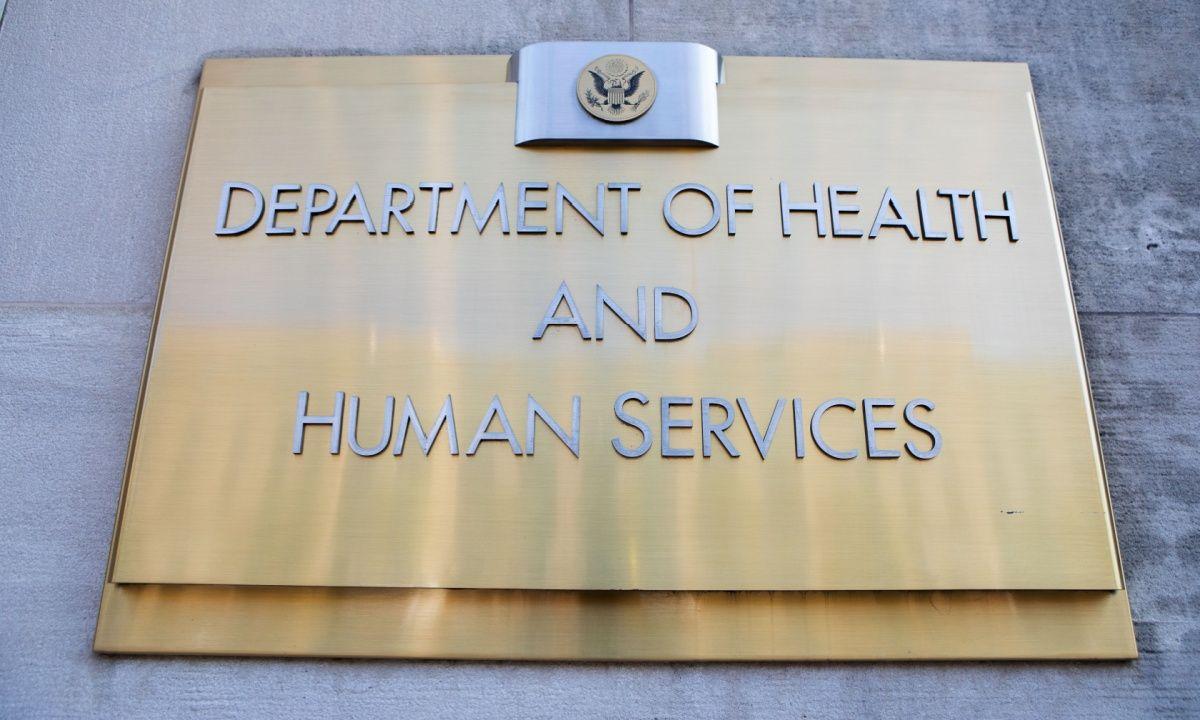
The U.S. Department of Health and Human Services unveiled its AI strategy on Thursday, marking a significant push to expand adoption of AI technology across federal healthcare operations
1
. The 20-page document, described as a "first step," focuses primarily on boosting departmental efficiency and coordinating AI integration across divisions including the CDC, CMS, FDA, and NIH4
. Deputy HHS Secretary Jim O'Neill framed the initiative as essential to cutting through bureaucracy, stating it was "time to tear down these barriers to progress and unite in our use of technology to Make America Healthy Again"2
.
Source: PYMNTS
Five Pillars Define AI Adoption in Healthcare
The AI strategy identifies five key pillars for implementation: creating a governance structure that manages risk, designing a suite of AI resources for departmental use, empowering employees to use AI tools, funding programs to set standards for AI in research and development, and incorporating AI in public health and patient care
3
. HHS has already made ChatGPT available to every employee and promotes a "try-first" culture to streamline administrative tasks1
. The department had 271 active or planned AI implementations in the 2024 financial year, with projections showing a 70% increase by 20252
.Patient Health Data Analysis and Drug Development Applications
Beyond internal operations, the plan teases ambitious applications in patient health data analysis and drug development
1
. HHS divisions are working to deliver "personalized, context-aware health guidance to patients by securely accessing and interpreting their medical records in real time"3
. This aligns with broader industry trends where almost half of healthcare organizations have generative AI in production use for documentation and clinical summaries, and 72% of surveyed physicians believe AI could improve diagnostic ability4
.Related Stories



Data Privacy Concerns Overshadow Innovation Plans
The strategy has sparked significant concerns about data privacy and risk management among experts. Oren Etzioni, an artificial intelligence expert, warned that "ambition brings risk when dealing with the most sensitive data Americans have: their health information"
2
. Darrell West from the Brookings Institution noted the document "promises to strengthen risk management but doesn't include detailed information about how that will be done," pointing out that while safeguards exist for individual records, "not as many protections" cover aggregated information being analyzed by AI tools3
. HHS previously faced criticism for data sharing practices when it handed over Medicaid recipients' personal health data to Immigration and Customs Enforcement officials1
.Leadership Questions and Political Context
The AI strategy follows President Donald Trump's repeal of Joe Biden's executive order that established guardrails for AI use, signaling the administration's intent to remove barriers to integrating artificial intelligence across federal government
2
. Questions persist about whether rigorous standards will be maintained under Health Secretary Robert F. Kennedy Jr.'s leadership. Etzioni expressed doubt that HHS could meet the strategy's calls for "gold standard science" and transparency, citing Kennedy's track record with scientific principles3
. Ironically, some within Kennedy's own "Make America Health Again" movement have voiced concerns about tech companies accessing personal health information1
. Despite these concerns, experts acknowledge that if executed carefully with proper governance, this could represent a significant modernization of agency operations.
Source: AP
References
Summarized by

Navi
Related Stories
Recent Highlights
1
Tennessee Teens Sue Elon Musk's xAI Over Grok AI-Generated Child Abuse Images
Policy and Regulation

2
Pentagon designates Palantir Maven AI as core US military system in major defense shift
Technology

3
Supermicro Co-Founder Indicted in $2.5 Billion Nvidia AI Chip Smuggling Scheme to China
Policy and Regulation

Recent Highlights
Today's Top Stories













Your Daily Dose of Curated AI News
Don’t drown in AI news. We cut through the noise - filtering, ranking and summarizing the most important AI news, breakthroughs and research daily. Spend less time searching for the latest in AI and get straight to action.

