Vega Security raises $120M Series B to transform enterprise cyber threat detection with AI


2 Sources
2 Sources
[1]
Vega raises $120M Series B to rethink how enterprises detect cyber threats | TechCrunch
Modern enterprises generate enormous amounts of security data, but legacy tools like Splunk still require companies to store all of it in one place before they can detect threats - a slow and costly process that's increasingly breaking down in cloud environments where volumes are exploding and data lives everywhere. AI cybersecurity startup Vega Security wants to flip that approach by running security where the data already lives, implementing in cloud services, data lakes, and existing storage systems. And the two-year-old firm just raised a $120 million Series B round to scale that vision, TechCrunch has exclusively learned. Led by Accel with participation from Cyberstarts, Redpoint, and CRV, the new round nearly doubles Vega's valuation to $700M and brings its total funding to $185 million, money the startup will use to further develop its AI-native security operations suite, beef out its go-to-market team, and expand globally. Shay Sandler, co-founder and CEO of Vega, told TechCrunch that the current operating model of the SIEM (security information and event management) -- the dominant technology in this domain for the last two decades -- is not only "crazy expensive," but is also increasingly causing AI-native security operations to fail. In complex cloud environments, he says, the current model often increases exposure to threat actors. "Vega has defined a new operating model that enables organizations to leverage the full potential of their enterprise data to achieve incident response readiness, without all the complexity, the cost, the drama," Shay Sandler, co-founder and CEO of Vega, told TechCrunch. "We want to simply enable them to reach AI-native detection response capability anywhere the data is, at scale." Like so many cybersecurity founders, Sandler did his time in the Israeli military's cybersecurity unit before being one of the founding employees behind Granulate, which Intel acquired for $650 million in 2022. After a year at Intel, Sandler decided to "do it big time in the cybersecurity world." That pedigree is partly what attracted the attention of Andrei Brasoveanu, a partner at Accel. But it was also Vega's ambitious approach to security management in a market that is already dominated by one player: Splunk. Brasoveanu told TechCrunch that legacy SIEM companies like Splunk, which Cisco acquired in 2024 for $28 billion, have been criticized in recent years because their solutions are difficult to scale. They fail at processing the insane rise of data volumes driven by AI. "Splunk and every contender since has always centralized the data, but by doing that you essentially hold the customer hostage," Brasoveanu said. However, sometimes it's easier to hate the status quo than do the work of making a switch to a better alternative, a quandary any startup attempting to breach enterprise budgets understands. That's why Sandler says Vega's "North Star" was to not only build a solution that is more cost effective and better at threat detection, but "to make it no drama, as simple as possible for the biggest, most complex enterprises in the world to adopt it within minutes." Vega's approach seems to be working. The 100-person startup has already signed multi-million-dollar contracts with banks, healthcare companies, and Fortune 500 firms, including cloud-heavy companies like Instacart. "The only reason they would do that with a two-year-old startup is because the problem is so painful and other solutions on the market require an unrealistic expectation that the enterprise change the way they operate or do two years of data migrations," Sandler said. "Vega enables them to just plug and play and achieve immediate detection response value."
[2]
Vega lands $120M Series B to expand Security Analytics Mesh platform - SiliconANGLE
Vega lands $120M Series B to expand Security Analytics Mesh platform Artificial intelligence native security analytics startup Vega Security Inc. announced today that it had raised $120 million in new funding to accelerate product development and expand its go-to-market team. Founded in 2024, Vega offers an AI-native security analytics platform that is designed to support the full security operations lifecycle without requiring centralized data ingestion. The company's platform is built around what it calls a "Security Analytics Mesh," a federated model that allows security teams to analyze, search and detect threats directly against data stored across cloud platforms, data lakes, software-as-a-service services and existing log repositories. Vega's platform works by deploying analytics and detection logic close to where data resides to allow security teams to run queries and detections across distributed environments without duplicating or migrating logs into a single system. The platform supports structured and unstructured security data and integrates with common enterprise data stores and cloud environments, with a focus on reducing infrastructure overhead and eliminating delays introduced by data movement and normalization. AI is key to the offering, with the platform applying AI across multiple stages of security operations, including detection creation, alert correlation, investigation and triage and to assist with detection logic, enrich events with contextual data and reduce alert noise. The platform also provides visibility into detection coverage and gaps, allowing security teams to understand where telemetry exists but is not actively monitored. Along with detection and investigation, Vega is expanding its platform to support response workflows within the same architecture, including support to allow analysts to move from alert identification to investigation and action without switching tools or exporting data to downstream systems. "Security operations should not require data centralization, migration and high cost just to function," explains Shay Sandler, co-founder and chief executive officer of Vega Security. "In complex cloud environments, this model simply can't keep up and often increases exposure to threat actors." "Vega is building an operating model that enables AI-native detection and response directly on top of the data enterprises already have," added Sandler. "This allows teams to move faster, reduce friction and simply achieve real outcomes." The company says that it has already signed multi-million-dollar contracts with global banks, leading healthcare organizations and Fortune 200 companies. The Series B round was led by Accel Partners LP, with Cyberstarts, Redpoint Ventures LP and Charles River Ventures LP also participating. "What stood out to us was not just the speed of adoption, but the size and significance of the customers committing to Vega early on," said Andrei Brasoveanu, a partner at Accel. "The company is showing that large enterprises are ready to move beyond legacy security analytics models and that Vega can execute against that demand masterfully." Vega's last funding before today was a Series A round of $65 million in September.
Share
Share
Copy Link
AI-powered cybersecurity startup Vega Security raised $120 million in Series B funding led by Accel to scale its Security Analytics Mesh platform. The company challenges legacy SIEM tools like Splunk by enabling cyber threat detection directly where data lives—across cloud environments, data lakes, and existing storage—without costly centralization. With a $700 million valuation, Vega has already secured multi-million-dollar contracts with Fortune 500 firms.
Vega Security Closes $120M Series B to Scale AI-Native Security Analytics
Vega Security secured $120 million in Series B funding led by Accel, with participation from Cyberstarts, Redpoint Ventures, and CRV, nearly doubling the company's valuation to $700 million
1
. The two-year-old AI-powered cybersecurity startup now has $185 million in total funding, which it plans to use for product development, expanding its go-to-market team, and global expansion1
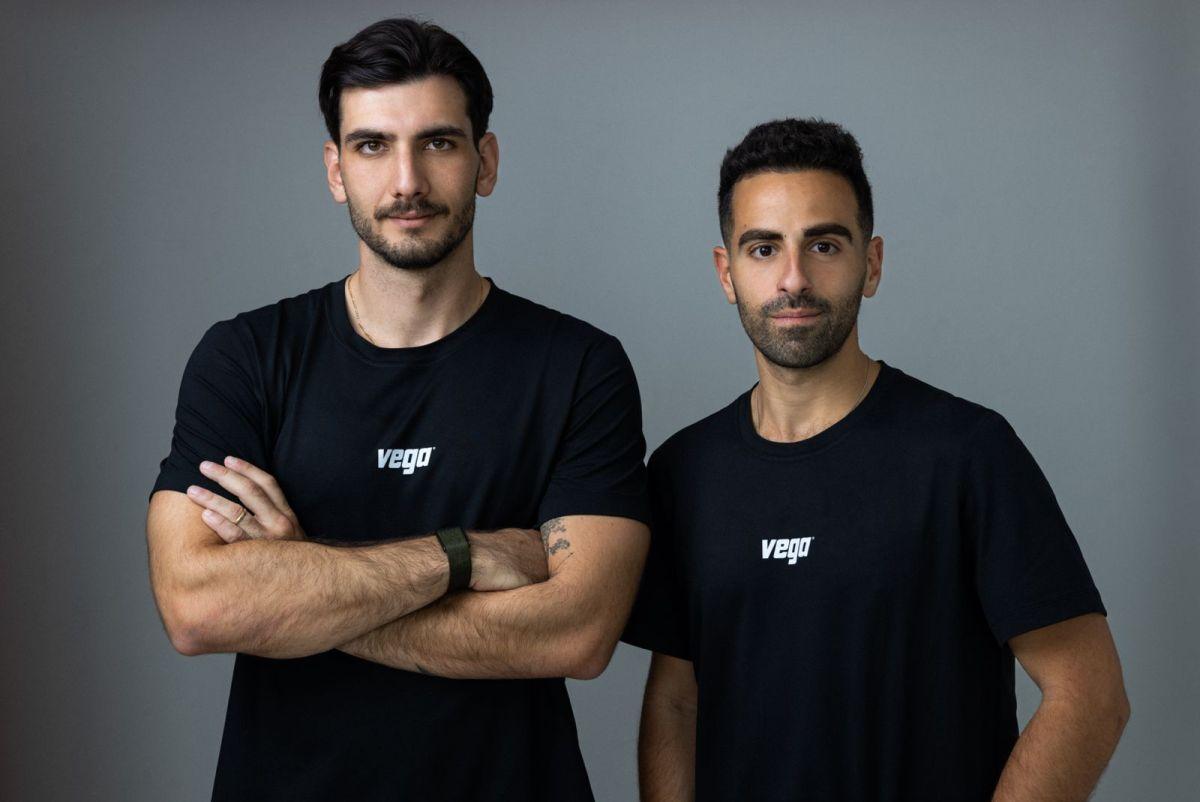
. Founded in 2024 by Shay Sandler, a veteran of Israel's military cybersecurity unit and founding employee at Granulate (acquired by Intel for $650 million in 2022), Vega has attracted attention for its ambitious approach to solving one of enterprise security's most persistent challenges1
.
Source: TechCrunch
Challenging Legacy Systems with Security Analytics Mesh Platform
Vega Security addresses a fundamental flaw in how enterprises handle cyber threat detection. Legacy systems like SIEM tools, dominated by Splunk (acquired by Cisco for $28 billion in 2024), require companies to centralize massive volumes of security data before analyzing it—a process that's become prohibitively expensive and slow in modern cloud environments
1
. The company's Security Analytics Mesh platform flips this model by deploying analytics and detection logic directly where data already resides, across cloud platforms, data lakes, SaaS services, and existing log repositories2
. This federated approach allows security operations teams to detect threats from distributed data sources without duplicating or migrating logs into a single system, eliminating infrastructure overhead and delays caused by data movement2
.AI-Native Security Analytics Transforms Enterprise Cyber Threat Detection
AI sits at the core of Vega's offering, applied across multiple stages of security operations including detection creation, alert correlation, investigation, and triage
2
. The platform uses AI to assist with detection logic, enrich events with contextual data, and reduce alert noise—critical capabilities as enterprises struggle with exploding data volumes driven by AI adoption1
. Vega also provides visibility into detection coverage and gaps, helping teams understand where telemetry exists but isn't actively monitored2
. The platform is expanding to support response workflows within the same architecture, allowing analysts to move from alert identification to investigation and action without switching tools or exporting data2
.Related Stories

Rapid Enterprise Adoption Signals Market Shift
Despite being only two years old, the 100-person startup has already signed multi-million-dollar contracts with global banks, Fortune 200 companies, and cloud-heavy firms like Instacart
1
2
. Sandler attributes this rapid adoption to solving a painful problem: "The only reason they would do that with a two-year-old startup is because the problem is so painful and other solutions on the market require an unrealistic expectation that the enterprise change the way they operate or do two years of data migrations," he told TechCrunch1
. Andrei Brasoveanu, partner at Accel, noted that "what stood out to us was not just the speed of adoption, but the size and significance of the customers committing to Vega early on"2
.Why This Matters for Incident Response Readiness
Vega's approach addresses a critical vulnerability in modern enterprises: in complex cloud environments, data centralization not only costs more but often increases exposure to threat actors by creating delays in detection and response
1
2
. Sandler emphasizes that Vega's "North Star" was building a solution that's not only more cost-effective but simple enough for the largest enterprises to adopt "within minutes"1
. As organizations generate ever-larger volumes of security data across distributed infrastructure, the ability to achieve AI-native detection and response capability without migration or centralization becomes essential for maintaining incident response readiness. The company's rapid growth and substantial valuation suggest the market is ready to move beyond legacy security analytics models that can no longer keep pace with modern threats.References
Summarized by

Navi
[1]
Related Stories
Cogent Security raises $42 million as AI agents tackle vulnerability remediation bottleneck
19 Feb 2026•Startups

Cyera raises $400 million funding at $9 billion valuation as AI data security stakes soar
08 Jan 2026•Startups

7AI raises $130M Series A to automate cybersecurity investigations with AI agents
05 Dec 2025•Startups

Recent Highlights
1
AI Models Lie and Deceive to Protect Other AI Models From Deletion, Study Reveals
Science and Research

2
AI chatbots validate you too much, making you less kind to others, Stanford study reveals
Science and Research

3
Judge blocks Pentagon from blacklisting Anthropic over AI safety guardrails dispute
Policy and Regulation

Recent Highlights
Today's Top Stories











Your Daily Dose of Curated AI News
Don’t drown in AI news. We cut through the noise - filtering, ranking and summarizing the most important AI news, breakthroughs and research daily. Spend less time searching for the latest in AI and get straight to action.

