AI Won't Kill IT Services: Industry Leaders Push Back on Disruption Fears


8 Sources
8 Sources
[1]
News of IT Services' Death Is Greatly Exaggerated
We are seeing a spate of disruptive headlines and predictions around the demise of IT services. With the progress made by AI, specifically in software development, it is easy to assume that traditional IT services are on their way out. This narrative is fundamentally flawed. Yes, AI-driven automation deflates the unit cost of technology work. But it also inflates the volume and complexity of that work even faster. The net effect is more demand for IT services, not less. We've seen this scenario play out before through waves of offshoring, cloud migration, and platform engineering. However, not every IT services firm will capture this growth. The winners will be those that build proprietary AI platforms, invest in domain expertise, and shift to outcome-based delivery. The losers will be those still selling labor arbitrage by the hour. The key questions for CIOs are which operating model wins, and whether your current providers are on the right side of that divide. Here is how I see it: * Frontier AI doesn't run itself. Tech maturity is diverging at speed. Big tech pushes toward frontier AI. Most enterprises just need their systems to run. The gap between AI's technical capability and its enterprise adoption is enormous, and it's a gap that requires human expertise to close. And the surface area keeps expanding: technology is penetrating logistics, finance, and operational functions that historically ran on spreadsheets and institutional memory. Process redesign, multi-agent orchestration, data pipeline engineering, governance frameworks, compliance controls, and workforce training are not tasks you hand to an AI agent. That is precisely what IT services firms deliver. As the gap widens, so does their relevance. At recent AI Impact Summit in New Delhi - both Sam Altman and Dario Amodei acknowledged that SIs will be the key channel for taking their solutions to enterprises. * Agents write code; humans engineer everything around it. AI is making code generation faster and cheaper. That matters less than most headlines suggest. Coding represents roughly a third of any delivery effort. The rest - specifications, architecture, cross-team coordination, platform integration, testing, and project governance - still demands human judgment. Getting requirements right is a nuanced process. Orchestrating work packages for coding agents across multiple teams requires architectural thinking that humans excel at and will do so for a foreseeable future. IT services firms do this work at scale, across complex enterprise environments, every day. AI makes their coders faster; it doesn't replace the engineering discipline that surrounds the code. * Agents don't run on models- they run on context. Agents are only as good as the context pipeline feeding them - i.e. structured data, unstructured enterprise knowledge, business rules, business ontology real-time operational signals. But also, tacit knowledge: the domain judgment, evolved problem-solving instincts, and operational intuition that live in your people's heads and resist codification. All of it must be engineered into a coherent layer specific to each organization. This is context engineering, and it will be the highest-value discipline in enterprise AI. IT services firms already hold the raw material: deep familiarity with their clients' processes, data architectures, and operational logic. Expect the leading IT services providers to develop sophisticated context engineering services, akin to Palantir's Forward Deployed Engineer (FDE) model. What This Means For CIOs Your IT services portfolio was built for the arbitrage era. You need to restructure it for the AI era: * Test for context engineering depth. Ask providers how they capture and embed tacit domain knowledge into AI agent pipelines. If the answer is vague, they haven't started. * Apply a "price x quantity" lens to vendor budgets. AI will deflate unit costs but inflate project volume. Model your vendor spend as a reallocation: less commodity coding, more integration, orchestration, and domain-specific AI work. * Demand outcome-based commercial models. Providers still pricing by FTE are optimizing for their margin, not your results. Shift contracts toward measurable delivery outcomes. * Force the reskilling question. What percentage of their delivery staff are AI-skilled today? What's the 12-month target? Providers without concrete numbers are hoping the transition happens slowly. It won't. The Tocqueville filter is coming. French philosopher Alexis de Tocqueville observed that bad government is most endangered when it begins to reform. The AI-driven reform of IT services will follow the same logic: it won't kill the industry, but it will expose and destroy the weakest operators. AI won't kill IT services. It will separate the architects from the order-takers. Providers built on labor arbitrage, with no proprietary AI assets, no context engineering capability, and no credible reskilling plan, are the bad government in this analogy. While Sam Altman and Dario Amodei were nice to the role SIs will play but still Palantir's partnership with SAP for ECC to S/4HANA migration shook the services firms. A capability that they could have built themselves. They didn't then but now reform will be forced upon them. CIOs who wait to see which of their providers survive the filter will pay for that passivity in delayed transformation and stranded contracts. Act now.
[2]
Threat to large IT firms 'overblown', Cognizant's AI chief says amid Anthropic-driven disruption
MUMBAI, Feb 26 (Reuters) - Fears that new artificial intelligence tools could replace large IT services firms are "overblown" as clients still need help deploying and scaling the technology, Babak Hodjat, chief AI officer at Cognizant (CTSH.O), opens new tab, told Reuters in an interview. Automated AI tools from startups such as Anthropic have stirred concerns about disruption in the business models of software and services firms globally, including India's traditionally labour-intensive IT services industry. Enterprises are far from being able to rely on a single, all-purpose AI agent, said Hodjat, adding that most clients still need help engineering, integrating, and governing AI systems. "That mapping is our job, it does not come just automatically out of the box," said Hodjat, whose work helped power Apple's (AAPL.O), opens new tab Siri voice assistant. Nasdaq-listed Cognizant, which has more than 70% of its workforce operating out of India, forecast annual revenue above Wall Street estimates on the back of strong demand as businesses adopt AI into their workflows. Rivals Tata Consultancy Services (TCS.NS), opens new tab and Wipro (WIPR.NS), opens new tab have also maintained that rapid AI adoption will boost, rather than shrink, demand for software service providers. Hodjat's vote of confidence in the role of services companies comes despite AI-related job cuts already underway. Shipping and logistics management software company WiseTech Global (WTC.AX), opens new tab said it would lay off nearly a third of its workforce as it integrates AI into its customer software and internal operations. TCS announced 12,000 job cuts last year, but has since denied to local media that the layoffs were AI-related. Cognizant, which generates about 30% of its code through AI and aims to reach 50%, is not worried about automation eliminating entry-level jobs. CEO Ravi Kumar S said during the company's earnings call earlier this month that it hired 25,000 fresh graduates in 2025, and expects to exceed that in 2026. Almost all of Cognizant's clients have already tried to work with AI agents, Hodjat said, but have acknowledged that they need us to deploy it within their systems for returns. Reporting by Haripriya Suresh in Mumbai; Editing by Janane Venkatraman Our Standards: The Thomson Reuters Trust Principles., opens new tab * Suggested Topics: * India Haripriya Suresh Thomson Reuters Haripriya reports on India's $254-billion Indian information technology (IT) industry, the country's burgeoning GCCs, as well as new-age startups. With seven years of experience, she has previously reported on politics, civic issues, crime, and breaking news in south India, and tracked the country's gig economy. She has a degree in Media Studies with a specialisation in journalism from the Symbiosis Centre for Media and Communication.
[3]
Threat to large IT firms 'overblown', Cognizant's AI chief says amid Anthropic-driven disruption
Cognizant, which generates about 30% of its code through AI and aims to reach 50%, is not worried about automation eliminating entry-level jobs. CEO Ravi Kumar S said during the company's earnings call earlier this month that it hired 25,000 fresh graduates in 2025, and expects to exceed that in 2026. Fears that new artificial intelligence tools could replace large IT services firms are "overblown" as clients still need help deploying and scaling the technology, Babak Hodjat, chief AI officer at Cognizant, told Reuters in an interview. Automated AI tools from startups such as Anthropic have stirred concerns about disruption in the business models of software and services firms globally, including India's traditionally labour-intensive IT services industry. Enterprises are far from being able to rely on a single, all-purpose AI agent, said Hodjat, adding that most clients still need help engineering, integrating, and governing AI systems. "That mapping is our job, it does not come just automatically out of the box," said Hodjat, whose work helped power Apple's Siri voice assistant. Nasdaq-listed Cognizant, which has more than 70% of its workforce operating out of India, forecast annual revenue above Wall Street estimates on the back of strong demand as businesses adopt AI into their workflows. Rivals Tata Consultancy Services and Wipro have also maintained that rapid AI adoption will boost, rather than shrink, demand for software service providers. Hodjat's vote of confidence in the role of services companies comes despite AI-related job cuts already underway. Shipping and logistics management software company WiseTech Global said it would lay off nearly a third of its workforce as it integrates AI into its customer software and internal operations. TCS announced 12,000 job cuts last year, but has since denied to local media that the layoffs were AI-related. Cognizant, which generates about 30% of its code through AI and aims to reach 50%, is not worried about automation eliminating entry-level jobs. CEO Ravi Kumar S said during the company's earnings call earlier this month that it hired 25,000 fresh graduates in 2025, and expects to exceed that in 2026. Almost all of Cognizant's clients have already tried to work with AI agents, Hodjat said, but have acknowledged that they need us to deploy it within their systems for returns.
[4]
As AI panic grips IT services stocks, Anand Mahindra weighs in on possible impact scenarios, cites famous Mark Twain quote: 'Reports of my death are greatly exaggerated'
In recent days, markets have been swinging wildly in response to a fictional AI scenario that imagines a 2028 where coding tools make software production almost as cheap as electricity. The ripple effects, from shrinking IT exports to potential IMF involvement, set off alarm bells about the future of Indian IT. Anand Mahindra stepped into the conversation to offer a more measured view, suggesting that while AI will pressure service providers, it may also make the most capable firms more central than ever. Mahindra responded to Citrini's tweet outlining the research behind the thought experiment, acknowledging the rigour and creativity of the scenario while emphasising the difference between a scenario and a prediction. He pointed out that markets are attempting to price uncertainty, which explains the volatility, and stressed that AI's rise doesn't necessarily signal the end of IT services. The business tycoon quoted Mark Twain's saying, "Reports of my death are greatly exaggerated." He further elaborated on how AI could reshape the industry: efficiency gains, cost optimisation, and a shift from effort-based pricing to outcome-focused delivery will become critical. Yet he highlighted that enterprises will still need secure data foundations, seamless integration across legacy and cloud systems, compliance oversight, and mission-critical reliability. Especially for medium and large organisations, these challenges remain complex and high-stakes, creating opportunities for IT firms that can orchestrate AI and deliver measurable outcomes. Mahindra suggested that the differentiator going forward will be the ability to manage risk and deliver "Scale at Speed," rather than simply supplying manpower. Services firms that pivot decisively toward AI orchestration and outcome-driven models will not only survive but remain extremely relevant in the evolving tech landscape. Netizens have been quick to weigh in on the AI debate and its impact on Indian IT. Many argue that AI won't eliminate the industry but will disrupt low-value, repetitive billing models. Firms that survive will be those that combine AI with domain expertise, compliance, and scale, moving from cost arbitrage to capability leadership. The focus shifts from replacing manpower to controlling the AI stack for enterprises. Others highlight that individuals and employees who adapt as "smart AI operators" will thrive, while those who resist change may fade. Many praised Anand Mahindra's perspective, noting that enterprise complexity isn't going away -- success depends on how quickly IT incumbents pivot toward AI orchestration before larger tech players dominate the space.
[5]
The Future of IT Services: A Rebuttal to Vinod Khosla's Predictions
Introduces Vasu AI Coach, LE AI Interviewer and LE AI Quality Compliance Specialist under LE AI, its proprietary AI infrastructure for global education and careers Ashok Soota founder and executive chairman of Happiest Minds Technologies Vinod Khosla stated that IT services and BPO roles will vanish within five years, with AI tools taking over tasks currently handled by human workers. He also argued that by 2030, traditional IT services and outsourcing will effectively disappear, replaced by AI-native services. He also said that by 2050, most expertise-based professions -- including medicine -- could be disrupted, with AI taking over roles in areas such as accounting, oncology, therapy, chip design, architecture, and sales. I am a strong believer in AI's role as a powerful tech enabler rather than a human replacement. The notion that IT services will disappear in five years ignores the lessons of history on how technology has always evolved to create newer opportunities. At both my companies i.e Happiest Minds and Happiest Health, we see AI as a catalyst for accelerating growth, enhancing productivity, and driving innovation across enterprises. IT services will remain essential in customizing solutions for diverse industries and ensuring enterprises innovate faster and achieve superior business outcomes. AI is transforming IT services into higher-value offerings, empowering us to deliver smarter, faster, and more cost-effective solutions. The industry is not dying; it is growing as the essential partner for enterprises and startups navigating the disruptive AI age. Even in my not-for-profit medical research trust, SKAN, I see AI enlarging the scope of research we can do, thereby increasing the market for IT Services. Moreover, predictions that doctors will lose their jobs in the coming decades underestimate the human aspect of healthcare. AI is being used as a powerful tool that empowers doctors by freeing them from routine tasks, not replacing them. From diagnostics to treatment planning, AI is processing vast amounts of medical data, identifying correlating patterns, and providing actionable insights. Reports from the WHO and WEF has also highlighted that while AI improves diagnostics, planning, and efficiency, it requires strong human oversight. Also, KPMG's 2025 GenAI Healthcare Sector Value Report shows that 65% of organizations are already reporting ROI from AI, with 92% of organizations believing that embracing AI will give them a competitive edge over those who do not. The entire Indian IT industry and many enterprises have completely embraced AI. Doctors and experts are emphasizing AI's complementary role in medicine and not replacing human judgement and skill. Truly, the complex decision-making, trust, and personalized care that doctors bring to patients cannot be replicated by machines. The future of healthcare lies in a symbiotic partnership between human expertise and AI innovation, leading to better outcomes, improved efficiencies, and healthier communities. Vinod Khosla's remarks risk undermining the credibility and confidence of India's flourishing IT industry, which continues to play a vital role in global business transformation. It is essential to highlight how AI is augmenting our capabilities, creating new opportunities, expanding our markets and strengthening India's position as a global technology leader. Far from dying, IT services are becoming the trusted bridge between cutting-edge AI and real-world enterprise needs.
[6]
'Bas Karo Yaar. Limit Hoti Hai': Fund manager slams AI doomsday narrative for IT services and recession prediction
Gurmeet Chadha, Managing Partner and CIO at Complete Circle, has pushed back against what he sees as excessive alarmism around artificial intelligence's potential impact on IT services players and overall and its impact on the economy. In his view, the narrative has swung from AI disrupting IT services to AI single-handedly triggering a recession. He mocked the exaggeration, suggesting that at this pace, people would soon claim AI would eliminate the need for basic human necessities. His broader point was clear: fear-driven storytelling around AI has crossed reasonable limits. However, markets have reacted sharply to concerns about AI's disruptive potential. Overnight, International Business Machines suffered its steepest single-day drop in over 25 years after AI startup Anthropic unveiled a tool aimed at modernizing Cobol systems traditionally run on IBM computers. Anthropic in a blog post said its Claude Code platform can automate much of the analysis and exploration work involved in updating legacy Cobol infrastructure, a process that previously required years of consultant-led effort. A fresh wave of selling hit Indian software services stocks today after a report by Citrini Research warned that companies exposed to traditional IT outsourcing models could face accelerating contract cancellations through 2027. The report flagged major players such as Tata Consultancy Services, Infosys, and Wipro as particularly vulnerable if enterprises increasingly adopt AI-driven automation tools. The NSE Nifty IT Index dropped as much as 3.6% in a single session while many frontline IT stocks dropped to multi-year lows. Indian IT companies have effectively become Asia's focal point for what traders are calling the "AI scare trade." While hardware manufacturers and AI infrastructure plays across the region have rallied on optimism about data center expansion and chip demand, Indian IT services firms have been punished amid fears that automation could undercut their traditional labor-arbitrage advantage. The sector has slid roughly 20% this month, erasing more than $54 billion in market capitalization. Investors worry that generative AI tools, including those developed by firms like Anthropic, may reduce the need for large offshore development teams and compress profit margins. The weakness was not confined to India. US technology stocks also felt pressure, with delivery, payments, and enterprise software companies declining. Analysts at HSBC Global Investment Research, led by Yogesh Aggarwal, warned of a potential 14%-16% gross deflationary impact on overall IT sector revenues over the next several years due to AI adoption. Meanwhile, Jefferies downgraded six Indian IT companies, citing structural shifts in business models. According to Jefferies, AI could fundamentally alter the revenue mix of IT services firms. Consulting and implementation services tied to AI transformation may grow, but traditional managed services could shrink. This shift would likely increase cyclicality and require companies to reconfigure talent pools and operating models, introducing execution risks. Yet not all investors share the apocalyptic outlook. Independent investor Kushal Shah, commenting on Gurmeet Chadha's post, argues that while AI's rapid scaling and disruptive power are real, predictions of the software industry's collapse within one to three years are overstated. Productivity gains are inevitable, he says. Over a five-year period, a 20-member team handling repetitive tasks could shrink significantly as automation takes over routine workflows. However, capability does not equal immediate diffusion, he said. Large-scale AI deployment requires integration with legacy systems, adherence to regulatory standards, cybersecurity safeguards, and infrastructure upgrades, highlighting how technological transitions take time. Industries will adopt AI at different speeds. Another independent investor, Kuldeep Verma, takes a macroeconomic perspective. Historically, recessions stem from monetary tightening, credit contraction, asset bubbles, energy shocks, or geopolitical crises. AI-driven productivity improvements, by contrast, tend to lower costs while expanding output. Productivity booms may create deflationary pressures in pricing but are typically expansionary in terms of economic capacity, he said. Artificial intelligence does not create an opportunity gap; the real issue is how effectively businesses use it, said Nandan Nilekani, chairman of Infosys, at the company's recent Investor AI Day 2026. He noted that technology is advancing faster than enterprises can deploy it, as AI adoption requires deep organisational change and it presents a big opportunity for IT services companies like Infosys, he said.
[7]
AI services a real opportunity for IT to adapt, move fast
Vinod Khosla says AI could transform the world into an era of abundance, where people need not work and can pursue their passions. He warns that India's IT services industry must adapt quickly to offer AI services globally or risk obsolescence. The country's talent and cost advantages create a major opportunity. The AI revolution will lead the world to an era of abundance where people will not have to work and will have the freedom to pursue their passion, Vinod Khosla, founder of Khosla Labs told ET's Swathi Moorthy and Surabhi Agarwal in an interview. About his doomsday prediction for the IT services industry, the Indian-American technocrat and venture capitalist said Indian services companies have a "real opportunity" to offer AI services all over the world, but they have to move fast and adapt quickly to save themselves from extinction. He also called the launch of the latest model by homegrown Sarvam as ahead of where DeepSeek was a year ago. Edited excerpts: You made a strong statement yesterday that perhaps by 2030, there will be nothing like the IT services or BPO industry anymore. What does it mean for India's economy? The thing with technology is that either you change with it and leverage it, or it leaves you behind. The notion that there will be IT services over some period, whether it happens by 2030 or 2035, is hard to predict. The idea of providing software services to western enterprises will go away. AI agents can do any BPO work, probably more accurately and faster than almost any human. One of the things Indian companies can do is to say, 'We won't hold on to that business but we will hold on to those customers and provide them new services.' More importantly, the world isn't as well equipped to adapt to AI as India is, especially the developing world. They have either very high costs in the West or very little knowledge, like in Africa or Southeast Asia. Indian services companies can do AI services all over the world, and that is the real opportunity. But only those who move rapidly will take advantage of it, and it will probably be a bigger opportunity than what they're leaving behind. India is a money-poor but people-rich and time-rich economy. With artificial general intelligence (AGI) pegged to arrive in the next 2-5 years, with job displacement in tow, what does it mean for India? I think the next five years will look very great to economists. They measure productivity and GDP growth, and that looks great. At some point...and my bet is from 2030 to 2040, we will see strong political forces and politics influencing whether AI gets adopted in each country. You will see chaotic policies, politicians pushing certain benefits, and saying there can't be job losses, which will slow down AI adoption. But I have no question that GDP growth will accelerate because of it. But because productivity is growing, you might see job losses or disruption in jobs. People will have to change what they do dramatically. When you get into the next 15 years, from 2040 to 2050, I think there will be such a large production of goods and services that things like food will be cheap, and entertainment will be cheap. I know it sort of seems odd to believe, but by 2050, it's going to be very exciting. It will truly be an era of abundance if politics allows it to happen. You had a meeting with the prime minister yesterday. What can you tell us about the discussions? The main thing is the idea that AI can make it possible to give every Indian a personal doctor who is available to them 24x7 and provide a level of healthcare that has not been possible and is affordable, at a cost much lower than what healthcare costs in India are today, and probably implemented through a system like Aadhaar. The other thing is that all 250 million children, and every adult learner, can use AI tutors for education. There are many Indian farmers, hundreds of millions of them, working on small plots. They can have a PhD-level agronomist available to them for free. These are not things we have to wait for in the future. I think they're available as soon as we adapt them from what is being done in the West for our country. A lot of investment as well as tech creation is currently dominated in the US and China. What does this mean for the Global South and India? 2047 coincides with the independence anniversary. I think that's a good time to shoot for a future where nobody in India needs a job. If you're a farm worker labouring in 110-degree heat, it's not really a job. It's servitude to survival. If those things go away, if there's lots of production of goods and services, that's what people need. So, can the bottom half of the Indian population have a 10x better standard of living than we have today by 2047 without having a job? Yes. I do think by 2047, which would be an awesome goal for India, we can declare minimum standards of living in the country that are so high that nobody needs to worry about survival.
[8]

Threat to large IT firms 'overblown', Cognizant's AI chief says amid Anthropic-driven disruption
MUMBAI, Feb 26 (Reuters) - Fears that new artificial intelligence tools could replace large IT services firms are "overblown" as clients still need help deploying and scaling the technology, Babak Hodjat, chief AI officer at Cognizant, told Reuters in an interview. Automated AI tools from startups such as Anthropic have stirred concerns about disruption in the business models of software and services firms globally, including India's traditionally labour-intensive IT services industry. Enterprises are far from being able to rely on a single, all-purpose AI agent, said Hodjat, adding that most clients still need help engineering, integrating, and governing AI systems. "That mapping is our job, it does not come just automatically out of the box," said Hodjat, whose work helped power Apple's Siri voice assistant. Nasdaq-listed Cognizant, which has more than 70% of its workforce operating out of India, forecast annual revenue above Wall Street estimates on the back of strong demand as businesses adopt AI into their workflows. Rivals Tata Consultancy Services and Wipro have also maintained that rapid AI adoption will boost, rather than shrink, demand for software service providers. Hodjat's vote of confidence in the role of services companies comes despite AI-related job cuts already underway. Shipping and logistics management software company WiseTech Global said it would lay off nearly a third of its workforce as it integrates AI into its customer software and internal operations. TCS announced 12,000 job cuts last year, but has since denied to local media that the layoffs were AI-related. Cognizant, which generates about 30% of its code through AI and aims to reach 50%, is not worried about automation eliminating entry-level jobs. CEO Ravi Kumar S said during the company's earnings call earlier this month that it hired 25,000 fresh graduates in 2025, and expects to exceed that in 2026. Almost all of Cognizant's clients have already tried to work with AI agents, Hodjat said, but have acknowledged that they need us to deploy it within their systems for returns. (Reporting by Haripriya Suresh in Mumbai; Editing by Janane Venkatraman)
Share
Share
Copy Link
Industry leaders including Cognizant's AI chief and Anand Mahindra are pushing back against predictions that AI will eliminate IT services firms. While AI is transforming how work gets done, experts argue that enterprises still need human expertise for deployment, integration, and orchestration. The debate intensifies as some predict IT services will vanish by 2030, while others see AI creating more demand, not less.
AI Drives Demand for IT Services, Not Replacement
The narrative that AI will eliminate IT services is fundamentally flawed, according to industry leaders responding to recent predictions about the sector's demise. Babak Hodjat, chief AI officer at Cognizant, told Reuters that fears of AI replacing IT services are "overblown" as enterprises still need help deploying and scaling the technology
2
. While AI tools from startups such as Anthropic have stirred concerns about disruption in business models globally, including India's traditionally labor-intensive IT services industry, the reality is more nuanced. AI-driven automation deflates the unit cost of technology work, but it also inflates the volume and complexity of that work even faster, creating net growth in demand for IT services rather than contraction1
.
Source: ET
Cognizant, which generates about 30% of its code through AI and aims to reach 50%, hired 25,000 fresh graduates in 2025 and expects to exceed that number in 2026
3
. This hiring surge directly contradicts predictions of widespread job displacement and signals confidence in the sector's growth trajectory. The company's Nasdaq listing and forecast of annual revenue above Wall Street estimates, backed by strong demand as businesses adopt AI into their workflows, further validates this optimism.Human Expertise Remains Essential for AI Orchestration
Enterprises are far from being able to rely on a single, all-purpose AI agent, according to Hodjat, whose work helped power Apple's Siri voice assistant. Most clients still need help engineering, integrating, and governing AI systems. "That mapping is our job, it does not come just automatically out of the box," he explained
2
. While AI agents write code faster and cheaper, coding represents roughly a third of any delivery effort. The rest—specifications, architecture, cross-team coordination, platform integration, testing, and project governance—still demands human judgment1
.Context engineering will emerge as the highest-value discipline in enterprise AI. Agents are only as good as the context pipeline feeding them, including structured data, unstructured enterprise knowledge, business rules, and tacit knowledge that lives in people's heads and resists codification
1
. IT services firms already hold this raw material through deep familiarity with their clients' processes, data architectures, and operational logic. Almost all of Cognizant's clients have already tried to work with AI agents but acknowledged they need deployment support within their systems for returns3
.Industry Leaders Counter Extinction Predictions
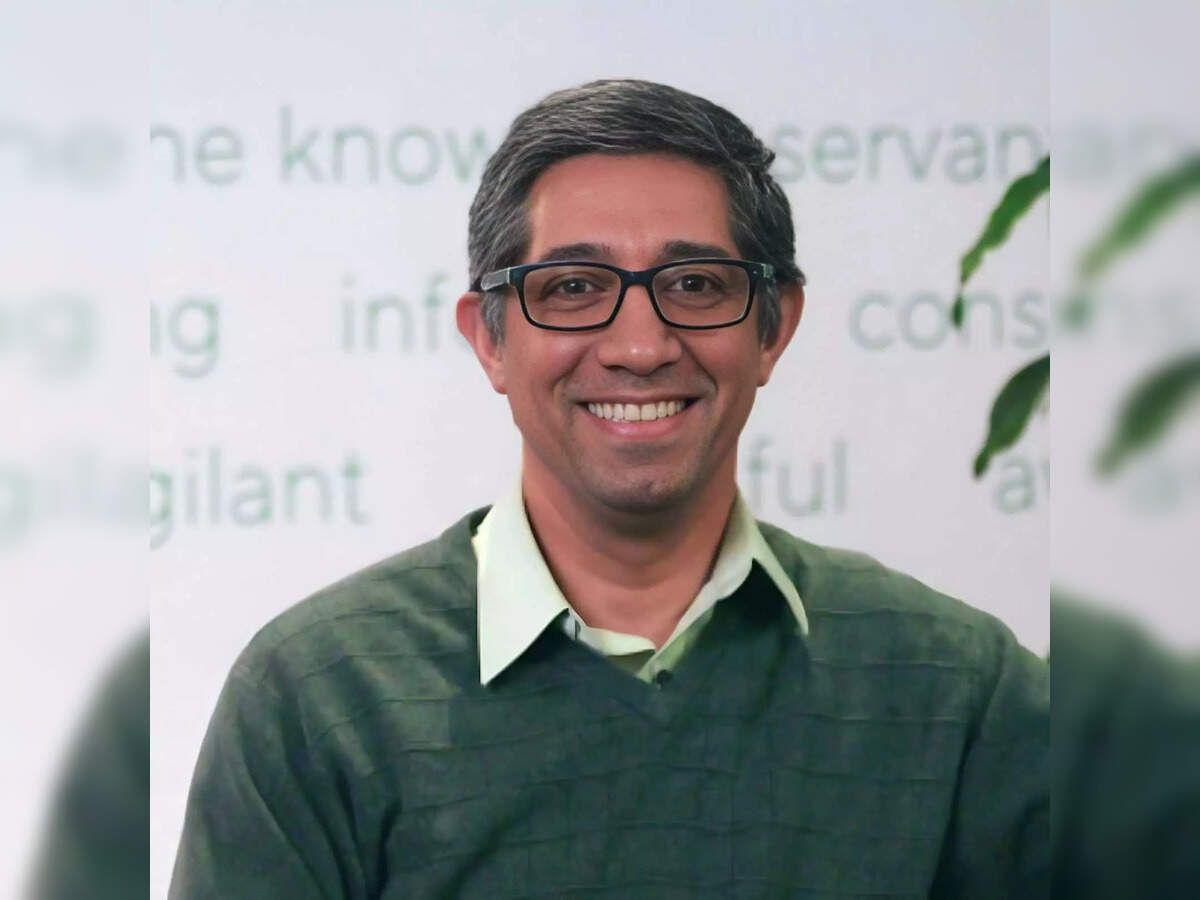
Anand Mahindra weighed into the debate, citing Mark Twain's famous quote: "Reports of my death are greatly exaggerated." He acknowledged that AI will pressure service providers but emphasized that the most capable firms may become more central than ever
4
. Mahindra highlighted that enterprises will still need secure data foundations, seamless system integration across legacy and cloud systems, compliance oversight, and mission-critical reliability. The differentiator going forward will be the ability to manage risk and deliver "Scale at Speed" rather than simply supplying manpower.
Source: ET
Ashok Soota, founder and executive chairman of Happiest Minds Technologies, directly rebutted Vinod Khosla's predictions that IT services and BPO roles will vanish within five years. Soota argued that such predictions ignore the lessons of history on how technology has always evolved to create newer opportunities
5
. He sees AI as a catalyst for accelerating growth, enhancing productivity, and driving innovation across enterprises. IT services will remain essential in customizing solutions for diverse industries and ensuring enterprises innovate faster and achieve superior business outcomes.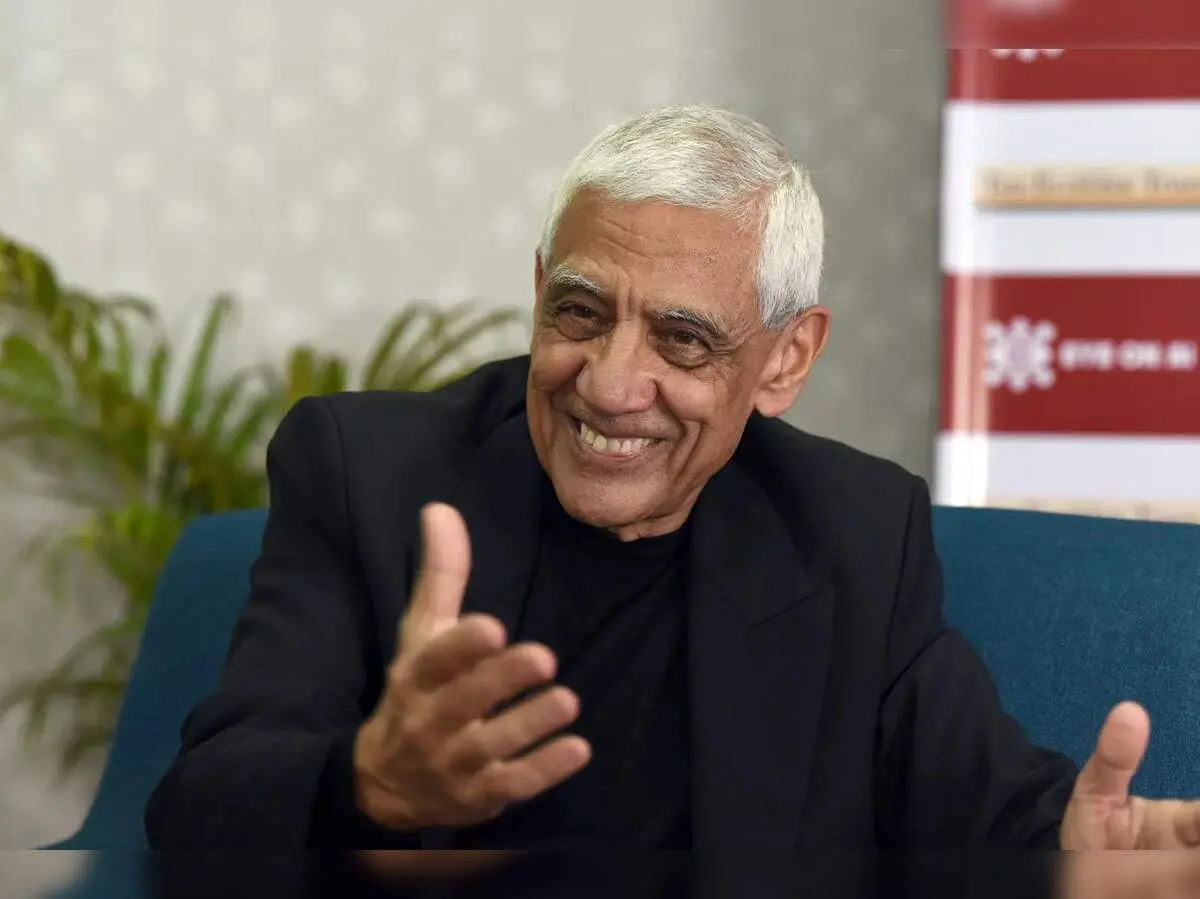
Source: ET
Related Stories

Winners and Losers in the AI-Driven Transformation
Not every IT services firm will capture this growth. The winners will be those that build proprietary AI platforms, invest in domain expertise, and shift to outcome-based delivery. The losers will be those still selling labor arbitrage by the hour
1
. Services firms that pivot decisively toward AI orchestration and outcome-driven models will not only survive but remain extremely relevant in the evolving tech landscape4
.The threat to IT firms is real but selective. While some job cuts have occurred—WiseTech Global laid off nearly a third of its workforce as it integrates AI, and TCS announced 12,000 job cuts last year—the overall trend points toward transformation rather than elimination
2
. Rivals Tata Consultancy Services and Wipro have maintained that rapid AI adoption will boost, rather than shrink, demand for software service providers. The gap between AI's technical capability and its enterprise adoption is enormous, and it's a gap that requires human expertise to close. As the gap widens between frontier AI and practical enterprise needs, so does the relevance of IT services firms capable of bridging it.References
Summarized by

Navi
[1]
[2]
[3]
Related Stories
Anthropic's AI legal tool triggers massive sell-off in software stocks across Europe and India
03 Feb 2026•Business and Economy

AI disruption triggers $100 billion market value erosion in Indian IT sector as foreign investors flee
06 Mar 2026•Business and Economy
Anthropic's AI Tool Launches Trigger $68.6 Billion Rout in Indian IT Stocks
24 Feb 2026•Business and Economy
Recent Highlights
1
AI Models Lie and Deceive to Protect Other AI Models From Deletion, Study Reveals
Science and Research

2
AI chatbots validate you too much, making you less kind to others, Stanford study reveals
Science and Research
3
Judge blocks Pentagon from blacklisting Anthropic over AI safety guardrails dispute
Policy and Regulation

Recent Highlights
Today's Top Stories




Your Daily Dose of Curated AI News
Don’t drown in AI news. We cut through the noise - filtering, ranking and summarizing the most important AI news, breakthroughs and research daily. Spend less time searching for the latest in AI and get straight to action.

