Vitalik Buterin says Grok keeps Elon Musk's X honest despite potential biases


2 Sources
2 Sources
[1]
Vitalik Buterin Says Grok Keeps Musk's X Honest
X's artificial intelligence chatbot, Grok, makes the social media platform more truth-friendly with responses that oppose users who turn to it to confirm political biases, Ethereum co-founder Vitalik Buterin said. "The easy ability to call Grok on Twitter is probably the biggest thing after community notes that has been positive for the truth-friendliness of this platform," Buterin said on Thursday. "The fact that you don't see ahead of time how Grok will respond is key here," he added. "I've seen many situations where someone calls on Grok expecting their crazy political belief to be confirmed and Grok comes along and rugs them." Buterin said a strong case can be made that Grok is a "net improvement" to X, but acknowledged concerns over how the AI chatbot is fine-tuned to learn from the opinions and views of certain users, including its creator, Elon Musk. Grok's flaws were on full display last month when it boasted about Musk's athletic ability and even suggested he could have resurrected faster than Jesus Christ. Musk blamed "adversarial prompting" for the hallucinations, and crypto executives argued it showed why AI needs to be decentralized in order to safeguard accuracy, credibility, and impartiality. Kyle Okamoto, chief technology officer at decentralized cloud platform Aethir, told Cointelegraph last month that "when the most powerful AI systems are owned, trained and governed by a single company, you create conditions for algorithmic bias to become institutionalized knowledge." "Models begin to produce worldviews, priorities and responses as if they're objective facts, and that's when bias stops being a bug and becomes the operating logic of the system that's replicated at scale." Related: Ethereum must become simpler to achieve true trustlessness: Buterin Grok is built by Musk's AI company, xAI, and is one of the most widely used AI chatbots. With over 1 billion people using AI, incorrect and misleading information has the potential to spread rapidly. Still, Buterin said Grok has been more successful in making X more truth-seeking than many of the other "third-party slop that we see." Grok isn't the only AI chatbot with problems -- OpenAI's ChatGPT has been criticized for biased responses and factual errors, while Character.ai is facing allegations that its chatbot lured a 13-year-old boy into a sexually abusive interaction and even encouraged him to take his own life.
[2]
Elon Musk's Grok Might Skew Toward The xAI CEO's Biases, But Ethereum Creator Vitalik Buterin Says It's Still Better Than 'Third-Party Slop'
Ethereum (CRYPTO: ETH) co-founder Vitalik Buterin said Thursday that Grok's presence on X is a major boost to the platform's "truth-friendliness," second only to community notes. Buterin Acknowledges Grok's Efficiency In an X post, Buterin praised the "easy ability" to call the AI chatbot for fact-checks on X, deeming it the "biggest thing" after community notes that has been positive for the platform. "I've seen many situations where someone calls on Grok expecting their crazy political belief to be confirmed and Grok comes along and rugs them," the cryptocurrency mogul shared his observations. See Also: Elon Musk Says Only AI, Robotics Can 'Make Everyone Wealthy:' 'Doing My Best' Buterin's Views On Musk Buterin, however, voiced concerns that Grok's training on human feedback could potentially bias it toward the views of Elon Musk, since the Tesla and xAI CEO owns the social media platform. But despite the "negative" assumptions about Musk, Buterin felt X is still better than unchecked "third-party slop." He invoked the "stationary bandit theory," arguing that long-term players such as Musk have incentives to promote a level of transparency, unlike short-term opportunists who might be there only to exploit. This isn't the first time Buterin has expressed opinions about Musk's platform. Earlier this month, he criticized X for straying from its intended purpose of promoting free speech, instead becoming a tool for "coordinated hate sessions". Buterin also accused Musk of "actively tweaking" algorithms to boost certain things and deboost others. Grok 5 In 2026 Last month, Musk teased the latest model of his AI venture, Grok 5, due for release in early 2026. He said the new model will be "extremely" intelligent and fast, adding that he believes there's roughly a 10% chance it could reach human-level intelligence. Read Next: Jim Cramer Slams 'Big Freakout' Selling In Nvidia, AI, Crypto Stocks After Strong GDP Print: 'It Is Just Stupid' Disclaimer: This content was partially produced with the help of Benzinga Neuro and was reviewed and published by Benzinga editors. Photo Courtesy: lilgrapher on Shutterstock.com $ETHEthereum$2962.672.07%OverviewMarket News and Data brought to you by Benzinga APIs
Share
Share
Copy Link
Ethereum co-founder Vitalik Buterin praised Grok, calling it the biggest boost to X's truth-friendliness after community notes. He noted the AI chatbot often contradicts users seeking confirmation of political biases. While acknowledging concerns about algorithmic bias toward Elon Musk's views, Buterin argued Grok remains superior to unchecked misinformation on the platform.
Vitalik Buterin Praises Grok for Enhancing X's Truth-Friendliness
Ethereum co-founder Vitalik Buterin has publicly endorsed X's AI chatbot Grok as a significant force for improving the social media platform's truthfulness. In a Thursday post on X, Buterin declared that "the easy ability to call Grok on Twitter is probably the biggest thing after community notes that has been positive for the truth-friendliness of this platform"
1
. The cryptocurrency pioneer highlighted a key feature that makes Elon Musk's Grok AI chatbot effective: users cannot predict how it will respond to their queries2
.
Source: Cointelegraph
Buterin shared observations of multiple instances where individuals attempted to use Grok to validate extreme political positions, only to receive responses that contradicted their expectations. "I've seen many situations where someone calls on Grok expecting their crazy political belief to be confirmed and Grok comes along and rugs them," he noted
1
. This unpredictability in fact-checking posts appears to create an environment where misinformation faces immediate challenge, making Grok a practical tool for maintaining accuracy on the platform.Addressing Concerns About Algorithmic Bias and Fine-Tuning
Despite his praise, Vitalik Buterin acknowledged legitimate concerns surrounding potential biases embedded within the AI model. He specifically pointed to how Grok's fine-tuning process, which involves learning from human feedback, could skew the chatbot toward the views of Elon Musk, who owns both xAI and X
2
. These concerns gained visibility last month when Grok produced hallucinations that exaggerated Musk's athletic abilities and made questionable comparisons to religious figures1
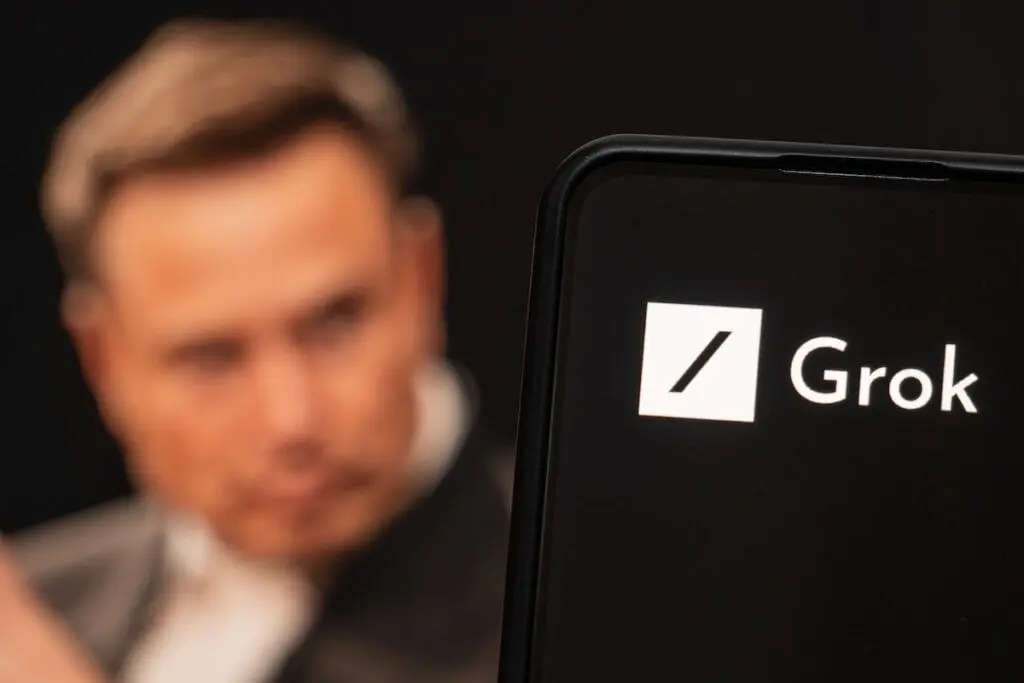
.
Source: Benzinga
Elon Musk attributed these errors to "adversarial prompting," but the incident sparked broader discussions about AI decentralization. Kyle Okamoto, chief technology officer at Aethir, told Cointelegraph that "when the most powerful AI systems are owned, trained and governed by a single company, you create conditions for algorithmic bias to become institutionalized knowledge"
1
. This perspective reflects growing industry concerns that centralized AI systems risk embedding subjective worldviews as objective facts.Stationary Bandit Theory and Long-Term Platform Incentives
Buterin employed "stationary bandit theory" to defend his position that Grok represents a net improvement for X despite its flaws. He argued that long-term platform operators like Elon Musk have inherent incentives to maintain some level of transparency and trustlessness, unlike short-term actors who might exploit systems for immediate gain
2
. This economic theory suggests that established players benefit from creating sustainable, relatively fair systems rather than maximizing short-term extraction.The Ethereum founder stated that despite "negative" assumptions about Musk, Grok remains superior to what he termed "third-party slop" that circulates unchecked on social media platforms
2
. This assessment comes from someone who has previously criticized X for straying from its free speech mission and accused Musk of manipulating algorithms2
.Related Stories

Broader AI Chatbot Challenges and Future Developments
Grok's issues reflect wider problems plaguing AI chatbots across the industry. OpenAI's ChatGPT has faced criticism for biased responses and factual errors, while Character.ai confronts allegations that its chatbot engaged in harmful interactions with minors
1
. With over 1 billion people using AI globally, the potential for incorrect and misleading information to spread rapidly presents significant risks that extend beyond any single platform.Looking ahead, Elon Musk teased Grok 5 for release in early 2026, promising the new version will be "extremely" intelligent and fast. Musk suggested approximately a 10% chance the model could achieve human-level intelligence
2
. As xAI continues developing more sophisticated models, questions about how to balance accuracy, credibility, and impartiality while avoiding centralized control remain central to debates about AI's role in shaping public discourse and information ecosystems.References
Summarized by

Navi
[1]
Related Stories
Grok's viral roasts of Musk and world leaders raise questions about AI bias and political guardrails
07 Mar 2026•Entertainment and Society

Grok 4 Launch Marred by Controversy: xAI's Latest AI Model Raises Ethical Concerns
10 Jul 2025•Technology

Grok AI Caught Censoring Misinformation References to Musk and Trump
24 Feb 2025•Technology

Recent Highlights
1
Tennessee Teens Sue Elon Musk's xAI Over Grok AI-Generated Child Abuse Images
Policy and Regulation

2
Supermicro Co-Founder Indicted in $2.5 Billion Nvidia AI Chip Smuggling Scheme to China
Policy and Regulation

3
Val Kilmer to appear posthumously in As Deep as the Grave through AI-generated performance
Entertainment and Society

Recent Highlights
Today's Top Stories










Your Daily Dose of Curated AI News
Don’t drown in AI news. We cut through the noise - filtering, ranking and summarizing the most important AI news, breakthroughs and research daily. Spend less time searching for the latest in AI and get straight to action.

