Waabi raises $1 billion and partners with Uber to deploy 25,000 robotaxis on ride-hailing platform


10 Sources
10 Sources
[1]
Waabi raises $1B and expands into robotaxis with Uber
Autonomous vehicle startup Waabi has raised $1 billion and struck a partnership with Uber to deploy self-driving cars on the ride-hailing platform -- the company's first expansion beyond autonomous trucking. The funding consists of an oversubscribed $750 million Series C round co-led by Khosla Ventures and G2 Venture Partners and roughly $250 million in milestone-based capital from Uber to support the deployment of 25,000 or more Waabi Driver-powered robotaxis exclusively on its platform. The companies did not provide a timeline for such a large-scale deployment. The partnership represents a bet that the startup's AI technology can succeed where others have struggled - scaling across multiple self-driving verticals with a single technology stack. While competitors like Waymo previously attempted both robotaxis and trucking before shutting down its freight program, Waabi founder and CEO Raquel Urtasun says her company's capital-efficient approach and generalizable AI architecture give it a unique advantage to tackle both markets simultaneously. "Our incredible core technology really enables, for the first time, a single solution that can do multiple verticals, and they can do them at scale," Urtasun told TechCrunch. "It's not about two programs, two stacks." The tie-up brings Urtasun's work full circle: she previously served as chief scientist at Uber's autonomous vehicle division, Uber ATG, which Uber sold to self-driving trucking firm Aurora Innovation in 2020. It also builds on Waabi's existing partnership with Uber Freight. Waabi is one of several AV companies that Uber has brought on to deploy self-driving vehicles on its platform globally. Other companies include Waymo, Nuro, Avride, Wayve, WeRide, Momenta, and more. The tie-up and funding round come as Uber launches a new division called Uber AV Labs that will use its vehicles to collect data for AV partners. Waabi isn't as reliant on data as some, if Urtasun is to be believed. The Waabi Driver is trained, tested, and validated using a closed-loop simulator called Waabi World that automatically builds digital twins of the world from data; performs real-time sensor simulation; manufactures scenarios to stress-test the Waabi Driver; and teaches the Driver to learn from its mistakes without human intervention. The result? Waabi's Driver can reason about its surroundings as a human would and choose the best maneuver, says Urtasun. This allows the system to generalize and learn from fewer examples than traditional autonomous driving systems. Waabi has spent the last four and a half years bringing that technology to life for highway and surface street capabilities with trucks, but Urtasun says the Waabi Brain already generalizes to different vehicle form factors - she has even hinted at the company's next vertical being robotics. From the beginning, the company collected and simulated passenger car data alongside its trucking work, a signal that robotaxis were always part of the long-term plan. The approach has allowed Waabi to build faster and cheaper than competitors, Urtasun claims. "We don't need the gazillion humans to develop the technology and the large fleets that AV 1.0 needs," Urtasun said. "We don't need the massive data centers, energy consumption, or a gazillion latest chips." The deal brings Waabi's total funding raised to roughly $1.28 billion after it closed a $200 million Series B in June 2024. Competitors Aurora Innovation and Kodiak Robotics have raised $3.46 billion and $448 million to date, respectively, through a combination of venture capital and public-market proceeds. In just five years, Waabi has launched several commercial pilots (with a human driver in the front seat) in Texas. The company had planned to launch a fully driverless truck on public highways by the end of last year, but the rollout has been delayed until sometime in the next few quarters, per Urtasun. Waabi is working with Volvo to build purpose-built autonomous trucks, which the company revealed last October at TechCrunch Disrupt. Urtasun says Waabi's Driver is ready to go, but the trucks still need to be fully validated before launch. Urtasun's not worried, though. She says there's plenty of demand for Waabi's trucks due to the company's direct-to-consumer model that enables shippers to buy the outfitted trucks directly, and she's confident that with the Uber partnership, Waabi will be able to "quickly penetrate the market and scale with a product that will be very reliable." "We're still in the first innings of deployment of robotaxis," she said. "There's a lot more scale to come." Urtasun wouldn't share more specifics about the Uber rollout, like what automaker Waabi would partner with. She did say that Waabi would take a similar route to its autonomous trucking rollout by building its sensors and technology into the vehicle from the factory floor. "We believe in vertically integrating with a fully redundant platform from the OEM," she said. "That is how you really build safe and truly scalable technology." Other investors in Waabi's Series C include Uber, NVentures (Nvidia's VC arm), Volvo Group Venture Capital, Porsche Automobil Holding SE, BlackRock, BDC Capital's Thrive Venture Fund, and others.
[2]
Self-driving truck startup Waabi is teaming up with Uber on robotaxis
Waabi, the Toronto-based autonomous trucking startup, is expanding its portfolio to include robotaxis. And it's bringing Uber along for the ride. Raquel Urtasun, the former chief scientist at Uber's now defunct Advanced Technologies Group, founded Waabi in 2021 to be a more "AI-centric approach" to autonomous vehicles. That approach initially focused on trucking, with Waabi using its proprietary software to automate driving on commercial delivery routes in Texas. But with self-driving trucks turning out to be a way harder problem than originally thought, and robotaxis seemingly having their own moment, Waabi is now turning its focus to autonomous rideshare vehicles as a demonstration of its "physical AI" prowess. To that end, Waabi has raised $1 billion, including $750 million in an oversubscribed Series C round led by Khosla Ventures and G2 Venture Partners, along with additional capital from Uber specifically tied to robotaxi development. As part of the agreement, Waabi plans to deploy a minimum of 25,000 robotaxis powered by its technology on Uber's platform. In an interview, Urtasun emphasized that the number of robotaxis is a floor rather than a ceiling. "So massive, massive partnership as you can see here," she said. "It really brings the next level of scale to the robotaxi market." That's a bold announcement from a startup that has yet to validate its self-driving trucks for commercial operation, let alone deploy a single robotaxi. Urtasun declined to specify the timeline for the deployment, the target markets, or the vehicle platform that Waabi will use for its robotaxis. She did claim, however, that the same technology Waabi uses to automate trucking can also be applied to robotaxis. In trucking, vehicles navigate to specific locations for loading and unloading -- similar to passenger pickups and drop-offs. She argues that many of the operational behaviors needed for robotaxis are already part of Waabi's existing system. Waabi isn't the first AV operator to pivot to robotaxis. And it's not surprising, given the growing excitement around Waymo's early successes, that investors are putting more money into startups that include a robotaxi plan. To be sure, driverless trucks were once expected to precede robotaxis and personally owned autonomous vehicles in mass adoption, considering that highways are vastly less complex than city and residential streets. But self-driving truck operators have run into hurdles involving the technology and regulation that have delayed their public debut. Some companies, like Embark Trucks, TuSimple, and Locomation, have gone out of business, while others have cut plans to deploy driverless trucks as timelines have stretched into the future and funding has dried up. But Urtasun firmly rejects the idea that trucking is proving too difficult. Waabi's trucking product, she explains, is already highly capable, but the company made a deliberate decision not to launch fully driverless operations on public roads until the platform was fully validated. Unlike competitors that deployed retrofit systems, Waabi chose to wait for a purpose-built, validated platform in partnership with Volvo. Still, she recognizes robotaxis introduce new challenges, including the risks inherent with accepting passengers into your vehicles and increased liability considerations. She declined to share key details about Waabi's tie-up with Uber, including who would own the robotaxi fleet -- though she stressed that Waabi considers itself a technology provider, and not necessarily a fleet owner or manager. Those aspects of the robotaxi business will likely be led by Uber, which has secured deals with over a dozen AV operators across the globe. And as a former tech executive with Uber, Urtasun has insider knowledge of what the ridehail giant expects. Still, Waabi will face a variety of headwinds, from regulators, suppliers, or Uber itself. Of course, Uber was once heavily invested in the idea of building its own self-driving cars. But the project blew up spectacularly, with allegations of trade secret theft and patent infringement, as well as a 2018 crash that killed a pedestrian in Arizona. The new funding will help Waabi in the near term, but once its robotaxis hit the road, and start encountering all the complexities and pitfalls of urban life, all bets are off.
[3]
Autonomous trucking startup Waabi raises $750 million to expand into robotaxis
Autonomous trucking startup Waabi said Wednesday that it has raised $750 million in funding as it enters into a partnership to deploy driverless systems in light duty vehicles for Uber robotaxi services. Waabi's series C round is led by Khosla Ventures and G2 Venture Partners, the startup announced Wednesday. The deal is one of the largest single rounds ever raised by a Canadian tech startup. Ranking 35 on CNBC's 2025 Disruptor 50 list, Waabi is based in Toronto with some operations in Texas. Founder and CEO Raquel Urtasun told CNBC the new funding will enable the company to adapt its "physical AI" to develop driverless systems that can be made to work in new locations, conditions and form factors with a high level of safety relatively quickly. In addition to Waabi's series C, Uber has committed to invest $250 million into the startup based on future milestones. With Uber's additional funding, Waabi will exclusively deploy at least 25,000 autonomous vehicles via the ridehail platform. Urtasun was previously a chief scientist at Uber's Advanced Technologies Group that worked on AV technology. "For me, it's been 16 years in self-driving," she said. "But this is -- it's finally here, scale is here. And the next couple of years, it's going to be amazing." Waabi has not yet revealed the vehicle models that will feature its systems. The startup previously developed driverless, trailer-hauling trucks made in partnership with automakers Volvo and, before that, Peterbilt. While Waabi has operated a fleet of its own driverless trucks to haul customers' cargo, it is now shifting to a "driver as a service" business model, said Urtasun, who is also a full professor of computer science at the University of Toronto.
[4]
Self-driving truck company Waabi raises $1B to expand into robotaxis
Why it matters: Waabi says it's the first company to develop a shared AI "brain" that can operate both trucks and robotaxis -- and eventually, other types of physical AI such as drones, warehouse robotics and humanoids. * "It's obvious that the physical AI moment is here," Waabi founder and CEO Raquel Urtasun tells Axios. "Autonomy is the first application where scale is going to happen." Driving the news: The funding includes $750 million in a Series C round, plus a $250 million milestone-based commitment from Uber tied to a robotaxi partnership. State of play: Uber's backing gives the new entrant instant weight in the race with Waymo, Tesla and overseas rivals to deploy driverless cabs. * As part of the agreement, Waabi has agreed to deploy at least 25,000 robotaxis powered by its driver system exclusively on Uber's global ride-hailing network. The Uber effect Autonomous vehicles are a potential threat to Uber, which abandoned an earlier effort to develop its own self-driving technology in-house. * Instead, it opted to partner with more than 20 AV companies worldwide to deploy small AV fleets alongside human drivers on its network. Between the lines: The Waabi deal, and a similar deal with Nuro and Lucid for 20,000 robotaxis, represents an escalation of Uber's strategy. * By committing to deploy tens of thousands of AVs worldwide, Uber is signaling it plans to strongly defend its ride-hailing turf. Yes, but: There are many unanswered questions about the Waabi/Uber robotaxi effort. * Waabi will supply the robot "driver," but it's not clear what vehicles will be used. In the Nuro-Lucid deal, Uber agreed to buy 20,000 Lucid electric robotaxis over six years and pay Nuro a per-mile licensing fee for its robot driver. * There is no such vehicle purchase agreement with Waabi yet. * It's also not known where and when Waabi's robotaxis will be deployed, and what the performance milestones are in order to unlock Uber's funding. The backstory Uber has had a stake in Waabi since its founding in 2021 by Urtasun, an AI pioneer who was previously chief scientist for Uber's Advanced Technologies Group. * Uber sold ATG in 2020 to Aurora Innovation, another AV company working on autonomous trucks. * Uber now has a stake in both Aurora and Waabi, which has a 10-year deal to autonomously haul cargo on the Uber Freight network. The intrigue: Waabi's early AV efforts in Texas focused on a hub-to-hub model, in which automated trucks would drive only on the highway and then hand off to a human driver for local delivery. * But logistics companies complained that system just added costs and friction to their operations. * So Waabi trained the trucks to master surface streets, too, so they could deliver cargo directly to the customer's final location. That street-level training, using self-learning AI technology, is what opened the door to urban robotaxis, Urtasun tells Axios. * "We've been pretty upfront for the last year and a half that our vision was to do more than self-driving trucks. We plan to do physical AI. Now it makes total sense for us to go to robotaxis next. Think about all the potential verticals you can do. This is ripe for scale." The bottom line: After years of hype, autonomous trucks and robotaxis are leading the way to the next phase of artificial intelligence.
[5]

Self-driving startup Waabi raises up to $1 billion and partners with Uber to deploy 25,000 robotaxis | Fortune
Waabi, the Toronto-based AI company building software to enable autonomous driving, has raised $1 billion in new funding and struck a major partnership with Uber to deploy at least 25,000 robotaxis on the ride-hailing giant's platform. The deal marks a significant expansion for Waabi, which until now has focused on autonomous trucking. The funding consists of a $750 million Series C round led by Khosla Ventures and G2 Venture Partners, plus an additional $250 million milestone-based investment from Uber tied to the robotaxi deployment. The company says it is the largest fundraise in Canadian history. Other investors in the Series C include Uber, NVentures (Nvidia's venture capital arm), Volvo Group Venture Capital, Porsche Automobil Holding SE, BlackRock, Radical Ventures, and a subsidiary of the Abu Dhabi Investment Authority. Waabi declined to disclose its valuation following the funding round. Toronto newspaper The Globe and Mail reported in December that the company was seeking a $3 billion valuation in the Series C round. Waabi also declined to say where its Uber robotaxis would first be deployed or on exactly what timeline they would be rolled out. Waabi represents a new breed of autonomous vehicle company -- part of what some in the industry call "AV 2.0." These companies use end-to-end AI models that learn to drive from vast amounts of data. Often a single AI model handles perception (understanding where the vehicle is on the road and what is happening around it), navigation (deciding what route to take), and action (deciding how to turn the steering wheel and whether to accelerate or brake). This contrasts with earlier self-driving technology, such as that originally deployed by Alphabet company Waymo, which relied on extensive hand-coded rules, many different software programs and machine learning models, each handling a single aspect of driving, as well as high-definition maps. Uber has recently announced a slew of robotaxi deals with vehicle manufacturers and AV 2.0 startups. In many of those deals, Uber is providing the startups with funding, as it's doing with Waabi. Earlier this month, Uber announced a tie-up with Nuro, another startup building software for self-driving, and Lucid Motors, which aims to put 20,000 Uber robotaxis on the roads, with the first robotaxi deployed this year. Alongside that announcement, Uber also invested $300 million into Nuro and Lucid. The ride hailing company also has partnerships with self-driving startup Avride for robotaxis in Dallas and several other U.S. cities. And it has partnered with Waymo to allow passengers to hail Waymo self-driving cars through the Uber app in Austin, Texas, and Atlanta. In 2024, Uber invested in U.K. AV 2.0 company Wayve as part of a partnership that also aimed to test Wayve's technology in Ubers in London. Uber also has a partnership with the Chinese internet giant Baidu to test robotaxis in London and several other international markets. Raquel Urtasun, the computer scientist who founded Waabi in 2021 and serves as its CEO, previously led Uber's autonomous vehicle research lab. Uber has been involved with Waabi since its Series A venture funding round and already holds a seat on the startup's board. Previously, Waabi had been working on the software that could operate autonomous trucks. In October, it announced the integration of its AI software into Volvo's fleet of autonomous trucks, which provide autonomous freight delivery services on highways in Texas and some mining and quarrying sites in Norway and Sweden. Volvo Autonomous also has a partnership with Uber's Uber Freight service. Currently, Volvo's trucks that use Waabi's software are using safety drivers in Texas. Urtasun said Waabi decided not to launch fully driverless trucking operations until the Volvo platform is fully validated -- a decision she framed as prioritizing safety over speed. Volvo has said publicly that full validation is "just quarters away." Urtasun told Fortune that the expansion to robotaxis is in no way a pivot for Waabi. The company's "physical AI platform" can generalize across different vehicle types, geographies, and driving conditions, and the exact same AI models that drive Waabi's trucks will also power its robotaxis, she said. "The model will be aware which vehicle it's driving, but it will be the same model," Urtasun said. "Think of us as humans -- we are not switching our brain, but we know each vehicle we are driving." This approach stands in contrast to companies that have developed separate systems for different vehicle types. It also means that improvements made for trucking benefit the robotaxi system, and vice versa. Although Waabi and Uber did not disclose a timeline for the Waabi-powered robotaxi rollout, Urtasun said it would happen "super fast." "Much faster than anybody can think," she said. "Much faster than you had traditionally seen on the robotaxi side." The robotaxi market is becoming intensely competitive. Waymo, owned by Google parent Alphabet, has been aggressively expanding beyond its original base in the San Francisco Bay Area. The company now operates in Phoenix, Los Angeles, Austin, and Atlanta, and has announced plans to launch in more than a dozen additional U.S. cities in 2026, including Miami, Dallas, Houston, Detroit, and Washington D.C. It's also planning its first international launches in London and Tokyo. Tesla, meanwhile, launched a limited robotaxi service in Austin, Texas, last June using its Full Self-Driving software. The service initially operated with human safety monitors in the passenger seat but began offering some fully driverless rides in January. Tesla's approach, like Waabi's, relies on end-to-end AI trained on camera data -- though Tesla uses a vision-only system without the lidar sensors most competitors employ. Wayve, the British company that has raised more than $1.3 billion from investors including SoftBank, Microsoft, and Nvidia, is also pursuing end-to-end AI. But unlike Waabi, Wayve has focused primarily on passenger vehicles and advanced driver-assistance systems rather than trucking. Waymo itself has been experimenting with end-to-end AI models and is rebuilding its own self-driving technology stack around them, as Fortune reported last year. But the company continues to rely on a combination of lidar, radar, and cameras for commercial operations. Waabi's new funding, meanwhile, will go toward accelerating its commercial progress in trucking while also supporting the expansion into robotaxis, Urtasun said. Vinod Khosla, founder of Khosla Ventures, said in a statement that Waabi's technology is "a fundamental leap forward" in how driverless technology is being developed. "Their remarkable progress in autonomous trucking and rapid expansion into robotaxis demonstrates how their technology unlocks for the first time true scale in the real world," he said.
[6]

Waabi raises $750M as Uber separately commits up to $250M for robotaxi partnership
Waabi raises $750M as Uber separately commits up to $250M for robotaxi partnership Canadian autonomous truck startup Waabi Innovation Inc. announced today that it had raised $750 million in new funding and had secured a separate, milestone-based future investment of up to $250 million from Uber Technologies Inc. to support a new partnership to deploy robotaxis powered by the Waabi Driver exclusively on the Uber platform. The new funding will fuel the continued advancement of Waabi's Physical AI Platform, further accelerate the company's commercial progress in autonomous trucking and support Waabi's expansion into robotaxis. Founded in 2021, Waabi is building a general-purpose artificial intelligence system to operate autonomous vehicles safely and at scale in the real world. The company's Physical AI offering combines large-scale machine learning with a deep understanding of physics to allow autonomous systems to reason, predict and act reliably in complex, dynamic environments. Waabi Driver, the company's autonomous vehicle system, is designed to generalize across different vehicle platforms rather than being tightly coupled to a single use case. The system is built around a learned model that can adapt to new scenarios, road conditions and driving behaviors with minimal retraining, differing from other solutions that use autonomy stacks that rely heavily on hand-coded rules. "Waabi's Physical AI Platform has enabled us to hit an industry-leading pace in the development and commercialization of autonomous trucks over the past few years," explains Raquel Urtasun, founder and chief executive officer of Waabi. "Our current self-driving capabilities across highways and generalized surface streets have unlocked a new direct-to-customer model that for the first time solves the pain points of the industry and provides an unprecedented opportunity to quickly and seamlessly enter the robotaxi market, delivering a truly scalable solution for both verticals." The $750 million Series C round was led by Khosla Ventures and G2 Venture Partners, with Uber, NVentures, Volvo Group Venture Capital AB, Porsche Automobil Holding SE, BlackRock Inc., Radical Ventures LP, HarbourVest Partners, Linse Capital, Incharge Capital, BDC Capital Inc., Export Development Canada, TELUS Global Ventures and BMO Global Asset Management Inc. also participating. "We invest in the companies that are leading the AI era," said Vinod Khosla, founder of Khosla Ventures. "Waabi has developed a truly groundbreaking Physical AI platform that represents a fundamental leap forward in how next-generation driverless technology is being developed." Along with the funding, the new partnership with Uber will see Waabi enter the robotaxi market. The deal will see Waabi exclusively partnering with Uber to deploy robotaxis powered by Waabi Driver on the Uber platform. Uber will invest additional milestone-based capital to support the development of Waabi's robotaxis and the deployment of 25,000 or more Waabi Driver-powered robotaxis over time. "Waabi's expanded focus on robotaxis marks an important milestone for their team and the AV industry more broadly," said Dara Khosrowshahi, CEO of Uber. "We're very excited to deepen our partnership with Waabi as they significantly scale their Physical AI Platform and enter a new phase of an already remarkable journey."
[7]

This Uber-Backed Robotaxi Company Just Broke a Fundraising Record
Waabi, a Canadian autonomous trucking company, just raised $1 billion to accelerate commercialization of its self-driving trucks and to expand into robotaxis. The company says that the funding is the largest in Canadian history. It includes a $750 million series C, led by Khosla Ventures and G2 Venture Partners, and a $250 million commitment from Uber, which plans to be Waabi's exclusive robotaxi partner. "Waabi's expanded focus on robotaxis marks an important milestone for their team and the AV industry more broadly," Uber CEO Dara Khosrowshahi said in a statement. "We're very excited to deepen our partnership with Waabi as they significantly scale their Physical AI Platform and enter a new phase of an already remarkable journey." Waabi is known for its Waabi Driver system, which combines generative AI-powered autonomy with hardware. Together, the hardware (such as sensors) and software serve as a kind of brain to help autonomous trucks -- and now robotaxis -- reason and navigate on real roads. "Waabi's Physical AI Platform has enabled us to hit an industry-leading pace in the development and commercialization of autonomous trucks over the past few years," Waabi founder and CEO Raquel Urtasun said in a statement. "Our current self-driving capabilities across highways and generalized surface streets have unlocked a new direct-to-customer model that for the first time solves the pain points of the industry, and provides an unprecedented opportunity to quickly and seamlessly enter the robotaxi market, delivering a truly scalable solution for both verticals."
[8]

Waabi Raises $1B to Expand From Self-Driving Trucks to Robotaxis
The autonomous trucking startup is partnering with Uber to deploy tens of thousands of self-driving passenger cars. Self-driving startup Waabi has spent the past five years becoming a dominant force in the world of autonomous trucking. Now, armed with $1 billion in new funding, it's gearing up to take on a new challenge: the robotaxi market. The Toronto-based venture raised $750 million in an oversubscribed Series C round co-led by Khosla Ventures and G2 Venture Partners, Waabi announced yesterday (Jan. 28). It also secured another $250 million in "milestone-based future investment" from Uber to deploy a fleet of robotaxis on the ride-hailing app. Sign Up For Our Daily Newsletter Sign Up Thank you for signing up! By clicking submit, you agree to our <a href="http://observermedia.com/terms">terms of service</a> and acknowledge we may use your information to send you emails, product samples, and promotions on this website and other properties. You can opt out anytime. See all of our newsletters "We are thrilled to partner with the best-in-class ridesharing platform to bring about a safer, more efficient and sustainable future," said Raquel Urtasun, founder and CEO of Waabi, in a statement. "Our current self-driving capabilities across highways and generalized surface streets have unlocked a new direct-to-customer model that, for the first time, solves the pain points of the industry." Waabi's new funding round, among the largest in Canadian history, also includes backers such as Nvidia's venture capital arm, Volvo Group Venture Capital and Porsche Automobil Holding SE. The startup, which is not disclosing its valuation, most recently raised $200 million in June 2024 during its Series B round. Founded by Urtasun in 2021, Waabi boasts self-driving technology -- referred to as its "Physical AI Platform" -- that can adapt to different geographies, environments and vehicle types. The company has long specialized in autonomous trucking to transform the $1 trillion freight industry in North America. Since 2023, Waabi has worked with Uber Freight to make commercial deliveries across Texas with safety drivers, and last year launched a collaboration with Volvo to co-develop long-haul trucks. It initially planned to begin operating fully driverless trucks by the end of 2025, but timelines have since been pushed into 2026. Its new partnership with Uber, however, will see the startup venture into the crowded world of robotaxis. Waabi, which declined to provide details on where robotaxis will be deployed or which car manufacturers it will work with, plans to deploy 25,000 or more self-driving passenger cars over time. It noted that its self-driving technology will be repurposed across robotaxi applications. Urtasun, 49, is also a professor at the University of Toronto. The Spanish-Canadian computer scientist launched Waabi after a stint at Uber's autonomous technologies group, a self-driving division that was sold in 2020 to A.I. trucking venture Aurora Innovation. While Uber no longer develops its own in-house self-driving unit, it has since pivoted to a strategy of integrating third-party players across its network. The ride-hailing company works with roughly 20 autonomous vehicle partners worldwide. Waymo, for example, operates cars on the Uber app in cities such as Austin, Atlanta and Phoenix, while the China-based WeRide partners with Uber across Middle Eastern cities like Dubai and Abu Dhabi. To bolster its self-driving ambitions, Uber also launched Uber AV Lab this week (Jan. 27), a new team focused on gathering driving data to support its autonomous driving partners. "Waabi's expanded focus on robotaxis marks an important milestone for their team and the [autonomous driving] industry more broadly," said Dara Khosrowshahi, CEO of Uber, in a statement. "We're very excited to deepen our partnership with Waabi as they significantly scale their Physical AI Platform and enter a new phase of an already remarkable journey."
[9]

Autonomous commercial vehicle startup Waabi raises $1 billion in Series C round
Waabi plans to deploy the new funds to speed up the commercialisation of its autonomous trucking operations and expand into robotaxis. It signed a deal today with Uber to deploy at least 25,000 self-driving robotaxis on the ride-hailing platform. With this, Waabi has now raised about $1.28 billion from investors including Uber, Nvidia's venture arm, Volvo Group Venture Capital, Porsche Automobil Holding SE, and BlackRock, among others. Canada-based autonomous commercial vehicle startup Waabi has raised $1 billion in its Series C funding round. The company announced that the round was oversubscribed. The company plans to deploy the fresh funds to accelerate the commercialisation of its autonomous trucking operations and expand into robotaxis. The company also signed a major partnership today with ride-hailing platform Uber to deploy at least 25,000 self-driving robotaxis on the latter's platform. "We are excited to work with Uber to deploy 25,000 or more Waabi Driver-powered robotaxis on the Uber platform, substantially accelerating the adoption of robotaxis at scale," the company wrote in a post on X on Wednesday. The funding round was led by Khosla Ventures and G2 Venture Partners. The startup will receive an additional $250 million in 'milestone-based' capital support from Uber to be able to fulfil the 25,000 robotaxi order for the ride-hailing platform. "For the first time in the industry, this enables one shared brain to power both applications -- trucks and robotaxis. This means any progress in one vertical directly improves the other," the company added. However, no timeline has been shared for the large-scale deployment. So far, Waabi has been running commercial trucking pilots in Texas with safety drivers. The company has been working with Uber Freight since 2023 and Volvo since 2025 for separate artificial intelligence (AI)-powered autonomous truck projects. With this round, Waabi's total funding rises to about $1.28 billion. Its investors include Uber, Nvidia's venture arm, Volvo Group Venture Capital, Porsche Automobil Holding SE, BlackRock, and others.
[10]

Waabi secures US$1 billion in funding as it pushes self-driving trucks, robotaxis
TORONTO -- Autonomous driving company Waabi Innovation Inc. says it has secured US$1 billion, or about $1.37 billion Canadian, in new funding to expand commercialization of its self-driving trucking system and push into robotaxis. Toronto-based Waabi says the capital raise includes a US$750 million series C funding round, co-led by Khosla Ventures and G2 Venture Partners, plus what it calls a "milestone-based future investment" from Uber. The deal with Uber will see Waabi roll out its system for robotaxis exclusively on the Uber platform, with plans to deploy 25,000 or more Waabi Driver-powered robotaxis. Raquel Urtasun, who founded Waabi in 2021, previously worked for Uber. The ride-hailing platform sold its self-driving unit in 2020, but has since partnered with Waymo, Alphabet Inc.'s self-driving division, and others, to bring autonomous ride-hailing to U.S. cities. Waabi says other strategic investors in the funding round include NVentures (Nvidia's venture capital arm), Volvo Group Venture Capital, and Porsche Automobil Holding SE, while financial investors include BlackRock, Radical Ventures, BDC Capital's Thrive Venture Fund, Export Development Canada and Telus Global Ventures. Urtasun found success by focusing first on digital simulations of the real world to train its AI-powered driving systems. Since 2022, Waabi has also been testing its vehicles on real roads with safety drivers, while last October it completed its first test drive on a closed course with no human on board. "Waabi's physical AI platform has enabled us to hit an industry-leading pace in the development and commercialization of autonomous trucks over the past few years," said Urtasun in a statement. Other driverless trucking companies have also been making inroads. Loblaw Cos. Ltd. partnered with Gatik Inc. to carry out its first fully driverless shipments in 2022 in the Greater Toronto Area. Last September, Loblaw said it had signed an expansion of the partnership that would see 20 autonomous Gatik trucks deployed by the end of 2025 plus another 30 by the end of 2026.
Share
Share
Copy Link
Toronto-based autonomous vehicle startup Waabi has secured $1 billion in funding and formed a partnership with Uber to deploy at least 25,000 self-driving cars on the ride-hailing platform. The deal marks Waabi's first expansion beyond autonomous trucking, betting that its AI-centric technology can scale across multiple self-driving verticals where others have struggled.
Waabi Raises $1 Billion in Major Autonomous Vehicle Partnership with Uber
Waabi, the Toronto-based self-driving truck startup, has secured $1 billion in funding while announcing an ambitious autonomous vehicle partnership with Uber to deploy at least 25,000 robotaxis exclusively on the ride-hailing platform
1
. The funding includes an oversubscribed $750 million Series C round co-led by Khosla Ventures and G2 Venture Partners, plus an additional $250 million in milestone-based capital from Uber tied specifically to the robotaxi deployment1
. Other investors participating in the Series C funding include Nvidia's venture capital arm NVentures, Volvo Group Venture Capital, Porsche Automobil Holding SE, BlackRock, Radical Ventures, and a subsidiary of the Abu Dhabi Investment Authority5
. The deal represents one of the largest fundraises in Canadian history and brings Waabi's total funding to roughly $1.28 billion after closing a $200 million Series B in June 20241
.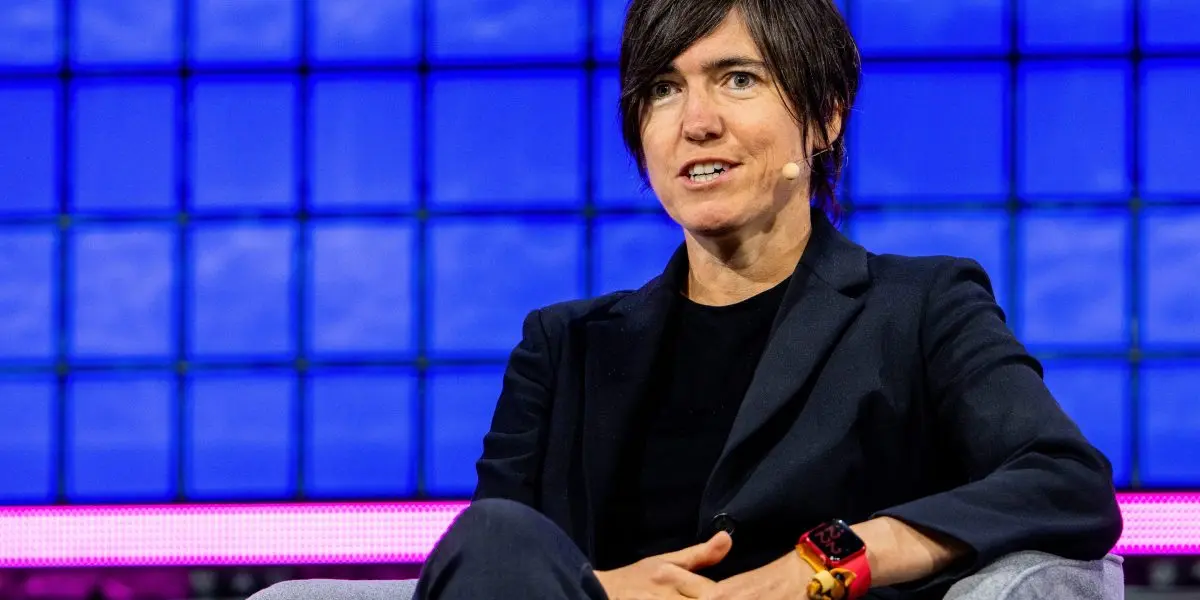
Source: Fortune
Expansion into Robotaxis Marks Strategic Shift for Autonomous Trucking Leader
The expansion into robotaxis represents Waabi's first venture beyond autonomous trucking since founder and CEO Raquel Urtasun established the company in 2021
2
. Urtasun, who previously served as chief scientist at Uber's Advanced Technologies Group (Uber ATG) before the division was sold to Aurora Innovation in 2020, emphasized that this isn't a pivot but rather a demonstration of the company's generalizable AI architecture1
. "Our incredible core technology really enables, for the first time, a single solution that can do multiple verticals, and they can do them at scale," Urtasun told TechCrunch. "It's not about two programs, two stacks"1
. The partnership builds on Waabi's existing relationship with Uber Freight and marks a full-circle moment for Urtasun's work in autonomous vehicles1
.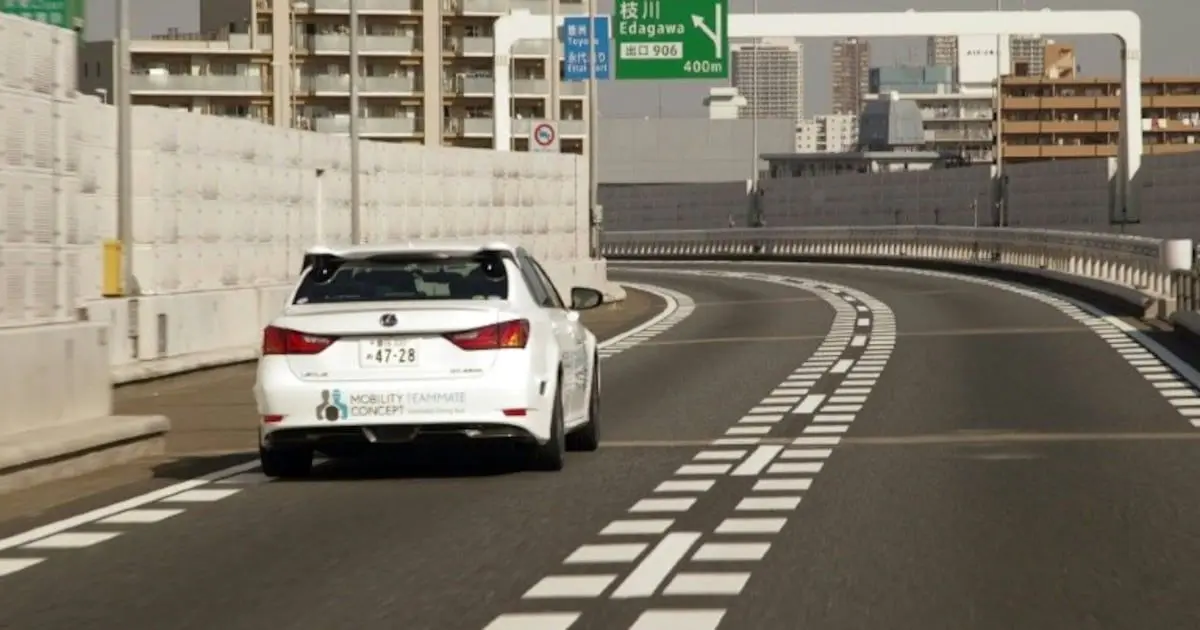
Source: BNN
Physical AI and AV 2.0 Technology Powers Multi-Vertical Approach
Waabi represents what industry observers call "AV 2.0," a new generation of autonomous vehicle companies using end-to-end AI models that learn to drive from vast amounts of data
5
. The company's physical AI platform centers on the Waabi Driver, which is trained, tested, and validated using a closed-loop simulator called Waabi World that automatically builds digital twins of the world from data, performs real-time sensor simulation, and manufactures scenarios to stress-test the system1
. This AI-centric technology allows the system to reason about its surroundings as a human would and choose optimal maneuvers, enabling it to generalize and learn from fewer examples than traditional autonomous driving systems1
. Urtasun explained that the exact same AI models driving Waabi's trucks will power its robotaxis, with the model simply being aware of which vehicle it's operating5
.
Source: TechCrunch
Competitive Landscape and Strategic Positioning Against Industry Giants
The partnership positions Waabi to compete directly with established players like Waymo, which previously attempted both robotaxis and trucking before shutting down its freight program
1
. Waabi joins a growing roster of AV companies deploying self-driving cars on Uber's platform globally, including Waymo, Nuro, Avride, Wayve, WeRide, and Momenta1
. The deal mirrors Uber's recent partnership with Nuro and Lucid Motors to deploy 20,000 robotaxis, signaling Uber's commitment to defend its ride-hailing turf by deploying tens of thousands of autonomous vehicles worldwide4
. Compared to competitors, Waabi has raised significantly less capital—Aurora Innovation has raised $3.46 billion while Kodiak Robotics secured $448 million to date1
. Urtasun claims this capital-efficient approach gives Waabi a unique advantage: "We don't need the gazillion humans to develop the technology and the large fleets that AV 1.0 needs. We don't need the massive data centers, energy consumption, or a gazillion latest chips"1
.Related Stories
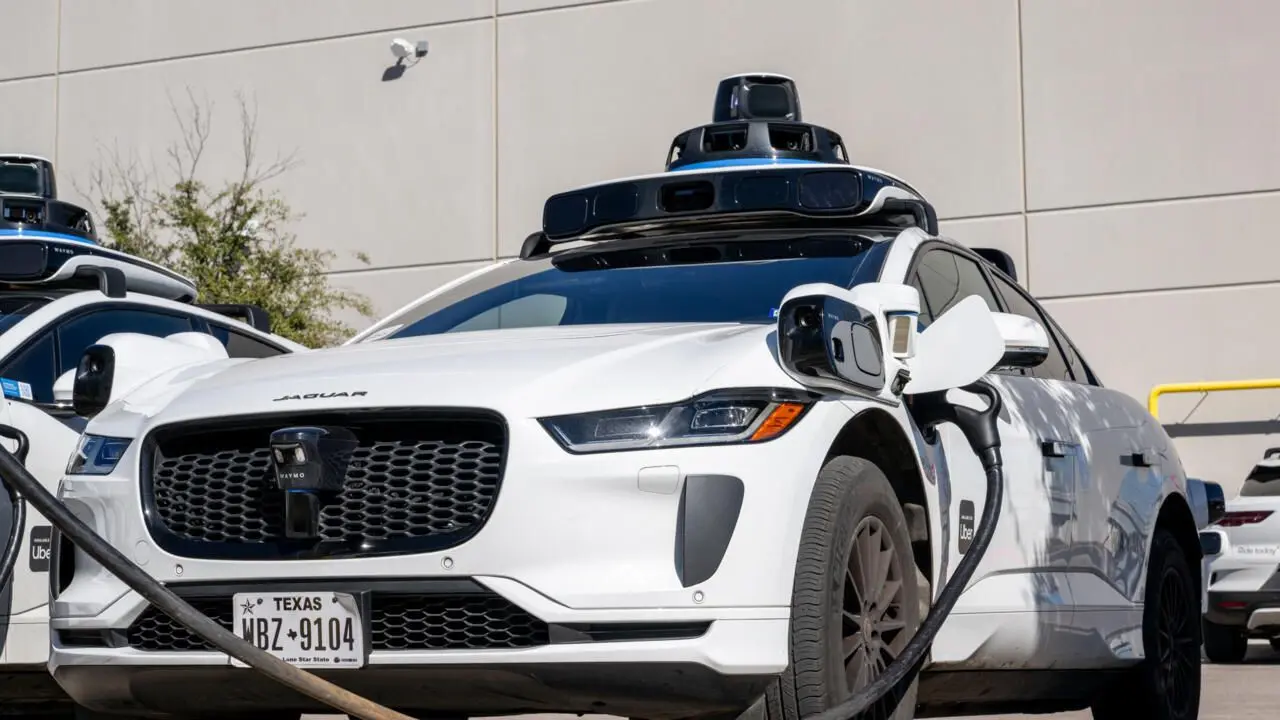
Timeline and Operational Challenges Ahead for Deploy 25,000 Robotaxis
While Waabi has committed to deploy 25,000 robotaxis—a floor rather than a ceiling according to Urtasun—the companies declined to provide specific timelines, target markets, or vehicle platforms for the deployment
2
. This ambitious announcement comes from a startup that has yet to validate its self-driving cars for commercial operation, though it has launched several commercial pilots with human safety drivers in Texas1
. The company had planned to launch fully driverless trucks on public highways by the end of last year, but the rollout has been delayed until sometime in the next few quarters as Waabi works with Volvo to fully validate purpose-built autonomous trucks revealed at TechCrunch Disrupt last October1
. Urtasun told Fortune the robotaxi rollout would happen "super fast" and "much faster than anybody can think," though she acknowledged that robotaxis introduce new challenges including passenger safety risks and increased liability considerations5
2
.Driver as a Service Model and Future Physical AI Applications
Waabi is transitioning from operating its own fleet to a "driver as a service" business model, positioning itself as a technology provider rather than a fleet owner or manager
3
2
. The company's direct-to-consumer approach enables shippers to buy outfitted trucks directly, and Urtasun expressed confidence that the Uber partnership will allow Waabi to "quickly penetrate the market and scale with a product that will be very reliable"1
. Looking beyond autonomous trucking and robotaxis, Urtasun has hinted that the company's next vertical could be robotics, emphasizing that "it's obvious that the physical AI moment is here" and that "autonomy is the first application where scale is going to happen"4
. The technology's ability to master surface streets alongside highway driving—originally developed to enable direct cargo delivery to final destinations rather than hub-to-hub operations—opened the door to urban robotaxis and demonstrates the platform's versatility across different driving environments4
.References
Summarized by

Navi
[1]
Related Stories
Volvo Partners with AI Startup Waabi to Accelerate Autonomous Truck Development
04 Feb 2025•Technology

Wayve Secures $1.5B From Nvidia, Uber, and Automakers to Scale Self-Driving AI Globally
25 Feb 2026•Startups

Waymo Secures $5.6 Billion in Funding, Accelerating Autonomous Vehicle Development and Expansion
26 Oct 2024•Technology

Recent Highlights
1
OpenAI Releases GPT-5.4, New AI Model Built for Agents and Professional Work
Technology

2
Anthropic sues Pentagon over supply chain risk label after refusing autonomous weapons use
Policy and Regulation

3
OpenAI secures $110 billion funding round as questions swirl around AI bubble and profitability
Business and Economy

Recent Highlights
Today's Top Stories






Your Daily Dose of Curated AI News
Don’t drown in AI news. We cut through the noise - filtering, ranking and summarizing the most important AI news, breakthroughs and research daily. Spend less time searching for the latest in AI and get straight to action.

