Western Digital unveils HDD tech roadmap with 100TB drives and flash-like performance for AI


7 Sources
7 Sources
[1]
WD's new HDD tech promises 'flash-like' performance and just maybe a way out of the dreaded memory supply crisis
But it will probably just make hard drives more expensive, too! Fair to say we're all desperate for a way out of the AI-driven memory and storage supply crisis, right? Well, how about a new class of old-school magnetic hard drives optimised for AI and with "flash-like" performance that might take the pressure off NAND memory and SSDs? That's exactly what storage specialist WD has announced. In a blog post, WD has detailed a pair of new HDD technologies. "Two breakthrough technologies can help solve the problem: High bandwidth drive technology (HBDT) enables multiple tracks to be read/written simultaneously, while dual pivot technology adds a second actuator to increase both capacity and performance," the blog says. WD claims this results in, "4x throughput gains without sacrificing economics. Combining HBDT (2-track) and dual pivot can boost throughput from 300 MB/s to 1.2 GB/s -- a 4x increase. A future design that scales to 8-track HBDT could deliver flash-like performance at HDD total cost of ownership (TCO)." A boost from 300 MB/s to 1,200 MB/s is certainly a huge leap. Indeed, WD says that this approach could scale out to yet faster drives. "Combining additional tracks goes even further -- eight-track HBDT plus dual pivot could have a theoretical maximum throughput near 4.8 GB/s, a performance level that would expand the list of applications able to leverage mechanical spinning HDDs." But there are implications that this type of performance may only pertain to very large sequential data transfers. "WD's engineering approach prioritizes throughput per terabyte (MB/s/TB) -- ideal for AI training, object storage, data lakes, and video streaming at exabyte scale," the company says. In other words, not the little itty bitty random access performance that arguably makes more difference to day-to-day PC performance than peak sequential performance. Of course, that probably doesn't matter. WD's announcement makes it clear enough where these drives are intended to end up. And it's not inside our PCs. However, if WD's new HDD tech is indeed fast enough to replace SSDs in some enterprise and AI installations, then that means a bit less demand for SSDs and the flash memory chips they depend on. Which has to be a god thing for PC SSD pricing. Anywho, WD doesn't detail exactly when HDDs with these new technologies will become available. But, frankly, they can't come soon enough.
[2]
Western Digital outlines new HDD capacity, performance and power gains for AI workloads - SiliconANGLE
Western Digital outlines new HDD capacity, performance and power gains for AI workloads Western Digital Corp. today unveiled a new customer-centric storage roadmap that it says reinvents the hard drive for artificial intelligence needs and reinforces its position as a strategic storage infrastructure partner for the AI-driven data economy. The announcements, made at the company's virtual Innovation Day 2026, mark a major milestone in WD's ongoing transformation into a pure-play hard-disk-drive company focused on hyperscale and cloud customers. The company outlined a multiyear strategy centered on scaling up capacity, improving performance, lowering power consumption and reducing deployment complexity as AI workloads drive explosive data growth across cloud infrastructure. Leading the list of announcements, WD revealed that its 40-terabyte UltraSMR ePMR HDD, currently the world's highest-capacity drive, is already in qualification with hyperscale customers, with volume production planned for the second half of 2026. The company added that qualifications of its heat-assisted magnetic recording-based HDDs are also underway with hyperscale customers, with ramp production expected in 2027. WD also introduced new performance technologies aimed at supporting AI workloads that were previously considered flash-only. Introduced today, WD's new High Bandwidth Drive technology allows simultaneous reads and writes across multiple heads and tracks, delivering up to twice the bandwidth of conventional HDDs with a roadmap to far higher gains. Another new technology, called Dual Pivot design, adds independently operating actuators to boost sequential input/output performance without sacrificing capacity. High Bandwidth Drive technology and Dual Pivot design, together, are expected to close the performance gap significantly with QLC flash while maintaining HDD cost advantages. Power efficiency was another major focus of the announcements made by WD today, with the company previewing a new class of power-optimized HDDs that are designed for AI cold data that must remain quickly accessible. The drives are expected to reduce power consumption by around 20%, shrinking the gap between warm and cold storage tiers and enabling lower total cost of ownership for large-scale AI data retention. The power-optimized drives are planned for 2027. Aside from hardware, WD also said it's expanding its Platforms business to reduce complexity and accelerate time-to-value for large enterprise customers. Planned future releases include an intelligent software layer that is delivered through an open application programming interface and expected to launch in 2027. The software layer is designed to bring hyperscale storage economics to organizations operating at 200-petabyte scale and beyond. The platform will so simplify qualification and deployment across WD's UltraSMR, ePMR, flash and HAMR offerings. "For the past year, WD has remained continuously focused on execution and accelerating innovation, which has enabled us to truly reimagine the hard drive to meet the requirements of AI," said Chief Executive Irving Tan.
[3]
WD teases new HDD solutions at Innovation Day: 100TB+ in 2029, new High Bandwidth Drive tech
TL;DR: Western Digital's Innovation Day 2026 revealed groundbreaking HDD advancements for AI-driven data storage, including a 40TB UltraSMR ePMR HDD launching in 2026 and a 100TB+ HAMR HDD by 2029. New High Bandwidth Drive and Dual Pivot technologies significantly boost HDD performance, closing the gap with QLC flash. Western Digital just hosted its Innovation Day 2026 event, unveiling new consumer-focused roadmaps that will see the reinvention of the HDD for AI, and reinforcing the company's position as a strategic storage infrastructure partner for the new AI-driven data economy. The company laid out plans to unveil a gigantic 100TB+ HDD by 2029, reinforcing its dual ePMR and HAMR technologies, announcing a new 40TB UltraSMR ePMR HDD in its qualification with two hyperscaler companies and volume production coming in the second half of 2026. WD plans to extend ePMR to 60TB by using HAMR innovations, all without increasing power consumption, while HAMR will be scaling to the lofty heights of 100TB by 2029. WD is using a dual-path approach as both ePMR and HAMR are built on a common architecture, something that the company says enables greater manufacturing efficiencies, yields, and a smoother customer product transition. Not only that, but WD is also closing the QLC flash performance gap with next-gen HDD architectures, introducing two industry-first innovations that "fundamentally reset" HDD performance. HDD Performance Architecture: Closing the QLC Flash Gap Addressing the performance demands of AI workloads, WD introduced two industry-first innovations that fundamentally reset HDD performance. These innovations address workloads previously considered flash-only, creating a new performance tier that balances speed and capacity without compromising economics, which is critical as flash faces persistent cost premiums (6-10x vs. HDD) and endurance limitations:
[4]
Western Digital unveils new storage roadmap and innovation at WD Innovation Day 2026
NEW DELHI: At its Innovation Day 2026, Western Digital recently unveiled a new customer-centric storage roadmap that aims to reinvent the hard drive for AI needs. As AI generates massive amounts of data, it has spurred intense demand for data storage. To meet the moment, WD has focused deeply on customer needs, particularly capacity with proven reliability and economics, performance, power efficiency, and faster qualifications without customer business disruptions. During its Innovation Day, WD showcased technologies that address these essential customer requirements and aims to deliver them at scale. WD announced that the 40TB UltraSMR ePMR HDD is in hyperscale qualification with volume production planned for the second half of 2026. WD HAMR HDD qualification is also underway with ramp production in 2027. WD will extend ePMR to 60TB by leveraging HAMR innovations without increasing power consumption, while HAMR will scale to 100TB by 2029. This dual-path approach is a critical advantage as both ePMR and HAMR are built on a common architecture. Addressing the performance demands of AI workloads, WD introduced two industry-first innovations that aims to fundamentally reset HDD performance. These innovations address workloads previously considered flash-only, creating a new performance tier that balances speed and capacity without compromising economics, which is critical as flash faces persistent cost premiums (6-10x vs. HDD) and endurance limitations: High Bandwidth Drive Technology enables simultaneous reading and writing from multiple heads on multiple tracks delivering up to 2x the bandwidth of conventional HDDs without power penalties. The technology has a clear path to scale up to 8x bandwidth gains and is already in customer hands for validation. Dual Pivot Technology adds a second set of independently operating actuators on a separate pivot and will deliver up to 2x sequential IO gain within a 3.5-inch drive. This differs from previous dual actuator designs that sacrificed capacity and required extensive customer software changes. Dual Pivot enables reduced spacing between disks, allowing for more platters per drive and higher overall capacity. When combined, these technologies will enable WD to increase sequential IO to 4x overall, delivering 100TB HDDs while maintaining the relative IO per TB rate customers enjoy today. This reduces the need for customers to increase SSD deployment or rearchitect services as capacity scales. High Bandwidth Drive Technology is already with customers today. HDDs with Dual Pivot Technology are currently in the lab and will become available in 2028. Irving Tan, Chief Executive Officer at WD, said in a statement, "For the past year, WD has remained continuously focused on execution and accelerating innovation, which has enabled us to truly reimagine the hard drive to meet the requirements of AI. Today, we are showcasing innovation that reflects our deep connection to our customers and how we are meeting demand for capacity, scale, quality, enhanced performance, and ease of technology adoption." Ahmed Shihab, Chief Product Officer at WD, said in a statement, "WD Innovation Day is where our customer-centric business transformation meets our breakthrough technology for the AI era. We've organised around how customers build and scale AI infrastructure. WD is challenging conventional storage assumptions and removing the complexity and cost barriers that limit their AI-driven growth. Our capacity, performance, power efficiency, and platform innovations solidify our position as the innovation partner for the AI-driven data economy." Ed Burns, HDD Research Director at IDC, said in a statement, "WD's Innovation Day revealed a company that has genuinely transformed its strategy around customer infrastructure needs. The market validation is already evident - customers are deploying these solutions because WD is solving what matters most for AI infrastructure: reliable capacity at scale, performance that meets demanding workloads, and economics that enable profitability. This customer-centric approach, combined with operational discipline positions WD well in the market going forward."
[5]

WD Unveils Hard Drive Road Map: 100-TB-Plus Capacity, AI-Focused Innovations
'We're reinventing the hard drive that the cloud and AI depend on so that we can deliver more capacity sooner while doubling both bandwidth and I/O. And we're introducing a class of drives that delivers 20 percent less power use with 10 percent more capacity. And we're going to make it easier for the next class of customers, including the hyperscalers, to use all the technologies that we're building,' says Ahmed Shihab, WD's chief product officer. Hard drive manufacturer WD Tuesday unveiled its road map for producing drives with capacities of over 100 TB along with a new intelligent platform the company said will redefine the economics of storage. WD, which until about a year ago was better known as Western Digital, said that its 40-TB UltraSMR ePMR hard drive, which it called the world's highest-capacity drive of that type, is now in customer qualifications and that the company is on its way toward introducing HAMR-based hard drives with capacities to over 100 TB. Ahmed Shihab, chief product officer at San Jose, Calif.-based WD, told CRN that the company is working to ensure that businesses have the hard drive technology needed for modern IT infrastructure. [Related: The 2025 Storage 100] "We're reinventing the hard drive that the cloud and AI depend on so that we can deliver more capacity sooner while doubling both bandwidth and I/O," Shihab said. "And we're introducing a class of drives that delivers 20 percent less power use with 10 percent more capacity. And we're going to make it easier for the next class of customers, including the hyperscalers, to use all the technologies that we're building." WD's new hard drive technology is aimed primarily at AI businesses, which not only need more and more capacity but also access to that capacity sooner than in the past, Shihab said. The company has qualified its first 40-TB drive, which he called an industry-first on ePMR (energy-assisted perpendicular magnetic recording). "And we can extend that a little further because what I heard from my customers is as we transition to HAMR [heat-assisted magnetic recording], we want that transition to be smooth," he said. "We don't want an abrupt transition. Otherwise things will go slowly. They want the acceleration from both HAMR and ePMR to overlap so that we can get to 100 terabytes by 2029." Shihab said WD has all the technology needed to move to HAMR technology to increase areal density and potentially increasing the platter count inside the same 3.5-inch drive footprint. "It plugs into today's infrastructure," he said. "It just continues to add more capacity." A big issue with increasing hard drive capacity is the fact that workloads are getting a little "hotter," Shihab said. "They need more bandwidth, and they need more I/O," he said. "We put some of those drives in customers' hands already. We've doubled the bandwidth of the drives. [Our new drives are] delivering 500 Megabytes per second and some change. Read, write, continuous throughput, no tricks. Just difficult engineering to make it work. And customers are really excited by that because now you can get more in and out of the drive while the capacity is increasing. It's not just rebuild times but serving more traffic from those assets that they're building. That's important obviously for all the cloud workloads, but also important for AI as we need more and more data to feed it and more and more users continue to create more data." A big part of that increased bandwidth comes via WD technology that allows reading and writing of data from two heads at the same time, Shihab said. "There are 22 heads inside, and normally we read from one," he said. "Now we're reading from 22. "You can imagine we can extend this. ... We've been working on the technology for some time because we saw the time coming when performance was needed. ... [Customers] want more performance, more bandwidth out of the drives. This is exactly the right time for the right idea. And we're able to show it, and not just say, 'Hey, we'll figure it out.' We actually show it." That ability to read and write data from two heads simultaneously will not be available with the new 40-TB drives, but is slated to be available as drives with 44-TB to 50-TB capacities enter mass production, Shihab said. "Obviously I want to get it sooner, but that's between me and my engineers," he said. "The performance is about 500 Megabytes [per second] and change. So we saturate the SATA link that's already in existence today. SATA is only capable of supporting 530 Megabytes per second. Our drives today in the labs and in customer testing are supporting 505 to 510 Megabytes per second." While that performance is double that of current hard drive technology, getting increased performance will require a new interface, likely NVMe, Shihab said. "But that's going to be disruptive to customers. ... I don't want to build it when customers can't use it," he said. "So we are working to figure out the road map because by the time we get to 100 Terabytes in 2029, they will want more performance. We can go eight times the performance to that's roughly 2 Gigabytes per second, but that will not be with SATA. SATA cannot support that performance, and that's why we have to work with customers because that's a change to the infrastructure." The other issue impacting hard drive performance is the need to increase the number of transactions per second, Shihab said. "There have been many attempts to double that using split actuators and a bunch of other things," he said. "But the problem with all of those is that it required a bunch of changes to the software and the operational running of data centers. ... We know we have to double the I/O. So we developed a technology called dual-pivot technology, which is a mechanical redesign of how the heads and the media are distributed within the drive itself using the same SATA interface so customers don't have to change the hardware or the software." WD hard drives with dual-pivot technology are currently being developed in the lab and are slated to be available in 2028. The amount of data generated by AI, analytics and other new workloads is increasing, and not all that data needs to be stored on the same capacity or performance tiers, Shihab said. WD's response is a new series of power-optimized hard drives that reduce power consumption while maintaining sub-second access in the existing 3.5-inch form factor, which trades a small amount of random I/O performance for higher capacity and lower power consumption for AI data storage at scale, he said. Such drives are expected to be in customer qualification in 2027. WD Tuesday also said it has expanded its Platforms business by developing an intelligent software layer with an open API as a way to help midscale customers take advantage of some of the benefits that hyperscaler cloud providers enjoy. There is a class of big enterprise or scaling AI businesses that want access to the economics of hard drives to profitably run AI but don't have the resources of the hyperscalers, Shihab said. WD has been packaging hard drives in JBOD (non-RAID, just a bunch of disk) enclosures, he said. "What we're doing now is putting a layer of abstraction inside the box," he said. "That gives a very simple interface that will connect to a file system with open-source implementations and show customers how to do it very easily. We're going to make it open so anybody can use it and make sure that we create competition, while allowing people to use UltraSMR and high-bandwidth drives, power-optimized drives, dual-pivot drives and capacity drives seamlessly so they don't have to do the qualification work. We do the abstraction work that allows them to access all of that capability from a very straightforward and simple API." This platform expansion will also be extended to flash storage, a technology WD has not offered since it separated its flash memory and SSD business into a separate company, Sandisk. "We won't be making the flash, but because customers have asked, we'll make it an easy transition for them," Shihab said. "We make the transition for them very seamless, much like we're doing for the hyperscalers on the hard drives."
[6]

WD Shares AI-Focused Storage Roadmap at Exclusive Media Roundtable in New Delhi
In parallel, WD's Heat-Assisted Magnetic Recording (HAMR) technology is advancing steadily, with ramp production expected in 2027 and capacities projected to approach 100TB by 2029. This roadmap reflects WD's focus on pushing the physical and technological limits of magnetic storage. Commenting on the occasion, Owais Mohammed, Sales Director India, Middle East, and Africa, Western Digital said, "As India emerges as one of the key players in the global AI and data-centre ecosystem, data growth is accelerating rapidly. Our focus is on supporting this growth with scalable, reliable HDD-based storage and platforms that enable India's expanding AI and data-centre infrastructure to grow sustainably and efficiently."
[7]

Western Digital unveils 100TB+ HDD roadmap at Innovation Day 2026
At its Innovation Day 2026, Western Digital (WD) unveiled new storage technologies for the AI era, including high-capacity HDDs, performance and power advancements, and an intelligent platform to improve storage economics for AI-scale workloads. Rebranded as WD, the company now focuses on AI and cloud workloads, high-capacity storage, performance optimization, and power efficiency to meet the growing requirements of AI-driven data infrastructure. WD's dual ePMR and HAMR roadmap enables continuous capacity growth: Two innovations enable AI workloads to run efficiently on HDDs, reducing reliance on flash storage: Combined, these technologies increase sequential IO up to 4x, supporting 100TB HDDs while maintaining IO per TB performance. Designed for active cold data, power-optimized drives: This design lowers operating costs and enables economically sustainable AI-scale storage. This platform makes hyperscale storage economics accessible to mid-scale AI customers while simplifying deployment and integration. Speaking at the event, Irving Tan, Chief Executive Officer at WD, said: For the past year, WD has remained continuously focused on execution and accelerating innovation, which has enabled us to truly reimagine the hard drive to meet the requirements of AI. Today, we are showcasing technology that reflects our deep connection to our customers and how we are meeting demand for capacity, scale, quality, enhanced performance, and ease of technology adoption. Speaking on the roadmap, Ahmed Shihab, Chief Product Officer at WD, said:
Share
Share
Copy Link
Western Digital revealed breakthrough hard drive innovations at Innovation Day 2026, introducing High Bandwidth Drive Technology and Dual Pivot design that promise to deliver flash-like performance for AI workloads. The company's new storage roadmap targets 100TB capacity by 2029 while addressing the growing demands of AI-driven data storage with 4x throughput gains and 20% power reduction.
Western Digital Reimagines HDD Technology for AI Era
Western Digital unveiled a transformative new storage roadmap at its Innovation Day 2026, signaling a major shift in how the company approaches AI-driven data storage. The announcements mark a milestone in WD's transformation into a pure-play hard-disk-drive company focused on hyperscale and cloud infrastructure customers
2
. Chief Executive Irving Tan stated that the company has "remained continuously focused on execution and accelerating innovation, which has enabled us to truly reimagine the hard drive to meet the requirements of AI" .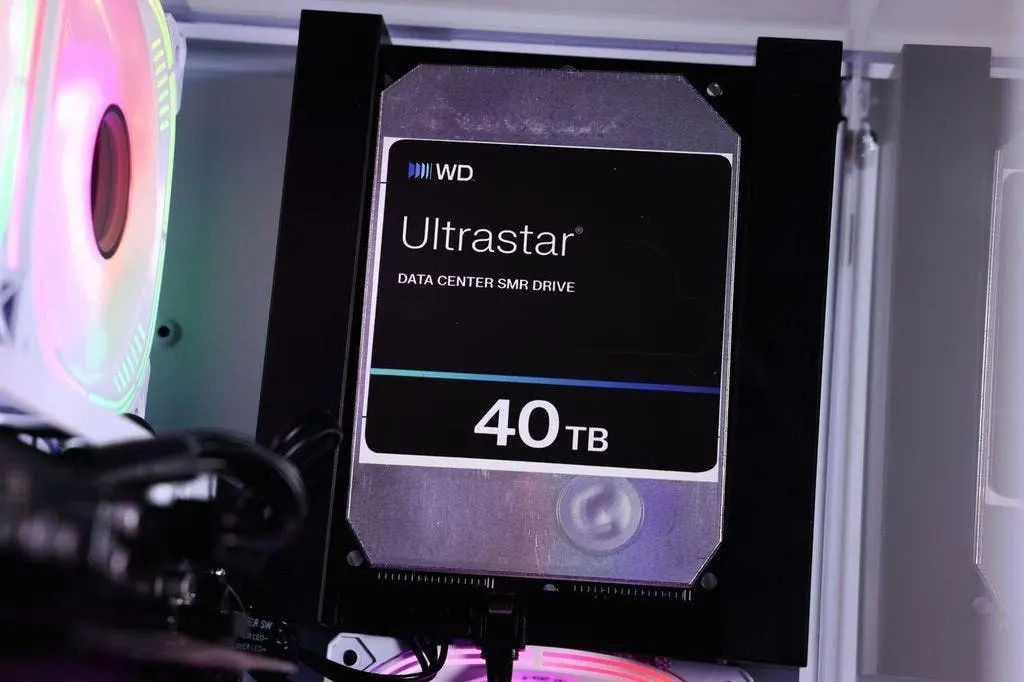
Source: CRN
The company's multiyear strategy centers on scaling up capacity, improving performance, lowering power consumption, and reducing deployment complexity as AI workloads drive explosive data growth across cloud infrastructure
2
. This customer-centric approach addresses what matters most for AI infrastructure: reliable capacity at scale, performance that meets demanding workloads, and economics that enable profitability.High Bandwidth Drive Technology Delivers 4x Throughput Gains
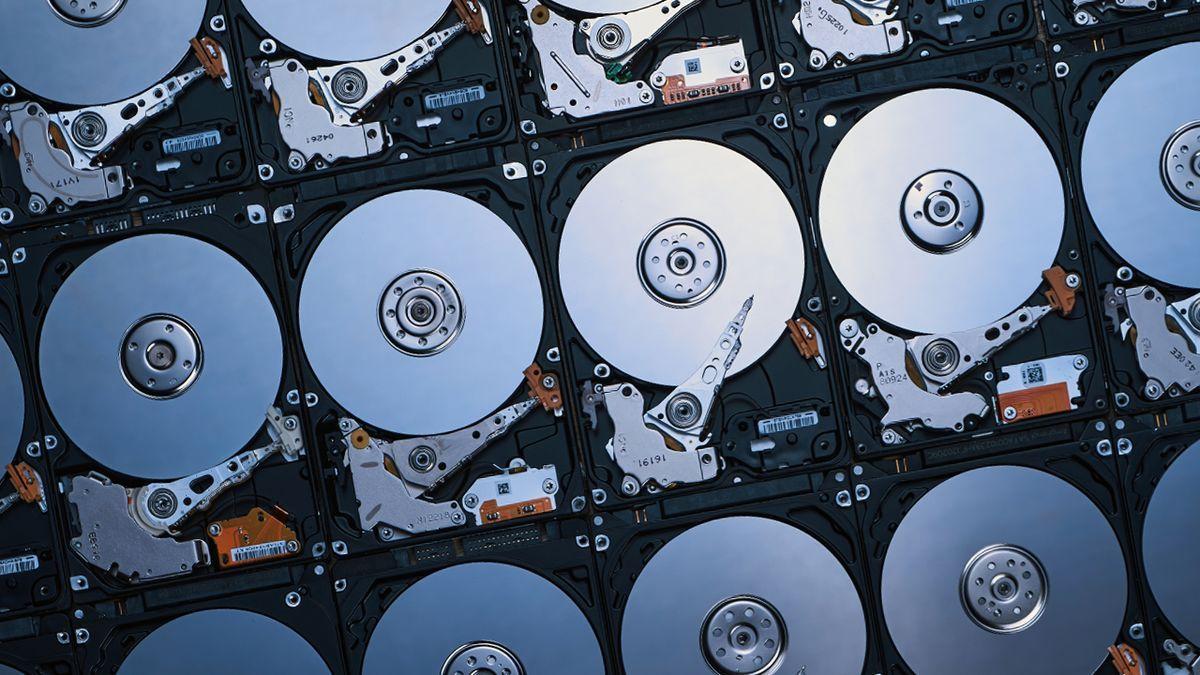
At the heart of Western Digital's AI-focused innovations lies High Bandwidth Drive Technology, an industry-first breakthrough that enables simultaneous reading and writing from multiple heads on multiple tracks . The technology delivers up to 2x the bandwidth of conventional HDDs without power penalties and has a clear path to scale up to 8x bandwidth gains .
Source: PC Gamer
WD claims this HDD technology can boost throughput from 300 MB/s to 1.2 GB/s—a 4x increase—when combining High Bandwidth Drive Technology with Dual Pivot design
1
. A future design that scales to 8-track HBDT could deliver flash-like performance at HDD Total Cost of Ownership (TCO), with theoretical maximum throughput near 4.8 GB/s1
.Chief Product Officer Ahmed Shihab explained that drives in customer testing are already supporting 505 to 510 Megabytes per second, essentially saturating the SATA link that's capable of supporting 530 Megabytes per second
5
. High Bandwidth Drive Technology is already with customers today for validation .Dual Pivot Technology Boosts Sequential IO Performance
Complementing the High Bandwidth Drive Technology, Western Digital introduced Dual Pivot Technology, which adds a second set of independently operating actuators on a separate pivot . This innovation will deliver up to 2x sequential IO gain within a 3.5-inch drive, differing from previous dual actuator designs that sacrificed capacity and required extensive customer software changes .
The Dual Pivot design enables reduced spacing between disks, allowing for more platters per drive and higher overall capacity . When combined with High Bandwidth Drive Technology, these innovations will enable WD to increase sequential IO to 4x overall, delivering 100TB HDDs while maintaining the relative IO per TB rate customers enjoy today . HDDs with Dual Pivot Technology are currently in the lab and will become available in 2028 .
Capacity Roadmap: 40TB Now, 100TB by 2029
Western Digital announced that its 40TB UltraSMR ePMR HDD, currently the world's highest-capacity drive, is already in qualification with hyperscale customers, with volume production planned for the second half of 2026
2
. The company will extend ePMR to 60TB by leveraging HAMR innovations without increasing power consumption, while HAMR will scale to 100TB by 2029 .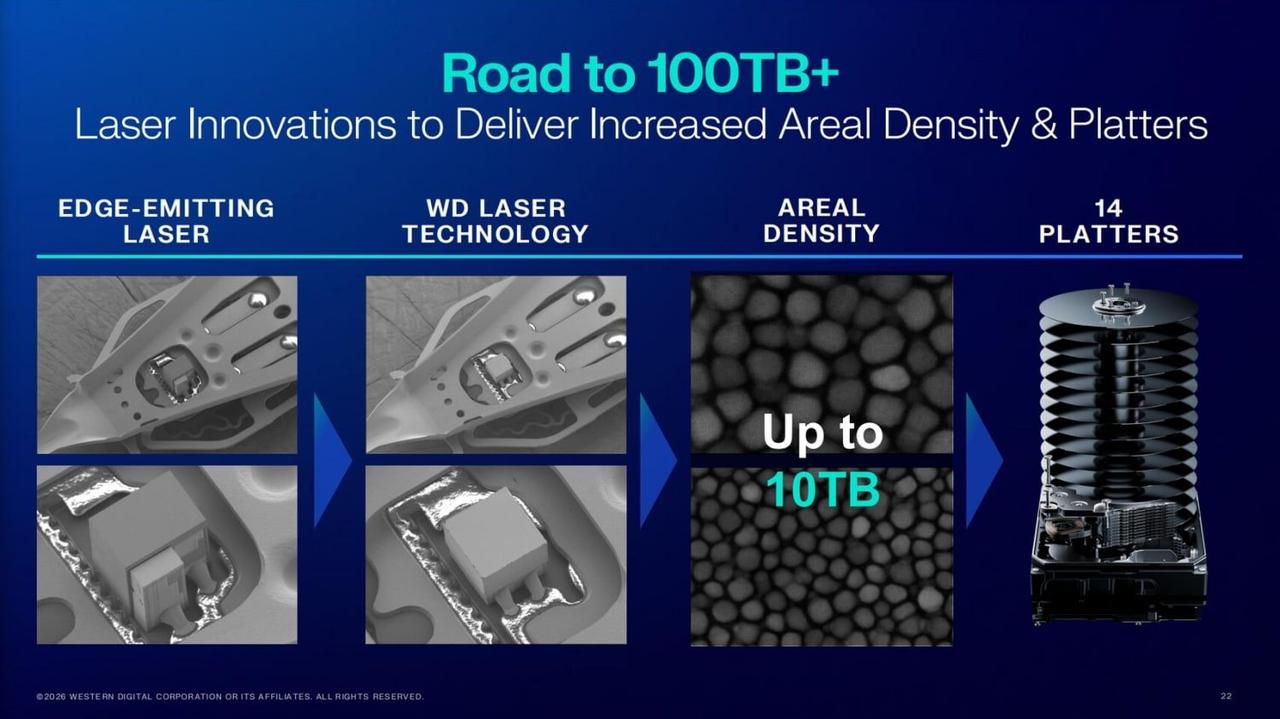
Source: TweakTown
Qualifications of HAMR-based HDDs are also underway with hyperscale customers, with ramp production expected in 2027
2
. This dual-path approach is critical as both ePMR and HAMR are built on a common architecture, enabling greater manufacturing efficiencies, yields, and a smoother customer product transition3
.Related Stories
Power Efficiency and Data Storage Economics
Addressing data storage and performance requirements, WD previewed a new class of power-optimized HDDs designed for AI cold data that must remain quickly accessible. The drives are expected to reduce power consumption by around 20%, shrinking the gap between warm and cold storage tiers and enabling lower Total Cost of Ownership (TCO) for large-scale AI data retention
2
. These power-optimized drives are planned for 20272
.The high-performance HDDs are expected to close the performance gap significantly with QLC flash while maintaining HDD cost advantages. Flash faces persistent cost premiums of 6-10x versus HDD and endurance limitations
3
. If WD's new HDD technology is fast enough to replace SSDs in some enterprise and AI installations, this could reduce demand for SSDs and flash memory chips, potentially improving PC SSD pricing1
.Platform Innovations for Hyperscale Customers
Beyond hardware, WD is expanding its Platforms business to reduce complexity and accelerate time-to-value for large enterprise customers. Planned future releases include an intelligent software layer delivered through an open application programming interface, expected to launch in 2027
2
. The platform will simplify qualification and deployment across WD's UltraSMR, ePMR, flash, and HAMR offerings, bringing hyperscale storage economics to organizations operating at 200-petabyte scale and beyond2
.Shihab emphasized the company's commitment to making technology adoption easier: "We're going to make it easier for the next class of customers, including the hyperscalers, to use all the technologies that we're building"
5
. Ed Burns, HDD Research Director at IDC, noted that "WD's Innovation Day revealed a company that has genuinely transformed its strategy around customer infrastructure needs," adding that the market validation is already evident as customers are deploying these solutions .References
Summarized by

Navi
[2]
[3]
Related Stories
Western Digital and Ingrasys Collaborate on High-Performance Storage Solutions for AI Workflows
16 May 2025•Technology

Seagate Aims for 100TB Hard Drives by 2030, Driven by AI Storage Demands
08 May 2025•Technology
Seagate Unveils 36TB Hard Drives with HAMR Technology, Targeting AI and Cloud Storage Demands
21 Jan 2025•Technology

Recent Highlights
1
Tennessee Teens Sue Elon Musk's xAI Over Grok AI-Generated Child Abuse Images
Policy and Regulation

2
Pentagon designates Palantir Maven AI as core US military system in major defense shift
Technology

3
Supermicro Co-Founder Indicted in $2.5 Billion Nvidia AI Chip Smuggling Scheme to China
Policy and Regulation
Recent Highlights
Today's Top Stories










Your Daily Dose of Curated AI News
Don’t drown in AI news. We cut through the noise - filtering, ranking and summarizing the most important AI news, breakthroughs and research daily. Spend less time searching for the latest in AI and get straight to action.

