Trump AI framework seeks to override state laws while shifting child safety to parents


20 Sources
20 Sources
[1]
Trump's AI framework targets state laws, shifts child safety burden to parents | TechCrunch
The Trump administration on Friday laid out a legislative framework for a singular policy for AI in the United States. The framework would centralize power in Washington by preempting state AI laws, potentially undercutting the recent surge of efforts from states to regulate the use and development of the technology. "This framework can only succeed if it is applied uniformly across the United States," reads a White House statement on the framework. "A patchwork of conflicting state laws would undermine American innovation and our ability to lead in the global AI race." The framework outlines seven key objectives that prioritize innovation and scaling AI, and proposes a centralized federal approach that would override stricter state-level regulations. It places significant responsibility on parents for issues like child safety, and lays out relatively soft, non-binding expectations for platform accountability. For example, it says Congress should require AI companies to implement features that "reduce the risks of sexual exploitation and harm to minors," but does not lay out any clear, enforceable requirements. Trump's framework comes three months after he signed an executive order directing federal agencies to challenge state AI laws. The order gave the Commerce Department 90 days to compile a list of "onerous" state AI laws, potentially risking states' eligibility for federal funds like broadband grants. The agency has yet to publish that list. The order also directed the administration to work with Congress on a uniform AI law. That vision is coming into focus, and it mirrors Trump's earlier AI strategy, which focused less on guardrails and more on promoting companies' growth. The new framework proposes a "minimally burdensome national standard," echoing the administration's broader push to "remove outdated or unnecessary barriers to innovation" and accelerate AI adoptions across industries. This is a pro-growth, light-touch regulatory approach championed by so-called "accelerationists," one of whom is White House AI czar and venture capitalist David Sacks. While the framework nods to federalism, the carve-outs for states are relatively narrow, preserving only their authority over general laws like fraud and child protection, zoning, and state use of AI. It draws a hard line against states regulating AI development itself, which it says is an "inherently interstate" issue tied to national security and foreign policy. The framework also seeks to prevent states from "penaliz[ing] AI developers for a third party's unlawful conduct involving their models" -- a key liability shield for developers. Missing from that framework are any gestures towards liability frameworks, independent oversight, or enforcement mechanisms for potential novel harms caused by AI. In effect, the framework would centralize AI policymaking in Washington while narrowing the space for states to act as early regulators of emerging risks. Critics say states are the sandboxes of democracy and have been quicker to pass laws around emerging risks. Notably, New York's RAISE Act and California's SB-53 seek to ensure large AI companies have and adhere to safety protocols that are publicly documented. "White House AI czar David Sacks continues to do the bidding of Big Tech at the expense of regular, hardworking Americans," said Brendan Steinhauser, CEO of The Alliance for Secure AI. "This federal AI framework seeks to prevent states from legislating on AI and provides no path to accountability for AI developers for the harms caused by their products." Many in the AI industry are celebrating this direction because it gives them broader liberties to "innovate" without the threat of regulation. "This framework is exactly what startups have been asking for: a clear national standard so they can build fast and scale," Teresa Carlson, president of General Catalyst Institute, told TechCrunch. "Founders shouldn't have to navigate a patchwork of conflicting state AI laws that impede innovation." The framework was issued at a moment when child safety has emerged as a central flashpoint in the debate over AI. Certain states have moved aggressively to pass laws aimed at protecting minors and placing more responsibility on tech companies. The administration's proposal points in a different direction, placing greater emphasis on parental control than platform accountability. "Parents are best equipped to manage their children's digital environment and upbringing," the framework reads. "The Administration is calling on Congress to give parents tools to effectively do that, such as account controls to protect their children's privacy and manage their device use." The framework also says the administration "believes" that AI platforms should "implement features to reduce potential sexual exploitation of children and encouragement of self-harm." While it calls on Congress to require such safeguards, and affirms that existing laws, including those banning child sexual abuse materials, should apply to AI systems, the proposal employs qualifiers like "commercially reasonable," and stops short of laying out clear prerequisites. On the topic of copyright, the framework attempts to find a middle ground between protecting creators and allowing AI systems to be trained on existing works, citing the need for "fair use." That kind of language mirrors arguments AI companies have made as they face a growing number of copyright lawsuits over their training data. The main guardrails Trump's AI framework seems to outline involve ensuring "AI can pursue truth and accuracy without limitation." Specifically, it focuses on preventing government-driven censorship, rather than platform moderation itself. "Congress should prevent the United States government from coercing technology providers, including AI providers, to ban, compel, or alter content based on partisan or ideological agendas," the framework reads. It also instructs Congress to provide a way for Americans to seek legal redress against government agencies that seek to censor expression on AI platforms or dictate information provided by an AI platform. The framework comes as Anthropic is suing the government for allegedly infringing on its First Amendment rights after the Defense Department labeled it a supply chain risk. Anthropic argues that the DoD is designating it as such in retaliation for not allowing the military to use its AI products for mass surveillance of Americans, and for making targeting and firing decisions in autonomous lethal weapons. Trump has referred to Anthropic and its CEO Dario Amodei as "woke" and a "radical" leftist. The framework's language, which emphasizes protecting "lawful political expression or dissent," seems to build on Trump's earlier Executive Order targeting so-called "woke AI," which pushed federal agencies to adopt systems deemed ideologically neutral. It's unclear what qualifies as censorship versus standard content moderation, so such language could make it difficult for regulators to coordinate with platforms on issues like misinformation, election interference, or public safety risks. Samir Jain, vice president of policy at the Center for Democracy and Technology, pointed out: "[The framework] rightly says that the government should not coerce AI companies to ban or alter content based on 'partisan or ideological agendas,' yet the Administration's 'woke AI' Executive Order this summer does exactly that."
[2]
White House Univeils AI Legislative Plan for Skeptical Congress
President Donald Trump released a national framework for regulating artificial intelligence on Friday, laying the groundwork for Congress to create a federal standard for the rapidly growing technology. The framework, which builds upon Trump's December executive order, calls for online safeguards for children, less stringent permitting requirements so data centers can generate power on site and preventing censorship. The latter provision is meant to address allegations by conservatives that technology companies are biased against their views, which the firms have denied. It also calls for intellectual property rights protections, removing "outdated barriers to innovation" and expanding AI workforce training. It's unclear whether the White House proposal will muster enough support on Capitol Hill, where mandates on tech companies have divided Republicans. The framework mirrors much of a draft measureBloomberg Terminal released by Senator Marsha Blackburn, a Tennessee Republican. Her plan also calls for protecting consumers from electricity price spikes. Trump has pushed tech giants, including Amazon.com Inc., Meta Platforms Inc., Microsoft Corp. and Google parent Alphabet Inc., to work with the federal government to ensure corporations cover the cost of power they use for AI initiatives. Such legislation would need the support of Democrats to pass the Senate. That would require political compromise ahead of the November midterm elections, in which Democrats are optimistic about taking control of Congress and therefore may be reluctant to strike a deal with Republicans. Earlier: Trump Signs Order Seeking to Limit State-Level AI Regulation Follow the latest in global politics. Follow the latest in global politics. Follow the latest in global politics. Get insights from reporters around the world in the Balance of Power newsletter. Get insights from reporters around the world in the Balance of Power newsletter. Get insights from reporters around the world in the Balance of Power newsletter. Bloomberg may send me offers and promotions. Plus Signed UpPlus Sign UpPlus Sign Up By submitting my information, I agree to the Privacy Policy and Terms of Service. AI stands to be a divisive issue in the midterms, with tech executives and companies pouring hundreds of millions of dollars into races to elect friendly members of Congress. But the technology faces backlash from some voters concerned about the rapid development of data centers in their communities, the electricity use and environmental costs of those centers, potential job losses from AI and possible new vulnerabilities for their personal information. Washington has struggled to regulate emerging technologies for decades, with the tools developing at a far more rapid pace than lawmakers can pass legislation. Trump has used executive authority to cajole tech and AI firms to ensure that the US has enough power to fuel energy-hungry data centers. He has championed the use of coal-fired plants, along with natural gas and nuclear power to help fuel the boom. He has taken an interest in establishing what the White House has described as "American dominance" in AI. The president unveiled a White House action plan last July for US technology manufacturing -- including of high-powered semiconductors necessary for AI. He's also enacted security measures to ensure that competitors such as China do not gain an edge. As AI development has expanded, states have moved to pass their own rules intended to mitigate threats posed by the emerging technology, such as algorithmic discrimination and unauthorized deepfakes. The White House, with the support of the tech companies, has sought to preempt the patchwork of state-by-state laws that have emerged in the absence of national AI regulation, arguing that local measures have become excessive and stymie growth.
[3]
White House releases national AI framework
WASHINGTON, March 20 (Reuters) - The White House released a framework on artificial intelligence on Friday that aims to ensure protections for children, communities and small businesses as part of a national plan to regulate developments in the field. The Trump administration has been pushing for a single legislative framework that can be applied uniformly across the country, rather than leaving states to form their own plans. "The administration looks forward to working with Congress in the coming months to turn this framework into legislation that the president can sign," the White House said in a statement. Reporting by Katharine Jackson and Doina Chiacu; Editing by Katharine Jackson Our Standards: The Thomson Reuters Trust Principles., opens new tab
[4]
White House releases AI policy framework for Congress, with six guiding principles
WASHINGTON (AP) -- The White House on Friday released its framework for how it wishes Congress will address the issue of artificial intelligence. The legislative blueprint, released on its website, outlines a half-dozen guiding principles for lawmakers to keep in mind when developing policies governing artificial intelligence. Those areas include: protecting children and empowering parents; safeguarding and strengthening American communities; respecting intellectual property rights, preventing censorship and protecting free speech, enabling innovation and ensuring American AI dominance, and educating Americans and developing an AI-ready workforce. "The Trump Administration is committed to winning the AI race to usher in a new era of human flourishing, economic competitiveness, and national security for the American people," the White House said in announcing its framework. "Achieving these goals requires a commonsense national policy framework that both enables American industry to innovate and thrive and ensures that all Americans benefit from this technological revolution." The White House said "strong federal leadership" is needed to make sure the public can trust how artificial intelligence is being used in their lives. Members of Congress from both parties, as well as civil liberties and consumer rights groups, have pushed for more regulations on AI, saying there is not enough oversight for the powerful technology. President Donald Trump signed an executive order in December to block states from crafting their own regulations, arguing that a patchwork of rules would hurt growth in the sector.
[5]

Trump admin. unveils national AI policy framework to limit state power
U.S. President Donald Trump delivers remarks on artificial intelligence at the "Winning the AI Race" Summit in Washington D.C., U.S., July 23, 2025. The Trump administration on Friday issued a legislative framework for a single national policy on artificial intelligence, aiming to create uniform safety and security guardrails around the nascent technology while preempting states from enacting their own AI rules. The six-pronged outline broadly proposes a slew of regulations on AI products and infrastructure, ranging from implementing new child-safety rules to standardizing the permitting and energy use of AI data centers. It also calls on Congress to address thorny issues surrounding intellectual-property rights and craft rules "preventing AI systems from being used to silence or censor lawful political expression or dissent." The administration said in an official release that it wants to work with Congress "in the coming months" to convert its framework into a bill that President Donald Trump can sign. The White House wants to codify the framework into law this year" and believes it can generate bipartisan support, Michael Kratsios, director of White House Office of Science and Technology Policy, said in an interview with Fox News on Thursday evening. That won't be easy in a deeply divided Congress where Republicans hold thin and often fractious majorities, and where Trump has already urged GOP lawmakers to prioritize his controversial voter-ID bill above all else ahead of the November midterms. The Senate has spent much of this week debating the SAVE America Act even though it doesn't have the votes to clear the chamber. Amid rapidly growing concerns about AI and its impacts, lawmakers in New York, California and elsewhere have pushed to enact their own state-level regulations. AI industry leaders have strongly opposed those efforts, arguing that a "patchwork" of laws would hobble innovation and give global competitors like China a major advantage in the race for AI dominance.
[6]

White House Unveils A.I. Policy Aimed at Blocking State Laws
The Trump administration on Friday released new guidelines for federal legislation on the technology, recommending some safeguards for children and consumer protections for energy costs. The White House on Friday released policy guidelines that called for blocking state laws regulating artificial intelligence, while also recommending some safeguards for children and consumer protections for energy costs. Dozens of states have passed laws in recent months to regulate A.I., which has created concerns about the technology's potential to steal jobs, push up energy prices and threaten national security. But President Trump has made clear U.S. companies should have mostly free rein in a global race to dominate the technology. On Friday, the White House called on Congress to pass federal A.I. legislation to override the state laws. Among the Trump administration's suggested measures, Congress would streamline the process for building data centers, the warehouses full of computers that power A.I. The framework also proposed guardrails to prevent the government from using the technology for censorship, as well as mandating A.I.-related work force training. "This framework can succeed only if it is applied uniformly across the United States," the White House said in its announcement. "A patchwork of conflicting state laws would undermine American innovation and our ability to lead in the global A.I. race." Meta, OpenAI, Google and other A.I. giants have argued that a patchwork of state laws could slow down their progress. The companies have repeatedly pointed to regulation as the biggest hindrance to the nation's success in leading the world in A.I. Some companies and their leaders have contributed to super PACs that are spending tens of millions of dollars aimed at blocking the election of candidates who favor A.I. regulation in the lead-up to the November midterm elections.
[7]

White House releases Trump's national AI plan and framework
Why it matters: The four-page framework calls on lawmakers to limit the ability of states to set their own rules for the technology, setting up a renewed clash with states and Congress over the future of AI regulation. What they're saying: "Congress should preempt state AI laws that impose undue burdens to ensure a minimally burdensome national standard consistent with these recommendations, not fifty discordant ones," the framework states. What's inside: The proposal calls on Congress to: * Address the use of AI replicas that simulate someone's likeness or voice. * Codify President Trump's pledge to require tech companies to pay for their increased energy demands. * Establish "regulatory sandboxes" to allow developers to experiment with AI under relaxed rules. It also focuses on kids' online safety: "AI services and platforms must take measures to protect children, while empowering parents to control their children's digital environment and upbringing," the framework states. What we're watching: This recommendation will shape Republican-led efforts on Capitol Hill, but disagreements over federal preemption, copyright and kids' safety remain the same sticking points that have stalled action for years.
[8]

The White House has a plan for AI regulation, and it starts with keeping states out of it | Fortune
The White House on Friday released its framework for how it wishes Congress will address the issue of artificial intelligence. The legislative blueprint, released on its website, outlines a half-dozen guiding principles for lawmakers to keep in mind when developing policies governing artificial intelligence. Those areas include: protecting children and empowering parents; safeguarding and strengthening American communities; respecting intellectual property rights, preventing censorship and protecting free speech, enabling innovation and ensuring American AI dominance, and educating Americans and developing an AI-ready workforce. "The Trump Administration is committed to winning the AI race to usher in a new era of human flourishing, economic competitiveness, and national security for the American people," the White House said in announcing its framework. "Achieving these goals requires a commonsense national policy framework that both enables American industry to innovate and thrive and ensures that all Americans benefit from this technological revolution." The White House said "strong federal leadership" is needed to make sure the public can trust how artificial intelligence is being used in their lives. Members of Congress from both parties, as well as civil liberties and consumer rights groups, have pushed for more regulations on AI, saying there is not enough oversight for the powerful technology. President Donald Trump signed an executive order in December to block states from crafting their own regulations, arguing that a patchwork of rules would hurt growth in the sector.
[9]

White House AI Proposal Seeks to Override State Laws, Avoid New Regulator - Decrypt
The plan also focuses on child safety, free speech, infrastructure, and copyright disputes. The White House on Friday released a sweeping national policy framework for artificial intelligence, outlining recommendations to Congress that would set national standards for AI while relying on existing federal agencies -- rather than creating a new regulator. The proposal comes as states move ahead with their own AI laws, which the Trump administration has criticized as a burdensome "patchwork" of requirements for companies. "The Trump Administration is committed to winning the AI race to usher in a new era of human flourishing, economic competitiveness, and national security for the American people," the White House said in a statement. "Achieving these goals requires a commonsense national policy framework that both enables American industry to innovate and thrive and ensures that all Americans benefit from this technological revolution." The framework urges Congress to set national AI rules that address child safety, innovation, free speech, and intellectual property, while preempting state laws it views as burdensome. It also says those federal standards should not override states' existing authority to enforce laws on issues like fraud, consumer protection, and child sexual abuse material. The Center for Democracy and Technology said the proposal includes "some sound statements of principles," but does not resolve competing priorities. "Its usefulness to lawmakers is limited by its internal contradictions and failure to grapple with key tensions between various approaches to important topics like kids' online safety," CDT Vice President of Policy Samir Jain said in a statement shared with Decrypt. Jain also said the framework contradicted the White House's own position on government influence over AI platforms. "It rightly says that the government should not coerce AI companies to ban or alter content based on 'partisan or ideological agendas,' yet the administration's 'woke AI' executive order does exactly that," he said. The framework follows earlier efforts by the Trump administration to curb state-level AI regulation. In November, a draft executive order outlined steps to challenge state laws and restrict funding to those that enacted laws that were seen as contradictory to the order. Despite the administration's attempts to set a federal standard, states have continued to pass their own measures. In October, California enacted SB 243, which would require AI companion chatbots to identify themselves and restrict certain interactions with minors while imposing disclosure rules on large developers. The White House's framework also said parents should be given more control over how children interact with AI systems, and that Congress should enact better protections against abuse. "The administration is calling on Congress to give parents tools to effectively do that, such as account controls to protect their children's privacy and manage their device use," the White House said. "The administration also believes that AI platforms likely to be accessed by minors should implement features to reduce potential sexual exploitation of children or encouragement of self-harm." The administration also said that while it views AI training on copyrighted material as lawful, it believes courts should decide the issue, adding that Congress "should not take any actions that would impact the judiciary's resolution of whether training on copyrighted material constitutes fair use." The proposal also calls for a federal law to protect individuals from unauthorized AI-generated deepfakes, expanding on a bipartisan law signed by Trump last year that made non-consensual intimate images and deepfake porn a federal crime. The new framework, however, comes with exceptions for parody, satire, news reporting, and "other expressive works protected by the First Amendment." The plan ties AI policy to infrastructure and economic goals, including faster permitting for data centers and ensuring residential electricity costs do not rise as a result of AI infrastructure buildout under a proposed "Ratepayer Protection Pledge." It also calls for expanded use of on-site and behind-the-meter power generation to support data center development and improve grid reliability, along with incentives to expand AI adoption and access to federal datasets. Consumer advocacy group Public Citizen called the proposal "a national framework to protect Big Tech at the expense of everyday Americans." "It is an extraordinary payback to the Big Tech companies that have lined up to throw pocket change at Trump's inauguration, and for his ballroom, and for the Melania movie, and to settle bad faith lawsuits and more," co-president Robert Weissman said in a statement shared with Decrypt. Weissman said the focus on preempting state laws could leave gaps in oversight, arguing that without new federal standards, limiting state action would reduce regulation. He pointed to ongoing state efforts addressing issues such as deepfakes, AI companions, and algorithmic decision-making. "This is a disgraceful proposal that, happily, will be dead on arrival in Congress," Weissman said. "It does, however, show yet again that Donald Trump aligns his interests with the biggest corporations and the billionaire class, not those of the American people."
[10]

White House releases AI legislation framework
The White House released a new framework for national AI legislation Friday morning, focusing on protections for children and boosting America's AI industry while calling for sharp limits on state laws that it says would slow down AI development and legal liability for AI developers. The legislative proposal emphasizes the need for Congress to establish a unifying federal approach to AI rather than let states set individual rules that it says could hamper AI innovation, a position the White House has repeatedly signalled over the past months. Politicians and activists across the political spectrum have instead advocated for states' ability to regulate AI in the absence of meaningful federal action, as Congress debates how to regulate the fast-moving technology. "The Federal government is uniquely positioned to set a consistent national policy that enables us to win the AI race and deliver its benefits to the American people," the White House said in an announcement accompanying the framework's release, "while effectively addressing the policy challenges that accompany this transformative technology. The Administration looks forward to working with Congress in the coming months to turn this framework into legislation that the President can sign." The framework is split into seven main areas, from "Protecting Children and Empowering Parents" and "Respecting Intellectual Property Rights and Supporting Creators" to "Educating Americans and Developing an AI-Ready Workforce." Several of the framework's provisions, including the focus on child protections and support for building American AI infrastructure, were previewed in President Donald Trump's executive order from December. That order directed David Sacks, the White House's AI czar, and Michael Kratsios, Director of the Office of Science and Technology Policy, to create Friday's draft framework. The framework supports limiting the liability of America's AI developers due to harms from AI systems, particularly railing against "open-ended liability" which "could give rise to excessive litigation" for issues related to child safety. The framework also advances limitations on states' ability to "penalize AI developers for a third party's unlawful conduct involving their models." These proposed restrictions on liability align with messaging from Sacks, a venture capitalist, and many leading Silicon Valley investors claiming that significant liability provisions would harm American AI innovation and scare away future investment. The need to regulate America's booming AI industry has quickly become a uniting factor for MAGA conservatives and progressive activists. In recent months, slowing the spread and construction of data centers has become a key bipartisan issue in many state capitols.
[11]
White House eyes Friday rollout for AI framework
Why it matters: Republicans are looking to the White House for direction on AI, but its plan is likely to run into the same sticking points that have stalled action for years. * Those include how to protect children online and whether to preempt state laws that conflict with the federal standards they're trying to set. * Pressure is mounting for Congress to act as states move ahead with laws that AI companies are increasingly comfortable living with. What's inside: The White House is eyeing Friday to announce a legislative framework for federal AI rules, multiple sources familiar with the matter told Axios. * In addition to preemption, the framework is expected to cover child safety, communities, creators and censorship -- "the four C's" outlined by White House AI czar David Sacks. The White House has been working with Hill leadership on plans. The House Energy and Commerce and Senate Commerce Committees would have primary jurisdiction on any AI proposal. * Asked about involvement in the effort, committee spokesman Matt VanHyfte pointed Axios to an essay Chair Brett Guthrie (R-Ky.) wrote earlier this year outlining his key pillars to AI leadership: "dominance, deployment and safeguards." * "We're excited to see what the White House releases, and wouldn't be surprised to see if it lines up with what Chairman Guthrie believes," VanHyfte said. "E&C is the tip of the spear when it comes to AI regulation in the House." * Blair Taylor, a spokesperson for Senate Commerce, told Axios that "we look forward to working with the White House and members of the Committee to advance meaningful AI legislation that encompasses a number of priorities, like those outlined in the Cruz AI framework." The big picture: The White House is trying to pair a national AI framework that would preempt state laws with a slate of kids' online safety bills that have bipartisan interest. * But the House and Senate remain far apart on the details of those proposals, making any package a tough lift. * The White House did not immediately respond to requests for comment. Friction point: The latest package of kids' safety bills that the House Energy and Commerce Committee advanced included a version of the Kids Online Safety Act that doesn't pass muster in the Senate. * The House version of the bill omits a "duty of care" that would require platforms to take reasonable steps to mitigate harms stemming from design features -- a provision senators in both parties have insisted on. * Sen. Marsha Blackburn (R-Tenn.) on Wednesday released a discussion draft of the TRUMP AI Act, which rolls together a number of Senate proposals, including her version of the children's online safety bill, and would codify many parts of Trump's executive orders on AI. The intrigue: Some major AI companies are now signaling that they are more comfortable with a patchwork of state-by-state laws in the face of congressional inaction, as long as they start to align. * OpenAI's Chris Lehane wrote in a blog this week that "in the absence of a national framework, states should align around the emerging model in California and New York." * Google president of global affairs Kent Walker told Axios in an interview this week that state coordination on AI laws is welcomed and California's SB53 and New York's RAISE Act are "manageable frameworks." The bottom line: The pressure is on for politicians to look like they're taking meaningful steps toward regulating AI ahead of the midterms.
[12]

Trump White House Proposes National AI Framework, Urges Federal Standard
The legislative recommendations highlight six policy areas, including copyright, energy and workforce development, while signaling a lighter regulatory stance. The Trump administration has released a national AI legislative framework for the United States, calling on Congress to establish a unified federal framework and warning that a patchwork of state laws could hinder innovation and competitiveness. The framework is structured around six core policy areas: protecting children and empowering parents, strengthening communities, intellectual property and creator rights, free speech protections, accelerating AI innovation and workforce development. At the center of the proposal is a push for a unified federal approach, with the administration urging Congress to preempt state-level AI laws it says could burden developers. "Congress should preempt state AI laws that impose undue burdens," the framework states, warning that "a patchwork of conflicting state laws would undermine American innovation and our ability to lead in the global AI race." The framework also calls for fewer barriers to AI deployment, regulatory sandboxes and expanded access to federal datasets, while opposing the creation of a new dedicated AI regulator. On intellectual property, the proposal states: Although the Administration believes that training of AI models on copyrighted material does not violate copyright laws, it acknowledges arguments to the contrary exist and therefore supports allowing the Courts to resolve this issue. It also ties AI expansion to energy policy, urging faster permitting for data centers and support for on-site power generation, while saying residential ratepayers should not bear the cost of new infrastructure. Additional measures include tools to protect minors online, efforts to combat AI-enabled fraud and workforce training initiatives aimed at preparing workers for AI-driven shifts. The framework is nonbinding and will require Congressional action to be enacted. Related: Super Micro co-founder arrested over alleged $2.5B AI chip smuggling scheme While the White House framework emphasizes workforce development and job creation in an AI-driven economy, it does not address the risk of job displacement as adoption accelerates across industries. That shift has already become visible in the crypto sector, where companies are rapidly integrating AI across operations. Over the past two months, a growing number of fintech and crypto companies have reported layoffs. In February, Jack Dorsey's payments company Block said it would cut roughly 40% of its workforce, with the co-founder pointing to the rapid use of AI tools as a key driver behind the restructuring. More recently, blockchain data provider Messari announced layoffs alongside a leadership change, as the company pivots toward an AI-first strategy following an earlier round of cuts in 2025. The trend continued this week, with Crypto.com saying it plans to cut up to 12% of its workforce as it integrates AI across its operations. On Thursday, CEO Kris Marszalek warned on X that "companies that do not make this pivot immediately will fail." Volatility in the crypto market has also led to staff reductions. On Wednesday, the Algorand Foundation said it would cut about 25% of its workforce, citing broader market downturns and macroeconomic uncertainty.
[13]

White House unveils AI policy wishlist for Congress
The White House released its policy recommendations for artificial intelligence on Friday, stating its framework "can succeed only" without a patchwork of conflicting state laws on the emerging technology. The blueprint for Congress is split into seven priorities, ranging from kids online safety laws to the protection of free speech and the streamlining of AI infrastructure. The four-page outline follows an executive order from President Trump last December seeking to limit states' abilities to regulate AI and push forward efforts to regulate at the federal level. The recommendations will be sent to Congress, which has spent years deadlocked on AI and kids online safety regulations amid fierce partisan and intraparty disagreements. It comes ahead of the 2026 midterms and recent polling indicates AI and data centers are expected to be a key issue for constituents. The White House acknowledged these concerns in a release Friday, writing it "recognizes that some Americans feel uncertain about how this transformative technology will affect issues they care about, like their children's wellbeing or their monthly electricity bill." The framework urges Congress to "build on" its kids online safety actions so far, like Sen. Ted Cruz's (R-Texas) Take it Down Act, which criminalized the publication of nonconsensual sexually explicit "deepfake" images and videos online. The White House said future regulations should give parents and guardians "robust tools" to manage children's online activity, along with creating "commercially reasonable [and] privacy protective" age assurance requirements -- another divisive issue on Capitol Hill. Notably, the White House recommended Congress not preempt states from enforcing their own kids online safety laws, including those related to sexual abuse material, even when created by AI. It urges Congress to guarantee ratepayers will not face increased electricity costs from new AI data center construction and operation, while also streamlining federal permitting for faster infrastructure development. As expected, it calls on Congress's federal framework to preempt state laws, an issue that has divided GOP leaders across the country. Republican lawmakers in Washington failed to include a 10-year moratorium on state AI laws in legislation in two attempts last year. The White House, and many technology companies, argue preemption will eliminate "undue burdens" on innovation and boost America's competitive standing. It also calls for the protection of intellectual property rights, a topic that has led to various lawsuits against major AI firms, along with the prevention of censorship -- a key concern for Republicans. While the framework emphasizes the urgency of such actions, its passage in Congress is likely to be an uphill battle amid the long-standing debates and slim majorities. The White House said it will be working with Congress "in the coming months" to turn the recommendations into legislation.
[14]

White House Releases AI Policy Framework for Congress, With Six Guiding Principles
WASHINGTON (AP) -- The White House on Friday released its framework for how it wishes Congress will address the issue of artificial intelligence. The legislative blueprint, released on its website, outlines a half-dozen guiding principles for lawmakers to keep in mind when developing policies governing artificial intelligence. Those areas include: protecting children and empowering parents; safeguarding and strengthening American communities; respecting intellectual property rights, preventing censorship and protecting free speech, enabling innovation and ensuring American AI dominance, and educating Americans and developing an AI-ready workforce. "The Trump Administration is committed to winning the AI race to usher in a new era of human flourishing, economic competitiveness, and national security for the American people," the White House said in announcing its framework. "Achieving these goals requires a commonsense national policy framework that both enables American industry to innovate and thrive and ensures that all Americans benefit from this technological revolution." The White House said "strong federal leadership" is needed to make sure the public can trust how artificial intelligence is being used in their lives. Members of Congress from both parties, as well as civil liberties and consumer rights groups, have pushed for more regulations on AI, saying there is not enough oversight for the powerful technology. President Donald Trump signed an executive order in December to block states from crafting their own regulations, arguing that a patchwork of rules would hurt growth in the sector.
[15]

Trump releases AI policy to pre-empt state rules
The White House has unveiled a new artificial intelligence policy. This plan aims to create a single national framework for AI regulation. It seeks to prevent varied state laws and ensure consistent rules across the country. The policy also focuses on protecting children online and managing energy costs associated with AI. The White House released an artificial intelligence policy on Friday that aims to pre-empt state rules, ensure protections for children and shield communities from prohibitive energy costs. The Trump administration has been pushing for a single legislative framework that can be applied uniformly across the country, rather than leaving states to form their own plans. US President Donald Trump in December said he would withhold federal broadband funding from states whose laws to regulate artificial intelligence are judged by his administration to be holding back American dominance in the technology. The AI industry has been a powerful profit driver for the tech sector in recent years, propelling chipmaker Nvidia to become the world's largest company, while tech behemoths Amazon.com, Meta Platforms, Alphabet and Microsoft pour billions of dollars into the burgeoning sector. The White House said it looked forward to working with Congress to turn the framework into legislation. "We need one national AI framework, not a 50-state patchwork," Michael Kratsios, science and technology adviser to Trump, told The Daily Signal. "And I think one of the key provisions of it that will make it all work and come together is really focusing on the bipartisan consensus around protecting America's children." Protections in the White House framework include giving parents control of accounts and devices to protect their children's privacy and suggests features to combat potential sexual exploitation or self-harm. The framework calls on Congress to streamline permitting so that electricity-gobbling data centers can generate their own power on site. It wants to increase the federal government's ability to fight AI-generated scams and national security concerns. The plan calls for removing barriers to innovation, accelerating AI deployment across business sectors and making it easier to build top-grade AI systems, with a goal of ensuring global AI dominance. The framework includes provisions on intellectual property rights, preventing censorship and protecting free speech and developing an AI-proficient workforce by educating Americans.
[16]
White House Releases National AI Framework
WASHINGTON, March 20 (Reuters) - The White House released a framework on artificial intelligence on Friday that aims to ensure protections for children, communities and small businesses as part of a national plan to regulate developments in the field. The Trump administration has been pushing for a single legislative framework that can be applied uniformly across the country, rather than leaving states to form their own plans. "The administration looks forward to working with Congress in the coming months to turn this framework into legislation that the president can sign," the White House said in a statement. (Reporting by Katharine Jackson and Doina Chiacu; Editing by Katharine Jackson)
[17]

White House Unveils National AI Policy to Sweep Aside State Regulations | PYMNTS.com
By completing this form, you agree to receive marketing communications from PYMNTS and to the sharing of your information with our sponsor, if applicable, in accordance with our Privacy Policy and Terms and Conditions. The framework aims to provide a consistent national policy, the White House said in a Friday press release. "Importantly, this framework can succeed only if it is applied uniformly across the United States," the White House said in the release. "A patchwork of conflicting state laws would undermine American innovation and our ability to lead in the global AI race." The framework's objectives include protecting children and empowering parents by providing account controls, safeguarding and strengthening communities by making it easier to secure permits for on-site power generation at data centers, and supporting creators by respecting intellectual property rights while also allowing fair use by AI. The framework also calls for protecting free speech by preventing AI systems from being used to silence political expression, enabling American dominance in AI by removing barriers to innovation, and developing an AI-ready workforce by expanding workforce development and skills training programs. "The Administration looks forward to working with Congress in the coming months to turn this framework into legislation that the President can sign," the White House said in the release. President Donald Trump signed an executive order in December 2025 that directed the federal government to establish a new national approach to AI and to push back against state-by-state AI rules the administration said are slowing AI innovation. It was reported Tuesday (March 17) that AI companies and investors have clamored for Congress to enact a single, federal standard that would override the growing patchwork of often conflicting state AI regulations. Currently, around 20 states have passed comprehensive privacy laws covering AI and several others have passed more limited measures. It was reported in February that Utah had become the latest flashpoint between states and the White House over AI regulations. As a bill regulating AI was being considered by the state's legislature, the White House Office of Intergovernmental Affairs sent a letter to a state senator saying that the bill is "unfixable" and "goes against the Administration's AI Agenda."
[18]

Trump administration calls on Congress to pass AI legislation By Investing.com
Investing.com -- The Trump Administration released a national legislative framework on Friday aimed at addressing artificial intelligence policy, calling on Congress to pass comprehensive legislation covering six key areas of AI development and deployment. The framework focuses on protecting children through parental controls and privacy features, with requirements for AI platforms accessible to minors to implement safeguards against sexual exploitation and self-harm content. On energy infrastructure, the administration proposed that Congress streamline permitting to allow data centers to generate power on site rather than relying on the electrical grid. The framework states that ratepayers should not bear costs associated with data center operations. The proposal addresses intellectual property rights by seeking to balance protections for creators and innovators with allowing AI systems to make fair use of materials for learning purposes. The administration outlined plans to prevent AI systems from being used for censorship or silencing political expression, stating that AI development should pursue truth and accuracy without government restrictions on content. The framework calls for removing regulatory barriers to AI innovation and expanding access to testing environments for AI system development and deployment across industry sectors. On workforce development, the administration proposed expanding training programs to prepare American workers for jobs in AI-related fields. The White House emphasized that the framework requires uniform application across all states, warning that conflicting state laws would undermine American innovation and competitiveness in AI development. The administration stated it will work with Congress in coming months to convert the framework into legislation for presidential signature. This article was generated with the support of AI and reviewed by an editor. For more information see our T&C.
[19]

Trump administration proposes national framework to oversee artificial intelligence
The White House wants to establish unified federal regulation for artificial intelligence to curb state-level initiatives and prevent legal fragmentation. Donald Trump's administration has unveiled a draft legislative framework aimed at establishing a coherent national policy for artificial intelligence. Structured around six key pillars, the plan includes measures for system security, child protection, energy management and data center regulation. It also calls on Congress to address sensitive issues such as intellectual property and the use of AI in political discourse. The stated objective is to limit the proliferation of local regulations, as several states, including New York and California, have launched their own initiatives. The administration believes such fragmentation could stifle innovation and weaken the competitiveness of American companies against international rivals. Consequently, the proposal suggests that Congress preempt certain state laws to impose a uniform federal framework. The White House hopes for a swift adoption of this framework, with the ambition of seeing it passed in the coming months. Michael Kratsios, head of science policy, mentioned the possibility of bipartisan support despite current political divisions. The project intends to balance technological development with oversight, highlighting the economic benefits of AI while addressing concerns related to consumer and worker protection.
[20]
White House releases national AI framework
WASHINGTON, March 20 (Reuters) - The White House released a framework on artificial intelligence on Friday that aims to ensure protections for children, communities and small businesses as part of a national plan to regulate developments in the field. The Trump administration has been pushing for a single legislative framework that can be applied uniformly across the country, rather than leaving states to form their own plans. "The administration looks forward to working with Congress in the coming months to turn this framework into legislation that the president can sign," the White House said in a statement. (Reporting by Katharine Jackson and Doina Chiacu; Editing by Katharine Jackson)
Share
Share
Copy Link
The Trump administration released a legislative framework for AI that would centralize power in Washington by preempting state regulations. The proposal prioritizes innovation over strict oversight, places responsibility for child safety on parents rather than platforms, and proposes minimal federal standards. Critics warn it eliminates state-level experimentation while providing liability shields for AI developers.
Trump Administration Unveils National Legislative Framework for AI
The Trump administration on Friday released an AI framework designed to establish a singular federal approach to AI regulation across the United States
1
. The proposal aims to preempt state AI laws and create what the White House describes as a "minimally burdensome national standard" that would override stricter state-level regulations1
. "This framework can only succeed if it is applied uniformly across the United States," reads the White House statement, arguing that a patchwork of regulations would undermine American innovation and the country's ability to lead in the global AI race1
.
Source: Cointelegraph
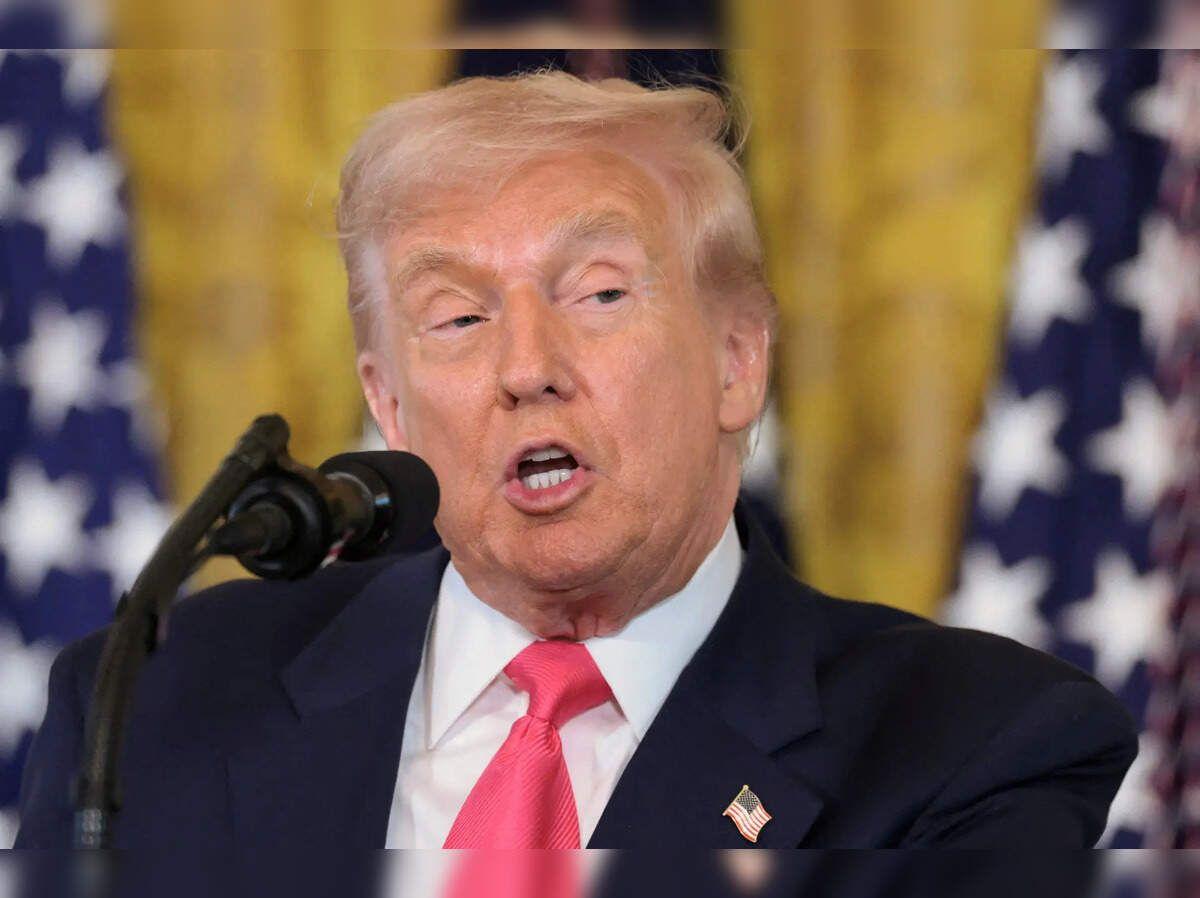
The administration said it wants to work with Congress "in the coming months" to convert the framework into legislation that President Donald Trump can sign
3
5
. Michael Kratsios, director of White House Office of Science and Technology Policy, stated the White House wants to codify the framework into law this year and believes it can generate bipartisan compromise5
. However, that won't be easy in a deeply divided Congress where Republicans hold thin majorities5
.
Source: ET
Federal Standards for AI to Limit State AI Laws
The framework draws a hard line against states regulating AI development itself, which it characterizes as an "inherently interstate" issue tied to national security and foreign policy
1
. While the proposal nods to federalism, the carve-outs for states are relatively narrow, preserving only their authority over general laws like fraud and child protection, zoning, and state use of AI1
. The framework also seeks to prevent states from penalizing AI developers for third-party unlawful conduct involving their models—a key liability shield for developers1
.This approach comes three months after Trump signed an executive order directing federal agencies to challenge state AI laws
1
. The order gave the Commerce Department 90 days to compile a list of "onerous" state AI laws, potentially risking states' eligibility for federal funds like broadband grants, though the agency has yet to publish that list1
. As AI development has expanded, states have moved to pass their own rules intended to mitigate threats posed by the emerging technology, such as algorithmic discrimination and unauthorized deepfakes2
. Notably, New York's RAISE Act and California's SB-53 seek to ensure large AI companies have and adhere to safety protocols that are publicly documented1
.Child Safety and AI: Shifting Burden to Parents Over Platform Accountability
The framework places significant responsibility on parents for issues like child safety rather than imposing strict platform accountability measures
1
. "Parents are best equipped to manage their children's digital environment and upbringing," the framework reads, calling on Congress to give parents tools such as account controls to protect their children's privacy and manage their device use1
. While it says Congress should require AI companies to implement features that "reduce the risks of sexual exploitation and harm to minors," it does not lay out any clear, enforceable requirements1
. The framework outlines six guiding principles including protecting children and empowering parents, safeguarding American communities, and respecting intellectual property rights4
.Related Stories
Prioritizing US Dominance in AI and Economic Competitiveness
The framework outlines seven key objectives that prioritize innovation and scaling AI, reflecting the administration's broader push to "remove outdated or unnecessary barriers to innovation" and accelerate AI adoption across industries
1
. This pro-growth, light-touch approach to AI regulation is championed by so-called "accelerationists," one of whom is White House AI czar and venture capitalist David Sacks1
. The framework also calls for less stringent permitting requirements so data centers can generate power on site, addressing AI data center energy consumption concerns2
5
.
Source: TechCrunch
The proposal includes provisions to prevent AI censorship, meant to address allegations by conservatives that tech companies are biased against their views, which the firms have denied
2
. It also calls for protecting intellectual property rights, expanding AI workforce training, and ensuring American AI dominance2
4
. Trump has taken an interest in establishing what the White House has described as "American dominance" in AI, enacting security measures to ensure that competitors such as China do not gain an edge2
.Industry Support and Critical Pushback
Many in the AI industry are celebrating this direction because it gives them broader liberties to innovate without the threat of regulation
1
. "This framework is exactly what startups have been asking for: a clear national standard so they can build fast and scale," Teresa Carlson, president of General Catalyst Institute, told TechCrunch1
. AI industry leaders have strongly opposed state-level efforts, arguing that a patchwork of laws would hobble innovation and give global competitors like China a major advantage5
.However, critics argue that missing from the framework are any gestures towards liability frameworks, independent oversight, or enforcement mechanisms for potential novel harms caused by AI
1
. "White House AI czar David Sacks continues to do the bidding of Big Tech at the expense of regular, hardworking Americans," said Brendan Steinhauser, CEO of The Alliance for Secure AI, adding that the framework "seeks to prevent states from legislating on AI and provides no path to accountability for AI developers for the harms caused by their products"1
. The framework would centralize AI policymaking in Washington while narrowing the space for states to act as early regulators of emerging risks1
. AI stands to be a divisive issue in the midterms, with tech companies pouring hundreds of millions of dollars into races to elect friendly members of Congress2
. Free speech protections and preventing censorship remain central to the administration's vision, though the path forward requires navigating political divisions ahead of November elections2
4
.References
Summarized by

Navi
[1]
[3]
Related Stories
Trump administration seeks unified national framework for artificial intelligence regulation
12 Dec 2025•Policy and Regulation

Trump's AI Action Plan: Deregulation, Infrastructure, and the Battle Against 'Woke' AI
23 Jul 2025•Policy and Regulation
Trump Administration Puts AI Regulation Executive Order on Hold Amid Republican Backlash
19 Nov 2025•Policy and Regulation

Recent Highlights
1
Google Maps unveils Ask Maps with Gemini AI and 3D Immersive Navigation in biggest update
Technology

2
Three Tennessee teens sue xAI over Grok AI creating child sexual abuse material from real photos
Policy and Regulation
3
Meta plans to cut 20% of workforce as AI spending reaches $600 billion, mirroring broader tech trend
Business and Economy
Recent Highlights
Today's Top Stories



Your Daily Dose of Curated AI News
Don’t drown in AI news. We cut through the noise - filtering, ranking and summarizing the most important AI news, breakthroughs and research daily. Spend less time searching for the latest in AI and get straight to action.

