Workday co-founder Aneel Bhusri returns as CEO as AI transformation pressures mount


6 Sources
6 Sources
[1]
Workday CEO Eschenbach departs, with co-founder Aneel Bhusri returning as CEO
Enterprise resource planning software company Workday announced Monday that chief executive Carl Eschenbach was stepping down and leaving the company's board, effective immediately. Workday co-founder and former CEO Aneel Bhusri will return as CEO. Eschenbach joined Workday in December 2022 as co-CEO alongside Bhusri, and had been operating as the company's sole CEO since February 2024. Bhusri, who had led the company since 2009 -- sometimes as co-CEO, sometimes as sole CEO -- has been serving as the company's executive chairman since 2024. Workday confirmed to TechCrunch that Bhusri is returning to the role permanently, as opposed to taking the helm during a search for a replacement. Workday made this leadership change as it says its next chapter will be focused on, unsurprisingly, AI. "We're now entering one of the most pivotal moments in our history," Bhusri said in the company's press release Monday. "AI is a bigger transformation than SaaS -- and it will define the next generation of market leaders. I'm energized to return as CEO, working alongside our presidents Gerrit Kazmaier and Rob Enslin, and I'm excited about the opportunity in front of us." Last February, Workday laid off 8.5% of its headcount, or 1,750 people, with Eschenbach stating at the time that the company needed a new approach to labor in the age of AI.
[2]
Hello Again! Bhusri Is Back Behind The Workday Wheel
Workday just announced its new CEO, and, well, he isn't really new at all. Aneel Bhusri is returning as CEO after two years as executive chair. The move follows a turbulent period for enterprise SaaS stocks, with Workday shares down more than 20% year-to-date (2026) and significantly declining since the start of 2025, dropping by approximately 39% as of early February 2026. This isn't the first time a founder has stepped back into the role of CEO, with classic examples including Steve Jobs, Jack Dorsey, and Howard Schultz (among others). During Carl Eschenbach's tenure, Workday pursued an aggressive, acquisition‑led strategy to accelerate its AI roadmap, buying a wide range of AI platforms across integration, talent, learning, and agent orchestration. While this expanded Workday's surface area and competitive intent, the company is struggling to fully integrate these assets, enable partners at speed, and translate M&A into clear differentiation amid rapid market shifts. As competitors such as Oracle and SAP move fast with tightly integrated stacks and partner mobilization, Workday is facing growing execution risk, slower data platform maturity, and pressure both up and down the market. As Aneel Bhusri retakes the helm, Workday's near-term challenge is proving that it can gain global market share for its non-HCM product lines, integrate and simplify its stack after all the acquisitions, and compete in an enterprise software market being rapidly reshaped by AI expectations. This change occurs against a backdrop of multiple workforce reductions, including a 1,750-employee cut (8.5% of the workforce) in early 2025 and an additional approximately 400-person reduction in February 2026, primarily in non-revenue-generating roles, emphasizing resource realignment to fund AI and product development. Is this a permanent change? Thus far, there's no indication otherwise -- with commentary focusing on continuity and stability. What Workday Customers/Prospects Should Do Workday customers should view Aneel Bhusri's return as CEO as a signal of strategic consolidation rather than radical change. The company's direction -- toward AI, agents, Data Cloud, and a more open platform -- is unlikely to reverse. What will change is the emphasis on execution discipline and architectural coherence. Customers should expect fewer speculative bets, more scrutiny on what actually ships, and a renewed focus on preserving Workday's historical strength: stability and a unified core, even as the platform expands beyond HCM and finance. At the same time, customers should be clear‑eyed about the risks. Much of Workday's AI vision depends on integrating a growing set of acquisitions and opening the core through the Data Cloud, which is not fully enterprise‑ready yet. There is real potential for integration drag, uneven partner readiness, and UX disruption as new AI interfaces are layered onto mission‑critical systems. Organizations should be cautious about committing to roadmap promises without clear GA timelines, dependencies, and support models. This is also a moment for customers to be more assertive. They should push Workday for explicit integration roadmaps that clarify what is truly native versus loosely coupled, when acquired capabilities become part of standard workflows, and how Data Cloud underpins AI features. Customers should demand proof of value in production -- not demos -- including references, operational metrics, and clarity on governance, SLAs, and supportability. As pricing models evolve toward consumption, customers should also protect themselves commercially by insisting on predictability and phased adoption. An overarching market observation is that, as AI continues to put pressure on the enterprise applications market, vertical specialization will become a key differentiator and increasingly crucial -- and this is where Workday has traditionally been weaker relative to newer and smaller vendors that offer massive industry depth. Workday needs to hear this direct feedback from industry customers, who should continue to advocate for solutions to real industry-specific challenges in product community conversations and strategic discussions with Workday account and executive teams. These interactions eventually lead to direct input to product engineering teams. If you have any questions about the Workday ecosystem, please reach out to me here for inquiry or guidance sessions.
[3]
Workday CEO Eschenbach steps down - co-founder Bhusri to return
Former leader will get $3.6 million cash severance package plus more Workday CEO Carl Eschenbach has stepped down with immediate effect after around two years as the head of the company (and another year as co-CEO), and he's already been replaced by Workday co-founder Aneel Bhusri who has returned to the role on a permanent basis. A Form 8-K confirms that Eschenbach will receive $3.6 million in cash severance plus accelerated vesting of equity awards. Bhusri will be eligible for a $1.25 million base salary "and an annual target cash bonus of up to 200% of the amount of his then-current base salary." The news comes as company share prices continue to plummet - they're down around 40% year-over-year with investors worried about Workday's AI strategy and its susceptibility to the tech's influences. Workday already cut around 1,750 roles, accounting for 8.5% of its then headcount, one year ago, framed as an AI-driven restructuring necessity. One year later, another 2% reduction was confirmed. The company has had three consecutive quarters of 12.6% revenue growth - a not-so-insignificant sum, but a sum that's fallen from around 15-18% in the two preceding years. "The opportunity ahead of us is always greater than what's behind. We are at a massive inflection point with AI, and there is nobody better than Aneel to lead Workday through this moment and drive the vision forward," Eschenbach wrote in a LinkedIn post. He now describes himself as Strategic Advisor to the CEO on the social networking platform. "As we look ahead, Workday is entering a new chapter that will be defined by AI and innovation," Bhusri shared in a separate LinkedIn update.
[4]
Workday lost $40 billion in value. Founder Aneel Bhusri is back with a $139 million bet he can turn it around | Fortune
By bringing cofounder Aneel Bhusri back to the CEO job, Workday has turned to a classic Silicon Valley tradition to deal with the AI threat squeezing software company stocks: the return of the founder. Bhusri's return to the top job at the human resources software company reflects the belief that only a founder with billions on the line and a personal legacy at stake has the unique vision and authority to steer the ship through difficult waters. And with majority voting control plus operational authority as CEO, Bhusri will have more power to make any difficult changes he sees necessary. A close look at Bhusri's compensation package however suggests that it's also an acknowledgement of just how bleak the investor prognosis is for software-as-a-service (SaaS) companies. To lure Bhusri back to the CEO job he left two years ago, Workday is giving him a $138.8 million pay package comprised of cash and performance-based and restricted stock. More than half of the package, $75 million, only pays out if Bhusri can hit a series of undisclosed stock price targets over the next five years. Perhaps more telling is the other half: Roughly $60 million in restricted stock requires only that Bhusri stick around at Workday for the next four years, with no performance targets whatsoever. With Wall Street bearish on SaaS companies, Workday is effectively recognizing the deep skepticism that even its founder-savior will face in successfully making the transition into the AI age. The AI panic rippling through enterprise software stocks for the past couple of weeks has helped wipe out some $40 billion in value at Workday, slashing its market cap in half from an all-time high of $80 billion. The stock has fallen 51% to roughly $150 a share from an intraday peak of $311.28 less than two years ago. This year alone, the stock is down 29% amid the broad bloodbath subsuming the SaaS industry. Other SaaS companies, including Salesforce, ServiceNow, and HubSpot, have all suffered double-digit declines in their stock prices. "AI is reshaping how work gets done and represents an even bigger transformation than the shift to cloud 20 years ago," Bhusri wrote in a LinkedIn post the day after the news of the leadership change. "Just as we helped redefine enterprise software when we founded Workday, I believe we can once again lead the way in this AI era." There's a lot at stake for Bhusri, even if he weren't taking back the reins. As executive chair at the SaaS giant for the past two years, Bhusri has seen half the value of his more than 8-million share ownership stake nosedive from an all-time-high value of $2.6 billion in 2024, to about $1.3 billion. That's a wealth wipeout on paper of roughly $1.3 billion in less than two years. Bhusri may have more hands-on experience leading a company than the average founder. Bhusri founded Workday with best friend and mentor Duffield in 2005 before the two joined forces as co-CEOs in 2009. In the years since, Bhusri served as sole CEO after ceding the chairmanship to Duffield before sharing it again in August 2020 with then co-CEO Luciano "Chano" Fernandez. After Fernandez announced his departure in December 2022, the board appointed ex-Sequoia Capital partner Carl Eschenbach to serve alongside Bhusri before Bhusri stepped into the executive chair role in February 2024. Now, with Eschenbach out as CEO, Bhusri is back in the saddle as CEO and chairman. As the software company turns the page, it has 20 years of decision making data and process history that give the opportunity to offer enterprise grade intelligence to large customers, Bhusri wrote in his post. Workday's success is highly dependent on Bhusri. The company operates with a dual-class share structure, which means shares sold on the open market, Class A shares, carry a single vote apiece, while Class B shares are worth 10 votes each. Between cofounder Dave Duffield and Bhusri and their affiliates and a voting rights agreement that dates back to Workday's 2012 IPO, the two cofounders control 68% of the voting power through their Class B share ownership. Bhusri's Linkedin post is jam-packed with optimism for Workday's future but the numbers are far more complex. In the past three years, the company has announced multiple rounds of layoffs impacting thousands of jobs with the rationale that they were part of a realignment, a shift toward AI, and a move to improve profitability. Last February, the company slashed its workforce by roughly 7.5% as part of a restructuring plan and recorded $172 million in associated charges. While revenue is growing -- Workday posted $8.4 billion in total revenue for fiscal 2025, up 16% over the year prior -- that growth has slowed. Subscription revenue growth, for example,slowed from 19% in fiscal 2024 to 17% in fiscal 2025, per the company's annual report, with the most recent quarter showing 15%. Plus, the unknown impact AI will have on SaaS companies is a brutal hangover on the sector, and the impact on Workday is significantly visible. The day of Bhusri's return, the stock dropped more than 6%, underscoring investors' anxiety about the company and its challenges adapting to the AI age. Workday has been mum on the specific targets Bhusri will have to hit to see his $138.8 million package pay out, but the disclosed terms state the $75 million award will be divided up into tranches that will require Bhusri to hit stock price targets -- and stay at Workday. Bringing the price back up to its peak will mean more than doubling the stock price in the next five years. Bhusri's $60 million restricted stock award will vest over four years so long as Bhusri stays with the company. He'll also collect a $1.25 million yearly salary and a yearly cash bonus of up to $2.5 million. He won't be eligible for any more grants until 2027. Eschenbach, the former CEO, who resigned from all his roles and will now serve as a senior advisor, got a severance package valued at roughly $3.6 million and he'll see accelerated vesting on nearly 140,000 shares of restricted stock units that would have vested in the year after his departure. At $150 a share, Eschenbach's equity is worth more than $20 million, and he'll see accelerated vesting on another 24,000 additional shares if performance metrics tied to the award are met. His "push-out score," an independent assessment of the terms of his departure, ranked his departure a nine out of 10. The score suggests "it seems extremely likely" Eschenbach felt pressured to leave. In a post on LinkedIn, Eschenbach praised Bhusri and his former "Workmates" at Workday. "The opportunity ahead of us is always greater than what's behind," wrote Eschenbach. "We are at a massive inflection point with AI, and there is nobody better than Aneel to lead Workday through this moment and drive the vision forward." Bhusri and Duffield's agreement also means that if one of the co-founders is incapacitated or dies, the other gets control of both stakes. The dual-class structure is set to expire in October 2032 -- a year after Bhusri's performance window closes in early 2031. That gives Bhusri a solid chunk of time to see if a co-founder in the CEO seat can make an impact on the stock price in the midst of an AI tidal wave.
[5]

Workday co-founder Aneel Bhusri returns as CEO, ending Carl Eschenbach's 2-year tenure
In a surprise move, enterprise applications powerhouse Workday today announced that Carl Eschenbach is stepping down as CEO and from its board after just two years in the role -- or three if you add his time as co-CEO alongside co-founder Aneel Bhusri, who now returns as sole CEO. In a press statement, the company gave no further clue to the reasons for Eschenbach's sudden departure, unless you count Bhusri's comments about the impact of AI on its future: We're now entering one of the most pivotal moments in our history. AI is a bigger transformation than SaaS -- and it will define the next generation of market leaders. I'm energized to return as CEO, working alongside our presidents Gerrit Kazmaier and Rob Enslin, and I'm excited about the opportunity in front of us. Eschenbach's association with Workday goes back to February 2018, when he joined its board following 14 years in leadership roles at VMWare and a two-year stint as a partner at Sequoia Capital. He was named as co-CEO in December 2022, with a one year timeline to become sole CEO in January 2024 -- effectively groomed as heir-apparent to co-founder Bhusri. It's fair, then, to ask what went wrong? At this point, we can only speculate. But Eschenbach's tenure has been marked by massive change at Workday, particularly in its technology leadership and operations, which could not have been forecast at the time of his appointment, as well as several painful rounds of layoffs. AI has had a particularly profound impact, all under Bhusri's mentoring in his role as Executive Chairman, where he retained the lead on innovation at the company. The company's entire technology leadership has changed in the past year, driven both by a series of AI-first acquisitions and by key hires from Google Cloud, such as Gerrit Kazmaier, who assumed the role of President of Product & Technology last March, and his former Google colleague Peter Bailis, who joined shortly afterwards as CTO. They put in train changes that were described to me last July by Jerry Ting, founding CEO of Evisort, which Workday acquired a year ago, and who is now VP and Head of Agentic AI: [P]art of what [we're] doing right now, organizationally, is unifying the different platforms -- UI, AI, our databasing teams -- all in the same reporting line, so that when we say, 'Hey, we have to build this agent,' it's a top-down integrated stack. That's a big change for Workday, a very large change. Other AI acquisitions have included Sana, which Workday positions as enabling a new conversational user experience, low-code agent builder Flowise and conversational recruitment app Paradox. Behind the scenes, Bhusri has been instrumental in driving all this flurry of activity, aiming to recapture the challenger spirit that he recalls from Workday's early years. As Ting told me: When I met with Aneel, he told me, 'Jerry, when Workday was 20 people, we thought just like you.' In Aneel's mind and his heart, this is his baby. He doesn't want us to become an old ERP system. He wants us to take the hill. I met with Aneel as a part of this role, and he asked me, 'Jerry, how do you bring that startup AI founder mindset to Workday?' This new mindset is not one that Eschenbach has experience of. When he was appointed, it seemed as though Workday was on a settled trajectory where it simply needed to consolidate its growth. Three years later, it faces entirely different challenges. Perhaps he found it difficult to keep pace with the change required across the Workday organization, its partners and customer base. Or maybe his desire to drive faster expansion internationally and rely more on external partners to drive growth didn't sit well with Workday's traditional emphasis on close customer relationships. And while he seems to have been well regarded by customers and investors, layoffs were becoming an increasingly regular feature of his tenure. They began with a 3% cut in headcount just weeks after he took up the reins as co-CEO, and then another 8.5% one year ago. Last week saw a further 2% round of layoffs. Perhaps what Mark Hawkins, Workday vice chair and lead independent director, described in today's press release as Bhusri's "deep connection to Workday's culture" is now needed to soothe morale at the vendor. There are external pressures building, too. Activist investor Elliott Investment revealed a $2 billion stake in the vendor in September, albeit expressing confidence at the time in Workday's leadership and planned operating model and investments. And of course last week's so-called 'SaaSpocalypse' which saw Workday's shares drop in line with most other leading SaaS stocks won't have calmed nerves. It seems churlish to reduce such a fraught and weighty decision to such simple terms, but perhaps with Workday due to report its Q4 results in just over two weeks' time, it was now or never to make this drastic move. Eschenbach will continue to provide strategic advice to his CEO successor, who commented: I'm deeply grateful to Carl for leading Workday through an important chapter -- scaling the company, building on our foundation, and positioning us well for what's ahead. For his part, Eschenbach stated: It's been a privilege to serve as CEO over the past three years and I'm proud of all we achieved -- instilling greater operational discipline, expanding globally, broadening our industry focus, and laying meaningful groundwork in AI. I could not be more grateful to Aneel and to our board for the trust they placed in me to lead this special company, and I look forward to supporting Aneel and Workday in this next chapter. The curse of succession in founder-led tech vendors strikes again. As I commented when Eschenbach was first appointed as co-CEO: [F]ounders aren't good at handing over the reins... The success of such arrangements all comes down to the trust that exists between the individuals concerned, and the self-discipline of the founder to be able to draw a line under their reign. But as I noted above, who could possibly have foreseen the extent to which Workday is having to reinvent itself and how it builds and delivers product over the past year or two? The challenge for Bhusri now is to balance that "startup AI founder mindset" with the demands of running and growing an established global corporation. His goal, surely, is to take some time to course-correct and then find an opportunity to step back once again. But is there ever a right time for a tech founder to step back? There doesn't seem to be an easy answer to that one.
[6]

Workday stock drops 5%+ after CEO Carl Eschenbach steps down - SiliconANGLE
Workday Inc. today announced that Carl Eschenbach has stepped down from his role as chief executive officer and executive chair. Shares of the company declined more than 5% on the news. The drop came amid a broader selloff in enterprise stocks, which began last week after Anthropic PBC introduced an artificial intelligence tool for automating legal tasks. The launch sparked investor concerns about AI's impact on incumbent work applications. Workday develops a cloud-based platform that companies use to perform day-to-day accounting tasks. Finance teams can review expenses, create budgets and forecast revenue. They can also use a built-in scenario modelling tool to simulate the impact of potential business changes. Workday's other core focus is workforce management. Human resources teams use its software to perform payroll administration tasks and plan recruiting initiatives. Additionally, the platform provides features for various other use cases such as onboarding suppliers. Eschenbach, a former Sequoia partner and VMware Inc. executive, joined the Workday board in 2018. He became co-CEO four years later alongside company co-founder Aneel Bhusri. After Bhusri left the role in February 2024, Eschenbach led Workday as its sole CEO. Over the past two years, the executive oversaw a major restructuring initiative and a series of artificial intelligence acquisitions. The largest of those deals, Workday's $1.1 billion purchase of Swedish software startup Sana Labs AB, was announced in September. The transaction bought the company an AI platform that automates business tasks such as creating data visualizations. Workday announced the acquisition at an analyst event where it also detailed a new financial roadmap. As part of the initiative, the company will buy back $5 billion worth of shares and take steps to boost profitability. The day after executives revealed the plan, activist investor Elliot Management disclosed a $2 billion stake in the company. Eschenbach will be succeeded by Workday co-founder Aneel Bhusri, with whom he served as co-CEO between 2022 and 2024. Bhusri has led the company as either co-CEO or sole chief executive for most of the past 20 years. "I'm deeply grateful to Carl for leading Workday through an important chapter -- scaling the company, building on our foundation, and positioning us well for what's ahead," said Bhusri. "We're now entering one of the most pivotal moments in our history. AI is a bigger transformation than SaaS." The leadership change comes about two weeks before the company's fourth quarter earnings report. Workday today reiterated its forecast of a 15.5% adjusted operating margin and $2.355 billion in subscription revenue. For the full fiscal year, the software maker is guiding a 29.1% adjusted margin and subscription revenues of $8.828 billion, which would represent a 14.4% increase from 12 months earlier.
Share
Share
Copy Link
Workday announced a sudden CEO change with co-founder Aneel Bhusri returning to lead the company after Carl Eschenbach's two-year tenure ended abruptly. The leadership change comes as Workday faces mounting pressure from a 40% stock decline and struggles to execute its AI strategy. Bhusri, who controlled the company since 2009, will receive a $138.8 million compensation package to steer the human resources software giant through what he calls the biggest transformation since the shift to cloud computing.
Workday CEO Change Brings Co-Founder Back to Navigate AI Crisis
Workday announced Monday that CEO Carl Eschenbach was stepping down with immediate effect, marking an abrupt end to his two-year tenure as sole chief executive of the enterprise resource planning software company
1
. Co-founder Aneel Bhusri, who had been serving as executive chairman since February 2024, is returning as CEO on a permanent basis—not as an interim leader during a search for replacement1
. The leadership change follows a turbulent period for the human resources software company, with shares plummeting approximately 40% year-over-year as investors grow increasingly concerned about Workday's AI strategy and its ability to compete in a rapidly transforming enterprise software market3
.
Source: TechRadar
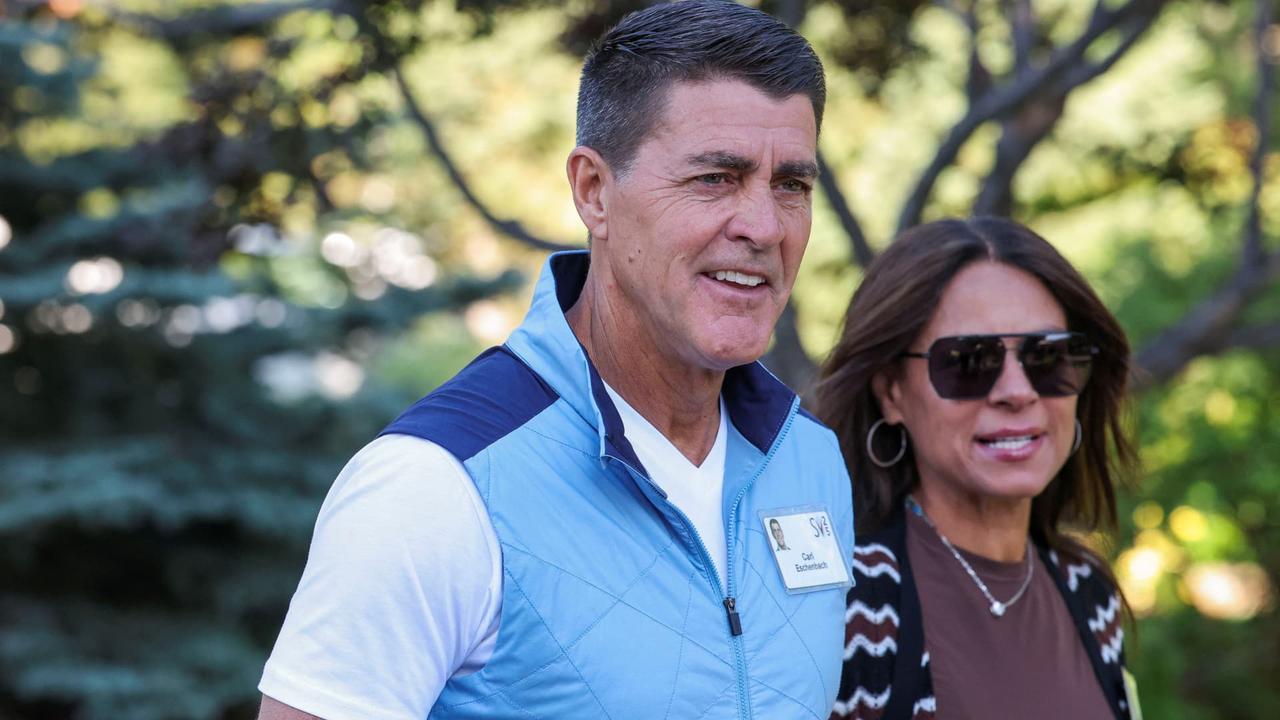
Eschenbach joined Workday in December 2022 as co-CEO alongside Bhusri and had been operating as sole CEO since February 2024
1
. According to a Form 8-K filing, Carl Eschenbach's departure includes a $3.6 million cash severance package plus accelerated vesting of equity awards3
. Meanwhile, Aneel Bhusri returning as CEO will be eligible for a $1.25 million base salary and an annual target cash bonus of up to 200% of his base salary3
.Massive Compensation Package Reflects High Stakes of AI Transformation
To bring Bhusri back to the CEO position he left two years ago, Workday is offering a $138.8 million pay package comprised of cash and performance-based and restricted stock
4
. More than half of this package—$75 million—only pays out if Bhusri can hit a series of undisclosed stock price targets over the next five years4
. Perhaps more telling is the other half: roughly $60 million in restricted stock requires only that Bhusri remain at Workday for the next four years, with no performance targets whatsoever4
. This structure reflects Wall Street's deep skepticism that even a founder-savior will successfully navigate the transition into the Artificial Intelligence age.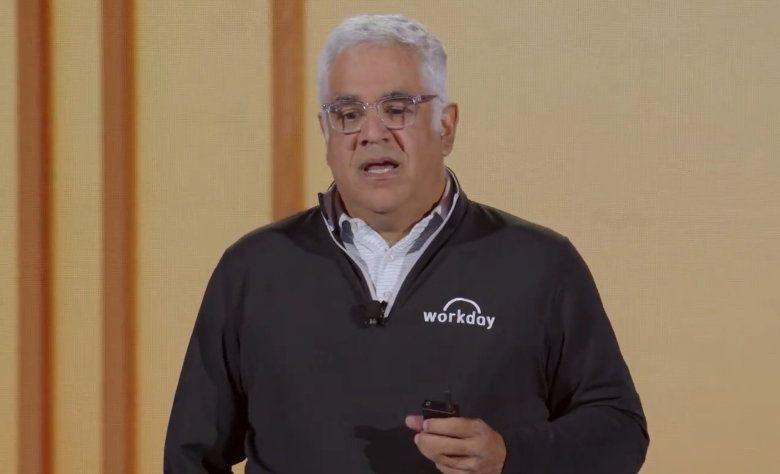
Source: diginomica
The AI panic has helped wipe out approximately $40 billion in value at Workday, slashing its market cap in half from an all-time high of $80 billion
4
. The stock has fallen 51% to roughly $150 a share from an intraday peak of $311.28 less than two years ago4
. Bhusri himself has seen the value of his more than 8-million share ownership stake nosedive from $2.6 billion in 2024 to about $1.3 billion—a personal wealth wipeout of roughly $1.3 billion in less than two years4
.Workday's AI Strategy Struggles Amid Aggressive Acquisition Spree
During Eschenbach's tenure, Workday pursued an aggressive, acquisition-led strategy to accelerate its AI roadmap, buying a wide range of AI platforms across integration, talent, learning, and agent orchestration
2
. While this expanded Workday's surface area and competitive intent, the company is struggling to fully integrate these assets, enable partners at speed, and translate mergers and acquisitions into clear differentiation amid rapid market shifts2
. As competitors such as Oracle and SAP move fast with tightly integrated stacks and partner mobilization, Workday is facing growing execution risk, slower data platform maturity, and pressure both up and down the market2
.The company's entire technology leadership has changed in the past year, driven both by a series of AI-first acquisitions and by key hires from Google Cloud, such as Gerrit Kazmaier, who assumed the role of President of Product & Technology, and Peter Bailis, who joined as CTO
5
. AI acquisitions have included Sana, which enables a new conversational user experience, low-code agent builder Flowise, and conversational recruitment app Paradox5
.
Source: TechCrunch
Related Stories

Layoffs and Revenue Growth Slowdown Signal Deeper Challenges
The leadership change occurs against a backdrop of multiple workforce reductions. Last February, Workday laid off 8.5% of its headcount, or 1,750 people, with Eschenbach stating at the time that the company needed a new approach to labor in the age of AI
1
. An additional approximately 400-person reduction occurred in February 2026, primarily in non-revenue-generating roles, emphasizing resource realignment to fund AI and product development2
.While Workday posted $8.4 billion in total revenue for fiscal 2025, up 16% over the year prior, that growth has slowed significantly
4
. Subscription revenue growth slowed from 19% in fiscal 2024 to 17% in fiscal 2025, with the most recent quarter showing 15%4
. The company has had three consecutive quarters of 12.6% revenue growth—a significant sum, but one that's fallen from around 15-18% in the two preceding years3
.What This Means for SaaS Companies and Workday's Future
Bhusri's return represents a classic Silicon Valley tradition: bringing back the founder to deal with existential threats. With majority voting control plus operational authority as CEO, Bhusri will have more power to make any difficult changes he sees necessary
4
. Between co-founder Dave Duffield and Bhusri and their affiliates, the two cofounders control 68% of the voting power through their Class B share ownership4
."AI is a bigger transformation than SaaS—and it will define the next generation of market leaders," Bhusri said in the company's press release
1
. Workday customers should view this CEO change as a signal of strategic consolidation rather than radical change, according to Forrester analysts2
. The company's direction toward AI, agents, Data Cloud, and a more open platform is unlikely to reverse, but the emphasis will shift to execution discipline and architectural coherence2
. As Workday's near-term challenge involves proving it can gain global market share for its non-HCM product lines, integrate and simplify its stack after all the acquisitions, and compete in an enterprise software market being rapidly reshaped by AI expectations, industry observers will be watching closely when the company reports Q4 results2
5
.References
Summarized by

Navi
[2]
Related Stories
Workday shares plunge 9% as weak guidance deepens AI disruption fears despite CEO's defense
25 Feb 2026•Business and Economy

Workday CEO's Tough Decision: Layoffs to Fuel AI Investment
10 Mar 2025•Business and Economy

Workday's Q2 Earnings Beat Estimates, but AI Disruption Fears Linger
22 Aug 2025•Technology
Recent Highlights
1
OpenAI shuts down Sora video app after six months, ending Disney's $1 billion investment deal
Technology

2
AI-Generated Val Kilmer to Posthumously Appear in As Deep as the Grave After His Death
Entertainment and Society

3
Supermicro Co-Founder Indicted in $2.5 Billion Nvidia AI Chip Smuggling Scheme to China
Policy and Regulation
Recent Highlights
Today's Top Stories




Your Daily Dose of Curated AI News
Don’t drown in AI news. We cut through the noise - filtering, ranking and summarizing the most important AI news, breakthroughs and research daily. Spend less time searching for the latest in AI and get straight to action.

