Workday shares plunge 9% as weak guidance deepens AI disruption fears despite CEO's defense


3 Sources
[1]
Workday CEO Says Anthropic and OpenAI Use His Company's Software
Workday Inc. Chief Executive Officer Aneel Bhusri said leading AI companies like Anthropic -- which investors fear will disrupt the software industry -- actually use his company's products. "Just for what it's worth, Anthropic, Google and OpenAI all run Workday," Bhusri said on a call Tuesday with
[2]
Workday's stock slumps again on weak guidance and AI disruption fears - SiliconANGLE
Workday's stock slumps again on weak guidance and AI disruption fears Shares of Workday Inc. got hammered in late trading today after the company offered weak guidance for the current quarter. It was the worst possible news for investors amid growing concerns over the existential threat it faces
[3]
Workday shares extend declines as soft forecast deepens AI disruption fears
A selloff in Workday shares resumed on Wednesday after the HR and payroll software maker's soft sales forecast fanned investor fears about its ability to stay competitive in the AI era. The stock fell nine per cent in premarket trading and was on track to widen losses of about 40 per cent this
Share
Copy Link
Workday stock tumbled after the company issued soft financial guidance, extending its 40% decline in 2026. CEO Aneel Bhusri defended the HR and payroll software maker against existential AI threats, revealing that Anthropic, OpenAI, and Google all use Workday. But investors remain unconvinced as the company forecasts slower growth and analysts lower price targets.
Workday shares decline extends as weak financial guidance rattles investors
Workday stock fell 9% in extended trading after the company delivered disappointing guidance for the current quarter and fiscal year, deepening concerns about its ability to compete in an AI-driven market
1
2
. The HR and payroll software provider now trades down approximately 40% year-to-date, making it one of the worst-performing U.S. software stocks in 20263
. For the current quarter, Workday projected an adjusted operating margin of 30.5% and subscription revenue of $2.335 billion, both falling short of analyst expectations of 30.9% and $2.35 billion respectively2
. More troubling for investors, the company's fiscal 2027 outlook anticipates subscription revenue between $9.93 billion and $9.95 billion, implying growth of just 12% to 13% compared to the prior year's 14% growth rate2
.AI disruption fears intensify across software-as-a-service model
The stock slump reflects mounting investor anxiety that AI tools from companies like Anthropic and OpenAI could reduce demand for software traditionally used for office tasks such as payroll and employee management
1
. This concern extends beyond Workday, with peer Salesforce also experiencing a roughly 40% decline this year amid similar worries about AI's effect on software spending1
. More than 23 analysts—over half of those covering Workday—lowered their price targets following the earnings report3
. The threat operates on multiple levels: AI tools could directly replace traditional enterprise resource planning (ERP) systems, while broader AI-driven layoffs might decrease overall demand for HR tools at businesses. Australian software company WiseTech Global recently announced plans to cut approximately 2,000 jobs—nearly a third of its workforce—in what could rank among the country's largest AI-linked job cuts3
.
Source: BNN
Aneel Bhusri returns as CEO to defend Workday's relevance
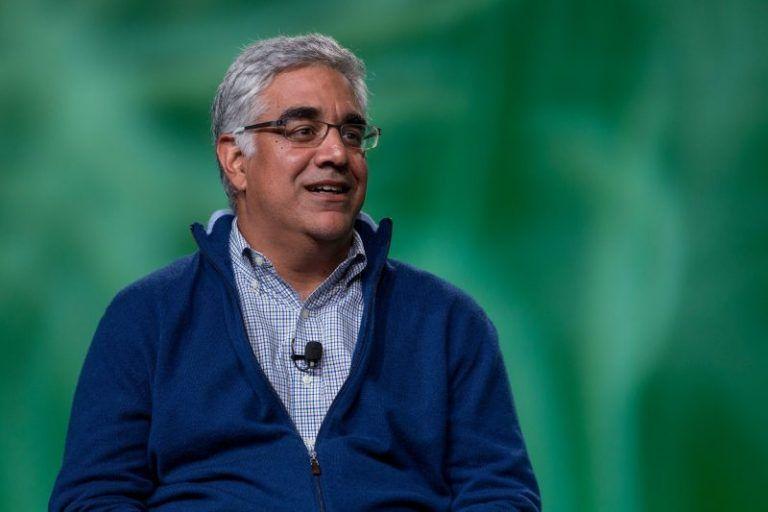
Aneel Bhusri, who returned as CEO earlier this month after stepping down as co-CEO in 2024, spent considerable time on the earnings call addressing existential concerns about the company's future
1
2
. The co-founder directly countered the narrative that HR and ERP systems would be replaced by AI, stating: "Just for what it's worth, Anthropic, Google and OpenAI all run Workday"1
. Bhusri emphasized that Workday operates as a critical system of record requiring absolute accuracy, complex security enforcement, and regulatory compliance across global jurisdictions. "No amount of vibe coding is going to produce an HR or an ERP system," he insisted, highlighting the complexity that makes these platforms difficult to replicate1
3
. His return follows the departure of CEO Carl Eschenbach, who stepped down after just three years without providing reasons for his exit2
.
Source: SiliconANGLE
Related Stories

Workday bets on generative AI features to lead disruption
Rather than simply defending against AI threats, Workday has invested heavily in building its own AI capabilities. The company has added dozens of generative AI features to its platform over the past year, with Bhusri revealing that these AI products now generate more than $400 million in annual recurring revenue
2
. During the quarter, Workday announced plans to launch a new AI agent capable of handling employee requests for modifying work shifts and acquired Pipedream Inc., a startup developing tools for connecting AI agents to external software and services2
. Chief Financial Officer Zane Rowe emphasized that Bhusri focuses more on initiatives driving long-term growth than exclusively hitting operating margin targets, suggesting confidence that Workday's AI investments will eventually pay off2
. Chief Commercial Officer Rob Enslin attributed the soft guidance to large customers taking longer to close deals, particularly in government and healthcare sectors3
. Despite these explanations, Piper Sandler analysts noted that "in an environment where there is increased scrutinization of every metric amidst the AI debates, the guide likely does not allay investors' general concerns"3
.References
Summarized by

Navi
[2]
Related Stories
Workday's Q2 Earnings Beat Estimates, but AI Disruption Fears Linger
22 Aug 2025•Technology

Workday stock soars 10% as AI push drives earnings beat, but analysts warn of pricing pressures
22 May 2026•Business and Economy
Workday's Q4 Earnings Surge: AI Integration Drives Growth and Expansion
26 Feb 2025•Business and Economy

Recent Highlights



Recent Highlights
Today's Top Stories



Don’t drown in AI news. We cut through the noise - filtering, ranking and summarizing the most important AI news, breakthroughs and research daily. Follow topics that matter to you and stay ahead.


