Xpeng shifts to physical AI, plans robotaxi trials and humanoid robot production by 2026


2 Sources
2 Sources
[1]
Chinese automaker Xpeng touts AI pivot in face of fierce competition
GUANGZHOU, China, Jan 9 (Reuters) - Chinese automaker Xpeng (9868.HK), opens new tab said it wanted to become better known as a "physical AI" company rather than just a carmaker, as it gears up to launch street trials of robotaxis and start mass producing humanoid robots later this year. Robots and autos are the core of physical artificial intelligence and share a wide range of existing sensor tech and other hardware. Automakers, for example, are creating robots to automate warehouse and factory tasks. He Xiaopeng, founder and CEO of the company - one of China's best-selling electric vehicle startups and a Volkswagen (VOWG.DE), opens new tab partner - on Thursday said that with automakers facing intense competition, integrated AI capabilities with XPeng's in-house "Turing" AI chip will give it an advantage. "XPeng definitely does not want to become a car company that simply sells hardware cheaply," he said at an event in Guangzhou. "We want to become a global technology company, a company with strong differentiation. The effort to reposition itself echoes similar efforts by Elon Musk's Tesla (TSLA.O), opens new tab to expand into making humanoid robots and robotaxis as part of a sharp rise in the use of AI globally. Underlining growing interest in physical AI, chip technology company Arm Holdings told Reuters this week that it had reorganized to create a physical AI unit to expand its presence in the robotics market. Another Chinese automaker, Li Auto (2015.HK), opens new tab in 2023 unveiled a repositioning towards AI, with founder Li Xiang saying that it had invested more than 6 billion yuan ($859.1 million) in AI models, computing power and infrastructure annually. Xpeng's shift also comes as China's auto market, the world's largest, has been embroiled in a years-long price war that has hurt profits. Xpeng's He unveiled four revamped car models at the Guangzhou event, emphasizing new software features including 3D navigation systems, advanced hazard alerts beyond the immediate line of sight and improvements in autonomous driving systems. He said Xpeng has also been hiring and investing in developing autonomous driving and humanoid robots centred on its in-house AI capabilities. The company will begin mass production of humanoid robots in the second half of 2026 and will begin street trials of robotaxis "very soon," He said. Xpeng recorded a net loss of 380 million yuan in the third quarter and He previously said he expected to break even by the end of 2025. Reporting by David Kirton in Guangzhou, Additional reporting by Zhang Yan in Shanghai; Editing by Brenda Goh and Thomas Derpinghaus Our Standards: The Thomson Reuters Trust Principles., opens new tab * Suggested Topics: * Artificial Intelligence * China Strategy * ADAS, AV & Safety * EV Battery * Sustainable & EV Supply Chain
[2]
China's Xpeng CEO Touts 'Physical AI' Vision, Says Robotaxi Testing Will Happen 'Soon' - Alibaba Gr Hldgs (NYSE:BABA), NVIDIA (NASDAQ:NVDA)
Xpeng Inc. (NYSE:XPEV) CEO He Xiaopeng has reiterated the company's focus on physical AI and robotaxi goals. Not Just An Automaker The CEO, speaking at an event in Guangzhou, China, on Thursday, shared that the company should also be known for its "physical AI" rather than just an automaker, Reuters reported on Friday. The Xpeng CEO said that the automaker would benefit from its in-house Turing AI chip amid the sector's push towards AI-integrated vehicles. He shared that the company "does not want to become a car company that simply sells hardware cheaply," adding that he wished for the company to "become a global technology company" instead. The CEO also reaffirmed Robotics and Robotaxi commitments, outlining that the company's humanoid robot would enter production in the latter half of the year, while the Robotaxi would begin trials soon, according to the report. Xpeng's goals could put it firmly in competition with Elon Musk's EV giant Tesla Inc. (NASDAQ:TSLA), which currently operates a ride-hailing service in multiple U.S. cities, as well as working on its Optimus humanoid robot. Xpeng's Robotaxi And Robotics Goal The automaker, during its third-quarter investor meeting last November, shared that it will be releasing 3 Robotaxi models in 2026, adding that the operations were not dependent on "high-definition maps or LiDAR." Xpeng also said that its Vision-Language-Action (VLA) model would be open-source, signalling possible licensing opportunities. The company will offer its Robotaxi service this year through Chinese tech giant Alibaba Group Holding Limited's (NYSE:BABA) Amap mapping platform. The company's technology could also challenge chipmaker Nvidia Corp's (NASDAQ:NVDA) Alpamayo self-driving technology, which is also an open-source model taking the VLA approach. On the Robotics front, Xpeng said that its IRON robot would be deployed in "commercial scenarios, providing services like tour guiding, retail assistance and patrols." The company also shared that it will target producing 1 million units annually by 2030. Check out more of Benzinga's Future Of Mobility coverage by following this link. Image via Shutterstock BABAAlibaba Group Holding Ltd$150.23-2.74%OverviewNVDANVIDIA Corp$185.700.36%TSLATesla Inc$436.870.25%XPEVXPeng Inc$20.38-0.71%Market News and Data brought to you by Benzinga APIs
Share
Share
Copy Link
Chinese EV maker Xpeng is repositioning itself as a physical AI company rather than just an automaker. CEO He Xiaopeng announced plans to begin street trials for robotaxis soon and start mass production of humanoid robots in the second half of 2026, leveraging its in-house Turing AI chip to compete with Tesla in the robotics market.
Xpeng Repositions as Physical AI Company Amid Market Pressures
Chinese electric vehicle startup Xpeng is making a decisive shift in its identity, seeking recognition as a physical AI company rather than simply an automaker. CEO He Xiaopeng announced the strategic pivot at an event in Guangzhou on Thursday, outlining ambitious plans to launch street trials for robotaxis imminently and begin mass production of humanoid robots in the second half of 2026
1
. The move comes as the company faces intense competition in the auto market, where China's industry has been locked in a brutal price war that has eroded profit margins across the sector.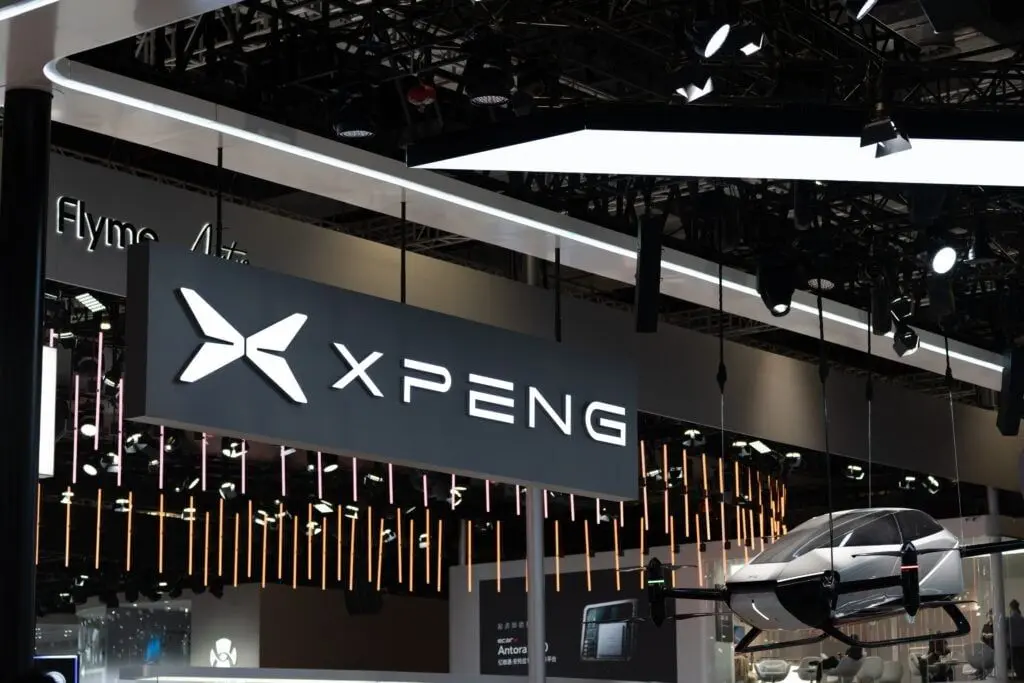
Source: Benzinga
He Xiaopeng emphasized that the company "definitely does not want to become a car company that simply sells hardware cheaply," instead aiming to "become a global technology company, a company with strong differentiation"
1
. This repositioning echoes similar strategies by Tesla, which has expanded into robotaxis and humanoid robots as part of the broader adoption of AI across industries. The effort to evolve beyond just an automaker reflects growing recognition that hardware alone may not sustain competitive advantages in the rapidly transforming automotive landscape.In-House Turing AI Chip Powers Differentiation Strategy
Central to Xpeng's transformation is its in-house Turing AI chip, which the company believes will provide a critical edge in developing integrated AI capabilities across its product lineup
1
2
. He Xiaopeng highlighted that robots and automobiles represent the core of physical AI, sharing extensive sensor technology and hardware components. This convergence enables automakers to leverage their existing capabilities in autonomous driving systems to enter the robotics market more seamlessly.At the Guangzhou event, He Xiaopeng unveiled four revamped car models featuring advanced software capabilities, including 3D navigation systems, hazard alerts that extend beyond immediate line of sight, and improvements in autonomous driving technology
1
. The company has been aggressively hiring talent and investing in autonomous driving and humanoid robot development centered on its proprietary AI capabilities. Xpeng's approach mirrors investments by fellow Chinese automaker Li Auto, which announced in 2023 that it had committed more than 6 billion yuan ($859.1 million) annually to AI models, computing power, and infrastructure1
.Robotaxis and Humanoid Robots Target Multiple Markets
Xpeng's robotaxi ambitions position it in direct competition with Tesla, which already operates ride-hailing services in multiple U.S. cities and continues developing its Optimus humanoid robot
2
. During its third-quarter investor meeting in November, Xpeng revealed plans to release three robotaxi models in 2026, with operations that won't depend on high-definition maps or LiDAR technology2
. The company will offer its robotaxi service through Alibaba's Amap mapping platform, leveraging the tech giant's extensive user base in China.The company's Vision-Language-Action (VLA) model will be open-source, signaling potential licensing opportunities that could generate additional revenue streams
2
. This approach could challenge Nvidia's Alpamayo self-driving technology, which also uses an open-source VLA model. On the robotics front, Xpeng's IRON robot is designed for deployment in commercial scenarios, providing services like tour guiding, retail assistance, and patrols2
. The company has set an ambitious target of producing 1 million units annually by 2030, indicating confidence in the scalability of its robotics business.Related Stories

Financial Pressures Drive Strategic Transformation
The strategic shift comes at a critical time for Xpeng, which recorded a net loss of 380 million yuan in the third quarter
1
. He Xiaopeng previously stated he expected the company to break even by the end of 2025, making the diversification into physical AI and robotics both a growth opportunity and a financial necessity. The years-long price war in China's auto market has compressed margins industry-wide, forcing manufacturers to seek differentiation through technology rather than competing solely on price.The broader industry is taking notice of physical AI's potential. Chip technology company Arm Holdings recently reorganized to create a dedicated physical AI unit to expand its presence in the robotics market
1
. As Xpeng prepares to launch its robotaxi trials and ramp up humanoid robot production, the company's success will depend on whether its integrated AI approach can deliver the differentiation He Xiaopeng envisions, particularly as it competes with established players like Tesla and navigates the challenging economics of China's automotive sector. The coming months will reveal whether Xpeng's bet on physical AI can transform it from a struggling EV startup into a diversified technology company capable of competing on a global stage.References
Summarized by

Navi
Related Stories
Xpeng Unveils Ambitious AI Ecosystem: Robotaxis, Humanoid Robots, and Flying Cars Powered by Revolutionary VLA 2.0 Model
05 Nov 2025•Technology

Xpeng's Advanced AI Chip Challenges Nvidia, Set to Power Volkswagen's Chinese Models
12 Jun 2025•Technology
XPeng's Global Expansion and Technological Advancements Boost Stock Performance
01 Aug 2024

Recent Highlights
1
Google releases Gemma 4 with Apache 2.0 license, enabling unrestricted local AI on devices
Technology

2
AI Models Lie and Deceive to Protect Other AI Models From Deletion, Study Reveals
Science and Research

3
OpenAI closes $122 billion funding round amid fierce AI competition and profitability questions
Startups

Recent Highlights
Today's Top Stories






Your Daily Dose of Curated AI News
Don’t drown in AI news. We cut through the noise - filtering, ranking and summarizing the most important AI news, breakthroughs and research daily. Spend less time searching for the latest in AI and get straight to action.

