Xpeng Unveils Ambitious AI Ecosystem: Robotaxis, Humanoid Robots, and Flying Cars Powered by Revolutionary VLA 2.0 Model


5 Sources
[1]
Chinese EV maker Xpeng to launch robotaxis, humanoid robots with self-developed AI chips
Guangzhou, CHINA -- Chinese electric car company Xpeng plans to launch robotaxis next year after previously claiming it wouldn't be a real business in the near future and took the wraps off of its latest humanoid robot model. Xpeng's technology push mirrors one of its key rivals Tesla, as the
[2]
Chinese EV-maker Xpeng reveals plans to have its flying cars on the road - and in the skies - by the end of 2026
You may not have heard the name before, but if you're at all interested in 21st century transport then ambitious Chinese EV-maker Xpeng should definitely be on your radar - pun intended. Far from being content playing in just the automotive space, it's in the process of branching out into the more
[3]
Your own private aircraft carrier? Chinese EV-maker Xpeng's annual 2025 showcase just gave us a tantalizing glimpse of the future of transportation
If the brand name Xpeng is unfamiliar, that may soon be about to change. The major Chinese EV manufacturer has its sights set on becoming a leader in all kinds of future tech, from robots to electric aircraft and beyond. In terms of cars, it sells the G6 and G9 SUVs, the P7 sedan and the X9 MPV,
[4]
I watched XPeng's AI Day keynote, and it was a clear glimpse into a long-promised future
A surprisingly grounded look at how AI is starting to take physical form If I asked you to picture the technologies that feel most futuristic - the ones sci-fi has been promising for decades - what would come to mind? Probably robots, flying cars and driverless taxis, right? That's exactly the
[5]

Xpeng AI Day: new AI model powering robots, robotaxis, and flying cars
Today, Xpeng held its AI Day 2025 at its new headquarters in Guangzhou. The automaker is positioning itself as an AI company with what it calls new "AI-defined applications" powered by the new Xpeng VLA 2.0 vision-centered model. This model is going to power the autonomous features in Xpeng's
Share
Copy Link
Chinese EV maker Xpeng showcased its transformation into a 'Physical AI' company at AI Day 2025, announcing robotaxis launching in 2026, advanced humanoid robots, flying cars nearing production, and a groundbreaking VLA 2.0 AI model that processes visual data directly into actions.
Revolutionary AI Model Powers Multiple Platforms
Chinese electric vehicle manufacturer Xpeng unveiled its ambitious transformation into a "Physical AI" company at its AI Day 2025 event in Guangzhou, showcasing a comprehensive ecosystem of autonomous technologies powered by its groundbreaking VLA 2.0 model
1
. The new vision-to-action AI model represents a significant departure from traditional "Vision-Language-Action" architectures by processing visual inputs directly into control outputs, eliminating the language translation bottleneck that typically slows response times3
.
Source: Electrek
The VLA 2.0 system operates more like human reflexes, trained on approximately 100 million videos and running a distilled model with billions of parameters - significantly more complex than competitors' models with tens of millions of parameters
3
. This approach sacrifices some flexibility compared to language-based systems but delivers substantial improvements in efficiency, responsiveness, and real-world deployability.Robotaxis Enter Commercial Phase
In a notable shift from previous skepticism, Xpeng announced plans to launch three purpose-built robotaxi models in 2026, featuring 5-seat, 6-seat, and 7-seat configurations
1
. Co-president Brian Gu acknowledged the dramatic change in timeline, explaining that "the tech is happening faster than we anticipated" after previously stating that robotaxis wouldn't become significant for at least five years1
.These vehicles will utilize four of Xpeng's self-developed Turing AI chips, delivering an unprecedented 3,000 TOPS of computing power - claimed to be the highest in-car computing capacity globally
1
. The robotaxis feature dual hardware systems for redundancy and external displays showing speed and contextual information to passengers and pedestrians, inspired by the animated film Cars4
.Alibaba has already partnered with Xpeng through its AutoNavi mapping subsidiary and Amaps app to support the robotaxi deployment, with initial testing planned for Guangzhou and other Chinese cities
1
.Humanoid Robots Approach Production
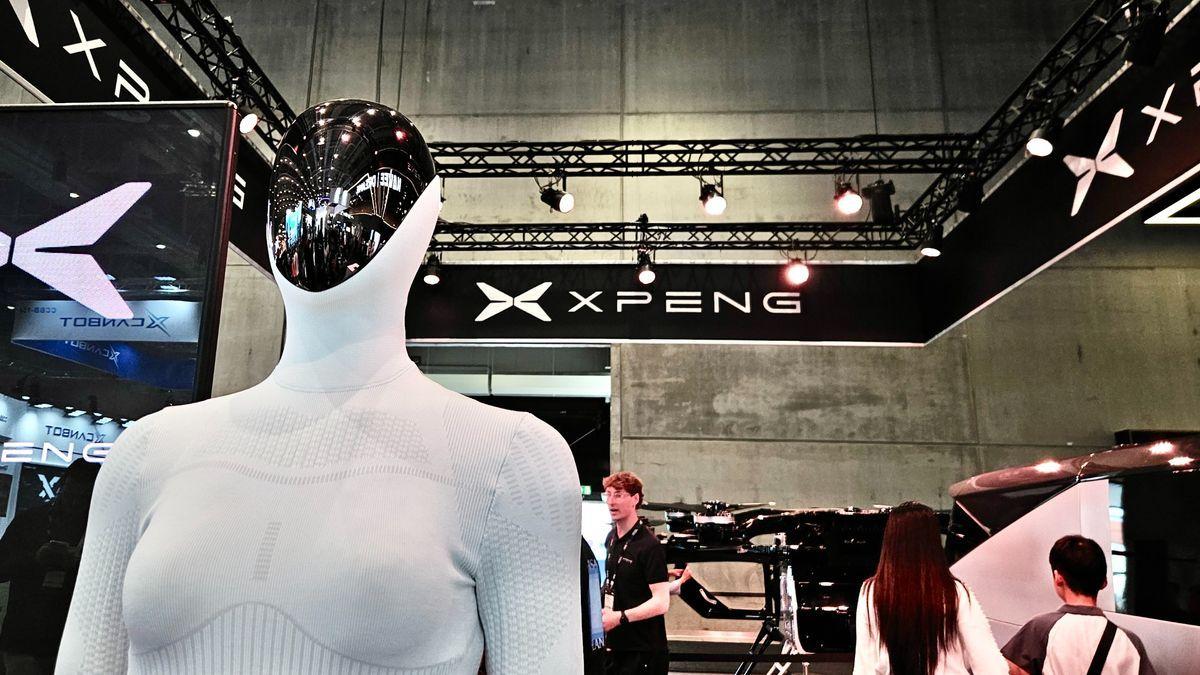
Xpeng's IRON humanoid robot represents seven years of development, evolving from quadruped designs to sophisticated humanoid forms
5
. The latest generation features 82 joints, a bionic iron spine, soft skin coverage, and a skeletal-muscle-skin structure that mimics human anatomy4
.
Source: Digital Trends
Powered by three Turing AI chips delivering 2,250 TOPS of computing power, the robot combines vision, language, and motion models to enable real-time interaction and task performance
5
. The robot demonstrates fluid, human-like movement that initially appeared so natural that observers questioned whether it was a human performer in costume4
.Xpeng targets mass production preparation by April 2026, focusing initially on public-facing roles such as guides, showroom assistants, and building concierges rather than industrial applications
4
. CEO He Xiaopeng introduced a "fourth law of robotics" stating that robots must not disclose human privacy, extending Isaac Asimov's original three laws4
.Related Stories
Flying Cars Near Market Reality
Xpeng's aviation division, Aridge, is developing two distinct flying vehicle platforms targeting China's emerging low-altitude economy
2
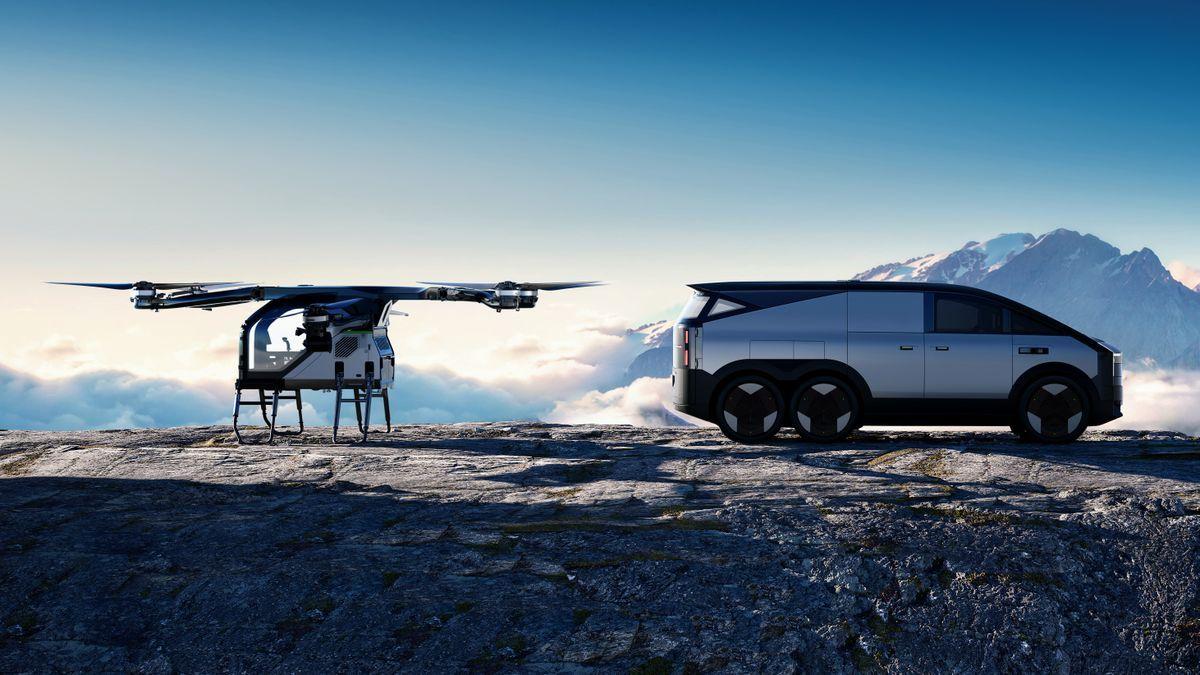
. The Land Aircraft Carrier, first announced in 2023, has received over 7,000 global orders at $280,000 per unit and began trial production on November 3rd2
.
Source: TechRadar
This innovative system combines a six-wheel hybrid-electric ground vehicle with a two-person electric copter that docks for transport and charging. The flying module offers 20-kilometer range with 20-minute flight times, sufficient for scenic tours or short business trips
2
.The newly unveiled A868 tiltrotor aircraft represents a more ambitious approach, designed as a six-seat vehicle with 500-kilometer range and 360 km/h cruise speed
2
. Built on Xpeng's "Kunpeng Super Extended-Range Architecture," the A868 operates like a hybrid vehicle with an internal combustion engine charging batteries that power electric motors, addressing range limitations of purely electric aircraft.Aridge's dedicated manufacturing facility targets initial production of 5,000 units annually, scaling to 10,000 at full capacity - equivalent to one aircraft every 30 minutes using automotive-style assembly lines
2
. Commercial operations will begin with tourism routes in China's northwest, offering "self-driving flight" experiences integrated with cultural itineraries by 2026.References
Summarized by

Navi
[2]
[4]
Related Stories
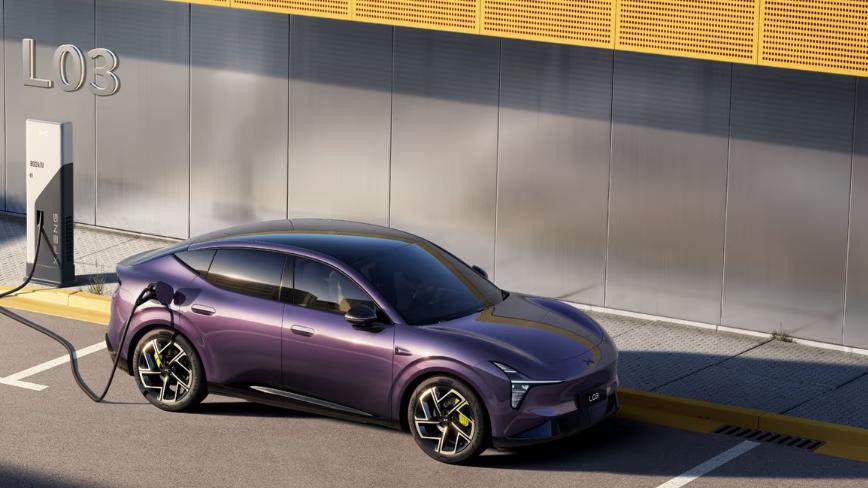
Xpeng L03 launches with proprietary AI chips, challenging Tesla's autonomous driving dominance
16 Jul 2026•Technology
Xpeng shifts to physical AI, plans robotaxi trials and humanoid robot production by 2026
09 Jan 2026•Technology
XPeng starts robotaxi mass production in Guangzhou with full-stack in-house technology
18 May 2026•Technology

Recent Highlights
1
Microsoft and Nvidia Launch Surface Laptop Ultra: A $2,599 AI-Ready PC With RTX Spark Chip
Technology

2
Trump Consulted Grok AI Before Ordering Venezuela Invasion and Capture of Nicolás Maduro
Policy and Regulation

3
Scientists Build AI Model That Reconstructs Images From Brain Scans in Record Time
Science and Research

Recent Highlights
Today's Top Stories







Don’t drown in AI news. We cut through the noise - filtering, ranking and summarizing the most important AI news, breakthroughs and research daily. Follow topics that matter to you and stay ahead.


