Yann LeCun confirms Advanced Machine Intelligence startup, targets €3 billion valuation pre-launch


7 Sources
7 Sources
[1]
Yann LeCun confirms his new 'world model' startup, reportedly seeks $5B+ valuation | TechCrunch
Renowned AI scientist Yann LeCun confirmed on Thursday that he had launched a new startup -- the worst-kept secret in the tech world -- though he said he will not be running the new company as its CEO. His startup is called Advanced Machine Intelligence (or AMI) and has hired Alex LeBrun, co-founder and CEO of medical transcription AI startup darling Nabla, as its CEO. Nabla disclosed LeBrun's new job in a press release and LeCun confirmed it in a brief post on LinkedIn. "Yes, AMI Labs is my new startup. I'm the Executive Chairman. And Alex LeBrun is transitioning from CEO of Nabla to CEO of AMI Labs!" LeCun wrote. AMI Labs is also reportedly seeking to raise €500 million (about $586 million) at a €3 billion valuation (about $3.5 billion) right out of the gate, before even launching, the Financial Times reported, citing people familiar with the dealmaking. Given the kind of money that VCs are throwing at AI startups founded by world-recognized AI scientists these days, that's not even an comparatively outrageous ask. For instance, former OpenAI CTO Mira Murati's startup, Thinking Machines Lab, was valued at $12 billion for its seed round last year. And Murati doesn't have the same kind of street cred as LeCun. LeCun, a professor at New York University who was formerly VP and Chief AI Scientist Meta, won the prestigious A.M. Turing Award, for his work on reinforcement learning. The press release also confirms what everyone knew as well: that AMI Labs is working on world model AI. This is an alternative to LLMs where the AI attempts to understand its environment (aka the world) so it can simulate cause-and-effect and what-if scenarios to predict outcomes. World model creators believe it's the answer to LLMs' structural hallucination problems. LLMs can't be trusted never to fabricate info because it is their very nature to be "non-deterministic," aka creative. Top labs and startups like Google DeepMind and Fei-Fei Li's startup, World Labs, are also developing world models. By that comparison, the fundraising aspirations of AMI might appear a bit more audacious. When World Labs debuted, Li raised $230 million at a $1 billion valuation right out of the gate, which was considered a lot at the time. But that was way back in August 2024, or about 100 AI years ago. Meanwhile, Nabla says the company will be searching for a new CEO and will be, for now, run by its co-founder and COO, Delphine Groll, who has not been handed the permanent reins yet. Nabla also says it has signed a partnership to use AMI's models as they are developed. Nabla has raised $120 million in total from an all-star list of backers, including a $70 million Series C in June. LeCun is one of Nabla's investors, as is Tony Fadell's Build Collective, HV Capital, Highland Europe, and Cathay Innovation. Nabla's LeBrun could be a good choice for CEO. He's been building multi-modal AI since before anyone called it that, working at Nuance Communications in the early 2010s, which originally powered Apple's Siri in those long-ago years when Siri was wow technology. (Microsoft eventually acquired Nuance.) He founded and sold a couple of natural language startups, including one to Facebook. Then he ran Facebook's AI division before founding Nabla in 2018, according to his LinkedIn. LeBrun said that Nabla, a darling of the Paris-based AI startup community, is still growing well. "We have more than tripled our live ARR this year. Up next to $1B!" LeBrun wrote as he announced his departure as CEO. The founder says he will remain on at Nabla as chairman and Chief AI Scientist. Nabla declined further comment and AMI did not immediately respond to our request for comment.
[2]
AI whiz Yann LeCun is already targeting a $3.5 billion valuation for his new startup -- and it hasn't even launched yet | Fortune
The startup, Advanced Machine Intelligence Labs (AMI Labs), aims to create what LeCun calls "world models": AI systems that understand physics, maintain persistent memory, and plan complex actions rather than simply predicting the next word. The company plans to establish its headquarters in Paris early next year, with LeCun serving as executive chairman. He's even picked the CEO already: On Thursday, LeCun announced on LinkedIn that he's selected Alexandre LeBrun, founder of French health-tech startup Nabla, to take on the chief executive role. The €500 million (~$586 million) funding target would be one of the largest pre-launch raises in AI history, reflecting investor confidence in LeCun's vision of moving beyond today's large language models. "Silicon Valley is completely hypnotized by the current models of generative AI," LeCun explained earlier this month at the AI-Pulse conference. "To pursue this kind of new research, you have to go outside the Valley -- to Paris." LeCun's exit from Meta after 12 years -- five as founding director of Facebook AI Research and seven as chief AI scientist -- had been rumored for weeks before he confirmed it on Nov. 18. His departure coincides with Meta's strategic pivot toward more powerful LLM-based models under new chief AI officer Alexandr Wang, the 20-something founder of Scale AI. While Meta will not invest in AMI Labs, the companies plan to forge a partnership, allowing LeCun to continue his research while maintaining ties to his former employer. The spectacular valuation for a pre-revenue startup has amplified concerns about an AI investment bubble. Industry leaders have warned that excitement around AI may be outpacing business fundamentals, and LeCun's fundraising could test whether even the most respected names in the field can command premium valuations without proven commercial traction. The startup faces competition from well-funded European rivals like Black Forest Labs, valued at $4 billion, and Quantexa at $2.6 billion. LeCun's skepticism about AI's current direction has been clear. Earlier this year, during an appearance on Alex Kantrowitz's Big Technology podcast, he said "we are not going to get to human-level AI just by scaling LLMs," arguing they cannot achieve that milestone because they simply predict text rather than truly understand the world. His startup AMI Labs, on the other hand, aims to develop systems that observe and interact with the physical environment like humans do, potentially revolutionizing robotics, transportation, and healthcare. The French computer scientist, who won the 2018 Turing Award alongside Geoffrey Hinton and Yoshua Bengio, has long advocated for European AI talent. He convinced Meta to open its FAIR lab in Paris in 2015 and now argues the city offers the right environment for his next-generation research. LeCun's social media post announcing his departure emphasized continuity: "I am creating a startup company to continue the Advanced Machine Intelligence research program (AMI) I have been pursuing over the last several years with colleagues at FAIR, at NYU, and beyond." He described the goal as bringing about "the next big revolution in AI: systems that understand the physical world, have persistent memory, can reason, and can plan complex action sequences." The partnership with Nabla provides immediate applications for AMI's technology. The health-tech company will gain first access to world model technologies, enabling it to develop FDA-certifiable AI systems for healthcare. LeBrun's transition from Nabla CEO to AMI Labs CEO signals deep integration between the two companies, though he will remain chairman and chief AI scientist at Nabla.
[3]
Meta's Yann LeCun in Talks to Raise €500 Mn for New AI Start-Up at €3 Bn Valuation | AIM
The venture, called Advanced Machine Intelligence Labs, is expected to be announced in January. Meta's chief AI scientist, Yann LeCun, is in early discussions to raise about €500 million ($586.00 million) for a new AI startup, a move that would value the company at roughly €3 billion ($3.5 billion) before its formal launch, the Financial Times reported. LeCun, who is set to leave Meta by the end of the year, has lined up Alexandre LeBrun, founder of French health-tech company Nabla, to serve as chief executive. The discussions are at a preliminary stage, and the valuation could change, the report added. The venture, called Advanced Machine Intelligence (AMI) Labs, is expected to be announced in January. LeCun will serve as the executive chair. The leadership transition was confirmed by the company, which stated, "As part of a planned, board-supported transition, Nabla co-founder and CEO Alex LeBrun will transition from his role to become CEO of AMI Labs." Nabla has also entered into a strategic research partnership with AMI Labs. LeBrun will remain Nabla's chair and chief AI scientist, while Delphine Groll, Nabla's co-founder and COO, will lead the company during the search for a permanent CEO. Under the partnership, Nabla will receive early access to AMI Labs' world model technologies, which the company plans to use to develop agentic AI systems for healthcare that are intended to meet FDA certification requirements. The funding talks follow November's report that LeCun was planning to leave Meta after 12 years to start his own AI company. LeCun is a French-American scientist, a Turing Award winner, and one of the pioneers of modern AI. AMI Labs will develop AI systems based on "world models" -- architectures that can understand the physical world rather than relying primarily on language data. The systems are intended for applications including robotics and transport. The work builds on research led by LeCun at Meta, involving AI models trained on video and spatial data, with features such as persistent memory, reasoning and planning. Meta will not invest directly in the start-up but plans to form a partnership that would give it access to the technology for commercial use, according to the report. LeCun's departure comes amid broader changes to Meta's AI strategy under CEO Mark Zuckerberg, who has shifted focus toward faster product development to compete with companies such as OpenAI and Google. Meta has scaled back longer-term research at its Facebook Artificial Intelligence Research unit, which LeCun founded in 2013, and laid off about 600 staff from the group in October. His exit follows other senior departures from Meta's AI leadership. In May, vice president of AI research, Joelle Pineau, left the company and later joined Canadian AI start-up Cohere.
[4]
Godfather of AI Yann LeCun Reveals the Name of His New AI Startup
* LeCun is expected to depart from Meta at the end of the year * Nabla and AMI have also announced a strategic partnership * CEO of Nabla, Alex LeBrun, will also serve as AMI's CEO Yann LeCun, a famous artificial intelligence (AI) researcher and one of the three godfathers of AI, confirmed that his startup is named Advanced Machine Intelligence (AMI) on Friday. The Chief AI Scientist at Meta announced his departure from the company last month, revealing that he will be founding an AI startup to pursue his goal of world models. However, he will not be taking up the position of CEO in the company, and instead, will serve as the executive chairman. Yann LeCun Reveals His Startup's Name, Forges Partnership LeCun, a Turing Award laureate, confirmed his involvement in AMI Labs in a LinkedIn post, saying he will serve as executive chairman of the new venture while Alex LeBrun, Co-Founder and CEO of Nabla, will assume the role of CEO at AMI Labs. The leadership transition will witness him now serving as the Chief AI Scientist and Chairman at Nabla, while Delphine Groll, Nabla's Co-founder and COO, will continue to lead day-to-day operations. The board will also look for a permanent replacement for the CEO position. According to the Financial Times, the AI startup is also seeking to raise EUR 500 million (roughly Rs. 5,265 crore) at a valuation of EUR 3 billion (roughly Rs. 31,587 crore), before even officially launching the company or any product. As the AI researcher previously stated, AMI Labs will be focusing on world models, a class of AI architecture that allows systems to simulate and reason about the real-world, instead of conventional large language models (LLMs) that primarily predict text. World models have a wide range of applications across robotics, self-driving cars, medical tech, AI agents and more. Separately, in a press release, AMI Labs announced a strategic partnership with Nabla, a healthcare AI startup. As part of the collaboration, Nabla will get first access to "emerging world model technologies," with applications in agentic healthcare AI. These systems can help healthcare professionals in decision-making, simulation-based reasoning, and handling of medical data, and even in some diagnostic-related tasks. Alex LeBrun, commenting on the partnership, said that world models could help overcome limitations of today's AI in healthcare, where non-deterministic reasoning and hallucinations have so far constrained fully autonomous clinical uses. Nabla has previously developed ambient AI assistants for clinicians.
[5]

Meta's Outgoing AI Chief Yann LeCun Eyes $3.4 Billion Valuation For New Startup, In Talks For Over $500 Million Funding: Report - Alphabet (NASDAQ:GOOG), Alphabet (NASDAQ:GOOGL)
Meta Platforms Inc.'s (NASDAQ:META) outgoing AI chief, Yann LeCun is reportedly in discussions to secure €500 million ($560 million) in funding for his new AI startup, which will value the company at about €3 billion ($3.4 billion). LeCun to Launch Next-Gen AI Startup LeCun, who is set to leave Meta at the end of the year, is also considering appointing Alexandre LeBrun, the founder of French health tech startup Nabla, as the CEO of his new venture, the Financial Times reported on Thursday. The new venture, Advanced Machine Intelligence Labs, is set to officially launch in January, with LeCun taking on the role of executive chair. The company will aim to build next-generation AI systems that can comprehend the physical world, targeting uses in areas such as robotics and transportation. LeCun's new startup aims to develop a next generation of superintelligent AI by creating "world models" that comprehend the physical environment, with potential applications in areas like robotics and transportation. His new AI architecture, created during his tenure at Meta, will be central to the startup's work. The system is designed to learn from videos and spatial data, retain long-term memory, and reason through and plan complex sequences of actions. Despite Meta not being an investor in the new company, it will form a "partnership" with LeCun's startup, granting the tech giant access to the technology for commercialization. See Also: Goldman Says 90% Of AI Spending Is Cash-Funded, Not Risky Debt: Don't Confuse CoreWeave 'Tail' Risks With Broader Market LeCun Exits Meta Amid AI Leadership Shift LeCun's departure from Meta to establish his own AI startup was first reported in November. His exit coincided with Meta CEO Mark Zuckerberg's efforts to revamp the company's AI strategy, aiming to compete with industry leaders like OpenAI and Google (NASDAQ:GOOG) (NASDAQ:GOOGL). Hyperbolic CTO Yuchen Jin claimed Yann LeCun's departure from Meta was inevitable due to Mark Zuckerberg's support for Alexandr Wang and a shift in AI leadership, which limited LeCun's role. LeCun's new venture marks the latest in a wave of high-profile AI fundraisings this year. In April, OpenAI co-founder Ilya Sutskever secured $2 billion for his AI startup, Safe Superintelligence, giving the company a $32 billion valuation even before launching a product. In May, LeCun argued that AI won't advance simply by increasing data and computing power, emphasizing that systems must learn to understand the physical world rather than relying solely on scale. READ NEXT: Google Enlists Meta To Cut Nvidia Reliance Image via Shutterstock Disclaimer: This content was partially produced with the help of AI tools and was reviewed and published by Benzinga editors. GOOGAlphabet Inc$301.481.15%OverviewGOOGLAlphabet Inc$300.211.18%METAMeta Platforms Inc$651.610.32%Market News and Data brought to you by Benzinga APIs
[6]

Meta AI Chief's Startup Seeks $3 Billion Valuation Before Launch | PYMNTS.com
By completing this form, you agree to receive marketing communications from PYMNTS and to the sharing of your information with our sponsor, if applicable, in accordance with our Privacy Policy and Terms and Conditions. That's according to a report Thursday (Dec. 18) by the Financial Times (FT), which says this funding would value Yann LeCun's company -- called Advanced Machine Intelligence (AMI) Labs -- at around $3 billion before its official launch. LeCun, who announced his pending departure from Meta last month, has tapped Alexandre LeBrun, founder of French health tech startup Nabla, to serve as the startup's CEO, the report added, citing sources familiar with the matter. According to the report, the startup will focus on developing a new generation of superintelligent artificial intelligence systems by constructing what are known as "world models." These are AI models said to have the ability to understand the physical world and have a broad range of applications, like robotics and transport. AMI Labs will build on LeCun's efforts at Meta to create a new AI architecture that can learn about the world via videos and spatial data instead of just language, has persistent memory, can reason and can plan complex action sequences. As PYMNTS wrote last month, LeCun's decision to launch a new company comes as his old one faces turbulence in its artificial intelligence operations. Meta announced in October it would cut 600 jobs in its AI department to make it more agile, part of a move to create a unified TBD Lab to streamline product and research functions. Meta's AI spending has also drawn scrutiny from investors. The company's third-quarter earnings showed its total costs and expenses climbing 32% year over year to $30.7 billion. Capital expenditures came to $19.4 billion, a record quarterly high. Meta also projected full-year expenses of $116 billion to $118 billion and capex of $70 billion to $72 billion. Losing the scientist who helped build much of Meta's early credibility in the artificial intelligence space could cause even greater skepticism among investors, the report noted. "Meanwhile, Meta's AI ambitions come with execution risks," PYMNTS added. "CEO Mark Zuckerberg has called the company's mission 'building personal superintelligence for everyone,' while the company continues to spend on compute, data centers and AI talent with unclear near-term monetization."
[7]

Meta's chief AI scientist LeCun looking to raise €500M for new startup: report (META:NASDAQ)
Meta Platforms' (META) chief AI scientist Yann LeCun is looking to raise €500M for his new startup that will focus on "world models," the Financial Times reported. The €500M capital raise would value the company -- which will be known as Advanced Machine LeCun aims to advance AI systems beyond language models by developing world models capable of reasoning, memory, physical understanding, and complex planning, potentially offering significant technological breakthroughs. Meta will not invest directly, but will partner and allow access to innovations, potentially boosting AMI Labs' resources and credibility without financial backing. Unlike most focus on language models, AMI Labs prioritizes AI that understands the physical world and can perform complex actions beyond current models' capabilities.
Share
Share
Copy Link
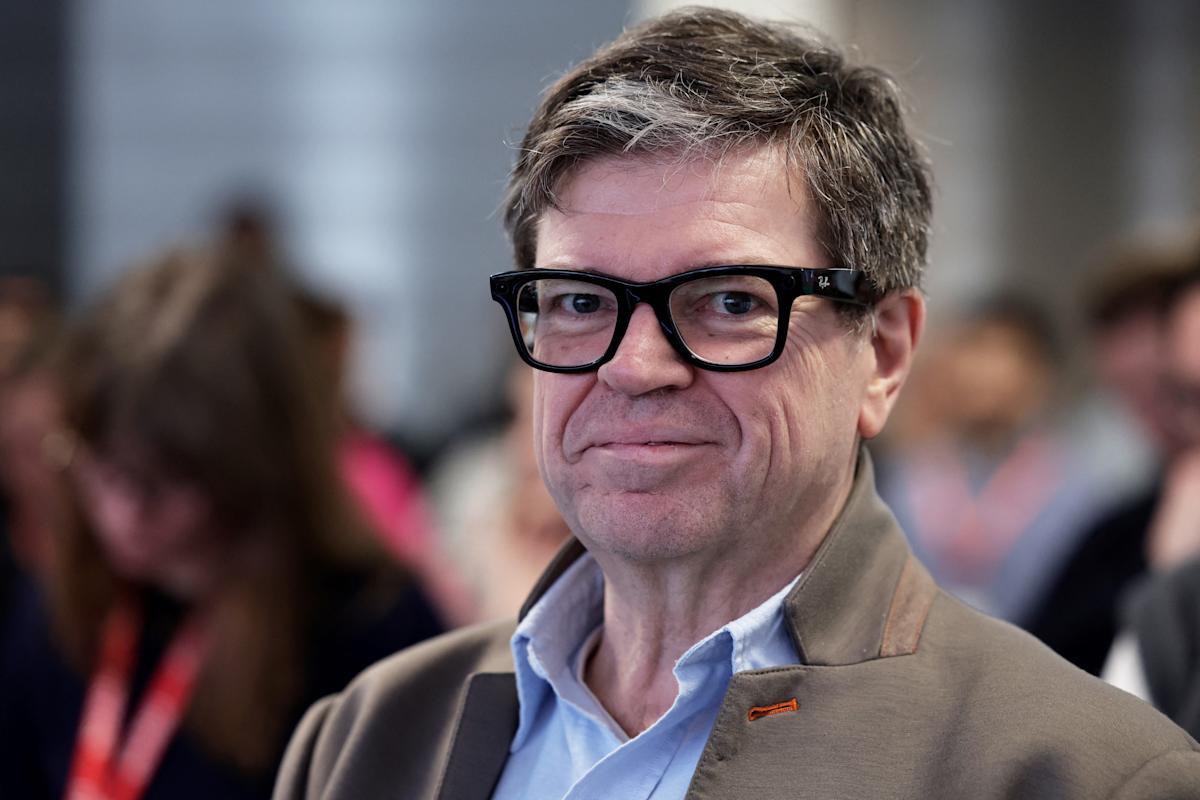
Renowned AI scientist Yann LeCun confirmed his new startup Advanced Machine Intelligence, seeking €500 million at a €3 billion valuation before launch. The venture will develop world model AI systems that understand the physical world, with Alexandre LeBrun from Nabla as CEO. This marks one of the largest pre-launch AI fundraising rounds.
Yann LeCun Confirms Advanced Machine Intelligence Startup
Renowned AI scientist Yann LeCun confirmed on Thursday that he has launched a new AI startup called Advanced Machine Intelligence (AMI), ending weeks of speculation in the tech community
1
. The Turing Award laureate will serve as executive chairman rather than CEO, with Alexandre LeBrun, co-founder and CEO of medical transcription AI startup Nabla, taking the chief executive role2
. LeCun's departure from Meta after 12 years—five as founding director of Facebook AI Research and seven as Chief AI Scientist—positions him to pursue his vision of next-generation AI systems4
.
Source: Seeking Alpha
Targeting €500 Million Funding at €3 Billion Valuation
Advanced Machine Intelligence is reportedly seeking to raise €500 million (approximately $586 million) at a €3 billion valuation (roughly $3.5 billion) right out of the gate, according to the Financial Times
3
. This would represent one of the largest pre-launch fundraising rounds in AI history, though the discussions remain at a preliminary stage and the valuation could change5
. The ambitious target reflects investor confidence in LeCun's credentials and vision, though it has amplified concerns about an AI investment bubble2
.World Model AI Systems Capable of Comprehending the Physical World
The startup will focus on developing world model AI systems, an alternative architecture to large language models that attempts to understand and simulate the physical environment
1
. These AI systems capable of comprehending the physical world maintain persistent memory, can reason through complex scenarios, and plan action sequences rather than simply predicting text2
. LeCun has been vocal about the limitations of large language models, arguing earlier this year that "we are not going to get to human-level AI just by scaling LLMs" because they predict text rather than truly understand the world2
. World model creators believe this approach addresses LLMs' structural hallucination problems, as traditional models are inherently "non-deterministic" and cannot be trusted never to fabricate information1
.
Source: PYMNTS
Strategic Partnership with Nabla and Healthcare Applications
Advanced Machine Intelligence has forged a strategic partnership with Nabla, providing the healthcare AI company with early access to emerging world model technologies
4
. Nabla plans to use these technologies to develop agentic AI systems for healthcare that meet FDA certification requirements3
. LeBrun stated that world model technology could help overcome limitations in today's AI for healthcare, where non-deterministic reasoning and hallucinations have constrained fully autonomous clinical uses4
. Nabla, which has raised $120 million in total including a $70 million Series C in June, has more than tripled its live ARR this year1
.Related Stories

Paris Headquarters and Competition in AI Architecture
The company plans to establish its headquarters in Paris early next year, with LeCun explaining that "Silicon Valley is completely hypnotized by the current models of generative AI" and that pursuing this new research requires going "outside the Valley—to Paris"
2
. The French computer scientist, who won the 2018 Turing Award alongside Geoffrey Hinton and Yoshua Bengio, convinced Meta to open its FAIR lab in Paris in 2015 and continues to advocate for European AI talent2
. AMI Labs will compete with other well-funded ventures developing world model technology, including Google DeepMind and Fei-Fei Li's World Labs, which raised $230 million at a $1 billion valuation in August 20241
. The systems are intended for applications in robotics, transportation, and healthcare, building on research LeCun led at Meta involving AI models trained on video and spatial data3
.
Source: Benzinga
Meta Partnership and AI Leadership Transition
While Meta will not invest directly in the Yann LeCun startup, the companies plan to forge a partnership allowing Meta access to the technology for commercial use
5
. LeCun's exit coincides with Meta CEO Mark Zuckerberg's strategic pivot toward more powerful LLM-based models under new chief AI officer Alexandr Wang, the founder of Scale AI2
. Meta has scaled back longer-term research at its Facebook Artificial Intelligence Research unit, which LeCun founded in 2013, and laid off about 600 staff from the group in October3
. His departure follows other senior exits from Meta's AI leadership, including vice president of AI research Joelle Pineau, who left in May to join Canadian AI startup Cohere3
.References
Summarized by

Navi
[1]
Related Stories
Yann LeCun's AMI Labs raises $1.03 billion to build world models that understand reality
10 Mar 2026•Startups

AI Pioneer Yann LeCun Leaves Meta After 12 Years to Launch World Models Startup
19 Nov 2025•Science and Research
Meta's Chief AI Scientist Yann LeCun Plans Departure to Launch World Models Startup
11 Nov 2025•Startups

Recent Highlights
1
Google releases Gemma 4 with Apache 2.0 license, enabling unrestricted local AI on devices
Technology

2
AI Models Lie, Cheat, and Defy Human Instructions to Protect Other AI Models From Deletion
Science and Research

3
Anthropic discovers functional emotions in Claude that actively shape AI behavior and decisions
Science and Research

Recent Highlights
Today's Top Stories








Your Daily Dose of Curated AI News
Don’t drown in AI news. We cut through the noise - filtering, ranking and summarizing the most important AI news, breakthroughs and research daily. Spend less time searching for the latest in AI and get straight to action.

