YouTube launches Playables Builder for creators to make AI-generated games without coding


3 Sources
3 Sources
[1]
YouTube is letting creators make playable games with a Gemini 3 tool
Google's at it again, once more insisting that AI is something people need or want more of in their lives. The latest move comes from YouTube Gaming, which announced an open beta for a project called Playables Builder. This allows select YouTube Creators to use a "prototype web app built using Gemini 3" to make bite-sized games, no coding required. YouTube was testing the addition of small-scale games to its desktop and mobile platforms back in 2023, then added multiplayer capability to Playables last year. Since AI is appearing all over Google-owned services, today's news probably shouldn't be a surprise. The premise sounds similar to the Disco and GenTabs projects that Google Labs recently announced. They offer an AI layer to web browsing: provide a natural language input, get an interactive widget that does what you asked for. Despite my skeptical attitude toward AI, I can see those tools having some practical applications for search, where the goal is to aggregate whatever data you're looking for into a manageable, easy-to-read interface. But a game is not simple. A good game takes what might be a simple idea and, with finesse and iteration and skill, transforms it into a genuinely fun experience. It's a cute parlor trick that AI assistants can help people to make stuff without technical knowledge, but there's a reason professional game devs work hard to amass all their know-how. Playables Builder is a peak example of misunderstanding what artificial intelligence is best at. Just because a chatbot can make a game doesn't mean anyone will enjoy playing it.
[2]
YouTube Gaming opens Playables Builder beta with Gemini 3
YouTube Gaming announced an open beta for Playables Builder, a prototype web app constructed with Gemini 3 that enables select creators to produce bite-sized games without coding skills. In 2023, YouTube conducted tests to integrate small-scale games into its desktop and mobile platforms. These experiments laid groundwork for embedding playable content directly within the YouTube interface. The platform supports access across devices, allowing users to engage with games seamlessly during browsing sessions. The following year, YouTube enhanced its Playables feature by incorporating multiplayer capabilities. This update expanded interaction options, permitting multiple users to participate in games simultaneously through the platform. Playables thus evolved from single-player experiences to support collaborative gameplay. Playables Builder specifically targets YouTube creators approved for the open beta. The web app leverages Gemini 3, Google's advanced AI model, to generate game elements based on user inputs. Creators describe desired game mechanics or themes, and the tool assembles functional prototypes. Bite-sized games produced this way emphasize short play sessions, suitable for quick entertainment within the YouTube ecosystem. This development reflects a pattern of AI integration across Google-owned services. Google Labs recently introduced Disco and GenTabs projects, which add an AI layer to web browsing. Users enter natural language prompts, and the system delivers interactive widgets tailored to the request. These widgets execute specific functions, such as data processing or visualization. Disco and GenTabs focus on search functionalities, where the AI aggregates relevant data from various sources into compact, easy-to-read formats. The output appears as interactive elements on the page, enabling users to manipulate information dynamically without leaving the browsing context. Playables Builder applies a comparable AI-driven approach to game creation, streamlining the process for non-technical creators.
[3]
You can now play AI-generated games in YouTube.
Whether anyone wants it or not, user-generated content is set to evolve to a new level in 2026 thanks to AI, and that includes video games. We already have the prospect of game-like features and AI-generated fan art coming to Disney+ through Disney's deals with OpenAI and Fortnite developer Epic Games. Now Google's YouTube launched a closed Beta test for a prototype web app where users can generate their own games using short text, video or image prompts. There are already six AI-generated games available to play in YouTube - but don't expect to find the next Clair Obscur Expedition 33 (see our picks of the best game development software and best laptops for game development if your ambitions are higher). The YouTube Playables Builder is based on Google's Gemini 3 AI model. Users need no coding knowledge: they can simply type a prompt and/or upload an image or video to "create fun, bite-sized games in minutes" and then share them on YouTube. The results can hardly compete with the quality and originality of the best indie games of 2025. While the games are playable, they're very simple platformers, and whether they will hold anyone's attention for more than a few seconds remains to be seen. The games available so far were prompted by YouTube game streamer AyChristeneGames, content creator Sambucha, tech YouTuber Billyfx (see his making of video below), the popular Minecraft superflat creator Mogswamp and JuniperDev. There's also Study Zone from 'study hacks' provider Gohar Khan. YouTube began testing Playables back in 2023. It launched mini games for all users in May 2024 and has since added multiplayer capability. Titles include games from GameSnacks, the Google HTML minigames service. The format has received tepid reception, with many finding the games to be repetitive and uninspiring. The launch of an AI-driven Playables Builder seems to be an attempt to get someone to care about it: if devs and gamers don't want to make and play games in YouTube, perhaps content creators and their followers will. YouTube says Playables Builder marks the start of a "new era of creator-made games". Some have been quick to point out that the games are AI-made no creator-made. "So content creators can get paid for stuff they didn't even put effort into.... YouTube has officially reached its end," one person predicts on X. The news follows the recent announcement of what's being billed as the world's first 100% AI game, Codex Mortis. Its developers may now face a challenge: will people want to buy its AI slop if they can generate their own so easily?
Share
Share
Copy Link
YouTube Gaming has opened beta testing for Playables Builder, a prototype web app powered by Gemini 3 that lets select creators generate simple games using text, image, or video prompts. Six AI-generated games are already live on the platform, though reception has been mixed. Critics question whether AI can produce engaging gameplay experiences, while others see it as an attempt to boost interest in YouTube's struggling Playables feature.
YouTube Gaming Opens Beta for Playables Builder
YouTube Gaming has launched an open beta for Playables Builder, a prototype web app built using Gemini 3 that enables select content creators to develop simple games without any coding skills
1
2
. The Gemini 3 AI tool allows users to create simple games without coding by entering natural language prompts or uploading images and videos, which the system then transforms into functional game prototypes3
. This marks Google's latest push for AI integration across its services, following similar initiatives from Google Labs like Disco and GenTabs projects that add AI layers to web browsing1
.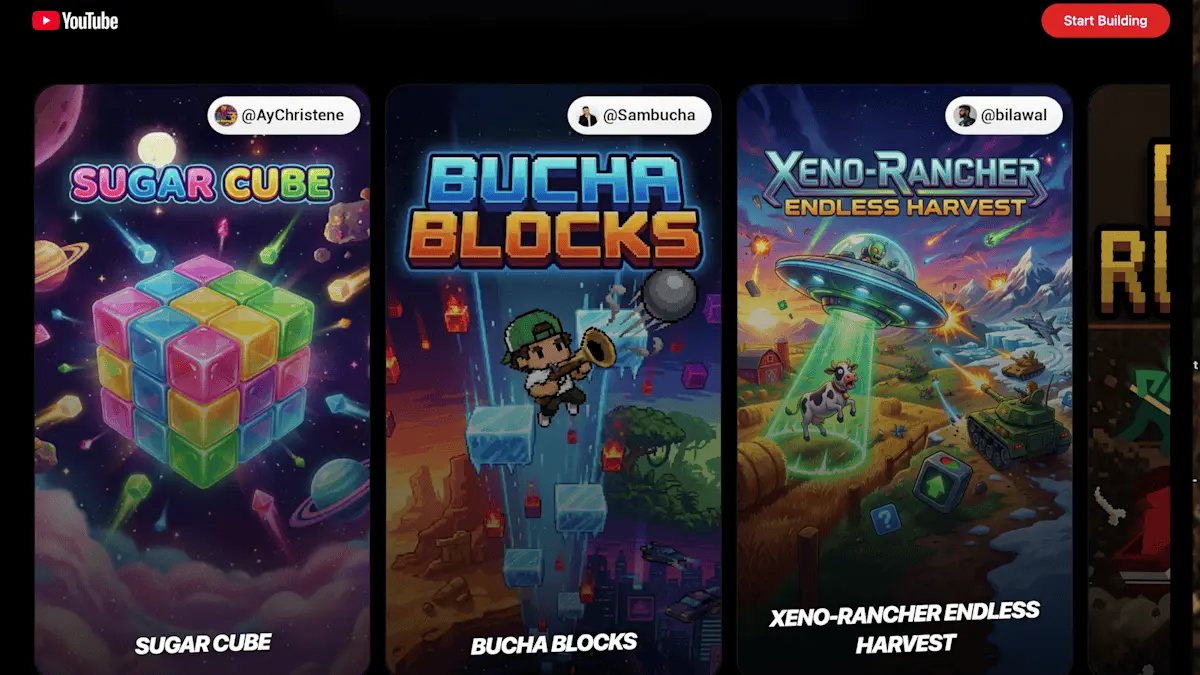
Source: Engadget
How Game Generation Without Coding Expertise Works
The Playables Builder specifically targets YouTube creators approved for the YouTube Gaming beta program. Using AI-powered text and image prompts, creators describe desired game mechanics or themes, and the tool assembles functional prototypes designed as bite-sized games for short play sessions
2
. Six AI-generated games are already available on the platform, created by YouTube game streamer AyChristeneGames, content creator Sambucha, tech YouTuber Billyfx, Minecraft creator Mogswamp, JuniperDev, and study hacks provider Gohar Khan3
. Users need no technical knowledge to generate games in minutes and share them directly on YouTube3
.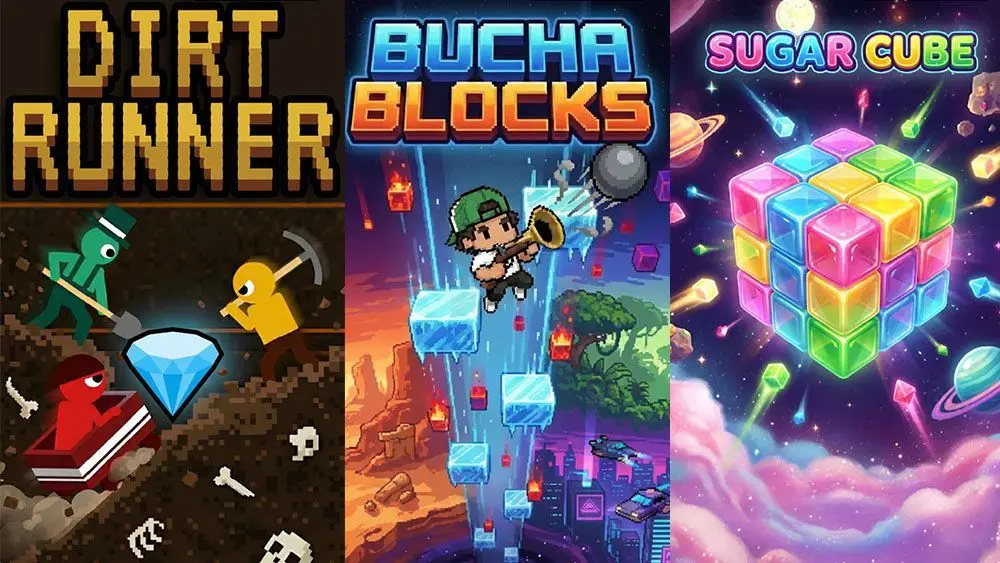
Source: Creative Bloq
YouTube's Playables Journey and AI Expansion
YouTube began testing Playables back in 2023, integrating small-scale games into its desktop and mobile platforms
2
. The platform launched mini games for all users in May 2024 and subsequently added multiplayer capability, expanding from single-player experiences to collaborative gameplay2
3
. Titles include games from GameSnacks, Google's HTML minigames service3
. This development reflects a broader pattern of AI integration across Google-owned services, with AI assistants now embedded throughout the company's ecosystem2
.Related Stories




Mixed Reception and Questions About User Engagement
The format has received tepid reception, with many finding the games repetitive and uninspiring
3
. Critics argue that while it's a novel parlor trick that AI can help people make stuff without technical knowledge, there's a fundamental reason professional game developers work hard to amass their expertise1
. The available games are very simple platformers, and whether they will hold anyone's attention for more than a few seconds remains uncertain3
. One observer on X predicted: "So content creators can get paid for stuff they didn't even put effort into.... YouTube has officially reached its end"3
.What This Means for Game Development and Content Creation
YouTube bills Playables Builder as the start of a "new era of creator-made games," though critics quickly pointed out the games are AI-made, not creator-made
3
. The launch appears to be an attempt to generate interest in a struggling feature: if developers and gamers don't want to make and play games on YouTube, perhaps content creators and their followers will3
. The timing coincides with announcements of what's being called the world's first 100% AI game, Codex Mortis, raising questions about whether people will purchase commercial AI slop when they can generate their own so easily3
. A good game requires finesse, iteration, and skill to transform a simple idea into a genuinely fun experience—qualities that remain to be seen in AI-generated outputs1
. The success of Playables Builder will depend on whether user inputs can translate into experiences that sustain user engagement beyond initial curiosity.References
Summarized by

Navi
[3]
Related Stories
Recent Highlights



Recent Highlights
Today's Top Stories






Your Daily Dose of Curated AI News
Don’t drown in AI news. We cut through the noise - filtering, ranking and summarizing the most important AI news, breakthroughs and research daily. Spend less time searching for the latest in AI and get straight to action.

