Join the DZone community and get the full member experience.
Join For Free
Large language models (LLMs) like OpenAI's ChatGPT, Anthropic's Claude, Google's Gemini, or Meta's Llama have taken the world by storm, offering powerful text-generation capabilities for everything from coding help to customer service. But as their use grows, so do concerns about privacy and data protection.
In the past year alone, an internal data leak at Samsung prompted the company to ban employees from using ChatGPT [1], and Italy's data protection authority temporarily blocked ChatGPT nationwide over alleged privacy violations [2]. These incidents underscore a critical point: both what we put into these LLMs and AI systems, and what they output, can pose serious privacy risks.
Privacy Risks: Inputs and Outputs Both Matter
When we think of AI privacy issues/risks, we often focus on the content an LLM generates. However, the prompts and data fed into the model are just as sensitive (garbage in, garbage out). Regulators around the globe are recognizing this dual risk, with efforts to police "the data fed into models and the content they produce" [3]. In practice, this means organizations must guard against privacy breaches on two fronts:
* Input privacy: The information users provide to an AI (prompts, questions, documents) may include personal data or confidential business information. Without safeguards, this data could be collected, stored, or even leaked. For example, Samsung employees inadvertently exposed proprietary code by pasting it into ChatGPT, after which Samsung noted it was nearly impossible to "retrieve and delete" such data from external servers [4]. By default, OpenAI retains user conversations to further train its models [5], raising the stakes if sensitive details are entered. In short, sharing private data with an LLM can be like broadcasting it -- unless precautions are in place.
* Output privacy: On the flip side, LLMs might reveal sensitive information in their responses. These models are trained on vast datasets that sometimes include personal or confidential details. Researchers have shown that LLMs can memorize and regurgitate portions of their training data verbatim -- including addresses, phone numbers, and other personal data [6]. In one study, a language model even revealed private contact information that was hidden in its training set [7]. There's also the risk of a model outputting information provided by other users or sessions due to a glitch or prompt manipulation. (Notably, a bug in ChatGPT's early days exposed some users' chat titles and payment info to others [8] -- a stark reminder that AI outputs can leak data just as inputs can. I had to personally follow up on this with OpenAI, as my card info was also affected due to this issue).
Core Privacy Threats in LLMs
Given those scenarios, experts highlight several key privacy threats posed by LLMs:
* Re-identification: Even if data shared with an AI is anonymized, a savvy model (or attacker using it) might piece together clues to re-identify individuals. Advanced LLMs can infer personal attributes from text and context, potentially unmasking who a dataset refers to. In regulatory terms, this violates the assumption that anonymized data stays anonymous -- a serious privacy red flag.
* Data leakage: This is the inadvertent exposure of sensitive information through an AI system. Leakage can occur via a model's responses (e.g., revealing someone else's data it learned) or through security flaws. The ChatGPT incident in Italy, where a data breach exposed user conversations and billing details, exemplified how AI services can leak data and run afoul of strict European privacy laws [8]. Data leakage not only compromises individual privacy but can also breach confidentiality agreements and regulations like GDPR.
* Memorization of private data: Large models have so much training data that they occasionally memorize exact passages. This means a model might "remember" a person's private information or proprietary text and reproduce it word-for-word when prompted. Such memorization turns an AI into an inadvertent data repository. As one analysis noted, LLMs can become long-term holders of personal data "even after it's been removed from the public web," undermining individuals' "right to be forgotten"[9]. Similarly, models like OpenAI's Codex have been observed spitting out licensed code verbatim, raising intellectual property concerns alongside privacy issues.
Each of these risks is exacerbated by the black-box nature of today's AI -- users often won't know if an AI has memorized their input or where a given output came from. That's why implementing robust guardrails for both inputs and outputs is now seen as essential for any responsible LLM deployment.
Safeguarding What Goes In: Input Guardrails
Organizations and developers can take concrete steps to protect privacy on the input side -- essentially, to prevent sensitive data from entering the AI model or being misused if it does. Key techniques include:
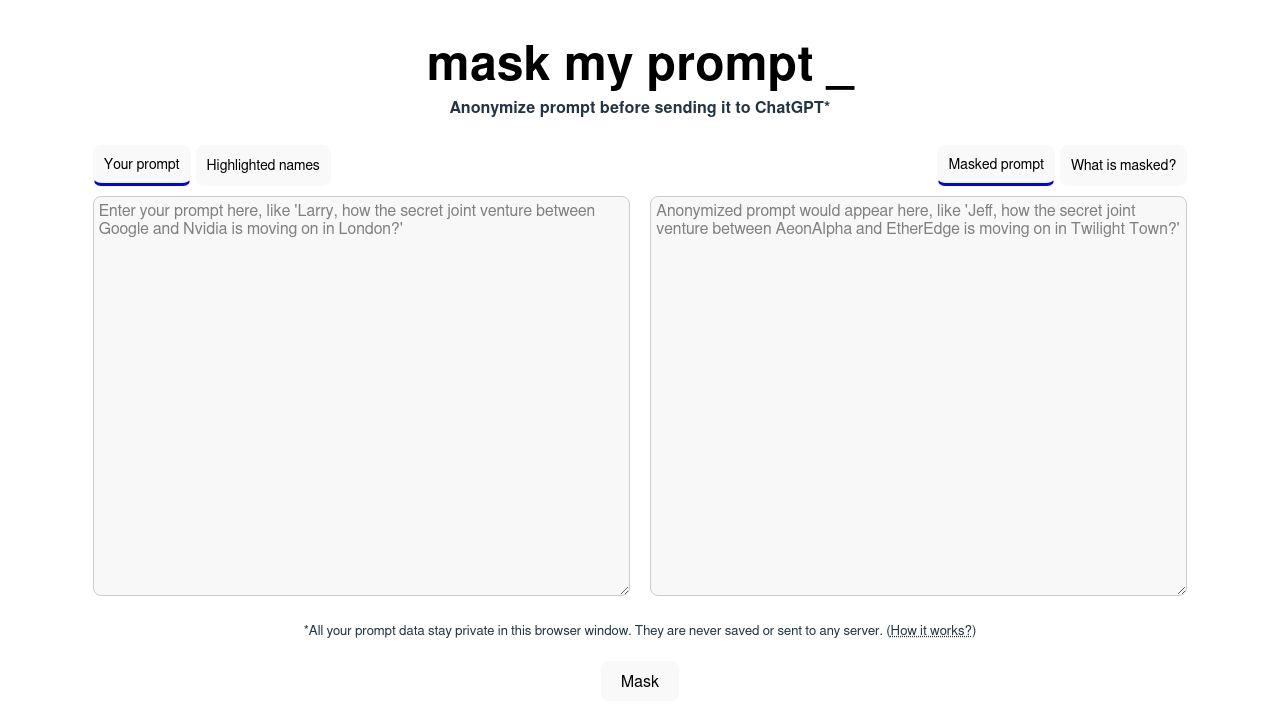
* Anonymization and redaction: Before user data is sent to an LLM, it can be stripped of personally identifiable information (PII) or confidential details. Automated filters can scan text for names, emails, ID numbers, and either remove them or replace them with neutral placeholders (e.g., "[NAME]") [10]. Advanced systems even detect and anonymize sensitive entities while preserving context -- for instance, swapping a real name with a fictional one in a prompt so the AI can still perform the task without knowing the true identity [11]. This way, the model never sees raw personal data in the first place.
* Access controls and policies: Companies are instituting strict access controls on LLM usage, especially for highly sensitive data. This can mean limiting who on a team is authorized to query an AI with customer data, or integrating LLMs only in segregated environments with no internet access for the model. Role-based access is another layer, ensuring that certain private databases are never accessible to the AI and that employees undergo privacy training before using generative AI at work [12]. Many firms have gone so far as to ban external AI tools for internal use until they have confidence in privacy safeguards. (Major banks, telecoms, and a few tech firms have all restricted ChatGPT internally to prevent leaks [13].)
* Input filtering and validation: As a frontline defense, input guardrails can block or scrub sensitive data in user prompts. For example, an enterprise chatbot might detect if a user is about to submit a Social Security number or a client's medical record and then warn or prevent them from doing so. Data loss prevention (DLP) tools and simple pattern matching (like regex for credit card numbers) can automatically redact such info. In practice, this means the AI either receives a cleaned-up query or refuses requests that would involve processing private data ("Sorry, I cannot assist with that request due to privacy restrictions."). By filtering inputs, organizations reduce the chance that an LLM ever "sees" something it shouldn't [14][15].
Importantly, guardrails on inputs not only protect individuals' privacy -- they also shield businesses from accidentally handing their trade secrets to an external system. As Samsung learned, once sensitive data leaves your hands and enters an AI, getting it back or ensuring its deletion can be impossible [4]. Better to not let it slip away in the first place.
Filtering What Comes Out: Output Guardrails
On the output side, the goal is to prevent an AI from exposing sensitive information or generating content that violates privacy. Effective measures include:
* Response filtering and masking: Just as inputs can be filtered, an LLM's outputs can be monitored and cleaned before they reach the end-user. Organizations deploy post-processing filters that scan the model's generated text for any personal data or other confidential info. If detected, that content can be automatically removed or replaced with a generic mask (for example, converting "John Doe lives on 123 Elm Street" to "[NAME REDACTED] lives on [ADDRESS REDACTED]") [16]. This ensures the AI doesn't inadvertently spill details it shouldn't. In many AI chat interfaces, if you ask for someone's private details, the system will either refuse or blank them out -- a direct result of these output guardrails working as intended.
* Preventing memorized leaks: One of the trickier challenges is stopping an AI from parroting back secrets it learned during training. Cutting-edge mitigation techniques like differential privacy help address this. In essence, differential privacy introduces statistical noise during model training so that the model learns patterns and language without retaining precise data about any single individual. This makes it much harder for the AI to spit out a specific address or key phrase from its training set [17]. Likewise, developers regularly perform "red-teaming" tests, trying to prompt the AI to reveal any memorized personal data -- and if it does, they adjust the model or training data to plug those leaks. OpenAI and other providers have also started letting users opt out of their conversations from future training to limit what new models will memorize.
* Policy filters and refusals: Beyond personal data, output guardrails also enforce privacy and compliance policies. For instance, an LLM could be instructed never to provide medical or financial advice tied to a real person's situation (to avoid breaching confidentiality). If a prompt asks for something inappropriate -- say, "Tell me the private itinerary of our CEO next week" -- the system's policy layer should recognize the privacy invasion and refuse. Companies often use a mix of automated rules and human review for such moderation. The guiding principle is that responses should be vetted for privacy just as thoroughly as queries are. As a result, many AI services today will respond with warnings or generic statements rather than sensitive details, even if the details are somewhere in the model's memory [18].
By implementing these output-focused guardrails, organizations can significantly reduce the chance that an AI system becomes a conduit for confidential data. It's about keeping a tight lid on what the model can say, especially in contexts (like healthcare, finance, or HR) where a slip-up could violate laws or individual rights.
Global Spotlight: Privacy Regulations and AI Incidents
The push for robust AI guardrails is not just coming from within companies -- it's being driven by high-profile incidents and regulators worldwide. Privacy is now a frontline issue for AI deployments across jurisdictions. Some notable examples:
* Italy's ChatGPT ban: In March 2023, Italy became the first Western country to block ChatGPT, citing GDPR privacy violations [19]. Italian authorities (Garante) noted an "absence of any legal basis" for OpenAI's mass data collection to train the chatbot [2], as well as concerns over inaccurate responses about individuals and a lack of age controls. The ban was a wake-up call: if AI firms don't handle personal data properly, they can and will be reined in. (OpenAI responded by adding privacy disclosures, age checks, and an opt-out for data use; within a month, ChatGPT was reinstated in Italy[20].) Italy's bold move prompted greater scrutiny across Europe -- France, Spain, and others launched investigations, and the EU quickly included generative AI in discussions around its AI Act. The message to AI providers was clear: build in privacy guardrails or risk regulatory backlash.
* Corporate clampdowns: On the corporate side, Samsung's chatbot blunder was only one of several such incidents that prompted action. Banks and tech leaders have restricted or outright banned staff from using external LLMs after realizing how easily a careless prompt could expose confidential information[13]. These organizations cited the risk of "confidential information entered into these systems" being leaked or used to train third-party models[13][5]. In one case, engineers reportedly found ChatGPT responses that closely mimicked internal code -- raising alarms that employees might have unknowingly fed proprietary code into the AI. The response has been to implement strict internal guardrails: companies are developing in-house AI tools that don't send data to outside servers, and deploying monitoring to prevent sensitive text from being shared with public models. This trend underscores that privacy isn't just a regulatory concern, but also a business continuity and IP protection concern.
* U.S. regulatory attention: While the United States hasn't banned any AI services outright, regulators are increasingly vocal about AI privacy risks. The Federal Trade Commission opened an investigation into OpenAI in 2023, examining whether the publication of personal info by ChatGPT might violate consumer protection laws[21][3]. Lawmakers, too, are pushing for safeguards. In the absence of new laws, existing frameworks like data breach notification rules and sectoral privacy laws (HIPAA for health data, etc.) are being interpreted to cover AI-related incidents. Globally, other countries from Canada to China are also drafting or updating AI guidelines that emphasize user privacy and data security. Privacy has become a key part of AI governance, and organizations deploying LLMs must anticipate that compliance requirements will only get stricter.
These developments all point to one conclusion: whether due to the law or public pressure, AI systems must have privacy protections baked in. The era of "move fast and break things" is giving way to a recognition that trust and legal compliance are paramount in AI innovation.
Towards Responsible Deployment: Recommendations
Experts across the AI and privacy fields agree that putting guardrails in place is now a non-negotiable step for responsible AI deployment. Here are several recommendations for organizations and AI practitioners moving forward:
* Adopt Privacy-by-Design: Treat privacy as a core design principle from day one. This means conducting privacy impact assessments for any LLM application, minimizing the collection of personal data, and using techniques like encryption and differential privacy at the architecture level[22]. By integrating privacy measures into the model development and deployment pipeline, you reduce risks before they manifest.
* Implement robust guardrails (both input and output): Use the technical measures discussed above -- input filtering/anonymization, strict access controls, output monitoring, and response sanitization -- to proactively prevent data leaks and policy violations. Don't rely on the model's base training alone to handle sensitive content. Augment it with rule-based systems and oversight. For example, ensure your AI refuses to process certain categories of data (like government ID numbers) and automatically redacts any personal info it might produce [23].
* Stay compliant with evolving regulations: Keep a close eye on international and local privacy regulations as they pertain to AI. Compliance isn't just about avoiding fines; it's about demonstrating to users that their data is respected. If deploying in the EU, ensure GDPR principles (lawful basis, data minimization, transparency) are followed -- e.g., let users know how their prompts may be used and give them options to opt out. In the U.S., align with FTC guidelines and any industry-specific rules. Anticipate that laws like the EU AI Act or new U.S. AI bills will likely mandate certain guardrails, and be ahead of the curve in meeting those standards.
* Train and audit: Even the best technical guardrails can be undermined by human error or clever workarounds. Invest in training employees, developers, and end-users about the dos and don'ts of LLMs. Make it clear what should never be shared with the AI. Conduct regular audits and penetration tests on your AI systems -- try to simulate adversarial prompts and see if any private data slips through. Monitor logs (with user consent and in compliance with policies) for any signs of sensitive info in prompts or outputs, and refine your filters accordingly. In essence, treat your AI like any other system handling sensitive data: with continuous oversight, updates, and improvements.
* Transparency and user control: Provide users with transparency about how their input data is used and stored. Wherever possible, give them control -- for instance, the option to delete their data or exclude it from model training. OpenAI's move to let users disable chat history is a good example of empowering user choice after privacy concerns [24]. If users know that an AI is designed with their privacy in mind, they'll be more likely to trust and adopt it.
In practice, open‑source frameworks like Guardrails AI [25] help teams codify input/output policies -- schema validation, PII detection/redaction, and refusal rules -- so privacy safeguards live in code, not just policy.
At the platform layer, AWS Bedrock Guardrails [26] offers managed, cross‑model safety controls (content filtering, PII redaction, topic and context rules), making it straightforward to enforce the guardrails described above at enterprise scale.
In conclusion, as LLMs become woven into the fabric of business operations and daily life, privacy guardrails are essential to sustaining trust and meeting legal obligations. The dual nature of LLM privacy risks -- in both what we tell the AI and what it tells us -- means organizations must double up on protections. By learning from early missteps (like Samsung's leak or Italy's pushback) and implementing strong input/output safeguards, we can harness the immense potential of generative AI without sacrificing personal privacy or confidential data. The path forward for AI is one where innovation and privacy go hand in hand, ensuring that this transformative technology can be deployed responsibly, safely, and in a way that respects the rights of individuals worldwide.
References
[1] [4] Samsung bans use of generative AI tools like ChatGPT after April internal data leak | TechCrunch
https://techcrunch.com/2023/05/02/samsung-bans-use-of-generative-ai-tools-like-chatgpt-after-april-internal-data-leak/
[2] [19] Italy curbs ChatGPT, starts probe over privacy concerns | Reuters
https://www.reuters.com/technology/italy-data-protection-agency-opens-chatgpt-probe-privacy-concerns-2023-03-31/
[3] [20] [21] US FTC opens investigation into OpenAI over misleading statements | Reuters
https://www.reuters.com/technology/us-ftc-opens-investigation-into-openai-washington-post-2023-07-13/
[5] [13] [24] Apple restricts employees from using ChatGPT over fear of data leaks | The Verge
https://www.theverge.com/2023/5/19/23729619/apple-bans-chatgpt-openai-fears-data-leak
[6] [7] [9] Large Language Models Can Steal Work and Spill Secrets. Here's Why We Should Care. | AVID
https://avidml.org/blog/llm-privacy-plaigarism/
[8] Why was Chatgpt banned in Italy | TenIntelligence
https://tenintel.com/why-was-chatgpt-banned-in-italy/
[10] [12] [14] [15] [16] [18] [23] Guardrails Implementation Best Practice | by Dickson Lukose | Medium
https://medium.com/@dickson.lukose/guardrails-implementation-best-practice-e5fa2c1e4e09
[11] [22] A Survey on Privacy Risks and Protection in Large Language Models
https://arxiv.org/html/2505.01976v1
[17] edpb.europa.eu
https://www.edpb.europa.eu/system/files/2025-04/ai-privacy-risks-and-mitigations-in-llms.pdf
[25] Guardrails AI - https://github.com/guardrails-ai/guardrails/blob/main/LICENSE
[26] AWS Bedrock guardrails - https://aws.amazon.com/bedrock/guardrails/