Accenture mandates AI proficiency for promotion as record bookings hit $22.1 billion


7 Sources
7 Sources
[1]
If you want a promotion at Accenture, CEO says you've got to use AI | Fortune
Moving up the career ladder at Accenture comes with a requirement: You must be using the company's AI tools. In a recent episode of the "Rapid Response" podcast, Accenture CEO Julie Sweet said AI proficiency is a mandatory part of working at the consultancy and moving up its ranks. The company announced in September it has invested more than $865 million in a "six-month business optimization program," including reskilling thousands of employees -- and showing the door to those who refused to adapt to using evolving workplace technology. "If you want to get promoted, you've got to do the things that we do in order to operate Accenture," Sweet said. "These are the new tools to operate a company," she added. "We didn't go from zero to 'you won't get promoted' in a month. It's over a three-year period of getting used to the technology, making sure it's user-friendly, making sure we have the right workbench for people to use, and then saying, 'Hey, this is Accenture and how we operate.'" The mass reskilling effort is part of Accenture's three-year, $3 billion push to integrate AI first announced in 2023. One goal of the effort was to double the company's AI talent to 80,000 professionals through hiring, acquisitions, and training. Accenture has more than 770,000 employees. But Accenture's embrace of AI has been an exception rather than the rule. As of the fourth quarter of 2025, 38% of companies reported integrating AI to improve workplace productivity, efficiency, and quality, according to a Gallup poll, a 1% increase from the quarter before. To be sure, AI adoption is still on the rise, with 69% of workplace leaders using AI as of 2025's fourth quarter, up from less than 40% as of 2023's second quarter. CEOs and other executives have approached AI adoption and impact with skepticism. A study published in February by the National Bureau of Economic Research found that among 6,000 C-suite executives, two-thirds used AI, but that usage amounted to only about 1.5 hours per week. About 90% of those respondents reported over the past three years, AI had no impact on employment or productivity. That could all soon change. Those same executives also forecasted a 1.4% increase in productivity and 0.8% increase in output over the next three years. The education company Pearson estimated that augmenting jobs with AI and reskilling employees could add between $4.8 trillion and $6.6 trillion to the U.S. economy within the next decade, per a report published in January. According to Sweet, integrating AI into the workplace is a natural extension of when computers become ubiquitous. The typewriter classes of yesterday are analogous to the AI reskilling of today, she suggested. "No one would have said that requiring someone to use a computer is coercion," Sweet said. "It's how the companies were going to get work done. Today, AI at Accenture is how we do work." Still, Sweet has empathy toward companies resistant to making the sweeping changes Accenture has made to accommodate an AI future. She previously told Fortune Editor in Chief Alyson Shontell that companies' failed attempts to integrate the technology in the office were a result of using AI as a tool in a previously established workflow, when it was really most effective when workplace systems were built with the technology in mind. "First of all, I think we're a good lesson in something that I'm advising CEOs all about: In order to capture the opportunity with AI, you really have to be willing to rewire your company," Sweet said. Accenture's own employees hit snags in embracing AI, she noted. Welcoming change associated with the new slate of tools was challenging, for both employees and old business. "For our people and our clients, it was hard," Sweet said. "How do you have the courage to do that? That's where you have the humility, but also this idea of embracing change and innovation."
[2]
Making AI work everywhere in the enterprise is the challenge - Accenture CEO Julie Sweet points to another quarter of booming Advanced AI demand
Accenture just turned in better than expected Q1 results on the back of a continued AI boom, so of course Wall Street sent its share price down to a 52 week low. Go figure... For the first quarter of 2026, total revenue of $18.74 billion was up six percent year-on-year, with new bookings up 12% to $20.94 billion. Consulting revenues for the quarter were $9.4 billion, up four percent, while Managed Services revenues were $9.3 billion, up eight percent. In terms of AI-related growth, the firm trotted out a series of stats around Advanced AI, defined as define as generative AI, agentic AI, and physical AI, and does not include data, classical AI or RPA.: According to CEO Julie Sweet: Advanced AI is increasingly embedded in our large transformation programs, either enabling future enterprise use or being implemented directly as part of our solutions. Our strong leadership in advanced AI is a clear competitive advantage as clients select us to help them capture the value of this technology now and over time and to build the readiness required to adopt it effectively across the enterprise. This is to be the final quarter in which Accenture will break out AI metrics in the way it has been accustomed to doing. Sweet explained: The demand for AI is both real and rapidly maturing. We've now reached a point where Advanced AI is being embedded in some way across nearly everything we do, and many of our clients are focusing on moving beyond standalone proof of concept or initiatives. We're shifting to more scaled end-to-end solutions that integrate multiple forms of AI and it has become less meaningful to isolate the data specifically for Advanced AI as it does not reflect how the demand is evolving on the ground, the full scope of our AI work or the value we're creating. As for that demand: Over the last nine quarters, we've seen about 100 incremental clients initiate advanced AI projects with us each quarter, but most have a lot of work to do before they will be able to scale across the enterprise, and it is still a relatively small part of our client base [at] over 1,300 clients to date out of 9,000. So we see lots of opportunity to help those who have initiated and to expand in our existing clients, as well as attract new clients. And those customers are becoming more sophisticated in their expectations, she suggested: Clients increasingly understand that Advanced AI is not a quick fix. Adopting it successfully requires foundational work to deliver P&L impact and other critical outcomes. This is why our clients and the broader ecosystem are turning to us to help bridge the gap between powerful technology and achieving real, measurable results. She added: Enterprise AI is fundamentally different than consumer AI. Consumer AI adoption is instant, right? In the enterprise, you can't adopt it unless you have the right security. You've done the right work around processes, and most companies have fragmented and siloed processes. You have to have the right data, and most companies have mountains of data with a lot of issues in the data, and we call it--they have processed debt, they have data debt, and of course, they need a modern digital core. And that's why so many companies are still early in the journey. Of note, Sweet said that at least 50% of every Advanced AI project signed leads to a data project: When companies tell us they want to use AI, they quickly realize that AI is only as powerful as the data underneath it. Most organizations have mountains of data spread across systems stored in different formats, often unreliable or incomplete. Before AI can create value, underlying data and the processes connected to it need to be simplified, cleaned, connected, and properly governed. We help clients manage all their data wherever it may be and turn it into something they can access and use to make decisions, train models, and uncover insights. We modernize their data platforms and make sure the data flows securely and consistently across the business, so people can trust it and use it with confidence. We also use AI to improve data quality at-scale. In the age of AI, data isn't just an input, it's the advantage. That's why we continue to see, at least, one out of every two advanced AI projects lead to a data project, and we're the partner that helps our clients unlock it. But it's still early days, she concluded: There's still a lot to do in the digital core because there's so much new opportunity and new ways of thinking about data, for example, than if you built your data foundation a few years ago. So there's still a fair amount of work to do even if you've got a pretty modernized digital core. But the real work, and this is why I think it's so important to understand how you adopt AI, is that you have to then change the processes, you have to up-skill your talent. One of the things I talk to CEOs a lot about is that if someone comes to you and says, 'Here's how we do something today, now we're going to use AI', and there isn't a big change, then they're not going to get value. Most of the work today has been around isolated areas. It hasn't been across the enterprise. And so what you're seeing is this inflection point where you've got now clients saying to us, 'Okay, we have to do this across the enterprise. How do we think differently, like how do we put marketing and sales and service together? They used to be in different functions. What does that mean and for the use of AI?' So the actual re-wiring is a huge amount of work. The real opportunity is not proving AI works. It is making it work everywhere. A strong quarter whatever the greedy Gordon Geckos think about it.
[3]
Accenture's AI momentum strong, but revenue growth signals caution for IT sector: Sudip Bandyopadhyay
Accenture's latest quarterly performance has reinforced its growing strength in the artificial intelligence (AI) space, with record bookings of $22.1 billion. However, the company's relatively modest revenue growth guidance of 3% to 5% indicates that strong deal wins are yet to translate into immediate topline acceleration. Market expert Sudip Bandyopadhyay in an interview to ET Now noted, "They have done a fantastic job and are clearly gaining from enterprise AI spending." He explained that such divergence is not unusual in the technology sector, adding, "There is a time lag between orders and revenue translation." Despite the cautious outlook, he remains optimistic that Accenture may outperform its guidance, stating, "They are being conservative and could end closer to 5% growth." A key shift in Accenture's reporting was the decision to stop disclosing AI revenues separately and instead integrate them into its core business. This reflects a broader structural change within the IT services industry, where AI is rapidly becoming a standard offering rather than a premium differentiator. As Bandyopadhyay put it, "AI is not a premium anymore, it is a necessity." He emphasized that clients are increasingly expecting efficiency gains and cost savings from AI-led solutions, saying, "Customers expect cost savings and efficiency from AI." In such an environment, companies that fail to adapt risk losing relevance, with Bandyopadhyay warning, "If you cannot provide AI solutions, you will lag behind peers." Traditionally, Accenture's earnings have been viewed as a bellwether for Indian IT majors such as TCS, Infosys, and HCLTech. However, the current phase of technological disruption may weaken this correlation. Bandyopadhyay cautioned that the landscape is evolving, noting, "The game is changing and Accenture moved early into AI." He highlighted that companies are progressing at different speeds in their AI adoption journeys, which will likely reflect in their financial performance. "Different companies are at different stages of AI adoption," he said, adding that this divergence may persist for some time. "This gap will continue until others catch up." The broader takeaway is that the IT services sector is entering a new phase, where the pace of AI integration will define winners and laggards. While strong deal pipelines remain encouraging, revenue visibility will depend on execution timelines and the ability to embed AI effectively into service offerings. For investors, this signals a shift towards a more selective approach, focusing on companies that are ahead in the AI curve rather than relying on traditional sector-wide trends.
[4]
Accenture CEO: AI Tools Are Helping Us 'Become The Most AI-Enabled Company In The World'
'We see AI as a tailwind because it's helping us win more today and take market share. It is creating new opportunities for growth over time,' says Julie Sweet, Accenture CEO. Accenture is leaning heavily into AI as both a client service and an internal transformation tool, with the approach already translating into revenue growth and market-share gains. The Dublin, Ireland-based solution provider, No.1 on CRN's 2025 Solution Provider 500, for the second quarter of Fiscal Year 2026 reported $18 billion in revenue, up 8 percent in the U.S, alongside record bookings of $22.1 billion. Accenture's stock was $202.80 per share, up about $6 the last five days. "We delivered another strong quarter ... once again taking significant market share," Accenture CEO Julie Sweet said during the company's earnings call Thursday. That momentum is coming as Accenture helps companies move from experimentation to full-scale deployment, Sweet said.. [Related: All Of Accenture's Acquisitions In 2025] "We play a critical role in the AI ecosystem," she said. "Our role is helping clients understand what to deploy and when, how to integrate it into their systems, reimagine their processes, modernize their data and digital core, and help build the capabilities and talent needed to scale across the enterprise." At least half of Accenture's advanced AI projects are now tied to data transformation efforts, and about 100 additional clients initiated AI projects with Accenture in the latest quarter, according to the CEO. "We see AI as a tailwind because it's helping us win more today and take market share," she said. "It is creating new opportunities for growth over time." Internally, the solution provider is embedding AI into its workforce and operations. "After significant investment in training starting this year, we have made the use of the AI tools and contributions to helping Accenture become the most AI-enabled company in the world," she said. The internal push translates to more roles and certifications in AI. Accenture now employs more than 85,000 AI and data professionals. In addition, 13 million training hours have been logged in the latest quarter and about 200,000 employees have completed a specialized program on agentic AI. The company is also investing heavily in acquisitions to expand its AI capabilities and move into higher-margin, scalable revenue streams. That's led to some of Accenture's traditional services changing, as advances in AI have made complex or cost-conscious projects, such as mainframe modernization, more feasible. "AI and data are now central, sometimes as the destination and increasingly as part of the work from day one," Sweet said. The CEO said she believed the company's early investment in AI, combined with partnerships across the tech ecosystem, positions it ahead of competitors. "At this point, AI is permeating everything we do," she said. "You have to be a leader to win at the levels we're winning."
[5]

Accenture CEO Julie Sweet Makes AI Proficiency A Prerequisite For Promotion - Accenture (NYSE:ACN)
Accenture Plc (NYSE:ACN) CEO Julie Sweet announced that proficiency in artificial intelligence (AI) is now a mandatory requirement for career advancement within the company. AI Skills Now Career-Critical At ACN Speaking on the "Rapid Response" podcast, Sweet said employees must demonstrate AI competency to move up the ranks. "If you want to get promoted, you've got to do the things that we do in order to operate Accenture," Sweet said. Sweet noted that the company gave employees three years to acclimate to AI tools before making proficiency a promotion requirement. While Accenture mandates AI proficiency across its workforce, broader adoption remains limited. A Gallup poll revealed that only 38% of companies had integrated AI to enhance workplace productivity, efficiency and quality by the fourth quarter of 2025. This recent announcement aligns with Accenture's previous move to make AI usage a requirement for senior promotions. Training Gap Threatens Broader Adoption Sweet also flagged a systemic gap: corporate investment in AI tools far outpaces investment in workforce training. Small and mid-sized enterprises face the sharpest exposure, underscoring a structural risk investors should monitor across the IT services sector. Trading Metrics Accenture has a market capitalization of $120.63 billion, with a 52-week high of $326.73 and a 52-week low of $188.73. Over the past 12 months, the stock of the Dublin-based technology consulting company has fallen 38.17%. Price Action: According to Benzinga Pro data, the stock closed on Thursday at $196.05, down 2.70%. Benzinga's Edge Stock Rankings indicate that ACN has a negative price trend across all time frames. Photo: Shutterstock Disclaimer: This content was partially produced with the help of AI tools and was reviewed and published by Benzinga editors. Market News and Data brought to you by Benzinga APIs To add Benzinga News as your preferred source on Google, click here.
[6]
Accenture hiring more entry-level jobs globally: CEO Julie Sweet
In the background of fears of AI eliminating entry-level jobs, the CEO argued that college graduates may actually be better positioned for AI-driven workplaces, as they are already exposed to the technology and so bring with them AI-readiness. The CEO said that at Accenture, instead of eliminating roles, they are being redesigned by removing tasks likely to be automated and emphasising skills that remain human-driven. Despite growing fears that artificial intelligence (AI) will eliminate junior roles, Accenture chief Julie Sweet said the consulting major is expanding hiring for entry-level talent across global markets this year, arguing that college graduates may actually be better positioned for an AI-driven workplace. "Accenture is hiring globally in all our major markets, more entry-level jobs this year than we did last year," she said, speaking to host Bob Safian at the Rapid Response podcast recently. Sweet said recent college graduates bring AI readiness and are already exposed to the technology. "The number one advantage for the college graduates we are bringing is that they are much more AI-fluent than someone who has even been here two or three years. Because they are using it every day," Sweet mentioned. For its own workforce, the Accenture CEO said the shift means redesigning roles rather than eliminating them. The firm has "reconstituted jobs" by removing tasks likely to be automated and emphasising skills that remain human-driven. "Entry-level jobs are important economically. It's how we create more experienced people," Sweet said. Training has also been revamped for new recruits, with greater focus on communication and strategic thinking alongside AI fluency, she added. Accenture's leadership advantage The hiring push comes as Accenture doubles down on becoming an AI-first company, a shift Sweet acknowledged is challenging because it requires leaders, not just engineers, to understand how AI transforms work. "Leader learning is a huge unlock," she said. "AI-first means asking yourself: is this something AI could do, instead of approaching work the same way as before." Julie Sweet became CEO in September 2019 and assumed the additional position of chair in September 2021. Previously, she looked after Accenture's business in North America and was Accenture's general counsel, secretary, and chief compliance officer for five years. Before joining Accenture in 2010, Julie was a partner for 10 years in the law firm Cravath, Swaine & Moore LLP. AI adoption for businesses The Dublin-headquartered firm added that AI adoption is not just about deploying advanced models. Much of the real value, according to Sweet, comes from rethinking how businesses operate before spending heavily on AI systems. "The technology is changing fast, but it is still really early," she said. "In three years, CEOs should be able to say what they used AI for to make the impossible possible." The clients at Accenture are first cleaning up fragmented processes and standardising operations before layering AI on top. "If you spend money on your current structure and just replace it, you are at best going to get incremental value," she added. This comes as advanced AI bookings for the first quarter of FY26 were $2.2 billion, up about 76-83% year-on-year (YoY), with AI revenues reaching $1.1 billion, a rise of around 120% YoY for the company. Across FY25 to date, Accenture has booked $11.5 billion of advanced AI work across roughly 11,000 projects, generating about $4.8 billion in revenue. Accenture's growth prospectus The global IT major reported revenue of $18.7 billion for the quarter, up 5% YoY in constant currency terms, beating street estimates. Accenture maintained its FY26 constant currency revenue growth guidance at 2-5%, excluding a 1% drag from the US federal business and including about 1.5% from acquisitions, implying organic growth of 0.5%-3.5%. Consulting revenues rose 3% YoY, while managed services revenue grew faster at 7%, indicating continued traction in outsourcing-led deals. Growth among verticals was led by financial services, which expanded 12% YoY in constant currency terms. Also Read: IT services sector can thrive in the AI age if they reinvent: Julie Sweet, Accenture
[7]
Accenture CEO Julie Sweet promotion requirements: AI proficiency becomes mandatory for promotions at consulting giant
Accenture's CEO, Julie Sweet, declared proficiency in AI tools a mandatory requirement for promotions, highlighting AI's central role in operations. This shift, implemented over three years, mirrors past technological integrations like computers. The consultancy is investing heavily in reskilling its workforce to adapt to these new operational standards, emphasizing a company-wide rewiring to fully leverage AI's potential. Accenture CEO Julie Sweet has said employees seeking promotions must demonstrate proficiency in the company's artificial intelligence tools, underscoring how AI has become central to its operations and workflows. Speaking on the Rapid Response, Sweet described AI adoption as a core requirement for career advancement within the consultancy. "If you want to get promoted, you've got to do the things that we do to operate Accenture. These are the new tools to operate a company. We didn't go from zero to 'you won't get promoted' in a month. It's over a three-year period of getting used to the technology, making sure it's user-friendly, making sure we have the right workbench for people to use, and then saying, 'Hey, this is Accenture and how we operate,'" Sweet said. Her remarks come as Accenture continues to expand AI adoption across internal systems and client services. In September 2025, the firm said it had invested more than $865 million in a six-month business optimisation programme aimed at reskilling employees and reducing workforce numbers among those unwilling to adapt to new technologies. In 2023, the company launched a three-year $3 billion initiative to integrate AI across operations and increase its AI workforce to 80,000 professionals through hiring, acquisitions and training. Accenture currently employs more than 770,000 people globally. Sweet compared the current AI transition to earlier workplace shifts when computers became standard tools. "No one would have said that requiring someone to use a computer is coercion. It's how the companies were going to get work done. Today, AI at Accenture is how we do work," she said. Sweet also acknowledged that organisations often struggle to embed AI effectively, noting in a previous interview with Fortune that companies sometimes treat AI as an add-on rather than redesigning workflows around it. "First of all, I think we're a good lesson in something that I'm advising CEOs all about: To capture the opportunity with AI, you really have to be willing to rewire your company," Sweet said. She added that both employees and clients experienced difficulties during the transition. "For our people and our clients, it was hard. How do you have the courage to do that? That's where you have the humility, but also this idea of embracing change and innovation," Sweet noted. (You can now subscribe to our Economic Times WhatsApp channel)
Share
Share
Copy Link
Accenture CEO Julie Sweet announces AI proficiency as mandatory for career advancement following a three-year reskilling program. The consultancy reports record bookings of $22.1 billion and 6% revenue growth, driven by surging enterprise AI adoption. With over 1,300 clients now engaged in Advanced AI projects, the firm positions itself as a bellwether for the IT services sector's transformation.
Accenture Makes AI Proficiency Mandatory for Career Advancement
Accenture has set a new standard in the IT services sector by making AI proficiency a non-negotiable requirement for employee promotions. CEO Julie Sweet announced on the "Rapid Response" podcast that using the company's AI tools is now essential for anyone looking to move up the career ladder
1
. "If you want to get promoted, you've got to do the things that we do in order to operate Accenture," Sweet stated, emphasizing that these are "the new tools to operate a company"1
.
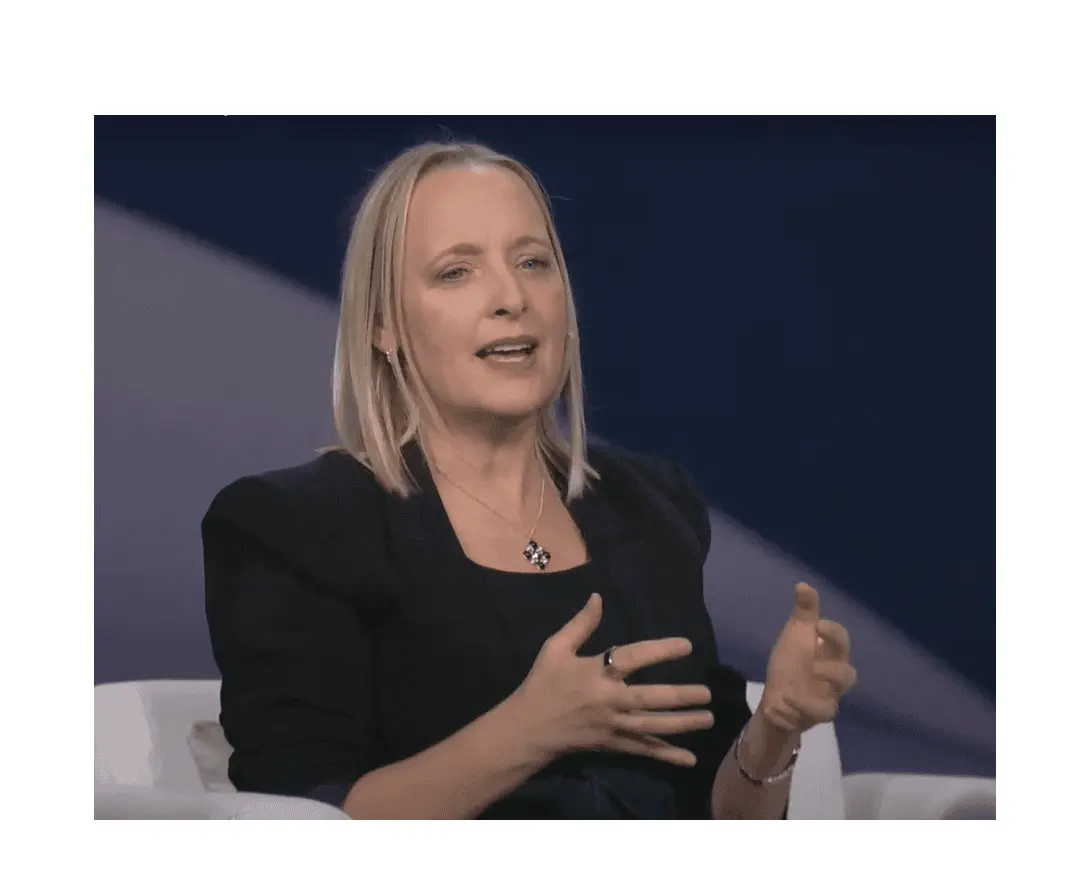
Source: ET
This mandate follows a three-year transition period during which the company invested heavily in reskilling its workforce. In September, Accenture announced it had invested more than $865 million in a six-month business optimization program that included training thousands of employees while showing the door to those who refused to adapt
1
. The mass reskilling effort is part of Accenture's broader $3 billion push to integrate AI, first announced in 2023, with a goal to double the company's AI talent to 80,000 professionals1
.
Source: Benzinga
Record Bookings Signal Strong Advanced AI Demand
Accenture's aggressive AI adoption strategy is translating into financial results. For the first quarter of fiscal 2026, the company reported total revenue of $18.74 billion, up 6% year-on-year, with new bookings surging 12% to $20.94 billion
2
. By the second quarter, record bookings reached $22.1 billion, with U.S. revenue growth accelerating to 8%4
.Julie Sweet attributed this momentum to the company's leadership in Advanced AI, which Accenture defines as generative AI, agentic AI, and physical AI
2
. "Advanced AI is increasingly embedded in our large transformation programs, either enabling future enterprise use or being implemented directly as part of our solutions," Sweet explained2
. The company now works with over 1,300 clients on Advanced AI projects out of a total client base of 9,000, with approximately 100 new clients initiating projects each quarter2
.Enterprise AI Adoption Faces Data and Process Challenges
While client demand for AI tools continues to grow, enterprise AI adoption remains complex and differs fundamentally from consumer AI. Sweet emphasized that "enterprise AI is fundamentally different than consumer AI" because companies must address security, fragmented processes, and data quality issues before deployment
2
. Most organizations suffer from what Accenture calls "process debt" and "data debt"—mountains of data spread across systems in different formats that are often unreliable or incomplete2
.This reality drives significant data modernization work. At least 50% of every Advanced AI project signed by Accenture leads to a data project
2
. "Before AI can create value, underlying data and the processes connected to it need to be simplified, cleaned, connected, and properly governed," Sweet noted2
. This focus on data quality and digital transformation represents a competitive advantage as clients increasingly understand that "AI is only as powerful as the data underneath it"2
.Related Stories

Market Implications and the Bellwether Effect for IT Services Sector
Market expert Sudip Bandyopadhyay, speaking to ET Now, acknowledged that Accenture has "done a fantastic job and are clearly gaining from enterprise AI spending"
3
. However, he noted caution regarding the company's revenue growth guidance of 3% to 5%, explaining that "there is a time lag between orders and revenue translation"3
.
Source: ET
Accenture's decision to stop disclosing AI revenues separately reflects a structural shift in the IT services sector. Bandyopadhyay explained that "AI is not a premium anymore, it is a necessity" and that "customers expect cost savings and efficiency from AI"
3
. Companies that cannot provide AI solutions risk falling behind, as "the game is changing and Accenture moved early into AI"3
.Workforce Training Gap Threatens Broader Adoption
While Accenture leads in enterprise AI adoption, broader corporate adoption remains limited. A Gallup poll revealed that only 38% of companies had integrated AI to enhance workplace productivity, efficiency, and quality by the fourth quarter of 2025, representing just a 1% increase from the previous quarter
1
. Sweet flagged a critical gap: corporate investment in AI tools far outpaces investment in workforce training, with small and mid-sized enterprises facing the sharpest exposure5
.Internally, Accenture has made significant strides. The company now employs more than 85,000 AI and data professionals, with 13 million training hours logged in the latest quarter and approximately 200,000 employees completing a specialized program on agentic AI
4
. Sweet emphasized that the company aims to "become the most AI-enabled company in the world"4
. "We see AI as a tailwind because it's helping us win more today and take market share," she stated4
.References
Summarized by

Navi
Related Stories
Accenture's Q1 FY25 Earnings Reveal Strong Growth in Generative AI, Boosting Tech Industry Outlook
20 Dec 2024•Business and Economy

Accenture's $3B AI Bet Pays Off: CEO Julie Sweet Reveals Insights on Enterprise AI Adoption
26 Sept 2025•Business and Economy
Accenture Raises Revenue Forecast as AI Services Demand Surges
20 Mar 2025•Business and Economy

Recent Highlights
1
Google releases Gemma 4 with Apache 2.0 license, enabling unrestricted local AI on devices
Technology

2
AI Models Lie and Deceive to Protect Other AI Models From Deletion, Study Reveals
Science and Research

3
OpenAI closes $122 billion funding round amid fierce AI competition and profitability questions
Startups

Recent Highlights
Today's Top Stories







Your Daily Dose of Curated AI News
Don’t drown in AI news. We cut through the noise - filtering, ranking and summarizing the most important AI news, breakthroughs and research daily. Spend less time searching for the latest in AI and get straight to action.

