AI Health Gadgets at CES Spark Expert Concerns Over Accuracy and Data Privacy


4 Sources
4 Sources
[1]
Dose of uncertainty: Experts wary of AI health gadgets at CES
LAS VEGAS (AP) -- Health tech gadgets displayed at the annual CES trade show make a lot of promises. A smart scale promoted a healthier lifestyle by scanning your feet to track your heart health, and an egg-shaped hormone tracker uses AI to help you figure out the best time to conceive. Tech and health experts, however, question the accuracy of products like these and warn of data privacy issues -- especially as the federal government eases up on regulation. The Food and Drug Administration announced during the annual show in Las Vegas that it will relax regulations on "low-risk" general wellness products such as heart monitors and wheelchairs. It's the latest step President Donald Trump's administration has taken to remove barriers for AI innovation and use. The White House repealed former President Joe Biden's executive order establishing guardrails around AI, and last month, the Department of Health and Human Services outlined its strategy to expand its use of AI. Booths at the conference showcased new tech designed to help people living in rural areas with their health care needs amid doctor shortages, boost research into women's health and make life easier for people with disabilities. AI technologies have benefits in the over $4.3 trillion health care industry, according to Marschall Runge, professor of medical science at the University of Michigan. They're good at analyzing medical imaging and can help streamline doctors' busy schedules, but they can also promote biases and "hallucinate," providing incorrect information stated as fact. "I would urge people not to think that the technology is the same as a well-resourced, thoughtful, research-driven medical professional," said Cindy Cohn, executive director of the digital rights group Electronic Frontier Foundation. Privacy protections like the Health Insurance Portability and Accountability Act do not cover information collected by consumer devices, and the companies could be using the data to train their AI models, or selling it to other businesses, Cohn said. With a lot of the gadgets at CES, it's difficult to find out where your information is going, Cohn said. "You have to dig down through the fine print to try to figure that out, and I just don't think that's fair or right for the people who might rely on it," she said. But the creators of the products say their innovations fill in health care gaps, and they maintain they protect their customers' privacy. Sylvia Kang, founder and CEO of Mira, said she created the egg-shaped hormone tracker because many of her friends were trying to conceive and realized they had no knowledge of their hormonal health. To use the "world's mini hormone lab," you dip a wand in urine, insert the wand into the monitor and look at the results on the app. Kang said her company uses AI to analyze female hormone data and has one of the world's biggest hormonal health banks. The data is stored on the cloud and is not shared with anyone, Kang said. "There was no such thing before," Kang said of her $250 product. Many gadgets at CES focused on women's health, which has been historically under-researched and underfunded. Before 1993, women were excluded from clinical trials, and there still is little research on areas like menopause. While not every woman will have a baby, all women go through menopause, and "yet we know nothing about it," said Amy Divaraniya, founder and CEO of the women's health company Oova, during a session. One gadget called Peri aims to better understand perimenopause -- the transitional phase before menopause. The wearable device monitors hot flashes and night sweats and provides the data via an app. Other products at CES were promoted as a way to increase accessibility to health information. The free medicine-focused AI chatbot called 0xmd helps improve access to medical information in areas with doctor shortages and provides a cost-effective alternative, said its founder and architect Allen Au. People can ask the chatbot questions about medicine, upload photos of a mole or rash, and submit their doctors' notes for an easier-to-understand translation, Au said. "At the end of the day, I don't think we will replace doctors," but it can give people a second opinion, Au said. OpenAI announced on Wednesday its launch of ChatGPT Health, a similar platform. Cohn remains skeptical of consumer tech. She said they can help prepare people to ask the right questions of their medical professional, but they're not going to be a substitute for a doctor. "People need to remember that these are just tools; they're not oracles who are delivering truths," she said.
[2]
AI-powered health gadgets at CES 2026 are concerning experts. Here's why
During the show in Las Vegas, the FDA announced that it will ease regulations on wellness products such as heart monitors. Health tech gadgets displayed at the annual CES trade show make a lot of promises. A smart scale promoted a healthier lifestyle by scanning your feet to track your heart health, and an egg-shaped hormone tracker uses AI to help you figure out the best time to conceive. Tech and health experts, however, question the accuracy of products like these and warn of data privacy issues -- especially as the federal government eases up on regulation. The Food and Drug Administration announced during the show in Las Vegas that it will relax regulations on "low-risk" general wellness products such as heart monitors and wheelchairs. It's the latest step President Donald Trump's administration has taken to remove barriers for AI innovation and use. The White House repealed former President Joe Biden's executive order establishing guardrails around AI, and last month, the Department of Health and Human Services outlined its strategy to expand its use of AI. Booths at the conference showcased new tech designed to help people living in rural areas with their health care needs amid doctor shortages, boost research into women's health and make life easier for people with disabilities. AI technologies have benefits in the over $4.3 trillion health care industry, according to Marschall Runge, professor of medical science at the University of Michigan. They're good at analyzing medical imaging and can help streamline doctors' busy schedules, but they can also promote biases and "hallucinate," providing incorrect information stated as fact. "I would urge people not to think that the technology is the same as a well-resourced, thoughtful, research-driven medical professional," said Cindy Cohn, executive director of the digital rights group Electronic Frontier Foundation. Privacy protections like the Health Insurance Portability and Accountability Act do not cover information collected by consumer devices, and the companies could be using the data to train their AI mode ls, or selling it to other businesses, Cohn said. With a lot of the gadgets at CES, it's difficult to find out where your information is going, Cohn said. "You have to dig down through the fine print to try to figure that out, and I just don't think that's fair or right for the people who might rely on it," she said. But the creators of the products say their innovations fill in health care gaps, and they maintain they protect their customers' privacy. Sylvia Kang, founder and CEO of Mira, said she created the egg-shaped hormone tracker because many of her friends were trying to conceive and realized they had no knowledge of their hormonal health. To use the "world's mini hormone lab," you dip a wand in urine, insert the wand into the monitor and look at the results on the app. Kang said her company uses AI to analyze female hormone data and has one of the world's biggest hormonal health banks. The data is stored on the cloud and is not shared with anyone, Kang said. "There was no such thing before," Kang said of her $250 product. Many gadgets at CES focused on women's health, which has been historically under-researched and underfunded. Before 1993, women were excluded from clinical trials, and there still is little research on areas like menopause. While not every woman will have a baby, all women go through menopause, and "yet we know nothing about it," said Amy Divaraniya, founder and CEO of the women's health company Oova, during a session. One gadget called Peri aims to better understand perimenopause -- the transitional phase before menopause. The wearable device monitors hot flashes and night sweats and provides the data via an app.
[3]
Dose of uncertainty: Experts wary of AI health gadgets at CES
LAS VEGAS -- Health tech gadgets displayed at the annual CES trade show make a lot of promises. A smart scale promoted a healthier lifestyle by scanning your feet to track your heart health, and an egg-shaped hormone tracker uses AI to help you figure out the best time to conceive. Tech and health experts, however, question the accuracy of products like these and warn of data privacy issues -- especially as the federal government eases up on regulation. The Food and Drug Administration announced during the annual show in Las Vegas that it will relax regulations on "low-risk" general wellness products such as heart monitors and wheelchairs. It's the latest step President Donald Trump's administration has taken to remove barriers for AI innovation and use. The White House repealed former President Joe Biden's executive order establishing guardrails around AI, and last month, the Department of Health and Human Services outlined its strategy to expand its use of AI. Booths at the conference showcased new tech designed to help people living in rural areas with their health care needs amid doctor shortages, boost research into women's health and make life easier for people with disabilities. AI technologies have benefits in the over $4.3 trillion health care industry, according to Marschall Runge, professor of medical science at the University of Michigan. They're good at analyzing medical imaging and can help streamline doctors' busy schedules, but they can also promote biases and "hallucinate," providing incorrect information stated as fact. "I would urge people not to think that the technology is the same as a well-resourced, thoughtful, research-driven medical professional," said Cindy Cohn, executive director of the digital rights group Electronic Frontier Foundation. Privacy protections like the Health Insurance Portability and Accountability Act do not cover information collected by consumer devices, and the companies could be using the data to train their AI models, or selling it to other businesses, Cohn said. With a lot of the gadgets at CES, it's difficult to find out where your information is going, Cohn said. "You have to dig down through the fine print to try to figure that out, and I just don't think that's fair or right for the people who might rely on it," she said. But the creators of the products say their innovations fill in health care gaps, and they maintain they protect their customers' privacy. Sylvia Kang, founder and CEO of Mira, said she created the egg-shaped hormone tracker because many of her friends were trying to conceive and realized they had no knowledge of their hormonal health. To use the "world's mini hormone lab," you dip a wand in urine, insert the wand into the monitor and look at the results on the app. Kang said her company uses AI to analyze female hormone data and has one of the world's biggest hormonal health banks. The data is stored on the cloud and is not shared with anyone, Kang said. "There was no such thing before," Kang said of her $250 product. Many gadgets at CES focused on women's health, which has been historically under-researched and underfunded. Before 1993, women were excluded from clinical trials, and there still is little research on areas like menopause. While not every woman will have a baby, all women go through menopause, and "yet we know nothing about it," said Amy Divaraniya, founder and CEO of the women's health company Oova, during a session. One gadget called Peri aims to better understand perimenopause -- the transitional phase before menopause. The wearable device monitors hot flashes and night sweats and provides the data via an app. Other products at CES were promoted as a way to increase accessibility to health information. The free medicine-focused AI chatbot called 0xmd helps improve access to medical information in areas with doctor shortages and provides a cost-effective alternative, said its founder and architect Allen Au. People can ask the chatbot questions about medicine, upload photos of a mole or rash, and submit their doctors' notes for an easier-to-understand translation, Au said. "At the end of the day, I don't think we will replace doctors," but it can give people a second opinion, Au said. OpenAI announced on Wednesday its launch of ChatGPT Health, a similar platform. Cohn remains skeptical of consumer tech. She said they can help prepare people to ask the right questions of their medical professional, but they're not going to be a substitute for a doctor. "People need to remember that these are just tools; they're not oracles who are delivering truths," she said.
[4]
CES Health Gadgets Promise Increased Accuracy, but Trigger Privacy Fears
What does a More Relaxed Regulatory Environment Mean for Consumers? During CES, the US Food and Drug Administration declared it would relax regulations for 'low-risk' wellness products such as heart rate monitors and wheelchairs. This announcement aligns with President Donald Trump's initiative to roll back all forms of regulatory barriers to AI innovation. The White House has already repealed protections established during former President Joe Biden's administration. The Department of Health and Human Services has outlined plans to integrate more .
Share
Share
Copy Link
CES unveiled numerous AI-powered health gadgets including hormone trackers and smart scales that promise to transform personal wellness. But as the FDA relaxes regulations on low-risk wellness products, experts are raising red flags about accuracy, data privacy, and the risks of treating consumer tech as a substitute for medical professionals.
AI Health Gadgets Take Center Stage at CES
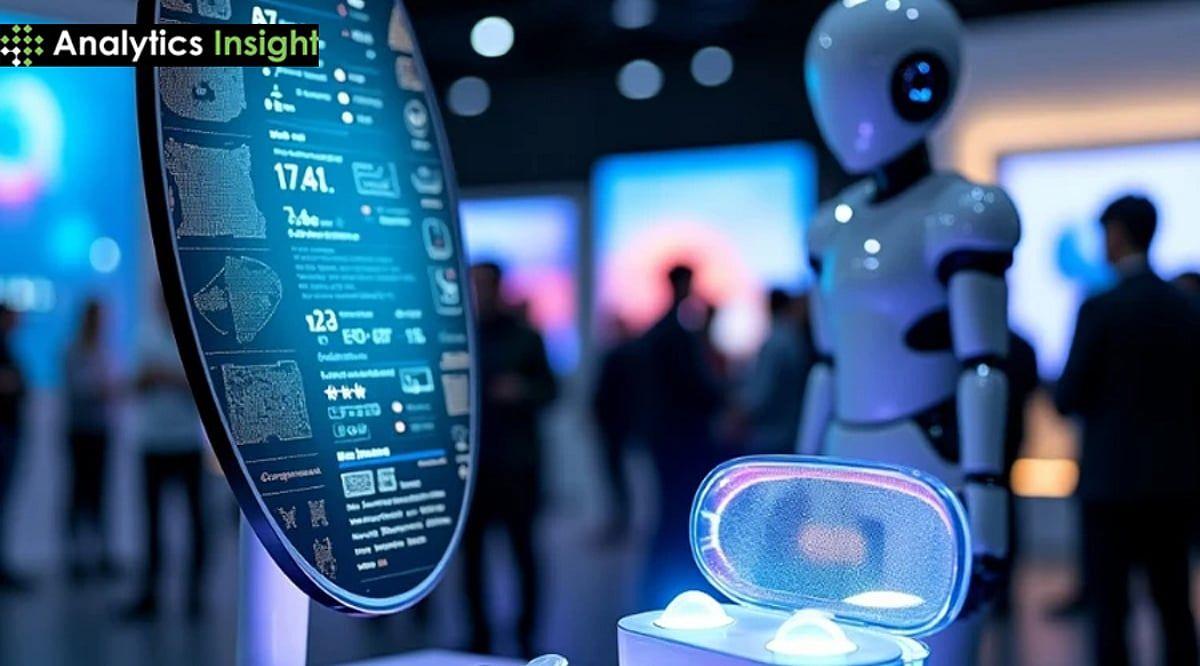
The annual CES trade show in Las Vegas became a showcase for AI health gadgets promising to transform how consumers monitor their wellness. From smart scales that scan feet to track heart health to egg-shaped hormone trackers using AI to determine optimal conception timing, the exhibition floor brimmed with AI-powered health gadgets targeting the over $4.3 trillion health care industry
1
. These consumer tech health devices claim to fill critical gaps in health care access, particularly for people in rural areas facing doctor shortages and for women whose health has been historically under-researched2
.
Source: Analytics Insight
FDA Announces Relaxed Federal Regulations
During CES, the FDA made a significant announcement that it would ease regulations on low-risk wellness products such as heart monitors and wheelchairs
3
. This regulatory shift represents the latest move by the Donald Trump administration to remove barriers for AI innovation in healthcare. The White House previously repealed former President Joe Biden's executive order that established guardrails around AI, while the Department of Health and Human Services outlined its strategy to expand AI use across the health sector. This convergence of relaxed federal regulations and rapid AI innovation in healthcare has intensified scrutiny from experts concerned about consumer protection.Expert Concerns Over Accuracy and AI Limitations
While AI technologies offer benefits in analyzing medical imaging and streamlining doctors' schedules, they carry significant limitations that worry health professionals. Marschall Runge, professor of medical science at the University of Michigan, notes that AI systems can promote AI biases and "hallucinate," providing incorrect information stated as fact
2
. Cindy Cohn, executive director of the Electronic Frontier Foundation, emphasized this concern: "I would urge people not to think that the technology is the same as a well-resourced, thoughtful, research-driven medical professional"3
. These expert concerns over accuracy highlight a fundamental tension between the promises of consumer wellness technology and the rigorous standards expected in medical care.Data Privacy Vulnerabilities in Health Tracking Devices
The data privacy implications of these devices present perhaps the most pressing concern for consumers. Privacy protections like HIPAA do not cover information collected by consumer devices, meaning companies could use the data to train their AI models or sell it to other businesses without the same legal constraints that govern traditional medical data
1
. Cohn pointed out that with many gadgets at the trade show, determining where personal information goes requires digging through fine print, which she considers neither fair nor right for people who might rely on these devices3
. This accuracy and data privacy gap leaves consumers vulnerable at a time when regulatory oversight is diminishing.Women's Health Technology Gains Prominence
Many gadgets at CES focused on women's health technology, addressing an area that has been historically underfunded and under-researched. Sylvia Kang, founder and CEO of Mira, created a $250 hormone tracker after realizing many women trying to conceive had no knowledge of their hormonal health. The device uses AI to analyze female hormone data from what the company claims is one of the world's biggest hormonal health banks
2
. Another device called Peri targets perimenopause, monitoring hot flashes and night sweats through a wearable that provides data via an app1
.
Source: AP
Amy Divaraniya, founder and CEO of women's health company Oova, noted that while not every woman will have a baby, all women go through menopause, "yet we know nothing about it"
3
.Related Stories


AI Chatbots Enter Medical Information Space
The expansion of AI innovation in healthcare extends beyond physical devices to include AI chatbot platforms. The free medicine-focused AI chatbot called 0xmd aims to improve access to medical information in areas with doctor shortages, allowing people to ask questions about medicine, upload photos of skin conditions, and submit doctors' notes for easier-to-understand translations, according to founder Allen Au
1
. OpenAI announced its launch of ChatGPT Health, a similar platform, during the same week3
. While Au stated he doesn't believe these tools will replace doctors, the proliferation of such platforms raises questions about how consumers will distinguish between reliable medical advice and AI-generated suggestions.Balancing Innovation With Consumer Protection
Product creators maintain they protect customer privacy and fill legitimate health care gaps. Kang stated that Mira's data is stored on the cloud and not shared with anyone, while other exhibitors emphasized their role in addressing accessibility challenges for people with disabilities and those in underserved areas
2
. However, Cohn remains cautious about the trajectory of consumer tech in health, suggesting these devices can help people prepare questions for medical professionals but should never substitute for doctors. "People need to remember that these are just tools; they're not oracles who are delivering truths," she said3
. As the regulatory environment continues to shift and AI capabilities expand, consumers face the challenge of navigating an increasingly complex landscape where the promise of personalized health insights must be weighed against questions of accuracy, privacy, and appropriate medical oversight.References
Summarized by

Navi
[4]
Related Stories
Recent Highlights
1
Tennessee Teens Sue Elon Musk's xAI Over Grok AI-Generated Child Abuse Images
Policy and Regulation

2
Pentagon designates Palantir Maven AI as core US military system in major defense shift
Technology

3
Supermicro Co-Founder Indicted in $2.5 Billion Nvidia AI Chip Smuggling Scheme to China
Policy and Regulation

Recent Highlights
Today's Top Stories










Your Daily Dose of Curated AI News
Don’t drown in AI news. We cut through the noise - filtering, ranking and summarizing the most important AI news, breakthroughs and research daily. Spend less time searching for the latest in AI and get straight to action.

