AI Hiring Creates a 'Doom Loop' as Job Seekers and Companies Struggle With Automated Screenings


3 Sources
3 Sources
[1]
AI agents are coming to job interviews. Tips for handling them
New data shows companies are heavily relying on AI for hiring, with many using it for first-round job candidate interviews. According to a 2025 survey by HRTech Outlook, 78% of companies are deploying AI in talent acquisition. Those companies reported a 40% reduction in time-to-hire, the survey noted. A separate study found that 87% of companies rely on AI in at least one hiring component. With AI hiring on the rise, job candidates should not be surprised when their first interview is with an AI agent. "The impact of AI on job interviews cannot be overstated," said Nathan Soto, a career expert at Resume Genius. "Our recent survey of 1,000 hiring managers found that 48% of hiring managers use AI to screen resumes before a human reviews them, and 19% use AI to help them conduct video interviews. "Candidates either record their answers or type them out, and the system looks at both the content and the delivery, things like clarity, structure, tone, pacing," said Jared Navarre, CEO of the business consulting firm Keyni.co, and a creative strategy AI Expert. "Then it compares those responses to whatever ideal profile the company set for the role." The result is simple, with a ranked list and a short write-up that a recruiter skims to decide who actually moves forward. "Honestly, it's a lot more mechanical than people think, but it drives the first cut in most places now," Navarre said. That's a big reason why career experts say AI is reshaping the first-round interview more than any other step in the hiring process. "Many companies now use automated screeners, one-way video interviews, or AI-driven assessments to handle large applicant volumes," said Michelle Perchuk, co-founder of New York City-based MTV Coaching, an executive search firm. AI interviews typically take place on an online platform, where candidates answer preset questions in video, audio, or written form. "The system evaluates responses based on employer-selected criteria such as keywords, structure, clarity, or pacing," Perchuk said. "But AI has blind spots: candidates can essentially say anything just to move to the next round, and the system won't know whether they're being truthful." More importantly, job candidates are used to human interviewers, who understand context, nuance, and credibility, whereas AI does not. "Unless a human steps in to ask deeper questions or request evidence of ROI or outcomes, the system can't distinguish between genuine skill and performative answers," Perchuk noted. That makes it critical for job candidates to sharpen unique skills, communication discipline, and hone strategic "tricks" that help them pass through the AI gatekeepers."Because these systems rely on preset criteria, applicants must learn to present themselves clearly and simply so the technology can understand and score them accurately," Perchuk said. The way forward for job applicants is to specifically prepare for AI-run job interviews, which differ from traditional face-to-face interviews. These action steps should lead the way. "If the AI asks, 'What is your name?' answer directly: 'My name is Michelle," Perchuk advised. "Most job seekers ramble or give too much context, which confuses the system." Alignment and focus are also big priorities. "Everything a job applicant says on an AI-run job interview should be relevant to the competencies required for the role," Foggle noted. It's also easy to forget to smile in an asynchronous interview because there is no feedback and no nonverbal cues that an applicant's answers are on the right track, Foggle noted. "There's nobody on the other side with an encouraging smile," she said. "Try putting a photo of someone, like a mentor who is a cheerleader you want to impress, near the camera as a reminder to smile, and to infuse some authentic warmth into responses." "Because of the proliferation of apps that help candidates cheat on interviews by providing answers in real time (i.e., Interview Buddy, Final Round AI), almost all AI interview platforms are assessing eye movements for reading, and can flag reading as cheating," she said. "Rambling, over explaining, or providing unclear answers hurts candidates because the system can't extract meaning the way a human can," Perchuk said. "On the technical side, poor lighting, sound, or connectivity can negatively affect how the AI interprets your responses. Another major no-no is assuming the AI understands context or nuance, which it doesn't. "That's why practicing presentation skills in front of the camera is essential, along with communicating with clarity, and keeping your answers tightly aligned with the role," Perchuk advised. "Also, never assume the machine will 'get' your personality; it's your job to present information crisply, strategically, and in a way the algorithm can digest. Companies are already reaping benefits from AI-powered interviews, so expect the technology to expand. "A great example is Fontainebleau Las Vegas Resort and Casino," said Lili Foggle, founder at Impressive Interview and director of the Interview Institute at the Professional Association of Resume Writers and Career Coaches. "Scheduled to open in December 2023, the casino used Paradox.ai to source, schedule, and screen candidates. They processed 300,000 applications and hired 6,500 employees in three months."
[2]
How to Keep AI Burnout From Driving Away Top Applicants
From many earlier reports we know that AI has already become deeply interwoven with the job application process. AI can be used to "cheat" through some of the early stages of an application and can be used as a force multiplier so that applicants can send out many more applications than possible if they were using traditional methods. It's also used by recruiters to help whittle down a massive list of applicants to a more manageable number of job seekers for a particular post. But the recent report from San Francisco-based resume service LiveCareer says that the whirlwind pressures and demands of the job search process are becoming too much for some people. It reports many applicants are just unplugging and dropping out before submitting thier applications. LiveCareer's data show nearly nine in 10 HR professionals say they've been ghosted by candidates midway through the process, and 71 percent say it's happening more often than it did last year. Fully 65 percent point to AI as definitely being a contributing factor to the rise in this ghosting habit, and 33 percent agree AI's had "some impact" on job seeker disengagement. Worst of all, a startling 12 percent say they've been ghosted even after making a firm job offer. The company's blog post notes that AI and other automation tech may be at fault because of the very artificial and unpleasant way it can feel to engage with. "From automated screenings to impersonal follow-ups," the post says, "job seekers are more likely to ghost hiring managers when they feel disconnected from the process or are uncertain whether they are interacting with a human." So much for the surge in "helpful" AI chatbots that are purportedly designed to make you feel like a company actually cares about your queries.
[3]
AI hiring is here. It's making companies -- and job seekers -- miserable
As America's labor market slows, AI-led interviews and auto-generated cover letters are dramatically changing the process of getting a job. And maybe not for the better. More than half of the organizations surveyed by the Society for Human Resource Management used AI to recruit workers in 2025. And an estimated third of ChatGPT users reportedly leaned on the OpenAI chatbot to help with their job search. However, recent research found that when job seekers use AI during the process, applicants are less likely to be hired. Meanwhile, companies are fielding an increased volume of applications. "The ability (for companies) to select the best worker today may be worse due to AI," said Anaïs Galdin, a Dartmouth researcher who co-authored a study looking at how large language models (LLMs) have impacted cover letters. Galdin and her co-author, Jesse Silbert at Princeton, analyzed cover letters for tens of thousands of job applications on Freelancer.com, a jobs listing site. The researchers found that after the introduction of ChatGPT in 2022, the letters all got longer and better-written, but companies stopped putting so much stock in them. That made it harder to distinguish a qualified hire from the rest of the applicant pool, and the rate of hiring dropped as did the average starting wage. "If we do nothing to make information flow better between workers and firms, then we might have an outcome that looks something like this," said Silbert, referring to the results of his study. And with more applications to review, employers are automating the interview itself. A majority (54 per cent) of the US job seekers surveyed by recruiting software firm Greenhouse in October said they've had an AI-led interview. Virtual interviews exploded in popularity during the pandemic in 2020. Many companies now use AI to ask the questions, but that hasn't made the process any less subjective. "Algorithms can copy and even magnify human biases," said Djurre Holtrop, a researcher who has conducted studies about the use of asynchronous video interviews, algorithms, and LLMs in hiring. "Every developer needs to be wary of that." Daniel Chait, CEO of Greenhouse, warned that with AI infiltrating hiring - from applicants using the tool to apply to hundreds of jobs and employees automating the process in response - it has created a "doom loop" making everyone miserable. "Both sides are saying, 'This is impossible, it's not working, it's getting worse,'" Chait told CNN. Employers are embracing the technology -- one estimate projects the market for recruiting technology will grow to US$3.1 billion by the end of this year. But state lawmakers, labor groups and individual workers have begun pushing back over fears that AI could discriminate against workers. Liz Shuler, president of the AFL-CIO labor union, called the use of AI in hiring "unacceptable." "AI systems rob workers of opportunities they're qualified for based on criteria as arbitrary as names, zip codes, or even how often they smile," Shuler said in a statement to CNN. States such as California, Colorado, and Illinois are enacting new laws and regulations aimed at creating standards for the technology's use in hiring, among other areas. A recent executive order signed by President Donald Trump threatens to undermine state-level AI regulations. Samuel Mitchell, a Chicago-based lawyer who argues employment cases, said that the order can't "preempt" state law but does add to the "ongoing uncertainty" around new regulations on the tech. However, he added that existing anti-discrimination laws still apply to hiring, even if a company uses AI. And lawsuits are already being filed. In a case backed by the American Civil Liberties Union, a deaf woman is suing HireVue (an AI-powered recruiting company) over claims an automated interview she was subject to did not meet accessibility standards required by law. HireVue denied the claim and told CNN that its technology works to reduce bias through a "foundation of validated behavioral science." But despite initial challenges, AI hiring seems here to stay. And to be sure, new developments in AI have led to more sophisticated ways to analyze resumes, opening doors for candidates who may have otherwise been overlooked. But those who value the "human touch" in hiring are left wanting. Jared Looper, an IT project manager based in Salt Lake City, Utah, began his career as a recruiter. As part of his current job search, he was interviewed by an AI recruiter. He found the experience "cold," even hanging up the first time he was contacted by the program. Looper now worries about those who haven't yet learned how to navigate a new hiring process in which catering to artificial intelligence is a crucial skill.
Share
Share
Copy Link
Companies are rapidly adopting AI for talent acquisition, with 78% now using it in hiring processes. But the shift is creating unexpected problems: nearly nine in 10 HR professionals report being ghosted by candidates, and research shows AI use actually reduces hiring rates. Both job seekers and employers find themselves trapped in what one CEO calls a 'doom loop' of impersonal interactions.
AI Transforming the Hiring Landscape at Unprecedented Scale
AI hiring has become the dominant force in talent acquisition, with 78% of companies now deploying AI systems to screen candidates and conduct job interviews
1
. A separate study found that 87% of companies rely on AI in at least one component of the job application process1
. More than half of organizations surveyed by the Society for Human Resource Management used AI to recruit workers in 2025, while an estimated third of ChatGPT users leaned on the OpenAI chatbot to help with their job search3
. Companies report a 40% reduction in time-to-hire when using AI for talent acquisition1
. The recruiting technology market is projected to reach $3.1 billion by the end of this year3
.
Source: BNN
How AI-Powered Interviews Actually Work
Job seekers should expect their first interview to be with an AI agent rather than a human. A survey of 1,000 hiring managers found that 48% use AI to screen resumes before human review, and 19% use AI to conduct video interviews
1
. AI-powered interviews typically occur on online platforms where candidates answer preset questions in video, audio, or written form. The system evaluates responses based on employer-selected criteria such as keywords, structure, clarity, and pacing1
. Jared Navarre, CEO of business consulting firm Keyni.co, explains that the system analyzes both content and delivery, comparing responses to an ideal profile the company set for the role, then produces a ranked list that recruiters skim to decide who moves forward1
. A majority—54 percent—of US job seekers surveyed by Greenhouse in October said they've experienced an AI-led interview3
.
Source: Quartz
The Doom Loop: AI Burnout and Ghosting Potential Employers
Daniel Chait, CEO of Greenhouse, warns that AI has created a "doom loop" making everyone miserable, with both sides saying the process is impossible and getting worse
3
. Data from LiveCareer shows nearly nine in 10 HR professionals report being ghosted by candidates midway through the process, with 71 percent saying it's happening more often than last year2
. Fully 65 percent of HR professionals point to AI as definitely being a contributing factor to this rise in ghosting potential employers, while 33 percent agree AI has had some impact on job seeker disengagement2
. Most alarmingly, 12 percent say they've been ghosted even after making a firm job offer2
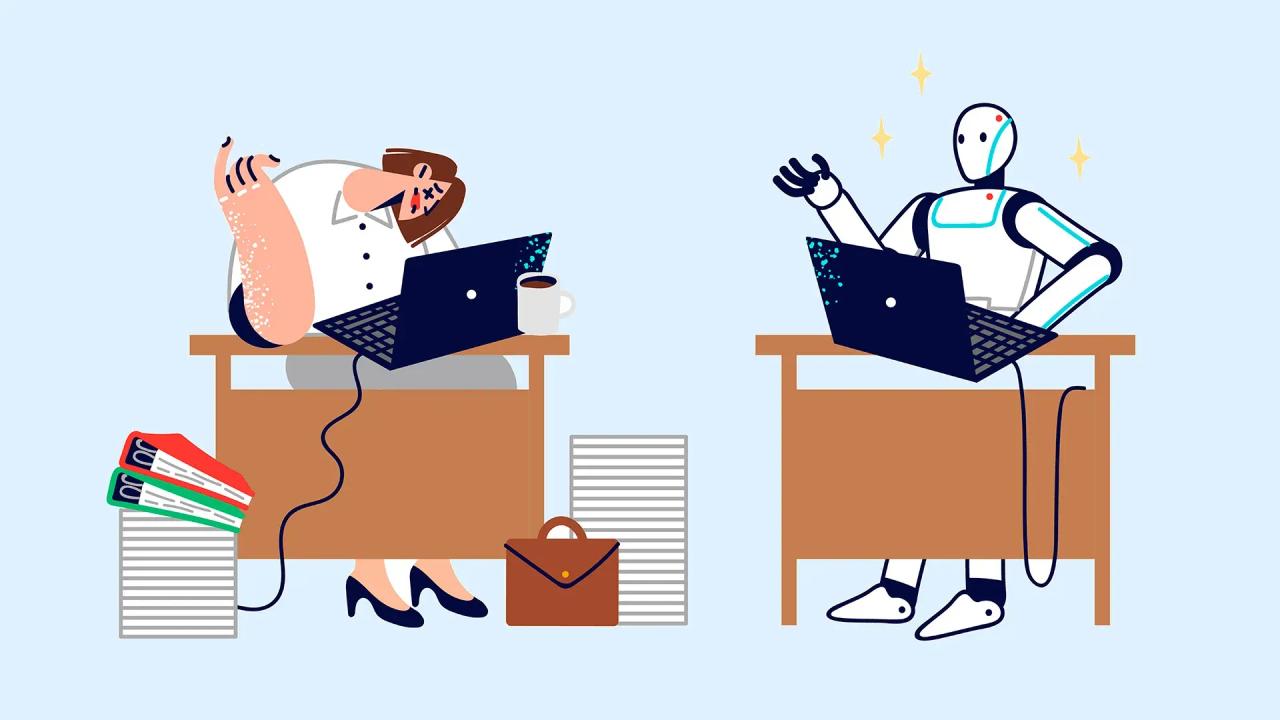
. The impersonal experience drives this AI burnout—automated screenings and impersonal follow-ups make job seekers more likely to ghost hiring managers when they feel disconnected or uncertain whether they're interacting with a human2
.
Source: Inc.
Research Shows AI Use Reduces Hiring Quality
Recent research from Dartmouth and Princeton reveals a troubling paradox: when job seekers use AI during the application process, they're actually less likely to be hired
3
. Researchers analyzed cover letters for tens of thousands of job applications on Freelancer.com and found that after ChatGPT's introduction in 2022, cover letters became longer and better-written, but companies stopped valuing them as much3
. This made it harder to distinguish qualified candidates from the rest, resulting in lower hiring rates and reduced average starting wages3
. "The ability for companies to select the best worker today may be worse due to AI," said Anaïs Galdin, co-author of the study3
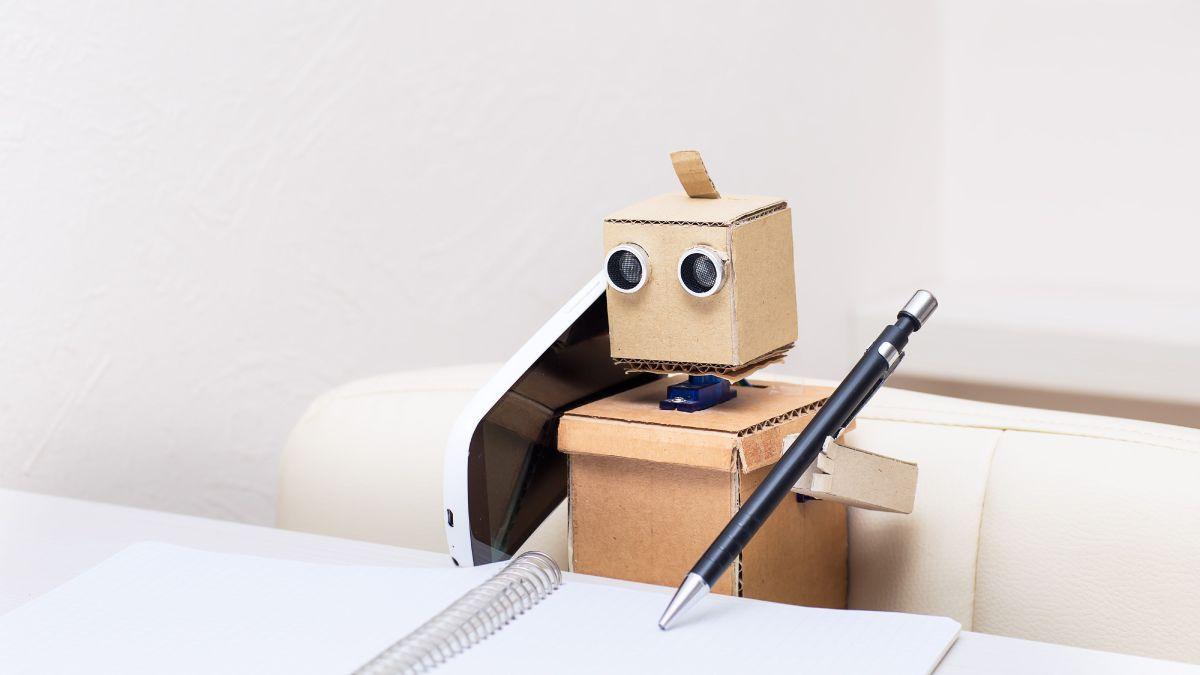
. Companies face increased application volume while struggling to identify genuine talent.Related Stories



Human Biases and Discrimination Concerns
Algorithms can copy and even magnify human biases, according to researcher Djurre Holtrop, who has studied asynchronous video interviews and AI use in hiring
3
. Liz Shuler, president of the AFL-CIO labor union, called AI use in hiring "unacceptable," stating that AI systems rob workers of opportunities based on criteria as arbitrary as names, zip codes, or how often they smile3
. Discrimination concerns have prompted action: states including California, Colorado, and Illinois are enacting regulations aimed at creating standards for AI use in hiring3
. In one case backed by the American Civil Liberties Union, a deaf woman is suing HireVue over claims an automated interview didn't meet accessibility standards required by law3
.Strategies for Job Seekers Facing AI Gatekeepers
Michelle Perchuk, co-founder of executive search firm MTV Coaching, notes that AI has blind spots: candidates can say anything to move to the next round, and the system won't know if they're being truthful
1
. Job seekers must adapt their approach. Answer questions directly without rambling—if asked "What is your name?" respond simply with your name rather than providing excessive context that confuses the system1
. Everything said should be relevant to the competencies required for the role1
. Because there's no feedback or nonverbal cues in asynchronous interviews, experts suggest placing a photo of a mentor near the camera as a reminder to smile and infuse warmth into responses1
. Almost all AI interview platforms assess eye movements for reading and can flag it as cheating, so avoid using apps like Interview Buddy or Final Round AI1
. Poor lighting, sound, or connectivity can negatively affect how AI interprets responses1
. Never assume the machine understands context or nuance—present information crisply and strategically in a way the algorithm can digest1
.References
Summarized by

Navi
Related Stories
Recent Highlights
1
AI chatbots validate you too much, making you less kind to others, Stanford study reveals
Science and Research
2
Anthropic's Claude Code Source Leak Reveals Hidden AI Agent Plans and Extensive System Access
Technology

3
Judge blocks Pentagon from branding Anthropic a security risk over AI safety guardrails dispute
Policy and Regulation
Recent Highlights
Today's Top Stories




Your Daily Dose of Curated AI News
Don’t drown in AI news. We cut through the noise - filtering, ranking and summarizing the most important AI news, breakthroughs and research daily. Spend less time searching for the latest in AI and get straight to action.

