AI Shopping Revolution Transforms Holiday Season as Retailers Deploy Advanced Assistants


20 Sources
20 Sources
[1]
AI-assisted shopping is the talk of the holiday shopping season
NEW YORK (AP) -- Major retail chains and tech companies are offering new or updated artificial intelligence tools in time for the holiday shopping season, hoping to give consumers an easier gift-buying experience and themselves an augmented share of online spending. Although AI-powered purchases are in early stages, the shopping assistants and agents rolled out by the likes of Walmart, Amazon and Google can do more than the chatbots of holidays past. The latest versions were designed to provide personalized product recommendations, track prices and to place some orders through unscripted "conversations" with customers. Those features are on top of shopping updates from AI platforms like OpenAI's ChatGPT and Google Gemini. In one of the season's most talked-about launches, Google this month introduced an AI agent that can be instructed to call local stores to ask if a desired product is in stock. San Francisco software company Salesforce estimated that AI would influence $73 billion, or 22%, of all global sales in one way or another from the Tuesday before Thanksgiving through Monday after the holiday, according to Caila Schwartz, Salesforce's director of consumer insights. The figure, which stood at $60 billion a year ago, encompasses everything from a ChatGPT query to AI-supplied gift suggestions on a retailer's website, Schwartz said. Despite the advancements, AI's impact on holiday shopping will be "relatively limited" this year since not every shopping site has useful tools and not every shopper is willing to try them, said Brad Jashinsky, a senior retail industry analyst at information technology research and consulting firm Gartner. "The more retailers that launch these tools, the better they get, and the more that consumers get comfortable and start to seek them out," Jashinsky said. "But customer behavior takes a long time to change." Here are three ways the technology is poised to influence holiday shopping habits in 2025: AI's potential to simplify the search for the perfect present is most apparent so far in tools that promise to give shoppers faster and more detailed results than a web browser with a lot fewer clicks. OpenAI upgraded ChatGPT with a shopping research feature that provides personalized buyers' guides. The information comes from product pages, reviews. prices and a user's previous interactions with the chatbot. The tool works best for complicated products like electronics and appliances, or for "detail-heavy" items like beauty or sporting goods, OpenAI said. Then there's Rufus, the shopping assistant that Amazon rolled out last year. It now remembers information customers previously fed it, like having four children that all like board games, for example. A user's browsing and purchase history and reviews are used to personalize recommendations. Google upgraded its AI Mode search tool to provide answers to detailed questions composed in natural language. For example, users can tell the agent they want to buy a casual sweater to wear with skirt or jeans in New York in January that goes with a skirt or jeans, Responses are pulled from Google's 50 billion product listings. The tool can also produce charts with side-by-side comparisons of prices, features, reviews and other factors. Previously, shoppers had to use keywords, filters and product links to find the information they needed. "This is an expansionary moment, I think, for all of technology and for commerce," Lilian Rincon, vice president of product, consumer shopping at Google, recently told The Associated Press. Meanwhile, Walmart's AI shopping assistant, Sparky, offers occasion-based recommendations and synthesizes reviews. An AI-powered gift finder on Target's app exclusively for the holidays responds to prompts such as the age and special hobbies of the recipient. Tools for tracking online prices have been around for years, including CamelCamelCamel, a third-party service for Amazon prices, as well as Paypal's Honey browser extension for monitoring thousands of online shops. This holiday season, shoppers have new options. Amazon launched a 90-day pricing history tracker this month for virtually everything it sells. Shoppers also now can set up alerts to receive notifications when prices on specific items fall within their budgets. Google, which for years had a basic price tracker, launched a more advanced version that lets users refine their requests with details like a garment's size and color. Microsoft's Copilot also launched a price tracker this year. Jason Goldberg, chief commerce strategy officer at Publicis Groupe, said he thinks the new pricing tools will add more pressure on retailers to make sure their prices are competitive. "A lot of consumers that weren't even looking for price alerts are going to discover price alerts for the first time," Goldberg predicted. Amazon, OpenAI and Google are racing to create tools that would allow for seamless AI-powered shopping by taking consumers from browsing to buying within the same program instead of having to go to a retailer's website to complete a purchase. OpenAI launched a new instant checkout feature that lets users buy products suggested by ChatGPT without leaving the app. Users can order merchandise from Etsy sellers and from some brands that use Shopify, including Glossier, Skims and Spanx. OpenAI and Walmart announced a similar deal in October, saying the partnership would allow ChatGPT members to use the instant checkout feature to shop for nearly everything available on Walmart's website except for fresh food. For now, however, the feature only supports buying one item at a time. A different deal Target struck with OpenAI lets shoppers put multiple items in a cart on ChatGPT, including fresh food products. But when customers are ready to pay for their orders, they are directed away from the chatbot to the Target app. New tools from Amazon and Google will give shoppers a taste of having autonomous AI assistants do the buying for them. While the services still are limited, "agentic AI" is intended to be more independent and advanced than the generative AI chatbots that excel at research and writing, experts say. Amazon is now letting Rufus automatically purchase items for customers who click an "auto buy" button while setting up price alerts. Once a product's price drops to the desired level, customers receive notice of their completed orders and have a limited window to cancel, the company said. The e-commerce giant also started allowing shoppers to use Rufus searches for brand-name products on the Amazon app as a gateway to other retailers. If Amazon doesn't carry a desired item in its store, a "Shop Direct" button will take them to the website of a place that does. Google's AI Mode price tracker also includes a "buy for me" option that automatically makes a customer's purchase through Google Pay when the price is right. The feature is available for products sold by Wayfair, Chewy, Quince and some Shopify merchants, and Google expects to keep adding more stores, the company said. sellers. Google also expanded its web browser with an automated AI call feature that phones local businesses on behalf of customers looking for information or specific products. Google's program discloses to the store that it's an AI caller, and stores can choose not to participate, the company said. Google said it's applying the feature initially to specific product categories: toys, health and beauty, and electronics. Target and Walmart declined to comment on whether this type of service would be part of their future plans.
[2]
AI shopping comes with its own perils this Black Friday
Stores in London display advertisements in their windows for 'Friday' sales as shoppers flock to the city's shopping hubs on November 22, 2024. The emergence of AI shopping doesn't just give consumers access to personalized advice and hassle-free shopping, it also brings with it an increased risk of digital fraud. This Black Friday, for the first time, consumers and retailers alike are being warned about the perils of so-called "agentic shopping," as consumers turn to large language models to search for products, compare offerings, receive personalized recommendations, and even make purchases without much human input. These technological advances come with their own risks. "It definitely makes my life easier... but at the same time, it also makes fraudsters' life substantially easier as well," said Michael Reitblat, CEO of Forter, an e-commerce prevention provider. According to Reitblat, there has been a 200% increase in agentic shopping by consumers over the past six months. That has been accompanied by a nearly tenfold increase in fraudsters using AI. "Think of it as sending thousands of robots into different stores to masquerade as good consumers," Reitblat told CNBC's "Squawk Box Europe." While some retailers' knee-jerk reaction has been to simply ban AI purchases, that could be a faulty strategy as more and more consumers use AI for shopping and driving good quality traffic, Reitblat said. A report by McKinsey & Company and The Business of Fashion found that among fashion executives, AI and digital tools were seen as the single biggest opportunity for the industry in 2026. To ensure products are visible and favored by AI models, brands must rethink marketing and e-commerce strategies, the report noted, adding that semantically rich data and API-accessible content will be critical to success.
[3]
A.I. Can Do More of Your Shopping This Holiday Season
Natallie Rocha reported from San Francisco, and Kailyn Rhone from New York. This holiday season, shoppers have more artificial intelligence to help with their gift lists. Target, Walmart, Ralph Lauren and other retailers this year unveiled chatbots that act as conversational stylists and shopping assistants. That means people who want to find matching pajamas for the family can ask a chatbot to sort through the options, or for a summary of customer reviews of an air fryer. At the same time, A.I. companies are getting into e-commerce. In September, OpenAI debuted an instant checkout feature in ChatGPT so people can buy items from stores such as Etsy without leaving the chat. This month, Google announced an A.I. assistant that can call local stores to check if an item is in stock, while Amazon rolled out an A.I. feature that tracks price drops and automatically buys an item if it falls within someone's budget. The goal is to provide shoppers with a tailored and convenient experience, retailers and tech companies said. Many of the new chatbots are "agents," which are programs that act autonomously and can respond to specific questions and context. They go beyond customer service chatbots that could handle only limited questions about returns or the status of an order. The latest chatbots can make holiday shopping more "personalized, efficient and cost-effective," said Lori Schafer, the chief executive of Digital Wave Technology, which helps companies with A.I. tools. "It fundamentally changes how people shop -- moving from humans searching for products to A.I. bringing the right products, at the best price, directly to them," she said. The A.I. tools can also help people deal with "decision fatigue from endless options," said Luca Cian, a marketing professor at the University of Virginia's Darden School of Business. Consumers are turning to chatbots to compare prices and save time so they can feel more confident in their decisions, he added. "The transformation ahead isn't just technological; it's psychological," Dr. Cian said. "We're recalibrating our relationship with choice itself, learning when to delegate decisions and when to maintain control." Roughly 42 percent of shoppers are already using A.I. tools for their holiday shopping, according to a survey of more than 4,000 consumers that Harris Poll conducted for Mastercard last month. More than half of Generation Z and millennial respondents said they trusted A.I. to recommend unique gifts. But many of the A.I. tools are still experimental and unproven. Some consumers said the chatbots failed to provide enough brands or types of products in their conversations. Olivia Meyer, 24, who works in the fashion industry in New York City, used ChatGPT this month to search for a pair of winter boots and was frustrated when it kept showing her the same brands. "I haven't been as completely satisfied with what I found, and so then I just end up going back to Google search or TikTok to try and find what I'm looking for," Ms. Meyer said. Consumer expectations about A.I. shopping may be ahead of reality, said Tyler Murray, the chief enterprise solutions officer of commerce and technology at VML, a marketing agency. True autonomous shopping, "where A.I. agents truly understand you, find the perfect gift and orchestrate the entire purchase journey, isn't quite here yet for this holiday season," he said. Retailers are rolling out upgraded chatbots and A.I. features in the meantime. This month, Target introduced a free chatbot that offers to find gifts by having a conversation with a user about the age of the person the shopper is buying for, the recipient's interests, the occasion and the shopper's budget. It is a more advanced version of Target's A.I. "gift finder" from last year, which did not allow for free-flowing conversations. OpenAI also beefed up ChatGPT's shopping features this year. In April, the company added images and links to product results in ChatGPT. In September, it rolled out the instant checkout feature with Etsy so ChatGPT users in the United States can hit a "buy" button on certain products without leaving the conversation. Shopify merchants such as Skims, Spanx and Glossier also recently became available for instant checkout. OpenAI takes a cut of each sale, but declined to disclose how much. This week, OpenAI said it had begun rolling out a shopping research feature in ChatGPT that offers users more refined product results than a typical chat does. OpenAI is working to expand the products that show up in ChatGPT's instant checkout, said Michelle Fradin, the ChatGPT commerce product lead, adding that A.I. shopping is still in its "early" stages. The company has announced a partnership with Walmart, though its products are not yet available through the checkout feature. (The New York Times has sued OpenAI and Microsoft, claiming copyright infringement of news content related to A.I. systems. The two companies have denied the suit's claims.) Among those won over by A.I. shopping is James Wilsterman, 38, a San Francisco tech executive. This summer, he used ChatGPT to shop for blazers and linen shirts for a wedding in France. He does not like to go shopping, so ChatGPT's carousel of images and direct links helped him find new brands, he said. Mr. Wilsterman said he planned to keep using A.I. to check off items on his holiday shopping list. "What has changed for me is that this is less intimidating," he said. There's another bonus, too. If his family does not like the gifts, he said, "I'll blame it on ChatGPT."
[4]
Black Friday Set a Record Even As In-Person Sales Slumped
U.S. shoppers spent a record number online this Black Friday, even as in-store sales were lackluster. Americans spent a record $11.8 billion shopping online on Nov. 28, according to data from Adobe Analytics. The numbers were up 9.1% from 2024 and were slightly above the $11.7 billion the company had initially forecast in October. The number is excluding the height of e-commerce deals, Cyber Monday, which Adobe is expecting will attract more than $14 billion in consumer spending. That means we could have another record sales day in sight. With the way things are going, Adobe said that it expects the 2025 holiday season to be "the first quarter trillion-dollar holiday season." Between 10 a.m. and 2 p.m. on Friday, online shoppers reportedly spent a whopping $12.5 million every minute. “The record spending yesterday shows that Black Friday has cemented its role as a major e-commerce moment, as more shoppers opt to stay home and take advantage of deals,†Adobe said on Saturday, per Forbes. The record sales were driven "in large part by competitive deals across categories like electronics, toys, and apparel," Adobe Digital Insights lead analyst Vivek Pandya told Forbes. Salesforce also conducted its own study, and their online sales estimates were even higher. The company shared in its report that American online shoppers spent $18 billion on Black Friday, up 3% from last year. Globally, Salesforce said that online shoppers spent $78.9 billion. Helping, at least partially, to get those numbers up to record highs are AI shopping tools. According to Adobe, traffic to retail websites from AI rose 805% from last year's Black Friday, although its uncertain how much of that traffic translated to a purchase. Salesforce, which has its own AI agents geared towards retailers, claimed that $3 billion in Black Friday sales were thanks to AI agents, per Reuters. Agentic AI has been the latest trend in corporate AI initiatives, and companies are betting that AI agents that do your shopping for you will be the future of commerce. A slew of companies unveiled AI shopping assistants since Black Friday 2024, from Walmart's Sparky to Google's AI Mode shopping, Amazon's Buy for Me, or ChatGPT's Instant Checkout feature for Etsy. OpenAI also announced on Monday that it is rolling out a new feature for the holiday season in which a quiz-style interface will pop up every time you ask ChatGPT for shopping advice. Online sales are soaring, and they have been crushing the traditional in-store Black Friday experience for some time now. CNBC reported on Friday that online Black Friday sales have topped in-store receipts for the last six years, and foot traffic hasn't scaled up significantly since a post-Covid spike. The preliminary data so far shows that trend continuing this year, as foot traffic in physical stores this Black Friday is allegedly down from 2024. Per NBC, RetailNext measures that Black Friday foot traffic fell 3.6% compared to 2024, while Sensormatic Solutions found that it was down 2.1%. Even though the numbers change from study to study, there is increasingly one uniform picture emerging: Black Friday is no longer the shopping experience that it once was. Gone are the days of shoppers waking up at the crack of dawn to line up outside of malls for hours on end to get a shot at exclusive flash sales. Instead, it is becoming a day of scrolling on your laptop and, supposedly, getting referred to deals by ChatGPT.
[5]

AI shopping wars: Walmart, Amazon, Target, Google, Meta, OpenAI unveil new tools
The big picture: The same generative tech that powers chatbots is now shaping everything from product discovery to in-store navigation -- testing whether consumers are ready to let algorithms do the gifting. * It's turning 2025 into the first true AI holiday season, experts tell Axios. * Traffic from AI-powered chat tools is projected to surge 520% year over year, and could spike to more than 1,000% on peak shopping days like Thanksgiving, Vivek Pandya, a director at Adobe Digital Insights, told Axios. State of play: This holiday shopping season marks a turning point for artificial intelligence in retail. * For the first time, AI isn't just behind the scenes powering recommendations -- it's front and center in how people shop. Zoom in: New AI features mark the biggest coordinated retail-tech rollout in decades -- an effort to make shopping feel less like searching and more like prompting. * OpenAI introduced a new shopping research tool inside ChatGPT that scans prices, reviews and product availability to generate personalized buyer guides -- and says direct purchasing is coming through its upcoming Instant Checkout program. Target and Walmart are among the first major retailers to integrate ChatGPT as a shopping platform. * Amazon launched Help Me Decide, an AI feature that analyzes browsing and purchase history to recommend "the right" product with one tap -- and explains why it fits. * Target rolled out new AI tools like Gift Finder, List-to-Cart Scanning and an upgraded Store Mode with in-aisle navigation and a "Find Bullseye" game. * Walmart rolled out a suite of new AI-powered tools designed to help shoppers find deals, locate products and navigate stores more easily -- part of its push to make shopping smarter both in stores and online. * Google is infusing Search and Shopping with new AI tools like virtual try-ons and automated price tracking. * Meta is embedding its AI assistant into Instagram and Facebook ads to match users with products in real time. What we're watching: Retail analyst Bruce Winder notes the technology is still finding its footing. * "Next year will be interesting to see if consumers use AI agents differently, who they trust, which partnerships are formed with retailers and how many retail dollars are sold through this new channel," Winder tells Axios. The bottom line: Every corner of commerce -- from gift search to checkout -- is being rewritten by AI, and payments players are adapting too.
[6]

The new holiday shopping concierge Is AI: Why conversational search will shape Black Friday & Cyber Monday
This Black Friday and Cyber Monday, many shoppers will not start with a product page or a coupon site. They will begin with a question. Instead of typing "best noise-canceling headphones under $200," they will ask a conversational assistant to weigh tradeoffs, surface top options, flag stock risks, and even point them to a deal that matches their budget. In other words, they are not just searching, they are looking for answers and recommendations. Generative AI Chat is the concierge that meets them where intent is clearest. For years, commerce discovery revolved around keywords and product grids. That approach is giving way to intent-driven interactions that feel more like a dialogue with a trusted associate. A shopper can say, "I need a compact stroller that handles cobblestones, fits in a hatchback, and is under $300," and get a structured response that narrows the field to a handful of relevant SKUs, along with a rationale. This shift from lists to answers accelerates decision-making and reduces the cognitive load associated with holiday shopping. It also creates a new moment for brands to be present in context, and for publishers to capture value when their content informs AI-assisted recommendations. A conversational environment changes the economics of attention. When a shopper articulates an explicit need, the signal is stronger than a generic keyword. That is why brand presence in AI chat can be high-intent. The opportunity is to meet the shopper with clear labeling, helpful answers, and responsible monetization that respects the publisher and the user. Leaders across the commerce and search ecosystem are converging on a few shared principles as conversational discovery grows. The most consistent themes involve clearer disclosure, conversational ad formats that feel natural within the experience, and frameworks that acknowledge the role publishers play when their content shapes an AI-assisted recommendation. What unites these efforts is a belief that conversational interfaces should simplify decision-making and give people more confidence in the choices they ultimately make. While the specific implementations vary, the industry is steadily moving toward approaches that prioritize helpfulness, transparency, and long-term sustainability. Across publisher pages, we are seeing a few patterns that will likely define Black Friday and Cyber Monday: Brands in the beauty, footwear, and home goods sectors are well-positioned for this behavior, as discovery often begins with a problem statement rather than a specific model. For example, beauty shoppers may request lean formulas or smudge-proof mascara; footwear shoppers may seek shoes that support wide feet or are suitable for long periods of standing; home goods shoppers may seek apartment-friendly gifts within a specified budget. These are intent-rich moments. Recent placements indicate that large consumer brands are experimenting within conversational environments as the holiday season approaches. For instance, campaigns from a well-known beauty brand are running through AI chat units on premium publisher pages across major lifestyle titles. That activity helps validate the format for other marketers who are considering GenAI chat as a channel for the fourth quarter. The right framing matters. Clear labeling, permissioned use of publisher content, and privacy hygiene are non-negotiable. Brands should treat conversational placements the same way they treat any premium environment: as helpful, practical, and context-aware. The holiday period will be a stress test for conversational discovery. Three signals will indicate whether this behavior sticks: Our view is that asking will continue to displace searching for many gifts and household purchases, because it reduces friction and feels more human. If you are testing GenAI chat placements this season, start with a narrow set of intents and measure rigorously. Keep your content creative, helpful, and concise. Finally, consider adding a consumer reward, even a small one. We've featured the best AI chatbots for business.
[7]

Don't worry, your holiday shopping stress will be managed by AI now
If you have ever felt your blood pressure spike just thinking about holiday shopping, you're not alone. The scramble to find the perfect gift at the absolute lowest price usually involves opening 50 browser tabs and praying you didn't miss a coupon code. But just in time for the Black Friday rush, two big tech players - Microsoft and Perplexity AI - are stepping in to handle the stress for you. Microsoft Edge Turns Into Your Personal Shopping Mall Recommended Videos On November 25, Microsoft rolled out a massive update to its Copilot feature inside the Edge browser, effectively turning it into a full-blown shopping assistant. Instead of you having to hunt for deals, Copilot now does the heavy lifting right in the sidebar. It can pull up price histories (so you know if that "deal" is actually real or just a scam), automatically find cashback offers, and compare prices across different retailers instantly. Think of it as having a savvy shopping buddy sitting next to you, whispering, "Hey, don't buy that here; it's cheaper over there." Perplexity Wants to Know Why You're Shopping Meanwhile, Perplexity AI quietly launched a new tool with a blog post titled "Shopping That Puts You First." Its approach is a little different. Instead of just finding the cheapest price, it wants to help you discover the right product. Using its conversational engine, you can tell Perplexity exactly what you need - like "a winter jacket for a rainy commute in Seattle" or "cookware for a tiny studio apartment." It remembers your past searches and style preferences to give you tailored recommendations, guiding you from that initial "I have no idea what to get" phase all the way to checkout. It's less about keywords and more about context. Why You Should Care & What's Next Honestly, if you shop online - especially right now - these tools are going to save you serious time and money. With Copilot in Edge, you can stop the endless tab-juggling. The info just comes to you. And if you're stuck looking for a gift that feels personal, Perplexity's assistant offers a much more thoughtful way to search, surfacing items you'd probably never find on a standard Amazon scroll. For stores, this is a wake-up call. They can't just rely on banner ads anymore; they now have to convince AI agents that their products are worth recommending. We can expect these assistants to get even smarter in the coming months. Copilot is likely to add faster checkout options and wishlist tracking soon. Perplexity has already hinted that mobile support is on the way, meaning you'll soon be able to voice-chat your way through your shopping list while you're on the go. If these tools actually work as promised, holiday shopping might finally stop being a frantic hunt and become something actually... enjoyable.
[8]

Sorry, mom. The shopping bots suggested a bathrobe for Christmas | Fortune
Amazon's AI-infused Rufus shopping assistant has new features that make it a "faster, more useful, state-of-the-art shopping companion." Google's agentic checkout feature "can do the heavy lifting to help you get the perfect item without blowing your budget." OpenAI on Monday unveiled a free ChatGPT tool it says can generate a personalized gift-buying guide. New artificial intelligence shopping tools are sprouting right and left just in time for the holidays, when US consumers are expected to spend a record $253 billion online. Technology companies and retailers are rushing to get ahead of a shift in consumer behavior that prognosticators say will one day see people using autonomous agents to research, price and buy products rather than plugging queries into a search engine. E-commerce hasn't changed all that much over the past 20 years, and there are signs people are itching for something new. More than 1 in 3 US consumers said they have used AI tools to assist in online shopping, mostly for product research, according to a September survey conducted by Adobe Inc. And the consulting firm McKinsey & Co. forecasts that so-called agentic commerce -- a rubric for automated agents aiding purchases or handling transactions entirely -- could explode into a $1 trillion business in the US by 2030. McKinsey could be right, but for the time being, agentic commerce is in an awkward experimental phase, with companies struggling to solve various technical challenges and negotiate partnerships even as they push out a variety of tools and features to see what works and what doesn't. Bloomberg asked several AI bots -- including Amazon's Rufus, OpenAI's ChatGPT and Walmart Inc.'s Sparky -- what to buy mom for Christmas. The top suggestion: a cozy bathrobe. Sparky recommended a pink hooded number emblazoned with "Mama Bear," and ChatGPT suggested buying the robe from Victoria's Secret. Perplexity Inc.'s AI bot proffered another option found on many gift guides: a $20 wooden photo frame from Etsy. "There are a lot of really big bets being made right now that consumers want to shop differently and that chat is the way they want to start shopping," said Emily Pfeiffer, an analyst at Forrester Research Inc. "I don't think this is going to have a huge impact on the way we shop this holiday season."Play Video The appeal of AI-aided commerce is obvious. Navigating through millions of products on Amazon, Walmart, Etsy and other retailers can be a tedious process that involves checking desired feature boxes, combing through reviews and scrolling through one advertisement after another. Telling a chatbot to "Find me a pair of well-reviewed hiking boots in my size, under $100, and available for delivery or pickup by Friday," seems like a much more user-friendly and intuitive experience. And there are early indications that shoppers referred to a website following a conversation with ChatGPT are more informed and prepared to buy than those who conducted a typical Google search, according to SimilarwebLtd., which monitors website traffic and app use. But for the most part, bots haven't yet meaningfully improved shopping. Amazon Chief Executive Officer Andy Jassy recently gave rivals' technology a mixed review, noting that agents aren't very good at tailoring shopping to individual consumers and often display incorrect pricing and delivery estimates. Retailers' websites -- built to be browsed by humans poking around with clicks and eyeballs -- have added machine-readable interfaces over the years for automated tools like web-crawling robots, or for partners to manage inventory. But they weren't designed to hand off purchasing authority to third parties. That's why many shopping chatbots essentially grab product listings and then present a user with a web link to buy on that retailer's site -- not much of an advancement over the way things have been done for years. Bot makers are working to solve various technical challenges. Anthropic PBC and Alphabet Inc.'s Google, for example, have built protocols designed to referee how agents communicate, helping translate queries made in human language into something capable of navigating a catalogue. Microsoft Corp. earlier this year announced a set of tools that helps retailers and other companies translate their websites to a medium agents can more readily interact with. Companies are also working with AI models, backed by immense computing power, that can understand what's rendered on a web browser and click through menus to make an order. As with any AI tool, efficacy depends largely on the data it feeds on. Retailers, keen to retain a competitive edge over rivals, have long guarded customer information like purchase history and customer reviews that bots could scrape to improve the shopping experience. Amazon, which captures about 40 cents of every dollar spent online in the US, has maintained a walled garden and doesn't currently permit autonomous shopping on its site. In a warning shot that could have implications for agentic shopping, the e-commerce giant recently sued Perplexity to try and stop the startup from helping shoppers buy items on its marketplace. Letting in Perplexity and others could damage Amazon's advertising business, which is expected to generate almost $70 billion this year by persuading shoppers to click on ads while searching for products. Amazon is developing its own shopping bots. Rufus, launched in February 2024, can browse Amazon's site, recommend products to shoppers and put them in a cart. In April, the company also introduced a feature -- still in public testing -- called Buy For Me, which is designed to let shoppers purchase items from other retailers' sites in the Amazon shopping app. Walmart has shown itself more willing to work with outside companies. The chain in October said shoppers would be able to purchase apparel, electronics, packaged food and other products directly on ChatGPT by pushing a buy button. The feature is rolling out in stages and is initially limited to single-item purchases, not how shoppers typically buy from the world's largest retailer. Partnerships with big retailers and payments processors will be crucial for the likes of OpenAI and Perplexity to become serious players in shopping. The ultimate goal is to let users browse and buy directly in their apps without having to leave. Perplexity this week announced it was incorporating PayPal checkout options into its offering. Without giving people an easy way to buy things, the AI startups will be limited to conducting research, said Juozas Kaziukenas, an independent e-commerce analyst. "It reminds me of searching online for a recipe and you end up on a website that wants you to read a 10,000-word family story before it tells you what you need to make a meatloaf," he said. "For some queries, ChatGPT will just throw up a wall of text on you. We have to see how this morphs into something that's cool to use." In Bloomberg's gift-for-mom experiment, Amazon's Rufus was the only bot that tried to learn more before answering. It asked about her interests and hobbies as well as the price range. After learning that mom is a fan of classic films, Rufus suggested a DVD set of movies starring Spencer Tracy and Katharine Hepburn. OpenAI is moving in a similar direction with its latest shopping tool. It asks clarifying questions and draws its answers from reviews published on websites, such as Reddit, which the company said may be considered more trustworthy than paid marketing or reviews posted on a product page. Users can use a dedicated "shopping research" button in the chat interface and describe what they're looking for using instructions like "find a small couch for a studio apartment" or "I need a gift for my 4-year-old niece who loves art." Instead of immediately generating a text response, the research tool will ask for more information in a quiz format, taking into consideration possible factors such as budget, color preferences and the desired size of the item. As it gathers information from the web, it will suggest 10 to 15 items along the way, and users will be prompted to click "more like this" or "not interested" to refine the final list. In a reminder that shopping bots are a work in progress, OpenAI recommended that users visit merchant sites for the most accurate details and cautioned that the new tool "might make mistakes about product details" including price and availability.
[9]

U.S. Cyber Monday spending to hit $14.2 billion, Adobe forecasts, as AI fuels momentum
U.S. consumers are expected to spend $14.2 billion on Cyber Monday, according to Adobe Analytics, set to build on strong Black Friday momentum as AI-powered shopping tools drive online sales. Americans will spend 6.3% more online from a year earlier on Cyber Monday, traditionally seen as the country's biggest online shopping day, marking the culmination of the Thanksgiving shopping weekend. U.S. online spending on Black Friday hit a record $11.8 billion, according to Adobe Analytics, which tracks 1 trillion visits that shoppers make to online retail websites. Consumers switched to chatbots to compare prices and secure discounts amid concerns about tariff-driven price hikes. "AI is the ultimate purchase accelerator, guiding consumers with clear intent straight to the buy button," said Caila Schwartz, director of Consumer Insights at Salesforce. Over half of the online spending on Cyber Monday is expected to be driven by three categories -- electronics, apparel and furniture -- according to Adobe, with Americans looking to get their holiday shopping completed. This year's holiday season has seen retailers become more careful with discounts, while also launching early promotions to lock in sales. Walmart's sales began on November 14 and will run in three phases through December 1, with Walmart+ members getting early access. Retailers have also doubled down on using artificial intelligence to lure shoppers. The AI-driven traffic to U.S. retail sites is expected to increase by 670% compared to last year, Adobe said, when artificial intelligence tools such as Walmart's Sparky or Amazon's Rufus had not yet been launched.
[10]

AI could play a big role in this year's Black Friday
Black Friday isn't what it used to be. Less than 15 years ago, it was fairly common for people to wake up at ridiculously early hours to drive to a store, where they would stand in line, waiting for the doors to open in order to grab the best deals. Those people still exist, but not in the numbers they used to, thanks to the convenience of online shopping (and the early start to holiday deals). But as artificial intelligence becomes more entrenched, it could play an outsized role in Black Friday (and Cyber Monday) -- and 2025 could be something of a test case for the technology. The average consumer is expected to spend $1,595 on holiday gifts this year, according to Deloitte. That's 10% less than 2024 and highlights the importance shoppers will place on bargains this year. And a growing number of consumers will be relying on AI to help them find those deals. Some 33% of the people Deloitte spoke to in its 2025 Holiday Retail Survey said they plan to use AI as part of their holiday shopping -- double the number who did last year. Many say the tech could assist them with inspiration and product discovery.
[11]

AI-assisted shopping is the talk of the holiday shopping season
NEW YORK (AP) -- Major retail chains and tech companies are offering new or updated artificial intelligence tools in time for the holiday shopping season, hoping to give consumers an easier gift-buying experience and themselves an augmented share of online spending. Although AI-powered purchases are in early stages, the shopping assistants and agents rolled out by the likes of Walmart, Amazon and Google can do more than the chatbots of holidays past. The latest versions were designed to provide personalized product recommendations, track prices and to place some orders through unscripted "conversations" with customers. Those features are on top of shopping updates from AI platforms like OpenAI's ChatGPT and Google Gemini. In one of the season's most talked-about launches, Google this month introduced an AI agent that can be instructed to call local stores to ask if a desired product is in stock. San Francisco software company Salesforce estimated that AI would influence $73 billion, or 22%, of all global sales in one way or another from the Tuesday before Thanksgiving through Monday after the holiday, according to Caila Schwartz, Salesforce's director of consumer insights. The figure, which stood at $60 billion a year ago, encompasses everything from a ChatGPT query to AI-supplied gift suggestions on a retailer's website, Schwartz said. Despite the advancements, AI's impact on holiday shopping will be "relatively limited" this year since not every shopping site has useful tools and not every shopper is willing to try them, said Brad Jashinsky, a senior retail industry analyst at information technology research and consulting firm Gartner. "The more retailers that launch these tools, the better they get, and the more that consumers get comfortable and start to seek them out," Jashinsky said. "But customer behavior takes a long time to change." Here are three ways the technology is poised to influence holiday shopping habits in 2025: Bypassing the search bar AI's potential to simplify the search for the perfect present is most apparent so far in tools that promise to give shoppers faster and more detailed results than a web browser with a lot fewer clicks. OpenAI upgraded ChatGPT with a shopping research feature that provides personalized buyers' guides. The information comes from product pages, reviews. prices and a user's previous interactions with the chatbot. The tool works best for complicated products like electronics and appliances, or for "detail-heavy" items like beauty or sporting goods, OpenAI said. Then there's Rufus, the shopping assistant that Amazon rolled out last year. It now remembers information customers previously fed it, like having four children that all like board games, for example. A user's browsing and purchase history and reviews are used to personalize recommendations. Google upgraded its AI Mode search tool to provide answers to detailed questions composed in natural language. For example, users can tell the agent they want to buy a casual sweater to wear with skirt or jeans in New York in January that goes with a skirt or jeans, Responses are pulled from Google's 50 billion product listings. The tool can also produce charts with side-by-side comparisons of prices, features, reviews and other factors. Previously, shoppers had to use keywords, filters and product links to find the information they needed. "This is an expansionary moment, I think, for all of technology and for commerce," Lilian Rincon, vice president of product, consumer shopping at Google, recently told The Associated Press. Meanwhile, Walmart's AI shopping assistant, Sparky, offers occasion-based recommendations and synthesizes reviews. An AI-powered gift finder on Target's app exclusively for the holidays responds to prompts such as the age and special hobbies of the recipient. New pricing tools and alerts Tools for tracking online prices have been around for years, including CamelCamelCamel, a third-party service for Amazon prices, as well as Paypal's Honey browser extension for monitoring thousands of online shops. This holiday season, shoppers have new options. Amazon launched a 90-day pricing history tracker this month for virtually everything it sells. Shoppers also now can set up alerts to receive notifications when prices on specific items fall within their budgets. Google, which for years had a basic price tracker, launched a more advanced version that lets users refine their requests with details like a garment's size and color. Microsoft's Copilot also launched a price tracker this year. Jason Goldberg, chief commerce strategy officer at Publicis Groupe, said he thinks the new pricing tools will add more pressure on retailers to make sure their prices are competitive. "A lot of consumers that weren't even looking for price alerts are going to discover price alerts for the first time," Goldberg predicted. New ways to buy Amazon, OpenAI and Google are racing to create tools that would allow for seamless AI-powered shopping by taking consumers from browsing to buying within the same program instead of having to go to a retailer's website to complete a purchase. OpenAI launched a new instant checkout feature that lets users buy products suggested by ChatGPT without leaving the app. Users can order merchandise from Etsy sellers and from some brands that use Shopify, including Glossier, Skims and Spanx. OpenAI and Walmart announced a similar deal in October, saying the partnership would allow ChatGPT members to use the instant checkout feature to shop for nearly everything available on Walmart's website except for fresh food. For now, however, the feature only supports buying one item at a time. A different deal Target struck with OpenAI lets shoppers put multiple items in a cart on ChatGPT, including fresh food products. But when customers are ready to pay for their orders, they are directed away from the chatbot to the Target app. New tools from Amazon and Google will give shoppers a taste of having autonomous AI assistants do the buying for them. While the services still are limited, "agentic AI" is intended to be more independent and advanced than the generative AI chatbots that excel at research and writing, experts say. Amazon is now letting Rufus automatically purchase items for customers who click an "auto buy" button while setting up price alerts. Once a product's price drops to the desired level, customers receive notice of their completed orders and have a limited window to cancel, the company said. The e-commerce giant also started allowing shoppers to use Rufus searches for brand-name products on the Amazon app as a gateway to other retailers. If Amazon doesn't carry a desired item in its store, a "Shop Direct" button will take them to the website of a place that does. Google's AI Mode price tracker also includes a "buy for me" option that automatically makes a customer's purchase through Google Pay when the price is right. The feature is available for products sold by Wayfair, Chewy, Quince and some Shopify merchants, and Google expects to keep adding more stores, the company said. sellers. Google also expanded its web browser with an automated AI call feature that phones local businesses on behalf of customers looking for information or specific products. Google's program discloses to the store that it's an AI caller, and stores can choose not to participate, the company said. Google said it's applying the feature initially to specific product categories: toys, health and beauty, and electronics. Target and Walmart declined to comment on whether this type of service would be part of their future plans.
[12]

Black Friday Broke Records. The Real Story Is How AI Changed the Way We Shop
If you only looked at the numbers, you'd think Black Friday was business as usual -- just bigger. And, to be clear, it was definitely bigger. Adobe, which tracks more than a trillion retail site visits across 18 categories, says consumers spent a record $11.8 billion online yesterday, up 9.1 percent from last year and even above the company's own forecast. Between 10 a.m. and 2 p.m., Adobe says shoppers spent $12.5 million every minute. By any metric, that's a massive number of people shopping for deals. It's a record for Black Friday sales online, but if you look a little closer, you realize it's also a massive number of people shopping in very different ways than they used to. Black Friday has already changed quite a bit in the past few years. What was once a single day defined by incredible deals and lines outside big-box stores has stretched into a weeks-long digital shopping season. And, let's be honest, people aren't camping outside a Target anymore; they're sitting on their couch, scrolling their phones. The most interesting part of the story is how things have shifted even more this year. Adobe's data shows that AI-generated traffic to retail sites jumped 805 percent year-over-year. Not only are people using AI tools to find deals and compare products, but shoppers who landed on a site from an AI assistant were 38 percent more likely to convert than everyone else. That's surprising, and yet, it makes perfect sense. One of the things AI chatbots like ChatGPT, Claude, and Gemini are good at is instantly surfacing the best price across half a dozen retailers. This year, there were plenty of headline features: electronics, toys, apparel, TVs, and appliances were discounted between 24 and 30 percent. AI tools just made it easier to find them. And those deals didn't just convince people to buy more. Adobe says that people spent more on higher-end items. The share of units sold from the most expensive tier of products spiked: 64 percent in electronics, 55 percent in sporting goods, 48 percent in appliances. With the right combination of discounts and AI-assisted shopping comparison, people weren't just looking for deals -- they were looking for the best value. Depending on the hour, around 55 percent of online Black Friday sales happened on a phone -- $6.5 billion worth. That's up 10 percent from last year and represents billions of dollars processed through screens smaller than a wallet. Mobile phones reward frictionless experiences. And it turns out, AI is very good at removing friction. When the easiest way to shop is to ask ChatGPT for a recommendation and the best deal, it changes the way retailers have to think about Black Friday. Not only that, but the timeline seems to have shifted. Adobe says one of the biggest spikes happened from 10 a.m. to 2 p.m. Shopping habits shifted toward the times when people are already using their phones. You don't need to wait for a sale to "start" when an AI assistant can surface the best price the moment it exists. Adobe expects U.S. consumers to spend more than $250 billion online this holiday season, with Cyber Monday alone projected to hit $14.2 billion. But the part worth paying attention to isn't the total -- it's how we got there. Shoppers are trusting AI to do the busywork and find them the best value. For a shopping event that used to be all about physical stores, that's a significant shift that retailers have to pay attention to. The challenge is that they no longer control the narrative -- the AI assistant does. The lesson here may not seem obvious, but the reality is that retailers need to redefine what loyalty means when more shoppers start their journey with an AI prompt instead of walking into a store or pulling up your website. When an assistant compares every retailer at once, being "top of mind" matters far less than being the lowest-friction, highest-confidence option in that moment. That means loyalty isn't something you win with flashy ads or homepage banners -- it's something you earn through the operational details an AI actually cares about. Black Friday broke spending records. But the more interesting record is the one you might overlook: how many of those purchases started with someone typing a question into an AI instead of typing a URL into a browser. Like this column? Sign up to subscribe to email alerts and you'll never miss a post. The opinions expressed here by Inc.com columnists are their own, not those of Inc.com. The final deadline for the 2026 Inc. Regionals Awards is Friday, December 12, at 11:59 p.m. PT. Apply now.
[13]

How A.I. Is Changing Black Friday Shopping Forever
A.I. tools drove an 805 percent spike in retail traffic on Black Friday, helping push U.S. online spending to record highs. A.I. is helping holiday shoppers empty their wallets at an unprecedented pace. U.S. consumers spent a record $11.8 billion online this Black Friday, according to Adobe Analytics, and are expected to shell out another $14.2 billion on Cyber Monday. Driving this shopping frenzy is a growing reliance on A.I. systems to recommend gifts, track prices and place orders. Sign Up For Our Daily Newsletter Sign Up Thank you for signing up! By clicking submit, you agree to our <a href="http://observermedia.com/terms">terms of service</a> and acknowledge we may use your information to send you emails, product samples, and promotions on this website and other properties. You can opt out anytime. See all of our newsletters Shoppers are especially turning to chatbots to research products and hunt for deals. On Black Friday, A.I.-driven traffic to retail sites -- measured by shoppers clicking on links provided by A.I. tools -- surged 805 percent year-over-year, said Adobe. This traffic was particularly strong in categories like video games, appliances, electronics, toys, personal care and baby products. Shoppers who found retail sites via A.I. services were also 38 percent more likely to purchase something compared to visitors arriving from non-A.I. traffic sources. "For every product, there are a million different variants or brands," Luca Cian, a professor at the University of Virginia's Darden School of Business who focuses on consumer behavior, told Observer. "A.I. simplifies a lot of our choices." The rise of A.I.-assisted shopping comes alongside a broader surge in holiday e-commerce, even amid economic pressures. In the first 23 days of November, U.S. consumers spent $79.7 billion online -- a 7.5 percent increase from last year. Adobe predicts online spending across the 2025 holiday season will reach $253.4 billion. Adobe first took notice of an A.I.-driven spike in holiday shopping last year, when generative A.I. boosted e-commerce visits by 1,300 percent during November and December. Shoppers who arrived via A.I. tools not only converted at higher rates but also spent more time browsing, explored more content and had lower bounce rates. The continued growth of A.I.-powered shopping can be attributed to improvements in previously "clunky" features, according to Cian, who added that tight budgets may motivate shoppers to lean on A.I. to seek out deals. The technology is also gaining steam as younger consumers enter the market -- around 61 percent of Gen Z and 57 percent of Millennials already use A.I. tools to shop, according to a recent Mastercard survey. Shopping assistants are evolving Adobe isn't the only firm tracking A.I.'s growing influence in retail. Salesforce, which also monitors holiday shopping, said A.I. tools such as autonomous agents influenced $22 billion in global online sales throughout Thanksgiving and Black Friday. And these tools are rapidly becoming more capable. OpenAI recently introduced an instant checkout feature that lets users buy products from Etsy or Shopify merchants like Glossier and Spanx without leaving ChatGPT. Amazon's upgraded assistant can automatically make purchases when prices fall within a set budget. Last month, Google introduced a feature that can call local stores to check whether a particular product is in stock. Brands are joining in as well. Walmart's Sparky A.I. assistant provides personalized recommendations, compares options and synthesizes reviews. Its rival Target has introduced similar tools to help holiday shoppers find specialized gifts through guided prompts. As A.I. boosts shopping efficiency, questions remain about how model developers might eventually monetize these tools -- and whether shoppers will become overly dependent on them, said Cian, who noted that A.I. could also diminish the joy of wandering through stores or browsing online. "Shopping can also be an enjoyable and enriching experience," he said. "If we move everything towards using A.I., we may lose that excitement."
[14]
AI can do more of your shopping this holiday season
This holiday season, shoppers have more artificial intelligence to help with their gift lists. Target, Walmart, Ralph Lauren and other retailers this year unveiled chatbots that act as conversational stylists and shopping assistants. That means people who want to find matching pajamas for the family can ask a chatbot to sort through the options, or for a summary of customer reviews of an air fryer. At the same time, AI companies are getting into e-commerce. In September, OpenAI debuted an instant checkout feature in ChatGPT so people can buy items from stores such as Etsy without leaving the chat. This month, Google announced an AI assistant that can call local stores to check if an item is in stock, while Amazon rolled out an AI feature that tracks price drops and automatically buys an item if it falls within someone's budget. The goal is to provide shoppers with a tailored and convenient experience, retailers and tech companies said. Many of the new chatbots are "agents," which are programs that act autonomously and can respond to specific questions and context. They go beyond customer service chatbots that could handle only limited questions about returns or the status of an order. The latest chatbots can make holiday shopping more "personalized, efficient and cost-effective," said Lori Schafer, the CEO of Digital Wave Technology, which helps companies with AI tools. "It fundamentally changes how people shop -- moving from humans searching for products to AI bringing the right products, at the best price, directly to them," she said. The AI tools can also help people deal with "decision fatigue from endless options," said Luca Cian, a marketing professor at the University of Virginia's Darden School of Business. Consumers are turning to chatbots to compare prices and save time so they can feel more confident in their decisions, he added. "The transformation ahead isn't just technological; it's psychological," Cian said. "We're recalibrating our relationship with choice itself, learning when to delegate decisions and when to maintain control." Roughly 42% of shoppers are already using AI tools for their holiday shopping, according to a survey of more than 4,000 consumers that Harris Poll conducted for Mastercard last month. More than half of Generation Z and millennial respondents said they trusted AI to recommend unique gifts. But many of the AI tools are still experimental and unproven. Some consumers said the chatbots failed to provide enough brands or types of products in their conversations. Olivia Meyer, 24, who works in the fashion industry in New York City, used ChatGPT this month to search for a pair of winter boots and was frustrated when it kept showing her the same brands. "I haven't been as completely satisfied with what I found, and so then I just end up going back to Google search or TikTok to try and find what I'm looking for," Meyer said. Consumer expectations about AI shopping may be ahead of reality, said Tyler Murray, the chief enterprise solutions officer of commerce and technology at VML, a marketing agency. True autonomous shopping, "where AI agents truly understand you, find the perfect gift and orchestrate the entire purchase journey, isn't quite here yet for this holiday season," he said. Retailers are rolling out upgraded chatbots and AI features in the meantime. This month, Target introduced a free chatbot that offers to find gifts by having a conversation with a user about the age of the person the shopper is buying for, the recipient's interests, the occasion and the shopper's budget. It is a more advanced version of Target's AI "gift finder" from last year, which did not allow for free-flowing conversations. OpenAI also beefed up ChatGPT's shopping features this year. In April, the company added images and links to product results in ChatGPT. In September, it rolled out the instant checkout feature with Etsy so ChatGPT users in the United States can hit a "buy" button on certain products without leaving the conversation. Shopify merchants such as Skims, Spanx and Glossier also recently became available for instant checkout. OpenAI takes a cut of each sale but declined to disclose how much. This week, OpenAI said it had begun rolling out a shopping research feature in ChatGPT that offers users more refined product results than a typical chat does. OpenAI is working to expand the products that show up in ChatGPT's instant checkout, said Michelle Fradin, the ChatGPT commerce product lead, adding that AI shopping is still in its "early" stages. The company has announced a partnership with Walmart, though its products are not yet available through the checkout feature. Among those won over by AI shopping is James Wilsterman, 38, a San Francisco tech executive. This summer, he used ChatGPT to shop for blazers and linen shirts for a wedding in France. He does not like to go shopping, so ChatGPT's carousel of images and direct links helped him find new brands, he said. Wilsterman said he planned to keep using AI to check off items on his holiday shopping list. "What has changed for me is that this is less intimidating," he said. There's another bonus, too. If his family does not like the gifts, he said, "I'll blame it on ChatGPT."
[15]

US Cyber Monday spending to hit $14.2 billion, Adobe forecasts, as AI fuels momentum
US online spending on Black Friday hit a record $11.8 billion, according to Adobe Analytics, which tracks 1 trillion visits that shoppers make to online retail websites. Consumers switched to chatbots to compare prices and secure discounts amid concerns about tariff-driven price hikes. US consumers are expected to spend $14.2 billion on Cyber Monday, according to Adobe Analytics, set to build on strong Black Friday momentum as AI-powered shopping tools drive online sales. Americans will spend 6.3% more online from a year earlier on Cyber Monday, traditionally seen as the country's biggest online shopping day, marking the culmination of the Thanksgiving shopping weekend. US online spending on Black Friday hit a record $11.8 billion, according to Adobe Analytics, which tracks 1 trillion visits that shoppers make to online retail websites. Consumers switched to chatbots to compare prices and secure discounts amid concerns about tariff-driven price hikes. "AI is the ultimate purchase accelerator, guiding consumers with clear intent straight to the buy button," said Caila Schwartz, director of Consumer Insights at Salesforce. Over half of the online spending on Cyber Monday is expected to be driven by three categories - electronics, apparel and furniture - according to Adobe, with Americans looking to get their holiday shopping completed. This year's holiday season has seen retailers become more careful with discounts, while also launching early promotions to lock in sales. Walmart's sales began on November 14 and will run in three phases through December 1, with Walmart+ members getting early access. Retailers have also doubled down on using artificial intelligence to lure shoppers. The AI-driven traffic to US retail sites is expected to increase by 670% compared to last year, Adobe said, when artificial intelligence tools such as Walmart's Sparky or Amazon's Rufus had not yet been launched.
[16]
AI-assisted shopping is the talk of the holiday shopping season
AI is changing holiday shopping, with major retailers and tech firms offering smarter assistants that personalise recommendations, track prices, and even place orders automatically. New tools from Amazon, Google, OpenAI and others promise quicker searches, clearer comparisons and easier checkout, though adoption remains gradual as shoppers adjust to these evolving technologies. Major retail chains and tech companies are offering new or updated artificial intelligence tools in time for the holiday shopping season, hoping to give consumers an easier gift-buying experience and themselves an augmented share of online spending. Although AI-powered purchases are in early stages, the shopping assistants and agents rolled out by the likes of Walmart, Amazon and Google can do more than the chatbots of holidays past. The latest versions were designed to provide personalized product recommendations, track prices and to place some orders through unscripted "conversations" with customers. Those features are on top of shopping updates from AI platforms like OpenAI's ChatGPT and Google Gemini. In one of the season's most talked-about launches, Google this month introduced an AI agent that can be instructed to call local stores to ask if a desired product is in stock. San Francisco software company Salesforce estimated that AI would influence $73 billion, or 22%, of all global sales in one way or another from the Tuesday before Thanksgiving through Monday after the holiday, according to Caila Schwartz, Salesforce's director of consumer insights. The figure, which stood at $60 billion a year ago, encompasses everything from a ChatGPT query to AI-supplied gift suggestions on a retailer's website, Schwartz said. Despite the advancements, AI's impact on holiday shopping will be "relatively limited" this year since not every shopping site has useful tools and not every shopper is willing to try them, said Brad Jashinsky, a senior retail industry analyst at information technology research and consulting firm Gartner. "The more retailers that launch these tools, the better they get, and the more that consumers get comfortable and start to seek them out," Jashinsky said. "But customer behavior takes a long time to change." Here are three ways the technology is poised to influence holiday shopping habits in 2025: Bypassing the search bar AI's potential to simplify the search for the perfect present is most apparent so far in tools that promise to give shoppers faster and more detailed results than a web browser with a lot fewer clicks. OpenAI upgraded ChatGPT with a shopping research feature that provides personalized buyers' guides. The information comes from product pages, reviews. prices and a user's previous interactions with the chatbot. The tool works best for complicated products like electronics and appliances, or for "detail-heavy" items like beauty or sporting goods, OpenAI said. Then there's Rufus, the shopping assistant that Amazon rolled out last year. It now remembers information customers previously fed it, like having four children that all like board games, for example. A user's browsing and purchase history and reviews are used to personalize recommendations. Google upgraded its AI Mode search tool to provide answers to detailed questions composed in natural language. For example, users can tell the agent they want to buy a casual sweater to wear with skirt or jeans in New York in January that goes with a skirt or jeans, Responses are pulled from Google's 50 billion product listings. The tool can also produce charts with side-by-side comparisons of prices, features, reviews and other factors. Previously, shoppers had to use keywords, filters and product links to find the information they needed. "This is an expansionary moment, I think, for all of technology and for commerce," Lilian Rincon, vice president of product, consumer shopping at Google, recently told The Associated Press. Meanwhile, Walmart's AI shopping assistant, Sparky, offers occasion-based recommendations and synthesizes reviews. An AI-powered gift finder on Target's app exclusively for the holidays responds to prompts such as the age and special hobbies of the recipient. New pricing tools and alerts Tools for tracking online prices have been around for years, including CamelCamelCamel, a third-party service for Amazon prices, as well as Paypal's Honey browser extension for monitoring thousands of online shops. This holiday season, shoppers have new options. Amazon launched a 90-day pricing history tracker this month for virtually everything it sells. Shoppers also now can set up alerts to receive notifications when prices on specific items fall within their budgets. Google, which for years had a basic price tracker, launched a more advanced version that lets users refine their requests with details like a garment's size and color. Microsoft's Copilot also launched a price tracker this year. Jason Goldberg, chief commerce strategy officer at Publicis Groupe, said he thinks the new pricing tools will add more pressure on retailers to make sure their prices are competitive. "A lot of consumers that weren't even looking for price alerts are going to discover price alerts for the first time," Goldberg predicted. New ways to buy Amazon, OpenAI and Google are racing to create tools that would allow for seamless AI-powered shopping by taking consumers from browsing to buying within the same program instead of having to go to a retailer's website to complete a purchase. OpenAI launched a new instant checkout feature that lets users buy products suggested by ChatGPT without leaving the app. Users can order merchandise from Etsy sellers and from some brands that use Shopify, including Glossier, Skims and Spanx. OpenAI and Walmart announced a similar deal in October, saying the partnership would allow ChatGPT members to use the instant checkout feature to shop for nearly everything available on Walmart's website except for fresh food. For now, however, the feature only supports buying one item at a time. A different deal Target struck with OpenAI lets shoppers put multiple items in a cart on ChatGPT, including fresh food products. But when customers are ready to pay for their orders, they are directed away from the chatbot to the Target app. New tools from Amazon and Google will give shoppers a taste of having autonomous AI assistants do the buying for them. While the services still are limited, "agentic AI" is intended to be more independent and advanced than the generative AI chatbots that excel at research and writing, experts say. Amazon is now letting Rufus automatically purchase items for customers who click an "auto buy" button while setting up price alerts. Once a product's price drops to the desired level, customers receive notice of their completed orders and have a limited window to cancel, the company said. The e-commerce giant also started allowing shoppers to use Rufus searches for brand-name products on the Amazon app as a gateway to other retailers. If Amazon doesn't carry a desired item in its store, a "Shop Direct" button will take them to the website of a place that does. Google's AI Mode price tracker also includes a "buy for me" option that automatically makes a customer's purchase through Google Pay when the price is right. The feature is available for products sold by Wayfair, Chewy, Quince and some Shopify merchants, and Google expects to keep adding more stores, the company said. sellers. Google also expanded its web browser with an automated AI call feature that phones local businesses on behalf of customers looking for information or specific products. Google's program discloses to the store that it's an AI caller, and stores can choose not to participate, the company said. Google said it's applying the feature initially to specific product categories: toys, health and beauty, and electronics. Target and Walmart declined to comment on whether this type of service would be part of their future plans.
[17]

How AI is changing holiday shopping (WMT:NYSE)
As consumer spend a record $11.8B on Black Friday, many of those transactions were made with an assist from artificial intelligence. The Associated Press drills down into how AI will change the holiday shopping season: --- Although AI-powered purchases are AI is enabling personalized recommendations, faster searches, automated buying, and new research tools from major retailers, simplifying gift discovery and purchasing. New price tracking tools increase shopper awareness of deals, pressure retailers to stay competitive, and introduce consumers to automated price alerts for the first time. AI agents now enable features like instant app-based checkouts, 'auto buy' alerts, and automated purchasing that streamline transactions across multiple retailers and platforms.
[18]
AI helps drive record $11.8 billion in Black Friday online spending
AI tools powered a record Black Friday online spending spree in the US, reaching $11.8 billion. Globally, AI influenced $14.2 billion in sales. Shoppers used chatbots to find deals, bypassing crowded stores. Despite higher prices, consumers spent more online. This surge sets the stage for an even bigger Cyber Monday. AI-powered shopping tools helped drive a surge in U.S. online spending on Black Friday, as shoppers bypassed crowded stores and turned to chatbots to compare prices and secure discounts amid concerns about tariff-driven price hikes. U.S. shoppers spent a record $11.8 billion online, up 9.1% from 2024 on the year's biggest shopping day, according to Adobe Analytics, which tracks 1 trillion visits that shoppers make to online retail websites. The AI-driven traffic to U.S. retail sites soared 805% compared to last year, Adobe said, when artificial intelligence tools such as Walmart's Sparky or Amazon's Rufus had not yet been launched. "Consumers are using new tools to get to what they need faster," said Suzy Davidkhanian, an analyst at eMarketer. "Gift giving can be stressful, and LLMs (large language models) make the discovery process feel quicker and more guided." Nearly half of respondents to an Adobe survey said they had used or plan to use AI for online shopping this season. Hot sellers on Black Friday included LEGO sets, Pokemon cards, gaming consoles like the Nintendo Switch and PlayStation 5, and products ranging from Apple AirPods to KitchenAid mixers. AI AGENTS INFLUENCED $14.2 BILLION IN ONLINE SALES GLOBALLY Globally, AI and agents influenced $14.2 billion in online sales on Black Friday, of which $3 billion came from the U.S. alone, according to software firm Salesforce. Salesforce, whose data includes non-discretionary items like groceries, reported that U.S. consumers had spent $18 billion online on Black Friday purchases, up 3% from a year ago, with luxury apparel and accessories among the most popular categories. Although U.S. consumers spent more this Black Friday compared to last year, price increases hampered online demand, according to Salesforce, with shoppers purchasing fewer items at checkout compared to last year. Order volumes fell 1% as average selling prices rose 7%. Consumers also purchased fewer items at checkout, with units per transaction falling 2% on a year-over-year basis, Salesforce said. "There are two things driving up the average selling price in the United States," said Caila Schwartz, director of consumer insights at Salesforce. "The first is absolutely the impact of tariffs, especially on those discretionary categories where we've seen a lot of growth in selling price. The other is the fact that we're seeing a much stronger higher-income earner than average-income earner, evidenced by the strength in the luxury category," she added. The spending surge sets the stage for an even bigger Cyber Monday, projected to drive $14.2 billion in sales, up 6.3% on a year-over-year basis and the largest online shopping day of the year, Adobe said. Electronics are expected to see the deepest discounts on Cyber Monday, reaching 30% off list prices, along with strong deals on apparel and computers, Adobe said. At physical stores, however, the bargain-chasing was relatively subdued on Black Friday, with some shoppers saying they feared overspending amid persistent inflation, trade-driven uncertainty, and a soft labor market. Standing in line at a Best Buy store on Black Friday, Lesliee Antonette, a consultant from Los Angeles, was buying an ice cream maker for her mother. "I got a good deal on the ice cream maker, but I was very aware of prices on everything in the store," she said. "I suspect holiday shopping this year will be very thoughtful, considering the costs. I know mine will be."
[19]

Black Friday online spending surges as Americans embrace AI to assist...
American shoppers turned to artificial intelligence (AI) in unprecedented numbers this Black Friday, helping push online spending to a record $11.8 billion as many consumers chose to avoid crowded stores and shop from home. On the year's busiest shopping day, US online spending surged 9.1% from last year, and Americans increasingly relied on AI-powered chatbots to compare prices and track deals, according to new data from Adobe Analytics. This year saw an 805% spike in AI-driven traffic to US retail websites compared with 2024, when tools like Walmart's "Sparky" or Amazon's "Rufus" were not yet available. "Consumers are using new tools to get to what they need faster," Suzy Davidkhanian, an eMarketer analyst, told Reuters. "Gift giving can be stressful, and [large language models] make the discovery process feel quicker and more guided." An Adobe survey also found that nearly half of US shoppers have already used or are planning to use AI to assist with their online shopping this season. Some of the most sought-after items this Black Friday included Pokémon cards, LEGO sets, Apple AirPods, KitchenAid mixers, the Nintendo Switch and PlayStation 5. The spike in Black Friday online spending followed another record-setting day during Thanksgiving. Consumers spent a record $6.4 billion online during Thanksgiving, driven in part by a surge in discounts. Spending increased 5.3% compared with a year ago, as shoppers took advantage of Cyber Week deals that came in stronger than expected, according to Adobe Analytics.
[20]
As AI reshapes shopping, US retailers try to change how they're seen online
Most of this holiday season's projected $253 billion in U.S. online sales will happen through website visits or standard online searches that favor companies that spend big on search engine ads. Big retailers traditionally spend millions on attracting eyeballs for the holiday season. Now, they're looking to get noticed by something else - AI agents. Most of this holiday season's projected $253 billion in U.S. online sales will happen through website visits or standard online searches that favor companies that spend big on search engine ads. But chatbots like OpenAI's ChatGPT or Google's Gemini have become part of the mix, with shopper-facing tools that can give product descriptions, compare prices, or allow purchases directly within large-language models as U.S. consumers increasingly use AI for advice on the best holiday stocking stuffers. "We've seen brands that previously were putting out three or four new blog posts or articles a month, are now trying to do 100 or 200," said Brian Stempeck, chief executive at generative engine optimization platform Evertune.ai, which works with clients to make their websites discoverable by large language models. The company charges "around $3,000" per month to its clients, which include apparel and shoe companies, for its services, Stempeck said. Traditionally, retailers based their Google and Meta ad placements on phrases that users searched for or links they previously clicked. Without the ability to advertise in the largest generative AI tools, companies are trying new methods, like posting more frequently on branded blogs or writing about their products on Reddit. Big retailers are building websites that cannot be seen by shoppers, intended to be read solely by AI scrapers, automated data extraction tools that scour the internet for information. The scrapers then feed information to platforms like ChatGPT and Gemini, which then offer suggestions on gifts, apparel and other holiday merchandise. Small traffic, more intent Traffic to retail websites from generative AI platforms is currently still a fraction of overall activity. ChatGPT referrals to Amazon, Walmart and eBay in October accounted for less than 1% of each site's overall traffic, according to data firm Sensor Tower. EBay said while traffic from AI sources is a small percentage of overall traffic, shoppers finding its links through agentic AI come to the online marketplace with high intent. Walmart did not respond to a request for comment. But retailers clearly see an opportunity. Bed linen company Brooklinen is paying social media influencers to talk about its bath towels and comforters on platforms like Facebook, YouTube, and TikTok, Brooklinen Chief Operating Officer Rachel Levy said. AI scrapers pull information from the text of product reviews and audio transcripts on these posts. Brooklinen has also submitted its $199 comforter for awards from publications like the New York Times' Wirecutter to boost its chances of appearing in AI agent responses. Currently, traffic from agentic AI sources is "super small," she said, because Gen Z, the biggest adopter of tools like ChatGPT, has less buying power than older generations. Miami-based hair care company R+Co is buying ads on Amazon's voice assistant Alexa based on the questions that customers are asking its Rufus agent, R+Co President Dan Langer said. Google recently introduced features that help shoppers use AI to track prices and buy goods, a task that can only happen if retailers' products are easily found by the tech giant's scrapers. Its AI mode and Gemini chatbot consider numerous factors, such as store locations or retailer quality when referring links to users, said Lilian Rincon, vice president of product for Google Shopping. Google is testing ads in AI Mode currently in the U.S., but not the Gemini app, the company said. Existing Shopping and Performance Max ad product campaigns are eligible to show up in AI mode through the testing, the company said. Amazon CEO Andy Jassy said on the company's October earnings call that shoppers who use Rufus are 60% more likely to buy products. Among large retailers, Walmart and Target both recently announced plans for apps to allow people to shop directly with chatbots.
Share
Share
Copy Link
Major retailers and tech companies are rolling out sophisticated AI shopping tools for the 2024 holiday season, with consumers spending record amounts online while AI influences billions in sales. New features include personalized recommendations, price tracking, and autonomous purchasing capabilities.
AI Shopping Tools Transform Holiday Retail Landscape
The 2024 holiday shopping season has marked a pivotal moment in retail history, with artificial intelligence fundamentally reshaping how consumers discover, evaluate, and purchase products. Major retailers and technology companies have deployed an unprecedented array of AI-powered shopping assistants, creating what experts are calling the first true AI holiday season
1
.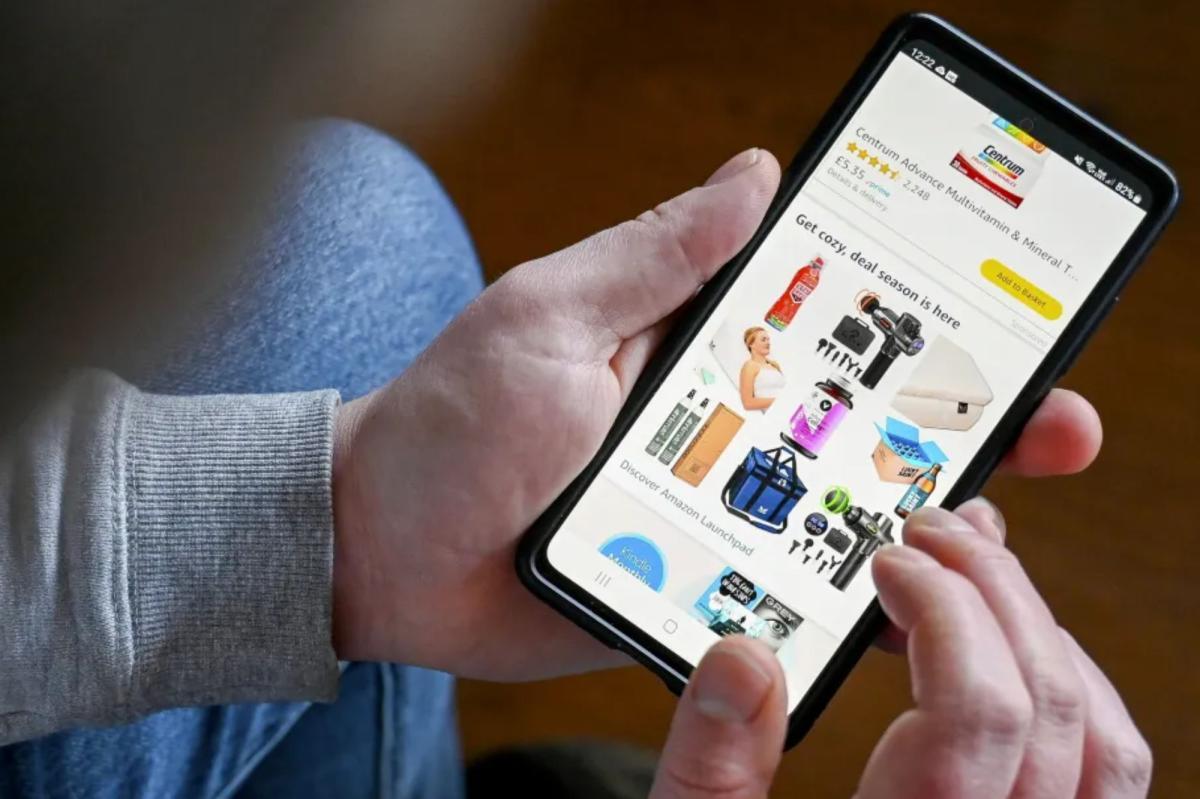
Source: New York Post
Salesforce estimated that AI influenced $73 billion, representing 22% of all global sales during the Thanksgiving through Cyber Monday period, a significant increase from $60 billion the previous year
1
. This surge coincided with record-breaking Black Friday online sales of $11.8 billion, up 9.1% from 2024, while traffic to retail websites from AI rose 805% compared to the previous year4
.Major Retailers Deploy Advanced AI Assistants
The retail landscape has witnessed an unprecedented coordinated rollout of AI shopping tools across major platforms. OpenAI upgraded ChatGPT with a shopping research feature that provides personalized buyers' guides using product pages, reviews, prices, and user interaction history
1
. The company also introduced an instant checkout feature allowing users to purchase items from stores like Etsy without leaving the chat interface3
.
Source: Seeking Alpha
Amazon enhanced its Rufus shopping assistant to remember customer information and preferences, while launching a 90-day pricing history tracker and automated price alerts
1
. The company also introduced "Help Me Decide," an AI feature that analyzes browsing and purchase history to recommend products with explanations5
.Target rolled out an upgraded AI gift finder that responds to conversational prompts about recipient age, interests, and budget, along with new features like List-to-Cart Scanning and enhanced Store Mode navigation
5
. Walmart introduced Sparky, an AI shopping assistant offering occasion-based recommendations and review synthesis1
.Google upgraded its AI Mode search tool to handle detailed natural language queries and introduced an AI agent capable of calling local stores to check product availability
1
. Meta embedded its AI assistant into Instagram and Facebook ads to match users with products in real-time5
.Consumer Adoption and Behavioral Shifts
Consumer acceptance of AI shopping tools has grown significantly, with roughly 42% of shoppers using AI tools for holiday shopping according to a Harris Poll survey conducted for Mastercard
3
. More than half of Generation Z and millennial respondents expressed trust in AI for recommending unique gifts, indicating strong adoption among younger demographics.However, the technology still faces limitations. Some consumers report frustration with AI chatbots providing limited brand variety or failing to meet expectations. Olivia Meyer, a 24-year-old fashion industry worker, found ChatGPT's winter boot recommendations repetitive, leading her to return to traditional search methods
3
.Related Stories

Security Challenges and Fraud Risks
The rapid adoption of AI shopping has introduced new security challenges. Michael Reitblat, CEO of fraud prevention provider Forter, reported a 200% increase in agentic shopping by consumers over six months, accompanied by a nearly tenfold increase in fraudsters using AI
2
. This phenomenon involves sending "thousands of robots into different stores to masquerade as good consumers," creating significant challenges for retailers.
Source: Fortune
While some retailers initially considered banning AI purchases entirely, experts warn this approach could alienate legitimate customers as AI-driven shopping becomes more prevalent
2
.References
Summarized by

Navi
Related Stories
AI Transforms Black Friday Shopping: Boosting Online Sales and Enhancing Customer Experience
28 Nov 2024•Technology

AI-Powered Chatbots Drive Record-Breaking $10.8 Billion in Black Friday Online Sales
01 Dec 2024•Business and Economy

Cyber Monday Breaks Records as AI Boosts Online Shopping Experience
03 Dec 2024•Business and Economy

Recent Highlights
1
AI chatbots validate you too much, making you less kind to others, Stanford study reveals
Science and Research

2
Anthropic's Claude Code Source Leak Reveals Hidden AI Agent Plans and Extensive System Access
Technology

3
Judge blocks Pentagon from branding Anthropic a security risk over AI safety guardrails dispute
Policy and Regulation

Recent Highlights
Today's Top Stories











Your Daily Dose of Curated AI News
Don’t drown in AI news. We cut through the noise - filtering, ranking and summarizing the most important AI news, breakthroughs and research daily. Spend less time searching for the latest in AI and get straight to action.

