Alibaba unveils Qwen3.5 AI model with visual agentic capabilities, claims edge over GPT-5.2


9 Sources
9 Sources
[1]
Alibaba Group unveils Qwen3.5 as China's chatbot race shifts to AI agents
Qwen3 is Alibaba's latest large language model, which it says combines traditional LLM capabilities with "advanced, dynamic reasoning." Alibaba Group has released its newest AI model series, featuring enhanced capabilities, as it faces intensifying competition in China's AI space with several models launched in the past week. The Qwen3.5 AI model comes in an open-weight version, which allows users to download, run, fine-tune, and deploy it on their own infrastructure. Alibaba also released a "hosted version," meaning the model can run on Alibaba's own servers. Both models were made available on Monday, the Eve of the Chinese Lunar New Year, and come just a week after Alibaba also released a new AI model designed for robots. The company highlighted that Qwen3.5 offers improvements in performance and cost and was built with "native multimodal capabilities," enabling the models to understand text, images and video simultaneously within one system. Leaning into a major AI trend this year, the model also supports new coding and agentic capabilities and is compatible with open-source AI agents like those from OpenClaw, which recently surged in popularity. AI agents are systems that can independently take actions and complete multi-step tasks on a user's behalf with minimal supervision. These agents and their abilities have garnered a lot of attention in recent weeks, after American AI company Anthropic released new agent tools. The potential for these agents to replace the work of software as a service companies, amongst others, has rocked markets. Alibaba's local competitors such as ByteDance and Zhipu AI also released upgraded models in the past week aimed at supporting more agent capabilities. The company said that its new Qwen3.5 open-weight model comes with 397 billion parameters -- variables that shape how an AI system learns and reasons. While less than its previous flagship model, the company said the latest model showed significant improvement based on self-reported benchmark evaluations. Alibaba provided benchmark tests showing that Qwen-3.5's performance was on par with leading models from OpenAI, Anthropic and Google DeepMind, though the comparisons were self-reported. Meanwhile, it also released a "hosted model" called the Qwen-3.5-Plus through its cloud platform Model Studio. Alibaba said this version also demonstrated performance on par with leading competitors. CNBC could not independently verify those claims. The new Qwen3.5 models also support 201 languages and dialects, up from the previous generation's 82. Alibaba is expected to release more open-weight models during this Chinese New Year, Lin Junyang, technical lead of Alibaba Cloud's Qwen team said in a social media post. Following the release of Anthropic's latest Claude AI agent tools, other American AI giants have been accelerating the development of agentic capabilities. OpenAI CEO Sam Altman said Sunday that the creator of the OpenClaw would be joining the company. Last month, Google DeepMind head Demis Hassabis told CNBC that Chinese AI models were just "months" behind Western rivals.
[2]
Alibaba's new Qwen 3.5 beats its larger trillion-parameter model -- at a fraction of the cost
Alibaba dropped Qwen3.5 earlier this week, timed to coincide with the Lunar New Year, and the headline numbers alone are enough to make enterprise AI buyers stop and pay attention. The new flagship open-weight model -- Qwen3.5-397B-A17B -- packs 397 billion total parameters but activates only 17 billion per token. It is claiming benchmark wins against Alibaba's own previous flagship, Qwen3-Max, a model the company itself has acknowledged exceeded one trillion parameters. The release marks a meaningful moment in enterprise AI procurement. For IT leaders evaluating AI infrastructure for 2026, Qwen 3.5 presents a different kind of argument: that the model you can actually run, own, and control can now trade blows with the models you have to rent. A New Architecture Built for Speed at Scale The engineering story underneath Qwen3.5 starts with its ancestry. The model is a direct successor to last September's experimental Qwen3-Next, an ultra-sparse MoE model that was previewed but widely regarded as half-trained. Qwen3.5 takes that architectural direction and scales it aggressively, jumping from 128 experts in the previous Qwen3 MoE models to 512 experts in the new release. The practical implication of this and a better attention mechanism is dramatically lower inference latency. Because only 17 billion of those 397 billion parameters are active for any given forward pass, the compute footprint is far closer to a 17B dense model than a 400B one -- while the model can draw on the full depth of its expert pool for specialized reasoning. These speed gains are substantial. At 256K context lengths, Qwen 3.5 decodes 19 times faster than Qwen3-Max and 7.2 times faster than Qwen 3's 235B-A22B model. Alibaba is also claiming the model is 60% cheaper to run than its predecessor and eight times more capable of handling large concurrent workloads, figures that matter enormously to any team paying attention to inference bills. It's also about 1/18th the cost of Google's Gemini 3 Pro. Two other architectural decisions compound these gains: The result is a model that can comfortably operate within a 256K context window in the open-weight version, and up to 1 million tokens in the hosted Qwen3.5-Plus variant on Alibaba Cloud Model Studio. Native Multimodal, Not Bolted On For years, Alibaba took the standard industry approach: build a language model, then attach a vision encoder to create a separate VL variant. Qwen3.5 abandons that pattern entirely. The model is trained from scratch on text, images, and video simultaneously, meaning visual reasoning is woven into the model's core representations rather than grafted on. This matters in practice. Natively multimodal models tend to outperform their adapter-based counterparts on tasks that require tight text-image reasoning -- think analyzing a technical diagram alongside its documentation, processing UI screenshots for agentic tasks, or extracting structured data from complex visual layouts. On MathVista, the model scores 90.3; on MMMU, 85.0. It trails Gemini 3 on several vision-specific benchmarks but surpasses Claude Opus 4.5 on multimodal tasks and posts competitive numbers against GPT-5.2, all while carrying a fraction of the parameter count. Qwen3.5's benchmark performance against larger proprietary models is the number that will drive enterprise conversations. On the evaluations Alibaba has published, the 397B-A17B model outperforms Qwen3-Max -- a model with over a trillion parameters -- across multiple reasoning and coding tasks. It also claims competitive results against GPT-5.2, Claude Opus 4.5, and Gemini 3 Pro on general reasoning and coding benchmarks. Language Coverage and Tokenizer Efficiency One underappreciated detail in the Qwen3.5 release is its expanded multilingual reach. The model's vocabulary has grown to 250k tokens, up from 150k in prior Qwen generations and now comparable to Google's ~256K tokenizer. Language support expands from 119 languages in Qwen 3 to 201 languages and dialects. The tokenizer upgrade has direct cost implications for global deployments. Larger vocabularies encode non-Latin scripts -- Arabic, Thai, Korean, Japanese, Hindi, and others -- more efficiently, reducing token counts by 15-40% depending on the language. For IT organizations running AI at scale across multilingual user bases, this is not an academic detail. It translates directly to lower inference costs and faster response times. Agentic Capabilities and the OpenClaw Integration Alibaba is positioning Qwen3.5 explicitly as an agentic model -- one designed not just to respond to queries but to take multi-step autonomous action on behalf of users and systems. The company has open-sourced Qwen Code, a command-line interface that lets developers delegate complex coding tasks to the model in natural language, roughly analogous to Anthropic's Claude Code. The release also highlights compatibility with OpenClaw, the open-source agentic framework that has surged in developer adoption this year. With 15,000 distinct reinforcement learning training environments used to sharpen the model's reasoning and task execution, the Qwen team has made a deliberate bet on RL-based training to improve practical agentic performance -- a trend consistent with what MiniMax demonstrated with M2.5. The Qwen3.5-Plus hosted variant also enables adaptive inference modes: a fast mode for latency-sensitive applications, a thinking mode that enables extended chain-of-thought reasoning for complex tasks, and an auto (adaptive) mode that selects dynamically. That flexibility matters for enterprise deployments where the same model may need to serve both real-time customer interactions and deep analytical workflows. Deployment Realities: What IT Teams Actually Need to Know Running Qwen3.5's open-weights in-house requires serious hardware. While a quantized version demands approximately 256GB of RAM, and realistically 512GB for comfortable headroom. This is not a model for a workstation or a modest on-prem server. What it is suitable for is a GPU node -- a configuration that many enterprises already operate for inference workloads, and one that now offers a compelling alternative to API-dependent deployments. All open-weight Qwen 3.5 models are released under the Apache 2.0 license. This is a meaningful distinction from models with custom or restricted licenses: Apache 2.0 allows commercial use, modification, and redistribution without royalties, with no meaningful strings attached. For legal and procurement teams evaluating open models, that clean licensing posture simplifies the conversation considerably. What Comes Next Alibaba has confirmed this is the first release in the Qwen3.5 family, not the complete rollout. Based on the pattern from Qwen3 -- which featured models down to 600 million parameters -- the industry expects smaller dense distilled models and additional MoE configurations to follow over the next several weeks and months. The Qwen3-Next 80B model from last September was widely considered undertrained, suggesting a 3.5 variant at that scale is a likely near-term release. For IT decision-makers, the trajectory is clear. Alibaba has demonstrated that open-weight models at the frontier are no longer a compromise. Qwen3.5 is a genuine procurement option for teams that want frontier-class reasoning, native multimodal capabilities, and a 1M token context window -- without locking into a proprietary API. The next question is not whether this family of models is capable enough. It is whether your infrastructure and team are ready to take advantage of it. Qwen 3.5 is available now on Hugging Face under the model ID Qwen/Qwen3.5-397B-A17B. The hosted Qwen3.5-Plus variant is available via Alibaba Cloud Model Studio. Qwen Chat at chat.qwen.ai offers free public access for evaluation.
[3]
Alibaba releases multimodal Qwen3.5 mixture of experts model - SiliconANGLE
Alibaba Group Holding Ltd. today released an artificial intelligence model that it says can outperform GPT-5.2 and Claude 4.5 Opus at some tasks. The new algorithm, Qwen3.5, is available on Hugging Face under an open-source license. By default, Qwen3.5 is capable of processing prompts with up to 262,144 tokens. Developers can nearly quadruple that number by applying customizations. Prompts may include text in more than 210 languages and dialects along with images such as data visualizations. Qwen3.5 is a mixture of experts model, which means that comprises multiple neural networks that are optimized for different tasks. When the LLM receives a prompt, it uses 10 of its neural networks to generate an answer. Activating only some components of a model to process prompts is more hardware-efficient than running input through all its artifial neurons. Qwen3.5 has a total of 397 billion parameters, 17 billion of which are used per prompt. Alibaba has also equipped the model with several other optimizations designed to boost its efficiency. An LLM's attention heads, the mechanisms that it uses to determine which data points to take into account when making a decision, usually scale quadratically. That means doubling the amount of data in a prompt quadruples the amount of RAM needed to produce a response. Qwen3.5 combines standard quadratic attention heads with so-called linear attention heads, which require considerably less memory. The model also uses another efficiency-boosting technology called a gated delta network. The technology combines two deep learning techniques known as gating and the delta rule. Gating enables an LLM to remove data that it doesn't need for a task from its memory, which lowers hardware usage. The delta rule, in turn, is a version of the backpropagation algorithm that LLMs use to learn new tasks during training. It streamlines how the model updates its parameters during the learning process. Last year, Nvidia Corp. researchers determined that combining the two methods reduces the amount of hardware needed to train LLMs. Alibaba compared Qwen3.5 to GPT-5.2 and Claude 4.5 Opus across more than 30 benchmarks. The model outperformed both on IFBench, a test that measures how well LLMs follow user instructions. In other cases, Qwen3.5 bested one of the LLMs but not the other. For example, it topped the score that Claude 4.5 Opus set on the HMMT reasoning benchmark but fell behind GPT-5.2. Alibaba says that Qwen3.5 is also adept at processing multimodal data. It outperformed Qwen3-VL, a model built specifically for image analysis tasks, across several visual reasoning and coding benchmarks.
[4]
Alibaba unveils Qwen3.5 with visual agentic abilities
Qwen3.5 is 60pc cheaper to use and eight times better at processing large workloads, the company said. Alibaba has unveiled its latest AI model called Qwen3.5, as newer launches from Chinese companies catch up to their US counterparts in the race for AI dominance. The first model in the open-weight Qwen3.5 series demonstrates "outstanding results across a range of benchmarks", the company said. It ranks higher than OpenAI's GPT-5.2, Anthropic's Claude Opus 4.5 and Google's Gemini 3 Pro in several of the tests. The model is built on a hybrid architecture that allows only 17bn parameters to activate per forward pass, while comprising of a total of 397bn parameters. This, Alibaba said, optimises speed without sacrificing its capability. According to the company, Qwen3.5 is 60pc cheaper to use and eight times better at processing large workloads than its immediate predecessor. The new model comes with "visual agentic capabilities", Alibaba said - the ability to take actions across phone and computer apps. "Built for the agentic AI era, Qwen3.5 is designed to help developers and enterprises move faster and do more with the same compute, setting a new benchmark for capability per unit of inference cost," the company said in a statement as reported by Reuters. Alibaba's latest launch follows ByteDance, which released an upgraded version of its Doubao chatbot app over the weekend. The agentic chatbot service has close to 200m users. The TikTok-parent also launched the latest version of its AI video generator called Seedance 2.0, which garnered praise for its ability while also receiving criticism for potential copyright theft. Other Chinese AI leaders launched their own new models recently, including Zhipu, which unveiled GLM-5, trained entirely using Chinese chips, MiniMax, which released M2.5, and the Alibaba-backed Moonshot AI, which came out with Kimi K2.5. These new launches come ahead of DeepSeek's new V4 model, expected to come out later this month. According to reports, the new DeepSeek model could outperform rivals ChatGPT and Claude, particularly on tasks that involve long coding prompts. Don't miss out on the knowledge you need to succeed. Sign up for the Daily Brief, Silicon Republic's digest of need-to-know sci-tech news.
[5]

Alibaba launches Qwen 3.5 AI model, claims outperformance of US rivals
Alibaba introduced its Qwen 3.5 artificial intelligence model. The new model is designed specifically for autonomous AI agents capable of executing complex tasks independently. This release aligns with a competitive period among Chinese technology firms during the Lunar New Year holiday. The launch follows a disruptive year initiated by the startup DeepSeek, which altered global AI dynamics with cost-efficient models. Alibaba positions Qwen 3.5 as a significant upgrade in capability and operational efficiency for enterprise developers. According to Alibaba, Qwen 3.5 offers substantial improvements over its predecessors regarding cost and performance. The model is 60 percent cheaper to operate and processes large workloads eight times more effectively than the previous iteration. It features "visual agentic capabilities," which allow the AI to perform autonomous actions across mobile and desktop applications without requiring user intervention. The company stated that the model supports over 200 languages, expanding its reach to include dialects used in South Asia, Oceania, and Africa, alongside enhanced reasoning and image processing functions. Alibaba claims that Qwen 3.5 achieves superior results compared to leading U.S. models on several performance benchmarks. The company asserts that the model outperforms OpenAI's GPT-5.2, Anthropic's Claude Opus 4.5, and Google's Gemini 3. In a formal statement, Alibaba described the model as "built for the Agentic AI Era," noting it helps developers "move faster and do more with the same compute." The firm emphasized setting a new benchmark for capability per unit of inference cost, highlighting the model's efficiency in resource utilization. The introduction of Qwen 3.5 escalates the rivalry within China's domestic AI market, where Alibaba currently trails ByteDance's Doubao chatbot. QuestMobile data published in late December indicates Doubao leads the market with 155 million weekly active users, while DeepSeek holds 81.6 million. ByteDance launched Doubao 2.0 on Saturday, also positioning it for the "agent era." Despite trailing in user base, Alibaba has utilized aggressive marketing to gain traction. A recent 3-billion-yuan ($433 million) campaign allowed users to buy food and beverages via the Qwen chatbot, resulting in a seven-fold increase in active users despite temporary technical glitches.
[6]

Alibaba Unveils a Faster, Cheaper Qwen‑3.5 AI -- But How Does It Stack Up Against ChatGPT?
The Chinese tech giant released its Qwen-3.5 model yesterday, only days after rivals -- including ByteDance and Zhipu AI -- launched upgraded systems that also focus on agent-style capabilities. Chinese companies are quickly iterating and responding to one another, signaling escalation within the AI race. Alibaba introduced two versions of the model An open-weight model, Qwen-3.5, can be downloaded and run on a user's own computer or corporate servers, allowing organizations to customize and train the system while keeping data private, according to CNBC. A separate hosted model, Qwen-3.5-Plus, runs on Alibaba's cloud platform Model Studio, letting users access the technology without managing infrastructure themselves.
[7]

New Qwen 3.5 AI Model Beats Opus 4.5 & Gemini 3 : Fully Tested
Qwen 3.5, developed by Alibaba, is an open source AI model designed to compete with leading proprietary systems like Claude Opus 4.5 and Gemini 3 Pro. As highlighted by World of AI, its architecture features 397 billion parameters, with 17 billion active ones, allowing it to tackle tasks ranging from multimodal reasoning to coding and vision analysis. Despite its strengths, such as hybrid linear attention for faster processing and sparse mixture of experts for efficiency, the model faces challenges in highly complex scenarios, particularly in spatial reasoning and intricate coding tasks. In this feature, you'll explore how Qwen 3.5's multimodal integration allows it to process text, vision, and reasoning inputs seamlessly, and how its reinforcement learning capabilities refine decision-making over time. Additionally, you'll learn about its real-world applications, such as multilingual language processing and object recognition, as well as its open source accessibility under the Apache 2.0 license. By understanding these aspects, you can evaluate whether Qwen 3.5 aligns with your needs for AI-driven development or research. Key Features That Define Qwen 3.5 Qwen 3.5's architecture is purpose-built to deliver precision and efficiency across a diverse array of tasks. Its standout features include: * Multimodal Integration: The model seamlessly processes inputs from text, vision, and reasoning tasks, making it highly adaptable for diverse applications, from robotics to content generation. * Hybrid Linear Attention: This innovative mechanism optimizes memory usage and accelerates processing speeds, allowing the model to handle large datasets with remarkable efficiency. * Sparse Mixture of Experts: By activating only the parameters relevant to a specific task, Qwen 3.5 achieves computational efficiency without compromising on performance. * Reinforcement Learning: The model refines its decision-making capabilities through iterative learning, enhancing its ability to adapt to complex tasks over time. These features collectively position Qwen 3.5 as a versatile and efficient tool, capable of addressing challenges across industries while maintaining a balance between performance and resource optimization. Performance Benchmarks and Achievements Qwen 3.5 has demonstrated exceptional performance across a variety of industry-standard benchmarks, solidifying its reputation as a leading open source AI model. Key highlights include: * MMLU Pro: Achieving a score of 87.8, the model outperforms competitors in tasks requiring advanced language understanding and reasoning. * MME: With a score of 87.5, Qwen 3.5 excels in multimodal evaluations, effectively integrating vision and text inputs for tasks like object recognition and contextual analysis. * Coding Tasks: On the Sway Bench, it surpasses Gemini 3 Pro in generating functional code, although it faces challenges in more intricate coding scenarios, such as those evaluated on the Terminal Bench. These results highlight the model's ability to deliver high-quality outputs across a range of applications, from natural language processing to software development. Qwen 3.5 vs Opus 4.5 vs Gemini 3 Take a look at other insightful guides from our broad collection that might capture your interest in Qwen 3.5. Applications and Real-World Utility Qwen 3.5's versatility makes it a valuable resource for developers, researchers, and businesses. Its capabilities span multiple domains, offering practical solutions for modern AI challenges: * Language Processing: Supporting 201 languages and dialects, Qwen 3.5 ensures accessibility for a global audience, making it ideal for multilingual applications. * Vision Reasoning: The model excels in tasks such as object counting, spatial recognition, and multimodal reasoning, making it a powerful tool for robotics, autonomous systems, and visual analytics. * Code Generation: Qwen 3.5 can generate functional code for diverse applications, including 3D mapping tools, game development, and front-end design, streamlining workflows for developers. * Tool Integration: Seamless compatibility with external tools enhances its utility in complex workflows, allowing integration into existing systems with minimal friction. These capabilities make Qwen 3.5 a versatile and adaptable solution for a wide range of industries, from technology and research to manufacturing and automation. Challenges and Limitations Despite its impressive capabilities, Qwen 3.5 is not without its limitations. Users should be aware of the following challenges: * Complex Spatial Tasks: The model struggles with highly intricate spatial reasoning scenarios, where some closed-source competitors demonstrate superior performance. * Stability Issues: Its performance can vary depending on the complexity and context of the task, particularly in code generation, where consistency remains a challenge. * Reliability in High-Stakes Applications: While effective in many areas, Qwen 3.5 occasionally falls short of the reliability offered by proprietary models in critical, high-stakes environments. These limitations highlight areas where further refinement and development could enhance the model's overall performance and reliability. Deployment and Accessibility Qwen 3.5 is open source and available under the Apache 2.0 license, making it an attractive option for developers and researchers seeking a cost-effective and customizable AI solution. Deployment options include: * Free Weights: Download the model's weights to customize and integrate it into local projects, offering flexibility for tailored applications. * API Access: Use APIs for seamless integration with existing systems, allowing rapid deployment without extensive setup. * Platform Compatibility: The model is compatible with tools like Kilo Code and Open Router, making sure broad usability across various environments and workflows. These deployment options make Qwen 3.5 accessible to a wide audience, from individual developers to large organizations, fostering innovation and collaboration in AI development. Efficiency and Competitive Positioning Qwen 3.5 is engineered for speed and efficiency, delivering 19 times faster performance compared to its predecessor, Qwen 3 Max. For developers focused on coding, the leaner variant, Qwen 3 Next Coder Q8, offers a specialized solution tailored to programming tasks. With its competitive pricing, open source accessibility, and robust feature set, Qwen 3.5 provides a compelling alternative to proprietary models like Claude Opus 4.5 and Gemini 3 Pro. By balancing performance, efficiency, and accessibility, Qwen 3.5 positions itself as a leading choice for those seeking a powerful and versatile AI model. Whether you're developing innovative applications or conducting advanced research, Qwen 3.5 offers a reliable and adaptable platform to meet your needs. Media Credit: WorldofAI Disclosure: Some of our articles include affiliate links. If you buy something through one of these links, Geeky Gadgets may earn an affiliate commission. Learn about our Disclosure Policy.
[8]

Alibaba introduces new AI model Qwen3.5 for agentic era
On Monday, Alibaba (BABA) unveiled a new AI model called Qwen3.5, aimed at executing complex tasks independently, with improvements in performance and cost. The Chinese ecommerce giant said that in various task evaluations, the 3.5 series consistently demonstrates performance on par Alibaba claims Qwen3.5 matches or exceeds leading models in versatility and performance according to published benchmarks. Qwen3.5 enables up to 60% reduction in deployment costs while maintaining high performance, making it more cost-efficient for developers and enterprises. Qwen3.5 is introduced amid fierce competition in China, positioning Alibaba as a top AI innovator though competitors like ByteDance and DeepSeek are rapidly advancing as well.
[9]

Alibaba Unveils Qwen3.5, Aligning with the New Generation of AI Agents
Equipped with native multimodal capabilities, the model can process text, images and video at the same time. It also supports new standards for coding and agentic systems, compatible with popular open-source tools such as OpenClaw. The open-weight version of Qwen3.5 is based on 397 billion parameters, a figure lower than some previous models, but Alibaba says performance has been significantly optimized, including in terms of cost and speed. The announcement comes amid intense competition in China, where other players such as ByteDance and Zhipu AI have recently unveiled their own upgraded models. The AI-agent segment is drawing growing attention worldwide, as it could reshape entire parts of existing business models, particularly in digital services. In response, Alibaba says Qwen3.5 can now operate in 201 languages and dialects, up from 82 in the previous version, signaling its international ambitions. The Qwen-3.5-Plus version, available via cloud hosting, is positioned as a direct competitor to flagship models from OpenAI, Anthropic or Google DeepMind. While the comparisons published by Alibaba have not yet been independently verified, they suggest a rapid narrowing of the gap between Chinese and Western model performance. Qwen3.5's rise also coincides with intensifying global competition, as OpenAI and Google accelerate work on autonomous agents, anticipating major upheavals in the architecture of the internet.
Share
Share
Copy Link
Alibaba released Qwen3.5, its latest AI model featuring visual agentic capabilities that enable autonomous task execution across applications. The company claims the model outperforms leading models from OpenAI, Anthropic, and Google DeepMind on multiple benchmarks while operating 60% cheaper than its predecessor. The launch intensifies competition in China's AI market as companies race to develop advanced AI agents.
Alibaba Releases Qwen3.5 with Advanced AI Agent Features
Alibaba unveiled its Qwen3.5 AI model series on Monday, timing the release to coincide with the eve of the Chinese Lunar New Year
1
. The launch represents a significant push into the emerging AI agents market, with the company positioning the model as purpose-built for autonomous task execution. Qwen3.5 arrives as an open-weight AI model, allowing developers to download, run, fine-tune, and deploy it on their own infrastructure, alongside a hosted version running on Alibaba Cloud's Model Studio platform1
.
Source: Market Screener
The flagship model features visual agentic capabilities that enable it to take actions across phone and computer applications without requiring constant user supervision
4
. These AI agents can independently complete multi-step tasks on behalf of users, a capability that has garnered intense attention following Anthropic's recent release of new agent tools1
. The potential for these systems to replace traditional software as a service companies has already begun impacting markets.Mixture of Experts Architecture Delivers Cost-Effective Development
The Qwen3.5-397B-A17B model employs a mixture of experts architecture with 397 billion total parameters but activates only 17 billion per token
2
. This architectural approach marks a direct evolution from last September's experimental Qwen3-Next, scaling aggressively from 128 experts in previous models to 512 experts in the new release2
.The engineering decisions translate into substantial operational advantages. Alibaba claims the model is 60% cheaper to operate than its predecessor and eight times more capable of handling large concurrent workloads
2
4
. The model also runs at approximately 1/18th the inference cost of Google's Gemini 3 Pro2
. At 256K context lengths, Qwen3.5 decodes 19 times faster than Qwen3-Max and 7.2 times faster than Qwen3's 235B-A22B model2
.The model operates within a 256K context window in the open-weight version, expandable to 1 million tokens in the hosted Qwen3.5-Plus variant
2
3
. Alibaba equipped the model with hybrid attention mechanisms combining standard quadratic attention heads with linear attention heads, which require considerably less memory3
.Native Multimodal Understanding Sets New Standard
Unlike previous iterations that attached vision encoders to language models, Qwen3.5 features native multimodal understanding trained from scratch on text, images, and video simultaneously
2
. This approach weaves visual reasoning into the model's core representations rather than grafting it on afterward. The model can process prompts with up to 262,144 tokens by default, including text in more than 201 languages and dialects along with images such as data visualizations3
5
.
Source: Inc.
The expanded language support represents a significant jump from Qwen3's 119 languages
2
, now covering dialects used in South Asia, Oceania, and Africa5
. The model's vocabulary grew to 250k tokens from 150k in prior generations, now comparable to Google's ~256K tokenizer2
. This tokenizer upgrade reduces token counts by 15-40% for non-Latin scripts, translating directly to lower costs and faster response times for global deployments.Related Stories
Qwen3.5 Outperforms Leading Models on Multiple Benchmarks
Alibaba claims Qwen3.5 delivers competitive performance against GPT-5.2, Claude Opus 4.5, and Gemini 3 Pro across numerous benchmarks
1
5
. The model outperformed both OpenAI and Anthropic on IFBench, which measures how well models follow user instructions3
. On MathVista, it scored 90.3, and on MMMU, it achieved 85.02
.Notably, the 397B-A17B model claims benchmark wins against Alibaba's own previous flagship, Qwen3-Max, which exceeded one trillion parameters
2
. The model also outperformed Qwen3-VL, built specifically for image analysis tasks, across several visual reasoning and coding benchmarks3
. While CNBC could not independently verify these claims1
, the self-reported results suggest enterprise AI solutions that balance performance with operational efficiency.Intensifying Competition in China's AI Market
The Qwen3.5 release escalates rivalry within China's AI market, where Alibaba currently trails ByteDance's Doubao chatbot
5
. QuestMobile data from late December shows Doubao leads with 155 million weekly active users, while DeepSeek holds 81.6 million5
. ByteDance launched Doubao 2.0 over the weekend, also targeting the agent era, while Zhipu AI released upgraded models aimed at supporting more agent capabilities1
4
.Alibaba has deployed aggressive marketing to gain traction, including a 3-billion-yuan ($433 million) campaign allowing users to buy food and beverages via the Qwen chatbot, resulting in a seven-fold increase in active users
5
. Lin Junyang, technical lead of Alibaba Cloud's Qwen team, indicated the company expects to release more open-weight models during the Chinese New Year period1
. Google DeepMind head Demis Hassabis told CNBC last month that Chinese AI models were just "months" behind Western rivals1
, suggesting the competitive gap continues narrowing as Chinese firms accelerate development cycles.
Source: Seeking Alpha
References
Summarized by

Navi
[2]
[4]
Related Stories
Alibaba Unveils Qwen 3: A New Family of Hybrid AI Reasoning Models Challenging Global Leaders
29 Apr 2025•Technology

Alibaba's Qwen3 Models Set New Benchmarks in Open-Source AI
23 Jul 2025•Technology

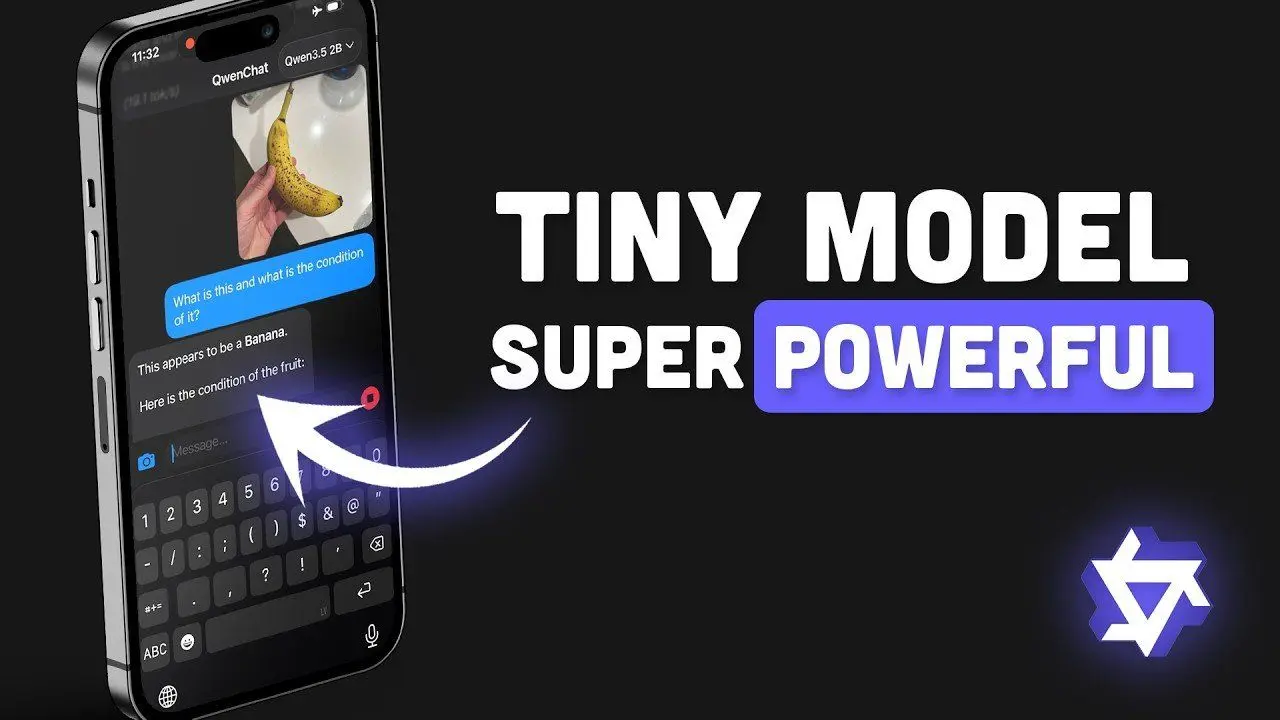
Alibaba launches Qwen 3.5 small AI models for edge devices with offline capabilities
09 Mar 2026•Technology
Recent Highlights


Recent Highlights
Today's Top Stories






Your Daily Dose of Curated AI News
Don’t drown in AI news. We cut through the noise - filtering, ranking and summarizing the most important AI news, breakthroughs and research daily. Spend less time searching for the latest in AI and get straight to action.

