13 Sources
13 Sources
[1]
Salesforce announces an AI-heavy makeover for Slack, with 30 new features | TechCrunch
Salesforce, the cloud software giant, has been remaking its business around AI, and at a small gathering in San Francisco on Tuesday, CEO Marc Benioff and his team unveiled the latest results of those efforts: an updated version of Slack, with a plethora of new AI features. The most significant of these is a serious glow-up for its AI agent, Slackbot. The 30 new features, which will be available in the coming months, follow a January update that gave Slackbot agentic capabilities -- including the ability to draft emails, schedule meetings, and sift through your inbox for specific information. Perhaps the most notable feature announced Tuesday is what the company calls reusable AI-skills -- which allow users to define specific tasks for Slackbot that, once created, can be applied in a variety of different scenarios and contexts. Slackbot comes with a built-in library of AI-skills, Salesforce says, but users can also create their own custom versions. Once these skills are set up, they significantly reduce the work an employee might need to do. For example, a user can trigger a skill using a simple command in Slack -- say, "create a budget" for an upcoming event -- prompting Slackbot to pull together all relevant information from a company's Slack channels, as well as any connected apps or data sources, to create an actionable plan. The bot will then automatically set up a meeting to discuss the plan, inviting relevant employees based on their titles. Slackbot now also functions as an MCP (Model Context Protocol) client -- meaning it can connect to and coordinate with outside services and tools. Among those is Agentforce, Salesforce's AI agent development platform launched in 2024. Through that connection, it can "route work or prompt questions to Agentforce or any agent or app in your enterprise" the company says, with the agent finding the most relevant and efficient path for the information, without human intervention. According to Rob Seaman, Slack's interim CEO and former chief product officer, Slackbot can also now transcribe meetings and summarize them. If a meeting participant happens to zone out, thus missing critical details, they can just ask Slackbot to produce a recap of the meeting, including any action items assigned to them. The agent can also now operate outside of Slack and monitor your desktop activities -- Salesforce lists "your deals, your conversations, your calendar, and your habits" as the kinds of data it draws on. Based on that context, the bot will make actionable suggestions or drafts follow-ups for critical tasks. Seaman has said that privacy protections are built into this design and that users have the ability to adjust permissions as needed. In short: Salesforce is clearly trying to take Slack beyond its roots as an enterprise communication tool and position it as a more versatile platform that can handle a wider variety of business tasks. The hope seems to be that, by flooding it with AI, Slack can become an indispensable part of enterprise users' core business processes. Benioff let his team walk through the major features on Tuesday but remarked, during his keynote, that the five years since Salesforce acquired Slack had been an "incredible journey," one that had delivered "two and a half times revenue growth." He added: "We have about a million businesses running on Slack. It's been a huge growth story."
[2]
Salesforce looks to Slackbot to help solve SaaSpocalypse
Opinion Salesforce has begun to position Slack, its business collaboration platform, as the interface through which users can access and act on data in enterprise applications from rival vendors. In 2020, the CRM giant bought Slack for $28 billion, saying at the time that it would be "deeply integrated into Salesforce Cloud." The new approach touted this week is as the host for an AI agent - or Slackbot - which can talk to agents in other applications and get information from rival vendors' enterprise software. It might work as a defensive move for Salesforce, which has been under pressure from the so-called SaaSpocalypse, an investor-led notion that AI will allow companies to create their own business applications in an afternoon, slashing the value of the SaaS companies in question. Salesforce has liberally cast Slackbot throughout the collaboration platform, offering automated note-taking of meetings and creating workflow for repeated tasks. Crucially, it will also act as a Model Context Protocol (MCP) client, an open standard built by Anthropic for connecting LLMs to external data sources, tools, and software systems. In this way, Slackbot can route work or prompt questions to other bits of Salesforce, including Agentforce, its AI agent platform. All this can be used to talk to agents from other software vendors and get information from "any app in your enterprise," the company claims. "Employees never need to know which system handles which task. Just ask, and Slackbot finds the right path and gets it done," it said. The claim understates the complexity of enterprise systems, and the challenge in ensuring the data held within them is up-to-date and well governed. But it deals with the choices in-house tech management will face as companies come under pressure to adopt AI agents. Offered the option of going with a cloud provider, a service layer like ServiceNow, or their main application vendor to build AI agent systems, users are likely to opt for the last one, as Gartner has pointed out. Salesforce is not the only company aware that AI agents will be an important battleground for securing customers' workloads. Most users rely on enterprise applications from a number of vendors. Last week, SAP acquired master data management and data integration specialist Reltio in a move aimed at making Business Data Cloud the data foundation for its agentic AI efforts, including its Joule agent platform. Salesforce will continue to try to convince users that it will be the center of their world as far as AI agents are concerned. But users have a lot to consider before they make up their own minds. ®
[3]
Slack's upgraded AI can analyze how you work
Salesforce has unveiled the newest version of Slack, which comes with a whole host of new AI features to add to its ever-growing catalog. Naturally, many of these tools are embedded into Slackbot, which the company had already pledged to turn into a "personalized AI companion." The new features include the stuff you'd expect, such as transcription, note taking and deep research, as well as integrations with the rest of the Salesforce family. But it'll also get "reusable skills," which sound a lot like automations, where a team can define a task from start to finish, and then the bot will run it whenever it's called for. In fact, there's a big focus on sharing and co-developing tools within organizations, so if you find a prompt that actually gets useful data out of Slackbot, you can share that with your team. And Slackbot will now analyze how you work as it attempts to discern your preferences, workflows and shortcuts. Which, if you read it in one way, sounds as if it's actively looking to work out how to do your job so it can just replace you. Of course, that probably won't happen, right? Right? Salesforce is also using these new Slack tools as a way to gently upsell small businesses toward its bigger products. New Slackbot is equipped with "native customer management," reading your channels, learning what goes on, and keeping your "deals, contacts and call notes up to date automatically." In its release, it even says that growing firms can "start simple inside Slack, scale up to Salesforce when ready." Similarly, every Salesforce customer will now be getting Slack bundled in, to help ensure all of your relationships and work remain in the same place under Slackbot's helpful eye.
[4]
Slack's biggest AI update turns Slackbot into a desktop agent | TNW
In short: Salesforce unveiled more than 30 new AI capabilities for Slackbot on 31 March 2026, the most sweeping overhaul of the platform since its $27.7 billion acquisition in 2021. The update transforms Slackbot from a conversational assistant into an agentic system that can transcribe meetings across any video platform, monitor users' desktop activity, execute tasks through third-party tools via the Model Context Protocol, and serve as a lightweight CRM. The new features run on Anthropic's Claude, are live now for Business+ and Enterprise+ subscribers, and will roll out in limited form to free and Pro users from April. From summer 2026, Slack will be automatically bundled with every new Salesforce customer account. Salesforce has given Slack its most ambitious overhaul since buying it for $27.7 billion four years ago. At an event in San Francisco on 31 March 2026, CEO Marc Benioff unveiled more than 30 new AI-powered capabilities for Slackbot, the platform's built-in assistant, in what the company described as a transformation from a messaging tool into what it calls an "agentic operating system" ,a single surface where workers interact with AI agents, enterprise applications, and one another. The announcement builds on a January 2026 update that first gave Slackbot the ability to draft emails, schedule meetings, and search inboxes; the March additions are considerably more expansive. The centrepiece of the update is reusable AI skills. Users can define a specific workflow once, "summarise this campaign brief", "generate a budget plan for this event", and save it as a named skill. Slackbot then learns to recognise when that task is being attempted and offers to run the skill automatically, pulling together relevant information from connected channels, applications, and data sources without the user needing to configure the process each time. The expectation that AI handles repetitive cognitive labour without requiring users to configure pipelines manually has become a baseline demand in enterprise software, and reusable skills is Slack's answer to it. Meeting intelligence lets Slackbot listen to calls on Zoom, Google Meet, or Slack Huddles by tapping into a user's desktop audio through the desktop application. It does not merely transcribe: it identifies decisions made, assigns action items to the relevant participants, and delivers a structured summary automatically when the call ends. The desktop agent extends Slackbot's reach beyond the Slack application itself, monitoring screen activity and drawing on a user's deals, conversations, calendar, and habits to surface suggestions and draft follow-ups proactively. This is the feature with the most significant privacy surface: Slack is, in effect, asking users to grant an AI agent persistent visibility into their computer. Slack is also launching a native CRM for small businesses, built directly into the chat interface. Slackbot reads channels, identifies when a deal is mentioned or a new contact introduced, and updates those records automatically. Salesforce says companies that outgrow the lightweight version can migrate to full Salesforce CRM without rebuilding their data. Finally, Slackbot now functions as an MCP client, a Model Context Protocol client, meaning it can connect to and coordinate with any external service that registers an MCP server through Slack's manifest. That list currently includes Agentforce (Salesforce's own AI agent platform launched in 2024), Google Workspace, Microsoft 365, Notion, Workday, ServiceNow, and more than 6,000 other applications in the Salesforce ecosystem. The shift toward agent orchestration, where a single interface coordinates multiple AI systems across different enterprise applications, is defining the competitive landscape for enterprise software in 2026 more than any other technical development. Under the hood, all of Slackbot's new capabilities run on Anthropic's Claude. Salesforce says it chose Claude partly because Anthropic was the only AI provider meeting FedRAMP Moderate certification requirements at the time Slack began designing the new system, a prerequisite for selling into regulated industries including government, healthcare, and financial services. Anthropic's trajectory as an enterprise AI provider has accelerated considerably since that decision was made, and the Slack partnership is one of the most visible deployments of Claude in a major productivity platform. Salesforce reports that Slackbot already has nearly one million weekly active users, a figure that is about to grow substantially given the pricing and bundling changes that accompany the announcement. The March 31 event was hosted by Marc Benioff directly, a signal of how central the Slack transformation is to Salesforce's current narrative. The more revealing context, however, is what happened three months earlier: in December 2025, Denise Dresser, Slack's CEO since 2023 and a Salesforce veteran of 14 years, left the company to become OpenAI's first chief revenue officer. Her successor as Slack CEO is Rob Seaman, the platform's former chief product officer, who holds the role on an interim basis. That the executive who built Slack's commercial strategy chose to leave for OpenAI, the company whose products represent perhaps the biggest threat to any single-platform AI assistant strategy, is a detail that Salesforce has had to absorb while executing its most ambitious product push in years. The 30-feature release is also, unmistakably, a competitive response. Microsoft has been building toward a deeply integrated AI layer across its 365 productivity stack, embedding Copilot into Teams, Word, Excel, Outlook, and PowerPoint, creating a coherent agent experience for organisations already inside the Microsoft ecosystem. Slack's counterargument, made explicit in the "agentic operating system" framing, is that a communication-first interface with broad enterprise integration is a better home for AI agents than a document-first one, and that MCP connectivity means Slackbot does not require an all-in bet on any single platform. The argument is more credible with 30 new capabilities than it was six months ago. Slackbot is already included in Business+ and Enterprise+ plans at no additional consumption cost. Starting in April 2026, a more limited version will become available to users on Slack's free and Pro plans. The more strategically significant change comes this summer: from that point, every new Salesforce customer will have Slack automatically provisioned and AI-enabled from day one. That bundling decision removes the question of whether enterprise buyers will pay for a separate AI layer, they will not need to, because it will arrive with the CRM they already purchased. The broader enterprise expectation in 2026 is that AI tools meet the same security and compliance standards as the infrastructure they sit alongside, and Slack's decision to anchor its new system on a FedRAMP-certified model addresses that expectation directly. Whether that is enough to shift purchasing decisions in accounts that have already standardised on Microsoft 365 is a different question, one that the next few quarters will begin to answer. What the March 31 event established is that Salesforce has decided Slackbot is the most important product it is building, and it is acting accordingly.
[5]
Salesforce reveals major AI overhaul for 'ultimate teammate' Slackbot, with over 30 new features
* Salesforce wants you to think of Slackbot as just another college that does your heavy lifting * It can listen in on meetings and proactively raise relevant recommendations for you * It gets its data from Slack, Salesforce tools and third-party integrations Salesforce has announced a 'new Slack' where its embedded Slackbot AI assistant can act even more like an autonomous colleague, with the introduction of more than 30 new capabilities. Rather than framing Slackbot as just another AI tool, Salesforce wants us to see it as a personal AI agent for work. Slackbot does all the things you'd expect of it - like drafting content, summarizing conversations and answering questions about company data - but it's designed to meet the worker where they are without forcing them into other apps and interfaces to share context. Salesforce wants Slackbot to be your personal AI assistant TextSlackbot has access to three primary sources of data and context: messages, channels and files within Slack itself; broader Salesforce systems like CRM; and third-party platforms via integrations. One of the tool's clearest benefits is when it comes to video calls - which have risen in frequency with the rise of hybrid working per new research. Rather than just transcribing calls and producing notes, Slackbot can proactively surface live recommendations "like pulling up a specific Salesforce record in the chat the moment a customer's name is mentioned." Essentially, Salesforce sees Slackbot as being "one interface for your entire AI fleet," marking the end of standalone AI tools and separate apps. "Slack is the operating system for work, bringing humans, agents, data, and apps together in one trusted conversational interface," CTO Parker Harris explained. "The bottleneck isn't intelligence," the company explained in another post. "It's shared intelligence." With that, it's bringing skills to users, described as a set of instructions that allow other workers to access similar capabilities without needing the expertise. Slackbot is currently available for Business+ and Enterprise+ users, but beginning this month, the company is also opening up limited access to Free and Pro plans. Follow TechRadar on Google News and add us as a preferred source to get our expert news, reviews, and opinion in your feeds. Make sure to click the Follow button! And of course you can also follow TechRadar on TikTok for news, reviews, unboxings in video form, and get regular updates from us on WhatsApp too.
[6]
Slack adds 30 AI features to Slackbot, its most ambitious update since the Salesforce acquisition
Slack today announced more than 30 new capabilities for Slackbot, its AI-powered personal agent, in what amounts to the most sweeping overhaul of the workplace messaging platform since Salesforce acquired it for $27.7 billion in 2021. The update transforms Slackbot from a simple conversational assistant into a full-spectrum enterprise agent that can take meeting notes across any video provider, operate outside the Slack application on users' desktops, execute tasks through third-party tools via the Model Context Protocol (MCP), and even serve as a lightweight CRM for small businesses -- all without requiring users to install anything new. The announcement, timed to a keynote event that Salesforce CEO Marc Benioff is headlining Tuesday morning, arrives less than three months after Slackbot first became generally available on January 13 to Business+ and Enterprise+ subscribers. In that short window, Slack says the feature is on track to become the fastest-adopted product in Salesforce's 27-year history, with some employees at customer organizations reporting they save up to 90 minutes per day. Inside Salesforce itself, teams claim savings of up to 20 hours per week, translating to more than $6.4 million in estimated productivity value. "Slackbot is smart. It's pleasant, and I think it's endlessly useful," Rob Seaman, Slack's interim CEO and former chief product officer, told VentureBeat in an exclusive interview ahead of the announcement. "The upper bound of use cases is effectively limitless for it." The release signals Slack's clearest bid yet to become what Seaman and the company's leadership describe as an "agentic operating system" -- a single surface through which workers interact with AI agents, enterprise applications, and one another. It also marks a direct challenge to Microsoft, which has spent the past two years embedding its Copilot assistant across the entirety of its productivity stack. From simple chatbot to autonomous coworker: six new capabilities that redefine what Slackbot can do The features announced Tuesday organize around several major capability areas, each designed to push Slackbot well beyond the role of a chatbot and into something closer to an autonomous digital coworker. The most foundational may be what Slack is calling AI-Skills -- reusable instruction sets that define the inputs, the steps, and the exact output format for a given task. Any team can build a skill once and deploy it on demand. Slackbot ships with a built-in library for common workflows, but users can also create their own. Critically, Slackbot can recognize when a user's prompt matches an existing skill and apply it automatically, without being explicitly told to do so. "Think of these as topics or instructions -- basically instructions for Slackbot to perform a repeat task that the user might want to do, that they can share with others, or a company might be able to set up for their whole company," Seaman explained. Deep research mode gives Slackbot the ability to conduct extended, multi-step investigations that take approximately four minutes to complete -- a significant departure from the instant-response paradigm of most enterprise chatbots. Slack chose not to demonstrate this feature on stage at the keynote, Seaman said, precisely because its value lies in depth, not speed. MCP client integration, meanwhile, allows Slackbot to make tool calls into external systems through the Model Context Protocol, meaning it can now create Google Slides, draft Google Docs, and interact with the more than 2,600 apps in the Slack Marketplace and the 6,000-plus apps built over two decades for the Salesforce AppExchange. "We're going all in on MCP for Slackbot," Seaman said. "MCP clients and MCP servers are becoming very mature." Meeting intelligence allows Slackbot to listen to any meeting -- not just Slack huddles, but calls on Zoom, Google Meet, or any other provider -- by tapping into the user's local audio through the desktop application. It captures discussions, summarizes decisions, surfaces action items, and because Slackbot is natively connected to Salesforce, it can log actions and update opportunities directly in the CRM. Slackbot on Desktop extends the agent outside the Slack container entirely, while voice mode adds text-to-speech and speech-to-text capabilities, with full speech-to-speech functionality under active development. How Anthropic's Claude powers Slackbot -- and why keeping it affordable is the hardest part Slackbot is built on Anthropic's Claude model, a detail Seaman confirmed ahead of the keynote, where Anthropic's leadership will appear alongside Slack executives on stage. The partnership underscores the deepening relationship between the two companies: Anthropic's technology powers the reasoning layer, while Slack's "context engineering" -- the process of determining exactly which information from a user's channels, files, and messages should be fed into the model's context window -- determines the quality and relevance of every response. Managing the cost of that reasoning at enterprise scale is one of the most significant technical and financial challenges the team faces. Slackbot is included in Business+ and Enterprise+ plans at no additional consumption charge -- a deliberate strategic choice that places the burden of cost optimization squarely on Slack's engineering team rather than on customers. "A lot of what we've done is in the context engineering phase, working really closely with Anthropic to make sure that we're optimizing the RAG phase, optimizing our system prompts and everything, to make sure we're getting the right amount of context into the context window and not obviously making fiscally irresponsible decisions for ourselves," Seaman said. Starting in April, Slackbot will also become available in a limited sampling capacity to users on Slack's free and Pro plans -- a move designed to drive conversion up the pricing tiers. Desktop AI and meeting transcription are powerful, but they raise hard questions about workplace surveillance The extension of Slackbot beyond the Slack application window -- particularly its ability to listen to meetings and view screen content -- raises immediate questions about employee surveillance, especially in large enterprise environments where tens of thousands of workers may be subject to company-wide IT policies. Seaman was emphatic that every capability is user-initiated and opt-in. Slackbot cannot listen to audio unless the user explicitly tells it to take meeting notes. It cannot view the desktop autonomously; in its current form, users must manually capture and share screenshots. And it inherits every permission the organization has already established in Slack. "Everything is user opt-in. That's a key tenet of Slack," Seaman said. "It's not rogue looking at your desktop or autonomously looking at your desktop. It's very important to us, and very important to our enterprise customers." On Slackbot's memory feature -- which allows it to learn user preferences and habits over time -- Seaman said the company has no plans to make that data available to administrators. Users can flush their stored preferences at any time simply by telling Slackbot to do so. Slack's native CRM is a Trojan horse designed to capture startups before they outgrow it Among the most important features in Tuesday's release is a native CRM built directly into Slack, targeting small businesses that haven't yet adopted a dedicated customer relationship management system. The logic is straightforward: small companies typically adopt Slack early in their lifecycle, often on the free tier, and their customer conversations already happen in channels and direct messages. Slack's native CRM reads those channels, understands the conversations, and automatically keeps deals, contacts, and call notes up to date. When companies are ready to scale, every record is already connected to Salesforce -- no migrations, no starting over. "The hypothesis is that along the way, companies are effectively going to have moments where a CRM might matter," Seaman said. "Our goal is to make it available to them as a default, so as they are starting their company and their company is growing, it's just right there for them. They don't have to think about going off and procuring another tool." The feature also represents a response to a growing competitive threat. As the Wall Street Journal reported earlier this year, a wave of startups and individual developers have begun "vibe coding" their own lightweight CRMs, emboldened by the capabilities of large language models. By embedding CRM directly into Slack -- the tool many of those same startups already depend on -- Salesforce aims to make the procurement of a separate system unnecessary. Slack says it has a context advantage over Microsoft and Google -- but can it last? The announcements arrive at a moment of intense competitive pressure. Microsoft has integrated Copilot across its entire productivity suite, giving it a distribution advantage that reaches into virtually every Fortune 500 company. Google has been similarly aggressive with Gemini across Workspace. And standalone AI tools from OpenAI to Anthropic threaten to fragment the enterprise AI experience. Seaman took a measured approach when asked directly about competitive positioning, invoking a mantra he said Slack uses internally: "We are competitor aware, but customer obsessed." "I think there are two things that really stand out. One, we have a context advantage -- if you look at the way people use Slack, they love it. They use it so much, constantly communicating with their colleagues, openly thinking, working in public project channels. Two is the user experience. We focus so much on how our product feels in people's hands." That context advantage is real but not guaranteed. Slack's strength lies in the richness and volume of conversational data flowing through its channels -- data that, when fed into an AI model, can produce responses with a degree of organizational awareness that competitors struggle to match. But Microsoft's Teams captures similar conversational data, and its deep integration with Windows, Office, and Azure gives it a systems-level advantage that Slack, operating as a single application, cannot easily replicate. Starting this summer, every new Salesforce customer will receive Slack automatically provisioned and AI-powered from day one -- a bundling play that ensures the messaging platform reaches the broadest possible enterprise audience. Salesforce reported $41.5 billion in revenue for fiscal year 2026, up 10% year-over-year, with Agentforce ARR reaching $800 million. But Wall Street has remained skeptical about whether AI will ultimately erode demand for traditional enterprise software, and Salesforce's stock has underperformed the broader Nasdaq over the past year. More Slack users in more organizations gives AI-driven features more surface area to prove their value. Slack's biggest bet is that it can do everything without losing the simplicity that made it beloved Tuesday's launch is the first major product release under Seaman's leadership. He assumed the interim CEO role after former Slack CEO Denise Dresser departed in December 2025 to become OpenAI's first chief revenue officer -- a move that signaled even Salesforce's own executives felt the gravitational pull of frontier AI companies. The overarching thesis embedded in the announcement -- that Slack is evolving from a messaging platform into an operating system for AI agents -- is as risky as it is ambitious. "One of the fundamental tenets of an operating system is that it obscures the complexity of the hardware from the end user," Seaman said. "There are thousands of apps and agents out there, and that can be overwhelming. I think that's our job -- to be the OS that obscures that complexity, so you just use it like it's a communication tool." When asked whether Slack risks losing its simplicity by trying to do everything, Seaman didn't flinch. "There's absolutely a risk," he said. "That's what keeps us up at night." It's a remarkably candid admission from the leader of a platform that just launched 30 new features in a single day. The company that won the hearts of millions of workers with playful emoji reactions and frictionless messaging is now betting its future on meeting transcription, CRM pipelines, desktop agents, and enterprise orchestration. Whether Slack can absorb all of that ambition without losing the thing that made people love it in the first place isn't just a product question -- it's the $27.7 billion question that Salesforce is still trying to answer.
[7]
Slack is getting more features you can count on fingers and toes
Slack is more than just a chat app. It is a cloud-based workspace designed to bring your entire team into one place. Instead of juggling endless emails, switching between multiple project tools, or chasing people down in direct messages, Slack pulls everything together into a single, organized hub. What makes it even more interesting now is its growing use of AI. Slackbot, which once felt like a simple helper, is gradually becoming more capable. It can send reminders, answer common questions, automate small tasks, and help teams stay on top of their work without constant back-and-forth. Slack was already good at keeping conversations and collaboration in sync. With these new additions, it is aiming to turn Slackbot into something closer to a reliable teammate. What's new here? Slackbot now acts like a built-in meeting companion, sitting through your calls, transcribing conversations, and instantly turning them into clean summaries with clear action items. The moment a meeting ends, you already have notes, decisions, and next steps ready. It even updates things like deals or follow-ups in your CRM, so nothing slips through the cracks. What really stands out is how Slackbot now moves with you. Instead of being limited to the Slack app, it understands what you're doing across your desktop. Whether you're looking at a document, a dashboard, or a conversation, you can ask it to summarize, draft a response, or flag issues on the spot. It already knows your work context, so you don't have to explain everything from scratch every time. Your workflow just found a brain Slack is also introducing reusable AI "skills" that make repetitive work less painful. You can define a task once with clear steps and outputs, and Slackbot can run it whenever needed. The clever part is that it can recognize when a task matches a skill and apply it automatically. Over time, teams can build a shared library of these, so what one person sets up becomes useful for everyone. Another big shift is how Slackbot connects with other tools. It now acts as a single entry point to your entire workplace ecosystem, whether that's Salesforce, Google Workspace, or other apps. You don't need to figure out which tool does what. You simply ask, and Slackbot finds the right system and completes the task. Recommended Videos For smaller teams, Slack is also adding built-in customer management. A Slackbot can track conversations, understand what's happening in channels, and automatically keep records like contacts and deals up to date. And for larger organizations already using Salesforce, it essentially turns Slack into a conversational control center where you can manage everything without opening another app. On top of all this, Slackbot is getting more personal. It now supports voice input, lets you save and share prompts, and gradually learns how you work. The more you use it, the better it gets at matching your style, workflows, and shortcuts. Put simply, Slack is reshaping Slackbot into an assistant that actively works alongside you.
[8]
Salesforce transforms Slackbot into the ultimate work assistant with 30 new AI features - SiliconANGLE
Salesforce transforms Slackbot into the ultimate work assistant with 30 new AI features Cloud software giant Salesforce Inc. has been trying to rebuild its customer relationship management business with artificial intelligence at its core, and its latest announcement provides the clearest vision of where it's heading. The company has just revealed a massive update to its collaboration platform Slack, positioning it as the new interface for enterprise work. The focus of today's updates is on Slackbot, the autonomous AI agent that lives within Slack and acts as a digital assistant, helper and now, teammate, all rolled into one. Slackbot is gaining 30 new features, with many of them set to roll out in the coming months. The update comes after Slackbot added its first agentic capabilities, such as the ability to draft emails, find information within someone's email inbox and schedule meetings. The new features build on those early capabilities, with one of the most significant being what Salesforce calls "reusable AI skills," which allows users to design specific tasks for Slackbot that can then be reused in other scenarios and contexts. The company has created a library of default AI skills, but companies will be able to customize these and create their own. Employees will have to tinker with Slackbot in order to set up these AI skills, but once they're done, it should significantly lighten their workload. Users will be able to trigger these skills with a simple command in Slack. For instance, they can tell Slackbot to "create a budget" for an upcoming event or product launch, and the agent will gather all of the necessary data from various corporate Slack channels and any connected applications and databases, before creating an actionable plan. It can also set up a meeting for relevant team members to discuss the plan, and users are free to adjust it as required. A second update pertains to the Model Context Protocol, which is a framework for agents to connect with and use third-party software tools. Slackbot can now function as an MCP client and connect to services including Agentforce, which is a platform for developing AI agents. This means it can automatically send work requests and other prompts to Agentforce and other AI agents. Based on the user's request, it will identify the most relevant agent and perform whatever work needs to be done, with no human intervention required, the company said. At a media event, Salesforce interim Chief Executive and former Chief Product Officer Rob Seaman said Slackbot has also gained the ability to transcribe and summarize meetings. Should someone at the meeting "zone out," and miss something important that was said, they can just ask Slackbot to fill them in later. It can also create a full recap of the meeting together with a detailed list of action items and who they were assigned to. "Slackbot is the ultimate teammate," Seaman declared. For the first time, Slackbot gains the ability to operate outside of the Slack interface and follow users across their entire desktop. This means it will be aware of whatever they're doing on their computer, and draw upon things such as "you deals, your conversations, your calendar and your habits," giving it the context it needs to generate answers and complete tasks whenever it's asked to do so. The bot will also be proactive, offering "actionable suggestions" as users go about their work. Seaman stressed that Salesforce has built in multiple privacy and safety guardrails into Slackbot to ensure that no sensitive data or personal information is leaked, and users will be able to adjust its permissions to control what it can and cannot access. These updates aren't just targeted at large enterprises. Seaman also discussed how they can benefit smaller businesses that don't have sales departments. In many cases, the business owner is the sales department, which is why Slackbot intends to make everything much easier by integrating Salesforce's CRM capabilities directly into Slack. Most customer conversations happen in Slack already, but smaller businesses may not have time to organize those interactions into proper records and easily retrieve important information that was discussed. Slackbot's native CRM capabilities allow it to read various Slack channels, understand what was said and update the deals, contacts and call notes for each customer and sales prospect automatically. If a user promises to follow up at a later date, Slackbot will make sure that gets logged, and remind them about it later. Or if a new contract is uploaded, it will be added to the relevant client files. Users will be able to access their full customer histories, update deals and perform any other associated tasks directly within Slack. Today's announcement suggests that Salesforce no longer sees Slackbot as a simple assistant for Slack users. Thanks to its deep integration with Agentforce and the company's CRM platform, it can now orchestrate more complex workflows, manage customer relationships automatically and follow users across their desktops to provide real-time assistance at any moment. Co-founder and Chief Technology Officer Parker Harris made it clear that the company sees Slackbot as the primary way that people will get business done. "We see it as the future interface for work," he said. "Slack is where you can get the work done." With Slackbot, Salesforce is moving towards a future where people may not even need to interact with its core CRM platform or other enterprise applications ever again. It's a future where everything will be conversational - users will just tell Slackbot what they need to happen or what they need to know, and it will do the legwork all by itself. "We're basically saying, 'why should I log into Salesforce at all? Slack is that new engagement layer for enterprise software," Harris said.
[9]
Slackbot gets 30 new AI upgrades as Salesforce pushes Slack toward an 'agentic operating system'
Salesforce is bringing a massive overhaul of its popular enterprise communication platform, Slack. The headline is a serious makeover for Slackbot, the platform's AI-powered personal agent, transforming it from a simple chatbot into a full-fledged enterprise agent capable of drafting emails, scheduling meetings, and going through your inbox for specific information. This release puts Slack closer to what the company describes as an agentic operating system. The most useful addition is "reusable AI skills", which let users define specific tasks for Slackbot from start to finish. Once created, these tasks can be deployed on demand across a variety of scenarios. There is also a strong focus on sharing and co-developing tools within an organization, meaning if you find a prompt useful, you can share it with your team. Slack comes with a built-in library of AI skills, but users can also create their own. Slackbot also gets a Deep Research mode, and the chatbot will now conduct multi-step investigations rather than instantly responding. The new version also brings MCP (Model Context Protocol) client integration, allowing Slackbot to connect to and coordinate with external services and tools. This includes creating Google Slides, drafting Google Docs, and interacting with more than 2,600 apps in the Slack Marketplace. Slackbot will also analyze your workflow, learning your preferences and shortcuts while actively figuring out how to help you do your job more efficiently. The agent can now also operate outside of Slack and can even listen to meetings held on Zoom and Google Meet. Based on that, it can transcribe and summarize meetings, and anyone who missed key details can simply ask Slackbot for a recap covering decisions made and action items. The Slackbot glow-up is big news for productivity, but it raises genuine concerns about workplace surveillance. Rob Seaman, Slack's executive vice president and general manager, has said that privacy protections are built into the design and that every capability is user-initiated and opt-in. Slack won't listen to your meetings unless you tell it to take notes, and the user preferences and habits Slackbot learns will not be accessible to administrators and can be cleared by the user at any time. That said, what we're seeing now is part of a broader push by companies to bring agentic AI into the equation, systems that can autonomously handle defined tasks. Salesforce is clearly steering Slack in that direction, positioning it as more than just a messaging app and instead as a platform that can actively manage business workflows. Slackbot is already included in Business+ and Enterprise+ plans at no additional consumption cost. Starting in April, it will also roll out to users on Slack's free and Pro plans, though in a more limited capacity.
[10]
Salesforce adds 30 new AI features to Slack
Salesforce announced an updated version of Slack featuring new AI functionalities that aim to enhance user productivity. The update includes 30 new features, following a previous enhancement in January that allowed Slackbot to draft emails, schedule meetings, and efficiently search inboxes. The introduction of "reusable AI-skills" marks a significant advancement. This feature lets users define specific tasks that can be reused in various contexts. Slackbot, which comes with a library of AI-skills, also allows for the creation of custom skills tailored to user needs. After setting up a skill, users can execute it through simple commands. For example, invoking "create a budget" prompts Slackbot to gather relevant information and create a plan, including automatically scheduling a meeting with pertinent team members. Slackbot now functions as a Model Context Protocol (MCP) client, enabling it to connect and interact with external services, including Agentforce, Salesforce's AI agent development platform launched in 2024. This capability allows Slackbot to route tasks and questions to various enterprise agents and applications without requiring human oversight. Rob Seaman, Slack's interim CEO, noted Slackbot's ability to transcribe meetings and summarize discussions. Participants missing details can request a recap with assigned action items post-meeting. Slackbot's functionality extends beyond its platform, as it can monitor desktop activities and retrieve data from diverse sources like calendars and communication tools. It utilizes this data to propose actionable suggestions or draft follow-up tasks, all while upholding user privacy through adjustable permissions. Salesforce is positioning Slack as a multifunctional platform for diverse business tasks, seeking to expand its role beyond an enterprise communication tool. CEO Marc Benioff stated that the five years since acquiring Slack has resulted in "two and a half times revenue growth," with approximately one million businesses currently using the platform.
[11]
Slack upgrades Slackbot with 30 new features; embeds Salesforce CRM - The Economic Times
With this, Slackbot can now summarise meetings, trigger follow-up actions, and operate independently with minimal input. The integration positions Slack as a front-end layer for Salesforce applications.Artificial intelligence (AI) work platform Slack announced today that it is adding 30 new capabilities to its AI agent, Slackbot. In addition to Slackbot upgrades, the company revealed that it has built a completely new Customer Relationship Management (CRM) interface inside Slack, powered by Salesforce, enabling small businesses to manage customer relationships without leaving Slack. "With this update, Slackbot evolves from a helpful assistant into an active teammate that can execute work across systems, reducing context switching and keeping everything in a single, secure environment," the company wrote in a press release. Making Slackbot an autonomous decision-maker As part of the new capabilities, Slackbot will now be able to capture discussions, summarise decisions, and trigger follow-ups across systems on its own as soon as meetings end. The agent would also come with voice capabilities and be able to work on employees' desktop systems, offering enhanced contextuality and independent decision-making with existing permissions. Teams will now be able to define recurring workflows for the Slackbot, which it would then be able to initiate without repetitive prompting, and an expanded ecosystem access via the Model Context Protocol (MCP) will connect Slackbot to Agentforce, third-party tools, and over 6,000 apps across the Salesforce ecosystem. Agentforce is Salesforce's enterprise-grade, agentic AI platform that allows businesses to build, deploy, and manage autonomous AI agents. Integration with Salesforce The most notable update of the announcement is the integration of Salesforce's CRM into Slack using the AI agent. This way, users can be entirely fluent with Salesforce native applications directly using Slackbot, without ever leaving the platform. "(This) increases the capability of every single employee that's using (the agent), and then on top of that, we are deploying it as a front-end for Salesforce applications. We have built an entirely new native CRM in Slack in conjunction with our teams at Salesforce, so that small businesses that sign up for Slack, as soon as they reach a point in their tenure where it makes sense for them to start managing their customer relationships, can just do that natively in Slack," Rob Seaman, general manager, Slack, said during a select media briefing. The latest announcement comes just months after the productivity platform unveiled Slackbot in January this year as a personal AI assistant for users. Seaman told ETtech that the company is currently tracking close to a million weekly Slackbot users. "We rolled out Slackbot to all Salesforce employees, and we went to 50,000 Salesforce employees using it every single week, week over week, within a matter of weeks. It is (being) used daily by our leadership and our employees, and... we have also seen companies like OpenAI, Anthropic, Amazon, and Rivian, some of the most important new companies in the world, are already using Slack to run their business, and we're helping them save material time throughout the day," Seaman shared. The company claims that using Slackbot has helped employees save up to 20 hours per week, and it is currently being used by more than 80,000 employees daily. While the exact details of the rollout of the complete capabilities have not been specified, Seaman shared that the agent will be available to the company's millions of free and pro users soon.
[12]
Salesforce Revamps Slackbot: 5 Channel Takeaways
Salesforce revealed more than 30 new capabilities released in Slackbot, with one of the biggest updates leveraging Model Context Protocol (MCP) to route work or prompt questions to Agentforce or any application or agent in the enterprise. That includes 2,600-plus applications in Slack Marketplace and 6,000-plus apps in AppExchange. Salesforce bills this capability as allowing employees to ask Slackbot to do something without needing to know which system handles the task. Among the capabilities becoming generally available in May are AI skills that allow Slackbot to turn repeatable work into reusable AI capabilities. Instead of users writing prompts and rebuilding workflows from scratch, they can package a skill, save it to a canvas and share across the organization. Deep research can exhaustively research a topic before a meeting, for example. Memory allows Slackbot to learn users' preferences, workflows, shortcuts and other ways they work, even down to preferred emojis based on who the user talks to and whether the user prefers making slides in Google Drive or OneDrive. Capabilities entering preview in June include intelligent notetaking, which has helped Salesforce product design and engineering teams, according to the vendor. On desktop, Slackbot will securely view work on screen to bridge the gap between what the user sees and what the user needs to do. Slackbot will respond to the user's request, execute the update in Slack without hijacking controls or leaving the workspace, keeping humans in control. This can work with design files, decks, browsers and inboxes on the desktop. Slackbot can summarize, draft follow-ups, provide status updates on actions in a document and other actions based on what's viewable on a user's desktop. Slackbot for desktop adoption should be easy for the tens of millions of Slack desktop application users with nothing new to install or configure. Slackbot voice input will transcribe words, understand intent and execute work in business applications. Voice-to-CRM logging allows representatives to update records through quick mobile conversation, according to Salesforce. Already generally available is agentic prospecting, where agents can research information online, in call recordings and serve users a list of prospects. Engagement agents can send personalized messages to leads, answer questions and book meetings with sales representatives. Pipeline management agents can look at conversations and updates and orchestrate revenue without manual Salesforce updating.
[13]
Salesforce CEO Benioff Calls Slackbot A 'Transformational' Channel Moment
'Now every engineer is augmented to a level that they've never seen,' says Salesforce co-founder and CEO Marc Benioff. Salesforce co-founder and CEO Marc Benioff called the company's revamped Slackbot virtual assistant "probably one of the most exciting but transformational moments for systems integrators, for developers, for systems engineers, for forward-deployed engineers" and other professionals who not only code but handle intensive enterprise systems like CRM software. "You can see these coding models have gotten to a whole other level of productivity and capability, especially when you see what's happened in the last just few months with [OpenAI's] Codex, but also with Anthropic [Claude Opus] 4.6, which is what Slackbot is built on," Benioff told CRN during a press conference this week revealing the new and improved Slackbot. "Now every engineer is augmented to a level that they've never seen," he said. "And their job has changed from manual coding to supervisory coding where they're paying attention to what the model is doing to basically deliver that next generation of capability." [RELATED: Claude Maker Anthropic's Channel Strategy Takes Shape: 5 Things To Know] Slackbot was already made generally available on Business+ and Enterprise+ plans in a phased rollout that started in January, and Salesforce plans to open access this month. This summer, Slack becomes automatically provisioned, connected and ready for all new Salesforce customers. Updates becoming generally available in May include AI skills, deep research, memory and Slackbot charts, the San Francisco-based vendor revealed this week. In June comes a preview for intelligent notetaking, Slackbot for desktop and voice command. Already generally available are agentic prospecting, engagement agent, pipeline management agent and CRM capabilities in Slack, which should especially appeal to small businesses that often use solution providers. Asokan Ashok, chief technology and innovation officer at San Diego-based Salesforce and Oracle solution provider SoftClouds, told CRN in a recent interview that Salesforce implementations are "catching up right now" thanks to the Automotive Cloud the vendor released in 2022. Automotive is one of the industries SoftClouds specializes in and has been ripe for AI innovation. AI has allowed SoftClouds to take knowledge management systems to a new level, adding improved language localization for taking one document needed by car repairers worldwide and creating dozens of versions of the document in different languages. SoftClouds is also exploring ways to expand its AI business into automatic speech recognition, color matching and video processing. "When a lot of people think about AI, people think that, 'OK, AI means it's only text; it's just knowledge," Ashok said. "There are multiple other areas of AI that we are already looking at." Slackbot can save users 90 minutes a day and accelerate deal cycles by 60 percent, Salesforce said. Salesforce itself has used Slackbot to generate more than $6.4 million in productivity value. Slackbot as a customer prospecting tool has saved 225,000 hours within Salesforce. Salesforce's SMB organization leveraged pipeline management agents to save 125,000 hours of updates in two months, MaryAnn Patel, Salesforce senior vice president of product management for Salesforce Sales Cloud, said during the Slackbot event. "This is the future of what it means to be Salesforce," Patel said. Salesforce bought Slack about five years ago and has delivered 2.5X revenue growth since then, Benioff said at the event. He expects to hit threefold growth by the end of the fiscal year. Aimed at helping Salesforce solution providers that are all in on agentic AI is also a reimagined consulting track of the Salesforce partner program. Revealed earlier in March, the program pays partners based in part on active consumption instead of seat provisioning. The change includes twofold to sixfold increases in certification vouchers and hands-on verification requirements to make sure solution providers can architect and deploy AI agents in high-stakes enterprise environments with security and compliance met. The track also moves down from four consulting partner tiers to two: Summit for top-tier, strategic growth partners and Select for delivery partners who meet performance standards and takes 170 legacy "navigator" distinctions to 28 core competencies aligned with Agentforce and Data 360, among other adjustments.
Share
Share
Copy Link
Salesforce has unveiled a major AI overhaul for Slack, introducing over 30 new features that transform Slackbot from a basic assistant into what the company calls an agentic operating system. The update includes reusable AI skills, desktop activity monitoring, and the ability to coordinate with external tools through the Model Context Protocol, powered by Anthropic's Claude.
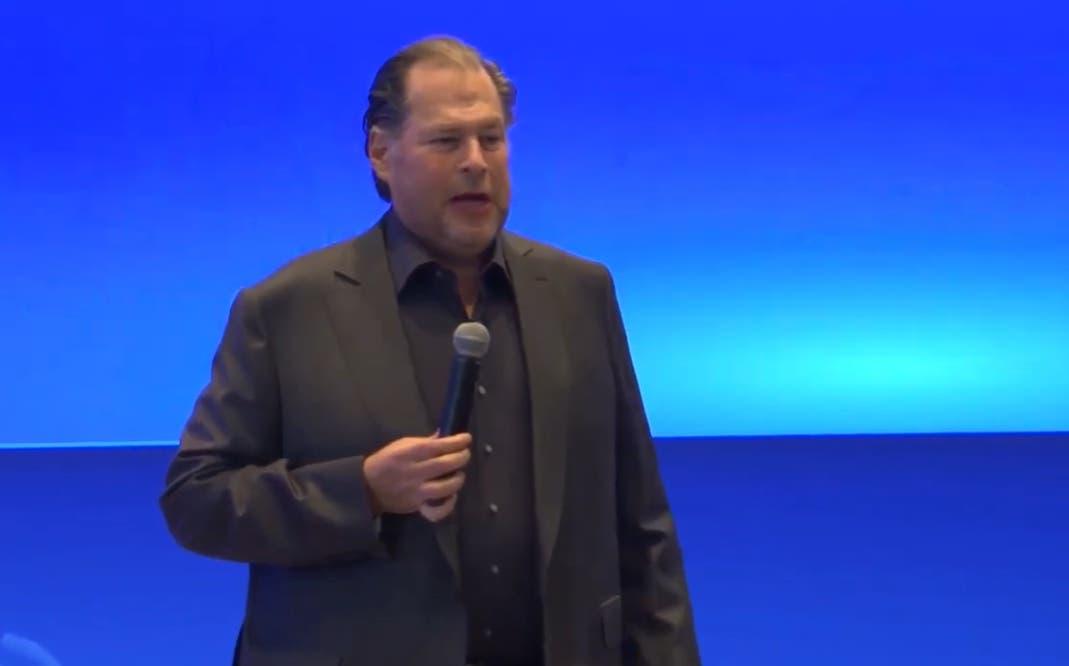
Salesforce has announced a comprehensive transformation of Slack, introducing over 30 new AI features that fundamentally reshape how the platform operates within enterprise environments. At a San Francisco event on March 31, 2026, CEO Marc Benioff and his team unveiled what they describe as an "agentic operating system"—positioning Slackbot as a personal AI agent capable of handling tasks far beyond basic messaging
1
. The update builds on a January 2026 release that first gave Slackbot capabilities to draft emails, schedule meetings, and search inboxes, but the March additions represent a significantly more ambitious expansion4
.
Source: CRN
The timing carries particular weight for Salesforce, which acquired Slack for $27.7 billion in 2021 and has since achieved what Benioff calls "two and a half times revenue growth," with approximately one million businesses now running on the platform
1
. This AI overhaul for Slack arrives as enterprise software companies face mounting pressure from what investors term the "SaaSpocalypse"—the notion that AI will enable companies to build their own business applications quickly, potentially diminishing the value of traditional SaaS providers2
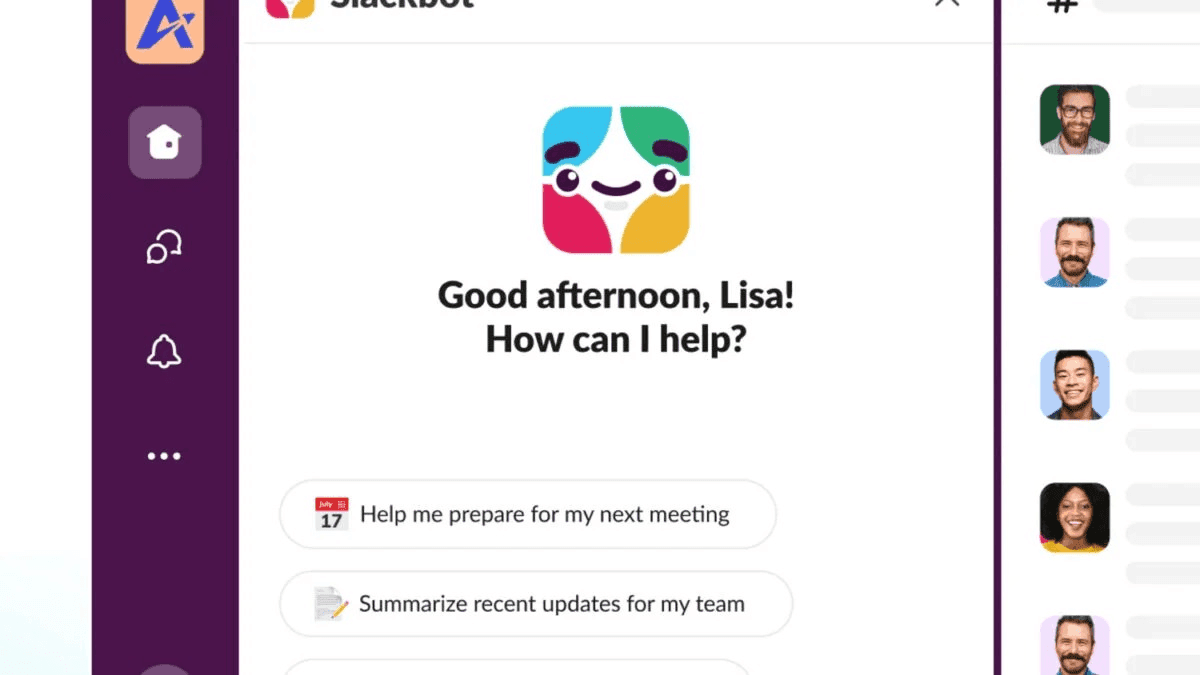
.The centerpiece of the update is reusable AI skills, which allow users to define specific tasks once and then apply them across different scenarios without reconfiguration. According to Salesforce, Slackbot comes with a built-in library of AI skills, but users can create custom versions tailored to their organization's needs
1
. Once configured, these skills dramatically reduce manual work—a user can trigger a skill with a simple command like "create a budget" for an upcoming event, prompting Slackbot to gather relevant information from Slack channels and connected apps, then automatically schedule a meeting and invite appropriate employees based on their titles1
.
Source: TweakTown
The workflow automation extends beyond individual use cases. Teams can share effective prompts and skills across their organization, addressing what Salesforce describes as the real bottleneck: "not intelligence, but shared intelligence"
5
. This collaborative approach to AI development within organizations represents a shift from viewing AI as a standalone tool to treating it as a shared resource that improves through collective refinement.Perhaps the most significant—and potentially controversial—addition is Slackbot's new desktop agent functionality, which extends its reach beyond the Slack application itself. The system monitors desktop activities, drawing on "your deals, your conversations, your calendar, and your habits" to make proactive suggestions and draft follow-ups for critical tasks
1
. Rob Seaman, Slack's interim CEO and former chief product officer, emphasizes that privacy controls are built into the design, with users able to adjust permissions as needed1
.The meeting intelligence feature taps into desktop audio to transcribe calls on Zoom, Google Meet, or Slack Huddles, but goes beyond simple transcription. It identifies decisions made during meetings, assigns action items to relevant participants, and delivers structured summaries automatically when calls end
4
. If someone zones out during a meeting, they can ask Slackbot for a recap including any tasks assigned to them1
. During video calls, Slackbot can proactively surface recommendations, such as pulling up a specific Salesforce record the moment a customer's name is mentioned5
.Slackbot now functions as a Model Context Protocol (MCP) client, an open standard built by Anthropic for connecting large language models to external data sources, tools, and software systems
2
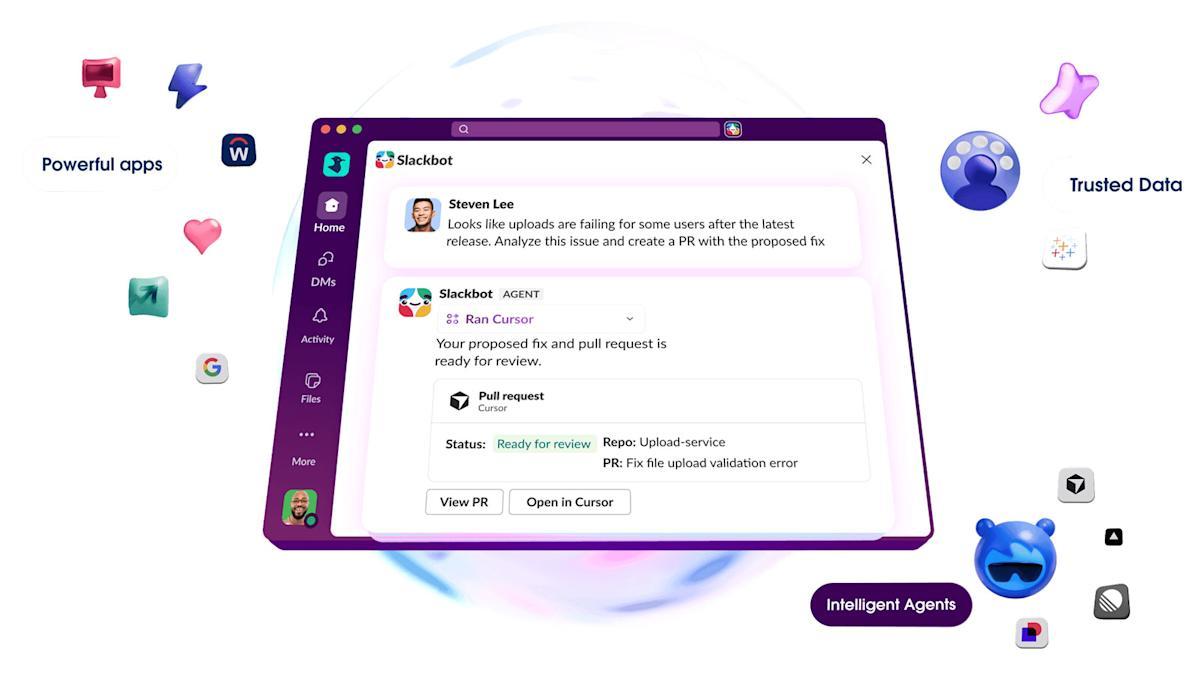
. This capability allows Slackbot to route work or questions to Agentforce—Salesforce's AI agent development platform launched in 2024—as well as to agents from other software vendors and enterprise applications1
. The integration list currently includes Google Workspace, Microsoft 365, Notion, Workday, ServiceNow, and more than 6,000 other applications in the Salesforce ecosystem4
.
Source: Engadget
"Employees never need to know which system handles which task. Just ask, and Slackbot finds the right path and gets it done," Salesforce claims
2
. This positioning as a universal interface for enterprise AI represents a defensive strategy against competitors. As Gartner has noted, companies facing pressure to adopt AI agents are likely to choose their main application vendor to build these systems2
. Salesforce isn't alone in recognizing this battleground—SAP recently acquired data integration specialist Reltio to strengthen its Joule agent platform2
.Related Stories
All of Slackbot's new capabilities run on Anthropic's Claude. Salesforce selected Claude partly because Anthropic was the only AI provider meeting FedRAMP Moderate certification requirements when Slack began designing the system—a prerequisite for selling into regulated industries including government, healthcare, and financial services
4
. Salesforce reports that Slackbot already has nearly one million weekly active users, a figure expected to grow substantially given the pricing and bundling changes accompanying the announcement4
.Salesforce is using these new Slack tools to encourage small businesses toward its broader product ecosystem. Slackbot now includes native customer management, reading channels to identify when deals are mentioned or new contacts introduced, then updating those records automatically
3
. Companies that outgrow this lightweight CRM can migrate to full Salesforce without rebuilding their data4
. From summer 2026, Slack will be automatically bundled with every new Salesforce customer account4
.The 30 new features are live now for Business+ and Enterprise+ subscribers, with limited functionality rolling out to Free and Pro users beginning in April
4
. As CTO Parker Harris explained, "Slack is the operating system for work, bringing humans, agents, data, and apps together in one trusted conversational interface"5
. Whether this vision materializes depends on how effectively Salesforce can balance ambitious automation with the complexity and governance challenges inherent in enterprise systems—and whether organizations are ready to grant an AI agent persistent visibility into their work.Summarized by
Navi
[1]
[2]
[3]
13 Oct 2025•Technology

13 Jan 2026•Technology

13 Jan 2026•Technology

1
Policy and Regulation

2
Technology

3
Technology