Amazon Alexa+ launches on Alexa.com, bringing AI assistant to web browsers for early access


19 Sources
19 Sources
[1]
Amazon Alexa+ released to the general public via an early access website
Anyone can now try Alexa+, Amazon's generative AI assistant, through a free early access program at Alexa.com. The website frees the AI, which Amazon released via early access in February, from hardware and makes it as easily accessible as more established chatbots, like OpenAI's ChatGPT and Google's Gemini. Until today, you needed a supporting device to access Alexa+. Amazon hasn't said when Alexa+'s early access period will end, but when it does, Alexa+ will be included with Amazon Prime memberships, which start at $15 per month, or cost $20/month on its own. The above pricing suggests that Amazon wants Alexa+ to drive people toward Prime subscriptions. By being interwoven with Amazon's shopping ecosystem, including Amazon's e-commerce platform, grocery delivery business, and Whole Foods, Alexa+ can make more money for Amazon. Just like it has with Alexa+ on devices, Amazon is pushing Alexa.com as a tool for people to organize and manage their household. Amazon's announcement of Alexa.com today emphasizes Alexa+'s features for planning trips and meals, to-do lists, calendars, and smart homes. Alexa.com "also provides persistent context and continuity, allowing you to access Alexa on whichever device or interface best serves the task at hand, with all previous chats, preferences, and personalization" carrying over, Amazon said. The Alexa+ website's homepage. Scharon Harding/Amazon The Alexa+ website's homepage. Scharon Harding/Amazon Amazon provided this example of someone using the Alexa+ website for organizing lists. Amazon Amazon provided this example of someone using the Alexa+ website for organizing lists. Amazon The Alexa+ website's homepage. Scharon Harding/Amazon Amazon provided this example of someone using the Alexa+ website for organizing lists. Amazon Amazon already knew a browser-based version of Alexa would be helpful. Alexa was available via Alexa.Amazon.com until right around when Amazon started publicly discussing a generative AI version of Alexa in 2023. Alexa+ is now accessible through Alexa.Amazon.com (in addition to Alexa.com). "This is a new interaction model and adds a powerful way to use and collaborate with Alexa+," Amazon said today. "Combined with the redesigned Alexa mobile app, which will feature an agent-forward design, Alexa+ will be accessible across every surface -- whether you're at your desk, on the go, or at home." Alexa has largely been reported to cost Amazon billions of dollars despite, per Amazon, 600 million Alexa-powered devices being sold. By incorporating more powerful and generative-AI-based features and a subscription fee, Amazon is hoping that people will use Alexa+ more frequently and for more advanced and essential tasks, resulting in the financial success that has eluded the original Alexa. Amazon is also considering injecting ads into Alexa+ conversations. Notably, ahead of its final release and while still in early access, Alexa+ has been reported to be slower than expected and struggle with inaccuracies at times. It also lacks some features that Amazon executives have previously touted, like the abilities to make dinner reservations or order takeout.
[2]
Amazon's AI assistant comes to the web with Alexa.com
Amazon's AI-powered overhaul of its digital assistant, now known as Alexa+, is coming to the web. On Monday, at the start of the Consumer Electronics Show in Las Vegas, the company announced the official launch of a new website, Alexa.com, which is now rolling out to all Alexa+ Early Access customers. The site will allow customers to use Alexa+ online, much as you can do today with other AI chatbots such as ChatGPT or Google's Gemini. While Alexa-powered devices, including Amazon's own Echo smart speakers and screens, have a well-established footprint with over 600 million devices sold worldwide, Amazon believes that for its AI assistant to be competitive, it will need to be everywhere -- not just in the home, but also on the phone and on the web. Plus, the expansion could later give anyone a way to interact with Alexa+, even if they don't have a device in their home. Related to this expansion, Amazon is updating its Alexa mobile app, which will now offer a more "agent-forward" experience. Or, in other words, it's putting a chatbot-style interface on the app's homepage, making it seem more like a typical AI chatbot. (While you could chat with Alexa before in the app, the focus is now on the chatting -- while the other features take a backseat.) On the Alexa.com website, customers can use Alexa+ for common tasks, for instance exploring complex topics, creating content, and making trip itineraries. However, Amazon aims to differentiate its assistant from others by focusing on families and their needs in the home. That includes controlling smart devices, as you already could with the original Alexa, but it also means doing things like updating the family's calendar or to-do list, making dinner reservations, adding grocery items you need to your Amazon Fresh or Whole Foods cart, finding recipes and saving them to a library, or even planning the family movie night with personalized recommendations. More recently, Amazon has been integrating more services with Alexa+, including the addition of Angi, Expedia, Square, and Yelp, which will join existing apps like Fodor's, OpenTable, Suno, Ticketmaster, Thumbtack, and Uber. The Alexa.com website features a navigation sidebar for quicker access to your most-used Alexa features, so you can pick up where you left off on tasks like setting the thermostat, checking your calendar for appointments, reviewing shopping lists, and more. In addition, Amazon aims to convince customers to share their personal documents, emails, and calendar access with Alexa+, so its AI can become a sort of hub to manage the goings-on at home, from kids' school holidays and soccer schedules to doctor's appointments and other things families need to remember -- like when the dog got its last rabies shot, or what day the neighbor's backyard BBQ is taking place. This is an area where Amazon will need to stretch, as it doesn't have its own productivity suite or the wealth of personal data that rivals like Google already have for their own customers. Instead, Amazon has been relying on tools to forward and upload files to Alexa+ for its AI to keep track of. That, too, will now be a feature available on Alexa.com, and the information you share can be displayed on the Echo Show's screen, where it can also be managed. This ability to manage a family's personal data could be Alexa's biggest selling point, if it gets it right. "Seventy-six percent of what customers are using Alexa+ for no other AI can do," says Daniel Rausch, VP of Alexa and Echo at Amazon, in an interview with TechCrunch. "And I think that's a really interesting statistic about Alexa+ for two reasons. He continues, "One, because customers count on Alexa to do unique things. You know, you can send a photograph of an old family recipe to Alexa and then talk through the recipe as you're cooking it in your kitchen, substitute ingredients for what you have around the home, and get the job all the way done." But he notes, another 24% are using Alexa to do things other AIs can do -- that could indicate they're shifting more of their AI usage to Alexa+. Alexa.com will initially only be available to Early Access customers who sign in with their Amazon account. Amazon has been steadily rolling out Early Access since its debut of Alexa+ early last year. Rausch tells us that over 10 million consumers now have access to Alexa+, and they're having two to three times more conversations with Alexa+ than they did with the original Alexa assistant. Specifically, they're shopping three times more with Alexa+ and are using recipes five times more than before, he says. Heavy smart home customers also use Alexa+ 50% more for smart home control, compared with the original Alexa. However, across social media and online forums, there are complaints about Alexa+'s misfires and mistakes. But Rausch believes the complaints are over-represented online. He says that the number of people opting out of the Alexa+ experience after trying it is in the low single digits, on average, or "effectively ... almost none." "Ninety-seven percent of Alexa devices support Alexa+, and we see now in adoption from customers that they're using Alexa across all those many years and many generations of devices," Rausch adds. "We support all of Alexa's original capabilities, the tens of thousands of services and devices that Alexa was integrated with already are carried forward to the Alexa+ experience."
[3]
Amazon Launches Alexa.com for More Wide-Ranging AI Interactions
Alex Valdes from Bellevue, Washington has been pumping content into the Internet river for quite a while, including stints at MSNBC.com, MSN, Bing, MoneyTalksNews, Tipico and more. He admits to being somewhat fascinated by the Cambridge coffee webcam back in the Roaring '90s. If you've been using Alexa Plus as your sous chef, travel planner or personal assistant via your Echo devices, you now have a new, more widely available way to do so -- reaching the AI helper on your browser. Amazon on Monday introduced Alexa.com, saying that it's rolling out access to Alexa Plus Early Access customers so that the AI tool can "truly serve as a personal assistant" wherever they are. Don't miss any of our unbiased tech content and lab-based reviews. Add CNET as a preferred Google source. Amazon launched Alexa Plus nine months ago to incorporate AI into the Alexa assistant, which launched in 2014. It offers more advanced capabilities than standard Alexa and with a more conversational style. Amazon says that more than 600 million Alexa devices -- including Echo, Kindle, Ring and Fire TV -- have been sold worldwide. Voice assistants have seen strong demand, with Alexa Plus and Google Assistant (now Gemini for Home) as the dominant services. According to Statista, more than 60% of smart speaker owners use the Amazon Echo, followed by Google Home at 23%. CNET's Tyler Lacoma has found Alexa Plus useful and even enjoyable -- scheduling Uber trips, shifting music between speakers and so on -- but cautions it might not be for everyone. People can use it at Alexa.com if they have Alexa Plus Early Access, which they can get by purchasing an eligible device, including an array of Echo and Fire TV products. Access is included at no extra charge if you have an Amazon Prime subscription. Otherwise, Alexa Plus is $20 a month. So, say you've bought an Amazon Echo device and you're an Alexa Plus Early Access customer. You can go to Alexa.com on your desktop PC or tablet, and use either voice or typing to do things like accessing your smart home controls, organizing your to-do list on a calendar, creating a weekend itinerary or planning a dinner. Amazon says you can start conversations on your PC and continue them on your mobile app or your Echo and Fire TV devices, "with all previous chats, preferences, and personalization seamlessly carrying over."
[4]
The Alexa Plus website is now available to everyone in early access
Alexa Plus was already popping up online for some users earlier this month, and now it's officially available to everyone through an early access program. Anyone can go sign up at Alexa.com and start playing with the new web interface for Amazon's new AI chatbot. Alexa Plus was already available on all new Echo devices and recently rolled out as an update to older Echoes as well. But certain tasks are just easier to do with a keyboard and mouse than they are with your voice. Now you can get access to Alexa while sitting at your laptop to update your to-do list or make reservations at that new Puerto Rican spot that recently opened up. One of the big advantages is the ability to upload documents, emails, and even images to Alexa Plus through the website and have it pull out important information. Recipes can become shopping lists, vet bills, a record of rabies vaccinations, and kids' little league schedules can automatically be added to your calendar. Of course, Amazon is talking up its broader integrations as well, like generating meal plans and automatically filling an Amazon Fresh or Whole Foods cart with your groceries -- even abiding by your dietary restrictions. It also puts access to your smart home devices like lights, locks, and doorbell cameras right next to your chat with Alexa. While in theory, Google Gemini should have similar smart home features, I can tell you from experience that they're not particularly reliable. Our experience with Alexa Plus has been a bit rocky so far. So, while it's nice to see Amazon giving its latest AI assistant a vote of confidence, maybe double-check its work before trusting that it's filled your cart with purely vegan options. Additionally, Alexa Plus is gaining entertainment features that should mean you spend less time aimlessly scrolling through Prime Video. But, also, just watching whatever Alexa suggests and sends to your Fire TV is precisely the sort of passive consumption that many are trying to break free of. Amazon is also launching a sidebar for keeping your favorite Alexa features a click away, so you don't need to switch windows when you want to turn up your thermostat. It's also launching a newly redesigned Alexa mobile app.
[5]

Use ChatGPT on the web? Amazon's new alternative may be better if you're an Alexa fan
Users can chat with Alexa+ on the site, just like other generative AI chatbots. Amazon isn't one to make big announcements during CES, but the company doesn't plan to be overshadowed this year. After months of Alexa+ availability through an early access program, Amazon just announced the launch of Alexa.com, a website where users can interact with the virtual assistant like they would with other AI chatbots. If you've used any of the generative AI chatbots available over the past three years, you're familiar with the process of going to a website to interact with them. While Google has a website for Gemini, other virtual assistants like Alexa and Siri don't -- although they also lacked general AI capabilities until recently. Also: CES 2026 live blog: Latest news on TVs, AI, phones, more You can count on Siri maintaining its lack of generational power for now, but Alexa received a generational AI injection months ago, and it's being widely used by users across the US in an early access program. Over the past nine months, Alexa+ has gained tens of millions of users, according to Daniel Rausch, Vice President of Alexa and Echo at Amazon. "We see customers taking advantage of Alexa Plus any and everywhere that they can," Rausch told ZDNET. "At Alexa.com, Customers can access that experience, and they'll see both the things that they count on Alexa for in the home, like your lists, your reminders, your smart home controls, all the documents you've sent to Alexa." Yet one of Amazon's big Alexa+ promises from last year wasn't realized until now: the ability to use it on a website. This expands usage beyond traditional means, namely, the Alexa mobile app -- though that is also set to get a refresh soon. Both the browser and app versions of Alexa+ will feature a chat-forward design that supports voice and text interactions, personalized to your account, and breaking away from the Alexa app's traditional tiled interface. Also: This Alexa+ update can track deals and buy for you when the price drops - here's how You'll have to log in to use the Alexa+ browser, Rausch confirmed, as this ensures feature continuity across all your supported devices and personalized experiences. Although he mentioned that plans exist to potentially allow unlogged access, user accounts provide access to profile management and cross-surface integrations. According to Rausch, 76% of Alexa+ interactions are unique tasks that only Alexa can accomplish -- namely, user-exclusive features, third-party integrations, and controlling Alexa-exclusive smart home devices. While the remaining 24% can be handled with almost any AI chatbot, Rausch points out that these would be done without the convenience that Alexa offers: voice control through a speaker in your home or phone. Amazon doesn't have a public timeline for the end of the Alexa+ early access program, which is set to cost $20 per month when it becomes generally available and will be included as a perk to Prime memberships. Also: How to get access to Alexa+ for free right now (and which Echo devices support it) Alexa+ supports over seven years of Alexa-enabled devices, ensuring legacy, current, and future hardware remain compatible with the Gen AI virtual assistant. This makes Alexa+ more accessible to a wide range of consumers, maximizing user investment while enjoying consistent service across multiple generations of devices. The revamped AI assistant's list of third-party integrations continues to grow, with Expedia, Angie's List, Yelp, and Square now joining the mix. The vision for Alexa+ includes offering unique features, consistency across devices and locations, and a comprehensive integration strategy, Rausch said. To this end, Alexa+ is set to become available on Echo Frames, Echo Buds, and the new browser platform.
[6]

Amazon lets some users chat with Alexa+ on the web in bid to take on ChatGPT
The Alexa.com website is only available to users of Alexa+, its revamped artificial intelligence assistant that debuted last February and remains in early access. Users have to join a waitlist to gain access to the service or purchase newer devices. Amazon says consumers can use Alexa.com to "get quick answers, explore complex topics, create content, plan trip itineraries, and get help with homework." Users can also manage their smart home gadgets within the Alexa+ chat window, the company said. By launching a browser-based version of Alexa, Amazon wants to make sure users can interact with its AI assistant across different interfaces. Previously, Alexa+ was only available via a mobile app or some Echo devices.
[7]

Amazon gives Alexa+ a home on the web
Karandeep Singh Oberoi is a Durham College Journalism and Mass Media graduate who joined the Android Police team in April 2024, after serving as a full-time News Writer at Canadian publication MobileSyrup. Prior to joining Android Police, Oberoi worked on feature stories, reviews, evergreen articles, and focused on 'how-to' resources. Additionally, he informed readers about the latest deals and discounts with quick hit pieces and buyer's guides for all occasions. Oberoi lives in Toronto, Canada. When not working on a new story, he likes to hit the gym, play soccer (although he keeps calling it football for some reason🤔) and try out new restaurants in the Greater Toronto Area. In a bid to take on the likes of Gemini, ChatGPT, Perplexity, and others, Amazon, in a highly surprising move, is ready to bring Alexa+ to the web. First announced at the e-commerce giant's 'February 2025 Devices & Services live event,' Alexa+ is Amazon's AI-powered voice assistant. It was, up until now, limited to the company's hardware. With what the tech giant announced at CES today, that is no longer the case. Related Amazon's Alexa+ comes with a $20 fee, Prime subscribers get it for free Prime costs $15 -- go figure Posts 1 By Karandeep Singh Oberoi The rollout aims to ensure that the people that rely on Alexa can find the virtual assistant on practically every device they use. "People are finding incredible value in how AI can help in every aspect of their day, and to truly serve as a personal assistant, Alexa+ needs to be available wherever they are -- at home, on their phone, and now on the web. Alexa.com brings the full power of Alexa+ right to your browser," wrote the tech giant in an announcement post. As expected, this also means that Alexa+ can offer continuity too. No matter which device you use the AI assistant on, all previous chats, preferences, and personalization options will carry over. Early access is open now Amazon is also updating the Alexa mobile app to offer an "agent-forward" design, which essentially means that the app is bringing the chatbot experience to the homepage, while other features take a back seat. Once available, users will be able to utilize Alexa+ for regular chatbot needs, including general queries, summarizing content, simplifying complex topics, and more. However, the AI assistant will set itself apart by also focusing on regular smart home tasks. Alexa+ doesn't just provide information, it's designed to take action. It can help you complete countless tasks: managing your to-do list, updating your family calendar, controlling your smart home, making reservations, and so much more. The e-commerce giant also shared some task examples where the AI assistant will shine. These include: Meal planning, complete with Amazon Fresh or Whole Foods integration to order groceries. The ability to extract key information from documents, like appointments, and add them to your calendar. Smart home controls right within the web UI. "You can instantly switch from chatting to checking who's at the front door, turning on the lights, adjusting your thermostat, unlocking the door for a family member, or checking your security cameras while you're away, all without touching a phone or saying a word." Find movies, shows, hidden gems, or get personalized recommendations based on the content that you've loved before. Said suggestions will then appear on your Fire TV (if you have one). Alexa+ on the web is accessible via https://www.alexa.com/. It is currently limited to customers with Early Access to Alexa+. Related Amazon brings big upgrades to new Fire TV products with Alexa+ integration Plus a cheaper Fire TV Stick 4K option Posts By Timi Cantisano
[8]

Amazon Alexa now has a real web app (again)
Corbin Davenport is the News Editor at How-To Geek and an independent software developer. He also runs Tech Tales, a technology history podcast. Send him an email at [email protected]! Corbin previously worked at Android Police, PC Gamer, and XDA before joining How-To Geek. He has over a decade of experience writing about tech, and has worked on several web apps and browser extensions. For years, the Alexa voice assistant has been on phones, tablets, smart home devices, and everything in-between. Now, it's coming (back) to your web browser, designed as an alternative to generative AI chatbots like Google Gemini and ChatGPT. Amazon first announced Alexa+ in early 2025, promising an upgraded version of Alexa powered by generative AI models that would understand questions better and offer new features. It's intended as both an upgrade to the standard Alexa voice assistant and a competitor to ChatGPT, Google Gemini, Microsoft Copilot. Unfortunately, the rollout has not gone well -- Alexa+ is often slower than the previous version, and it has problems controlling smart home devices. It also has all the usual pitfalls of generative AI chatbots, like providing incorrect answers. Amazon is pressing ahead, though, and now you can access the Alexa+ voice assistant from the new Alexa.com website. You have to opt into Alexa+ to use it, which is free for Amazon Prime subscribers (some of which were upgraded against their will) or a $20 per month subscription. The company said in its blog post, "You can use Alexa.com to get quick answers, explore complex topics, create content, plan trip itineraries, and get help with homework. But Alexa+ doesn't just provide information, it's designed to take action. It can help you complete countless tasks: managing your to-do list, updating your family calendar, controlling your smart home, making reservations, and so much more. It also provides persistent context and continuity, allowing you to access Alexa on whichever device or interface best serves the task at hand, with all previous chats, preferences, and personalization seamlessly carrying over." The new website has a similar interface as ChatGPT or Gemini, with a large text box for asking questions and tabs for other smart home functionality. Importantly, this also gives you full control of your smart home devices connected to Alexa, including cameras, thermostats, switches, locks, and anything else. If this sounds familiar, it's because there was already a basic Alexa web app years ago, but it was shut down around 2023. In typical tech industry fashion, the functionality has now returned behind a paywall. Amazon also said, "Combined with the redesigned Alexa mobile app, which will feature an agent-forward design, Alexa+ will be accessible across every surface -- whether you're at your desk, on the go, or at home." Subscribe to our newsletter for smart-home & AI insight Get smarter about Alexa+, smart-home setups, and AI. Subscribe to our newsletter for expert analysis, practical setup tips, clear explanations of implications, and curated coverage of generative-AI developments. Subscribe By subscribing, you agree to receive newsletter and marketing emails, and accept Valnet's Terms of Use and Privacy Policy. You can unsubscribe anytime. You can access the Alexa+ web app by visiting alexa.com in your browser. You could also try 'installing' it for a more native-feeling experience. Source: Amazon
[9]

Alexa+ launches on the web for everyone: Amazon takes on ChatGPT -- here's how to sign up
Users can manage tasks, plan meals, and organize life without relying on voice commands Amazon's AI-enhanced Alexa+ assistant is stepping out of the speaker and into browsers. The tech giant has introduced a full-fledged web version of Alexa+ for everyone. The rollout creates a possible rival to ChatGPT, Gemini, and other fast-evolving AI chatbots. Alexa+ provides more than a new coat of paint for the voice assistant. Amazon is keen to encourage people to think of Alexa+ as a kind of life manager across their devices and locations. Offering Alexa+ to Alexa.com means you can have nuanced and more complex interactions with Alexa than the standard voice commands. Amazon wants to meet people wherever they are, regardless of their access to an Echo smart speaker. To get in, most users will need to join the Alexa+ Early Access program. If you've got an Echo device already, saying "Notify me when Alexa+ is available" should put you on the list. Some newcomers with newer Fire or Echo products may also receive invites, but the program is geared to long-term Alexa users. Once you're on the list, you can just log into Alexa.com and see the dashboard for Alexa+. Nine months after its quiet debut, Alexa+ has started to show its hand. Amazon says it's seeing twice as many conversations per user, three times the purchases, and five times the recipe requests compared to legacy Alexa interactions. And with the arrival of a browser-based interface, Alexa has a home among the more hotly discussed AI assistants like ChatGPT. Where Alexa+ starts to differ from ChatGPT or Gemini is in how it blends personal context with action. Amazon suggests asking for things like a week of low-sugar, high-protein meals to see how Alexa+ both puts together the menus and offers to fill your Amazon Fresh cart with the ingredients, cross-referencing your family calendar to avoid overlap with busy nights. The same goes for other household management. Alexa+ can organize calendars from disparate sources of information, like photos of records, uploaded PDFs, and emails. It can also handle smart home devices without bouncing between a dozen apps or screens. All of it lives alongside your conversation with Alexa on Alexa.com. If anything, Alexa+ seems to be targeting the everyday user more directly than ChatGPT or Gemini ever have. While those tools are pushing toward multimodal reasoning and abstract creativity, Alexa+ is remembering to remind you of your dentist appointment and helping you finish dinner before bedtime. That's also where Alexa has a baked-in advantage. There are more than 600 million Alexa-enabled devices in homes around the world. But going online means Alexa is on all your screens, not just whispering ideas from a speaker on your counter. No AI assistant will be perfect, but if Amazon can convince people that Alexa+ has enough of the conversational elements that people like in ChatGPT, combined with existing and improved practical functions familiar to Alexa users, it might well win over plenty of skeptical users.
[10]

Amazon Launches New Chatbot-Style Interface for Alexa - Decrypt
Alexa.com offers text and image generators in a bid to expand its foothold in the generative AI market dominated by Google and OpenAI. Amazon on Monday announced the launch of Alexa.com, a new browser-based interface that lets users interact with its Alexa+ AI assistant through a chatbot-style experience on the web. The move extends Alexa beyond smart speakers and mobile devices, placing it alongside other generative AI chatbots, including Gemini, Claude, and ChatGPT. More and more agentic AI chatbots offer shopping and task management, though Alexa+ is attempting to differentiate itself from rivals by allowing users access to smart-home controls through their browser. While the company has not described Alexa as an "AI agent," the expanded capabilities come as Amazon has moved to restrict third-party tools that perform automated actions on its platform, including serving Perplexity with a cease-and-desist letter over its Comet browser in November. Last year, Amazon first began rolling out Alexa+ through a limited preview in the U.S. As part of the upgrade, the company partnered with Anthropic, the developer of Claude, to help power the generative AI-driven version of Alexa. "Alexa+ has evolved rapidly since it launched nine months ago," Amazon said in a statement. "We've integrated with tens of thousands of services and devices, scaled to tens of millions of customers, and have seen people transform the way they use their AI assistant: twice the conversations, three times the purchases, five times the recipe requests. What we've learned is simple: customers want Alexa wherever they are." Amazon has said the company uses a "model-agnostic" approach rather than relying on a single large language model. While the new interface offers a new way to interact with Alexa, Amazon said the web-based expansion did not change its approach to user privacy. "We design Alexa+ the same way we approach building any product -- we aim to create something customers will love while also protecting their privacy and security," an Amazon spokesperson told Decrypt. "Customers can review their interactions, including shared attachments, voice recordings, and web activity, and use the Alexa Privacy dashboard to control their most important privacy settings." Alongside those upgrades, Alexa.com enabled the assistant to generate images from user prompts, manage reminders and household notifications, and assist with shopping by reviewing, updating, and completing purchases through conversational commands. Users can also shop and manage their Amazon shopping carts, including Amazon Fresh and Whole Foods orders, upload documents, set reminders, book reservations, and control connected devices such as Ring cameras, lighting, and thermostats from a single browser window. The interface supports typed or spoken interaction and carries context across Echo devices, the Alexa app, and desktop browsers. Access to Alexa.com remains limited to Alexa+ Early Access users, and Amazon did not provide a timeline for a broader public release.
[11]

Amazon launches Alexa+ AI assistant to challenge ChatGPT
Until now, Alexa has only been available on smartphones and Amazon's connected devices. Users with early access to Alexa+ can now access the chatbot via their web browsers. Amazon's Alexa - the artificial intelligence assistant that's been integrated into its connected devices for over a decade - is accessible via web browser for the first time, the company announced on Monday. Early access users of Alexa+, a premium generative-AI service Amazon launched last February, can now interact with the chatbot in their web browsers by connecting to their Alexa.com account, Amazon said. The new web interface brings Amazon's AI services more in line with offerings from industry leaders, including OpenAI, Google and Anthropic. Amazon has been under increasing pressure from shareholders to update its hardware and software to better compete in the generative-AI era. Until now, Alexa+ has been available only in the US and Canada on some of Amazon's newer connected devices and the Alexa+ mobile app. "People are finding incredible value in how AI can help in every aspect of their day, and to truly serve as a personal assistant, Alexa+ needs to be available wherever they are -- at home, on their phone, and now on the web," the company wrote in a blog post. Alexa+ features agentic AI experiences that allow users to book travel and restaurant reservations, generate weekly meal plans and control smart home devices. The AI assistant is also accessible across platforms and Amazon Echo devices and stores all previous chats, preferences and personalisation settings. To access the Alexa+ service, users in the US or Canada must join a waitlist or purchase a new Amazon Echo device. The paid service will be included at no cost for Prime users, Amazon said. The company said "tens of millions" of people already have access to the new service and plans to roll out the feature to more users in the near future.
[12]

Amazon takes Alexa to the web with launch of Alexa.com at CES 2026
Amazon launched Alexa.com at the Consumer Electronics Show in Las Vegas on Monday, rolling it out to Alexa+ Early Access customers to extend its AI-powered assistant online like ChatGPT or Google Gemini. The website represents Amazon's AI-powered overhaul of its digital assistant, now called Alexa+. Alexa-powered devices, such as Echo smart speakers and screens, have reached over 600 million units sold worldwide. Amazon seeks to position Alexa+ competitively by making it accessible everywhere, including homes, phones, and the web. This expansion allows interactions with Alexa+ without requiring a home device. Amazon is updating the Alexa mobile app to prioritize an agent-forward experience. The app's homepage now features a chatbot-style interface, shifting focus from previous features to chatting capabilities. Previously, chatting existed in the app, but other functions now appear secondary. On Alexa.com, users access Alexa+ for tasks like exploring complex topics, creating content, and planning trip itineraries. Amazon differentiates Alexa+ by targeting family needs in the home. Functions include smart device control, similar to the original Alexa, along with managing family calendars or to-do lists, making dinner reservations, adding items to Amazon Fresh or Whole Foods carts, discovering and saving recipes to a library, and planning family movie nights with personalized recommendations. Amazon has integrated additional services into Alexa+, adding Angi, Expedia, Square, and Yelp. These join existing partners such as Fodor's, OpenTable, Suno, Ticketmaster, Thumbtack, and Uber. The integrations expand Alexa+'s utility for family-oriented tasks. The Alexa.com interface includes a navigation sidebar for quick access to frequently used features. Users can resume tasks like setting the thermostat, checking calendars for appointments, reviewing shopping lists, and similar activities without restarting processes. Amazon encourages users to share personal documents, emails, and calendar data with Alexa+. This positions Alexa+ as a central hub for household management, tracking details such as children's school holidays, soccer schedules, doctors' appointments, the dog's last rabies shot date, or a neighbor's backyard BBQ timing. Amazon lacks its own productivity suite or extensive personal data compared to rivals like Google. Instead, it relies on users forwarding and uploading files for Alexa+ to monitor. Uploading files now works on Alexa.com, with shared information displayable and manageable on Echo Show screens. Daniel Rausch, VP of Alexa and Echo at Amazon, stated in an interview with TechCrunch, "Seventy-six percent of what customers are using Alexa+ for that no other AI can do." He described this statistic as interesting for two reasons. First, customers rely on Alexa+ for unique tasks. For example, users send a photograph of an old family recipe to Alexa+, then discuss it while cooking, substitute ingredients based on available items, and complete the process. Rausch noted that the remaining 24 percent of usage covers tasks other AIs handle, suggesting a shift in user AI preferences toward Alexa+. Alexa.com launches initially for Early Access customers signing in with their Amazon accounts. Amazon began Early Access rollout for Alexa+ early last year, now reaching over 10 million consumers. These users engage in two to three times more conversations with Alexa+ than with the original Alexa. Shopping occurs three times more frequently, recipe usage five times more, and heavy smart-home users control devices 50 percent more with Alexa+ compared to the original. Online forums and social media report complaints about Alexa+ misfires and errors. Rausch views these as over-represented online. Opt-out rates after trying Alexa+ average in the low single digits, described as "effectively ... almost none." He added, "Ninety-seven percent of Alexa devices support Alexa+, and we see now in adoption from customers that they're using Alexa across all those many years and many generations of devices." Alexa+ preserves all capabilities of the original Alexa. It carries forward integrations with tens of thousands of services and devices. This ensures continuity for existing users across device generations. The launch aligns with Amazon's strategy to broaden Alexa+'s reach. Over 600 million Alexa devices worldwide provide a foundation, but web access via Alexa.com targets broader adoption. Early Access data shows increased engagement: conversations up 2-3 times, shopping tripled, recipes quintupled, and smart-home control boosted 50 percent for heavy users. The 76 percent unique usage rate, as per Rausch, highlights tasks like interactive recipe handling from photos, unavailable elsewhere. Family-centric features emphasize practical home management. Users update shared calendars for school events, sports, medical visits, pet vaccinations, and social gatherings. Service expansions to Angi for home services, Expedia for travel, Square for payments, and Yelp for reviews complement partners like Fodor's for travel guides, OpenTable for dining, Suno for music, Ticketmaster for events, Thumbtack for local services, and Uber for rides. The mobile app redesign centers chatting on the homepage, de-emphasizing other tabs. Sidebar navigation on the web speeds access to thermostat adjustments, appointment views, and list reviews. Personal data sharing, including documents and emails, enables Echo Show visualization, fostering a unified family information center. Rausch's insights detail usage patterns. The 24 percent overlap with other AIs indicates growing preference for Alexa+. Low opt-outs and 97 percent device compatibility across years and models support sustained adoption. All original integrations remain intact, maintaining ecosystem breadth.
[13]

Alexa Web Interface Brings Amazon's AI Assistant to Your Browser - Phandroid
Amazon is making a serious play for the AI assistant market. The company launched its Alexa web interface for all Alexa+ Early Access customers, bringing the voice assistant directly to your browser. This puts Amazon in direct competition with ChatGPT, Google Gemini, and Claude. The Alexa web interface works at alexa.com and requires an Amazon account to access. Unlike the voice-only experience on Echo devices, this web version combines information with real-world actions. You can ask questions, create content, and plan trips just like other AI chatbots. However, Alexa goes further by completing tasks like managing shopping lists, controlling smart homes, and making reservations. What separates the Alexa web interface from competitors is its Amazon ecosystem integration. Ask Alexa to plan a week's worth of meals based on your dietary preferences, then instantly add every ingredient to your Amazon Fresh or Whole Foods cart. ChatGPT and Gemini can't do that without jumping through multiple apps. The web version syncs seamlessly with your Echo devices and Alexa mobile app. Start a conversation on your laptop, continue it on your phone, then finish on your Echo Show. All your chat history and preferences carry over across devices. Amazon partnered with Expedia, Yelp, Angi, and Square to build "agentic experiences." This means you can discover and book services for travel, restaurants, home repairs, and wellness directly through Alexa. For smart home users, the interface keeps controls in the same window as your chat. Check your Ring doorbell, adjust your thermostat, or view security cameras while asking Alexa to add items to your grocery list. The Alexa web interface is available now for Alexa+ Early Access customers.
[14]

Amazon's AI Assistant Alexa+ Now Has a Web Address
Alexa+ on the web comes with the memory of previous chats and context Amazon is bringing its artificial intelligence (AI)-powered version of its Alexa assistant, Alexa+, to the web. On Monday, the Seattle-based tech giant announced that Alexa+, which was previously available only via the company's Echo and Fire TV devices, and the redesigned Alexa app, will now also be accessible on the browser. A new web address will let users visit the assistant even when they are away from any compatible device or their smartphone. The web version comes with all the existing features, such as memory, context, and personalisation. Alexa+ Comes to the Web In a newsroom post, the tech giant announced the launch of Alexa.com, the newest home for the AI-powered Alexa+ assistant. The website is a web client for the chatbot, similar to OpenAI's ChatGPT or Google's Gemini. The latest expansion will now let users access and stay connected to the assistant on more devices. Explaining this reasoning, Amazon says, "To truly serve as a personal assistant, Alexa+ needs to be available wherever they are -- at home, on their phone, and now on the web." Notably, the website is only available to those users who received early access to the assistant. These are US residents who own a compatible Echo or Fire TV device, or have an active Amazon Prime subscription. Eligible users can visit the website to get quick answers, explore complex topics, create content, plan their trips and get itineraries, get help with homework, and more. Additionally, the chatbot comes with some agentic capabilities and can update calendar events, control the connected smart home appliances, make reservations, and more. Since the chatbot comes with memory of previous chats, it also brings persistent context and continuity, meaning users can move from Echo or the app to the browser without losing any information. Amazon also shared a few use cases where Alexa+ can be handy. It can help users with meal prep by generating recipes for the entire week while keeping in mind any user preferences. Additionally, if the user lacks any grocery items, it can automatically add the items to the Amazon Fresh or Whole Foods cart. If the user has connected Alexa+ with their smart home devices, these can be controlled via the browser as well. So, users can check if someone is at the front door, turn on the lights, adjust the thermostat, check security cameras, and more while they're away from home. With multimodal input, users can also upload images, emails, and documents, and Alexa+ can extract data, add to the calendar, or simply remember the information to remind the user at an appropriate time.
[15]

Amazon's Alexa is now on the web; eyes competing with ChatGPT, Gemini - The Economic Times
Alexa+ is now positioned at the core of Amazon's strategy. According to the company, going beyond voice, Alexa+ now enables users with accessibility across formats, including browsers, mobiles and devices.In a bid to keep up with the growing popularity of artificial intelligence (AI) assistant websites like chatgpt.com and gemini.google.com, Amazon today rolled out Alexa.com, a web interface for its voice AI assistant. Alexa was launched in 2014, and the website for the voice AI assistant came more than a decade later. Launching a slew of AI-powered products at CES 2026, Amazon has positioned Alexa+ at the core of its strategy. The company claims that Alexa+ aims to go beyond voice, enabling users with accessibility across formats, including browsers, mobiles and devices. This is not the first time Big Techs with key AI assistant products have intended to compete with the rising AI startups. Google started rolling out Gemini to Chrome late last year, as Perplexity, another AI startup, gained popularity for its agentic AI web browser Comet, launched in July, almost a month earlier than Google's September rollout for its AI assistant on the browser. This comes as Amazon aims to provide users with ambient AI to be able to position its connected home ecosystem products better. The company revealed that Alexa+ is also becoming more agentic, allowing users to discover and book travel, restaurants, home services, and wellness offerings through Amazon's partners such as Expedia, Yelp, Angi, and Square. The company claims that the assistant will now be able to answer doorbell rings and talk to visitors on behalf of the users. Further, Alexa+ is also being integrated across automotives, home appliances, and personal gadgets. This is the first time the voice AI assistant will be built into a third-party device, such as televisions. "In 2026, we are adding the next generation of Alexa Custom Assistant, powered by Alexa+, to select BMW models, including the latest BMW iX3. Samsung is adding Alexa+ to their smart televisions, marking the first time Alexa+ is built into a third-party device. Bosch is enabling voice-directed commands in its Bosch 800 series of fully automatic coffee makers. HERE Technologies and TomTom integrated Alexa Custom Assistant (ACA) into their mapping and location services for intelligent in-vehicle navigation. And Oura is rolling out early access to its Alexa+ integration, enabling customers to keep track of and act on their health information," Amazon wrote in its note.
[16]

Amazon's AI Assistant Alexa+ Arrives on the Web to Take on ChatGPT and Gemini
It's not a generic AI chatbot. You can control your smart home devices and perform other tasks too. At CES 2026, Amazon announced that it's bringing its Alexa+ service to the web via a friendly AI chatbot. And the new service is available at alexa.com, rolling out to Alexa+ Early Access users. Amazon has decided to launch its AI chatbot just like ChatGPT and Gemini, and it's going to be available on your phone, web browser, and smart home devices. In the future, even non-Alexa device owners would be able to interact with Alexa+ via the web app. This makes Amazon's AI assistant a potential alternative to ChatGPT. The Alexa app is also being redesigned for an agentic experience. You can chat with Alexa+, explore complex topics, generate content, create trip itineraries, and also ask it to perform tasks. At the same time, you can control your thermostat, update your shopping lists, check calendar, and more. You can continue ongoing tasks from the sidebar menu. Basically, Alexa+ will be able to control your smart home devices and also perform tasks like grocery shopping, dinner reservation, etc. Amazon is integrating third-party services like Angi, Expedia, Square, Yelp, etc. along with the existing ones like OpenTable, Ticketmaster, Uber, and more. For all this to work, you need to grant access to your email, personal documents, and calendar to the AI assistant. As Amazon rebranded Alexa and moved it to AI-powered Alexa+, consumers have been complaining about several issues. However, the company says that all past Alexa actions and skills are supported in the new version.
[17]

Amazon Launches Alexa Website to Rival ChatGPT - Amazon.com (NASDAQ:AMZN)
Amazon.com Inc (NASDAQ:AMZN) is expanding Alexa+ to the web as it ramps up competition with leading artificial intelligence chatbots. On Monday, Amazon launched Alexa.com, a browser-based experience that allows users to interact with Alexa+ directly from a desktop or laptop. The move puts Amazon's AI assistant in more direct competition with web-first tools such as OpenAI's ChatGPT, as well as offerings from Alphabet Inc (NASDAQ:GOOGL) Google Gemini, Anthropic, and Perplexity, CNBC reported on Monday. Also Read: Amazon Closing The Gap In AI Race: Analysts Early Access Rollout Expands Alexa's Reach The Alexa.com website is currently limited to Alexa+, Amazon's upgraded AI assistant that debuted last February and remains in early access. Users must typically join a waitlist or purchase newer Amazon devices to gain access. Amazon has been gradually rolling out Alexa+ and has said that more than one million people already have access to the service. Through Alexa.com, users can ask questions, explore more complex topics, generate content, plan travel itineraries, and get help with homework. Amazon also says users can manage smart home devices directly within the Alexa+ chat window, keeping conversations and controls in a single interface. By introducing a browser-based version of Alexa+, Amazon aims to make its assistant available to the users everywhere. Amazon has faced increasing pressure to modernize Alexa's hardware and software following the rapid adoption of ChatGPT, Google's Gemini, and similar AI platforms. Amazon previewed Alexa.com when it introduced Alexa+ last year and previously indicated the site would roll out to early access users in 2024. Ambient Intelligence Drives Amazon's AI Strategy Amazon is pushing Alexa toward "ambient intelligence" as it looks to move users away from screen-heavy habits like doom scrolling. Panos Panay, Amazon's head of devices and services, said younger users are growing tired of endless social media feeds and want technology that works naturally in the background. Speaking at Fortune Brainstorm AI, Panay said this generation expects AI to remove friction and operate without constant tapping, scrolling, or screens. He pointed to simple voice interactions, like settling family decisions, as examples of how ambient intelligence makes technology feel effortless. To support this shift, Amazon is developing new hardware beyond today's smart speakers, wearables, and devices. AMZN Price Action: Amazon.com shares were up 3.12% at $233.57 at the time of publication on Monday, according to Benzinga Pro data. Read Next: Amazon Runs 900+ Data Centers To Fuel AI Demand: Report Photo via Amazon AMZNAmazon.com Inc$232.942.84%OverviewGOOGLAlphabet Inc$314.80-0.11%Market News and Data brought to you by Benzinga APIs
[18]

Alexa Moves Beyond Voice with New Alexa.com Browser Interface
MediaNama's Take: Amazon's launch of Alexa.com marks a meaningful shift in how it wants users to interact with Alexa. Rather than a new product, it is the clearest execution yet of the Alexa+ strategy Amazon outlined in February 2025. By adding a browser-based interface, Amazon moves Alexa beyond ambient, voice-first interactions and into planning-heavy contexts where users research, verify, and commit to actions. This shift changes what Alexa is for. Amazon no longer positions it as a system that responds to isolated commands, but as an orchestration layer that coordinates commerce, services, schedules, and connected devices across surfaces. When an assistant can trigger payments, book services, or control homes, design choices around defaults, verification, memory, and error handling become structural rather than cosmetic. Notably, this direction cuts against much of the AI industry. While OpenAI is pushing toward an audio-first personal device built around continuous, ambient conversation, Amazon draws a boundary by bringing Alexa into the browser precisely where the stakes are highest, and reversibility matters most. Alexa's evolution also sits alongside Amazon's long history of privacy and consumer scrutiny. As it gains autonomy across commerce and home control, earlier design decisions around data retention and consent do not fade. They compound. Seen together, Alexa.com is less about making Alexa more conversational and more about strengthening Amazon's control layer across surfaces, memory, and execution. Amazon has rolled out Alexa.com, a browser-based interface for Alexa+, extending the assistant beyond Echo devices and mobile apps to the web. The company first outlined this browser experience when it announced Alexa+ in February 2025 as part of a multi-surface assistant strategy. However, Alexa.com is currently limited to Alexa+ Early Access users in the United States. The service is not available to users in India, and Amazon has not disclosed any timeline for a broader or international rollout. Through Alexa.com, users can interact with Alexa using text, review previous conversations, upload files, manage tasks, and move between devices without losing context. Amazon says the interface allows users to plan trips, manage calendars, organise documents, control smart home devices, and complete purchases from a single interface. When Amazon introduced Alexa+ in February 2025, it described the assistant as a generative AI system designed to complete tasks rather than answer isolated questions. Amazon said Alexa+ could orchestrate tens of thousands of services and devices using agentic capabilities built on large language models hosted on Amazon Bedrock. Alexa.com operationalises that promise. By placing it in the browser, Amazon moves the assistant into contexts where users plan, compare, verify, and commit to decisions. The web interface also allows it to operate in environments where voice interaction alone often proves inadequate. Alexa.com, therefore, does not function as a secondary add-on. Instead, it acts as a primary control surface for workflows that span research, execution, and follow-through. Amazon claims this shift has already changed usage patterns. According to the company, since Alexa+ launched nine months ago, conversations have doubled, purchases have tripled, and recipe-related requests have increased fivefold. Amazon uses these figures to argue that users increasingly expect Alexa to function across surfaces rather than remain confined to ambient voice interactions. Alexa.com allows users to move from intent to execution within a single interface. Amazon's examples emphasise complete workflows rather than isolated requests. For instance, users can generate weekly meal plans, customise them based on dietary preferences, and add ingredients directly to Amazon Fresh or Whole Foods carts. Similarly, users can upload documents or emails, extract dates and details, and automatically update calendars or reminders. Crucially, these workflows do not end at planning. Users can begin tasks in the browser and continue them on Echo devices, Fire TV, or the Alexa mobile app without repeating instructions. This continuity reflects Amazon's earlier claim that Alexa+ can navigate the web autonomously to complete tasks on a user's behalf. What changes, however, is not just convenience. The most prominent Alexa.com use cases centre on transactions rather than neutral productivity. Amazon highlights integrations across travel, restaurants, home services, groceries, entertainment, and shopping, with partners such as Expedia, Yelp, Angi, and Square. As a result, Alexa functions less like a conversational interface and more like a transactional intermediary embedded into Amazon's ecosystem. This shift raises the stakes. Errors in interpretation or execution no longer remain informational. Instead, they translate directly into financial, logistical, or physical outcomes. Once it moves from suggesting actions to completing them, orchestration and persistence matter more than conversational fluency. Alexa.com also sits alongside Amazon's parallel experiment with Rufus, its generative AI-powered shopping assistant that launched in India in August 2025 and operates inside the Amazon Shopping app and on desktop. Rufus focuses narrowly on shopping intent. It answers natural language questions, compares products, summarises reviews, and surfaces recommendations within Amazon's marketplace. Amazon positions Rufus as a discovery and decision-support layer trained on its product catalogue and information from across the web. Independent industry analysis, however, suggests Rufus also reveals Amazon's broader play for controlling customer intent. Analysts have claimed that users who engage with Rufus convert significantly better, while recommendations tend to favour Amazon's own products and advertising priorities. Overall, Rufus and Alexa.com point to the same strategic direction. Amazon is not building general-purpose assistants first. It is building intent capture systems that sit between users and outcomes, especially where commerce, advertising, and platform control intersect. Alexa.com becomes more revealing when viewed alongside recent developments at OpenAI. As MediaNama reported earlier, OpenAI is reorganising teams internally and rebuilding its audio models to support an audio-first personal device built around continuous, ambient conversation. Amazon, however, moves in the opposite direction at precisely the moments where the stakes are highest. By introducing Alexa.com, it brings back a visible and inspectable interface at the point where users plan, verify, and commit to actions. Screens allow users to review information, confirm decisions, and catch mistakes before they cascade into real-world consequences. As AI systems gain the ability to act autonomously, interface choices increasingly reflect how companies manage risk and accountability, not just how natural an interaction feels. In his Reasoned newsletter, MediaNama founder and editor Nikhil Pahwa has noted that users tend to automate tasks where the cost of failure remains low, and hesitate when autonomy increases without corresponding safeguards. Seen in that light, Alexa.com appears less like a step backwards from voice and more like an acknowledgement that higher-stakes automation requires visibility, constraint, and user oversight. Amazon consistently frames memory and personalisation as central to Alexa+. Alexa.com materially expands that capability by allowing users to upload documents, emails, images, and schedules directly through the browser. As a result, Alexa's memory no longer consists only of past commands or preferences. It increasingly includes structured personal data, ongoing plans, household routines, and historical context. Conversations, preferences, and task histories now persist across devices, allowing Alexa to shape future actions based on accumulated context rather than isolated requests. This is where lock-in emerges. Moreover, Pahwa, in his newsletter, has argued that agentic systems do not lock users in through features alone, but through accumulated memory. The more an assistant remembers, the more costly it becomes to switch away, because users are not just leaving an interface, but leaving behind context, history, and personalised workflows that another system cannot easily replicate. Alexa.com reinforces this dynamic by widening the range of data Alexa can ingest and act upon. Over time, this makes Alexa harder to replace, not because it is uniquely capable, but because it becomes deeply embedded in how users organise decisions, schedules, and execution across devices. By expanding Alexa's ability to trigger payments, bookings, and physical actions, Alexa.com raises the cost of automation failures. Errors that might remain minor in a chat-based interface become consequential when they affect finances, schedules, or access to homes and devices. As Alexa shifts further into execution-layer territory, responsibility increasingly moves from individual commands to platform design. Safeguards, defaults, and verification mechanisms, therefore, become structural rather than optional. This risk calculus is shaped by Amazon's existing privacy record. The company has faced class action litigation in the United States over alleged deceptive voice recording practices and has settled Federal Trade Commission charges related to the retention of children's voice recordings. In 2025, Amazon also removed the "Do Not Send Voice Recordings" feature, increasing reliance on cloud-based processing. The success of agentic assistants depends not only on how effectively they automate tasks, but on how well platforms anticipate, contain, and recover from failure. Reasoned has pointed out that as agents gain more degrees of freedom, the cost of failure compounds rather than scales linearly. Alexa.com increases those degrees of freedom by tying decisions directly to payments, bookings, and physical infrastructure. Seen in that light, Alexa.com reads less as surface expansion and more as a design response to risk, where higher-stakes automation demands visibility, constraint, and user oversight at the point of execution.
[19]

Amazon Launches Web Version of Alexa+ to Compete With ChatGPT and Gemini
Amazon.com has launched a web browser version of its Alexa+ assistant, expanding the AI tool beyond smart speakers and screens. The move places Alexa+ in a direct competition with AI chatbots such as ChatGPT and Google Gemini, while also strengthening Amazon's broader AI ecosystem. Amazon shares rose nearly 3% in midday trade following the announcement. The recently-launched allows users to communicate with Alexa+ via a web browser. It offers familiar features found in most AI chat interfaces. According to Amazon, users are actively using the bot to get fast answers to complex questions, generate text, plan trips, and get assistance with their studies. The assistant can also make changes to appointments and book tables. This shows that Amazon is focusing on integrating in everyday workflows. The web version arrives about nine months after Amazon rolled out Alexa+, a major overhaul of its voice assistant that helped define the smart assistant category.
Share
Share
Copy Link
Amazon has launched Alexa.com, making its generative AI assistant Alexa+ accessible through web browsers for the first time. The early access website positions Amazon's AI assistant alongside competitors like ChatGPT and Google Gemini, while emphasizing household management features. With over 10 million users already testing the platform, Amazon aims to transform Alexa from a money-losing venture into a profitable service through a $20 per month subscription fee.
Amazon Alexa+ Expands Beyond Hardware with Web Launch
Amazon has officially launched Alexa.com, an early access website that brings its generative AI assistant to web browsers, marking a significant shift in how users interact with the service
1
. The move positions Amazon Alexa+ directly alongside established competitors like ChatGPT and Google Gemini, freeing the AI assistant from its hardware constraints2
. Until this launch, users needed supporting Echo devices to access Alexa+, limiting its reach compared to browser-based AI chatbot alternatives.
Source: Ars Technica
The early access website represents Amazon's attempt to make its AI assistant available everywhere—not just in homes with Echo devices, but also on desktops, tablets, and through a redesigned mobile app with an "agent-forward" interface
3
. Daniel Rausch, Vice President of Alexa and Echo at Amazon, revealed that over 10 million consumers now have access to Alexa+, and they're having two to three times more conversations with the AI assistant than with the original Alexa2
.
Source: How-To Geek
Household Organization Takes Center Stage
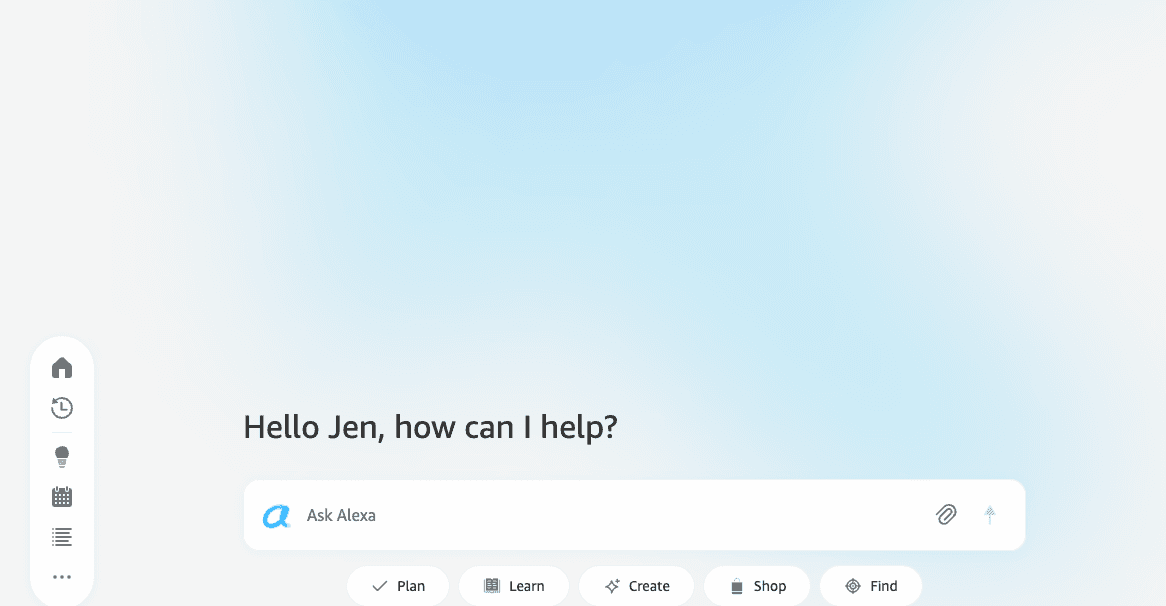
Amazon is differentiating its AI assistant by focusing on household organization and family needs rather than competing solely on conversational AI capabilities. The web interface emphasizes features for planning trips and meals, managing to-do lists, controlling smart home device control, and coordinating family calendars
1
. Users can upload documents, emails, and images to Alexa+ through the website, allowing the AI to extract important information like converting recipes into shopping lists or automatically adding kids' soccer schedules to calendars4
.
Source: The Verge
The platform provides continuity across devices, allowing users to start conversations on their PC and continue them on mobile app or Echo devices, with all previous chats, preferences, and personalization seamlessly carrying over
3
. Amazon has integrated the service with its shopping ecosystem, including Amazon Fresh, Whole Foods, and its e-commerce platform, enabling features like generating meal planning suggestions and automatically filling grocery carts while respecting dietary restrictions4
.Unique Capabilities and Growing Integration Network
According to Rausch, 76% of what customers use Alexa+ for cannot be done by other AI assistants, representing truly unique functionality
2
. Users are shopping three times more with Alexa+ and using recipes five times more than before, while heavy smart home customers use it 50% more for controlling connected devices2
. The platform now features third-party integrations with services including Expedia, Angi, Yelp, Square, Fodor's, OpenTable, Suno, Ticketmaster, Thumbtack, and Uber5
.The Alexa.com website includes a navigation sidebar for quick access to frequently used features like thermostat settings, calendar appointments, and shopping lists
2
. This web interface supports both voice and text interactions, breaking away from the traditional tiled interface of the Alexa app5
.Related Stories

Revenue Strategy and Future Pricing
Amazon hasn't announced when the early access period will end, but the company has confirmed that Alexa+ will eventually cost $20 per month or be included with Amazon Prime memberships, which start at $15 per month
1
. This pricing strategy suggests Amazon wants Alexa+ to drive subscriptions to Amazon Prime memberships while generating revenue from its shopping ecosystem integration1
.The subscription fee represents Amazon's attempt to turn Alexa into a profitable venture after the original assistant reportedly cost the company billions of dollars despite 600 million Alexa-powered devices being sold worldwide
1
. Amazon is also considering injecting ads into Alexa+ conversations as an additional revenue stream1
.Performance Concerns and Compatibility
While still in early access, Alexa+ has been reported to be slower than expected and struggle with inaccuracies at times
1
. The service also lacks some previously touted features like making dinner reservations or ordering takeout1
. Despite complaints about misfires and mistakes appearing across social media and online forums, Rausch maintains that the number of people opting out after trying Alexa+ remains low2
.Amazon has ensured broad device compatibility, with Alexa+ supporting over seven years of Alexa-enabled devices, including Echo speakers, Echo Frames, Echo Buds, Kindle, Ring, and Fire TV products
5
. This backward compatibility maximizes user investment while ensuring consistent service across multiple generations of hardware. Users can access the early access website by purchasing an eligible device or through existing Amazon Prime subscriptions at no extra charge3
.References
Summarized by

Navi
[2]
Related Stories
Amazon launches Alexa+ web portal to compete with ChatGPT and Google Gemini
17 Dec 2025•Technology

Amazon Unveils Alexa+: A Generative AI-Powered Assistant with Enhanced Capabilities
27 Feb 2025•Technology

Amazon Unveils Alexa+: A Next-Generation AI Assistant Poised to Transform Smart Home Interactions
07 Mar 2025•Technology
Recent Highlights
1
AI chatbots validate you too much, making you less kind to others, Stanford study reveals
Science and Research
2
Anthropic's Claude Code Source Leak Reveals Hidden AI Agent Plans and Extensive System Access
Technology

3
Judge blocks Pentagon from branding Anthropic a security risk over AI safety guardrails dispute
Policy and Regulation

Recent Highlights
Today's Top Stories




Your Daily Dose of Curated AI News
Don’t drown in AI news. We cut through the noise - filtering, ranking and summarizing the most important AI news, breakthroughs and research daily. Spend less time searching for the latest in AI and get straight to action.

