Amazon Web Services Partners with Cerebras to Deliver Faster AI Inference Using Combined AI Chips


5 Sources
5 Sources
[1]
Amazon Will Use Cerebras' Giant Chips to Help Run AI Models
Amazon.com Inc. plans to use chips from startup Cerebras Systems Inc. alongside its own Trainium processors, a combination that the companies say will be able to better run AI software. Amazon Web Services, the biggest provider of cloud computing power, will begin offering a new service based on the arrangement in the second half of 2026, according to a statement Friday. Financial terms weren't disclosed. The partnership marks the latest attempt to satisfy the voracious demand for AI computing infrastructure. The two companies have been preparing for this collaboration for several years, according to Amazon Web Services Vice President Nafea Bshara. AWS will deploy as many of the chips as it gets demand for, he said. For Cerebras, which is planning an initial public offering, having Amazon as a customer helps raise its profile in a huge potential market. AWS is the first of the hyperscalers -- the largest data center operators -- to commit to using Cerebras. Chips from the two companies will work together in what's known as inference computing -- the process of running AI software and generating answers to incoming queries. In a unique arrangement, Amazon's Trainium 3 silicon will work on prefill, or making sense of user prompts. Cerebras' Wafer Scale Engine will then take over and generate the answers. Get the Tech Newsletter bundle. Get the Tech Newsletter bundle. Get the Tech Newsletter bundle. Bloomberg's subscriber-only tech newsletters, and full access to all the articles they feature. Bloomberg's subscriber-only tech newsletters, and full access to all the articles they feature. Bloomberg's subscriber-only tech newsletters, and full access to all the articles they feature. Bloomberg may send me offers and promotions. Plus Signed UpPlus Sign UpPlus Sign Up By submitting my information, I agree to the Privacy Policy and Terms of Service. This so-called disaggregated work typically has a drawback: Communicating between the different components slows down the process. In this case, the companies aim to have an edge by using specialized chips that can more responsively handle inference tasks. The improvement will be especially apparent in areas that require a back-and-forth with the user, such as work creating computer code that's done in multiple stages. While a Trainium-only service will likely still be cheaper, the new combined chip offering will be attractive "where time is money," Bshara said. Cerebras Chief Executive Officer Andrew Feldman has signed up some of the biggest users of AI hardware as customers, and he sees the inroads as validation of his company's unusual chip design. Cerebras has pioneered a unique approach to processing information using huge chips that can handle massive amounts of data in one go. It's seeking widespread adoption of its technology in a bid to challenge market leader Nvidia Corp. The startup also operates its own data centers, which showcase the capabilities of its components and bring in recurring revenue. The Amazon announcement "brings the fastest inference to a much wider audience," Feldman said. Amazon has an "enormous reach." Though Amazon is also a major Nvidia customer, it's made headway with its own chip designs. The effort is aimed at improving the economics of its data centers and giving the company the ability to provide unique services.
[2]
Cerebras Systems, Amazon strike deal to offer Cerebras AI chips on Amazon's cloud
SAN FRANCISCO, March 13 (Reuters) - Amazon.com (AMZN.O), opens new tab and Cerebras Systems on Friday said they have reached a deal to combine the two companies' computing chips in a new service aimed at speeding up chatbots, coding tools and other artificial intelligence services. Valued at $23.1 billion, Cerebras is a chip startup aiming to take on Nvidia by building a fundamentally different kind of AI chip that does not rely on expensive high-bandwidth memory as Nvidia's flagship chips do. Earlier this year, Cerebras signed a $10 billion deal to supply chips to ChatGPT creator OpenAI. Under the deal announced Friday, Cerebras chips will sit inside Amazon Web Services (AWS) data centers and be linked to Amazon's own Trainium3 custom AI chips, connected with custom networking technology from Amazon. "Every customer large or small is on AWS, from individual developers to the largest banks in the world," Cerebras CEO Andrew Feldman told Reuters, saying the deal will "make it easy as a click to get on Cerebras." Both companies declined to disclose the size of the deal. Amazon and Cerebras will team up to tackle what is known as "inference," where previously trained AI systems take requests from users and spit out answers. The two companies will split up that task into two steps, one called "prefill" where the user's request is transformed from human words into the language of "tokens" that AI computers use, and a "decode" stage where the AI computer provides the answer the user is looking for. Amazon said its Trainium3 chips will handle prefill, while Cerebras chips handle decoding, what Feldman told Reuters is a "divide and conquer strategy." It is a similar strategy to the one that analysts expect Nvidia to unveil next week, when it details how it plans to combine its own graphics processing unit (GPU) chips with those from Groq, a startup it spent $17 billion on in late December. In a statement, Amazon said that it could not yet make a detailed comparison between its offering, which will come online in the second half of this year, and Nvidia's as-yet-unrevealed offering, but Amazon expects its service to be a better value. "The timeline for that (Nvidia-Groq) pairing remains unclear while our Trainium3 program is just months away from running production workloads," Amazon said in response to Reuters questions. "What we can say is that we believe (Trainium3) -- and future (Trainium4) -- will continue to lead in price-performance versus merchant GPUs." Reporting by Stephen Nellis in San Francisco, Editing by Franklin Paul Our Standards: The Thomson Reuters Trust Principles., opens new tab
[3]
Cerebras Systems, Amazon strike deal to offer AI chips on AWS cloud
Amazon Web Services and Cerebras Systems have joined forces. They will combine their computing chips in a new service. This service aims to speed up AI applications like chatbots and coding tools. Cerebras chips will be integrated into Amazon data centres. They will work alongside Amazon's Trainium3 AI chips. This collaboration is set to enhance AI inference capabilities. Amazon.com and Cerebras Systems on Friday said they have reached a deal to combine the two companies' computing chips in a new service aimed at speeding up chatbots, coding tools and other artificial intelligence services. Valued at $23.1 billion, Cerebras is a chip startup aiming to take on Nvidia by building a fundamentally different kind of AI chip that does not rely on expensive high-bandwidth memory as Nvidia's flagship chips do. Earlier this year, Cerebras signed a $10 billion deal to supply chips to ChatGPT creator OpenAI. Under the deal announced Friday, Cerebras chips will sit inside Amazon Web Services (AWS) data centers and be linked to Amazon's own Trainium3 custom AI chips, connected with custom networking technology from Amazon. "Every customer large or small is on AWS, from individual developers to the largest banks in the world," Cerebras CEO Andrew Feldman told Reuters, saying the deal will "make it easy as a click to get on Cerebras." Both companies declined to disclose the size of the deal. Amazon and Cerebras will team up to tackle what is known as "inference," where previously trained AI systems take requests from users and spit out answers. The two companies will split up that task into two steps, one called "prefill" where the user's request is transformed from human words into the language of "tokens" that AI computers use, and a "decode" stage where the AI computer provides the answer the user is looking for. Amazon said its Trainium3 chips will handle prefill, while Cerebras chips handle decoding, what Feldman told Reuters is a "divide and conquer strategy." It is a similar strategy to the one that analysts expect Nvidia to unveil next week, when it details how it plans to combine its own graphics processing unit (GPU) chips with those from Groq, a startup it spent $17 billion on in late December. In a statement, Amazon said that it could not yet make a detailed comparison between its offering, which will come online in the second half of this year, and Nvidia's as-yet-unrevealed offering, but Amazon expects its service to be a better value. "The timeline for that (Nvidia-Groq) pairing remains unclear while our Trainium3 program is just months away from running production workloads," Amazon said in response to Reuters questions. "What we can say is that we believe (Trainium3)-and future (Trainium4)-will continue to lead in price-performance versus merchant GPUs."
[4]
Amazon's AWS Partners With Cerebras Systems To Deliver Faster AI Inference For LLMs - Amazon.com (NASDAQ:AMZN)
The partnership aims to deliver the world's fastest AI inference for large language models (LLMs). Unmatched Speed Through Disaggregation The new solution integrates AWS Trainium chips with Cerebras CS-3 systems. By using "inference disaggregation," the system splits workloads. Trainium handles "prefill" (input processing), while the CS-3 focuses on "decode" (output generation). David Brown, Vice President at AWS, stated, "The result will be inference that's an order of magnitude faster and higher performance than what's available today." Exclusive Access via Amazon Bedrock The technology will be deployed within AWS data centers. Customers can access these speeds through Amazon Bedrock starting in the next couple of months. AWS is the first cloud provider to offer Cerebras' specialized hardware for disaggregated inference. Later this year, AWS will add support for Amazon Nova and other open-source models using this infrastructure. "Partnering with AWS... will bring the fastest inference to a global customer base," noted Cerebras CEO Andrew Feldman. Cerebras is also powering OpenAI with massive computing capacity. AMZN Price Action: Amazon.com shares were down 0.98% at $207.48 at the time of publication on Friday, according to Benzinga Pro data. Image via Shutterstock This content was partially produced with the help of AI tools and was reviewed and published by Benzinga editors. Market News and Data brought to you by Benzinga APIs To add Benzinga News as your preferred source on Google, click here.
[5]

Cerebras Systems, Amazon strike deal to offer Cerebras AI chips on Amazon's cloud
SAN FRANCISCO, March 13 (Reuters) - Amazon.com and Cerebras Systems on Friday said they have reached a deal to combine the two companies' computing chips in a new service aimed at speeding up chatbots, coding tools and other artificial intelligence services. Valued at $23.1 billion, Cerebras is a chip startup aiming to take on Nvidia by building a fundamentally different kind of AI chip that does not rely on expensive high-bandwidth memory as Nvidia's flagship chips do. Earlier this year, Cerebras signed a $10 billion deal to supply chips to ChatGPT creator OpenAI. Under the deal announced Friday, Cerebras chips will sit inside Amazon Web Services (AWS) data centers and be linked to Amazon's own Trainium3 custom AI chips, connected with custom networking technology from Amazon. "Every customer large or small is on AWS, from individual developers to the largest banks in the world," Cerebras CEO Andrew Feldman told Reuters, saying the deal will "make it easy as a click to get on Cerebras." Both companies declined to disclose the size of the deal. Amazon and Cerebras will team up to tackle what is known as "inference," where previously trained AI systems take requests from users and spit out answers. The two companies will split up that task into two steps, one called "prefill" where the user's request is transformed from human words into the language of "tokens" that AI computers use, and a "decode" stage where the AI computer provides the answer the user is looking for. Amazon said its Trainium3 chips will handle prefill, while Cerebras chips handle decoding, what Feldman told Reuters is a "divide and conquer strategy." It is a similar strategy to the one that analysts expect Nvidia to unveil next week, when it details how it plans to combine its own graphics processing unit (GPU) chips with those from Groq, a startup it spent $17 billion on in late December. In a statement, Amazon said that it could not yet make a detailed comparison between its offering, which will come online in the second half of this year, and Nvidia's as-yet-unrevealed offering, but Amazon expects its service to be a better value. "The timeline for that (Nvidia-Groq) pairing remains unclear while our Trainium3 program is just months away from running production workloads," Amazon said in response to Reuters questions. "What we can say is that we believe (Trainium3)--and future (Trainium4)--will continue to lead in price-performance versus merchant GPUs." (Reporting by Stephen Nellis in San Francisco, Editing by Franklin Paul)
Share
Share
Copy Link
Amazon Web Services announced a partnership with Cerebras Systems to combine their AI chips in a new service launching in the second half of 2026. The collaboration pairs AWS Trainium 3 processors with Cerebras' Wafer Scale Engine to accelerate AI inference computing, particularly for chatbots and coding tools. This marks the first time a major hyperscaler has committed to using Cerebras technology.
AWS and Cerebras Join Forces to Enhance AI Inference Computing
Amazon Web Services has struck a deal with Cerebras Systems to offer Cerebras AI chips on Amazon's cloud, marking a significant shift in the AI computing infrastructure landscape. The Cerebras Amazon partnership will combine AWS Trainium chips with Cerebras' innovative technology to deliver what the companies claim will be faster AI inference for LLMs than currently available solutions
1
. AWS, the largest provider of cloud computing power, plans to begin offering this new service in the second half of 2026, though financial terms remain undisclosed1
.
Source: Market Screener
For Cerebras, valued at $23.1 billion and planning an initial public offering, securing Amazon as its first hyperscaler customer represents a major validation of its unique chip design
2
. The startup has already made waves earlier this year by signing a $10 billion deal to supply AI chips to OpenAI, the creator of ChatGPT3
. According to Cerebras CEO Andrew Feldman, the partnership will "bring the fastest inference to a global customer base," leveraging AWS's reach across individual developers to the largest banks in the world2
.
Source: Bloomberg
How the Divide and Conquer Strategy Works
The technical approach behind this collaboration centers on AI inference—the process where trained AI systems respond to user queries. The companies will employ what Feldman describes as a divide and conquer strategy, splitting inference tasks into prefill and decode stages
2
. Trainium 3 processors will handle the prefill phase, transforming user requests from human language into tokens that AI systems understand. Meanwhile, Cerebras' Wafer Scale Engine will take over the decode stage, generating the actual responses users seek1
.This approach to inference disaggregation typically faces a significant challenge: communication between different components can slow down processing. However, the partnership aims to overcome this drawback by using specialized AI chips that can more responsively handle inference tasks
1
. The improvement will be especially noticeable in applications requiring back-and-forth interaction, such as chatbots and coding tools that work in multiple stages. AWS Vice President Nafea Bshara noted that while a Trainium-only service will likely remain cheaper, the combined chip offering will appeal to use cases "where time is money"1
.
Source: Reuters
Positioning to Compete with Nvidia
The collaboration arrives as the AI chip market intensifies, with multiple players seeking to compete with Nvidia, which dominates the graphics processing unit (GPU) market. Cerebras has pioneered a fundamentally different approach with its massive chips that don't rely on expensive high-bandwidth memory like Nvidia's flagship chips do
2
. The Cerebras CS-3 systems can handle massive amounts of data in one go, representing a unique architecture in the AI hardware landscape4
.Interestingly, analysts expect Nvidia to unveil a similar strategy next week, detailing how it plans to combine its own GPU chips with those from Groq, a startup Nvidia acquired for $17 billion in late December
5
. When asked about comparisons, Amazon stated it couldn't make detailed assessments of Nvidia's unrevealed offering but emphasized that its Trainium 3 program is "just months away from running production workloads" while the timeline for Nvidia-Groq pairing remains unclear . Amazon expects both Trainium 3 and future Trainium 4 chips to "continue to lead in price-performance versus merchant GPUs"2
.Related Stories

Access Through Amazon Bedrock and Data Centers
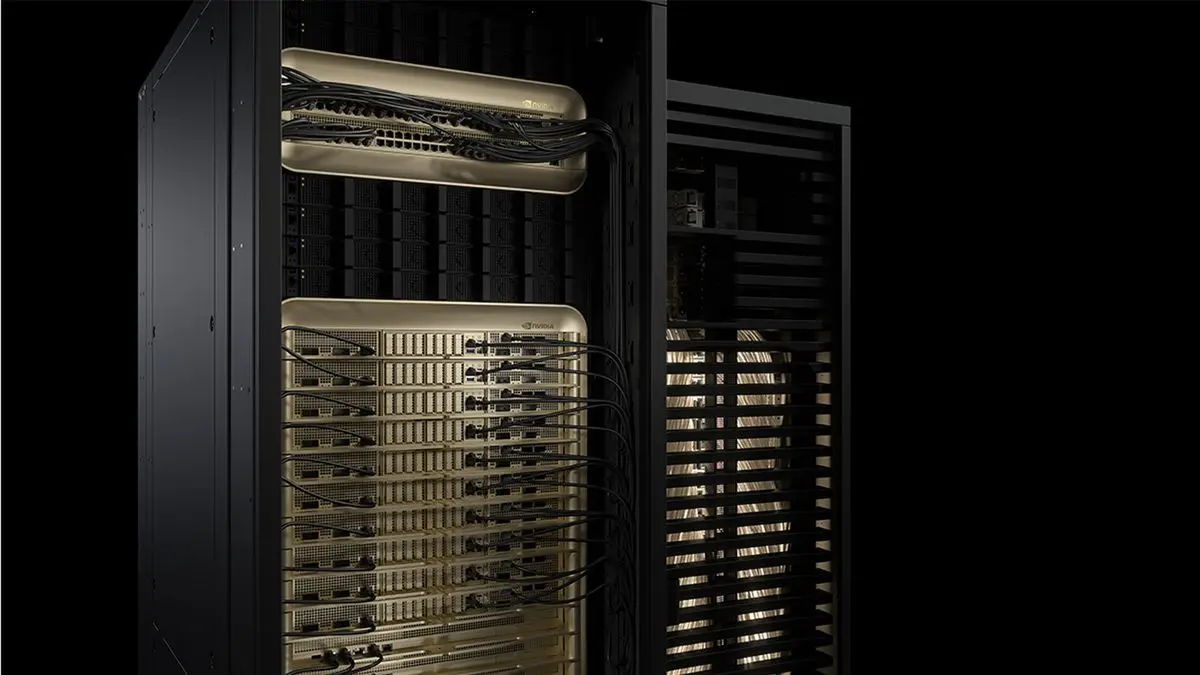
Cerebras chips will be deployed inside Amazon Web Services data centers, connected to Amazon's Trainium 3 custom AI chips through proprietary networking technology
3
. Customers will access these capabilities through Amazon Bedrock starting in the next couple of months, with AWS being the first cloud provider to offer Cerebras' specialized hardware for disaggregated inference4
. Later this year, AWS plans to add support for Amazon Nova and other open-source models using this infrastructure4
.According to AWS Vice President David Brown, "The result will be inference that's an order of magnitude faster and higher performance than what's available today"
4
. The partnership addresses the voracious demand for AI computing infrastructure, with the two companies having prepared for this collaboration for several years1
. AWS will deploy as many of the chips as demand requires, signaling confidence in market appetite for this combined solution. While Amazon remains a major Nvidia customer, this partnership demonstrates its commitment to improving data center economics and providing unique services through its own chip designs and strategic collaborations1
.References
Summarized by

Navi
Related Stories
Amazon Challenges Nvidia's AI Chip Dominance with Trainium and Project Rainier
04 Dec 2024•Technology

Amazon unveils AI Factories with Nvidia partnership and launches Trainium3 chip for on-premises AI
02 Dec 2025•Technology

Amazon Challenges Nvidia's AI Chip Dominance with Trainium 2
12 Nov 2024•Technology

Recent Highlights
1
OpenAI Releases GPT-5.4, New AI Model Built for Agents and Professional Work
Technology

2
AI chatbots helped teens plan violent attacks in 8 of 10 cases, new investigation reveals
Technology

3
Pentagon shuts door on Anthropic talks as Microsoft and Big Tech rally behind AI firm's lawsuit
Policy and Regulation

Recent Highlights
Today's Top Stories





Your Daily Dose of Curated AI News
Don’t drown in AI news. We cut through the noise - filtering, ranking and summarizing the most important AI news, breakthroughs and research daily. Spend less time searching for the latest in AI and get straight to action.

