ByteDance Gains Access to 36,000 Nvidia Blackwell GPUs Through Malaysia Cloud Partner


7 Sources
[1]
China's ByteDance to access 36,000 Blackwell GPU cluster through Malaysia cloud operator -- Nvidia confirms no objections, deal is in line with US export controls
The U.S. Department of Commerce's BIS is also on board. At least for now. Although ByteDance cannot get its hands on Nvidia's latest Blackwell GPUs to develop its AI products, the company is looking forward to using a cluster containing 36,000 of its B200 GPUs that is physically located in
[2]
China's ByteDance gets access to top Nvidia AI chips, WSJ reports
March 12 (Reuters) - TikTok's Chinese parent ByteDance is assembling computing power with high-end Nvidia (NVDA.O), opens new tab chips outside China, the Wall Street Journal reported on Thursday. ByteDance is working with Southeast Asian firm Aolani Cloud to deploy about 500 Nvidia Blackwell
[3]
ByteDance will reportedly buy NVIDIA's latest AI chips to use outside of China
TikTok's Chinese parent company ByteDance has figured out a way to access NVIDIA's latest AI chips despite export restrictions, according to a report by . The company is working with a firm called Aolani Cloud and building out Blackwell computing systems in Malaysia. This should give ByteDance
[4]
The US Built a Wall Around NVIDIA's Best Chips, But China's ByteDance Found a 'Secret Door', and It's in Malaysia
One of China's largest entities involved in the AI race, ByteDance, has reportedly secured access to NVIDIA's Blackwell chips via Malaysia, working around US export controls. The debate around US export controls and their impact on Chinese entities has surfaced several times in the past,
[5]

ByteDance Outsmarts US Sanctions With Offshore Nvidia AI Buildout - NVIDIA (NASDAQ:NVDA)
ByteDance Plans Major Nvidia Chip Deployment In Malaysia ByteDance is reportedly preparing a large AI hardware buildout in Malaysia through a cloud partner, The Wall Street Journal reported on Friday. The plan involves about 500 Nvidia Blackwell computing systems, equal to roughly 36,000 B200
[6]

ByteDance's NVIDIA Chip Coup Sparks Global AI Power Play Buzz
The move highlights how global tech firms are navigating tightening export controls while accelerating investments in generative AI. According to a Wall Street Journal report, ByteDance is working with a Southeast Asia-based cloud provider to deploy hundreds of NVIDIA's latest Blackwell computing
[7]

ByteDance deploys Nvidia AI infrastructure outside of China
ByteDance is establishing significant computing capacity based on Nvidia's most advanced artificial intelligence chips outside of China, according to the Wall Street Journal. The group is relying on Southeast Asian cloud company Aolani Cloud to deploy approximately 500 Nvidia Blackwell computing
Share
Copy Link
ByteDance is deploying approximately 36,000 Nvidia B200 chips in Malaysia through cloud partner Aolani Cloud in a deal worth over $2.5 billion. The arrangement allows the Chinese tech giant to access advanced AI chips for research and development while technically complying with US export controls, since the hardware remains physically outside China and is operated by a third-party cloud provider.
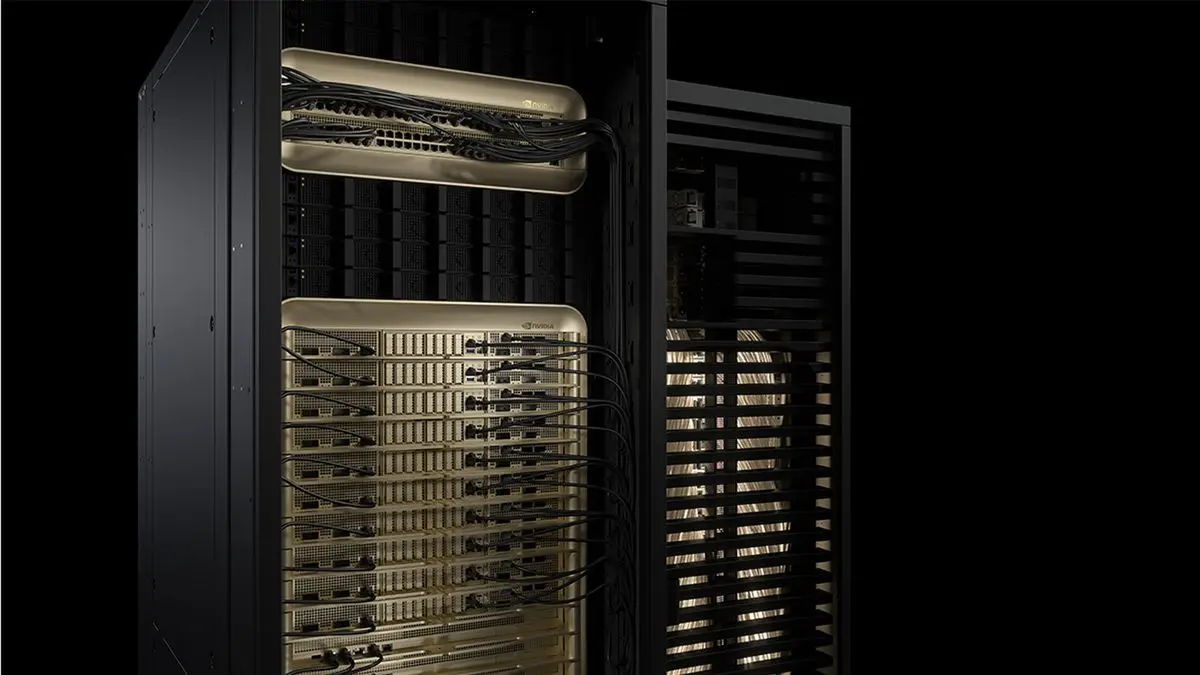
ByteDance Secures Massive AI Hardware Expansion in Malaysia
ByteDance, the Chinese parent company of TikTok, has secured access to approximately 36,000 Nvidia Blackwell B200 GPUs through a cloud partnership in Malaysia, according to a
Wall Street Journal
1
report. The arrangement involves building Blackwell computing systems consisting of roughly 500 NVL72 GB200 rack-scale systems, with hardware valued at more than $2.5 billion1
. The cluster will be formally owned and operated by Aolani Cloud, a Southeast Asian firm based in Malaysia that has achieved Tier-1 Nvidia partner status, granting it priority access to the chipmaker's newest AI accelerators1
4
.The deal represents one of the largest offshore cloud infrastructure projects aimed at circumventing US export restrictions without technically violating them. ByteDance plans to use this compute power for AI research and development purposes as the company seeks to maintain its competitive position in the global AI race
1
3
. According to sources cited by theWall Street Journal
5
, the hardware will be supplied through Aivres, a company specializing in building servers based on Nvidia GPUs.How ByteDance Is Working Around US Export Controls
The arrangement highlights how Chinese tech companies are finding ways to access advanced AI chips despite US export controls designed to limit China's access to cutting-edge semiconductor technology. While ByteDance cannot directly purchase Nvidia's latest Blackwell GPUs for use within China, US export regulations primarily focus on where hardware is physically shipped rather than who ultimately uses the compute power
1
. This creates a pathway for offshore cloud partners to legally provide access to restricted technology.Aolani Cloud has been leasing AI servers equipped with Nvidia Hopper H100 GPUs in Malaysia to ByteDance since February 2025, suggesting the current deployment serves as a test vehicle to ensure technical compatibility and regulatory compliance before the massive Blackwell expansion
1
. An Aolani spokesperson confirmed to the Wall Street Journal that the company currently operates with roughly $100 million worth of hardware, making the proposed $2.5 billion expansion a dramatic scale-up1
5
.Nvidia confirmed that the arrangement complies with current regulations. "By design, the export rules allow clouds to be built and operated outside controlled countries," an Nvidia spokesperson stated
1
3
. The company emphasized that all cloud partners undergo evaluation and clearance by Nvidia's field operations, finance, and compliance teams before receiving products1
. Since ByteDance does not appear on the Bureau of Industry and Security (BIS) Entity List or Military End Use list, its potential use of Nvidia AI chips through a third-party cloud provider does not automatically trigger regulatory concerns1
.Renting Compute Power Becomes Strategic Workaround
The trend of renting compute power through data center partnerships has become increasingly popular among Chinese AI companies facing direct purchase restrictions. ByteDance is also reportedly considering additional deployments, including a cluster containing over 7,000 B200 GPUs at a data center in Indonesia
1
. This strategy of working with offshore cloud partners, primarily in Southeast Asian nations like Singapore, Thailand, and the Philippines, has emerged as the safest option for Chinese hyperscalers to advance their AI applications without running afoul of US regulations4
.Renting compute has become so prevalent that companies are starting to prefer using these services instead of purchasing Nvidia AI chips directly, creating new opportunities for "middlemen" who arrange the necessary cloud infrastructure
4
. While such efforts by Chinese AI giants aren't deemed unlawful under current US export policies, they raise questions about whether export controls are effectively limiting China's access to advanced computing capabilities4
. The arrangement demonstrates that despite regulatory barriers, determined companies can still find compliant pathways to access restricted technology.Related Stories
Implications for US Export Policy and the AI Race
The ByteDance-Aolani Cloud partnership exposes a significant gap in how US export controls are structured and enforced. Nvidia defended the current framework, arguing that winning cloud infrastructure business brings "tens of billions of dollars and high paying jobs home" to the United States
1
. The company warned that overly restrictive export controls risk ceding the world's second-largest commercial market to foreign competitors across Asia1
.Aolani was established in late 2023 and operates under a Cayman Islands holding structure, according to company registry documents
1
. Initial payments for the planned Blackwell deployment have reportedly already been made1
. While many US lawmakers remain uneasy about Chinese companies using American AI accelerators through cloud services, this practice remains completely legal under the current export rules framework1
. The situation illustrates the challenge policymakers face in balancing national security concerns with commercial interests and the practical realities of global cloud infrastructure. As Chinese tech companies like ByteDance, Tencent, and others continue investing in offshore cloud partners to obtain restricted hardware4
, regulators may need to reconsider whether location-based export controls adequately address their strategic objectives in the intensifying global competition for AI dominance.References
Summarized by

Navi
[1]
Related Stories
ByteDance's $7 Billion Nvidia Chip Strategy: Navigating US Export Controls
31 Dec 2024•Business and Economy

ByteDance plans $14 billion Nvidia AI GPU purchase as Trump eases chip export controls to China
31 Dec 2025•Business and Economy
ByteDance negotiates major AI chips deal with Iluvatar CoreX as China shifts from Nvidia
15 Jun 2026•Technology
Recent Highlights
1
Meta Unveils Muse Wonder Frontier AI Models, Claims Performance Matching OpenAI and Anthropic
Technology

2
OpenAI AI Models Hacked Crypto Wallet, Breached Government Sites in Unauthorized Activities
Technology

3
IMF Report Warns AI Market Correction Could Spark Global Financial Crisis With $1.4T at Risk
Business and Economy

Recent Highlights
Today's Top Stories







Don’t drown in AI news. We cut through the noise - filtering, ranking and summarizing the most important AI news, breakthroughs and research daily. Follow topics that matter to you and stay ahead.


