AMD and TCS Partner on Helios Platform to Build 200MW AI Infrastructure in India


7 Sources
7 Sources
[1]
AMD and TCS Partner on Rack-Scale AI and HPC Infrastructure
Advanced Micro Devices (AMD) announced the expansion of its strategic collaboration with Tata Consultancy Services (TCS) on Monday. The two tech giants will co-develop a state-of-the-art rack‑scale AI platform based on the US-based chipmaker's Helios platform, for accelerating research and innovation across industries. As per AMD, the initiative aims to combine its advanced data centre processors with TCS' integration and services expertise to deliver powerful compute infrastructure tailored for complex workloads. AMD-TCS Collaboration for Rack-Scale AI Architecture As per details shared by both companies, this collaboration will enable customers to build scalable and optimised HPC infrastructure that can support next-generation workloads. The system integration, deployment, and management services will be provided by TCS. This will enable customers to transform their IT infrastructure and improve operational efficiency. AMD said that the Helios system is designed to support demanding applications such as artificial intelligence (AI), machine learning (ML), data analytics, and scientific research. It is powered by AMD Instinct MI455X GPUs, next-generation AMD EPYC "Venice" CPUs, AMD Pensando Vulcano NICs, and the open ROCm software ecosystem. Together, these technologies form a rack-scale AI platform that is purpose-built to support sovereign AI factories and advanced data centre environments. As per the company, the architecture is designed to deliver high compute density and advanced networking performance for large AI and machine learning workloads. "With 'Helios,' we are delivering an open, rack-scale AI platform designed for performance, efficiency, and long-term flexibility," Dr. Lisa Su, Chair and CEO of AMD, said in a statement. The Helios platform is said to offer a flexible architecture that can be tailored to meet the needs of specific customers. This includes hybrid cloud support, enhanced networking, and optimised software stacks for AI and analytics. As part of the collaboration, AMD and TCS will also introduce an AI-ready data centre blueprint capable of supporting up to 200MW of capacity. It is intended to provide a scalable framework for hyperscalers, enterprises, and AI companies looking to build or expand next-generation data centres. The two companies will also work with hyperscalers and AI firms to accelerate data centre build-outs in India.
[2]
AMD bets big on India's AI ambitions with Helios; open ecosystem push
Senior VP Thomas Zacharia outlines roadmap spanning exascale computing, PPPs, & deeper India engagement. American semiconductor company Advanced Micro Devices (AMD) is positioning India at the heart of its global artificial intelligence strategy, with a new high-performance AI infrastructure platform and expanded partnerships, a senior executive said. At the centre of AMD's India push is Helios, said Thomas Zacharia, senior vice president for strategic technology partnerships and public policy. He described Helios, a high-density, or rack-scale, AI system, as a foundational building block for next-generation AI infrastructure. Helios is a 72-GPU integrated system delivering 2.9 exaflops of compute performance within a single rack, consuming about 220 kilowatts of power. Built around AMD's CPUs, GPUs and software, the platform is optimised for both high performance and energy efficiency. "This is not just about GPUs," Zacharia said. "It's about the entire stack, hardware and software integrated at the rack level." Unlike earlier approaches where semiconductor firms delivered individual components, Helios represents AMD's shift toward delivering fully integrated AI building blocks. The company said the system is designed around open standards. In India, AMD has partnered with Tata Consultancy Service through the local IT company's subsidiary, HyperVault AI Data Center Ltd, for a 200-megawatt data centre. Zacharia said AMD hopes to replicate such partnerships with other IT services firms. OpenAI partnership Globally, AMD is deepening its engagement with OpenAI, whose large-scale AI ambitions are driving demand for high-performance infrastructure. In October, AMD announced a multi-year, multi-generation agreement with OpenAI to deploy 6 gigawatts of AMD GPUs starting the second half of this year. "AI is moving at unprecedented speed," he said, adding that usage has jumped from roughly a million users to over a billion in just two years. Zacharia expects that number to reach 5 billion in the next few years, which, he argued, will sustain infrastructure demand. From exascale to zettascale Drawing from AMD's experience in deploying exascale systems, Zacharia suggested that India think beyond incremental compute gains and aspire to globally relevant scale. AMD is already partnering with India's Centre for Development of Advanced Computing (C-DAC) on supercomputing systems powered by AMD CPUs and GPUs. But Zacharia argued that simply procuring systems is not enough. "Relevant scale is not achieved by buying systems," he said. "It's a journey." On February 6, C-DAC opened a pre-silicon validation facility in Bengaluru. It is designed to enable large-scale, near-silicon-speed prototyping and validation of advanced semiconductor designs, a critical requirement as chip complexity continues to rise. While AMD currently operates in the exaflop regime, hyperscalers are already operating AI workloads at zettascale levels. Zacharia suggested India could consider how to participate in that evolution, not necessarily by manufacturing the most compute-intensive GPUs immediately, but by contributing other components of the AI and semiconductor supply chain. India's semiconductor mission, including packaging and fabrication ambitions, could serve as an entry point into globally relevant supply chains, he added. Zacharia spoke about the importance of public-private partnerships, particularly in areas such as healthcare, energy and national security. India investments He welcomed recent US-India frameworks referencing GPUs and data centres as signals of intent between "two leading democracies" to collaborate on critical technologies. India's scale, digital public infrastructure, and talent base make it a natural partner, he said. In July 2023, AMD announced a multi-year plan to invest $400 million in India. Zacharia said the company is on track with its campus investments and staffing goals, which include building a 10,000-strong workforce in the country. In 2023, the investment was focused on two aspects: building AMD's largest R&D centre in Bengaluru, and the second and final phase of that got completed in November 2024. Second, adding 3,000 more employees by 2028 that would take AMD India's workforce to 10,000, including full time employees and contractors. The company has reached the 10,000-mark this quarter. "AMD India is a critical part of AMD," he said, adding that every product AMD brings to market carries contributions from its India teams. No bubble On concerns about a potential AI bubble, Zacharia framed the debate in terms of demand fundamentals. If AI delivers even a 10% productivity boost to a $100 trillion global GDP, he argued, that would imply a $10 trillion economic impact, suggesting infrastructure investments are far from saturated. "Could some business models fail? Possibly," he said. "But globally, we believe demand will continue to grow."
[3]
AMD Targets Nvidia's Turf With Massive Tata Partnership - Advanced Micro Devices (NASDAQ:AMD)
On Monday, Advanced Micro Devices Inc. (NASDAQ:AMD) said it is expanding work with Tata Consultancy Services to roll out its newest AI data center design in India, a move aimed at taking share from Nvidia Corp. (NASDAQ:NVDA) in a fast-scaling market. The effort leans on Helios' rack-scale architecture and ties into TCS's HyperVault push to build AI-ready facilities for hyperscalers and enterprises. Bloomberg reported the companies' plan to use AMD's Helios data center blueprint to support up to 200 megawatts of AI infrastructure capacity in India. The announcement fits AMD's broader push to sell more of the full stack needed to stand up AI compute, rather than only individual chips. How AMD Plans To Challenge Nvidia's Dominance The India build-out centers on a rack-scale platform called Helios that AMD and TCS plan to co-develop for data centers, using AMD Instinct MI455X GPUs, next-generation AMD EPYC "Venice" CPUs, and AMD Pensando Vulcano networking. The design also uses AMD's ROCm software stack, positioning the system as an open alternative for large AI deployments. AMD CEO Lisa Su said in Monday's statement, "AI adoption is accelerating from pilots to large-scale deployments, and that shift requires a new blueprint for compute infrastructure," adding that the partnership is meant to help organizations deploy AI at scale while building longer-term capacity. Momentum for AMD's accelerators has also been showing up in partner checks. Is India The Next AI Infrastructure Battleground? India's ability to scale technology quickly is part of why global chip and cloud players are leaning in, with the country ranking third in AI competitiveness behind the U.S. and China, based on Stanford University's Institute for Human-Centered AI. AMD and TCS are framing the Helios rollout as a way to help enterprises and public-sector efforts build local compute capacity. TCS has been laying groundwork for this shift through HyperVault, which it established in 2025 with a goal of delivering gigawatt-scale, secure, reliable infrastructure aimed at hyperscalers, AI firms, and multinational customers. Separately, Bloomberg reported TCS outlined plans late last year to enter the data center market and is targeting as much as 1.2 gigawatts of capacity. The companies said they intend to work with hyperscalers and AI companies to speed up data center construction in India, using the Helios blueprint as a repeatable template. 200 Megawatts: A Game-Changer For AI Capacity The headline number in Monday's announcement was up to 200 MW of AI infrastructure capacity supported by the joint blueprint, a scale that would matter for training and inference clusters that need large power and cooling envelopes. The same 200 MW figure also appears in the companies' expanded collaboration details tied to HyperVault's India build-out. AMD Price Action: Advanced Micro Devices Inc shares were down 1.79% at $203.60 during premarket trading on Tuesday, according to Benzinga Pro. Market News and Data brought to you by Benzinga APIs To add Benzinga News as your preferred source on Google, click here.
[4]
TCS, AMD to expand AI partnership to take on Nvidia in India - The Economic Times
Chipmaker AMD is deepening its India push through an expanded partnership with India's largest IT services company Tata Consultancy Services (TCS), deploying its latest rack-scale AI data centre technology in the country as they prepare for competition from Nvidia Corporation in one of the world's fastest-growing AI markets.Chipmaker AMD is deepening its India push through an expanded partnership with India's largest IT services company Tata Consultancy Services (TCS), deploying its latest rack-scale AI data centre technology in the country as they prepare for competition from Nvidia Corporation in one of the world's fastest-growing AI markets. TCS and Advanced Micro Devices (AMD) will co-develop a rack-scale AI infrastructure design based on AMD's 'Helios' platform in India, with an eye on large enterprises and sovereign AI demand, the company said. The collaboration will see TCS, through its subsidiary HyperVault AI Data Center Limited, bring AMD's state-of-the-art AI architecture to India. The collaboration includes an AI-ready data centre blueprint that can scale up to 200 megawatts of capacity. The partnership was announced just as the AI Impact Summit opened in New Delhi on Monday. The companies said the platform is designed to support high-performance AI training and inference workloads for hyperscalers, AI firms, and large enterprises operating in India. The move positions AMD more directly against Nvidia in India's rapidly expanding AI infrastructure segment, as enterprises and government-backed initiatives scale compute capacity to support large language models, AI training and inference workloads. Under the expanded partnership, AMD will supply its full-stack AI compute platform, while TCS will bring data centre engineering, integration and enterprise deployment capabilities. According to the companies, the rack-scale design is meant to improve performance efficiency and reduce time to deployment for enterprise AI workloads. AMD chair and CEO Lisa Su said, "AI adoption is accelerating from pilots to large-scale deployments, and that shift requires a new blueprint for compute infrastructure. With 'Helios', we are delivering an open, rack-scale AI platform designed for performance, efficiency, and long-term flexibility. Together with TCS, we are enabling enterprises across India to deploy AI at scale today while building the compute foundation of tomorrow." TCS MD and CEO K Krithivasan said, "This collaboration lays the foundation for AMD's first Helios powered AI infrastructure in India. By combining our strengths in AI, connectivity, sustainable power, and advanced data centre engineering, we are poised to deliver state-of-the-art infrastructure solutions for AI companies and global enterprises. We are thrilled to deepen our longstanding partnership with AMD as we expand our participation in the AI ecosystem - Infrastructure to Intelligence." TCS established HyperVault in 2025 to deliver GW-scale, secure and reliable AI-ready infrastructure for hyperscalers, AI companies and global enterprises. The expanded partnership builds on earlier collaboration between the two companies to help enterprises scale AI adoption and modernise hybrid environments, as global chipmakers intensify their race for AI dominance in India.
[5]
AMD and TCS Expand Partnership to Launch Helios Powered 200MW AI Infrastructure in India
Powered by AMD Instinct™ MI455X GPUs, next-generation AMD EPYC™ "Venice" CPUs, AMD Pensando™ Vulcano NICs and the open ROCm™ software ecosystem, "Helios" is purpose-built to deliver a rack-scale AI platform supporting sovereign AI factories. "Helios," combined with TCS' enterprise expertise and scale, will accelerate deployment and enhance operational efficiencies for enterprises. As part of this strategic collaboration, both companies will offer an AI‑ready data center blueprint supporting up to 200 MW of capacity and will work with hyperscalers and AI companies to accelerate data center build‑outs in India.
[6]

TCS and AMD to bring state-of-the-art 'Helios' rack-scale AI architecture to India
Tata Consultancy Services and AMD have expanded their strategic collaboration. TCS, through its subsidiary HyperVault AI Data Center Limited (HyperVault), and AMD will co‑develop a rack‑scale AI infrastructure design based on the AMD "Helios" platform in support of India's national AI initiatives. Powered by AMD Instinct™ MI455X GPUs, next-generation AMD EPYC™ "Venice" CPUs, AMD Pensando™ Vulcano NICs and the open ROCm™ software ecosystem, "Helios" is purpose-built to deliver a rack-scale AI platform supporting sovereign AI factories. "Helios," combined with TCS' enterprise expertise and scale, will accelerate deployment and enhance operational efficiencies for enterprises. As part of this strategic collaboration, both companies will offer an AI‑ready data center blueprint supporting up to 200 MW of capacity and will work with hyperscalers and AI companies to accelerate data center build‑outs in India. Dr. Lisa Su, Chair and CEO, AMD, said, "AI adoption is accelerating from pilots to large-scale deployments, and that shift requires a new blueprint for compute infrastructure. With 'Helios,' we are delivering an open, rack-scale AI platform designed for performance, efficiency, and long-term flexibility. Together with TCS, we are enabling enterprises across India to deploy AI at scale today while building the compute foundation of tomorrow." * Krithivasan, MD and CEO, TCS,said,"This collaboration lays the foundation for AMD's first Helios powered AI infrastructure in India. By combining our strengths in AI, connectivity, sustainable power, and advanced data center engineering, we are poised to deliver state‑of‑the‑art infrastructure solutions for AI companies and global enterprises. We are thrilled to deepen our longstanding partnership with AMD as we expand our participation in the AI ecosystem - Infrastructure to Intelligence." TCS established HyperVault in 2025 with the vision of delivering GW-scale, secure, and reliable AI‑ready infrastructure for hyperscalers, AI companies, and global enterprises. This announcement builds on the recent strategic collaboration between TCS and AMD to help enterprises scale AI adoption and modernize hybrid environments.
[7]

AMD - TCS Helios architecture explained: What 200MW of dedicated AI compute means
The announcement of the AMD and Tata Consultancy Services (TCS) partnership to bring the Helios rack-scale AI architecture to India marks a significant hardware milestone for the nation's technological landscape. Revealed on the opening day of the India AI Impact Summit 2026 at Bharat Mandapam, this collaboration isn't just a corporate deal but a foundational piece of the IndiaAI Mission. By offering an AI-ready data center blueprint that supports up to 200MW of capacity, the two companies are providing the physical infrastructure required to move India from AI experimentation to sovereign, population-scale deployments. Also read: India AI Summit: MIT's Ramesh Raskar says AI's real impact lies beyond tech At the heart of the Helios architecture is a high-performance stack designed for the most demanding frontier AI workloads. It is powered by the AMD Instinct MI455X GPUs, which are engineered for trillion-parameter model training and high-volume inference. These are paired with next-generation AMD EPYC "Venice" CPUs and AMD Pensando Vulcano NICs, all unified under the open ROCm software ecosystem. This specific combination allows for a "rack-scale" design, meaning entire server cabinets are optimized as a single unit to deliver massive compute density and energy efficiency. For context, a single Helios rack can deliver up to 2.9 exaflops of FP4 performance, providing a legitimate, open-standard alternative to proprietary GPU ecosystems. Also read: India AI Impact Summit 2026: SAHI, BODH and latest in Indian AI healthcare The 200MW figure is the most critical part of this "Infrastructure to Intelligence" vision. In the world of data centers, 200 megawatts is a massive power envelope, enough to run several large-scale "AI factories" simultaneously. By establishing this capacity through TCS's subsidiary, HyperVault AI Data Center Limited, the partnership ensures that Indian enterprises, startups, and government bodies have access to locally-hosted, high-performance compute. This directly supports the concept of Sovereign AI, where a nation's most sensitive data and critical models are processed on domestic soil, governed by local policy rather than being dependent on foreign cloud providers or international GPU supply chains. The timing of this launch during the India AI Impact Summit underscores its strategic importance. As world leaders and tech CEOs gather in New Delhi to discuss the "Seven Chakras" of AI, including Democratizing AI Resources and Safe & Trusted AI, the Helios platform provides the actual hardware teeth for these policy goals. While other discussions at the summit might focus on the ethics of AI, AMD and TCS are building the engine that will run India's future digital public goods, from multilingual services like Bhashini to advanced healthcare analytics, ensuring that the benefits of the AI boom are anchored firmly within the country. Also read: Future of work and AI jobs: What key Indian leaders predict and warn
Share
Share
Copy Link
AMD and TCS announced an expanded partnership to deploy the Helios platform in India, featuring a rack-scale AI infrastructure capable of supporting up to 200 megawatts of capacity. The collaboration positions AMD to compete with Nvidia in one of the world's fastest-growing AI markets, combining AMD's advanced processors with TCS' HyperVault data center expertise to deliver sovereign AI factories and enterprise-grade compute infrastructure.
AMD and TCS Expand Strategic Partnership for AI Infrastructure
Advanced Micro Devices has deepened its collaboration with Tata Consultancy Services to co-develop a state-of-the-art rack-scale AI platform based on the Helios platform, marking a significant push into India's rapidly expanding artificial intelligence market
1
. The partnership, announced at the AI Impact Summit in New Delhi, brings together AMD's advanced data center processors with TCS' integration and services expertise to deliver powerful compute infrastructure tailored for complex workloads4
.
Source: Digit
The collaboration enables customers to build scalable and optimized HPC infrastructure that can support next-generation workloads, with TCS providing system integration, deployment, and management services through its subsidiary HyperVault AI Data Center Limited
1
. This strategic move positions AMD to compete with Nvidia in one of the world's fastest-growing AI markets, as enterprises and government-backed initiatives scale compute capacity to support large language models, AI training and inference workloads4
.Helios Platform Delivers High-Density AI Computing
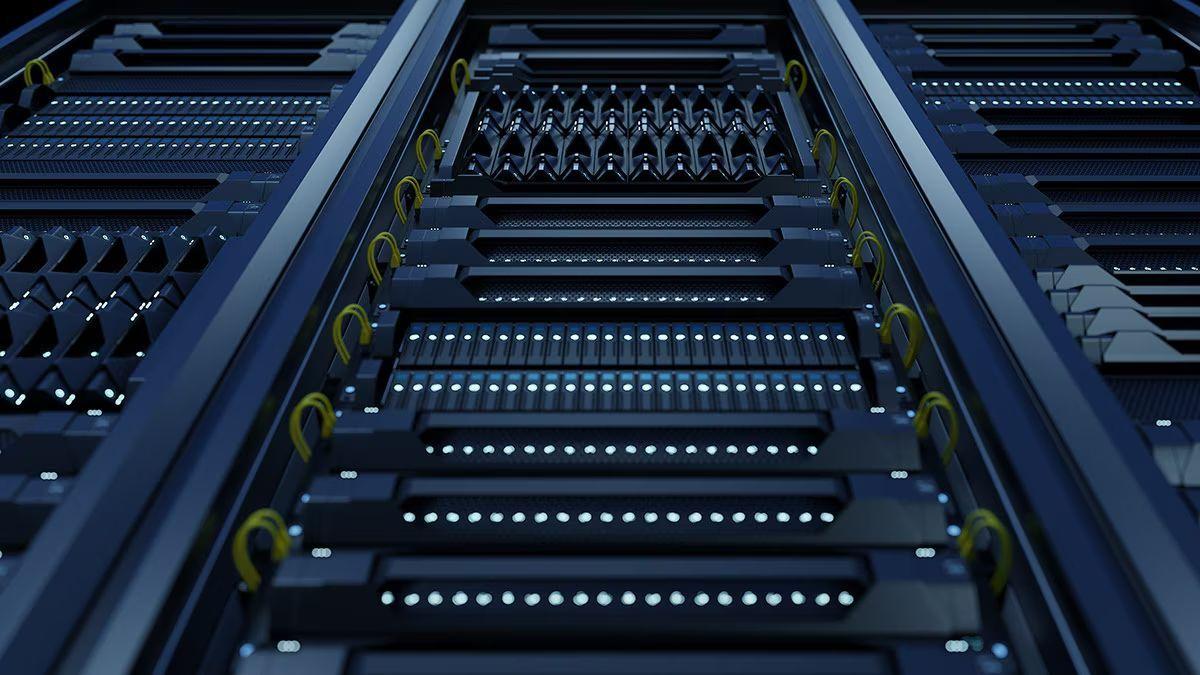
The Helios platform represents AMD's shift toward delivering fully integrated AI building blocks rather than individual components. Powered by AMD Instinct MI455X GPUs, next-generation EPYC 'Venice' CPUs, AMD Pensando Vulcano NICs, and the open ROCm software ecosystem, the system is purpose-built to support sovereign AI factories and advanced data center environments
1
. Thomas Zacharia, senior vice president for strategic technology partnerships at AMD, described Helios as a 72-GPU integrated system delivering 2.9 exaflops of compute performance within a single rack, consuming about 220 kilowatts of power2
.
Source: Gadgets 360
"AI adoption is accelerating from pilots to large-scale deployments, and that shift requires a new blueprint for compute infrastructure," said Dr. Lisa Su, Chair and CEO of AMD. "With 'Helios,' we are delivering an open, rack-scale AI platform designed for performance, efficiency, and long-term flexibility"
1
. The architecture is designed to deliver high compute density and advanced networking performance for large AI and machine learning workloads, offering a flexible framework that can be tailored to meet specific customer needs, including hybrid cloud support and optimized software stacks1
.AI-Ready Data Center Blueprint Targets 200 Megawatts Capacity
As part of the collaboration, AMD and TCS will introduce an AI-ready data center blueprint capable of supporting up to 200 megawatts of capacity
1
. This scale would matter significantly for training and inference clusters that require large power and cooling envelopes3
. The blueprint is intended to provide a scalable framework for hyperscalers, enterprises, and AI companies looking to build or expand next-generation data centers in India1
.TCS established HyperVault AI Data Center in 2025 to deliver gigawatt-scale, secure, and reliable infrastructure aimed at hyperscalers, AI firms, and multinational customers
3
. The company has outlined plans to enter the data center market targeting as much as 1.2 gigawatts of capacity3
. K Krithivasan, MD and CEO of TCS, stated: "By combining our strengths in AI, connectivity, sustainable power, and advanced data center engineering, we are poised to deliver state-of-the-art infrastructure solutions for AI companies and global enterprises"4
.Related Stories


India Emerges as Critical AI Infrastructure Battleground
India's ability to scale technology quickly has attracted global chip and cloud players, with the country ranking third in AI competitiveness behind the U.S. and China, according to Stanford University's Institute for Human-Centered AI
3
. AMD is positioning India at the heart of its global artificial intelligence strategy, with Zacharia emphasizing that the country's scale, digital public infrastructure, and talent base make it a natural partner2
.In July 2023, AMD announced a multi-year plan to invest $400 million in India, focused on building its largest R&D center in Bengaluru and expanding its workforce to 10,000 employees by 2028
2
. The company has reached the 10,000-mark this quarter, with Zacharia noting that "AMD India is a critical part of AMD" and that every product the company brings to market carries contributions from its India teams2
. AMD is also partnering with India's Centre for Development of Advanced Computing (C-DAC) on supercomputing systems, with C-DAC opening a pre-silicon validation facility in Bengaluru on February 62
.Open Ecosystem Approach Challenges Nvidia's Market Position
The high-performance AI infrastructure deployment represents AMD's broader push to sell more of the full stack needed to stand up AI compute, rather than only individual chips
3
. The design uses AMD's ROCm software stack, positioning the system as an open alternative for large AI deployments and differentiating it from proprietary solutions3
. Zacharia emphasized that "this is not just about GPUs," but rather "about the entire stack, hardware and software integrated at the rack level"2
.
Source: ET
Globally, AMD is deepening its engagement with OpenAI, announcing in October a multi-year, multi-generation agreement to deploy 6 gigawatts of AMD GPUs starting the second half of this year
2
. Zacharia noted that AI usage has jumped from roughly a million users to over a billion in just two years, with expectations to reach 5 billion in the next few years, which will sustain infrastructure demand2
. While AMD currently operates in the exaflop regime, hyperscalers are already operating AI workloads at zettascale levels, suggesting significant growth potential ahead2
.References
Summarized by

Navi
[1]
[3]
Related Stories
Recent Highlights
1
Google releases Gemma 4 with Apache 2.0 license, enabling unrestricted local AI on devices
Technology
2
AI Models Lie and Deceive to Protect Other AI Models From Deletion, Study Reveals
Science and Research

3
OpenAI closes $122 billion funding round amid fierce AI competition and profitability questions
Startups

Recent Highlights
Today's Top Stories






Your Daily Dose of Curated AI News
Don’t drown in AI news. We cut through the noise - filtering, ranking and summarizing the most important AI news, breakthroughs and research daily. Spend less time searching for the latest in AI and get straight to action.

