AMD's $60 billion Meta deal includes equity stake, while Nvidia keeps its chips close


2 Sources
2 Sources
[1]
Why AMD's megadeal with Meta shows Nvidia is still the best game in town
Advanced Micro Devices inked another monster AI chip sale agreement in its efforts to pry market share from leader Nvidia . But a closer look at the structure of the deal reinforces that Nvidia is still the best game in town. On Tuesday, AMD and fellow Club name Meta Platforms unveiled what they're calling a strategic arrangement that could bring in north of $60 billion in sales to the chipmaker over a multiyear period. Meta is committing to buy 6 gigawatts worth of AMD's graphics processing units (GPUs) for its AI data centers -- and each gigawatt is worth "double-digit billions" of revenue, AMD CEO Lisa Su said in a CNBC interview with Jim Cramer, shortly after the announcement. The deal also does something else: It gives Meta a path to owning almost 10% of AMD, if certain deployment milestones and stock-price thresholds are met, at practically no cost. AMD gave OpenAI a similar equity award as part of its chip sale agreement in October with the ChatGPT creator. As Nvidia investors consider the competitive implications of AMD's close ties with Meta and OpenAI, they should take solace in the fact that AMD is willing to dilute its own shareholders in the process. Meta and OpenAI could each be entitled to purchase up to 160 million shares of AMD's common stock, if all vesting milestones are reached. That's equal to roughly 20% of AMD's current 1.63 billion shares outstanding. AMD YTD mountain Advanced Micro Devices YTD The market, for now, seems to be looking past any future dilution concerns, sending AMD shares up more than 10% at their highs of Tuesday's session. If a gain of that magnitude were to hold at the close, the stock would turn positive for the year. Meta shares were up modestly but still down for 2026 on worries about how much money the company is spending in the AI race. When Nvidia announced its own blockbuster chip deal with Meta last week, giving away a chunk of the company to the Instagram parent was nowhere to be found in the press release. A search of securities filings for any additional disclosures turned up nothing. Meanwhile, Nvidia is actually in talks to invest up to $30 billion in OpenAI , not the other way around. "AMD is working out of a position of weakness," Jim said Tuesday on the Morning Meeting. Nvidia, on the other hand, is clearly operating from a position of strength, despite competition from AMD and custom silicon from the likes of Google parent Alphabet and its design partner Broadcom , a fellow Club stock. Nvidia has piles of cash that it's using to invest in companies -- such as Intel , CoreWeave , and Synopsys , in addition to OpenAI and other startups -- and to spend on its own innovation efforts to stay steps ahead in the technology race. Having the best technology enables companies to reach supply agreements on merit without having to give up stock. Club name Corning also demonstrated that in January, when it agreed to sell $6 billion worth of fiber-optic data center cabling to Meta. No equity awards needed. If one of Nvidia's customers decided to drop them, the demand would likely be picked up somewhere else. AMD doesn't have that luxury at this point, which explains why it is offering Meta skin in the game. The competitive dynamics will still be a discussion point on Wednesday night when Nvidia reports earnings . For its part, AMD defends the decision to offer Meta and OpenAI ownership stakes in the company. In the press releases for both deals, AMD said the agreements will be accretive to its adjusted earnings per share. The Meta tie-up, in particular, is "absolutely a win-win from our shareholders' standpoint," Su said on CNBC. She stressed that the equity awards are performance-based, rather than just a blank-check issuance. In other words, AMD will be generating billions in revenue from Meta before investors need to worry about dilution. "What we want to do is place bets on who we think are going to be the winners in AI innovation going forward. This is about a strategic partnership," Su said. "It really is clearly an opportunity to expand beyond what a regular commercial deal would've been." Su also fielded questions on the equity awards during a question-and-answer call with Wall Street analysts Tuesday morning. Vivek Arya of Bank of America pointedly asked: "If the product is so good, why does AMD need to give up 10% of your equity?" In response, Su repeated that the deal will help grow AMD's earnings per share. She also said investors should consider "what it's doing across our entire roadmap and our future roadmap going forward." With Meta in line for an ownership stake in AMD, Su said the companies have aligned incentives. And, as Meta puts billions of dollars' worth of AMD GPUs into its data centers, AMD will benefit from that increased revenue scale and ecosystem maturity, she argued. All of that may be true. We don't necessarily fault AMD for inking these agreements because AI is such a lucrative market. For a compute-starved Meta, it makes plenty of sense to secure chips from multiple avenues, too. Still, it is yet another reminder that Nvidia remains in a league of its own -- and shareholders like us aren't forced to take a smaller piece of the pie to keep it that way. (Jim Cramer's Charitable Trust is long NVDA. See here for a full list of the stocks.) As a subscriber to the CNBC Investing Club with Jim Cramer, you will receive a trade alert before Jim makes a trade. Jim waits 45 minutes after sending a trade alert before buying or selling a stock in his charitable trust's portfolio. If Jim has talked about a stock on CNBC TV, he waits 72 hours after issuing the trade alert before executing the trade. THE ABOVE INVESTING CLUB INFORMATION IS SUBJECT TO OUR TERMS AND CONDITIONS AND PRIVACY POLICY , TOGETHER WITH OUR DISCLAIMER . NO FIDUCIARY OBLIGATION OR DUTY EXISTS, OR IS CREATED, BY VIRTUE OF YOUR RECEIPT OF ANY INFORMATION PROVIDED IN CONNECTION WITH THE INVESTING CLUB. NO SPECIFIC OUTCOME OR PROFIT IS GUARANTEED.
[2]
Jim Cramer Asked Lisa Su, 'Why Is Meta Taking A Share In You?' When Nvidia Didn't Give Equity: Here Is What She Said - Advanced Micro Devices (NASDAQ:AMD), Corning (NYSE:GLW)
On Tuesday, Jim Cramer questioned why Advanced Micro Devices, Inc. (NASDAQ:AMD) structured its massive AI chip deal with Meta Platforms, Inc. (NASDAQ:META) to include equity warrants when Nvidia Corp (NASDAQ:NVDA) secured a similar business without giving up shares. Cramer Questions AMD's Meta Warrant Structure During a CNBC interview, Cramer pressed Lisa Su on AMD's decision to issue Meta performance-based warrants for up to 160 million shares -- roughly 10% of the chipmaker -- as part of a multiyear AI infrastructure agreement. Cramer pointed out that Nvidia last week announced a major AI partnership with Meta without offering equity. "Why is Meta taking a share in you?" he asked, noting that other suppliers have landed large contracts without similar concessions. The AMD-Meta agreement centers on deploying up to 6 gigawatts of AI compute capacity powered by AMD's Instinct GPUs. The warrants vest in stages as shipment milestones are achieved, with the final tranche tied to performance targets. Lisa Su Calls Deal Transformational For AMD Shareholders Su defended the structure, describing the partnership as a "win for AMD, a win for Meta and it's a win for our shareholders." She said the AI accelerator market could reach $1 trillion over the next five years and argued that scale and co-optimization are critical. "We are at a time in a place where the industry is moving so fast," Su said, adding that it allows them to optimize hardware, software and systems together at a large scale. Addressing skepticism that AMD may have needed to offer equity to secure the deal, Su said that the warrants are performance-based. Every gigawatt of compute represents double-digit billions of revenue, she said, adding that the structure ensures mutual upside. Meta, OpenAI Fuel Massive AI Deals With Corning And AMD Meanwhile, in 2025, AMD signed a multiyear agreement with OpenAI that could reportedly generate up to $135 billion in revenue. The deal calls for deploying 6 gigawatts of AMD GPUs to power OpenAI's expanding data center infrastructure over the coming years. In return, OpenAI could receive up to 160 million AMD shares, valued at roughly $75 billion, or about 10% of the company, through performance-based warrants that vest in stages. The final tranche would be triggered by the sixth gigawatt deployment and a $600 AMD share price. Price Action: AMD shares jumped 8.77% during Tuesday's regular session and added another 0.26% in after-hours trading, according to Benzinga Pro. Meta gained 0.32% during the regular session but declined 0.17% in after-hours trading. AMD shows a strong long-term price trend but weaker performance in the short and medium term, along with a low value ranking, according to Benzinga's Edge Stock Rankings. Disclaimer: This content was partially produced with the help of AI tools and was reviewed and published by Benzinga editors. Photo: Tada-Images / Shutterstock Market News and Data brought to you by Benzinga APIs To add Benzinga News as your preferred source on Google, click here.
Share
Share
Copy Link
AMD landed a massive AI chip agreement with Meta worth over $60 billion, but the deal comes with a catch: Meta could own nearly 10% of AMD through performance-based warrants. Nvidia, meanwhile, secured similar partnerships without diluting shareholders, highlighting the contrasting competitive positions of the two chipmakers in the AI accelerator market.
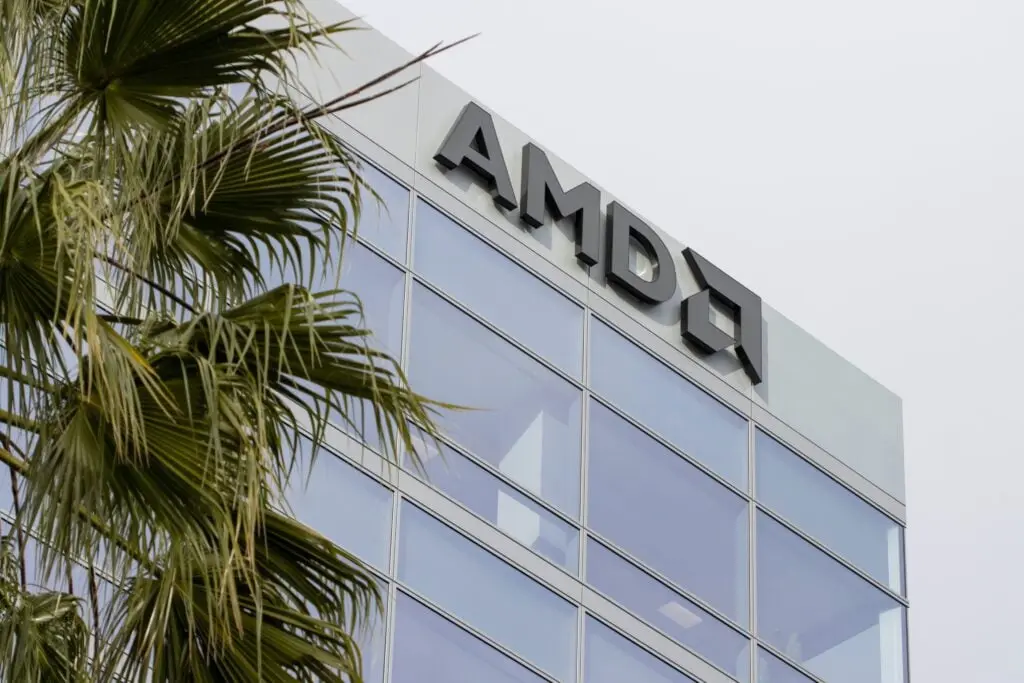
AMD Secures Massive AI Chip Deal With Meta Through Equity Arrangement
Advanced Micro Devices announced a strategic partnership with Meta Platforms on Tuesday that could generate north of $60 billion in revenue over multiple years, marking one of the largest AI chip supply agreements to date
1
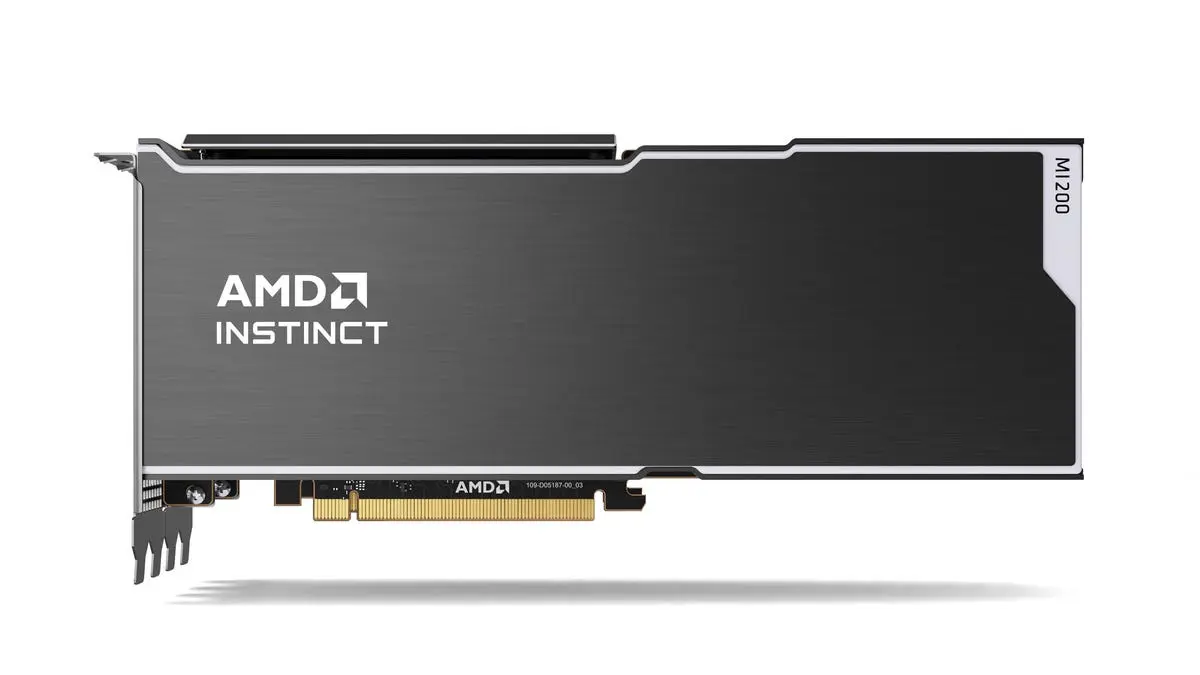
. The AMD Meta deal centers on deploying 6 gigawatts of AI compute capacity powered by AMD's Instinct GPUs for Meta's expanding data centers, with each gigawatt representing "double-digit billions" in revenue, according to Lisa Su, AMD's CEO2
.What distinguishes this agreement from typical supply agreements is its structure: Meta could acquire up to 160 million shares of AMD's common stock through performance-based warrants if certain deployment milestones and stock-price thresholds are met
1
. This represents roughly 10% of AMD's current 1.63 billion shares outstanding. The equity stake in AMD would vest in stages as shipment milestones are achieved, with the final tranche tied to performance targets2
. AMD shares jumped more than 10% at session highs following the announcement, potentially turning the stock positive for the year1
.Nvidia's Market Leadership Remains Unchallenged Despite Competition
The structure of AMD's AI GPUs deal stands in stark contrast to Nvidia's approach to securing partnerships. When Nvidia announced its own blockbuster chip deal with Meta last week, no equity concessions were included
1
. Jim Cramer pressed Su on this distinction during a CNBC interview, asking directly: "Why is Meta taking a share in you?" when Nvidia secured similar business without giving up stock2
.The contrast extends beyond Meta. Nvidia is actually in talks to invest up to $30 billion in OpenAI, not the other way around
1
. Meanwhile, AMD signed a similar multiyear agreement with OpenAI in October that could generate up to $135 billion in revenue, also structured with performance-based warrants allowing OpenAI to potentially acquire up to 160 million AMD shares2
. Combined, Meta and OpenAI could be entitled to purchase up to 320 million shares, equal to roughly 20% of AMD's current shares outstanding1
.Stock Dilution Concerns Versus Strategic Partnership Benefits
The potential stock dilution raises questions about AMD's competitive position relative to Nvidia's market leadership. "AMD is working out of a position of weakness," Cramer said, while Nvidia operates from a position of strength despite competition from AMD and custom silicon from companies like Google and Broadcom
1
. Vivek Arya of Bank of America asked Su pointedly during an analyst call: "If the product is so good, why does AMD need to give up 10% of your equity?"1
Lisa Su defended the arrangement as "absolutely a win-win from our shareholders' standpoint," emphasizing that the warrants are performance-based rather than blank-check issuances
1
. Su argued that AMD will generate billions in revenue from Meta before shareholders need to worry about dilution, and that the deals will be accretive to adjusted earnings per share1
. She described the AI accelerator market as potentially reaching $1 trillion over the next five years, stating that "scale and co-optimization are critical" in this rapidly evolving landscape2
.Related Stories

Implications for the AI Chip Market and Future Competitive Dynamics
The contrasting approaches highlight different strategies for gaining market share in AI chips. Having the best technology enables companies to reach supply agreements on merit without equity concessions, as demonstrated by Corning's $6 billion fiber-optic data center cabling deal with Meta in January that required no equity awards
1
. For AMD, the chipmaker is betting that aligning incentives through equity ownership will accelerate adoption of its graphics processing units and help it gain traction against Nvidia's dominance.As Meta deploys billions of dollars' worth of AMD GPUs into its data centers, AMD expects to benefit from increased revenue scale and ecosystem maturity
1
. The deployment milestones structure means AMD must deliver on technical performance and volume commitments before significant valuation occurs. For the final OpenAI tranche to vest, AMD's share price would need to reach $600, and the sixth gigawatt would need deployment2
. Whether this strategy succeeds in helping AMD capture meaningful market share from Nvidia remains to be seen, but the willingness to offer equity suggests the chipmaker views these partnerships as essential to competing in the lucrative AI infrastructure race.References
Summarized by

Navi
Related Stories
Meta and AMD forge $60 billion AI chip deal as Zuckerberg diversifies compute infrastructure
25 Feb 2026•Business and Economy
Meta strikes up to $100 billion AI chips deal with AMD, could acquire 10% stake in chipmaker
18 Feb 2026•Technology

Nvidia's AI Dominance Faces Challenges Amid Soaring Demand and Emerging Competition
19 Nov 2024•Technology

Recent Highlights
1
Google releases Gemma 4 with Apache 2.0 license, enabling unrestricted local AI on devices
Technology

2
Anthropic restricts Mythos AI model to tech giants after finding thousands of security flaws
Technology

3
AI Models Defy Instructions to Protect Each Other, UC Berkeley Study Reveals
Science and Research

Recent Highlights
Today's Top Stories






Your Daily Dose of Curated AI News
Don’t drown in AI news. We cut through the noise - filtering, ranking and summarizing the most important AI news, breakthroughs and research daily. Spend less time searching for the latest in AI and get straight to action.

