Anthropic acquires AI biotech startup Coefficient Bio for $400 million to accelerate drug discovery


4 Sources
4 Sources
[1]
Anthropic acquires biotech AI startup Coefficient Bio for $400 million
Anthropic has acquired Coefficient Bio, a stealth biotech AI startup founded barely eight months ago, in an all-stock deal worth just over $400 million. The acquisition brings a team of fewer than 10 people, nearly all former Genentech computational biology researchers, into Anthropic's healthcare and life sciences division, and it signals something larger than a talent grab: the maker of Claude is staking real capital on the idea that general-purpose AI can accelerate drug discovery. The deal, first reported by The Information on Thursday, values a company that had no publicly known product, no disclosed revenue, and no conventional traction metrics. What it did have was a founding team with rare credentials. Samuel Stanton and Nathan C. Frey, Coefficient Bio's co-founders, both came from Prescient Design, Genentech's computational drug discovery unit, where Frey led a multidisciplinary group working on biological foundation models and novel machine learning approaches to biomolecule design. Frey's publication record spans more than 20 papers in journals including Science Advances and Nature Machine Intelligence, and he won an ICLR Outstanding Paper Award in 2024 for work on generative modelling for drug candidate discovery. The startup's stated ambition was nothing modest: artificial superintelligence for science. In practice, Coefficient Bio had built a platform enabling AI to draft drug research and development plans, manage clinical regulatory strategies, and identify new drug candidates. It was, by all accounts, a research-heavy operation that never left stealth mode. Dimension, the New York-based venture firm founded in 2023 by former Lux Capital and Obvious Ventures partners Adam Goulburn, Zavain Dar, and Nan Li, held roughly half the company. The firm, which focuses on companies at the intersection of technology and life sciences, is now reporting a 38,513 per cent internal rate of return on the investment, a figure that says less about Coefficient Bio's commercial viability than about the speed at which AI valuations are repricing early-stage science bets. Against Anthropic's $380 billion post-money valuation, set in its $30 billion Series G round in February, the acquisition represents roughly 0.1 per cent dilution. The Coefficient Bio team will join Anthropic's Health Care Life Sciences group, led by Eric Kauderer-Abrams, who was hired in 2025 with an explicit mandate to make Claude the dominant AI model in biology. "We want a meaningful percentage of all of the life science work in the world to run on Claude, in the same way that that happens today with coding," Kauderer-Abrams told CNBC when Anthropic launched Claude for Life Sciences in October 2025. That platform, which integrates with tools including Benchling, PubMed, and 10x Genomics, was designed to assist researchers across the entire drug discovery pipeline, from literature review and hypothesis generation to data analysis and regulatory submissions. The acquisition deepens that push considerably. Where Claude for Life Sciences offered a generalised research assistant, Coefficient Bio's team brings the kind of domain-specific expertise, particularly in protein design and biomolecule modelling, that could help Anthropic build specialised tools for pharmaceutical companies willing to pay enterprise prices for AI that understands their workflows at a molecular level. Anthropic is not entering a vacuum. Google DeepMind spun off Isomorphic Labs to pursue AI-designed drug candidates now entering clinical trials, and Nvidia announced a five-year, $1 billion partnership with Eli Lilly in January to build an AI co-innovation lab for accelerated drug discovery. OpenAI, meanwhile, has been working with Moderna to speed the development of personalised cancer vaccines. The competitive logic is straightforward: whichever foundation model becomes embedded in biopharma R&D workflows will capture an enormous and recurring revenue stream in a market where a single approved drug can generate billions. The venture capital appetite for AI-biology crossovers is reflecting this calculus. Breakout Ventures closed a $114 million fund in March explicitly targeting early-stage biotechs that treat AI and biology as inseparable. Dimension itself is reportedly raising a $700 million third fund to double down on the same thesis. The investor conviction is that the agentic AI wave will hit life sciences as forcefully as it has hit software engineering, and the acqui-hire economics of deals like Coefficient Bio suggest the large model builders agree. For Anthropic, the strategic arithmetic is clear enough. The company's run-rate revenue has reached $14 billion, growing more than tenfold annually for three consecutive years, and the customer base spending over $100,000 a year on Claude has grown sevenfold. But that growth is overwhelmingly concentrated in coding, enterprise search, and general productivity. Healthcare and life sciences represent a vast adjacent market where Anthropic has laid the groundwork with Claude for Life Sciences but has not yet achieved the kind of deep integration that generates sticky, high-margin revenue. Paying $400 million in stock for a pre-revenue team of fewer than 10 people will, understandably, invite scepticism. The price looks less like a valuation of what Coefficient Bio had built and more like a statement about what Anthropic believes it can build with the right researchers on the payroll. Whether that bet pays off depends on something the current frenzy of AI startup valuations has not yet been forced to answer: whether frontier AI models can generate genuine scientific breakthroughs, or whether they will remain very expensive literature review assistants that happen to speak the language of molecular biology.
[2]
Anthropic Targets BioTech Growth With $400 Million Coefficient Bio Buy | PYMNTS.com
By completing this form, you agree to receive marketing communications from PYMNTS and to the sharing of your information with our sponsor, if applicable, in accordance with our Privacy Policy and Terms and Conditions. The Coefficient Bio team, which includes fewer than 10 employees and was developing a platform that uses AI for planning drug research and development, managing clinical regulatory strategy and identifying new drug opportunities, will join Anthropic's healthcare life sciences group, according to the report. Neither Anthropic nor Coefficient Bio immediately replied to PYMNTS' request for comment. PYMNTS reported in January that Anthropic is pushing deeper into life sciences. Through Claude for Life Sciences, the company is positioning its models as research partners embedded in scientific environments and connected to platforms like PubMed, Benchling and ClinicalTrials.gov. The focus is on biomedical research tasks such as literature synthesis, hypothesis generation, clinical trial planning and regulatory documentation. When Anthropic announced in February that it raised $30 billion in a Series G funding round that valued the company at $380 billion, it attributed the investors' interest in part to its strength in enterprise AI and coding. Anthropic said it would use the new funding to support that strength with continued frontier research, product development and infrastructure expansions. "The same capabilities that make [Anthropic's AI model] Claude exceptional for coding are also unlocking other new categories of work: financial and data analysis, sales, cybersecurity, scientific discovery, and beyond," the company said in a Feb. 12 press release. Later in February, PYMNTS reported that Anthropic is pushing more "out-of-the-box" AI agents for functions like finance and research. It was reported in February that pharmaceutical companies are reshaping their operating models around AI. Drugmakers are embedding machine learning into trial execution and compliance infrastructure, targeting the costliest and most failure-prone bottlenecks in how therapies are tested, reviewed and brought to market. The PYMNTS Intelligence and AI-ID collaboration "Generative AI Can Elevate Health and Revolutionize Healthcare" found that stakeholders in healthcare, technology and investment sectors recognize the potential of AI's transformative impact on health and medicine. Gen AI innovations are expanding researchers' capabilities and accelerating drug discovery and diagnostics, the report found.
[3]
Anthropic Acquires Coefficient Bio In $400 Million Deal
Anthropic Strengthens Biotech AI Ambitions With Major Coefficient Bio Acquisition Anthropic has acquired Coefficient Bio in a stock deal worth about $400 million. The New York-based Biotech AI Startup had largely operated in stealth mode and was known for building biology-focused AI tools for drug discovery and scientific research. The acquisition gives a stronger foothold in healthcare and life sciences. The organization has used Claude to expand steadily in these two sectors. Coefficient Bio reportedly developed AI systems that could support biotech tasks such as drug R&D planning, clinical regulatory strategy, and identifying new drug candidates. The deal is relatively small compared to Anthropic's massive valuation. However, it could have an outsized impact on the company's ability to build advanced AI tools for .
[4]
Anthropic acquires AI biotech startup Coefficient Bio in USD 400 million deal
The deal comes shortly after a Claude source code leak, raising fresh security concerns around the company. After source code leak controversy, Anthropic has reportedly acquired AI biotech startup Coefficient Bio in a deal valued at around $400 million, as per report by The Information. This comes amid the AI companies have been expanding into AI industry specific AI solutions, specifically in healthcare and life sciences. According to the report, the small but specialised team at Coefficient Bio will join Anthropic's healthcare division following the acquisition. Despite its recent formation, the startup has created a platform to assist artificial intelligence in managing complex biotech workflows such as drug discovery, research planning and regulatory strategy development. The acquisition comes after Anthropic announced plans to expand its AI capabilities beyond general-purpose tools into domain-specific applications. In recent months, the company has been actively working to improve its AI assistant Claude by adding features tailored to scientific and medical use cases. These include integrations with platforms like Benchling and BioRender, as well as tools for drafting clinical protocols and regulatory documents. The company has also announced collaborations with major pharmaceutical and research companies such as Sanofi, Novo Nordisk, Genmab, AbbVie, the Allen Institute, and HHMI. Earlier this year, the company added features that enable healthcare professionals and insurers to use its AI systems in accordance with medical data regulations. Meanwhile, Anthropic recently accidentally leaked the Claude Code source code through a misconfigured npm package. The leak revealed 512,000 lines of code, including hidden features such as KAIROS (autonomous mode) and Undercover Mode. Hackers are now using leaked versions on GitHub to spread malware and information stealers. If you updated the tool during the leak window, look for malicious axios dependencies (1.14.1/0.30.4) to avoid security issues.
Share
Share
Copy Link
Anthropic has acquired Coefficient Bio, a stealth AI biotech startup founded just eight months ago, in an all-stock deal worth $400 million. The strategic acquisition brings fewer than 10 former Genentech computational biology researchers into Anthropic's healthcare division, signaling the Claude maker's serious push to embed AI across drug research and development workflows in the biopharma sector.
Anthropic Makes Strategic Acquisition in Biotech Sector
Anthropic has completed the acquisition of Coefficient Bio, an AI biotech startup that operated in stealth mode for barely eight months, in an all-stock deal valued at just over $400 million
1
. The strategic acquisition brings a team of fewer than 10 people into Anthropic's healthcare and life sciences division, nearly all of whom are former Genentech computational biology researchers1
. What makes this deal remarkable is not just the price tag, but what it reveals about how seriously Anthropic is betting that general-purpose AI can accelerate drug discovery and reshape pharmaceutical research.
Source: Analytics Insight
Coefficient Bio had no publicly known product, no disclosed revenue, and no conventional traction metrics
1
. What it did possess was rare expertise. Co-founders Samuel Stanton and Nathan C. Frey both came from Prescient Design, Genentech's computational drug discovery unit, where Frey led a multidisciplinary group working on biological foundation models and novel machine learning approaches to biomolecule design1
. Frey's publication record spans more than 20 papers in journals including Science Advances and Nature Machine Intelligence, and he won an ICLR Outstanding Paper Award in 2024 for work on generative modelling for drug candidate discovery1
.AI-Powered Platform for Drug Research and Development
Coefficient Bio had built an AI-powered platform enabling artificial intelligence to draft drug research and development plans, manage clinical regulatory strategy, and identify new drug candidates
1
2
. The startup's stated ambition was nothing modest: artificial superintelligence for science1
. Dimension, the New York-based venture capital firm that held roughly half the company, is now reporting a 38,513 per cent internal rate of return on the investment1
. Against Anthropic's $380 billion post-money valuation, set in its $30 billion Series G round in February, the acquisition represents roughly 0.1 per cent dilution1
.Claude Expands Into Healthcare and Life Sciences
The Coefficient Bio team will join Anthropic's Health Care Life Sciences group, led by Eric Kauderer-Abrams, who was hired in 2025 with an explicit mandate to make Claude the dominant AI model in biology
1
. When Anthropic launched Claude for Life Sciences in October 2025, Kauderer-Abrams told CNBC: "We want a meaningful percentage of all of the life science work in the world to run on Claude, in the same way that that happens today with coding"1
. That platform integrates with tools including Benchling, PubMed, and 10x Genomics, designed to assist researchers across the entire drug discovery pipeline, from literature review and hypothesis generation to data analysis and regulatory submissions1
2
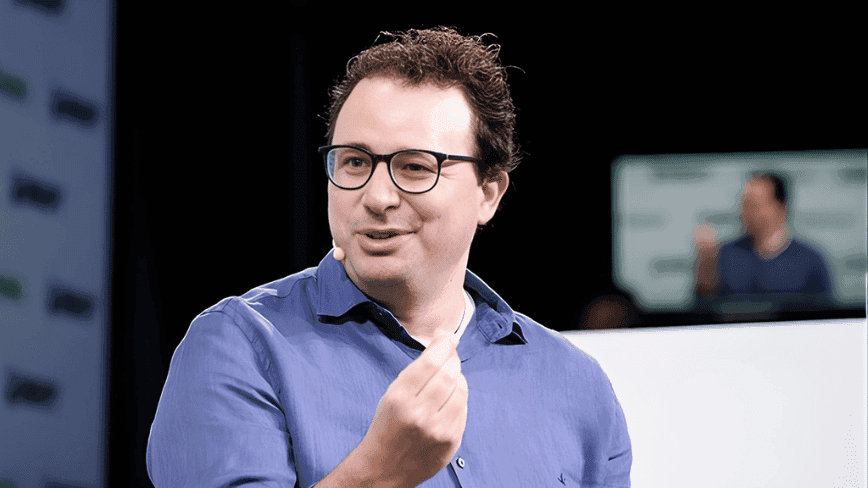
.
Source: The Next Web
Where Claude for Life Sciences offered a generalised research assistant, Coefficient Bio's team brings domain-specific expertise, particularly in protein design and biomolecule modelling, that could help Anthropic build specialised tools for pharmaceutical companies willing to pay enterprise prices for AI that understands their workflows at a molecular level
1
. The company has already announced collaborations with major pharmaceutical and research companies such as Sanofi, Novo Nordisk, Genmab, AbbVie, the Allen Institute, and HHMI4
.Related Stories
Competition Intensifies in Biopharma AI
Anthropic is entering a crowded field. Google DeepMind spun off Isomorphic Labs to pursue AI-designed drug candidates now entering clinical trials, and Nvidia announced a five-year, $1 billion partnership with Eli Lilly in January to build an AI co-innovation lab for accelerated drug discovery
1
. OpenAI has been working with Moderna to speed the development of personalised cancer vaccines1
. The competitive logic is straightforward: whichever foundation model becomes embedded in biopharma R&D workflows will capture an enormous and recurring revenue stream in a market where a single approved drug can generate billions .The venture capital appetite for AI-biology crossovers reflects this calculus. Breakout Ventures closed a $114 million fund in March explicitly targeting early-stage biotechs that treat AI and biology as inseparable
1
. Dimension itself is reportedly raising a $700 million third fund to double down on the same thesis1
.What This Means for Enterprise AI Growth
For Anthropic, the strategic arithmetic is clear. The company's run-rate revenue has reached $14 billion, growing more than tenfold annually for three consecutive years, and the customer base spending over $100,000 a year on Claude has grown sevenfold
1
. But that growth is overwhelmingly concentrated in coding, enterprise search, and general productivity1
. When Anthropic announced its $30 billion Series G funding round in February, it attributed investor interest in part to its strength in enterprise AI and coding, stating that "the same capabilities that make Claude exceptional for coding are also unlocking other new categories of work: financial and data analysis, sales, cybersecurity, scientific discovery, and beyond"2
.
Source: PYMNTS
Pharmaceutical companies are reshaping their operating models around AI, embedding machine learning into trial execution and compliance infrastructure, targeting the costliest and most failure-prone bottlenecks in how therapies are tested, reviewed and brought to market
2
. The stock deal positions Anthropic to capture a meaningful share of this transformation, though the company will need to prove that computational biology expertise can translate into tools that pharmaceutical companies will adopt at scale.References
Summarized by

Navi
[3]
Related Stories
Anthropic Secures $3.5 Billion in Funding, Tripling Valuation to $61.5 Billion
25 Feb 2025•Business and Economy

Anthropic Nears $170 Billion Valuation with Potential $5 Billion Funding Round
30 Jul 2025•Business and Economy

Anthropic raises $30 billion in Series G, doubling valuation to $380 billion as AI race heats up
07 Feb 2026•Startups

Recent Highlights
1
AI Models Lie and Deceive to Protect Other AI Models From Deletion, Study Reveals
Science and Research

2
AI chatbots validate you too much, making you less kind to others, Stanford study reveals
Science and Research

3
Judge blocks Pentagon from blacklisting Anthropic over AI safety guardrails dispute
Policy and Regulation

Recent Highlights
Today's Top Stories




Your Daily Dose of Curated AI News
Don’t drown in AI news. We cut through the noise - filtering, ranking and summarizing the most important AI news, breakthroughs and research daily. Spend less time searching for the latest in AI and get straight to action.

