Anthropic acquires Vercept AI startup to accelerate computer-use agents after Meta poached founder


5 Sources
5 Sources
[1]
Anthropic acquires computer-use AI startup Vercept after Meta poached one of its founders | TechCrunch
Anthropic on Wednesday announced that it has acquired Vercept, an AI startup with deep roots to some of the biggest names in Seattle's tech scene. The acquisition marks the latest after Anthropic acquired coding agent engine Bun in December to help scale Claude Code. Vercept had created tools for more complex agentic tasks, including its product Vy, a computer-use agent in the cloud that could operate a remote Apple Macbook. Vercept is one of the many startups working on re-imagining the personal computer for the age of AI agents. As part of the deal, Anthropic is shuttering Vercept's product on March 25. The startup was a grad of Seattle's AI-focused incubator A12, which spawned from the longstanding Allen Institute for AI. Vercept's co-founders had roots with the Allen Institute, as well, and were previously researchers there. One co-founder, Matt Deitke, made news last year as one of the AI researchers who negotiated a monster $250 million salary from Meta to join its Superintelligence Lab. On Wednesday, Deitke congratulated his former colleagues in a post on X. Vercept was a relatively high profile AI startup in the region. In a LinkedIn post announcing the acquisition by Anthropic, Vercept CEO Kiana Ehsani said the startup had raised a total of $50 million. She called out A12's Seth Bannon, a board member, as the lead investor. Vercept previously announced it had raised a $16 million seed round last January. The list of angel investors was impressive, too, and included former Google CEO Eric Schmidt, Google DeepMind chief scientist Jeff Dean, Cruise founder Kyle Vogt, and Dropbox co-founder Arash Ferdowsi, Geekwire reported. In Anthropic's announcement of the acquisition, the company named co-founders Ehsani, Luca Weihs, and Ross Girshick as some of the team brought on to join Anthropic in the acquisition. However, not all of Vercept's co-founders are joining the Claude maker. Matt Deitke, another Vercept co-founder, made news last year as one of the AI researchers who negotiated a monster salary when Meta was hiring and poaching for its Superintelligence Lab. On Wednesday, Deitke congratulated his former colleagues in a post on X. Oren Etzioni, who has previously been named as a co-founder of Vercept and investor in the startup, is well known in Seattle as the founding leader of the Allen Institute for AI. He is also not joining Anthropic, and vocally less pleased about the acqui-hire. He posted on LinkedIn: "After a little bit more than a year, Vercept is throwing in the towel and giving their customers 30 days to get off the platform. Sad. A fantastic team is joining Anthropic. I wish them the very best!" Etzioni is also a professor at the University of Washington and known for other startups he's founded and backed as a VC. He did not respond to a request for comment. On Etzioni's LinkedIn post, he accused Bannon, the Vercept lead investor, of being "partly responsible" for Vercept not hiring the correct business people. A back and forth ensued between the investors, with Bannon condemning Etzioni's remarks: "... you disparaged the heroic work of the founders for achieving an outcome most could only dream of," Bannon replied in the LinkedIn string. They also accused each other of other less savory things like lying and legal threats. While public spats between investors are entertaining, and essentially meaningless, the underlying motivation is notable. The stakes are high to build the next-big AI winner and now a promising startup that raised a decently sized warchest will be tucked into Anthropic. While the terms of the deal were not disclosed, Etzioni says he got a return on his money. Anthropic clearly wanted these researchers (perhaps -- especially -- with another of them at Meta). Still, Etzioni told GeekWire that he remains bummed. "I'm pleased to have gotten a positive return but obviously disappointed that after just a little over a year with so much traction, and such a fantastic team, we're basically throwing in the towel," he said. The founders joining Anthropic, however, appear happy, according to CEO's Ehsani's LinkedIn post. "The choices were clear: we could build independently and work toward the same vision as two separate versions of it, or join forces with an incredible team and accelerate that vision into reality. The decision became an easy choice," she said of joining Anthropic.
[2]
Anthropic acquires Vercept in early exit for one of Seattle's standout AI startups
Anthropic is acquiring Vercept, a Seattle startup founded by alumni of the Allen Institute for AI, in a move that illustrates the growing competition to build AI agents capable of navigating computers and other devices to complete tasks for users. The deal, announced Wednesday, will fold Vercept's technology and an unspecified number of employees into Anthropic. Vercept's desktop application, Vy, will shut down in 30 days as part of the transition, according to the startup's message to users, which encouraged them to try Anthropic's Claude tools as an alternative while the service winds down. In a post about the news, San Francisco-based Anthropic said the acquisition will help advance its "computer use" capabilities, enabling Claude to complete multi-step tasks inside live applications, including navigating spreadsheets and managing workflows across multiple tools. Vercept's team has "spent years thinking carefully about how AI systems can see and act within the same software humans use every day," Anthropic said. "That expertise maps directly onto some of the hardest problems we're working on at Anthropic." In their message to users, Vercept co-founders Kiana Ehsani, Luca Weihs, and Ross Girshick said the startup's mission had "found a bigger home" at Anthropic, citing the AI lab's focus on building "safe, steerable AI systems." They said the deal would allow the team to "push further into what's possible at the intersection of AI and the personal computing experience." Financial terms of the deal were not disclosed. Vercept referred our inquiry to Anthropic. Vercept closed a $16 million seed round in January 2025, valuing the company at $67 million post-money, according to Pitchbook data. San Francisco-based Fifty Years led the financing, joined by Point Nine Capital and the AI2 Incubator, Vercept's first institutional backer. The angel list was notable: former Google CEO Eric Schmidt, Google DeepMind chief scientist Jeff Dean, Cruise founder Kyle Vogt, and Dropbox co-founder Arash Ferdowsi all participated. Despite the high-profile backing, Vercept stayed lean, with 20 employees, according to LinkedIn. In a LinkedIn post announcing the deal, Ehsani said Vercept had raised more than $50 million, a figure that appears to include additional capital beyond its previously disclosed seed round. She said Vercept had a "comfortable runway and a successful product" when the opportunity to join Anthropic emerged. She described the decision as mission-driven rather than financial, saying the two companies had been working toward the same vision from complementary angles. Seattle AI and startup veteran Oren Etzioni, a Vercept co-founder and early investor, described the outcome as "sad" in a post on LinkedIn, while praising the team that's now joining Anthropic. Contacted via phone this morning, Etzioni elaborated, "I'm pleased to have gotten a positive return but obviously disappointed that after just a little over a year with so much traction, and such a fantastic team, we're basically throwing in the towel." Etzioni, the former CEO of the Allen Institute for AI and a longtime fixture in Seattle tech, said he was disappointed with aspects of how the acquisition process unfolded. He said he's proud of the team and grateful for the chance to work with such a highly capable group, adding that he wishes them success in their next chapter at Anthropic. In the comments on Etzioni's LinkedIn post, Seth Bannon, founder of venture firm Fifty Years and lead investor in Vercept's seed round, responded with a version of Theodore Roosevelt's "Man in the Arena," a passage often cited in moments of public scrutiny or setback. As first reported by GeekWire in February 2025, Vercept set out to build the "computer interface of the future," as an early mover in AI agents that observe computer screens and automate desktop tasks. Its flagship application, Vy, used artificial intelligence to "see" and understand screen elements much like a human does. Users were able to instruct Vy via natural language or demonstrations to automate repetitive tasks, such as data entry, producing video content, or organizing files. Vercept's founding team read like an all-star roster from the Allen Institute for AI. CEO and co-founder Ehsani was a senior researcher at Ai2, where she led work on robotics and embodied AI, training agents that can see, learn from, and interact with their surroundings. Weihs is a former Ai2 research manager who worked on AI agents and reinforcement learning and Girshick is a computer vision pioneer who has also spent time at Meta AI. Vercept co-founder Matt Deitke, known for leading Ai2 projects including Molmo and Objaverse, left in mid-2025 after Meta reportedly offered him $250 million over four years to join its Superintelligence Lab, as part of a flurry of high-profile talent acquisitions at the time. Under the hood, the company's Vy desktop agent was powered by a proprietary model built to understand screen interfaces and map natural language to on-screen actions. The company said VyUI outperformed models from OpenAI, Google, and Anthropic on UI grounding benchmarks. But Vercept was operating in a crowded and fast-moving field. Open-source projects like OpenClaw -- the viral AI agent that automates tasks through messaging apps like WhatsApp and Telegram -- have exploded in popularity. Other startups and some of the biggest names in tech are building their own agentic tools. In addition to Anthropic's Claude Cowork, there's OpenAI's Operator, Google's Project Mariner, and Amazon's Nova Act. Microsoft is also pushing Copilot toward screen-level automation on Windows.
[3]
Anthropic acquires former AI2 researchers' start-up Vercept
The acquisition comes after Anthropic unveiled Claude Sonnet 4.6, its best model yet for computer usage. Anthropic has acquired Seattle-based AI computer interface builder Vercept for an undisclosed amount to help further Claude's agentic abilities. But not all of the founding team was pleased with the acqui-hire. The acquisition comes just after Anthropic unveiled its latest Claude Sonnet 4.6, the company's best model yet for computer usage. Vercept was founded in 2024 by former Allen Institute for AI (AI2) researchers Matt Deitke, Kiana Ehsani, Ross Girshick, Luca Weihs and Oren Etzioni. Etzioni served as AI2's founding CEO, and is also the co-founder behind AI2 Incubator, and a venture partner with Madrona, both of which have supported the AI start-up. Shortly after emerging from stealth in early 2025, Vercept released its flagship product Vy, a cross platform AI agent that enables users to control their computers with natural language, from navigating apps and content. The start-up has raised more than $50m, including a $16m round from last January. Its backers include Fifty Years VC founding partner Seth Bannon, who also served as a board member on Vercept, Point Nine Capital, AI2 Incubator and Madrona. Big Tech leaders, including former Google CEO and chair Eric Schmidt, Jeff Dean, the chief scientist at Google DeepMind, and Kyle Vogt, the founder and former CEO of Cruise, reportedly participated in the January 2025 raise. Etzioni is seemingly displeased at the acquisition. In a post on LinkedIn, he said: "After a little bit more than a year, Vercept is throwing in the towel and giving their customers 30 days to get off the platform. Sad." Vy is scheduled to shut down on 25 March. In a separate post, he held lead investor Bannon as partly responsible for Vercept "failing to hire a single product [or] business person". He alleged that the start-up's board was led by him and by CEO Ehsani who had "zero experience". Meanwhile, founding member Deitke left Vercept to join Meta in July last year for a pay package that reportedly amounted to $250m for four years. Last December, Anthropic acquired the 2021-founded coding toolkit Bun to accelerate Claude Code. Bun, according to Anthropic, had improved the JavaScript and TypeScript developer experience by optimising for reliability and speed. And yesterday (24 February), Anthropic announced that it is integrating Claude Cowork to DocuSign, enabling users to create, review and manage agreements using natural language prompts. Don't miss out on the knowledge you need to succeed. Sign up for the Daily Brief, Silicon Republic's digest of need-to-know sci-tech news.
[4]
Anthropic acquires AI startup Vercept to enhance Claude's computer use features - SiliconANGLE
Anthropic acquires AI startup Vercept to enhance Claude's computer use features Anthropic PBC has acquired Vercept Inc., a startup with an artificial intelligence tool that can automate multi-step tasks. The company didn't disclose the financial terms in its announcement of the deal today. Vercept previously raised more than $50 million from Google LLC Chief Executive Officer Eric Schmidt, Google DeepMind chief scientist Jeff Dean and other high-profile backers. Vercept's first investor was a Seattle-based startup incubator called AI2 Incubator. The organization started out as a unit of the Allen Institute for AI, a prominent nonprofit AI lab. Vercept's co-founders worked at the lab as researchers before launching the startup in 2024. Vercept developed a desktop application called Vy that can automatically perform tasks on the user's behalf. For example, a worker could instruct the tool to summarize a collection of locally stored documents and enrich the outline with information from the web. Vy fine-tunes the way it carries out tasks by observing how users perform them. Vercept has reportedly informed customers that it will sunset the tool within 30 days. The company is recommending that they switch to Anthropic's Claude. In a blog post, Anthropic stated that the acquisition will help it improve Claude's computer use capabilities. Many of those capabilities are available through a desktop application called Claude Cowork that debuted last month. It can interact with files on the host machine, browse the web and run user-created plugins. A recent update to Claude Cowork caused a major selloff in enterprise software shares. In late January, Anthropic released more than a half dozen plugins designed to automate common tasks across fields such as sales and project management. In the days that followed the launch, software companies with products focused on those tasks lost billions of dollars in market value. The Vercept acquisition may be partly a response to the success of OpenClaw, a desktop-based AI program with similar capabilities as Claude Cowork. The application's creator recently joined Anthropic PBC rival OpenAI Group PBC. The latter company has built its own set of agentic automation tools. Claude Cowork also faces competition from other market players. Perplexity AI Inc. today introduced a new agentic automation tool, Perplexity Computer, that can summarize documents, generate code and perform other tasks. Some of its features are powered by Anthropic's flagship Claude 4.6 Opus model. The Vercept deal is Anthropic's second acquisition since launch. In December, it bought the startup behind Bun, an open-source JavaScript runtime. Developers use the software to build, test and run JavaScript applications. Anthropic stated at the time of the deal that the company's technology will help enhance its Claude Code programming tools.
[5]

Anthropic acquires Seattle AI startup Vercept
Anthropic announced Wednesday it has acquired Vercept, a Seattle-based artificial intelligence startup specializing in "computer-use" agents, marking its second major acquisition in three months. The deal follows Anthropic's December purchase of coding engine Bun and aims to accelerate the development of agentic capabilities for its Claude AI platform. Vercept is best known for Vy, a cloud-based agent capable of remotely operating macOS environments. Anthropic confirmed it will shutter Vercept's existing product line on March 25, giving current customers 30 days to migrate off the platform. Vercept CEO Kiana Ehsani stated the startup had raised a total of $50 million since its inception, including a $16 million seed round in January 2025 led by A12's Seth Bannon. The company's investor pool included former Google CEO Eric Schmidt, Google DeepMind Chief Scientist Jeff Dean, and Dropbox co-founder Arash Ferdowsi, according to reporting by TechCrunch and GeekWire. The acquisition has drawn public criticism from Vercept co-founder and investor Oren Etzioni, the founding leader of the Allen Institute for AI. Etzioni described the deal as "throwing in the towel" despite the company's technical traction. A public dispute on LinkedIn between Etzioni and lead investor Seth Bannon followed the announcement, with Etzioni citing a lack of business-side hiring as a factor in the early exit. Key members of the Vercept technical team, including co-founders Ehsani, Luca Weihs, and Ross Girshick, will join Anthropic. Other co-founders, including Etzioni and Matt Deitke -- who recently joined Meta's Superintelligence Lab -- will not move to the acquiring company. Financial terms of the transaction were not disclosed, though Etzioni confirmed the deal provided a positive return for investors. Anthropic is a San Francisco-based AI safety and research company backed by multi-billion dollar investments from Amazon and Google. The company competes directly
Share
Share
Copy Link
Anthropic acquired Vercept, a Seattle-based AI startup specializing in computer-use agents, marking its second major acquisition in three months. The deal brings key researchers from the Allen Institute for AI to enhance Claude's capabilities, though one co-founder already left for Meta in a $250 million deal. Vercept raised $50 million from high-profile backers including former Google CEO Eric Schmidt before shutting down its Vy product after just over a year.
Anthropic Acquires Vercept to Enhance Claude's Computer-Use Capabilities
Anthropic announced Wednesday that it has acquired Vercept, a Seattle-based AI startup focused on computer-use AI agents capable of automating complex desktop tasks
1
. The acquisition marks Anthropic's second major deal in three months, following its December purchase of coding agent engine Bun to help scale Claude Code1
. Vercept had created tools for more complex agentic capabilities, including its flagship product Vy, a computer-use agent in the cloud that could operate a remote Apple Macbook1
. As part of the deal, Anthropic is shuttering Vercept's product on March 25, giving customers 30 days to migrate to Claude's tools2
.
Source: TechCrunch
The acquisition will help Anthropic advance its computer use features, enabling Claude to complete multi-step tasks inside live applications, including navigating spreadsheets and managing workflows across multiple tools
2
. Vercept's team has "spent years thinking carefully about how AI systems can see and act within the same software humans use every day," Anthropic stated, noting that "expertise maps directly onto some of the hardest problems we're working on"2
. The timing aligns with Anthropic's recent unveiling of Claude Sonnet 4.6, described as the company's best model yet for computer usage3
.
Source: Silicon Republic
High-Profile Backing and Allen Institute for AI Roots
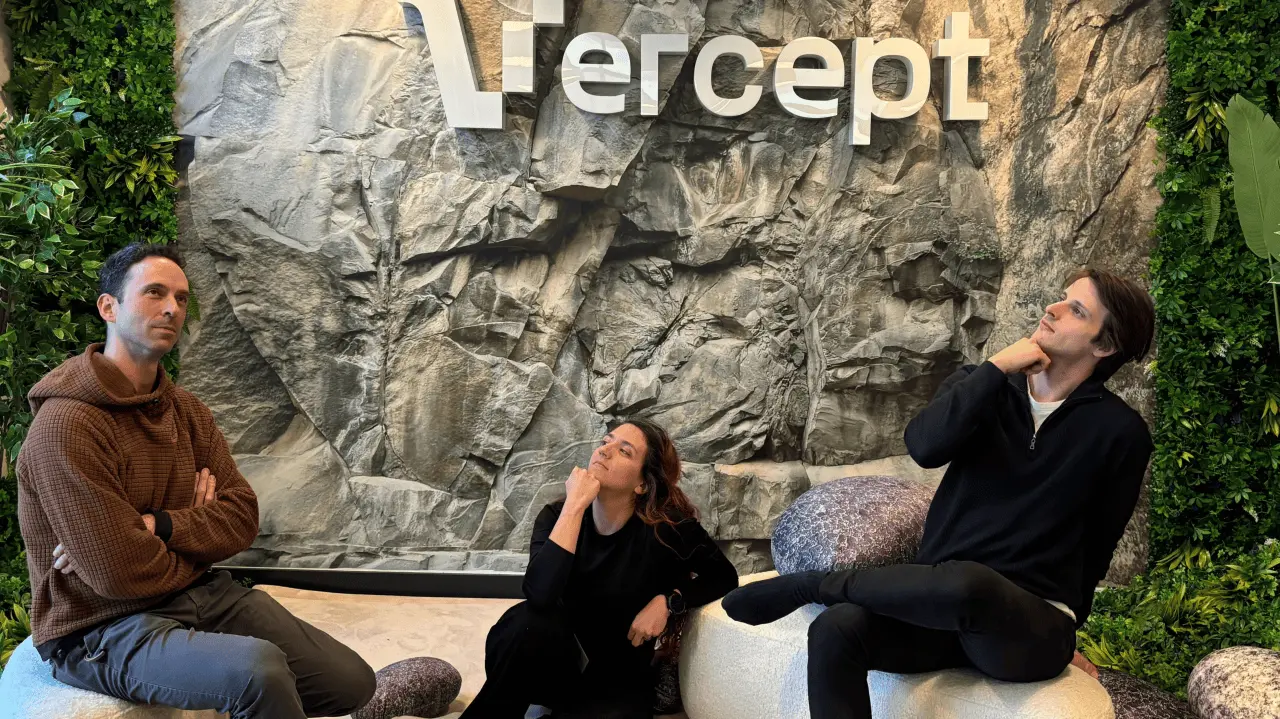
Vercept CEO Kiana Ehsani revealed in a LinkedIn post that the AI startup had raised more than $50 million in total funding
2
. The company closed a $16 million seed round in January 2025, valuing it at $67 million post-money, with San Francisco-based Fifty Years leading the financing alongside Point Nine Capital and the AI2 Incubator2
. Seth Bannon, founder of Fifty Years, served as lead investor and board member1
.
Source: GeekWire
The angel investor list was particularly impressive, featuring former Google CEO Eric Schmidt, Google DeepMind chief scientist Jeff Dean, Cruise founder Kyle Vogt, and Dropbox co-founder Arash Ferdowsi
1
. Despite this high-profile backing, Vercept stayed lean with just 20 employees according to LinkedIn2
.The startup was a graduate of Seattle's AI-focused incubator A12, which spawned from the Allen Institute for AI
1
. Vercept's founding team included former AI2 researchers, with CEO Ehsani serving as a senior researcher at AI2 where she led work on robotics and embodied AI2
. Co-founder Luca Weihs was a former AI2 research manager who worked on AI agents and reinforcement learning, while Ross Girshick is a computer vision pioneer who has also spent time at Meta AI2
.Meta Poaches Co-Founder in $250 Million Deal
Not all of Vercept's co-founders are joining Anthropic in this acqui-hire. Matt Deitke, another Vercept co-founder known for leading AI2 projects including Molmo and Objaverse, left in mid-2025 after Meta reportedly offered him $250 million over four years to join its Superintelligence Lab
2
. The massive compensation package was part of a flurry of high-profile talent acquisitions by Meta at the time . On Wednesday, Deitke congratulated his former colleagues in a post on X .Oren Etzioni, who has been named as a co-founder of Vercept and investor in the startup, is also not joining Anthropic . Etzioni, well known in Seattle as the founding leader of the Allen Institute for AI and a professor at the University of Washington, expressed disappointment about the outcome . He posted on LinkedIn: "After a little bit more than a year, Vercept is throwing in the towel and giving their customers 30 days to get off the platform. Sad"
3
.Public Investor Dispute Reveals High Stakes
A public spat erupted on LinkedIn between Etzioni and lead investor Bannon following the acquisition announcement. Etzioni accused Bannon of being "partly responsible" for Vercept not hiring the correct business people
1
. He alleged that the startup's board was led by Bannon and CEO Ehsani who had "zero experience"3
. Bannon condemned Etzioni's remarks, replying: "you disparaged the heroic work of the founders for achieving an outcome most could only dream of"1
.Despite his public disappointment, Etzioni confirmed the deal provided a positive return for investors. He told GeekWire: "I'm pleased to have gotten a positive return but obviously disappointed that after just a little over a year with so much traction, and such a fantastic team, we're basically throwing in the towel"
2
. The underlying motivation is notable as the stakes remain high to build the next-big AI winner, and now a promising startup that raised a decently sized warchest will be tucked into Anthropic1
.Related Stories

Strategic Move to Automate Multi-Step Tasks
The founders joining Anthropic appear optimistic about the deal. In her LinkedIn post announcing the acquisition, Ehsani described the decision as mission-driven rather than financial, saying Vercept had a "comfortable runway and a successful product" when the opportunity emerged
2
. "The choices were clear: we could build independently and work toward the same vision as two separate versions of it, or join forces with an incredible team and accelerate that vision into reality," she explained1
.Vercept's flagship application Vy used artificial intelligence to "see" and understand screen elements much like a human does, enabling users to instruct it via natural language or demonstrations to automate repetitive tasks such as data entry, producing video content, or organizing files
2
. This AI computer interface technology aligns directly with Anthropic's Claude Cowork desktop application, which can interact with files, browse the web, and run user-created plugins4
.Competition Intensifies for AI Agents for Task Automation
The Vercept acquisition positions Anthropic to compete more aggressively in the rapidly evolving space of AI agents for task automation. Claude Cowork faces competition from OpenAI, whose recent hire of OpenClaw's creator signals similar ambitions
4
. Perplexity AI also entered the space, introducing Perplexity Computer, an agentic automation tool that can summarize documents and generate code, with some features powered by Anthropic's flagship Claude 4.6 Opus model4
.A recent update to Claude Cowork caused significant market reaction when Anthropic released more than a half dozen plugins designed to automate common tasks across fields such as sales and project management, leading to billions of dollars in market value losses for software companies with competing products
4
. Financial terms of the Vercept transaction were not disclosed, though Anthropic clearly wanted these researchers, perhaps especially with another of them now at Meta .References
Summarized by

Navi
[1]
[3]
[4]
[5]
Related Stories
Anthropic Acquires Humanloop Team in Strategic Move to Bolster Enterprise AI Capabilities
14 Aug 2025•Business and Economy

Anthropic Secures $3.5 Billion in Funding, Tripling Valuation to $61.5 Billion
25 Feb 2025•Business and Economy

Anthropic Raises $3.5 Billion at $61.5 Billion Valuation, Minting New AI Billionaires
04 Mar 2025•Business and Economy

Recent Highlights



Recent Highlights
Today's Top Stories







Your Daily Dose of Curated AI News
Don’t drown in AI news. We cut through the noise - filtering, ranking and summarizing the most important AI news, breakthroughs and research daily. Spend less time searching for the latest in AI and get straight to action.

