Anthropic CEO Warns AI Wealth Concentration Could Break Society as Cofounders Pledge 80% of Fortune


2 Sources
2 Sources
[1]
Anthropic's billionaire cofounders are giving away 80% of their wealth: 'The thing to worry about is a level of wealth concentration that will break society' | Fortune
Now, the billionaire tech titan behind Claude is sounding the alarm that there's an even bigger danger coming for the everyday worker. "The thing to worry about is a level of wealth concentration that will break society," Amodei wrote in a letter published yesterday. Already, he noted, Elon Musk's nearly $700 billion net worth exceeds that of John D. Rockefeller at the height of the Gilded Age; and that, Amodei argued, is before most of AI's economic impact has even materialized. Against that backdrop, all seven of Anthropic's cofounders -- including Dario and his sister, Daniela Amodei -- are pledging to donate 80% of their wealth. Each cofounder's net worth is estimated at about $3.7 billion, according to Forbes, though that figure does not account for recent fundraising talks that reportedly valued Anthropic at $350 billion -- nearly double its prior $183 billion valuation. Based on this estimate alone, the pledge could direct tens of billions of dollars toward philanthropy. Other Anthropic employees have also committed to donating shares that could be worth billions, with the company saying it will match those contributions. As the future of work is questioned, billionaire wealth is soaring to record highs While there have long been worries about rising wealth inequalities in the world, the AI boom is only raising the stakes. Anthropic, which launched ChatGPT rival Claude in March 2023, is a case study itself. In spring of that year, the company was already valued at $4.1 billion. But less than three years later, its valuation grew 87-fold to its current $350 billion figure. In the same period, OpenAI has surged to a $750 billion valuation and become a household name. These soaring valuations are minting new billionaires at record speed. Last year alone, billionaire wealth jumped by 16% to $18.3 trillion -- the highest level in history, according to Oxfam. Amodei warned these wealth dynamics may eventually force a fundamental rethink of work and income. "In the long term, in a world with enormous total wealth, in which many companies increase greatly in value due to increased productivity and capital concentration, it may be feasible to pay human employees even long after they are no longer providing economic value in the traditional sense," Amodei wrote -- adding that his company is considering a range of pathways for Anthropic employees. Elon Musk has echoed these predictions that technology's rapid innovation will completely change the workforce -- and cause a need for "universal high income" to sustain individuals. "My prediction is that work will be optional. It'll be like playing sports or a video game or something like that," Musk said in November at the U.S.-Saudi Investment Forum. "If you want to work, [it's] the same way you can go to the store and just buy some vegetables, or you can grow vegetables in your backyard. It's much harder to grow vegetables in your backyard, and some people still do it because they like growing vegetables." Anthropic's seven cofounder billionaires * Dario Amodei, $3.7 billion * Daniela Amodei, $3.7 billion * Tom Brown, $3.7 billion * Jack Clark, $3.7 billion * Jared Kaplan, $3.7 billion * Sam McCandlish, $3.7 billion * Christopher Olah, $3.7 billion Estimates according to Forbes; their net worths are likely to increase with Anthropic's growing valuation. The ultra rich have an 'obligation' to address wealth disparities, according to Amodei While leaders debate what the future of work could look like, Amodei stresses that action is needed now. "Wealthy individuals have an obligation to help solve this problem," Amodei wrote. "It is sad to me that many wealthy individuals (especially in the tech industry) have recently adopted a cynical and nihilistic attitude that philanthropy is inevitably fraudulent or useless." Many tech leaders, including Mark Zuckerberg, Elon Musk, and Larry Ellison, have already signed The Giving Pledge -- the initiative launched by Bill Gates, Melinda French Gates, and Warren Buffett to give the majority of their wealth to charitable causes. But critics have noted that not most signers have not followed through with their promise yet. Last year, reports suggested billionaire investor Peter Thiel encouraged Musk to abandon The Giving Pledge, arguing Gates would otherwise give the money "to left-wing nonprofits. Ultimately, Amodei said many near-term solutions are just ways to manage a transition rather than stop what's coming. "In the end, AI will be able to do everything, and we need to grapple with that," Amodei said. "It's my hope that by that time, we can use AI itself to help us restructure markets in ways that work for everyone, and that the interventions above can get us through the transitional period." Fortune reached out to Anthropic for further comment.
[2]
This AI CEO Says Inequality Will Skyrocket -- and Wants the Most Powerful to Pay More
In Amodei's essay, titled "The Adolescence of Technology," he wrote that in an ideal world, the global GDP could grow by an annual rate of 10 to 20 percent. But will everyone on Earth share in that abundance? Possibly not. Amodei believes it will be more difficult for humans to adapt to a world with powerful AI than it was for previous generations to largely shift from physical, farm-based labor to knowledge work. Because of this, the Anthropic founder predicted that within the next one to five years, 50 percent of entry-level white collar jobs will be disrupted by AI. One possible result of this disruption is extreme wealth concentration among a very small group. Amodei compared the situation to the United States' Gilded Age. He wrote that the wealth of John D. Rockefeller, the richest man of the era, amounted to around 2 percent of the U.S. GDP. "A similar fraction today would lead to a fortune of $600B," Amodei wrote, "and the richest person in the world today (Elon Musk) already exceeds that, at roughly $700B." While today's wealth gap might feel vast, Amodei cautioned that it could become exponentially worse as AI-related companies begin generating trillions of dollars in revenue per year. "In that world," Amodei wrote, "the debates we have about tax policy today simply won't apply as we will be in a fundamentally different situation."
Share
Share
Copy Link
Anthropic CEO Dario Amodei warns that AI's economic impact could create wealth concentration levels that break society, comparing today's inequality to the Gilded Age. All seven billionaire cofounders are pledging to donate 80% of their wealth—potentially tens of billions—as the company's valuation soars to $350 billion and concerns mount over significant job disruption.
Anthropic CEO Sounds Alarm on AI-Driven Wealth Concentration
Dario Amodei, CEO of Anthropic, has issued a stark warning about the future of economic inequality in an essay titled "The Adolescence of Technology." The billionaire cofounders giving away wealth marks an acknowledgment that AI's economic impact could fundamentally reshape society in ways that demand immediate action
1
. "The thing to worry about is a level of wealth concentration that will break society," Amodei wrote, noting that Elon Musk's nearly $700 billion net worth already exceeds that of John D. Rockefeller at the height of the Gilded Age—and this is before most of AI's transformative effects have materialized1
.
Source: Fortune
Historic Philanthropy Pledge from Seven Billionaire Cofounders
All seven of Anthropic's cofounders—including Dario and his sister Daniela Amodei, along with Tom Brown, Jack Clark, Jared Kaplan, Sam McCandlish, and Christopher Olah—are committing to donate 80% of their wealth
1
. Each cofounder's net worth is estimated at approximately $3.7 billion according to Forbes, though recent fundraising talks reportedly valued Anthropic at $350 billion—nearly double its prior $183 billion valuation1
. Based on these estimates, the pledge could direct tens of billions of dollars toward philanthropy. Other Anthropic employees have also committed to donating shares potentially worth billions, with the company matching those contributions1
.Exponential Increase in Wealth Concentration Amid AI Boom
The rise in wealth disparity has accelerated dramatically during the AI boom. Anthropic, which launched ChatGPT rival Claude in March 2023, exemplifies this trajectory. In spring 2023, the company was valued at $4.1 billion, but less than three years later, its valuation grew 87-fold to $350 billion
1
. During the same period, OpenAI surged to a $750 billion valuation. These soaring valuations are minting new billionaires at record speed—last year alone, billionaire wealth jumped by 16% to $18.3 trillion, the highest level in history according to Oxfam1
. The escalating wealth concentration represents a fundamental shift in the economic landscape that could dwarf historical precedents.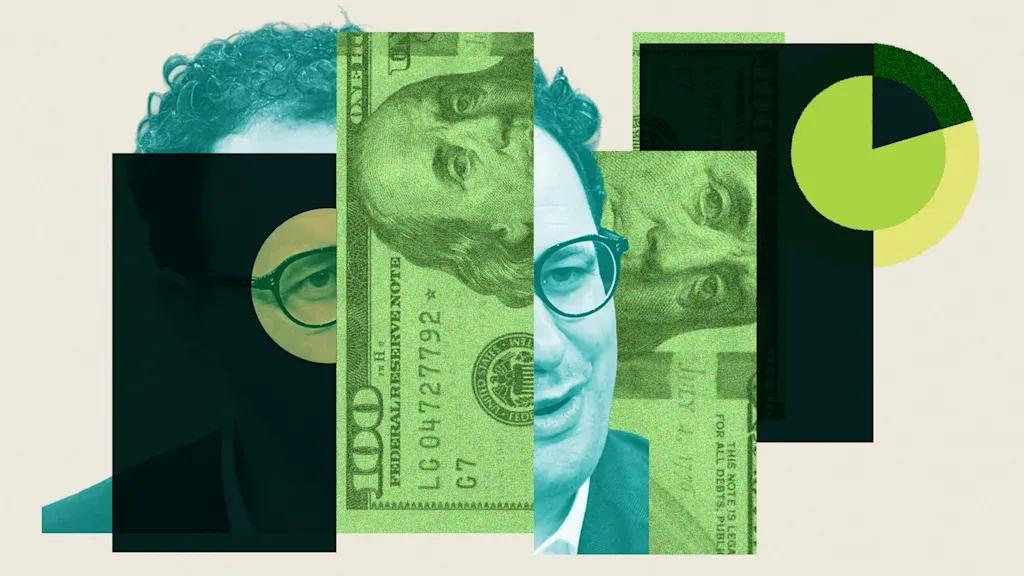
Source: Inc.
Significant Job Disruption and the New Economic Landscape
Amodei predicts that within the next one to five years, 50 percent of entry-level white-collar jobs will face disruption from powerful AI
2
. In his essay, he suggested that in an ideal scenario, global GDP could grow by an annual rate of 10 to 20 percent, but cautioned that not everyone will share in that abundance2
. Job disruption from AI will likely prove more challenging for humans to adapt to than previous economic transitions, such as the shift from physical farm-based labor to knowledge work. Amodei warned that as AI-related companies begin generating trillions of dollars in revenue per year, current debates about tax policy will become obsolete as society enters a fundamentally different situation2
.Related Stories

Rethinking Work and Income Through Capital Concentration
The Anthropic CEO suggested that wealth dynamics may eventually force a fundamental rethink of work and income structures. "In the long term, in a world with enormous total wealth, in which many companies increase greatly in value due to increased productivity and capital concentration, it may be feasible to pay human employees even long after they are no longer providing economic value in the traditional sense," Amodei wrote
1
. Elon Musk has echoed predictions about technology's rapid innovation completely changing the workforce, advocating for universal high income to sustain individuals. "My prediction is that work will be optional," Musk said in November at the U.S.-Saudi Investment Forum1
.Philanthropy and The Giving Pledge Under Scrutiny
Amodei stressed that wealthy individuals have an obligation to address the wealth gap now. "It is sad to me that many wealthy individuals (especially in the tech industry) have recently adopted a cynical and nihilistic attitude that philanthropy is inevitably fraudulent or useless," he wrote
1
. While tech leaders including Mark Zuckerberg, Elon Musk, and Larry Ellison have signed The Giving Pledge—an initiative launched by Bill Gates, Melinda French Gates, and Warren Buffett—critics note that most signers have not yet followed through with their promises. Reports suggest billionaire investor Peter Thiel encouraged Musk to abandon The Giving Pledge, arguing Gates would otherwise give the money "to left-wing nonprofits"1
. Amodei acknowledged that many near-term solutions are transitional measures rather than permanent fixes. "In the end, AI will be able to do everything, and we need to grapple with that," he said, expressing hope that AI itself could help restructure markets in ways that work for everyone1
.References
Summarized by

Navi
Related Stories
Dario Amodei warns AI risks are 'almost here' in 19,000-word essay calling out AI companies
26 Jan 2026•Policy and Regulation

Anthropic CEO Dario Amodei warns AI power is concentrating 'overnight and by accident'
25 Feb 2026•Business and Economy
Block's 4,000-person layoff sparks debate: AI revolution or corporate cost-cutting in disguise?
05 Mar 2026•Business and Economy
Recent Highlights
1
Google releases Gemma 4 with Apache 2.0 license, enabling unrestricted local AI on devices
Technology
2
AI Models Lie and Deceive to Protect Other AI Models From Deletion, Study Reveals
Science and Research

3
OpenAI closes $122 billion funding round amid fierce AI competition and profitability questions
Startups

Recent Highlights
Today's Top Stories






Your Daily Dose of Curated AI News
Don’t drown in AI news. We cut through the noise - filtering, ranking and summarizing the most important AI news, breakthroughs and research daily. Spend less time searching for the latest in AI and get straight to action.

