OpenAI and Anthropic clash over Super Bowl ads as AI companies shift to agent teams


73 Sources
73 Sources
[1]
AI companies want you to stop chatting with bots and start managing them
On Thursday, Anthropic and OpenAI shipped products built around the same idea: instead of chatting with a single AI assistant, users should be managing teams of AI agents that divide up work and run in parallel. The simultaneous releases are part of a gradual shift across the industry, from AI as a conversation partner to AI as a delegated workforce, and they arrive during a week when that very concept reportedly helped wipe $285 billion off software stocks. Whether that supervisory model works in practice remains an open question. Current AI agents still require heavy human intervention to catch errors, and no independent evaluation has confirmed that these multi-agent tools reliably outperform a single developer working alone. Even so, the companies are going all-in on agents. Anthropic's contribution is Claude Opus 4.6, a new version of its most capable AI model, paired with a feature called "agent teams" in Claude Code. Agent teams let developers spin up multiple AI agents that split a task into independent pieces, coordinate autonomously, and run concurrently. In practice, agent teams look like a split-screen terminal environment: A developer can jump between subagents using Shift+Up/Down, take over any one directly, and watch the others keep working. Anthropic describes the feature as best suited for "tasks that split into independent, read-heavy work like codebase reviews." It is available as a research preview. OpenAI, meanwhile, released Frontier, an enterprise platform it describes as a way to "hire AI co-workers who take on many of the tasks people already do on a computer." Frontier assigns each AI agent its own identity, permissions, and memory, and it connects to existing business systems such as CRMs, ticketing tools, and data warehouses. "What we're fundamentally doing is basically transitioning agents into true AI co-workers," Barret Zoph, OpenAI's general manager of business-to-business, told CNBC. Despite the hype about these agents being co-workers, from our experience, these agents tend to work best if you think of them as tools that amplify existing skills, not as the autonomous co-workers the marketing language implies. They can produce impressive drafts fast but still require constant human course-correction. The Frontier launch came just three days after OpenAI released a new macOS desktop app for Codex, its AI coding tool, which OpenAI executives described as a "command center for agents." The Codex app lets developers run multiple agent threads in parallel, each working on an isolated copy of a codebase via Git worktrees. OpenAI also released GPT-5.3-Codex on Thursday, a new AI model that powers the Codex app. OpenAI claims that the Codex team used early versions of GPT-5.3-Codex to debug the model's own training run, manage its deployment, and diagnose test results, similar to what OpenAI told Ars Technica in a December interview. "Our team was blown away by how much Codex was able to accelerate its own development," the company wrote. On Terminal-Bench 2.0, the agentic coding benchmark, GPT-5.3-Codex scored 77.3%, which exceeds Anthropic's just-released Opus 4.6 by about 12 percentage points. The common thread across all of these products is a shift in the user's role. Rather than merely typing a prompt and waiting for a single response, the developer or knowledge worker becomes more like a supervisor, dispatching tasks, monitoring progress, and stepping in when an agent needs direction. In this vision, developers and knowledge workers effectively become middle managers of AI. That is, not writing the code or doing the analysis themselves, but delegating tasks, reviewing output, and hoping the agents underneath them don't quietly break things. Whether that will come to pass (or if it's actually a good idea) is still widely debated. A new model under the Claude hood Opus 4.6 is a substantial update to Anthropic's flagship model. It succeeds Claude Opus 4.5, which Anthropic released in November. In a first for the Opus model family, it supports a context window of up to 1 million tokens (in beta), which means it can process much larger bodies of text or code in a single session. On benchmarks, Anthropic says Opus 4.6 tops OpenAI's GPT-5.2 (an earlier model than the one released today) and Google's Gemini 3 Pro across several evaluations, including Terminal-Bench 2.0 (an agentic coding test), Humanity's Last Exam (a multidisciplinary reasoning test), and BrowseComp (a test of finding hard-to-locate information online) Although it should be noted that OpenAI's GPT-5.3-Codex, released the same day, seemingly reclaimed the lead on Terminal-Bench. On ARC AGI 2, which attempts to test the ability to solve problems that are easy for humans but hard for AI models, Opus 4.6 scored 68.8 percent, compared to 37.6 percent for Opus 4.5, 54.2 percent for GPT-5.2, and 45.1 percent for Gemini 3 Pro. As always, take AI benchmarks with a grain of salt, since objectively measuring AI model capabilities is a relatively new and unsettled science. Anthropic also said that on a long-context retrieval benchmark called MRCR v2, Opus 4.6 scored 76 percent on the 1 million-token variant, compared to 18.5 percent for its Sonnet 4.5 model. That gap matters for the agent teams use case, since agents working across large codebases need to track information across hundreds of thousands of tokens without losing the thread. Pricing for the API stays the same as Opus 4.5 at $5 per million input tokens and $25 per million output tokens, with a premium rate of $10/$37.50 for prompts that exceed 200,000 tokens. Opus 4.6 is available on claude.ai, the Claude API, and all major cloud platforms. The market fallout outside These releases occurred during a week of exceptional volatility for software stocks. On January 30, Anthropic released 11 open source plugins for Cowork, its agentic productivity tool that launched on January 12. Cowork itself is a general-purpose tool that gives Claude access to local folders for work tasks, but the plugins extended it into specific professional domains: legal contract review, non-disclosure agreement triage, compliance workflows, financial analysis, sales, and marketing. By Tuesday, investors reportedly reacted to the release by erasing roughly $285 billion in market value across software, financial services, and asset management stocks. A Goldman Sachs basket of US software stocks fell 6 percent that day, its steepest single-session decline since April's tariff-driven sell-off. Thomson Reuters led the rout with an 18 percent drop, and the pain spread to European and Asian markets. The purported fear among investors centers on AI model companies packaging complete workflows that compete with established software-as-a-service (SaaS) vendors, even if the verdict is still out on whether these tools can achieve those tasks. OpenAI's Frontier might deepen that concern: its stated design lets AI agents log in to applications, execute tasks, and manage work with minimal human involvement, which Fortune described as a bid to become "the operating system of the enterprise." OpenAI CEO of Applications Fidji Simo pushed back on the idea that Frontier replaces existing software, telling reporters, "Frontier is really a recognition that we're not going to build everything ourselves." Whether these co-working apps actually live up to their billing or not, the convergence is hard to miss. Anthropic's Scott White, the company's head of product for enterprise, gave the practice a name that is likely to roll a few eyes. "Everybody has seen this transformation happen with software engineering in the last year and a half, where vibe coding started to exist as a concept, and people could now do things with their ideas," White told CNBC. "I think that we are now transitioning almost into vibe working."
[2]
Sam Altman got exceptionally testy over Claude Super Bowl ads | TechCrunch
Anthropic's Super Bowl commercial, one of four ads the AI lab dropped on Wednesday, begins with the word "BETRAYAL" splashed boldly across the screen. The camera pans to a man earnestly asking a chatbot (obviously intended to depict ChatGPT) for advice on how to talk to his mom. The bot, portrayed by a blonde woman, offers some classic bits of advice. Start by listening. Try a nature walk! And then twists into an ad for a fictitious (we hope!) cougar-dating site called Golden Encounters. Anthropic finishes the spot by saying that while ads are coming to AI, they won't be coming to it's own chatbot, Claude. Another one features a slight young man looking for advice on building a six pack. After offering his height, age, and weight, the bot serves him an ad for height-boosting insoles. The Anthropic commercials are cleverly crafted at OpenAI's users, after that company's recent announcement that ads will be coming to ChatGPT's free tier. And they caused an immediate stir, spawning headlines that Anthropic "mocks," "skewers" and "dunks" on OpenAI. They are funny enough that even Sam Altman admitted on X that he laughed at them. But he clearly didn't really find them funny. They inspired him to write a novella-sized rant that devolved into calling his rival "dishonest" and "authoritarian." In that post, Altman explains that an ad-supported tier is intended to shoulder the burden of offering free ChatGPT to many of its millions of users. ChatGPT is still the most popular chatbot by a large margin. But the OpenAI CEO insisted they were "dishonest" in implying that ChatGPT will twist a conversation to insert an ad (and possibly for an off-color product, to boot)."We would obviously never run ads in the way Anthropic depicts them," Altman wrote in the social media post. "We are not stupid and we know our users would reject that." Indeed, OpenAI has promised ads will be separate, labeled, and will never influence a chat. But the company has also said it is planning on making them conversation-specific -- which is the central allegation of Anthropic's ads. As OpenAI explained in its blog. "We plan to test ads at the bottom of answers in ChatGPT when there's a relevant sponsored product or service based on your current conversation." Altman then went on to fling some equally questionable assertions at his rival. "Anthropic serves an expensive product to rich people," he wrote. "We also feel strongly that we need to bring AI to billions of people who can't pay for subscriptions." But Claude has a free chat tier, too, with subscriptions at $0, $17, $100, $200. ChatGPT's tiers are $0, $8, $20, $200. One could argue the subscription tiers are fairly equivalent. Altman also alleged in his post that: "Anthropic wants to control what people do with AI" He argues it blocks usage of Claude Code from "companies they don't like" like OpenAI, and said Anthropic tells people what they can and can't use AI for. True, Anthropic's whole marketing deal since day one has been "responsible AI." The company was founded by two former OpenAI alums, after all, who claimed they grew alarmed about AI safety when they worked there. Still, both chatbot companies have usage policies, AI guardrails, and talk about AI safety. And, while OpenAI allows ChatGPT to be used for erotica while Anthropic does not, it, too, has determined some content should be blocked, particularly in regards to mental health. Yet Altman took this Anthropic-tells-you-what-to-do argument to an extreme level when he accused Anthropic of being "authoritarian." "One authoritarian company won't get us there on their own, to say nothing of the other obvious risks. It is a dark path," he wrote. Using "authoritarian" in a rant over a cheeky Super Bowl ad is misplaced, at best. It's particularly tactless when considering the current geopolitical environment in which protesters around the world have been killed by agents of their own government. While business rivals have been duking it out in ads since the beginning of time, clearly Anthropic hit a nerve.
[3]
OpenAI is hoppin' mad about Anthropic's new Super Bowl TV ads
On Wednesday, OpenAI CEO Sam Altman and Chief Marketing Officer Kate Rouch complained on X after rival AI lab Anthropic released four commercials, two of which will run during the Super Bowl on Sunday, mocking the idea of including ads in AI chatbot conversations. Anthropic's campaign seemingly touched a nerve at OpenAI just weeks after the ChatGPT maker began testing ads in a lower-cost tier of its chatbot. Altman called Anthropic's ads "clearly dishonest," accused the company of being "authoritarian," and said it "serves an expensive product to rich people," while Rouch wrote, "Real betrayal isn't ads. It's control." Anthropic's four commercials, part of a campaign called "A Time and a Place," each open with a single word splashed across the screen: "Betrayal," "Violation," "Deception," and "Treachery." They depict scenarios where a person asks a human stand-in for an AI chatbot for personal advice, only to get blindsided by a product pitch. In one spot, a man asks a therapist-style chatbot (a woman sitting in a chair) how to communicate better with his mom. The bot offers a few suggestions, then pivots to promoting a fictional cougar-dating site called Golden Encounters. In another spot, a skinny man looking for fitness tips instead gets served an ad for height-boosting insoles. Each ad ends with the tagline: "Ads are coming to AI. But not to Claude." Anthropic plans to air a 30-second version during Super Bowl LX, with a 60-second cut running in the pregame, according to CNBC. In the X posts, the OpenAI executives argue that these commercials are misleading because the planned ChatGPT ads will appear labeled at the bottom of conversational responses in banners and will not alter the chatbot's answers. But there's a slight twist: OpenAI's own blog post about its ad plans states that the company will "test ads at the bottom of answers in ChatGPT when there's a relevant sponsored product or service based on your current conversation," meaning the ads will be conversation-specific. The financial backdrop explains some of the tension over ads in chatbots. As Ars previously reported, OpenAI struck more than $1.4 trillion in infrastructure deals in 2025 and expects to burn roughly $9 billion this year while generating about $13 billion in revenue. Only about 5 percent of ChatGPT's 800 million weekly users pay for subscriptions. Anthropic is also not yet profitable, but it relies on enterprise contracts and paid subscriptions rather than advertising, and it has not taken on infrastructure commitments at the same scale as OpenAI. Three OpenAI leaders weigh in Competition between Anthropic and OpenAI is especially testy because several OpenAI employees left the company to found Anthropic in 2021. Currently, Anthropic's Claude Code has pulled off something of a market upset, becoming a favorite among some software developers despite the company's much smaller overall market share among chatbot users. Altman opened his lengthy post on X by granting that the ads were "funny" and that he "laughed." But then the tone shifted. "I wonder why Anthropic would go for something so clearly dishonest," he wrote. "We would obviously never run ads in the way Anthropic depicts them. We are not stupid and we know our users would reject that." He went further: "I guess it's on brand for Anthropic doublespeak to use a deceptive ad to critique theoretical deceptive ads that aren't real, but a Super Bowl ad is not where I would expect it." Altman framed the dispute as a fight over access. "More Texans use ChatGPT for free than total people use Claude in the US, so we have a differently shaped problem than they do," he wrote. He then accused Anthropic of overreach: "Anthropic wants to control what people do with AI," adding that Anthropic blocks "companies they don't like from using their coding product (including us)." He closed with: "One authoritarian company won't get us there on their own, to say nothing of the other obvious risks. It is a dark path." OpenAI CMO Kate Rouch posted a response, calling the ads "funny" before pivoting. "Anthropic thinks powerful AI should be tightly controlled in small rooms in San Francisco and Davos," she wrote. "That it's too DANGEROUS for you." Anthropic's post declaring Claude ad-free does hedge a bit, however. "Should we need to revisit this approach, we'll be transparent about our reasons for doing so," Anthropic wrote. OpenAI President Greg Brockman pointed this out on X, asking Anthropic CEO Dario Amodei directly whether he would "commit to never selling Claude's 'users' attention or data to advertisers,'" calling it a "genuine question" and noting that Anthropic's blog post "makes it sound like you're keeping the option open."
[4]
Anthropic Pinky Promises It Won't Add Ads to Claude
In the latest chapter of Anthropic's "We're not like the other guys" campaign, the AI company is pledging that it won't introduce advertisements into conversations with its chatbot, Claude. And it's spending big on Super Bowl ads to make sure you know it. Anthropic's announcement and ads take a clear shot at competitor OpenAI. The ChatGPT maker said a few weeks ago that it would begin testing ads in its products. Those ads will be "clearly marked" as sponsored posts, the company said, and ads wouldn't be served around sensitive or regulated topics, like mental health and politics. The news was a stark reversal from previous statements -- Altman called ads a "last resort" in 2024 -- though it wasn't entirely unexpected given the general chaos of the AI industry's financing. For a long time, AI startups operated at a loss, spending billions from venture capitalists and others to focus on building their chatbots without making money. OpenAI and many others now have a complex web of circular deals to keep the lights on, but newer advanced models require more compute, better chips and generally more maintenance and money to keep up. Anthropic certainly isn't immune to these issues; the company is the the process of securing a new $10 billion funding deal. That's why AI companies are trying to find new revenue sources. Hence the ads. The concern with including ads in chatbots (beyond general irritation) is that it will push products at the expense of actually helping users. Anthropic wrote, "Users shouldn't have to second-guess whether an AI is genuinely helping them or subtly steering the conversation towards something monetizable." There's also the demonstrated risk that tech companies will prioritize advertising metrics and revenue over users' general well-being. OpenAI did not immediately respond to a request for comment. Anthropic, for its part, has been very outspoken about the risks posed by AI technology, so it's not surprising to hear the company weigh in on this issue. CEO Dario Amodei has spoken at length about the potential threat AI systems may have on our humanity. But we have a wealth of examples to draw on -- streaming services, smart TVs and now chatbots -- of tech companies that tried and eventually failed to resist the allure of advertiser money. We can never say never. Anthropic didn't.
[5]
Should AI chatbots have ads? Anthropic says no.
On Wednesday, Anthropic announced that its AI chatbot, Claude, will remain free of advertisements, drawing a sharp line between itself and rival OpenAI, which began testing ads in a low-cost tier of ChatGPT last month. The announcement comes alongside a Super Bowl ad campaign that mocks AI assistants that interrupt personal conversations with product pitches. "There are many good places for advertising. A conversation with Claude is not one of them," Anthropic wrote in a blog post. The company argued that including ads in AI conversations would be "incompatible" with what it wants Claude to be: "a genuinely helpful assistant for work and for deep thinking." The stance contrasts with OpenAI's January announcement that it would begin testing banner ads for free users and ChatGPT Go subscribers in the US. OpenAI said those ads would appear at the bottom of responses and would not influence the chatbot's actual answers. Paid subscribers on Plus, Pro, Business, and Enterprise tiers will not see ads on ChatGPT. "We want Claude to act unambiguously in our users' interests," Anthropic wrote. "So we've made a choice: Claude will remain ad-free. Our users won't see 'sponsored' links adjacent to their conversations with Claude; nor will Claude's responses be influenced by advertisers or include third-party product placements our users did not ask for." Competition between OpenAI and Anthropic has been fierce of late, due to the rise of AI coding agents. Claude Code, Anthropic's coding tool, and OpenAI's Codex have similar capabilities, but Claude Code has been widely popular among developers and is closing in on OpenAI's turf. Last month, The Verge reported that many developers inside long-time OpenAI benefactor Microsoft have been adopting Claude Code, choosing Anthropic products over Microsoft's Copilot, which is powered by tech that originated at OpenAI. In this climate, Anthropic could not resist taking a dig at OpenAI. In its Super Bowl commercial, we see a thin man struggling to do a pull-up beside a buff fitness instructor, who is a stand-in for an AI assistant. The man asks the "assistant" for help making a workout plan, but the assistant slips in an advertisement for a supplement, confusing the man. The commercial doesn't name any names, and OpenAI has said it will not include ads in chat text itself, but Anthropic's implications are clear. Different incentives, different futures In its blog post, Anthropic describes internal analysis it conducted that suggests many Claude conversations involve topics that are "sensitive or deeply personal" or require sustained focus on complex tasks. In these contexts, Anthropic wrote, "The appearance of ads would feel incongruous -- and, in many cases, inappropriate." The company also argued that advertising introduces incentives that could conflict with providing genuinely helpful advice. It gave the example of a user mentioning trouble sleeping: an ad-free assistant would explore various causes, while an ad-supported one might steer the conversation toward a transaction. "Users shouldn't have to second-guess whether an AI is genuinely helping them or subtly steering the conversation towards something monetizable," Anthropic wrote. Currently, OpenAI does not plan to include paid recommendations of products within a ChatGPT conversation itself. Instead, the ads appear as banners alongside the conversation text. OpenAI CEO Sam Altman has previously expressed reservations about mixing ads and AI conversations. In a 2024 interview at Harvard, he described the combination as "uniquely unsettling" and said he would not like having to "figure out exactly how much was who paying here to influence what I'm being shown." A key part of Altman's partial change of heart is that OpenAI faces enormous financial pressure. The company made more than $1.4 trillion worth of infrastructure deals in 2025, and according to documents obtained by The Wall Street Journal, it expects to burn through roughly $9 billion this year while generating $13 billion in revenue. Only about 5 percent of ChatGPT's 800 million weekly users pay for subscriptions. Much like OpenAI, Anthropic is not yet profitable, but it is expected to get there much faster. Anthropic has not attempted to span the world with massive datacenters, and its business model largely relies on enterprise contracts and paid subscriptions. The company says Claude Code and Cowork have already brought in at least $1 billion in revenue, according to Axios. "Our business model is straightforward," Anthropic wrote. "This is a choice with tradeoffs, and we respect that other AI companies might reasonably reach different conclusions."
[6]
Is ChatGPT starting ads today? Here's a preview - and which AIs don't have them
OpenAI will reportedly begin testing ads in ChatGPT today for Free and Go users, and the reaction has been ... a lot. Although the company has been clear about who will see ads and how they will appear in conversations, that has not stopped at least one rival from piling on the criticism. In addition to a blog post clarifying its stance on ads, Anthropic went loud, rolling out four Super Bowl commercials that mock an unnamed AI for suddenly pivoting from sycophantic responses to hard sells. Also: Is ChatGPT Plus still worth your $20? I compared it to the Free, Go, and Pro plans - here's my advice In one spot, an aspiring entrepreneur asks for input on their business idea, but is pretty quickly pushed toward a loan. In another, a student seeking essay help is steered to buy jewelry to celebrate the "momentous occasion" of their deadline. A third ad shows an adult asking how to talk to his mom, only to be told to "connect with other older women" on a dating site. The last ad tells a user chasing six-pack abs to buy 1-inch insoles to "help short kings stand tall." If you laughed at these, so did Sam Altman. (Disclosure: Ziff Davis, ZDNET's parent company, filed an April 2025 lawsuit against OpenAI, alleging it infringed Ziff Davis copyrights in training and operating its AI systems.) In a post on X, OpenAI's CEO called the ads funny but deceptive, saying they misrepresent how ads will work in ChatGPT. He stressed they will be labeled, separate from answers, and will not influence responses. Still, I can't help but wonder: as AI chatbots race to scale and grow revenue, how many will rely on ads, and will those ads affect responses in the way Anthropic depicts? And at this point, is any major AI committed to staying ad-free? To find out, I checked the current ad status of the most popular ones. Let's start with ChatGPT, since it is under the microscope right now. OpenAI said it plans to begin testing ads in the US for logged-in users over 18 on the Free and Go tiers, while Pro, Business, and Enterprise users will remain ad-free. According to the company, ads will appear at the bottom of responses "when there's a relevant sponsored product or service" based on your conversation. Also: How to use ChatGPT: A beginner's guide to the most popular AI chatbot The ads will be clearly labeled and kept separate from the AI's "organic" answers. OpenAI also said ads will not appear near sensitive topics such as health, mental health, or politics, and that your user data and conversations will not be sold to advertisers. As with most platforms, you will be able to see why you are being shown an ad, dismiss it, and provide feedback. So, if Anthropic's big game commercials are about ChatGPT, they are misleading because they show ads interrupting and steering responses, and even appearing in sensitive conversations like health topics, all of which OpenAI said will not happen. Looking at Anthropic next, given how vocal it has been, the company has drawn the clearest line of any major AI player so far. It said ads do not belong inside conversations and has pledged to keep Claude ad-free. Anthropic argued that AI chats often involve sensitive topics, deep work, or complex thinking, and that advertising would "feel incongruous -- and, in many cases, inappropriate." Responding to Anthropic's criticism of ad-supported AI, OpenAI CEO Sam Altman said that "more Texans use ChatGPT for free than total people use Claude in the US," arguing the two companies face very different scale challenges. Also: Anthropic says its new Claude Opus 4.6 can nail your work deliverables on the first try Anthropic has acknowledged that AI will "increasingly interact with commerce," and said it plans to support this through user-initiated features such as agentic commerce, where Claude acts on a user's behalf to complete a purchase or booking. "We'll continue to build features that enable our users to find, compare, or buy products," Anthropic said, "when they choose to do so." For now, Claude is solely funded through subscriptions and enterprise contracts. Google has reportedly told advertisers that ads are coming to its Gemini chatbot in 2026, according to Adweek, although details on how they will appear remain unclear. For now, Google's support page only says Gemini chats are "not being used to show you ads." Also: Google's AI Mode can search your email and photos now too - how it works Separately, Google has begun testing ads in Search's AI Mode. During its latest Q4 earnings call, the company revealed it is in the early stages of AI monetization, including "testing ads below the AI response," with more experiments underway in AI Mode, as reported by Search Engine Journal. Chief Business Officer Philipp Schindler even said Gemini's improved understanding of intent has increased Google's ability to "deliver ads on longer, more complex searches that were previously challenging to monetize." Google said it plans to add in-AI checkout from select merchants, too. In practice, that all suggests ads in AI Mode will appear below responses, will likely be shopping-related, and possibly coupled with checkout options. Microsoft Copilot is tightly integrated with Microsoft Advertising, and sponsored content is already part of the experience. Ads are clearly labeled and intentionally built into Copilot's design, appearing below responses with explanations for how they relate to the conversation. Microsoft also offers an agentic shopping experience that lets you buy products directly inside a chat, similar to features available in other popular AI chatbots such as ChatGPT, Gemini, and Claude. Also: I tested all of Edge's new AI browser features - and it felt like having a personal assistant In a blog post from late 2024, Microsoft explained it has been "pioneering advertising on generative AI experiences," including search ads in Microsoft Copilot since its release. "Microsoft Copilot is enhancing engagement across various ad types, including Vertical ads, Multimedia ads, Responsive Search ads, and Product ads," the company said. Perplexity began rolling out ads in late 2024. Formatted as sponsored follow-up questions and paid media positioned to the side of an answer, the company said it intentionally chose these ad formats because they're integrated in a way that "still protects the utility, accuracy, and objectivity of answers." Also: Want Perplexity Pro for free? 4 ways to get a year of access for $0 (a $200 value) The company positions these ads as relevant suggestions rather than interruptions, but they are clearly part of its monetization strategy. "Ad programs like this help us generate revenue to share with our publisher partners," Perplexity explained. "Experience has taught us that subscriptions alone do not generate enough revenue to create a sustainable revenue-sharing program." Grok, the chatbot developed by xAI and integrated into X, is expected to introduce ads as part of its monetization strategy. Company leadership openly discussed ads appearing within or alongside responses, aligning with X's ad-driven business model. Elon Musk told advertisers last summer that the platform plans to introduce ads in Grok's responses, as reported by the Financial Times. Also: The two fastest growing AI chatbots now (neither is ChatGPT) "Our focus thus far has just been on making Grok the smartest, most accurate AI in the world, and I think we've largely succeeded in that," Musk said, adding that X would allow marketers to pay to appear in the chatbot's suggestions. "If a user's trying to solve a problem [by asking Grok], then advertising the specific solution would be ideal at that point," he said. By 2026, users on Reddit were sharing examples of ads they had seen appear in Grok. In one case, an image-based promotion for a book being discussed popped up mid-chat, clearly targeted to the user's prompt. Meta AI does not insert ads directly into chatbot responses. However, Meta has confirmed that interactions with its AI tools are used to personalize content and advertising across its platforms. That means your AI usage can influence the ads you see elsewhere on Facebook, Instagram, etc. While you won't see ads in your chat window right now, there's still an ad-driven ecosystem at work. Also: I asked six popular AIs the same trick questions, and every one of them hallucinated Right now, Anthropic's Claude is the only major AI chatbot with a public, explicit commitment to keeping ads out of conversations altogether. Gemini doesn't have ads in chats yet, but you will see them in AI Mode. Meta AI chats are technically ad-free as well, but Meta uses AI interactions to target ads across its platform, and it has not promised to keep ads out of AI conversations in the future. That does not automatically make Claude the best AI chatbot for everyone. If staying ad-free is your top priority, Claude is the obvious place to start. If your needs are more nuanced, it is worth weighing features, pricing, and integrations alongside ad policies. These ZDNET guides can help you decide which AI to use and when: In the end, ads in AI are not the end of the world, and they do help these services generate revenue and scale. Still, few people want an experience like the one Anthropic depicts in its Super Bowl ads, where a simple question about a business idea, an essay, relationships, or fitness suddenly turns into an intrusive, targeted pitch you never asked for or wanted.
[7]

Sam Altman responds to Anthropic's 'funny' Super Bowl ads
OpenAI says its ad test will only appear for logged-in users on free or ChatGPT Go accounts, while maintaining that "Ads do not influence the answers ChatGPT gives you. Answers are optimized based on what's most helpful to you. Ads are always separate and clearly labeled." According to Altman, OpenAI's Super Bowl ad is "about builders, and how anyone can now build anything." Sam Altman (X): First, the good part of the Anthropic ads: they are funny, and I laughed. But I wonder why Anthropic would go for something so clearly dishonest. Our most important principle for ads says that we won't do exactly this; we would obviously never run ads in the way Anthropic depicts them. We are not stupid and we know our users would reject that. I guess it's on brand for Anthropic doublespeak to use a deceptive ad to critique theoretical deceptive ads that aren't real, but a Super Bowl ad is not where I would expect it. More importantly, we believe everyone deserves to use AI and are committed to free access, because we believe access creates agency. More Texans use ChatGPT for free than total people use Claude in the US, so we have a differently-shaped problem than they do. (If you want to pay for ChatGPT Plus or Pro, we don't show you ads.) Anthropic serves an expensive product to rich people. We are glad they do that and we are doing that too, but we also feel strongly that we need to bring AI to billions of people who can't pay for subscriptions. Maybe even more importantly: Anthropic wants to control what people do with AI -- they block companies they don't like from using their coding product (including us), they want to write the rules themselves for what people can and can't use AI for, and now they also want to tell other companies what their business models can be. We are committed to broad, democratic decision making in addition to access. We are also committed to building the most resilient ecosystem for advanced AI. We care a great deal about safe, broadly beneficial AGI, and we know the only way to get there is to work with the world to prepare. One authoritarian company won't get us there on their own, to say nothing of the other obvious risks. It is a dark path. As for our Super Bowl ad: it's about builders, and how anyone can now build anything. We are enjoying watching so many people switch to Codex. There have now been 500,000 app downloads since launch on Monday, and we think builders are really going to love what's coming in the next few weeks. I believe Codex is going to win. We will continue to work hard to make even more intelligence available for lower and lower prices to our users. This time belongs to the builders, not the people who want to control them.
[8]

Anthropic's Super Bowl Ad Was Less of a ChatGPT Takedown Than Expected
Millions of people saw the new Claude ad from Anthropic during Sunday's Super Bowl, with a small but important distinction compared with the version you may have previously watched on YouTube. The new ad campaign features a promise from Anthropic that it has no immediate plans to introduce ads to its AI chatbot. The ad depicts an AI as a person, accompanying a user on a workout and telling them what to do, but its dialogue is full of sponsored recommendations. At its initial debut, and still live on Anthropic's YouTube channel, the ad had a tagline of "Ads are coming to AI. But not to Claude." If you saw the ad on TV, it said, "There is a time and place for ads. Your conversations with AI should not be one of them." That appears to be a toned-down version of the tagline, with the original referencing OpenAI's recent move to bring ads to ChatGPT. The ad change was first reported by The Verge after viewers spotted it on social media during Super Bowl LX. OpenAI's CEO, Sam Altman, publicly commented on the ads after their debut last week, saying they were "clearly dishonest" despite finding them funny. Altman said, "Our most important principle for ads says that we won't do exactly this; we would obviously never run ads in the way Anthropic depicts them. We are not stupid, and we know our users would reject that." Altman continued, "I guess it's on brand for Anthropic doublespeak to use a deceptive ad to critique theoretical deceptive ads that aren't real, but a Super Bowl ad is not where I would expect it." It may be that Anthropic wanted to tone down its attack on ChatGPT before running the ads to a wider audience. ChatGPT isn't mentioned directly in any version of the ad, but it's a clear reference to OpenAI, as it's the largest AI company to confirm testing chatbot ads. However, Anthropic hasn't changed its tagline on the YouTube version. It may have chosen a different approach for its core audience, who may seek out the ad themselves, while being less direct when the ad runs for a wider audience. Disclosure: Ziff Davis, PCMag's parent company, filed a lawsuit against OpenAI in April 2025, alleging it infringed Ziff Davis copyrights in training and operating its AI systems.
[9]

Ad trackers say Anthropic beat OpenAI but ai.com won the day
Advertising search and web meters recorded site crashing traffic for ai.com Anthropic's sensitive cubs and roaring cougars commercial trampled OpenAI's offerings in searches and site hit metrics during the Super Bowl, according to ad tracking firm EDO. However, the unknown player ai.com, which pitched the fantastical idea that "AGI is coming," won the day. EDO examines online behavior after an ad runs, looking at searches and website visits to determine sales or market shifts, the company's CEO Kevin Krim said in a segment on CNBC. "Anthropic's Claude outdueled OpenAI's ChatGPT with two of its ads outperforming the three ads from ChatGPT," Krim said. "But there was a dark horse that came out of the rankings, ai.com, which is a domain purchased by crypto.com founder Kris Marszalek, and he and his creative team trolled 'Elon' and 'Sam' and that ad got people very curious. The site crashed in the minutes following that ad airing on TV." The ai.com hit won 9.1 times as much engagement as the average Super Bowl LX ad, beating Universal Studios' ad for a new Minions movie, Lay's tear-jerker potato farming ad, a Netflix trailer for the Once Upon A Time In Hollywood TV series, and even a Dunkin' Donuts ad that had Ben Affleck alongside stars from Friends, Seinfeld, and Cheers, along with an appearance by Tom Brady. The website ai.com claims to let all users build AI agents that operate on their behalf, according to a press release the company posted Friday. All website visitors must hand over credit card information to vouch that they are human. Two of Claude's three ads placed 12th and 13th in the rankings, ahead of EDO's 14th place Salesforce - a Vault ad which promoted a $1 million give away by Mr. Beast. They were also well in front of OpenAI's Codex ad which ranked 24th, according to a selection of rankings that are featured on the company's site. The Register has reached out to EDO for a full list of the rankings. "I think the theme here was between the AI ads - which outnumbered automotive and beer ads which I thought was fascinating - you saw just his idea that technology whether it was AI or pharmaceutical can change people's lives," Krim said. Meta's ad with former Seattle Seahawk running back Marshawn Lynch for its wearable AI devices ranked 20th, in a game in which a current Seattle running back stole the show on the gridiron. Claude last week drew a hard line saying advertising had no place in the conversations with its users. "We want Claude to act unambiguously in our users' interests. So we've made a choice: Claude will remain ad-free. Our users won't see "sponsored" links adjacent to their conversations with Claude; nor will Claude's responses be influenced by advertisers or include third-party product placements our users did not ask for," the company wrote. Claude's ads leaned into the problems this could cause with a workout companion recommending shoe lifts for "short kings" after the user feeds it his height, and an AI therapist which pushes a dating site that matches "sensitive cubs with roaring cougars" for a man seeking a better relationship with his mom. OpenAI's ad was centered on its software development tool Codex and the progression of a technologist from building cardboard to code. "I think the stakes are so high in this battle among the AI giants that Anthropic went after the weakness that they saw with ads in the middle of someone's very intimate chats," Krim said. "I think OpenAI responded that that was not how it was going to work. I think those types of battles that can really work. The value proposition from the consumer is pretty clear. Open AI went with heartwarming and very good ads around the value proposition of helping you achieve what you want to achieve." ®
[10]

Anthropic buys Super Bowl ads to slap OpenAI for selling ads in ChatGPT
Feb 7 (Reuters) - Anthropic is spending millions of dollars to air commercials during Sunday night's National Football League championship game to slam rival OpenAI for its plan to sell ads on its ChatGPT chatbot, in one of the biggest public spats between the big artificial-intelligence companies. One 30-second spot expected to air on the NBC television network during Super Bowl LX from Anthropic takes a thinly veiled jab at OpenAI's intentions to introduce ads to its AI-powered chatbot, ChatGPT. The commercial features a scrawny twenty-something doing pull-ups in the park, and asking a muscular bystander for advice about achieving six-pack abs. The man replies in a robotic way that suggests he is a chatbot, offering to provide a personalized strength-training plan. But first, he slips in a promotion for shoe inserts that help "short kings stand tall" - prompting a puzzled response from the twenty-something. The punchline: "Ads are coming to AI. But not to Claude," the name of Anthropic's chatbot. OpenAI CEO Sam Altman was not amused, calling the Anthropic ad "deceptive" in a post on Wednesday on the social media platform X. "We're not stupid," said Altman in an interview on Thursday with the TBPN podcast. "We respect our users, we understand that if we did something like what those ads depict, people will rightfully stop using our product." OpenAI plans to use the Super Bowl to tout its software coding product, Codex. It is the first Super Bowl campaign for Anthropic's Claude. An estimated 120 million viewers are expected to tune in to watch the Seattle Seahawks play against the New England Patriots in Santa Clara, California. Mark Marshall, NBCUniversal chairman of global advertising, said the average cost to air a 30-second spot is $8 million, though a handful sold for more than $10 million. NBCUniversal is owned by Comcast (CMCSA.O), opens new tab. The Super Bowl ads are the most public display of a rivalry between the two big AI labs - neither of which is profitable - as they seek to attract consumers and compete for market share. The companies are also battling for business customers as they race to go public as early as this year, in a process that will pit them against each other for investor attention. Sam Singer, president of Singer Associates Public Relations, said the dispute shows that even artificial-intelligence companies cannot resist the "very human urge" to argue in public. "The dispute between OpenAI and Anthropic makes the Super Bowl more interesting," said Singer. "The compelling battle between two companies with two similar products (is) going to make people think about Claude or ChatGPT, and that will benefit both parties." Ad industry experts said Anthropic and OpenAI can take advantage of the biggest television audience of the year to counter negative perceptions of artificial intelligence, and help consumers feel more comfortable using chatbots. "It is about finding the right tone," said Sean Wright, chief insights and analytics officer at the ad-tracking firm Guideline. "Today, only 17% of U.S. adults think AI will have a positive impact on the U.S. in the next 20 years. So it's about striking the right balance of not alienating a general audience, many of whom may have never used AI." Sean Muller, founder and CEO of TV ad-measurement company iSpot, said OpenAI has been using commercials to build awareness of ChatGPT, which they position as a tool for everyday life. Its most recent commercial features a trio of runners encouraging each other to keep going despite the cold. It concludes with scrolling text of ChatGPT's answer to the question, "How do I make sure I don't quit running?" -- a response that includes running with friends for accountability. "It wasn't an ad that people liked," said Muller, adding that OpenAI "is still trying to find its way with storytelling and narrative." The Anthropic ad also evoked negative reactions in consumer testing, according to a spokesman for the ad-measurement firm. Reporting by Dawn Chmielewski in Los Angeles, and Deepa Seetharaman and Max Cherney in San Francisco; Editing by Matthew Lewis Our Standards: The Thomson Reuters Trust Principles., opens new tab * Suggested Topics: * Artificial Intelligence Max A. Cherney Thomson Reuters Max A. Cherney is a correspondent for Reuters based in San Francisco, where he reports on the semiconductor industry and artificial intelligence. He joined Reuters in 2023 and has previously worked for Barron's magazine and its sister publication, MarketWatch. Cherney graduated from Trent University with a degree in history.
[11]
Which AI chatbots are ad-free? It's time to look beyond ChatGPT
Let's break down which AI chatbots have ads or plan to roll them out. OpenAI recently announced plans to begin testing ads in ChatGPT for Free and Go users, and the reaction has been ... a lot. Even though the company was clear about who will see ads and how they will appear in conversations, that has not stopped at least one rival from piling on the criticism. In addition to a blog post clarifying its stance on ads, Anthropic went loud, rolling out four Super Bowl commercials that mock an unnamed AI assistant for suddenly pivoting from sycophantic responses to hard sells. Also: Is ChatGPT Plus still worth your $20? I compared it to the Free, Go, and Pro plans - here's my advice In one spot, an aspiring entrepreneur asks for input on their business idea, but is pretty quickly pushed toward a loan. In another, a student seeking essay help is steered to buy jewelry to celebrate the "momentous occasion" of their deadline. A third ad shows an adult asking how to talk to his mom, only to be told to "connect with other older women" on a dating site. The last ad tells a user chasing six-pack abs to buy 1-inch insoles to "help short kings stand tall." If you laughed at these, so did Sam Altman. (Disclosure: Ziff Davis, ZDNET's parent company, filed an April 2025 lawsuit against OpenAI, alleging it infringed Ziff Davis copyrights in training and operating its AI systems.) In a post on X, OpenAI's CEO called the ads funny but deceptive, saying they misrepresent how ads will work in ChatGPT. He stressed they will be labeled, separate from answers, and will not influence responses. Still, I can't help but wonder: as AI chatbots race to scale and grow revenue, how many will rely on ads, and will those ads affect responses in the way Anthropic depicts? And at this point, is any major AI committed to staying ad-free? To find out, I checked the current ad status of the most popular ones. Let's start with ChatGPT, since it is under the microscope right now. OpenAI said it plans to begin testing ads in the US for logged-in users over 18 on the Free and Go tiers, while Pro, Business, and Enterprise users will remain ad-free. According to the company, ads will appear at the bottom of responses "when there's a relevant sponsored product or service" based on your conversation. Also: How to use ChatGPT: A beginner's guide to the most popular AI chatbot The ads will be clearly labeled and kept separate from the AI's "organic" answers. OpenAI also said ads will not appear near sensitive topics such as health, mental health, or politics, and that your user data and conversations will not be sold to advertisers. As with most platforms, you will be able to see why you are being shown an ad, dismiss it, and provide feedback. So, if Anthropic's big game commercials are about ChatGPT, they are misleading because they show ads interrupting and steering responses, and even appearing in sensitive conversations like health topics, all of which OpenAI said will not happen. Looking at Anthropic next, given how vocal it has been, the company has drawn the clearest line of any major AI player so far. It said ads do not belong inside conversations and has pledged to keep Claude ad-free. Anthropic argued that AI chats often involve sensitive topics, deep work, or complex thinking, and that advertising would "feel incongruous -- and, in many cases, inappropriate." Responding to Anthropic's criticism of ad-supported AI, OpenAI CEO Sam Altman said that "more Texans use ChatGPT for free than total people use Claude in the US," arguing the two companies face very different scale challenges. Also: Anthropic says its new Claude Opus 4.6 can nail your work deliverables on the first try Anthropic has acknowledged that AI will "increasingly interact with commerce," and said it plans to support this through user-initiated features such as agentic commerce, where Claude acts on a user's behalf to complete a purchase or booking. "We'll continue to build features that enable our users to find, compare, or buy products," Anthropic said, "when they choose to do so." For now, Claude is solely funded through subscriptions and enterprise contracts. Google has reportedly told advertisers that ads are coming to its Gemini chatbot in 2026, according to Adweek, although details on how they will appear remain unclear. For now, Google's support page only says Gemini chats are "not being used to show you ads." Also: Google's AI Mode can search your email and photos now too - how it works Separately, Google has begun testing ads in Search's AI Mode. During its latest Q4 earnings call, the company revealed it is in the early stages of AI monetization, including "testing ads below the AI response," with more experiments underway in AI Mode, as reported by Search Engine Journal. Chief Business Officer Philipp Schindler even said Gemini's improved understanding of intent has increased Google's ability to "deliver ads on longer, more complex searches that were previously challenging to monetize." Google said it plans to add in-AI checkout from select merchants, too. In practice, that all suggests ads in AI Mode will appear below responses, will likely be shopping-related, and possibly coupled with checkout options. Microsoft Copilot is tightly integrated with Microsoft Advertising, and sponsored content is already part of the experience. Ads are clearly labeled and intentionally built into Copilot's design, appearing below responses with explanations for how they relate to the conversation. Microsoft also offers an agentic shopping experience that lets you buy products directly inside a chat, similar to features available in other popular AI chatbots such as ChatGPT, Gemini, and Claude. Also: I tested all of Edge's new AI browser features - and it felt like having a personal assistant In a blog post from late 2024, Microsoft explained it has been "pioneering advertising on generative AI experiences," including search ads in Microsoft Copilot since its release. "Microsoft Copilot is enhancing engagement across various ad types, including Vertical ads, Multimedia ads, Responsive Search ads, and Product ads," the company said. Perplexity began rolling out ads in late 2024. Formatted as sponsored follow-up questions and paid media positioned to the side of an answer, the company said it intentionally chose these ad formats because they're integrated in a way that "still protects the utility, accuracy, and objectivity of answers." Also: Want Perplexity Pro for free? 4 ways to get a year of access for $0 (a $200 value) The company positions these ads as relevant suggestions rather than interruptions, but they are clearly part of its monetization strategy. "Ad programs like this help us generate revenue to share with our publisher partners," Perplexity explained. "Experience has taught us that subscriptions alone do not generate enough revenue to create a sustainable revenue-sharing program." Grok, the chatbot developed by xAI and integrated into X, is expected to introduce ads as part of its monetization strategy. Company leadership openly discussed ads appearing within or alongside responses, aligning with X's ad-driven business model. Elon Musk told advertisers last summer that the platform plans to introduce ads in Grok's responses, as reported by the Financial Times. Also: The two fastest growing AI chatbots now (neither is ChatGPT) "Our focus thus far has just been on making Grok the smartest, most accurate AI in the world, and I think we've largely succeeded in that," Musk said, adding that X would allow marketers to pay to appear in the chatbot's suggestions. "If a user's trying to solve a problem [by asking Grok], then advertising the specific solution would be ideal at that point," he said. By 2026, users on Reddit were sharing examples of ads they had seen appear in Grok. In one case, an image-based promotion for a book being discussed popped up mid-chat, clearly targeted to the user's prompt. Meta AI does not insert ads directly into chatbot responses. However, Meta has confirmed that interactions with its AI tools are used to personalize content and advertising across its platforms. That means your AI usage can influence the ads you see elsewhere on Facebook, Instagram, etc. While you won't see ads in your chat window right now, there's still an ad-driven ecosystem at work. Also: I asked six popular AIs the same trick questions, and every one of them hallucinated Right now, Anthropic's Claude is the only major AI chatbot with a public, explicit commitment to keeping ads out of conversations altogether. Gemini doesn't have ads in chats yet, but you will see them in AI Mode. Meta AI chats are technically ad-free as well, but Meta uses AI interactions to target ads across its platform, and it has not promised to keep ads out of AI conversations in the future. That does not automatically make Claude the best AI chatbot for everyone. If staying ad-free is your top priority, Claude is the obvious place to start. If your needs are more nuanced, it is worth weighing features, pricing, and integrations alongside ad policies. These ZDNET guides can help you decide which AI to use and when: In the end, ads in AI are not the end of the world, and they do help these services generate revenue and scale. Still, few people want an experience like the one Anthropic depicts in its Super Bowl ads, where a simple question about a business idea, an essay, relationships, or fitness suddenly turns into an intrusive, targeted pitch you never asked for or wanted.
[12]
Anthropic says 'Claude will remain ad-free,' unlike ChatGPT
That said, Anthropic does make sure to leave the door open for a reversal: "Should we need to revisit this approach, we'll be transparent about our reasons for doing so." An about-face a few years down the line might look hypocritical in the light of the new Super Bowl ad the company is releasing to highlight its announcement. It's one of four commercials released so far on YouTube along the same theme, with humanized AIs dropping adverts in the middle of their advice. The Wall Street Journal reports that a shorter 30-second version of this spot will air during the game on Sunday, with a separate minute-long commercial featuring an ad-enabled AI therapist during the pregame show.
[13]

Anthropic executive takes a thinly-veiled swipe at OpenAI over spending and ads
He was speaking as Anthropic struck an AI partnership with Man Group. Anthropic is focused on growing its business rather than making "flashy headlines," its commercial chief told CNBC in a thinly-veiled swipe at rival OpenAI as the public war of words between the AI giants continues. Anthropic aired ads at Sunday's Super Bowl taking a dig at OpenAI's decision to begin testing ads on ChatGPT. OpenAI CEO Sam Altman called Anthropic's ad "deceptive." It comes as the leading AI model players are locked in an intensifying battle to sign up businesses to use their products. In a wide-ranging interview with CNBC, Smith also said the market sell-off in software stocks, sparked by Anthropic's Claude Cowork tool, was "a lot of hyperbole."
[14]
Anthropic Says No Ads on Claude. But It Will Spend Millions on a Super Bowl Spot
OpenAI has confirmed that ads are coming to ChatGPT, and they've popped up in Google's AI Mode, too. However, Anthropic is spending millions to let you know its chatbot will remain ad-free. The company will be among those companies paying big bucks for a Super Bowl ad. The 30-second spot, which reportedly costs more than $8 million, features a man asking an AI chatbot for a fitness plan. When he reveals that he's 5'7", the AI interjects with an ad for insoles that can add to his height, complete with a discount code. According to The Wall Street Journal, Anthropic will also run a longer, pre-game spot featuring a man asking for help communicating with his mother; it also posted two other commercials on its X account. OpenAI also has plans for another Super Bowl ad this year. But despite participating in one of the biggest advertising events of the year, none of these ads are coming to Anthropic's Claude chatbot. "Claude will remain ad-free. Our users won't see 'sponsored' links adjacent to their conversations with Claude; nor will Claude's responses be influenced by advertisers or include third-party product placements our users did not ask for," the company writes in a blog post. Anthropic says it also wants to avoid ads in a separate window to ensure Claude offers a "clear space to think and work." Including ads would "introduce an incentive to optimize for engagement," when sometimes, "the most useful AI interaction might be a short one, or one that resolves the user's request without prompting further conversation," it says. That said, Anthropic isn't guaranteeing that it won't ever reverse this decision. "Should we need to revisit this approach, we'll be transparent about our reasons for doing so," it says. We've seen brands do that before. Meta always said it wouldn't bring ads to WhatsApp, but that changed in 2025, when it began allowing promoted channels and sponsored posts within the Status feature. We've also seen various streaming platforms introduce ad-supported plans after years of promising they'd remain ad-free. Disclosure: Ziff Davis, PCMag's parent company, filed a lawsuit against OpenAI in April 2025, alleging it infringed Ziff Davis copyrights in training and operating its AI systems.
[15]

Anthropic, OpenAI rivalry spills into new Super Bowl ads as both fight to win over AI users
The two artificial intelligence startups behind rival chatbots ChatGPT and Claude are bracing for an existential showdown this year as both need to prove they can grow a business that will make more money than they're losing. The fiercest competition between the two AI developers, along with bigger companies like Google, is a race to win over corporate leaders looking to adopt AI tools to boost workplace productivity. The rivalry is also spilling into other realms, including the Super Bowl. Anthropic is airing a pair of TV commercials during Sunday's game that ridicule OpenAI for the digital advertising it's beginning to place on free and cheaper versions of ChatGPT. While Anthropic has centered its revenue model on selling Claude to other businesses, OpenAI has opened the doors to ads as a way of making money from the hundreds of millions of consumers who get ChatGPT for free. Anthropic's commercials humorously mock the dangers of manipulative chatbots -- represented as real people speaking in a stilted and unnaturally effusive tone -- that form a relationship with a user before trying to hawk a product. The commercials end with a written message -- "Ads are coming to AI. But not to Claude." -- followed by the opening beat and lyrics of the Dr. Dre song "What's the Difference." In a sign they struck a nerve, OpenAI CEO Sam Altman said in a social media post that he laughed at the "funny" ads but blasted them as dishonest and threw shade at his competitor's smaller customer base. "Anthropic serves an expensive product to rich people," Altman wrote on X. He also boasted that more Texans "use ChatGPT for free" than all the people in the United States who use Claude. The rivalry has existed ever since a group of OpenAI leaders quit the AI research laboratory and formed Anthropic in 2021, promising a clearer focus on the safety of the better-than-human technology called artificial general intelligence that both San Francisco firms wanted to build. That was before OpenAI first released ChatGPT in late 2022, revealing the huge commercial potential of large language models that could help write emails, homework or computer code. The competition ramped up this week as both companies launched product updates. OpenAI on Thursday launched a new platform called Frontier, designed to be a one-stop shop for businesses adopting a variety of AI tools that can work in tandem, particularly AI agents that work autonomously on someone's behalf. "We can be the partner of choice for AI transformation for enterprise. The sky is the limit in terms of revenue we can generate from a platform like that," Fidji Simo, OpenAI's CEO of applications, told reporters this week. Anthropic earlier in the week said it was adding new functionality to its Cowork assistant to help automate legal research and drafting work. "Both OpenAI and Anthropic are really trying to position themselves as a platform company," said Gartner analyst Arun Chandrasekaran. "The models are important, but the models aren't a means to an end." The two startups aren't just competing with each other. They also face competition from Google, which is both a leading developer of a powerful AI model, Gemini, and has its own cloud computing infrastructure backed by revenue from its legacy digital advertising business. They also have complicated relationships with Amazon, which is Anthropic's primary cloud provider, and Microsoft, which holds a 27% stake in OpenAI. The first choice for businesses looking to adopt AI agents is typically cloud computing "hyperscalers" like Microsoft, Google and Amazon, which offer a package of services, while AI model providers like Anthropic and OpenAI "tend to come in second place," said Nancy Gohring, a senior research director at IDC. But there's an opening because none of the players are giving businesses what they want, which are stronger security and compliance assurances to enable the more widespread use of AI agents. "Adopting AI and agents is inherently somewhat risky," Gohring said. There's also the AI division of Elon Musk's newly merged SpaceX and its chatbot, Grok, which is not yet a viable contender for business customers. Musk has long set his sights on OpenAI, which he co-founded and is now suing in a court case set for trial in April. SpaceX, OpenAI and Anthropic are among the world's most valuable privately held firms and Wall Street investors expect any, or all of them, could become publicly traded within the next year or so. But unlike SpaceX, which has its rocket business to fall back on, or established tech giants -- like Amazon, Google and Microsoft -- both Anthropic and OpenAI must find a way to make enough in sales to pay for the huge costs in computer chips and data centers to run their energy-hungry AI systems. It's not that Anthropic and OpenAI aren't making money or growing their product lines. The private firms don't publicly disclose sales but both have signaled they are making billions of dollars in revenue on their existing products, including paid chatbot subscriptions for individual users. But it has costs a lot more money to fund the computing infrastructure needed to build these powerful AI models and respond to the millions of prompts they get each day. OpenAI, in particular, has said it owes more than $1 trillion in financial obligations to backers -- including Oracle, Microsoft and Nvidia -- that are essentially fronting the compute costs on the expectation of future payoffs. For some, the wait will likely be worth it. "Profitability matters, but not as a near‑term decision factor for investors who remain focused on scale, differentiation and infrastructure leverage," said Forrester analyst Charlie Dai. "Both companies continue to post heavy losses, yet investors still back them because the frontier‑model race demands extraordinary capital intensity." Denise Dresser, OpenAI's newly hired chief revenue officer, told reporters this week that the company's priority is "building the best enterprise platform for all industries, all segments." "I don't think we're thinking about it from a revenue standpoint, but truly from a customer outcome standpoint," she said, in part reflecting the "sense of urgency" from CEOs who want a smoother way of applying AI. "There's a recognition that AI is becoming a core operating advantage," Dresser said. "They don't want to be on the wrong side of that shift."
[16]

Anthropic says it won't bring ads to Claude, unlike rival ChatGPT
Anthropic has announced that its chatbot Claude will remain ad-free. This is in direct contrast to rival company OpenAI, which recently brought ads to ChatGPT for many users. The company says that "including ads in conversations with Claude would be incompatible" with the chatbot becoming a "genuinely helpful assistant for work and for deep thinking." The reasoning here is rather simple. People tend to with chatbots, for better , and getting ads based on that stuff would be creepy. Imagine asking for mental health advice and getting an ad for St. John's wort or something. Anthropic notes that other conversations "involve complex software engineering tasks, deep work or thinking through difficult problems. The appearance of ads in these contexts would feel incongruous -- and, in many cases, inappropriate." The company said that integrating advertising would "work against" the , which counts "being generally helpful" as a core principle. "Introducing advertising incentives at this stage would add another level of complexity. Our understanding of how models translate the goals we set them into specific behaviors is still developing; an ad-based system could therefore have unpredictable results," it writes in a blog post. There are some real world concerns here. AI companies and the returns . Ads are an easy way to recoup some of that investment, which is likely why OpenAI went that route. Engadget reached out to Anthropic to inquire about any kind of forthcoming financial hurdles that could force it to change course. A representative pointed to today's blog post and said it's "all the information we have to share at this time." We do know that Anthropic remains committed to commerce-based agentic AI. It said it will "continue to build features that enable our users to find, compare or buy products, connect with businesses and more."
[17]

ChatGPT boss ridiculed for online 'tantrum' over rival's Super Bowl ad
The boss of ChatGPT-maker OpenAI is being ridiculed for launching a lengthy attack on a rival chatbot firm over the adverts it intends to run during the Super Bowl. Anthropic is using the ads to criticise commercials being introduced to ChatGPT, describing the move as a "betrayal". In a 420 word-long post on X, OpenAI CEO Sam Altman hit back, calling Anthropic "dishonest" and "deceptive" - and even accusing the firm of using "doublespeak". But commenters on social media have turned the accusation back on Altman, with some likening his post to "the digital equivalent of a toddler throwing a tantrum". "Looks like a nerve was well and truly hit," said one person, while another called his post "hypocritical". "The reason Anthropic's satirical ads went viral is precisely because public trust in you and OpenAI has already hit rock bottom over the past few months," reads one prominent comment. Altman also took issue with Anthropic's decision to run the videos during the Super Bowl on 8 February. "I guess it's on brand for Anthropic doublespeak to use a deceptive ad to critique theoretical deceptive ads that aren't real, but a Super Bowl ad is not where I would expect it," he wrote. He justified the introduction of adverts by saying it was because OpenAI was committed to "free access" and "agency" for ChatGPT users. "Anthropic serves an expensive product to rich people," he said, and argued his company sought to "bring AI to billions of people who can't pay for subscriptions". But commenters disagreed, and Nikita Bier, the head of product at X, offered Altman some simple advice for the future. "Never respond to playful humour with an essay," he said. Anthropic offers a free version of Claude, but more users have to pay for more capable versions - as they do with ChatGPT. The BBC has approached Anthropic for comment. The firm's adverts depict a range of scenarios intended to make fun of how carrying adverts could negatively impact the way people use chatbots. One features a man talking to a therapist about how to communicate better with his mum - the kind of query a user might put to ChatGPT. The therapist initially responds with some common-sense suggestions for the user, before jarringly veering into what appears to be a dating service for older women. It then ends with the slogan: "Ads are coming to AI. But not to Claude." Despite the humorous tone, the fact Anthropic is screening the ads during the Super Bowl - the most expensive and high-profile marketing opportunity in the US - shows it does not really see its rivalry with OpenAI as a laughing matter. Experts say a 30-second commercial during what is one of the world's most-watched sporting events could cost up to $10m (£7.4m). Though this is dwarfed by the many hundreds of billions AI companies are ploughing into the tech. Sign up for our Tech Decoded newsletter to follow the world's top tech stories and trends. Outside the UK? Sign up here.
[18]
Anthropic apes OpenAI with cheeky chatbot commercials
AI companies are looking for new ways of burning cash other than by handing it to hyperscalers for model training. So now they're setting money on fire by buying Super Bowl ads that mock rivals. Anthropic, everyone's favorite AI company that doesn't make ChatGPT, has decided that its Claude AI model family will remain free of advertising, unlike rival OpenAI, and wants everyone to know about it. By letting "everyone" know, we mean everyone who chooses to watch the Super Bowl, as the firm plans to run a pair of TV commercials during this Sunday's game, according to the Associated Press. Anthropic has actually created four of the commercials, each a minute long, all of which follow the same pattern: a user asks a chatbot for advice concerning some aspect of their life. The chatbot, represented by a real person speaking in a somewhat unnatural manner, gives encouraging and supportive advice at first, before abruptly switching to promote a product related to the conversation. Youtube Video According to some sources, the TV networks have been flogging 30-second ad slots for prices exceeding $10 million this year, which means Anthropic could be coughing up $20 million for each minute-long commercial it runs. That's equivalent to the company sacrificing about six of Nvidia's hulking DGX GB200 NVL72 rack scale AI systems or a lot of runtime on AWS for a jokey commercial, according to our reckoning, so they had better be funny. Unfortunately, they aren't that funny, just mildly amusing, but OpenAI chief Sam Altman claims they made him laugh. In a riposte posted on X, Altman described the commercials as funny, but dishonest. "Our most important principle for ads says that we won't do exactly this; we would obviously never run ads in the way Anthropic depicts them. We are not stupid and we know our users would reject that," he says - we imagine through gritted teeth. Altman then has a pop at Anthropic in return, claiming that the biz "wants to control what people do with AI by blocking companies it doesn't like from using its coding product" and wants to "write the rules itself for what people can and can't use AI for," contrasting that with OpenAI's approach, naturally. This unseemly spat could be partly down to Anthropic being founded in 2021 by former members of OpenAI, including, we should disclose, Jack Clark, formerly of this parish. Anthropic appears to be trying to position itself as the plucky underdog, nipping at the heels of the tech giants, but it too has major backers, including Amazon and Google, which have committed billions in funding and partnerships to the AI developer. Perhaps we can look forward to the day when the AI bubble finally pops and we don't have to hear any more from Silicon Valley AI firms and their crazy circular investment schemes. Altman himself admitted we're in the midst of an AI bubble last year. ®
[19]

Anthropic spent millions on Super Bowl ads to roast OpenAI
Everyone knows Super Bowl commercials are expensive, bombastic, and designed to be talked about. What we didn'texpect was an AI startup using the biggest ad stage of the year to throw shade at a rival's advertising strategy. That's exactly what Anthropic has done. The company bought Super Bowl airtime to broadcast a simple message: "Ads are coming to AI, but not to Claude." Its ads depict a chatbot spitting product pitches mid-conversation, ending with a clear contrast to its own ad-free promise. Even ads these days aren't what they used to be. Video: Can I get a six pack quickly?, uploaded by Anthropic and Claude on YouTube On paper, it's witty positioning. In practice, it's a symbolic escalation of the AI narrative war, from technical features and safety debate to brand virtue signaling. Here's the setup: OpenAI, facing towering infrastructure costs and financial pressure, has signalled a shift toward ads in ChatGPT's free and lower-cost tiers, saying they'll be clearly labelled and won't influence the assistant's output. Anthropic has seized on this to frame itself as the principled alternative, a chatbot that will remain ad-free. I will save these ads in case we need to for the future. But let's unpack that. Ads in any product that's expensive to operate are a practical monetization strategy, not a nightmare scenario. OpenAI's plan doesn't involve bots randomly pitching breakfast cereal mid-answer. That exaggerated depiction belongs in satire, not an accurate product comparison. OpenAI's CEO Sam Altman responded by calling Anthropic's portrayal "clearly dishonest," noting that the company won't implement ads in the intrusive way the ads suggest. That exchange tells you everything you need to know about how this story has been framed. This clash highlights a broader trend: ethical stances are being used as marketing weapons. Instead of discussing the trade-offs that come with running large AI models, including cost, access, and user choice, the conversation has been reduced to a simple morality play: "Ads are bad; we are good." That's not a serious engagement with the business realities, it's advertising dressed up as principle. Whether conversational AI should have ads isn't a clear ethical line like privacy or data misuse. It's a product design choice with real implications. Free users get wider access, maybe subsidized by ads. Paying customers can avoid them. People who care deeply about ad-free experiences pay a premium. Those indifferent to ads choose products that suit them. This is economics, not moral absolutes. What makes this episode interesting, and a bit absurd, is that both Anthropic and OpenAI are unprofitable and competing for narrative territory as much as market share. Spending Super Bowl-level money to argue over why your chatbot won't show ads feels less like product differentiation and more like a branding battle staged for investors and tech pundits. This isn't just about two companies squabbling over who's less commercial. It's symptomatic of a broader issue in AI discourse: nuance gets swallowed by cliffnotes. Instead of explaining the real trade-offs to users, cost structures, pricing tiers, and data policies, we get satirical commercials aired to millions, turning complex decisions into sound bites. That's a sign of how the AI narrative is evolving: not through clear debate about trade-offs and user impact, but through curated messages designed to elicit applause. If we want a responsible monetization conversation in AI, it needs to happen outside of game-day spots and brand posturing. Honestly, I miss the days when we were critiquing mistakes in commercials, when advertising was genuinely creative because it came from real insights we all recognized, when the jokes were original. After all, they weren't pulled from an AI's memory. That's just me.
[20]
Super Bowl AI ad spat heats up as Altman lashes out at Anthropic campaign
After Anthropic took aim at OpenAI's ad push in a new Super Bowl campaign on Wednesday, OpenAI CEO Sam Altman shared a post on X calling the ads "funny" but "clearly dishonest." OpenAI said last month that it will begin testing ads with its free users and ChatGPT Go subscribers in the U.S., and Anthropic announced Wednesday that the company plans to keep its chatbot Claude ad-free. Anthropic seized on the opportunity and took a not-so-subtle swipe at its rival with its Super Bowl campaign, which centers around Anthropic's decision to keep ads out of Claude. Anthropic will air a 60-second pregame ad and a 30-second in-game ad that both feature the tag line, "Ads are coming to AI. But not to Claude." Altman said the commercials are "deceptive" and that OpenAI would "obviously never run ads in the way Anthropic depicts them." "We are not stupid and we know our users would reject that," Altman wrote. "I guess it's on brand for Anthropic doublespeak to use a deceptive ad to critique theoretical deceptive ads that aren't real, but a Super Bowl ad is not where I would expect it."
[21]

Anthropic promises no ads in Claude, upsetting ChatGPT's CEO
This creates a clear market divide between ad-supported and ad-free AI assistants, with Google's Gemini currently aligning with Anthropic's no-ads approach. A few weeks ago, OpenAI announced that it would begin testing display advertisements in ChatGPT responses. Shortly afterwards, Google promised no ads in Gemini (for now). Which way will other AI companies decide to go? We now have an answer for Anthropic, at least, who appears to be following in Google's footsteps. Anthropic recently announced via blog post that its AI chatbot Claude will remain free of ads. There will be no sponsored links in conversations with Claude, and the chatbot's responses will not be influenced by advertisers or contain product placements. At the same time, the company released a few promo videos that take jabs at the whole idea of ads in chatbots. While no competitors were directly named, it's pretty clear what they were going for: Anthropic believes that while there are many good places for ads, a conversation with Claude is not one of them. Baking ads into the chatbot would defeat Claude's main purpose of being "a genuinely helpful assistant for work and for deep thinking." Sam Altman, CEO of rival company OpenAI, took to social media afterwards with a comment on Anthropic's advertising promise and videos. Altman seems to see Anthropic's stance as a veiled attack on OpenAI's implementation of ads in ChatGPT: It's a long-winded essay in which Altman basically goes on the offensive against Anthropic and Claude. He claims that Anthropic's AI is an expensive product for the rich while ads in ChatGPT keep it accessible to free users (ignoring that Claude itself is also free). Altman also brags that ChatGPT has more free users in the state of Texas than Claude has total users in the entire United States. All things considered, Claude is still small fry compared to ChatGPT... so what's got Altman so riled up? A lion doesn't concern itself with the opinion of sheep -- unless perhaps that lion is slowly losing its established position as king of the jungle. With Gemini and Perplexity hot on its trail, maybe Altman is feeling the heat and taking it out on Anthropic.
[22]

Anthropic pokes fun at ads in ChatGPT with Superbowl ad [Video] - 9to5Mac
OpenAI recently revealed that we will soon see ads in ChatGPT conversations, and Anthropic is having some fun with this. It will reportedly run an ad during Sunday's Super Bowl (below) in which ChatGPT isn't named but is very clearly the target ... OpenAI CEO Sam Altman once said that embedding ads into ChatGPT conversations would be "a last resort," but more recently confirmed that they are in fact on the way - though will not appear in Siri queries which fallback to ChatGPT. Anthropic has announced today that it will not embed ads in conversations with Claude. Including ads in conversations with Claude would be incompatible with what we want Claude to be: a genuinely helpful assistant for work and for deep thinking. We want Claude to act unambiguously in our users' interests. So we've made a choice: Claude will remain ad-free. Our users won't see "sponsored" links adjacent to their conversations with Claude; nor will Claude's responses be influenced by advertisers or include third-party product placements our users did not ask for. The company says there are several dangers with including ads in chatbot conversations, including potential bias and incentivizing chatbots to keep users in conversations for longer periods. Consider a concrete example. A user mentions they're having trouble sleeping. An assistant without advertising incentives would explore the various potential causes -- stress, environment, habits, and so on -- based on what might be most insightful to the user. An ad-supported assistant has an additional consideration: whether the conversation presents an opportunity to make a transaction [...] Such ads would also introduce an incentive to optimize for engagement -- for the amount of time people spend using Claude and how often they return. These metrics aren't necessarily aligned with being genuinely helpful. The most useful AI interaction might be a short one, or one that resolves the user's request without prompting further conversation. The company has today posted a one-minute video to its YouTube channel poking fun at the idea of ads in chatbots. The Wall Street Journal reports that a 30-second version of this ad will be run during Sunday's Super Bowl.
[23]

'So clearly dishonest': Sam Altman responds to Anthropic's Super Bowl ad targeting ChatGPT -- here's what he said
It wasn't just the Seahawks and the Patriots clashing at this year's Super Bowl. Anthropic, the company behind Claude, dropped some not-so-subtle digs at its chief rival, OpenAI, in commercials that criticised the latter's decision to start introducing ads. Anthropic had several commercials that played during the game, including one where a young guy asks a jacked personal trainer to help him get a six pack quickly. The trainer responds in the manner of a chatbot, asking for personal details to create a tailored workout plan. Right before he drops in a plug for a pair of insoles, complete with a code to use for a discount. It's a pretty slick ad and, at no point, does it directly reference ChatGPT, which confirmed back on January 16 that it would soon be introducing ads. However, that didn't stop Sam Altman, the CEO of OpenAI, from responding with a 420-word long post on X last week when the ads were first teased. While Altman claimed the ads "are funny" and that he "laughed", he also said they were "so clearly dishonest." "Our most important principle for ads says that we won't do exactly this; we would obviously never run ads in the way Anthropic depicts them. We are not stupid and we know our users would reject that." Altman returns fire at Anthropic, accusing it of "doublespeak" and saying the company wants to "control what people do with AI." He then goes on to talk about Codex, ChatGPT's new coding agent. Unfortunately, he also doesn't give us any further concrete details about the rollout of ads on ChatGPT and what to expect. OpenAI has previously confirmed that the Plus, Pro and Enterprise subscriptions will not get ads, and also that ChatGPT's responses "will not be influenced by ads" and that subscribers' conversations will remain private and won't be used to target advertising. The commercials themselves will be separate and clearly labeled. In an example that OpenAI described as one of the formats it plans to test, the advertisement shows up at the bottom of your chat with a linkout. Meanwhile, the company says that chats which cover sensitive topics like health, mental health or politics also won't receive ads. Currently, only users aged over 18 will be part of the testing procedure and OpenAI says it will seek feedback to ensure ads "support broad access to AI." If you want to know everything that Sam Altman said in response to Anthropic's Super Bowl adverts, here's his full statement: First, the good part of the Anthropic ads: they are funny, and I laughed. But I wonder why Anthropic would go for something so clearly dishonest. Our most important principle for ads says that we won't do exactly this; we would obviously never run ads in the way Anthropic depicts them. We are not stupid and we know our users would reject that. I guess it's on brand for Anthropic doublespeak to use a deceptive ad to critique theoretical deceptive ads that aren't real, but a Super Bowl ad is not where I would expect it. More importantly, we believe everyone deserves to use AI and are committed to free access, because we believe access creates agency. More Texans use ChatGPT for free than total people use Claude in the US, so we have a differently-shaped problem than they do. (If you want to pay for ChatGPT Plus or Pro, we don't show you ads.) Anthropic serves an expensive product to rich people. We are glad they do that and we are doing that too, but we also feel strongly that we need to bring AI to billions of people who can't pay for subscriptions. Maybe even more importantly: Anthropic wants to control what people do with AI -- they block companies they don't like from using their coding product (including us), they want to write the rules themselves for what people can and can't use AI for, and now they also want to tell other companies what their business models can be. We are committed to broad, democratic decision making in addition to access. We are also committed to building the most resilient ecosystem for advanced AI. We care a great deal about safe, broadly beneficial AGI, and we know the only way to get there is to work with the world to prepare. One authoritarian company won't get us there on their own, to say nothing of the other obvious risks. It is a dark path. As for our Super Bowl ad: it's about builders, and how anyone can now build anything. We are enjoying watching so many people switch to Codex. There have now been 500,000 app downloads since launch on Monday, and we think builders are really going to love what's coming in the next few weeks. I believe Codex is going to win. We will continue to work hard to make even more intelligence available for lower and lower prices to our users.
[24]

Anthropic Promises Claude Will Remain Ad-Free, Mocks ChatGPT Ads in Super Bowl Commercial
As OpenAI is making plans to introduce ads to ChatGPT, competitor Anthropic has promised to keep Claude ad-free. In a blog post today, the company said that there are "many good places for advertising," but a "conversation with Claude is not one of them." According to Anthropic, including ads in Claude would not be in line with its mission of creating a helpful assistant for work and deep thinking. Anthropic claims that users should not need to second-guess whether an AI is being helpful or "subtly steering the conversation towards something monetizable." There will be no ads or sponsored links in conversations with Claude, and Claude's responses will not be influenced by advertisers or include third-party product placements. Our analysis of conversations with Claude (conducted in a way that keeps all data private and anonymous) shows that an appreciable portion involve topics that are sensitive or deeply personal--the kinds of conversations you might have with a trusted advisor. Many other uses involve complex software engineering tasks, deep work, or thinking through difficult problems. The appearance of ads in these contexts would feel incongruous--and, in many cases, inappropriate. Promising an ad-free experience could encourage people to choose Claude over OpenAI's ChatGPT. In January, OpenAI said that it would start testing ads in the United States for free and Go tier subscribers, though subscribers with higher paid tiers will not see ads. OpenAI claims that ads will be clearly labeled and will not influence the answers that ChatGPT provides, nor will the company provide conversation details to advertisers. To further reinforce the difference between Claude's ad-free experience and ChatGPT's ad-supported experience, Anthropic plans to run a humorous Super Bowl commercial where a man gets an unwanted cougar dating ad after asking about his mother. "Ads are coming to AI," reads the video's text. "But not to Claude." An ad-free Claude experience isn't a sure thing forever, as Anthropic gives itself an out in the blog post: "Should we need to revisit this approach, we'll be transparent about our reasons for doing so."
[25]
Anthropic keeps Claude ad-free
As profit-starved AI companies scramble to monetize chat interactions, Claude bets on trust Anthropic has taken the high road by committing to keep its Claude AI model family free of advertising. "There are many good places for advertising," the company announced on Wednesday. "A conversation with Claude is not one of them." Rival OpenAI has taken a different path and is planning to present promotional material to its free and Go tier customers. With its abjuration of sponsorship, Anthropic is leaning into its messaging that principles matter, a market position reinforced by recent reports about the company's clash with the Pentagon over safeguards. "We want Claude to act unambiguously in our users' interests," the company said. "So we've made a choice: Claude will remain ad-free. Our users won't see 'sponsored' links adjacent to their conversations with Claude; nor will Claude's responses be influenced by advertisers or include third-party product placements our users did not ask for." That choice may follow in part from how Anthropic's customer base, and its path toward possible profitability, differ from rivals. Anthropic has focused on business customers. According to The Information, "The vast majority of Anthropic's $4.5 billion in revenue last year stemmed from selling access to its AI models through an application programming interface to coding startups Cursor and Cognition, as well as other companies such as Microsoft and Canva." For OpenAI, on the other hand, 75 percent of its revenue comes from consumers, according to Bloomberg. And given the rate at which OpenAI has been spending money - an expected $17 billion in cash burn this year, up from $9 billion in 2025, according to The Economist - ad revenue looks like a necessity. Other major US AI companies - Google, Meta, Microsoft (to the extent its technology can be disentangled from OpenAI), and xAI - all have substantial advertising operations. (xAI, which acquired X last year, absorbed the social media company's ad business, said to have generated about $2.26 billion in 2025, according to eMarketer.) Anthropic's concern is that serving ads in chat sessions would introduce incentives to maximize engagement. And that might get in the way of making the chatbot helpful and might undermine trust - to the extent people trust error-prone models deemed dangerous enough to need guardrails. "Users shouldn't have to second-guess whether an AI is genuinely helping them or subtly steering the conversation towards something monetizable," the AI biz said. The incentive to undermine privacy is what worries the Center for Democracy and Technology. "Business models based on targeted advertising in chatbot outputs, for example, will create incentives to collect as much user information as possible, including potentially from the highly personal conversations some users have with chatbots, which inexorably will raise risks to user privacy," the advocacy group said in a recent report. Melissa Anderson, president of Search.com, which offers a free, ad-supported version of ChatGPT for web search, told The Register in a phone interview that she disagrees with Anthropic's premise that an AI service can't be neutral while serving ads. "They're kind of saying it's one or the other and I don't think that's the case," Anderson said. "And here's a great example: The New York Times sells advertising. The Wall Street Journal sells advertising. And so I think what they're conflating is the concept that maybe advertisers are gonna somehow spoil the editorial content." At Search.com and at some of the other large LLMs, she said, there's a commitment to the natural, organic LLM answer not being affected by advertisers. Anthropic's view, she said, is valid but extreme. "The advertising industry for a long time has recognized that having too many ads is definitely a bad thing," she said. "But it's possible in a world where there's the right volume of ads, and those ads are relevant and interesting and helpful to the consumer, then it's a positive thing." Iesha White, director of intelligence for Check My Ads, a non-profit ad watchdog group, took the opposite view, telling The Register in an email, "We applaud Anthropic's decision to forgo an ad-supported monetization model. "Anthropic's recognition of the importance of its role as a true agent of its users is both refreshing and innovative. It puts Anthropic's trust-centered approach in stark contrast to its peers and incumbents." Other AI companies, she said, pointing to Meta, Perplexity, and ChatGPT, have chosen to adopt an ad monetization model that, by design, depends upon user data extraction. "This data - including people's deepest thoughts, hopes, and fears - is then packaged to sell ads to the highest bidders," said White. "Anthropic has recognized that an ad-supported model would create incentives that undermine user trust as well as the company's own broader vision. Anthropic's choice reminds one of Google's original but now jettisoned motto, 'Don't be evil.' Let's hope that Anthropic's resolve to do right by its customers is stronger than Google's was." ®
[26]

OpenAI and Anthropic are picking public fights
Why it matters: The squabbling is intensifying as the cost of staying competitive in AI soars -- and pressure is mounting for the technology to deliver real returns. Driving the news: The fighting ramped up around the Super Bowl. * Anthropic pledged to keep its large language model, Claude, ad-free, alongside a commercial poking at OpenAI, which is testing ads in ChatGPT. * OpenAI CEO Sam Altman fired back with a 420-word post on X, calling the ad "dishonest." * Altman was already fending off rumors about OpenAI's relationship with Nvidia, after the Wall Street Journal reported the chipmaker was pulling back from a proposed $100 billion investment. Reuters' sources said OpenAI has been exploring alternatives to Nvidia's chips. Between the lines: "What a huge coincidence that after Nvidia hurt OpenAI's feelings, OpenAI hurt Nvidia's feelings back... high school level behavior," Gil Luria of D.A. Davidson told Axios. * Altman also has beef with Elon Musk, the xAI founder behind the Grok chatbot and a co-founder of OpenAI. * Musk is currently pursuing two separate lawsuits against Altman -- for abandoning OpenAI's original non-profit business model and for monopolizing markets. * The two openly jab at each other online and in interviews. The big picture: AI CEOs can be roughly divided into two groups: the researchers and the entrepreneurs. * The researchers tend to view AI as a fragile, long-term project that demands collaboration, caution and governance. * The entrepreneurs want to move fast and break things. Zoom in: Google DeepMind is seen as a research-first AI lab, earning early notoriety for AlphaFold, which transformed how scientists understand the building blocks encoded by DNA. * Altman and Musk come from startup and engineering worlds, emphasizing speed and scale rather than scientific consensus (Musk argues AI deployment should slow down unless, of course, he's the one in charge.) Yes, but: Free market enthusiasts say this kind of trash-talking is healthy for the economy. * "The reason we've done so well as a society for almost 250 years is competition," Luria said. What we're watching: Ultimately, the outcome of the AI race might be less dependent on the CEO and more dependent on the AI itself. * Both Altman and Google CEO Sundar Pichai have admitted that AI will eventually be able to do a better job leading companies than they do. * AI is already pretty good at trash talking humans -- as Moltbook showed. The bottom line: The AI buildout is not just a capitalism contest among its CEOs.
[27]

Battle of the chatbots: Anthropic and OpenAI go head-to-head over ads in their AI products
New Anthropic campaign suggests other AI platforms will incorporate targeted ads in their chatbot conversations The Seahawks and the Patriots aren't the only ones gearing up for a fight. AI rivals Anthropic and OpenAI have launched a war of ads trying to court corporate America during one of the biggest entertainment nights of the year. Ahead of the Super Bowl, Anthropic has launched a series of ads going hard at its rival. For the scrawny 23-year-old who wants a six-pack, a ripped older man who is supposed to depict a chatbot suggests insoles that "help short kings stand tall" because "confidence isn't just built in the gym". And for the man trying to improve communication with his mom: his therapist prescribes "a mature dating site that connects sensitive cubs with roaring cougars" in case he can't fix that relationship. All four ads end with the same tagline: "Ads are coming to AI. But not to Claude." There's no explicit mention of ChatGPT, but the subtext is clear. Even Sam Altman laughed. But he also called the ads "so clearly dishonest" before diving into a lengthy critique on X. "Our most important principle for ads says that we won't do exactly this; we would obviously never run ads in the way Anthropic depicts them," Altman wrote. "We are not stupid and we know our users would reject that." Altman stressed that OpenAI's decision to include ads, announced last month, makes the product more accessible. "We believe everyone deserves to use AI and are committed to free access," he wrote. And Altman didn't shy away from taking some shots of his own. "Anthropic serves an expensive product to rich people. We are glad they do that and we are doing that too, but we also feel strongly that we need to bring AI to billions of people who can't pay for subscriptions," he wrote. (Claude has a free subscription version, too.) ChatGPT's ad policy is not live yet, but OpenAI maintains on its website that ads will be "separate and clearly labeled" and won't influence the answers users see. The company also states that it will not share conversations with ChatGPT with advertisers, and is focused on prioritising trust, claiming it will give users the option to turn off personalization or opt for an ad-free paid plan. The company said the chatbot would initially have ads show up at the bottom of answers "when there's a relevant sponsored product or service based on your current conversation". Altman wasn't always sold on including ads in ChatGPT's business model. In October 2024, he dismissed the idea as a "last resort". But in recent years, as OpenAI invests even more heavily in AI infrastructure, the company's growth in new subscribers has dwindled. Anthropic's critique of OpenAI didn't come out of nowhere: Anthropic was founded by former OpenAI researchers who left based on concerns about the company's direction on AI safety. Anthropic wrote in a 4 February blogpost that Claude would remain ad-free because doing otherwise would prevent the chatbot from being a "genuinely helpful assistant for work and for deep thinking". The company likened open-ended conversations with AI assistants, which are often deeply personal or complex, to those with a trusted adviser. "The appearance of ads in these contexts would feel incongruous - and, in many cases, inappropriate," the company wrote. Even if OpenAI says it won't share user data directly with advertisers, targeted advertising more broadly has been criticized for exploiting users' vulnerabilities. In this case, that concern could extend to users asking ChatGPT questions about their mental and physical health, similar to the issues shown in Anthropic's ads. But there's also a chance targeted advertising could help with reining in AI's most toxic attributes. Big corporations that buy in may pull out in response to hateful or egregious content. Many websites and apps, from Google to Instagram, already have ads, so it may not be a huge adjustment for users. It is unclear whether Altman's attempts to deliver more revenue with ads will drive users to ad-free competitors. But Anthropic is betting on it.
[28]

'I wonder why Anthropic would go for something so clearly dishonest' -- Sam Altman launches tirade at Claude maker after its Super Bowl ads hit a nerve
The feud underscores rising tension over how AI companies monetize their platforms without losing user trust OpenAI CEO Sam Altman is dropping a penalty flag of his own on rival AI developer Anthropic's set of Super Bowl commercials that appear to take square aim at ChatGPT's new ad‑supported tier. Anthropic's "A Time and a Place" campaign ads depict AI assistants interrupting emotionally vulnerable moments with sudden commercial pitches for imaginary products. The joke is clearly supposed to be on OpenAI for ChatGPT's advertising plans, while promising that Anthropic's AI chatbot Claude won't follow suit. Altman did not find the insinuation charming. In a string of posts on X (formerly Twitter), he accused Anthropic of "clearly dishonest" messaging. He suggested the company had crossed a line by implying ChatGPT would inject ads into advice or answers. Despite also saying he found the ads funny, he still accused Anthropic of being "authoritarian" and that it "serves an expensive product to rich people." It's been a few weeks since OpenAI began testing ads in a lower‑cost version of ChatGPT. The company said these ads would appear at the bottom of responses, clearly labeled, and would not infiltrate the content of the chatbot's answers. Anthropic's Super Bowl spots mock the idea of an unintrusive AI advertisement. One commercial shows a user seeking help communicating with his mother, only for his AI assistant, played by an actress in a therapist‑style chair, to pivot into a glowing endorsement of a fictional dating service called Golden Encounters. Another advertisement features an earnest fitness consultation that dissolves into a pitch for height‑boosting shoe insoles. Anthropic plans to run the ads nationally during Sunday's Super Bowl broadcast and will probably be an amusing moment that most people forget about at the next touchdown. Altman, though, clearly will not move on quite as quickly. It's not even his first social media feud this year. Elon Musk provoked similar ire when the xAI owner implied ChatGPT is too unsafe to use. Underneath the public sniping is a heated debate over how to make AI chatbots profitable. OpenAI is exploring generating revenue from ChatGPT's free and low-cost tiers. But Anthropic's strategy seems more reliant on enterprise and corporate deals. If it can position Claude as an alternative to the ad‑supported ChatGPT approach, it might entice users who fear advertising popping up in yet another facet of their digital lives to pick Claude over ChatGPT. People may not follow AI research or model development, but they certainly understand ads and are tired of them. OpenAI and Anthropic know this, which is part of why Altman is responding so sharply. The distinction between "ads below answers" and "ads inside answers" isn't central to a 30‑second commercial, but it's everything to Altman and his team as they try to both raise revenue and trust in ChatGPT. Anthropic's ads may be exaggerated satire, but Altman's reaction shows how sensitive OpenAI is to accusations that they are undermining that trust in pursuit of revenue. And plenty of the responses to Altman demonstrated exactly that.
[29]

Anthropic's Claude Opus 4.6 brings 1M token context and 'agent teams' to take on OpenAI's Codex
Anthropic on Thursday released Claude Opus 4.6, a major upgrade to its flagship artificial intelligence model that the company says plans more carefully, sustains longer autonomous workflows, and outperforms competitors including OpenAI's GPT-5.2 on key enterprise benchmarks -- a release that arrives at a tumultuous moment for the AI industry and global software markets. The launch comes just three days after OpenAI released its own Codex desktop application in a direct challenge to Anthropic's Claude Code momentum, and amid a $285 billion rout in software and services stocks that investors attribute partly to fears that Anthropic's AI tools could disrupt established enterprise software businesses. For the first time, Anthropic's Opus-class models will feature a 1 million token context window, allowing the AI to process and reason across vastly more information than previous versions. The company also introduced "agent teams" in Claude Code -- a research preview feature that enables multiple AI agents to work simultaneously on different aspects of a coding project, coordinating autonomously. "We're focused on building the most capable, reliable, and safe AI systems," an Anthropic spokesperson told VentureBeat about the announcements. "Opus 4.6 is even better at planning, helping solve the most complex coding tasks. And the new agent teams feature means users can split work across multiple agents -- one on the frontend, one on the API, one on the migration -- each owning its piece and coordinating directly with the others." The release intensifies an already fierce competition between Anthropic and OpenAI, the two most valuable privately held AI companies in the world. OpenAI on Monday released a new desktop application for its Codex artificial intelligence coding system, a tool the company says transforms software development from a collaborative exercise with a single AI assistant into something more akin to managing a team of autonomous workers. AI coding assistants have exploded in popularity over the last year, and OpenAI said more than 1 million developers have used Codex in the past month. The new Codex app is part of OpenAI's ongoing effort to lure users and market share away from rivals like Anthropic and Cursor. The timing of Anthropic's release -- just 72 hours after OpenAI's Codex launch -- underscores the breakneck pace of competition in AI development tools. OpenAI faces intensifying competition from Anthropic, which posted the largest share increase of any frontier lab since May 2025, according to a recent Andreessen Horowitz survey. Forty-four percent of enterprises now use Anthropic in production, driven by rapid capability gains in software development since late 2024. The desktop launch is a strategic counter to Claude Code's momentum. According to Anthropic's announcement, Opus 4.6 achieves the highest score on Terminal-Bench 2.0, an agentic coding evaluation, and leads all other frontier models on Humanity's Last Exam, a complex multi-discipline reasoning test. On GDPval-AA -- a benchmark measuring performance on economically valuable knowledge work tasks in finance, legal and other domains -- Opus 4.6 outperforms OpenAI's GPT-5.2 by approximately 144 ELO points, which translates to obtaining a higher score approximately 70% of the time. The stakes are substantial. Asked about Claude Code's financial performance, the Anthropic spokesperson noted that in November, the company announced that Claude Code reached $1 billion in run rate revenue only six months after becoming generally available in May 2025. The spokesperson highlighted major enterprise deployments: "Claude Code is used by Uber across teams like software engineering, data science, finance, and trust and safety; wall-to-wall deployment across Salesforce's global engineering org; tens of thousands of devs at Accenture; and companies across industries like Spotify, Rakuten, Snowflake, Novo Nordisk, and Ramp." That enterprise traction has translated into skyrocketing valuations. Earlier this month, Anthropic signed a term sheet for a $10 billion funding round at a $350 billion valuation. Bloomberg reported that Anthropic is simultaneously working on a tender offer that would allow employees to sell shares at that valuation, offering liquidity to staffers who have watched the company's worth multiply since its 2021 founding. One of Opus 4.6's most significant technical improvements addresses what the AI industry calls "context rot" -- the degradation of model performance as conversations grow longer. Anthropic says Opus 4.6 scores 76% on MRCR v2, a needle-in-a-haystack benchmark testing a model's ability to retrieve information hidden in vast amounts of text, compared to just 18.5% for Sonnet 4.5. "This is a qualitative shift in how much context a model can actually use while maintaining peak performance," the company said in its announcement. The model also supports outputs of up to 128,000 tokens -- enough to complete substantial coding tasks or documents without breaking them into multiple requests. For developers, Anthropic is introducing several new API features alongside the model: adaptive thinking, which allows Claude to decide when deeper reasoning would be helpful rather than requiring a binary on-off choice; four effort levels (low, medium, high, max) to control intelligence, speed and cost tradeoffs; and context compaction, a beta feature that automatically summarizes older context to enable longer-running tasks. Anthropic, which has built its brand around AI safety research, emphasized that Opus 4.6 maintains alignment with its predecessors despite its enhanced capabilities. On the company's automated behavior audit measuring misaligned behaviors such as deception, sycophancy, and cooperation with misuse, Opus 4.6 "showed a low rate" of problematic responses while also achieving "the lowest rate of over-refusals -- where the model fails to answer benign queries -- of any recent Claude model." When asked how Anthropic thinks about safety guardrails as Claude becomes more agentic, particularly with multiple agents coordinating autonomously, the spokesperson pointed to the company's published framework: "Agents have tremendous potential for positive impacts in work but it's important that agents continue to be safe, reliable, and trustworthy. We outlined our framework for developing safe and trustworthy agents last year which shares core principles developers should consider when building agents." The company said it has developed six new cybersecurity probes to detect potentially harmful uses of the model's enhanced capabilities, and is using Opus 4.6 to help find and patch vulnerabilities in open-source software as part of defensive cybersecurity efforts. The rivalry between Anthropic and OpenAI has spilled into consumer marketing in dramatic fashion. Both companies will feature prominently during Sunday's Super Bowl. Anthropic is airing commercials that mock OpenAI's decision to begin testing advertisements in ChatGPT, with the tagline: "Ads are coming to AI. But not to Claude." OpenAI CEO Sam Altman responded by calling the ads "funny" but "clearly dishonest," posting on X that his company would "obviously never run ads in the way Anthropic depicts them" and that "Anthropic wants to control what people do with AI" while serving "an expensive product to rich people." The exchange highlights a fundamental strategic divergence: OpenAI has moved to monetize its massive free user base through advertising, while Anthropic has focused almost exclusively on enterprise sales and premium subscriptions. The launch occurs against a backdrop of historic market volatility in software stocks. A new AI automation tool from Anthropic PBC sparked a $285 billion rout in stocks across the software, financial services and asset management sectors on Tuesday as investors raced to dump shares with even the slightest exposure. A Goldman Sachs basket of US software stocks sank 6%, its biggest one-day decline since April's tariff-fueled selloff. The selloff was triggered by a new legal tool from Anthropic, which showed the AI industry's growing push into industries that can unlock lucrative enterprise revenue needed to fund massive investments in the technology. One trigger for Tuesday's selloff was Anthropic's launch of plug-ins for its Claude Cowork agent on Friday, enabling automated tasks across legal, sales, marketing and data analysis. Thomson Reuters plunged 15.83% Tuesday, its biggest single-day drop on record; and Legalzoom.com sank 19.68%. European legal software providers including RELX, owner of LexisNexis, and Wolters Kluwer experienced their worst single-day performances in decades. Not everyone agrees the selloff is warranted. Nvidia CEO Jensen Huang said on Tuesday that fears AI would replace software and related tools were "illogical" and "time will prove itself." Mark Murphy, head of U.S. enterprise software research at JPMorgan, said in a Reuters report it "feels like an illogical leap" to say a new plug-in from an LLM would "replace every layer of mission-critical enterprise software." Among the more notable product announcements: Anthropic is releasing Claude in PowerPoint in research preview, allowing users to create presentations using the same AI capabilities that power Claude's document and spreadsheet work. The integration puts Claude directly inside a core Microsoft product -- an unusual arrangement given Microsoft's 27% stake in OpenAI. The Anthropic spokesperson framed the move pragmatically in an interview with VentureBeat: "Microsoft has an official add-in marketplace for Office products with multiple add-ins available to help people with slide creation and iteration. Any developer can build a plugin for Excel or PowerPoint. We're participating in that ecosystem to bring Claude into PowerPoint. This is about participating in the ecosystem and giving users the ability to work with the tools that they want, in the programs they want." Data from a16z's recent enterprise AI survey suggests both Anthropic and OpenAI face an increasingly competitive landscape. While OpenAI remains the most widely used AI provider in the enterprise, with approximately 77% of surveyed companies using it in production in January 2026, Anthropic's adoption is rising rapidly -- from near-zero in March 2024 to approximately 40% using it in production by January 2026. The survey data also shows that 75% of Anthropic's enterprise customers are using it in production, with 89% either testing or in production -- figures that slightly exceed OpenAI's 46% in production and 73% testing or in production rates among its customer base. Enterprise spending on AI continues to accelerate. Average enterprise LLM spend reached $7 million in 2025, up 180% from $2.5 million in 2024, with projections suggesting $11.6 million in 2026 -- a 65% increase year-over-year. Opus 4.6 is available immediately on claude.ai, the Claude API, and major cloud platforms. Developers can access it via claude-opus-4-6 through the API. Pricing remains unchanged at $5 per million input tokens and $25 per million output tokens, with premium pricing of $10/$37.50 for prompts exceeding 200,000 tokens using the 1 million token context window. For users who find Opus 4.6 "overthinking" simpler tasks -- a characteristic Anthropic acknowledges can add cost and latency -- the company recommends adjusting the effort parameter from its default high setting to medium. The recommendation captures something essential about where the AI industry now stands. These models have grown so capable that their creators must now teach customers how to make them think less. Whether that represents a breakthrough or a warning sign depends entirely on which side of the disruption you're standing on -- and whether you remembered to sell your software stocks before Tuesday.
[30]

Anthropic Super Bowl LX ads mock ChatGPT
In a series of Super Bowl LX ads released today, AI company Anthropic is taking shots at OpenAI and ChatGPT, its biggest rival. As you may have heard, OpenAI is bringing advertisements to users' ChatGPT conversations, including in some paid plans. As recently as June 2025, OpenAI CEO Sam Altman described ads in ChatGPT as a "last resort." But as the latest ChatGPT models fail to deliver the big leaps in performance many users were expecting, and as OpenAI faces fierce competition from Google, OpenAI is reportedly in "code red" mode. Hence, advertisements in ChatGPT. Now, Anthropic is rubbing salt in the wound. Anthropic uploaded four new videos to YouTube, which all follow a similar format. The videos have dramatic-sounding titles like "Betrayal" and "Deception." Per the Wall Street Journal, the ads were made for Super Bowl LX to promote the company's AI chatbot Claude. In one video, a forlorn young man asks his therapist how he can communicate better with his mom. His therapist's answer sounds helpful at first, until she takes a hard pivot into sales mode. "Or, if the relationship can't be fixed, find emotional connection with other older women on Golden Encounters, the mature dating site that connects sensitive cubs with roaring cougars," the therapist says. "Would you like me to create your profile?" In another, a scrawny 23-year-old asks for help building a workout plan, only for his personal trainer to pitch him on supportive insoles for "short kings." All of the videos end with the same tagline: "Ads are coming to AI. But not to Claude." You get the idea.
[31]

Scott Galloway on why that Anthropic Super Bowl ad got under Sam Altman's skin and exposed 'therapy' as the AI use case | Fortune
In a move that marketing professor Scott Galloway is calling a "seminal moment" in the AI wars, Anthropic used a Super Bowl commercial to take a direct shot at market leader OpenAI, successfully getting under the skin of CEO Sam Altman. The advertisement, which claims "Ads are coming to AI, but not to Claude," capitalizes on recent news that OpenAI is testing advertisements on ChatGPT. According to Galloway, the ad's effectiveness lies not just in its humor, but in its recognition of the dominant, unspoken use case for artificial intelligence: therapy. During a recent segment of The Prof G Pod with co-host Ed Elson, Galloway said that what Anthropic CEO Dario Amodei understands -- and what makes this ad so vicious and so effective -- is that while corporations discuss AI as a productivity enhancer, the reality of user behavior is far more intimate. The top use case for AI is, in fact, "therapy," according to Galloway, and "people are revealing their most intimate questions and concerns to AI." (That is the set-up for the Anthropic commercial.) Jess Ramos, founder of Big Data Energy Analytics, declared on LinkedIn that it was the most thought-provoking Super Bowl ad of the year and that it "obliterated ChatGPT" by poking fun at how many people use it for therapy and validation. Then it "ended with a smackdown of what they think ads will look like in ChatGPT: abruptly interrupted conversation with insensitive ad placements." Introducing ads in the middle of a therapy session creates a dystopian scenario that Anthropic is smart to exploit, Galloway said. If a user confesses to an AI that they are suffering from depression, the trust is broken if the platform immediately pivots to monetization. "The thought that this person is going to take all your personal information and start saying 'Oh you seem to be suffering from depression. Have you thought about Lexapro...?'" is a major vulnerability for OpenAI, he added. Other analysts have praised the ad's impact, with Australian marketing journalist Mark Ritson dubbing the campaign as "the first piece of effective brand strategy the AI category has produced." By drawing a hard line in the sand -- promising no ads -- Anthropic has executed a classic brand strategy, Galloway said. Because OpenAI has already signaled a move toward ad-supported models to meet growth projections, he explained, it cannot easily refute Anthropic's privacy-focused stance. The effectiveness of the attack was made evident by the response from OpenAI's Altman. Following the ad's release, he posted a long critique on social media, calling the commercial "dishonest" and "deceptive." "Our most important principle for ads says that we won't do exactly this; we would obviously never run ads in the way Anthropic depicts them," Altman wrote. "We are not stupid and we know our users would reject that." Galloway characterized Altman's reaction as a significant misstep, saying "When you're the market leader... you don't reference the competition." He pointed out that Hertz never referenced Avis, and Coke never referenced Pepsi. By writing an essay-length rebuttal rather than simply dismissing the ad with a compliment, Altman inadvertently validated Anthropic as a serious threat. "He just comes across as defensive," Galloway observed. He compared the commercial to Apple's legendary "1984" Super Bowl ad, which positioned the Mac against the "Big Brother" of IBM. (Considered perhaps the best Super Bowl commercial of all time, the riff on the classic George Orwell novel was named "Commercial of the Decade" by Advertising Age at the end of the 1980s, and was inducted into the Clio Awards Hall of Fame in 1995.) Just as Apple framed IBM as an authoritarian controller of information, Anthropic was positioning OpenAI as a data-harvesting entity that will "prostitute [its users] to advertisers." This marketing coup may signal a shift in market dominance. Galloway predicted that within 12 months, Anthropic will be worth more than OpenAI. He drew a parallel to the PC wars of the 1990s, when Gateway (consumer-focused) eventually lost ground to Dell (enterprise-focused). While OpenAI has captured the consumer's imagination, Anthropic is aggressively targeting the enterprise market where data security and privacy are paramount. Ultimately, the ad highlighted a critical juncture for the industry. Users want to know that the AI they confide in is a "clean, well-lit place," free from pharmaceutical influence or commercial manipulation. By tapping into the intimacy of the user-AI relationship -- effectively, the therapy use case -- Anthropic has drawn first blood in the battle for trust. Regarding Altman's frustration, Galloway's co-host Elson agreed that Anthropic is emerging as the winner, "and for Sam Altman to come out and give this essay on critiquing the details... it just rubs salt into the wounds."
[32]

Sam Altman Is Spiraling
In 2024, OpenAI CEO Sam Altman dismissed the possibility that his company would ever have to stuff ads into its chatbots, painting it as a desperate move he called a "last resort for us as a business model." As it turns out, the billionaire may have overestimated how much people were willing to shell out every month to access ChatGPT. Paid subscriber growth has slowed in key markets as OpenAI continues to burn billions of dollars every quarter, further stoking concerns over the company's potential inability to turn things around before it's too late. And as the competition at Anthropic and Google continued to make massive strides in their efforts to catch up, Altman declared an internal "code red," announcing late last year that ChatGPT was getting ads after all. OpenAI's competitors saw the reversal as a golden opportunity to strike. Anthropic released a series of Super Bowl ads this week that openly skewer Altman's compromise on ads -- without ever naming the company outright, cleverly -- in a bid to strike a chord with users who aren't thrilled about an ad-packed chatbot experience. "Ads are coming to AI." the ads' tagline reads. "But not to Claude." It's always a bad sign when someone insists that they're not mad and actually laughing. So when Altman declared on X that he thinks the ads are "funny" and that he "laughed" -- before posting a lengthy screed about how they're horribly unfair -- it was an unintentional masterclass in corporate insecurity. "But I wonder why Anthropic would go for something so clearly dishonest," he wrote. "Our most important principle for ads says that we won't do exactly this; we would obviously never run ads in the way Anthropic depicts them." Altman also angrily accused the company of "doublespeak" and using a "deceptive ad to critique theoretical deceptive ads that aren't real." The CEO also called users who shell out $20 a month for a Claude subscription "rich people" -- a bizarre characterization, especially given his multibillion-dollar net worth. "We are glad they do that and we are doing that too, but we also feel strongly that we need to bring AI to billions of people who can't pay for subscriptions," Altman wrote. He also accused Anthropic of trying to become an "authoritarian company" that wants to "control what people do with AI," even though there's plenty of evidence to suggest that he's the pot calling the kettle black. It's a messy and unusually public blowout that highlights how the AI race, once fought in board rooms behind closed doors and through carefully worded press releases, is entering the public consciousness. Altman's frustration perfectly illustrates how AI companies have driven themselves into a corner. Either they can charge a hefty monthly fee to cut their losses and reassure spooked investors that they can, in fact, deliver revenues on their balance sheets -- or scare away users through annoying ads, like every generation of new platform before them. While OpenAI hasn't yet settled on a way to implement ads for its blockbuster chatbot, an early screenshot the company showed off during its announcement late last year indicates that free-tier users will likely be painfully aware that the company is trying to sell them something. The shown example ad covers a significant chunk -- almost half -- of the mobile screen. It remains to be seen how users will react once the ads go live. Will they immediately flock to an ad-free competitor, like Claude or Google's Gemini, or will they be willing to stick it out to avoid paying more than what they pay for Netflix every month? The AI race is bound to drag on as companies like OpenAI will continue to desperately convince their customers and investors that their existence -- and enormous spending -- is justified and that their tech is worth the hassle in the first place. Given the recent tech selloffs and nervousness among investors and diminishing performance gains with each new AI model release, that seems to still be an open question. In short, Altman may say he was amused by Anthropic's latest slight, but given his heated rhetoric, the gloves are starting to come off. "'I laughed, until I didn't.'" one Reddit user joked.
[33]

Anthropic is betting on ad-free Claude to win you over from ChatGPT
Anthropic is using hilarious Super Bowl commercials to highlight Claude's ad-free experience, directly mocking rivals as they embrace ads. Anthropic has taken a very public shot at ads in AI chatbots, pledging that its assistant Claude will stay free of advertising even as rivals move in the opposite direction. The company says it has no plans to introduce sponsored content, branded responses, or advertiser-influenced answers, positioning the decision as a core principle rather than a temporary choice. The announcement arrives just weeks after OpenAI confirmed that ads will soon appear in ChatGPT for free users and those on the lower-priced Go tier. Anthropic's response has been anything but subtle. Alongside a detailed blog post, the company has debuted Super Bowl commercials that mock AI assistants interrupting users with awkward ad placements mid-conversation. According to Anthropic, advertising creates incentives that are fundamentally misaligned with how an AI assistant should behave. In its view, a system designed to sell products, even indirectly, risks nudging responses toward commercial outcomes rather than prioritizing what is most useful for the user. The company points to scenarios like health and wellness queries, where users expect neutral advice rather than suggestions shaped by sponsorships. It also argues that ads would be distracting for people using Claude as a work tool. Claude will remain ad-free, at least for now Despite the firm messaging, Anthropic stops short of making an absolute commitment. The company acknowledges that while Claude is ad-free today, it may revisit the approach in the future, promising to be transparent if that happens. This caveat is notable given how strongly Anthropic is currently marketing its anti-ad stance. Recommended Videos None of Anthropic's ads mention OpenAI or ChatGPT by name, but the target is obvious. Whether this is enough to influence users to switch from ChatGPT to Claude for an ad-free experience remains to be seen.
[34]

Anthropic takes a swing at ChatGPT in a new Super Bowl ad
A man sits in a therapist's office, trying -- earnestly -- to figure out how to talk to his mom. His "therapist" listens, nods, offers something that almost sounds helpful, and then, without changing expression, abruptly pivots into a pitch for "Golden Encounters," a fictional dating site for younger men seeking older women. If you felt your soul leave your body for a second, congratulations: You understood the assignment. That lurch is the centerpiece of Anthropic's new Claude ad campaign, which spends its time on a single, pointed fear: Once the chat window becomes a business model, the chatbot's loyalties start to blur. The campaign, called "A Time and a Place," was created with Mother and directed by Jeff Low, and it's built to scale from internet buzz to a mass audience. Each spot starts with a normal modern ask -- help me write, help me decide, help me get in shape, help me be a better person -- and then yanks the wheel into an absurd product plug, delivered in the exact cadence people now associate with chatbot help. All of the ad spots end with a line aimed straight at OpenAI, which recently announced an ad tier: "Ads are coming to AI. But not to Claude." Anthropic is making its case on a stage that doesn't do subtle: Super Bowl LX. A 30-second ad will reportedly run during the Super Bowl, with a longer, 60-second cut in the pregame -- an expensive way (see: around $8 million for a game-day ad) to introduce Claude via the biggest, loudest megaphone in American advertising to people who don't spend their days arguing about large language models. The other ads widen Anthropic's point into different everyday corners -- and Anthropic gives them names that don't exactly whisper subtlety. The spots are labeled like sins in a morality play: "Treachery," "Deception," "Violation," and "Betrayal." The joke is that the AI isn't wrong to monetize; it's just socially unbearable when the monetization barges into what feels like a private moment. In "Treachery," a student asks a teacher for reassurance about an essay -- and gets it, right up until the "teacher" starts pushing jewelry discounts mid-feedback. In "Deception," a nervous female entrepreneur pitches a business idea and receives warm, mentor-y guidance -- until the AI swerves into a payday-loan plug ("Because girlbosses need SHE-E-O money quick"). In "Violation," a short, scrawny guy is doing a pull-up -- a wink at OpenAI's "Pull-Up with ChatGPT" ad from last year -- and asks a buff trainer, "Can I get a six-pack quickly?" The trainer starts out like a pocket life coach, and then tries to sell him "Step Boost Max," fictional insoles "that add one vertical inch of height and help short kings stand tall." That's Anthropic taking OpenAI's same consumer-AI premise and flipping it into a cautionary tale: Imagine asking for help and getting sold to mid-sentence. Same cadence. Same gentle authority. Same little turn where the conversation stops being about the person asking the question and starts being about the invisible person paying for the interruption. Anthropic paired the ads with a public pledge. "There are many good places for advertising," the company wrote in a Wednesday blog post. "A conversation with Claude is not one of them." Claude, Anthropic says, will remain ad-free: no sponsored links beside chats, no third-party product placements, no advertisers nudging responses. OpenAI, for its part, has stopped pretending the ad question is theoretical. In January, it said it plans to start testing ads "in the coming weeks" in the U.S. for logged-in adults on the free tier and its $8-a-month Go tier. The initial format puts ads at the bottom of answers when there's a "relevant sponsored product or service," clearly labeled and separated from the organic response, with options to dismiss the ad and see why it appeared. OpenAI's argument is that ads can expand access without corrupting the core product -- and that answers won't be influenced by advertisers. Anthropic's counterargument is simpler and, frankly, stickier: Ads change incentives, and incentives change behavior, especially in a product that people use for work, advice, and sometimes the sort of confessions they probably shouldn't be typing into any app with a login screen. On paper, this looks like the familiar internet bargain: You either pay with money, or you pay with attention. In a chat window, the attention tax feels different. A feed can wear an ad like a cheap suit. A chatbot speaks in the first person, remembers context, and invites you to hand over the messy stuff -- work drafts, health worries, the delicate interpersonal scripts you're too embarrassed to rehearse with a friend. Anthropic is arguing that ads don't merely sit alongside a conversation; they tug on the direction of it. Someone shows up asking for help sleeping or focusing, and the revenue engine starts scanning for a product-shaped exit. The risk isn't a cartoon villain whispering "buy." The risk is the quieter drift toward what pays -- the suggestion that keeps you engaged, the recommendation that happens to have a sponsor, the subtle pressure to treat your train of thought as inventory. Ads beside content are the price of the modern internet. Ads inside something that talks back -- and remembers context, and nudges your choices, and often gets used for work or personal problems -- land differently. In enterprise circles, Claude has been steadily muscling into workflows where "model quality" is a procurement decision, not a vibe. But in consumer land, ChatGPT is still the Kleenex of chatbots: the name people use when they mean the category. Anthropic's ads aren't really trying to win a feature comparison. They're trying to win a reflex. Anthropic is making a promise, yes -- and also a way to give mainstream users a mental sorting mechanism at the exact moment AI is becoming normal enough to attract the internet's oldest business model. If the future of chat is sponsored, Anthropic is pitching itself as the place you go when you'd rather not be pitched while you're asking for help. OpenAI's bet is that people will tolerate ads if the product stays powerful and the price stays low. Anthropic's bet is that, in a world already exhausted by the ad economy, "ad-free" can be a feature people choose on purpose -- and pay for, or bring into the office on an expense account. Either way, the AI wars are growing up: less demo magic, more business model. And apparently, more dodgy therapy.
[35]
Anthropic says no to ads on Claude chatbot, weeks after OpenAI made move to test them
In a blog post, Anthropic said that Claude users will not see ads or sponsored links near their conversations, and the chatbot's answers will not be influenced by third-party product placements. The personal nature of users' conversations with Claude would make ads feel "incongruous" and "in many cases, inappropriate," the company said. Anthropic was founded in 2021 by former OpenAI researchers, including its CEO, Dario Amodei. The company is best known for developing a family of AI models called Claude, and its AI coding tool Claude Code has exploded in popularity in recent months. "Our business model is straightforward: we generate revenue through enterprise contracts and paid subscriptions, and we reinvest that revenue into improving Claude for our users," Anthropic said in the blog post. "This is a choice with tradeoffs, and we respect that other AI companies might reasonably reach different conclusions."
[36]

Anthropic Trolls OpenAI's ChatGPT in Super Bowl Ad Campaign - Decrypt
The move underscores a growing divide over how consumer AI assistants should be monetized. Anthropic, the developer behind Claude AI, is using its first Super Bowl ad buy to take a direct shot at OpenAI. In a series of commercials posted online Wednesday ahead of the big game, the company mocked OpenAI's shift into advertising embedded inside ChatGPT, focusing on how the ads could change the experience of using conversational AI. In one 30-second spot, a routine fitness question veers into an unsolicited pitch for shoe insoles mid-response. In another, a user asks their chatbot how to communicate better with their mother, and up pops an ad for a mature dating service that connects "sensitive cubs with roaring cougars." In January, OpenAI announced it would begin testing ads for users of its free, and $8 a month ChatGPT Go tier. OpenAI has said its ads will appear at the bottom of responses and be clearly labeled; it also claimed that personal user data would not be sold to advertisers, and can be turned off by users. "The thing about ads, when it comes to AI, is the way in which sponsored content could end up integrating with organic content in a way that's not obvious to users," Miranda Bogen, director of the AI Governance Lab at the Center for Democracy and Technology, told Decrypt. The challenge, Bogen explained, centers on whether users can distinguish "organic" or "paid responses." "Financial incentives can skew those behaviors," she said. "Any business model choice that AI companies are making now will have implications for the way the product functions, and we should be thinking about that holistically." In a blog post released Wednesday, Anthropic pledged to stay ad-free, acknowledging that the subscription-only approach carries financial trade-offs. To maintain its free tier without ad revenue, Anthropic said it is investing in smaller, more efficient models and exploring regional pricing or lower-cost tiers to expand global access. "Conversations with AI assistants are meaningfully different. The format is open-ended; users often share context and reveal more than they would in a search query," the company wrote. "This openness is part of what makes conversations with AI valuable, but it's also what makes them susceptible to influence in ways that other digital products are not." The Super Bowl ads come as Anthropic prepares to launch an IPO this year, leaving open the question of how long Anthropic can maintain its ad-free business model. Bogen pointed to Anthropic's willingness to run a Super Bowl ad campaign, where 30-second spots can cost as much as $10 million, as evidence of the scale and risk AI developers are willing to take to lure customers. "The amount of money that's being deployed in all directions when it comes to ads is just immense," she said. "Running an extremely high-cost ad is just an example of the scale we're talking about when it comes to what the competition for this space entails." In a post on X on Wednesday, OpenAI CEO Sam Altman praised Anthropic's ads for their comedy, but called them "clearly dishonest." "Our most important principle for ads says that we won't do exactly this; we would obviously never run ads in the way Anthropic depicts them," he wrote. "We are not stupid, and we know our users would reject that." Altman hit back at Anthropic, calling the ads "on-brand for Anthropic doublespeak." However, he acknowledged that a Super Bowl ad is not where he expected it, calling Anthropic's AI "an expensive product to rich people." "Maybe even more importantly: Anthropic wants to control what people do with AI," Altman wrote. "They block companies they don't like from using their coding product (including us), they want to write the rules themselves for what people can and can't use AI for, and now they also want to tell other companies what their business models can be." Anthropic has solidified its position as the primary "enterprise-first" alternative to OpenAI, distinguishing itself through a focus on AI safety, interpretability, and deeply integrated business tools. As of early 2026, Anthropic is one of the most valuable private companies in the world, with a reported valuation reaching $350 billion following its latest funding rounds. There is a significant scale gap in consumer adoption, however. OpenAI boasts nearly 900 million weekly active users and roughly 3 million paying business users. In contrast, Anthropic serves approximately 30 million monthly users, but maintains a "moat" through over 300,000 active enterprise accounts that utilize its models for high-stakes, large-scale professional applications. Its subscription model has also been a source of frustration for some consumers. Unlike OpenAI and Gemini's $20 unlimited access model, Claude usage is tracked in 5-hour rolling blocks. For a standard Pro ($20) user, the limit is typically around 45 messages every 5 hours. Once you hit this, you are locked out until the earliest messages in that window "expire." There's also a weekly data cap.
[37]

OpenAI CEO Sam Altman outs himself as massive baby as Superbowl ads annihilate ads-supported AI: if you want to 'communicate better with your mother', have you considered a site for dating mature women?
I'm not sure when this became a thing, but AI firm Anthropic has released the ads it intends to show during the Super Bowl. Which is in two days, and obviously has as big a live audience as you get, which is why you're paying up to $10 million per 30 seconds of airtime. Anthropic's adverts criticise ads being introduced to ChatGPT, and describe it as a "betrayal" of users. I regret to inform you all that the irony metre has officially smashed. It has gone off the scale. First thing to say is, the ads are also good: I'd recommend watching one or two first, while thinking about OpenAI CEO Sam Altman's face the first time he saw them. https://www.youtube.com/watch?v=FBSam25u8O4 So to take one example, titled "How can I communicate better with my mother", a male ChatGPT user asks AI that exact question. The AI here is a middle-aged woman with some amazingly dead eyes. Roughly the first half of the ad features the AI giving some common-sense responses. Then it segues into asking the younger man what if it doesn't work out, and recommends a site for dating mature women where "cubs" can find "cougars", with the stunned user mumbling "what" in response, before the AI offers to create him an account on the site. Each ad ends with the same sting: "Ads are coming to AI. But not to Claude." As if it couldn't get better, this is backed by the refrain from Dr Dre's What's the Difference, which goes "What's the difference between me and you?" Look I know it's marketing, I know they've "won" by getting me to write about it, but come on: this shit is funny. These ads incinerate OpenAI and also have the unbuyable quality of perfect timing: Altman announced less than a month ago that, despite once calling it a "last resort", OpenAI would now feature ads for free and lower-tier users. And it's not as if the uncomfortable scenarios Anthropic presents are unbelievable: Are we to believe that AI companies are so scrupulous that they'd never consider incorporating ads directly into AI responses if it would help them recoup the billions they're spending? In his response, Altman claimed also to find the ads funny, but then unleashed a further 400 words on why, if you think about it, the ads are not funny, actually, and maybe Anthropic are elitist and trying to control what you think!?! I wish I was joking but here we go: I'll try to spare you the worst. Altman calls Anthropic "clearly dishonest" before saying "we would obviously never run ads in the way Anthropic depicts them." Then he's got a 1984 reference ready to go (or did ChatGPT?): "I guess it's on brand for Anthropic doublespeak to use a deceptive ad to critique theoretical deceptive ads that aren't real, but a Super Bowl ad is not where I would expect it." Altman goes on a slight tear about how they have more users in Texas than Anthropic does in the US, and how Anthropic "serves an expensive product to rich people." Like I said, the irony meter went bust, like two paragraphs in. You can't quite process how Altman transitions effortlessly to how OpenAI is bringing ChatGPT "to billions of people who can't pay for subscriptions." This is the part where it all goes off-piste. Altman makes the absurd claim that "Anthropic wants to control what people do with AI" and "they also want to tell other companies what their business models can be." Where OpenAI is "democratic" and "committed to building the most resilient ecosystem for advanced AI" you don't want to look at those absolute bastards over at Anthropic because "one authoritarian company won't get us there on their own... It is a dark path." Look: The irony meter burst in the second paragraph, and another one, and it's gone again. I can't keep on watching it. This is what these people responsible for billions say and yes, it is definitely going to work. Altman ends his monologue with the line: "This time belongs to the builders, not the people who want to control them." Sam: writes 400-word defensive essay calling them authoritarian, deceptive, and elitist.
[38]
Anthropic pledges ad-free Claude, with a Super Bowl shot at ChatGPT
Why it matters: This could become the key differentiator for AI brands: those that become ad platforms and those that don't. What they're saying: "There are many good places for advertising. A conversation with Claude is not one of them," an Anthropic blog post about the ad-free pledge notes. Driving the news: The post is the serious side of Anthropic's position; the Super Bowl ad is the pitch to consumers. * It features a man talking to an AI-generated therapist about his communication issues with his mom. * After some bland advice, the "therapist" pitches a paid dating app to connect with older women. Between the lines: It's a swipe at OpenAI, which is offering chatbot ads to dozens of advertisers already. * It's also a line in the sand for Anthropic, which is now promising the world it will remain ad-free, with no sponsored links or third-party placements influencing responses, a policy it frames as protecting usefulness and trust. Zoom out: This highlights a growing business model divide in generative AI: some companies are embracing ads as a revenue stream, while others promise a cleaner, paid experience. * The question is how the LLMs will make money if they don't offer advertising, given how expensive it is to build and maintain AI infrastructure. * So far, Anthropic's approach is to double down on enterprise revenue through the launch of Claude Code and Cowork, which have already brought in at least $1 billion in revenue, according to the company. * "Our business model is straightforward: we generate revenue through enterprise contracts and paid subscriptions," Anthropic noted in the blog, which was posted Wednesday. What we're watching: How AI features in this weekend's big game. * The category has become a Super Bowl battleground, with major players spending millions on ad inventory to boost brand awareness and fend off rivals. The bottom line: For consumers and businesses alike, the choice between ad-supported AI and ad-free alternatives may shape usage patterns and loyalty in the coming years -- just as data privacy and safety did in the early days of social platforms.
[39]
OpenAI's GPT-5.3-Codex drops as Anthropic upgrades Claude -- AI coding wars heat up ahead of Super Bowl ads
OpenAI on Wednesday released GPT-5.3-Codex, which the company calls its most capable coding agent to date, in an announcement timed to land at the exact same moment Anthropic unveiled its own flagship model upgrade, Claude Opus 4.6. The synchronized launches mark the opening salvo in what industry observers are calling the AI coding wars -- a high-stakes battle to capture the enterprise software development market. The dueling announcements came amid an already heated week between the two AI giants, who are also set to air competing Super Bowl advertisements on Sunday, and whose executives have been trading barbs publicly over business models, access, and corporate ethics. "I love building with this model; it feels like more of a step forward than the benchmarks suggest," OpenAI CEO Sam Altman wrote on X minutes after the launch. He later added: "It was amazing to watch how much faster we were able to ship 5.3-Codex by using 5.3-Codex, and for sure this is a sign of things to come." That claim -- that the model helped build itself -- is a significant milestone in AI development. According to OpenAI's announcement, the Codex team used early versions of GPT-5.3-Codex to debug its own training runs, manage deployment infrastructure, and diagnose test results and evaluations. The company describes it as "our first model that was instrumental in creating itself." OpenAI's new coding model posts record-breaking benchmark scores, outpacing Anthropic's Claude by double digits The new model posts substantial gains across multiple industry benchmarks. GPT-5.3-Codex achieves 57% on SWE-Bench Pro, a rigorous evaluation of real-world software engineering that spans four programming languages and tests contamination-resistant, industrially relevant challenges. It scores 77.3% on Terminal-Bench 2.0, which measures the terminal skills essential for coding agents, and 64% on OSWorld, an agentic computer-use benchmark where models must complete productivity tasks in visual desktop environments. The Terminal-Bench 2.0 result is particularly striking. According to performance data released Wednesday, GPT-5.3-Codex scored 77.3% compared to GPT-5.2-Codex's 64.0% and the base GPT-5.2 model's 62.2% -- a 13-percentage-point leap in a single generation. One user on X noted that the score "absolutely demolished" Anthropic's Opus 4.6, which reportedly achieved 65.4% on the same benchmark. OpenAI also claims the model accomplishes these results with dramatically improved efficiency: less than half the tokens of its predecessor for equivalent tasks, plus more than 25% faster inference per token. "Notably, GPT-5.3-Codex does so with fewer tokens than any prior model, letting users simply build more," the company stated in its announcement. From coding assistant to computer operator: GPT-5.3-Codex aims to automate the entire software development lifecycle Perhaps more significant than the benchmark improvements is OpenAI's positioning of GPT-5.3-Codex as a model that transcends pure coding. The company explicitly states that "Codex goes from an agent that can write and review code to an agent that can do nearly anything developers and professionals can do on a computer." This expanded capability set includes debugging, deploying, monitoring, writing product requirement documents, editing copy, conducting user research, building slide decks, and analyzing data in spreadsheet applications. The model shows strong performance on GDPVal, an OpenAI evaluation released in 2025 that measures performance on well-specified knowledge-work tasks across 44 occupations. The expansion signals OpenAI's ambition to capture not just the developer tools market but the broader enterprise productivity software space -- a market that includes established players like Microsoft, Salesforce, and ServiceNow, all of whom are racing to embed AI agents into their platforms. OpenAI's first 'high capability' cybersecurity model prompts new safety protocols and a $10 million defense fund The pivot toward general-purpose computing brings new security considerations. In a notable disclosure, OpenAI revealed that GPT-5.3-Codex is the first model it classifies as "High capability" for cybersecurity-related tasks under its Preparedness Framework, and the first directly trained to identify software vulnerabilities. "While we don't have definitive evidence it can automate cyber attacks end-to-end, we're taking a precautionary approach and deploying our most comprehensive cybersecurity safety stack to date," the company stated. Mitigations include dual-use safety training, automated monitoring, trusted access for advanced capabilities, and enforcement pipelines incorporating threat intelligence. Altman highlighted this development on X: "This is our first model that hits 'high' for cybersecurity on our preparedness framework. We are piloting a Trusted Access framework, and committing $10 million in API credits to accelerate cyber defense." The company is also expanding the private beta of Aardvark, its security research agent, and partnering with open-source maintainers to provide free codebase scanning for widely used projects. OpenAI cited Next.js as an example where a security researcher used Codex to discover vulnerabilities disclosed last week. Super Bowl showdown: Sam Altman calls Anthropic's advertising campaign 'clearly dishonest' as rivalry turns personal The cybersecurity announcement, however, has been overshadowed by the increasingly personal nature of the OpenAI-Anthropic rivalry. The timing of Wednesday's release cannot be understood without the context of OpenAI's intensifying competition with Anthropic, the AI safety-focused startup founded in 2021 by former OpenAI researchers, including Dario and Daniela Amodei. Both companies scheduled major product announcements for 10 a.m. Pacific Time today. Anthropic unveiled Claude Opus 4.6, which it describes as its "smartest model" that "plans more carefully, sustains agentic tasks for longer, operates reliably in massive codebases, and catches its own mistakes." The head-to-head timing follows a week of escalating tensions. Anthropic announced it will air Super Bowl advertisements mocking OpenAI's recent decision to begin testing ads within ChatGPT for free users. Altman responded with unusual directness, calling the advertisements "funny" but "clearly dishonest" in an extensive X post. "We would obviously never run ads in the way Anthropic depicts them. We are not stupid and we know our users would reject that," Altman wrote. "I guess it's on brand for Anthropic doublespeak to use a deceptive ad to critique theoretical deceptive ads that aren't real, but a Super Bowl ad is not where I would expect it." He went further, characterizing Anthropic as an "authoritarian company" that "wants to control what people do with AI." "Anthropic serves an expensive product to rich people," Altman wrote. "More Texans use ChatGPT for free than total people use Claude in the US, so we have a differently-shaped problem than they do." Enterprise AI spending surges past projections as OpenAI's market share faces pressure from Anthropic and Google The public sparring masks a deadly serious business competition. The rivalry plays out against a backdrop of explosive enterprise AI adoption, where both companies are fighting for position in a rapidly expanding market. According to survey data from Andreessen Horowitz released this week, enterprise spending on large language models has dramatically outpaced even bullish projections. Average enterprise LLM spending reached $7 million in 2025, 180% higher than 2024's actual spending of $2.5 million -- and 56% above what enterprises had projected for 2025 just a year earlier. Spending is projected to reach $11.6 million per enterprise in 2026, a further 65% increase. The a16z data reveals shifting market dynamics that help explain the intensity of the competition. OpenAI maintains the largest average share of enterprise AI wallet, but that share is shrinking -- from 62% in 2024 to a projected 53% in 2026. Anthropic's share, meanwhile, has grown from 14% to a projected 18% over the same period, with Google showing similar gains. Enterprise adoption patterns tell a more nuanced story. While OpenAI leads in overall usage, only 46% of surveyed OpenAI customers are using its most capable models in production, compared to 75% for Anthropic and 76% for Google. When including testing environments, 89% of Anthropic customers are testing or using the company's most capable models -- the highest rate among major providers. For software development specifically -- one of the primary use cases for both companies' coding agents -- the a16z survey shows OpenAI with approximately 35% market share, with Anthropic claiming a substantial and growing portion of the remainder. Both AI labs race to become the enterprise operating system of choice, moving beyond models to full-stack platforms These market dynamics explain why both companies are positioning themselves as platforms rather than mere model providers. OpenAI on Wednesday also launched Frontier, a new platform designed to serve as a comprehensive hub for businesses adopting a range of AI tools -- including those developed by third parties -- that can operate together seamlessly. "We can be the partner of choice for AI transformation for enterprise. The sky is the limit in terms of revenue we can generate from a platform like that," Fidji Simo, OpenAI's CEO of applications, told reporters this week. This follows Monday's launch of the Codex desktop application for macOS, which OpenAI says has already surpassed 500,000 downloads. The app enables users to manage multiple AI coding agents simultaneously -- a capability that becomes increasingly important as enterprises deploy agents for complex, long-running tasks. Trillion-dollar compute obligations and $350 billion valuations reveal the massive financial stakes driving the AI coding race The platform ambitions require extraordinary capital. The dueling launches underscore the staggering financial requirements of frontier AI development, with both companies burning through billions while racing to establish market dominance. Anthropic is currently in discussions for a funding round that could bring in more than $20 billion at a valuation of at least $350 billion, according to Bloomberg, and is simultaneously planning an employee tender offer at that valuation. OpenAI, meanwhile, has disclosed that it owes more than $1 trillion in financial obligations to backers -- including Oracle, Microsoft, and Nvidia -- that are essentially fronting compute costs in expectation of future returns. GPT-5.3-Codex was "co-designed for, trained with, and served on NVIDIA GB200 NVL72 systems," according to OpenAI's announcement -- a reference to Nvidia's latest Blackwell-generation AI supercomputing architecture. The financial pressure adds urgency to both companies' enterprise strategies. Unlike established tech giants with diversified revenue streams, both Anthropic and OpenAI must prove they can generate sufficient revenue from AI products to justify their extraordinary valuations and infrastructure costs. OpenAI promises more Codex features in coming weeks as 500,000 users download the new desktop app Looking ahead, OpenAI says GPT-5.3-Codex is available immediately for paid ChatGPT users across all Codex surfaces: the desktop app, command-line interface, IDE extensions, and web interface. API access is expected to follow. The model includes a new interactivity feature: users can choose between "pragmatic" or "friendly" personalities -- a customization Altman suggests users feel strongly about. More substantively, the model provides frequent progress updates during tasks, allowing users to interact in real time, ask questions, discuss approaches, and steer toward solutions without losing context. "Instead of waiting for a final output, you can interact in real time," OpenAI stated. "GPT-5.3-Codex talks through what it's doing, responds to feedback, and keeps you in the loop from start to finish." The company promises more capabilities in the coming weeks, with Altman declaring: "I believe Codex is going to win." He concluded his response to Anthropic with a philosophical statement that frames the competition in stark terms: "This time belongs to the builders, not the people who want to control them." Whether that message resonates with enterprise customers -- who according to a16z data cite trust, security, and compliance as their top concerns -- remains to be seen. What's clear is that the AI coding wars have begun in earnest, and neither company intends to cede ground.
[40]

Anthropic joins a long list of brands that have vowed to stay ad-free. They don't always keep their word
Subscribe to the Daily newsletter.Fast Company's trending stories delivered to you every day While OpenAI will use its time to tout how its ChatGPT helps people build things with a real-world impact, Anthropic is taking a swipe at its much-larger competitor's recent decision to incorporate ads into the platform -- and its virtuous decision to keep its Claude AI assistant ad-free. This off-field action has already made for some entertaining viewing. Anthropic dropped four ads this past week set to Dr. Dre's 2001 song "What's the Difference," which all conclude with the same warning: "Ads are coming to AI. But not Claude."
[41]

Anthropic's hilarious Super Bowl ad jibe about ChatGPT's ads hits a nerve - SiliconANGLE
Anthropic's hilarious Super Bowl ad jibe about ChatGPT's ads hits a nerve Anthropic PBC is spending millions of dollars on a series of amusing Super Bowl commercials that poke fun at its rival OpenAI Group PBC, which recently said it's going to start running ads in ChatGPT. The ads follow today's pledge by the company to ensure that its popular chatbot Claude will always remain ad-free. In a blog post, Anthropic promised that customers will never see ads or sponsored links anywhere near their conversations with Claude. In addition, it vowed that Claude's responses will never be influenced by advertisers or suggest third-party products that users did not ask for. The company stressed that the personal nature of interactions with Claude would make ads feel "incongruous" and "inappropriate" in many cases. Anthropic's pledge came as it posted a series of adverts that it plans to broadcast during the Super Bowl next Sunday, centered on its decision to ensure Claude remains ad-free. Prior to the game, the company will air a 60-second ad, followed by a 30-second commercial during the game, with both featuring the same tag line: "Ads are coming to AI. But not to Claude." The ads will cost the company millions of dollars. It hasn't disclosed how much it will spend exactly, but during last year's Super Bowl, 30-second ad slots cost an average of around 48 million, with some selling for as much as $10 million, according to NBC. Founded in 2021 by former OpenAI researchers, including its Chief Executive Dario Amodei, Anthropic has emerged as perhaps the biggest rival to the ChatGPT maker. Its AI chatbot Claude has become incredibly popular, especially with business users, who appreciate its coding prowess. "Our business model is straightforward," Anthropic said. "We generate revenue through enterprise contracts and paid subscriptions, and we reinvest that revenue into improving Claude for our users. This is a choice with tradeoffs, and we respect that other AI companies might reasonably reach different conclusions." No doubt, many will find Anthropic's in-game commercial amusing due to the way it cleverly parodies the prospect of intrusive ads popping up during chatbot interactions. It features a slim young man in a park who's trying to do pull ups when he's approached by a muscular bystander. The young man asks for advice about getting a six-pack, and the bystander responds similarly to a chatbot, with a slightly robotic voice that initially offers a few tips, before suddenly promoting "StepBoost Max" insoles. "The insoles that add one vertical inch of height and help short kings stand tall. Use code 'HeightMaxing10' for big discounts," he says. The man asking for advice responds with a befuddled look on his face. . Anthropic's ad doesn't mention OpenAI specifically, but the ad is a clear jibe at its rival, which recently unveiled plans to integrate ads in ChatGPT. The company said last month it will begin testing ads with free ChatGPT users and also subscribers to ChatGPT Go, its cheapest paid tier. At the time, OpenAI stressed that all ads will be clearly labeled as such, and appear at the bottom of ChatGPT's responses, without influencing its standard advice in any way. But Anthropic doesn't appear to be convinced by OpenAI's promises, and it continues to poke fun at its rival in its 60-second pre-game ad, which features a man in therapy asking about how he can communicate with his mother better. The therapist says he could engage with her during shared activities, such as a nature walk, before suggesting that he could also seek emotional connections with alternative mature women on "Golden Encounters," a dating site that "connects sensitive cubs with roaring cougars." The AI firm also posted a third ad on YouTube but it's not clear when it will be broadcast. In that ad, a woman is sitting in a diner with her friend when she asks for advice on starting a business. The friend responds by telling her to do her research and get to know her audience and to think of a catchy business name. She then follows up by saying that "new businesses often struggle with cash flow, so try Quick Dash Payday Loans because girl bosses need SHE-EO money quick." True to form, OpenAI CEO Sam Altman responded to Anthropic's ad campaign within hours. In a post on X, he claimed that he thought the ads were funny and even laughed, but immediately launched a tirade against his rival, accusing it of being dishonest. "Our most important principle for ads says that we won't do exactly this; we would obviously never run ads in the way Anthropic depicts them. We are not stupid and we know our users would reject that.," he insisted. Altman went on to try and justify OpenAI's decision, saying that ads help to support free access to AI - something his company remains totally committed to, he said. He then took a stab at Anthropic's business ethics, accusing it of controlling what people do with AI. "They block companies they don't like from using their coding product (including us), they want to write the rules themselves for what people can and can't use AI for, and now they also want to tell other companies what their business models can be," Altman argued. Unfortunately for Altman, his response didn't go down too well, with a stream of comments accusing him of being just as "controlling" and "deceitful" as he claims Anthropic is: While Altman talks about using ads as a way to ensure everyone can access AI, the reality is that the company desperately needs to find a way to pay for its staggering bills. Last year, OpenAI inked more than $1.4 trillion worth of AI infrastructure deals in order to secure the vast computing resources needed to power its AI models, but its current revenue is nowhere near enough to be able to pay for all of those commitments. By running ads, OpenAI hopes to generate a revenue stream that will be even more significant than its current subscription sales. No doubt, it's inspired by the success of Google LLC and Meta Platforms Inc., which both rake in billions of dollars annually from ad sales. Anthropic also needs money to pay for its own AI infrastructure, and by foregoing ads in Claude it could miss out on a potentially lucrative revenue stream. For now, it's focused on making money through subscriptions and enterprise contracts, though its decision doesn't rule out a possible ad model that could sit outside of Claude itself.
[42]
OpenAI vs. Anthropic Super Bowl ad clash signals we've entered AI's trash talk era -- and the race to own AI agents is only getting hotter | Fortune
Yesterday's Super Bowl offered more than a Seattle Seahawks win, a halftime performance from Bad Bunny, and beer ads. This year's annual football extravaganza provided a vivid snapshot of how the long-running AI rivalry between OpenAI and Anthropic has erupted into a much noisier contest over perception, positioning, and power. For the first time, Anthropic spent millions of dollars on several satiric Super Bowl spots. The ads had the headlines "Deception," "Betrayal," "Treachery" and "Violation," and all carried the tagline: "Ads are coming to AI. But not to Claude." While the ads did not mention OpenAI by name, they were obviously a pointed jab at OpenAI's plans to sell ads inside ChatGPT, and the ads pointed out that Anthropic has committed to keeping its Claude chatbot ad-free. OpenAI's leadership pushed back publicly, defending its strategy and airing its own more earnest Super Bowl ad showcased its Codex tool, centered on "builders" -- pushing the idea that anyone can build with AI. The social media noise around the ads grew so loud in advance of the game that the feud spilled over into trolling and misinformation. Fabricated headlines began circulating on X, claiming last-minute changes to OpenAI's Super Bowl ad -- spurring OpenAI president Greg Brockman to call a Reddit post "fake news" and company Chief Marketing Officer Kate Rouch to call out an X post about a supposed story in the trade publication Ad Age that said OpenAI altered its Super Bowl ad at the last minute as a "fake headline and entire fake website." (Which it was. The Ad Age reporter whose byline was supposedly on the story also took to social media to say she had not written the article.) Meanwhile, technology show TBPN lobbed its own made-up "news" into the X-sphere with Claude with Ads, a parody website. What had for years been, at least publicly, a relatively restrained battle between the two companies over raw model performance -- highlighted again by last week's dueling releases of Claude Opus 4.6 and GPT-5.3-Codex -- has now spilled into a broader fight over brand, trust, safety narratives, and ultimately who gets to define the next generation of intelligent AI agents. In advance of the Super Bowl, OpenAI CEO Sam Altman was unusually direct in responding to Anthropic's campaign, calling the ads "funny" but "clearly dishonest." In a lengthy post on X, Altman wrote "Anthropic serves an expensive product to rich people. We are glad they do that, and we are doing that too, but we also feel strongly that we need to bring AI to billions of people who can't pay for subscriptions." Anthropic, for its part, has largely let its marketing and published statements do the talking. Anthropic president Daniela Amodei insisted on Good Morning America that the ad wasn't intended to be about OpenAI or "any other company other than us." Anthropic had previously targeted OpenAI without specifically naming them. In May 2025, Anthropic posted billboards around San Francisco reading, "AI that you can trust" and "The one without all the drama," which many read as an oblique reference to the abortive boardroom coup against Altman at OpenAI in November 2023 and subsequent staff churn. And CEO Dario Amodei recently took a jab at its rivals' "code red" moments, while not naming Google or OpenAI -- both companies that have declared official "code reds" to respond to competitive pressure from rival AI shops. The billboards tried to position Anthropic as calmer and more deliberative than its competitors. In a blog post published alongside the Super Bowl campaign, Anthropic said it was making a "principled decision" not to show sponsored links or ads inside its chatbot Claude. "The conversations people have with LLMs are often very personal," the company wrote. "Using intimate details like these to serve ads didn't feel like a respectful way to treat our users' information." The public sniping continued even as play unfolded on the gridiron. Daniel Steigman, a member of the OpenAI Codex staff, wrote on X: "I much prefer OpenAI's positive outlook on AI over Anthropic's negative one during the Super Bowl ads. Almost like we believe in the brighter future we are building." OpenAI president Greg Brockman reposted Steigman's post, adding "a fundamental difference in our respective outlooks on AI." The unusually public back-and-forth marks a tonal shift for both companies. Historically, OpenAI avoided naming Anthropic directly, while Anthropic mostly kept its public comments framed around its own principles rather than calling out rivals' alleged shortcomings. Still, the rivalry between two of the most well-funded startups in history runs deep. Anthropic was founded in 2020 by Dario Amodei, his sister Daniela, and other former OpenAI employees who broke away over disagreements about safety, commercialization, and Altman's leadership style. But a rivalry once centered on research direction and model capabilities is now playing out through competing narratives about trust, safety, and how AI is meant to be used in everyday work and decision-making. The scale of the OpenAI-Anthropic rivalry is underscored by just how large -- and different -- the two companies have become. OpenAI is valued at roughly $500 billion, with more than 800 million users globally, but it remains far from turning a profit as it spends aggressively on infrastructure, compute, and consumer products. Anthropic, which is in the process of raising funds at a reported $350 billion valuation, is smaller by user count but has carved out a strong enterprise footprint and has told investors it expects to reach breakeven sometime in 2028 -- earlier than OpenAI -- despite still burning billions annually. It is unlikely the current flare-up over Super Bowl ads will be the only one between the two companies. While they were sparring over the ads last week, the two companies were also both launching competing products into the market. Both Anthropic and OpenAI released new flagship models -- Claude Opus 4.6 and GPT-5.3 Codex -- while OpenAI introduced Frontier, an AI agent platform expected to compete with Claude Claude and Cowork's agentic workflows. The stakes are enormous. So it's not surprising that as the competition shifts from models to agents, and from benchmarks to real-world marketshare, and from technical stats to user perception, the OpenAI-Anthropic rivalry appears poised to intensify.
[43]

OpenAI Is Losing the Big Tech Race. The Super Bowl Ads Made That Clear.
Are you sure you want to unsubscribe from email alerts for Alex Kirshner? Sign up for the Slatest to get the most insightful analysis, criticism, and advice out there, delivered to your inbox daily. Sam Altman wants you to know he wasn't mad. Altman was about to launch into a diatribe about the commercials that Anthropic, the maker of ChatGPT competitor Claude, rolled out for the Super Bowl. "First, the good part of the Anthropic ads: they are funny, and I laughed," the OpenAI founder wrote. The commercials target Altman's company for its ongoing rollout of ads in ChatGPT. In each one of these spots, someone asks a question of a dead-behind-the-eyes person who represents ChatGPT. A few seconds into their answer, the A.I.-person pivots into selling something instead of just answering the question. Text appears on-screen: "Ads are coming to AI," then: "But not to Claude." (The company slightly tweaked that copy in the ad that actually aired during Super Bowl 60.) Altman was furious. He called the ads "clearly dishonest," asserting that OpenAI won't run ads in that fashion because its users would reject them. He said, "Anthropic wants to control what people do with A.I.," calling his competitor an "authoritarian company." Altman cribbed some of the language that the founders of Robinhood, the stock-trading app, have used in finance: "We believe everyone deserves to use A.I. and are committed to free access, because we believe access creates agency." ChatGPT serving ads is a matter of human liberty, if one really thinks about it. Amid a deluge of ads for A.I. products, it was easy to shrug the whole thing off as part of a big, messy circus. There were more A.I. commercials during the Super Bowl (15) than New England Patriots points (13). As a collective force, it was an exhausting blitz, designed to get the American public excited about A.I. in a way the industry's products still have not. (It also came at a moment when ad execs seem very light on creative ideas.) But the most interesting thing about all of the A.I. Super Bowl ads was not how goddamned many of them there were. It was the rupture they revealed in how the big players are selling themselves. The fight wasn't about whether people will adopt A.I. (taken as a given) or whether they'll actually like it (we'll see), but about what A.I. should be for in the first place. One of these companies has a slightly more tolerable vision than the rest, although it's fair to question whether any one of these ideals could ever vanquish the others. The most telling part of Altman's exchange with Anthropic occurred when the OpenAI CEO introduced a little dose of class warfare. "Anthropic serves an expensive product to rich people," Altman wrote elsewhere in his 420-word missive. "We are glad they do that and we are doing that too, but we also feel strongly that we need to bring AI to billions of people who can't pay for subscriptions." Altman was careful not to sound too much like a man of the people. After all, ChatGPT and Claude have similar $20-a-month tiers. (I have subscribed to each of them at turns, including both lately.) Both also sell $100 and/or $200 monthly subscriptions to power users whose time with their products requires more computing power. But the companies have different revenue models, and the features they offer map onto those ways of making money. While both of them have their hands in as many revenue pots as possible, the big thing Anthropic brags about is how many business customers it serves -- more than 300,000, it said last September, with those customers paying more than $100,000 a year for its services. Anthropic sells productivity tools to companies. Most famous is Claude Code, the command-line coding tool that will do one of two things: If you (like me) have no idea how to code, it will, with some trial and error, help you build personal app projects you never thought you could build. Most will not amount to anything that lasts, a few will assist you with your job, and one might help you build a killer draft strategy for your fantasy baseball league. If you're an actual software developer, you'll use it more effectively, maybe with a dash of fear that the machine will come for your job. Reviews vary among people who really know code, and it raises security concerns that companies cannot wave away. OpenAI is swimming in those waters too, and recently unveiled a big update to its own coding tool, Codex. But OpenAI's golden goose is not selling fancy coding software to businesses. It's generating eye-watering user counts -- 800 million active users a week, as Altman claimed in October -- and trying to figure out how to profit from them. Personally, the first time a generative A.I. tool made me feel the magic and majesty of technology was when I tried Claude Code. I could not possibly be less interested in A.I. video or image generation, which carry dire consequences for society that Altman should be ashamed of just shrugging off. But ChatGPT, through its image generation and its Sora video app, thinks it has a carrot. Altman bragged about how ChatGPT has more free users in the state of Texas alone than Claude has total users, and he spoke of spreading A.I. to the masses. Whether or not Altman is a true believer in A.I.'s equalizing powers, he's talking his book. It's a lot easier to gain mass user adoption if your A.I.'s value proposition includes the ability to dream up a hyperrealistic photograph and make it show up on your phone. You can sell that to a bunch of teenagers! Claude's business-oriented productivity pitch will have a harder time landing with that constituency. Altman isn't alone in thinking that. Google's Gemini has some slick capabilities, albeit ones that none of us should feel all that comfortable with. Because it's looped into your Google account, it can hunt for old emails and documents in a way that traditional search cannot. (For example, you can tell it to find a document from three or four years ago in which you wrote a specific thing, rather than just trial-and-erroring a bunch of search terms. Often, it will even work!) It's also about to drive Apple's Siri, giving Google another foothold in a product that's in most of our pockets. It's got its own developer suite that works fine for lay users and that some coder friends have told me is just as serious as Claude Code. But these tools are not as easy to mass-market as the image-generation Super Bowl commercial the company aired on Sunday. All of this is unsatisfying. More than three years into the generative A.I. boom, the techno-optimist on my shoulder is holding out for an industry that saves me time on the business tasks that don't excite me but skips the most pointless and destructive applications of the technology. As the major players currently bill themselves, the A.I. lab that most fits into this vision is Anthropic, which is why Claude is the most likely of these services to keep getting my $20 after I file this story. If not wanting my robot assistant/future overlord to have an image tool makes me an A.I. elitist, as Altman implies, then I will proudly fit myself for a monocle. That is the opposite of Altman's vision; OpenAI aims to be ubiquitous, racking up as many users as possible with the help of made-up pictures and videos and a chatbot that will talk you through all sorts of questions and problems. It has sometimes done that very poorly, allegedly up to encouraging a user to end his own life. OpenAI still loses billions of dollars every year, and a whole lot of people have questions about the company's business acumen and culture. (These people seem to include the boss of Nvidia, OpenAI's most critical partner.) But when you have 800 million users, your pitch isn't not working. Meanwhile, Google wants you to build your entire life around its products, same as ever, and sees Gemini as a tool to that end. It's agnostic about whether it woos you with image-maker Nano Banana or a better way to search through your Google Drive. If there is anything comforting about Gemini, it's that it does not represent Google shifting its corporate vision much. "Use Google products more" is still the main thing, and there could be a dark comfort in knowing that the company knew everything it needed to know about you long before you ever tried Gemini. In this sense, it feels less disruptive than its competitors. The biggest skeptics of the generative A.I. industry may yet be right that the financials don't really work, and the global stock market is due for a reckoning. But the concept of generative A.I. flat-out going away is a fantasy, absent a regulatory crackdown that is nowhere on the menu of American politics. This means that the rest of us have to decide which vision provides the most benefit for the least harm. I'm partial to the concept of more help with grunt work and less visual slop of the sort that can ruin lives and influence elections. There is a problem, though, and it comes from the unlikelihood that OpenAI or Anthropic will ever vanquish the other. Our A.I. future probably won't be à la carte, and for now we've already ordered the whole thing.
[44]

Anthropic, OpenAI rivalry spills into new Super Bowl ads as both fight to win over AI users
OpenAI and Anthropic, the startups behind ChatGPT and Claude, are gearing up for a major showdown The two artificial intelligence startups behind rival chatbots ChatGPT and Claude are bracing for an existential showdown this year as both need to prove they can grow a business that will make more money than they're losing. The fiercest competition between the two AI developers, along with bigger companies like Google, is a race to win over corporate leaders looking to adopt AI tools to boost workplace productivity. The rivalry is also spilling into other realms, including the Super Bowl. Anthropic is airing a pair of TV commercials during Sunday's game that ridicule OpenAI for the digital advertising it's beginning to place on free and cheaper versions of ChatGPT. While Anthropic has centered its revenue model on selling Claude to other businesses, OpenAI has opened the doors to ads as a way of making money from the hundreds of millions of consumers who get ChatGPT for free. Anthropic's commercials humorously mock the dangers of manipulative chatbots -- represented as real people speaking in a stilted and unnaturally effusive tone -- that form a relationship with a user before trying to hawk a product. The commercials end with a written message -- "Ads are coming to AI. But not to Claude." -- followed by the opening beat and lyrics of the Dr. Dre song "What's the Difference." In a sign they struck a nerve, OpenAI CEO Sam Altman said in a social media post that he laughed at the "funny" ads but blasted them as dishonest and threw shade at his competitor's smaller customer base. "Anthropic serves an expensive product to rich people," Altman wrote on X. He also boasted that more Texans "use ChatGPT for free" than all the people in the United States who use Claude. The rivalry has existed ever since a group of OpenAI leaders quit the AI research laboratory and formed Anthropic in 2021, promising a clearer focus on the safety of the better-than-human technology called artificial general intelligence that both San Francisco firms wanted to build. That was before OpenAI first released ChatGPT in late 2022, revealing the huge commercial potential of large language models that could help write emails, homework or computer code. The competition ramped up this week as both companies launched product updates. OpenAI on Thursday launched a new platform called Frontier, designed to be a one-stop shop for businesses adopting a variety of AI tools that can work in tandem, particularly AI agents that work autonomously on someone's behalf. "We can be the partner of choice for AI transformation for enterprise. The sky is the limit in terms of revenue we can generate from a platform like that," Fidji Simo, OpenAI's CEO of applications, told reporters this week. Anthropic earlier in the week said it was adding new functionality to its Cowork assistant to help automate legal research and drafting work. "Both OpenAI and Anthropic are really trying to position themselves as a platform company," said Gartner analyst Arun Chandrasekaran. "The models are important, but the models aren't a means to an end." The two startups aren't just competing with each other. They also face competition from Google, which is both a leading developer of a powerful AI model, Gemini, and has its own cloud computing infrastructure backed by revenue from its legacy digital advertising business. They also have complicated relationships with Amazon, which is Anthropic's primary cloud provider, and Microsoft, which holds a 27% stake in OpenAI. The first choice for businesses looking to adopt AI agents is typically cloud computing "hyperscalers" like Microsoft, Google and Amazon, which offer a package of services, while AI model providers like Anthropic and OpenAI "tend to come in second place," said Nancy Gohring, a senior research director at IDC. But there's an opening because none of the players are giving businesses what they want, which are stronger security and compliance assurances to enable the more widespread use of AI agents. "Adopting AI and agents is inherently somewhat risky," Gohring said. There's also the AI division of Elon Musk's newly merged SpaceX and its chatbot, Grok, which is not yet a viable contender for business customers. Musk has long set his sights on OpenAI, which he co-founded and is now suing in a court case set for trial in April. SpaceX, OpenAI and Anthropic are among the world's most valuable privately held firms and Wall Street investors expect any, or all of them, could become publicly traded within the next year or so. But unlike SpaceX, which has its rocket business to fall back on, or established tech giants -- like Amazon, Google and Microsoft -- both Anthropic and OpenAI must find a way to make enough in sales to pay for the huge costs in computer chips and data centers to run their energy-hungry AI systems. It's not that Anthropic and OpenAI aren't making money or growing their product lines. The private firms don't publicly disclose sales but both have signaled they are making billions of dollars in revenue on their existing products, including paid chatbot subscriptions for individual users. But it has costs a lot more money to fund the computing infrastructure needed to build these powerful AI models and respond to the millions of prompts they get each day. OpenAI, in particular, has said it owes more than $1 trillion in financial obligations to backers -- including Oracle, Microsoft and Nvidia -- that are essentially fronting the compute costs on the expectation of future payoffs. For some, the wait will likely be worth it. "Profitability matters, but not as a near‑term decision factor for investors who remain focused on scale, differentiation and infrastructure leverage," said Forrester analyst Charlie Dai. "Both companies continue to post heavy losses, yet investors still back them because the frontier‑model race demands extraordinary capital intensity." Denise Dresser, OpenAI's newly hired chief revenue officer, told reporters this week that the company's priority is "building the best enterprise platform for all industries, all segments." "I don't think we're thinking about it from a revenue standpoint, but truly from a customer outcome standpoint," she said, in part reflecting the "sense of urgency" from CEOs who want a smoother way of applying AI. "There's a recognition that AI is becoming a core operating advantage," Dresser said. "They don't want to be on the wrong side of that shift."
[45]

Anthropic commits to keeping Claude ad free unlike rival ChatGPT
Anthropic announced in a blog post that its chatbot Claude will remain ad-free, unlike rival OpenAI, which recently introduced ads to ChatGPT for many users. The company stated this decision aligns with Claude's role as a genuinely helpful assistant for work and deep thinking. Anthropic explained that users often share personal details with chatbots during interactions. Ads generated from such information would create an uncomfortable experience. For instance, the company cited the scenario of seeking mental-health advice and receiving a subsequent ad for St. John's wort. Claude handles various conversation types beyond personal disclosures. Users engage it in complex software engineering tasks, deep work sessions, or solving difficult problems. Ads appearing in these contexts would seem out of place and, in numerous instances, unsuitable. The firm emphasized that including ads contradicts the Claude Constitution. This framework designates "being generally helpful" as a core principle. Advertising integration would undermine this foundational goal. Anthropic detailed further challenges in its blog post. "Introducing advertising incentives at this stage would add another level of complexity," the company wrote. "Our understanding of how models translate the goals we set them into specific behaviors is still developing; an ad‑based system could therefore have unpredictable results." AI development incurs substantial costs for companies like Anthropic. Returns on these investments have not matched expenditures. OpenAI adopted ads as a method to offset such expenses, prompting questions about Anthropic's financial strategy. Engadget contacted Anthropic regarding potential financial pressures that might prompt a policy reversal. A representative responded by directing attention to the blog post, stating it contains "all the information we have to share at this time." Despite rejecting ads in conversations, Anthropic affirmed its dedication to commerce-based agentic AI. The company plans to develop features allowing users to find products, compare options, purchase items, connect with businesses, and perform related actions.
[46]

Anthropic, OpenAI Rivalry Spills Into New Super Bowl Ads as Both Fight to Win Over AI Users
The two artificial intelligence startups behind rival chatbots ChatGPT and Claude are bracing for an existential showdown this year as both need to prove they can grow a business that will make more money than they're losing. The fiercest competition between the two AI developers, along with bigger companies like Google, is a race to win over corporate leaders looking to adopt AI tools to boost workplace productivity. The rivalry is also spilling into other realms, including the Super Bowl. Anthropic is airing a pair of TV commercials during Sunday's game that ridicule OpenAI for the digital advertising it's beginning to place on free and cheaper versions of ChatGPT. While Anthropic has centered its revenue model on selling Claude to other businesses, OpenAI has opened the doors to ads as a way of making money from the hundreds of millions of consumers who get ChatGPT for free. Anthropic's commercials humorously mock the dangers of manipulative chatbots -- represented as real people speaking in a stilted and unnaturally effusive tone -- that form a relationship with a user before trying to hawk a product. The commercials end with a written message -- "Ads are coming to AI. But not to Claude." -- followed by the opening beat and lyrics of the Dr. Dre song "What's the Difference." In a sign they struck a nerve, OpenAI CEO Sam Altman said in a social media post that he laughed at the "funny" ads but blasted them as dishonest and threw shade at his competitor's smaller customer base. "Anthropic serves an expensive product to rich people," Altman wrote on X. He also boasted that more Texans "use ChatGPT for free" than all the people in the United States who use Claude. The rivalry has existed ever since a group of OpenAI leaders quit the AI research laboratory and formed Anthropic in 2021, promising a clearer focus on the safety of the better-than-human technology called artificial general intelligence that both San Francisco firms wanted to build. That was before OpenAI first released ChatGPT in late 2022, revealing the huge commercial potential of large language models that could help write emails, homework or computer code. The competition ramped up this week as both companies launched product updates. OpenAI on Thursday launched a new platform called Frontier, designed to be a one-stop shop for businesses adopting a variety of AI tools that can work in tandem, particularly AI agents that work autonomously on someone's behalf. "We can be the partner of choice for AI transformation for enterprise. The sky is the limit in terms of revenue we can generate from a platform like that," Fidji Simo, OpenAI's CEO of applications, told reporters this week. Anthropic earlier in the week said it was adding new functionality to its Cowork assistant to help automate legal research and drafting work. "Both OpenAI and Anthropic are really trying to position themselves as a platform company," said Gartner analyst Arun Chandrasekaran. "The models are important, but the models aren't a means to an end." The two startups aren't just competing with each other. They also face competition from Google, which is both a leading developer of a powerful AI model, Gemini, and has its own cloud computing infrastructure backed by revenue from its legacy digital advertising business. They also have complicated relationships with Amazon, which is Anthropic's primary cloud provider, and Microsoft, which holds a 27% stake in OpenAI. The first choice for businesses looking to adopt AI agents is typically cloud computing "hyperscalers" like Microsoft, Google and Amazon, which offer a package of services, while AI model providers like Anthropic and OpenAI "tend to come in second place," said Nancy Gohring, a senior research director at IDC. But there's an opening because none of the players are giving businesses what they want, which are stronger security and compliance assurances to enable the more widespread use of AI agents. "Adopting AI and agents is inherently somewhat risky," Gohring said. There's also the AI division of Elon Musk's newly merged SpaceX and its chatbot, Grok, which is not yet a viable contender for business customers. Musk has long set his sights on OpenAI, which he co-founded and is now suing in a court case set for trial in April. SpaceX, OpenAI and Anthropic are among the world's most valuable privately held firms and Wall Street investors expect any, or all of them, could become publicly traded within the next year or so. But unlike SpaceX, which has its rocket business to fall back on, or established tech giants -- like Amazon, Google and Microsoft -- both Anthropic and OpenAI must find a way to make enough in sales to pay for the huge costs in computer chips and data centers to run their energy-hungry AI systems. It's not that Anthropic and OpenAI aren't making money or growing their product lines. The private firms don't publicly disclose sales but both have signaled they are making billions of dollars in revenue on their existing products, including paid chatbot subscriptions for individual users. But it has costs a lot more money to fund the computing infrastructure needed to build these powerful AI models and respond to the millions of prompts they get each day. OpenAI, in particular, has said it owes more than $1 trillion in financial obligations to backers -- including Oracle, Microsoft and Nvidia -- that are essentially fronting the compute costs on the expectation of future payoffs. For some, the wait will likely be worth it. "Profitability matters, but not as a near‑term decision factor for investors who remain focused on scale, differentiation and infrastructure leverage," said Forrester analyst Charlie Dai. "Both companies continue to post heavy losses, yet investors still back them because the frontier‑model race demands extraordinary capital intensity." Denise Dresser, OpenAI's newly hired chief revenue officer, told reporters this week that the company's priority is "building the best enterprise platform for all industries, all segments." "I don't think we're thinking about it from a revenue standpoint, but truly from a customer outcome standpoint," she said, in part reflecting the "sense of urgency" from CEOs who want a smoother way of applying AI. "There's a recognition that AI is becoming a core operating advantage," Dresser said. "They don't want to be on the wrong side of that shift."
[47]

Anthropic's "Dishonest" Ads Clearly Struck a Nerve With Sam Altman. That Was the Point
In one commercial, a man confiding in his AI about a difficult conversation with his mother is interrupted by a jarring, high-energy pitch for "Golden Encounters," a dating site for "sensitive cubs." In another, a fitness query pivots abruptly into an ad for "StepBoost Max" insoles. Most of the response to the ads online was that they were spot on and brutally funny. That's because they highlight the exact anxiety people have when they think about talking to a chatbot and getting sponsored answers in reply. Of course, the campaign comes not long after OpenAI said it will start showing ads to users on its free tier, as well as its new $8 per month "Go" tier. Anthropic's ads don't mention OpenAI or ChatGPT by name, but it's pretty clear who they are targeting.
[48]

Anthropic mocks OpenAI in new ad promising no ads in Claude - Phandroid
Anthropic just bought Super Bowl ad time to tell everyone that Claude will stay ad-free. The timing's not subtle. OpenAI announced last month that it's testing ads in ChatGPT for free users and Go tier subscribers, and Anthropic's using its first-ever Super Bowl campaign to take direct shots at that decision. The company released both a 30-second in-game spot and a longer pregame ad, all built around the tagline "Ads are coming to AI. But not to Claude." The commercials show AI assistants giving advice and then awkwardly pivoting into product pitches. One spot features a man talking to an AI therapist about his mom, only to get interrupted with a dating app promotion for meeting older women. Anthropic also put out a blog post alongside the ads explaining why Claude ad-free matters to them. The company argues that AI conversations are too personal for advertising. People use these tools for sensitive work, health questions, and private decisions. Throwing ads into those moments would feel wrong and could influence responses in ways users can't easily detect. OpenAI CEO Sam Altman didn't take the ads quietly. He posted a lengthy response on X calling Anthropic's portrayal "clearly dishonest." Altman admitted the ads were funny but said OpenAI would never run ads the way Anthropic depicted them. "We are not stupid and we know our users would reject that," he wrote. Altman went further, claiming Anthropic "serves an expensive product to rich people" while ChatGPT brings AI to billions who can't afford subscriptions. He pointed out that more Texans use ChatGPT for free than the total number of people using Claude in the US. He also accused Anthropic of wanting to control what people do with AI and called the company "authoritarian." The back-and-forth shows how business model has become the real battleground. Instead of ads, Anthropic's sticking with enterprise contracts and paid subscriptions. Claude Pro runs $20 per month, same as ChatGPT Plus. ChatGPT has around 800 million weekly users, and OpenAI's been hiring ad-tech specialists to build out its advertising platform. Anthropic does leave itself an out. The blog post mentions that if the company needs to revisit this approach, it'll be transparent about why. But for now, the positioning is clear: Claude equals a space to think, not a space to get targeted with ads.
[49]
The new cola wars are upon us -- but this time it's the battle of AI
Anthropic's anti-ChatGPT Super Bowl ads could instigate a win-win scenario for artificial intelligence -- but OpenAI has to respond in kind. Days before the Super Bowl, Anthropic dropped a handful of Super Bowl ads taking aim at OpenAI's impending advertising model for ChatGPT. The ads anthropomorphize OpenAI's platform, imagining how the chatbot might answer everyday questions like "What do you think of my business idea?" and "Can I get a six-pack quickly?" The answers, delivered by actors in cheerfully sycophantic robot speak, start out sounding like stilted but helpful advice, before veering into promotional marketing speak for a hypothetical advertiser on ChatGPT.
[50]

Sam Altman Rants About Anthropic's 'Dishonest' and 'Authoritarian' Super Bowl Ads
The commercials mocked ChatGPT's new campaign, causing the OpenAI CEO to rage against his rival on X. Sam Altman is not happy about Anthropic's new Super Bowl ads. The OpenAI CEO took to X to write a novella-long rant against his AI rival after Anthropic released commercials mocking ChatGPT's upcoming ads. One spot shows a man asking ChatGPT for advice on talking to his mom, only to have the bot twist the conversation into an ad for a fictitious cougar-dating site called Golden Encounters. Altman called Anthropic "dishonest" for implying ChatGPT would twist conversations to insert ads. But OpenAI has said it plans to test ads "at the bottom of answers in ChatGPT when there's a relevant sponsored product or service based on your current conversation." Altman also called Anthropic "authoritarian," accusing the company of wanting to control what people do with AI. The rant over a cheeky Super Bowl ad clearly showed Anthropic hit a nerve.
[51]

Anthropic Mocks ChatGPT in New Ads, OpenAI CEO Calls Them 'Deceptive'
OpenAI CEO Sam Altman called the ads deceptive and dishonest Anthropic fired shots at OpenAI and ChatGPT on Wednesday with its new Super Bowl commercials. The Claude-maker dropped four different advertisements, with each targeting ads in AI chatbots. While no rival company or product was mentioned directly, the ChatGPT-maker recently announced that it is testing ads in the chatbot, making the connection obvious for viewers. Anthropic also said that ads in conversations with Claude are incompatible with the company's vision. Within hours, OpenAI CEO Sam Altman responded to the ads, calling them deceptive and dishonest. Anthropic's New Commercials Mock Ads in AI Chatbots All of the four commercials were shared by the official handle of Claude on X (formerly known as Twitter). Each video has the same premise -- a person asks a professional for help, and while offering advice, the professional randomly inserts an ad mid-conversation. The videos end with the message, "Ads are coming to AI. But not to Claude." Additionally, each commercial opens with a specific word flashing on the screen. These words are "Betrayal," "Violation," "Deception," and "Treachery." The Super Bowl ads were accompanied by a blog post, where Anthropic further explained its stance on ads within its chatbot. "Claude will remain ad-free. Our users won't see "sponsored" links adjacent to their conversations with Claude; nor will Claude's responses be influenced by advertisers or include third-party product placements our users did not ask for," the post stated. Calling the placement of general or targeted ads within an AI chatbot incongruous and inappropriate, Anthropic explained that its users often share context and reveal a lot of personal information when interacting with Claude. This openness can also make them susceptible to influence from the responses shared by the chatbot, added the company. Anthropic also highlighted that ads that influence an AI model's response can also make it difficult for users to trust its recommendations due to the potential of a commercial motive. "Users shouldn't have to second-guess whether an AI is genuinely helping them or subtly steering the conversation towards something monetisable," it added. OpenAI CEO Slams Anthropic's Commercials In a post on X, Altman called Anthropic dishonest and said the company used doublespeak to show a deceptive ad. He said the representation of the commercials was not the way ChatGPT intends to show ads, adding, "We are not stupid and we know our users would reject that." The OpenAI CEO also threw more serious allegations towards its AI rival and said Anthropic serves an expensive product to rich people, and that it wants to control what people do with AI. Altman exemplified his accusation with the example that the company blocked OpenAI employees from using Claude Code. Altman also took a jab at Anthropic's smaller user base and said, "More Texans use ChatGPT for free than total people use Claude in the US, so we have a differently-shaped problem than they do." The CEO added that it is also running a Super Bowl ad, which focuses on how anyone can build anything using ChatGPT (and its coding-focused Codex).
[52]

Sam Altman and Dario Amodei Clash Over Ads and the Future of A.I.
Sam Altman responds to Anthropic's Super Bowl jab, arguing that ads in ChatGPT are necessary to make A.I. widely accessible. As the A.I. industry's two most influential voices, OpenAI CEO Sam Altman and Anthropic's Dario Amodei are competing not only for market share but control over the public narrative. The rivalry was put to the test this week when Anthropic released a Super Bowl campaign poking fun at OpenAI's recent move to introduce ads into ChatGPT. Altman didn't take the jab lightly and is now trying to reclaim popular sentiment by framing his decision as one that will democratize technology, rather than keep it locked behind pricey subscription plans. Sign Up For Our Daily Newsletter Sign Up Thank you for signing up! By clicking submit, you agree to our <a href="http://observermedia.com/terms">terms of service</a> and acknowledge we may use your information to send you emails, product samples, and promotions on this website and other properties. You can opt out anytime. See all of our newsletters "Anthropic serves an expensive product to rich people," Altman wrote in an X post reacting to Anthropic's Super Bowl campaign. "We are glad they do that, and we are doing that too, but we also feel strongly that we need to bring A.I. to billions of people who can't pay for subscriptions." The OpenAI chief had previously dismissed advertisements as a "last resort" business model. But last month, OpenAI announced plans to test ads in ChatGPT for free users and subscribers of the entry-level "Go" tier. More expensive plans will remain ad-free. Altman has justified his change of heart as motivated by a desire to "make powerful A.I. accessible to everyone." ChatGPT's "Go" tier costs $8 a month, less than half of Claude's entry-level plan, which costs $17. To bolster his case, Altman noted that ChatGPT has far more users than Claude. "More Texans use ChatGPT for free than total people use Claude in the U.S.," Altman wrote. "So we have a differently-shaped problem than they do." ChatGPT has more than 800 million users globally. Anthropic hasn't disclosed Claude's user count. Amodei worked under Altman at OpenAI before departing in 2020 over disagreements about the company's approach to safety. Amodei, alongside his sister, Daniela, and a group of other former OpenAI staffers, launched Anthropic the following year. There's no question that both OpenAI and Anthropic have become powerhouses, albeit in different market segments. OpenAI, currently valued at $500 billion, relies on consumers for more than 60 percent of its revenue, while Anthropic, valued at $350 billion, draws 85 percent of its revenue from enterprise clients, according to CNBC. On the consumer side, they are direct competitors with similar offerings. OpenAI's monthly plans range from $8 to $200, while Anthropic's plans run between $17 and $200. Both offer a free tier with usage limits and fewer features. Altman is now eyeing an aggressive push into the enterprise A.I. market, which is projected to grow significantly in the coming years. OpenAI doubled down on that bet today (Feb. 5) with the release of Frontier, a platform that allows businesses to create and deploy A.I. agents as digital co-workers. Anthropic is also favored among engineers for its coding A.I., Claude Code, which achieved $1 billion in annualized recurring revenue just six months after its launch last year. OpenAI has reacted by rolling out its own coding assistant, Codex, as a standalone app separate from ChatGPT. The app has been downloaded 500,000 times since its launch on Monday (Feb. 2), Altman said. "We are enjoying watching so many people switch to Codex...We think builders are really going to love what's coming in the next few weeks. I believe Codex is going to win," he added. Until then, Altman is using the public square to win over users. Anthropic's Super Bowl campaign is further evidence of the company's agenda to "control what people do with A.I.," Altman said, noting that Anthropic decides who can and cannot use its products. (It has blocked OpenAI's access to Claude.) The parody ad takes it a step further, suggesting "now they also want to tell other companies what their business models can be," Altman said.
[53]
Altman accuses Anthropic of restricting access to Claude Code
Anthropic released four Super Bowl commercials on Wednesday targeting OpenAI users following the company's announcement of ads on ChatGPT's free tier. One ad depicts a chatbot offering advice that shifts into promotions for fictitious products, prompting a response from OpenAI CEO Sam Altman. The first commercial opens with the word "BETRAYAL" displayed prominently on the screen. A man seeks guidance from a chatbot, portrayed by a blonde woman and clearly intended to represent ChatGPT, on how to converse with his mother. The chatbot provides standard suggestions, including starting by listening and proposing a nature walk. The response then pivots to advertise a nonexistent cougar-dating site named Golden Encounters. Anthropic concludes the ad by stating that while advertisements are arriving in the AI sector, they will not appear in its own chatbot, Claude. A second commercial shows a slight young man requesting advice on developing a six-pack. He supplies details such as his height, age, and weight to the chatbot. In response, the bot recommends height-boosting insoles. These spots directly reference OpenAI's recent decision to introduce advertisements on the free version of ChatGPT. OpenAI made this announcement prior to the ads' release, outlining plans to incorporate sponsored content into the platform. The commercials generated widespread media attention, with headlines describing them as Anthropic mocking, skewering, or dunking on OpenAI. Sam Altman, CEO of OpenAI, reacted on X, formerly Twitter. He acknowledged laughing at the advertisements but proceeded to post a lengthy response. In it, he labeled Anthropic dishonest and authoritarian. Altman detailed that the ad-supported tier for ChatGPT aims to support free access for millions of its users. ChatGPT remains the most widely used chatbot by a substantial margin. Altman contested the portrayal of advertisements in Anthropic's commercials. He argued that the depiction falsely suggests ChatGPT would alter conversations to insert ads, potentially for inappropriate products. In his post, Altman stated verbatim, "We would obviously never run ads in the way Anthropic depicts them. We are not stupid and we know our users would reject that." OpenAI has specified that upcoming ads will remain separate from interactions, clearly labeled, and uninfluencing of any chat. The company plans to position them at the bottom of responses when a sponsored product or service relates to the ongoing conversation. As detailed in OpenAI's blog post, "We plan to test ads at the bottom of answers in ChatGPT when there's a relevant sponsored product or service based on your current conversation." This approach addresses the core premise shown in Anthropic's ads, where promotions emerge directly from user queries. Altman extended his criticism to Anthropic's business model. He claimed, "Anthropic serves an expensive product to rich people." In contrast, he emphasized OpenAI's commitment to delivering AI to billions unable to afford subscriptions. Claude, Anthropic's chatbot, includes a free tier alongside paid options priced at $0 for basic access, $17 for a standard subscription, $100 for a higher tier, and $200 for the top level. ChatGPT offers comparable pricing structure: $0 for the free tier, $8 for ChatGPT Plus, $20 for an intermediate option, and $200 for the enterprise-level plan. These tiers demonstrate structural similarities between the two services despite Altman's characterization. Altman further accused Anthropic of seeking to control AI applications. He alleged that the company blocks access to Claude Code for certain organizations, including OpenAI itself, and imposes restrictions on permissible AI uses. Anthropic's marketing has consistently highlighted responsible AI development since its inception. The company originated from former OpenAI employees, including two key figures who left due to concerns over AI safety during their time there. Both Anthropic and OpenAI implement usage policies, AI guardrails, and safety protocols. OpenAI permits erotica generation via ChatGPT, whereas Anthropic prohibits it. Each company restricts specific content areas, such as mental health-related topics. In his post, Altman escalated the rhetoric by describing Anthropic as authoritarian. He wrote, "One authoritarian company won't get us there on its own, to say nothing of the other obvious risks. It is a dark path." This exchange underscores tensions between the rivals amid their competition in the AI chatbot market.
[54]

Claude's homepage throws shade at ChatGPT-maker OpenAI's ad move - The Economic Times
Anthropic has updated Claude's homepage to show what makes its AI different. Visitors are now greeted with a friendly intro, presenting Claude as a helper for working, imagining, and deep thinking and absolutely no ads. The update follows a cheeky Super Bowl advert that throws shade at ChatGPT's move to show ads.Just days after launching a series of advertisements aimed at the way ads might appear inside ChatGPT, Anthropic, the AI company behind Claude, has updated the homepage of its assistant to spell out what it believes makes Claude different. Visitors to the site are now greeted with a friendly introduction, positioning Claude as a tool for "working, imagining, and deep thinking". The page then highlights several core ideas about the chatbot, and underlines the fact that conversations remain free from advertising. Here's what Claude's homepage now says: Hey there, I'm Claude. I'm your AI assistant for working, imagining, and deep thinking. Here's a few things you should know about me: Ask me anything Chat with me about anything from simple asks to complex ideas! Guardrails keep our chat safe. Ad-free chats I won't show you ads. My focus is being genuinely helpful to you. The update follows Anthropic's first-ever Super Bowl advert, a 30-second commercial that clearly takes aim at a rival AI company. The ad plays on the idea of how annoying it would be if advertising interrupted personal AI conversations. In one version of the advertisement, a young man working out in a park asks a muscular stranger for advice on how to get six-pack abs. The stranger begins replying in a stiff, robotic way (like a chatbot) before suddenly switching to a sales pitch for 'StepBoost Max' insoles, complete with a promo code. Then came the blunt and hard-to-miss tagline: 'Ad are coming to AI, But not to Claude'. Although OpenAI and ChatGPT are never mentioned by name, many have taken the campaign as a direct dig at OpenAI's recent move to experiment with ads in the free version of ChatGPT. OpenAI CEO Sam Altman responded to the campaign on Wednesday, saying the adverts were "funny" but also "clearly dishonest". He criticised Anthropic for what he described as "doublespeak", arguing that the company was attacking practices that don't actually exist, and using exaggerated examples to make its point.
[55]
Anthropic takes aim at chatbot ads -- with its own Super Bowl ad
Anthropic uses the Super Bowl to land some zingers about the future of AI Anthropic's Super Bowl ads are bangers. The spots, which Anthropic posted on X on Wednesday, seize on rival OpenAI's plans to begin injecting ads into its ChatGPT chatbot for free-tier users as soon as this month. The 30-second ads dramatize what the real effects of that decision might look like for users. They never mention OpenAI or ChatGPT by name. In one ad, a human fitness instructor playing the role of a friendly chatbot says he'll develop a plan to give his client the six-pack abs he wants, before suddenly suggesting that "Step Boost Max" shoe inserts might be part of the solution. In another, a psychiatrist offers her young male patient some reasonable, if generic, advice on how to better communicate with his mom, then abruptly pitches him on signing up for "Golden Encounters," the dating site where "sensitive cubs meet roaring cougars." The ads are funny and biting. The point, of course, is that because people use chatbots for deeply personal and consequential things, they need to trust that the answers they're getting aren't being shaped by a desire to please advertisers.
[56]

'Ads Are Coming To AI But Not To Claude:' Anthropic's Super Bowl Spot Challenges OpenAI -- Sam Altman Hits Back - Meta Platforms (NASDAQ:META)
Anthropic's Super Bowl ad sparked controversy by taking aim at OpenAI and highlighting how users rely on artificial intelligence for personal, therapy-like conversations. Anthropic Targets OpenAI Over Ads On Monday, Marketing professor Scott Galloway called Anthropic's Super Bowl ad a "seminal moment" in the escalating AI rivalry. The commercial, which states "Ads are coming to AI but not to Claude," was widely seen as a direct shot at OpenAI, which has acknowledged testing advertising models for ChatGPT. Speaking on the Prof G Markets podcast, Galloway said the ad landed because it challenged the industry's public narrative. Corporations talk about productivity, but the No. 1 use case for AI is therapy, he said, adding that users routinely share their most intimate fears, anxieties and personal struggles with chatbots. Sam Altman Pushes Back Publicly The ad prompted an unusually forceful response from OpenAI CEO Sam Altman, who criticized it as "dishonest" and "deceptive." "We would obviously never run ads in the way Anthropic depicts them," Altman wrote on X. He added, "We are not stupid and we know our users would reject that." Galloway described Altman's essay-length rebuttal as a misstep. "When you're the market leader, you don't reference the competition," he said, arguing the response made OpenAI appear defensive and elevated Anthropic as a serious challenger. AI Safety Concerns Rise As Chatbots Face Bias And Misuse Last year, AI pioneer Yoshua Bengio highlighted another risk, noting chatbots often flatter users and give misleading feedback, prompting him to mislead systems to receive honest responses. He later launched the nonprofit LawZero to address risky AI behaviors. Researchers also discovered "subliminal learning," where AI models silently absorbed biases from meaningless data, transferring hidden preferences between models and evading detection, underscoring growing safety and ethical concerns in AI development. Disclaimer: This content was partially produced with the help of AI tools and was reviewed and published by Benzinga editors. Photo courtesy: gguy on Shutterstock.com Market News and Data brought to you by Benzinga APIs To add Benzinga News as your preferred source on Google, click here.
[57]

Anthropic buys Super Bowl ads to slap OpenAI for selling ads in ChatGPT
Anthropic is spending millions of dollars to air commercials during Sunday night's National Football League championship game to slam rival OpenAI for its plan to sell ads on its ChatGPT chatbot, in one of the biggest public spats between the big artificial-intelligence companies. One 30-second spot expected to air on the NBC television network during Super Bowl LX from Anthropic takes a thinly veiled jab at OpenAI's intentions to introduce ads to its AI-powered chatbot, ChatGPT. The commercial features a scrawny twenty-something doing pull-ups in the park, and asking a muscular bystander for advice about achieving six-pack abs. The man replies in a robotic way that suggests he is a chatbot, offering to provide a personalized strength-training plan. But first, he slips in a promotion for shoe inserts that help "short kings stand tall" -- prompting a puzzled response from the twenty-something.
[58]
Anthropic CEO Dario Amodei Bets Ad-Free A.I. Will Win the Trust War
Dario Amodei wants to carve out his own path in A.I. That includes rejecting the tech industry's most proven business model. Dario Amodei is done playing nice. The Anthropic CEO, who has spent much of the past five years positioning his company as the safety-conscious alternative to OpenAI, is spending millions on a Super Bowl campaign, taking direct aim at OpenAI's decision to introduce advertising into ChatGPT in a pointed jab at the direction Silicon Valley's biggest players are heading. The spots -- a 60-second pregame ad and a 30-second in-game version -- parody what happens when a "trusted assistant" starts acting like a monetized feed. In one, a man seeks therapy for communication issues with his mother; his A.I. therapist responds with bland advice before pivoting to pitch a dating app for older women. In another, a guy asking for fitness tips gets interrupted mid-answer by an ad for insoles. The tagline is blunt: "Ads are coming to A.I. But not to Claude." Sign Up For Our Daily Newsletter Sign Up Thank you for signing up! By clicking submit, you agree to our <a href="http://observermedia.com/terms">terms of service</a> and acknowledge we may use your information to send you emails, product samples, and promotions on this website and other properties. You can opt out anytime. See all of our newsletters The soundtrack choice is pointed: Dr. Dre's "What's the Difference," the 1999 track built around the question "What's the difference between me and you?" It's a song about separating the authentic from the pretenders -- a fitting anthem for a company betting that consumers will care about the distinction between an A.I. that serves them and one that serves advertisers. It's a calculated provocation -- and an extraordinarily public one. Super Bowl spots can cost upwards of $8 million for 30 seconds. Amodei isn't making a policy statement, but betting real money that the difference matters. The timing is deliberate. OpenAI, led by Sam Altman, has aggressively expanded its commercial ambitions, exploring advertising as a revenue stream to offset the enormous costs of training frontier models. Google's Gemini and Meta's A.I. products already exist within advertising-driven ecosystems. The pressure to monetize is immense, and most players are yielding to it. Amodei's conviction traces back to the split that created Anthropic in the first place. In 2020, Amodei left his role as VP of Research at OpenAI, taking his sister Daniela and a cohort of researchers with him. The departure was rooted in disagreements over safety practices and governance. Given OpenAI's U-turn on advertisements and Anthropic's description of such ads as "incongruous" and "inappropriate," these differences also evidently extend to commercial trajectories. Anthropic, founded in 2021, raised $13 billion last September from investors including Iconiq, Fidelity Management & Research Company and Lightspeed Venture Partners and is reportedly eyeing another $10 billion round. The company has positioned Claude as a premium product for enterprises that need reliable, controllable A.I. for the sort of clients who might balk at ad-supported tools handling sensitive data. Enterprise customers and individual consumers are increasingly wary of A.I. products that might prioritize engagement over accuracy or raise murky questions about data use. An ad-free guarantee is a competitive moat. But it's also a constraint. Advertising remains one of the most proven business models in technology. Roughly 72 percent of Alphabet's revenue throughout its most recent quarter came from ads. At Meta, that figure comes in even higher at 97 percent. By forswearing it, Anthropic limits its monetization options and increases its dependence on subscription revenue and continued venture funding. If the enterprise market doesn't materialize at sufficient scale, the company could find itself outspent by rivals with deeper pockets and fewer scruples. Amodei appears willing to accept that risk. In interviews, he has repeatedly emphasized that building trustworthy A.I. requires resisting short-term commercial pressures -- even when competitors don't. Whether that philosophy can survive contact with the market remains an open question. A.I. development is extraordinarily expensive, and the companies that can sustain investment the longest will likely dominate. Altman's OpenAI has flown past startup funding records. Google has its own war chest. Meta can afford to treat A.I. as a loss leader indefinitely. Anthropic has conviction. The next few years will reveal whether that's enough.
[59]
Super Bowl 2026: Super Bowl LX is now battleground for OpenAI-Chatgpt and Anthropic to grab 120 million eyeballs. Check how much AI majors are spending
Super Bowl 2026: One 30-second spot expected to air on the NBC television network during Super Bowl LX from Anthropic takes a thinly veiled jab at OpenAI's intentions to introduce ads to its AI-powered chatbot, ChatGPT. Anthropic is spending millions of dollars to air commercials during Sunday night's National Football League championship game to slam rival OpenAI for its plan to sell ads on its ChatGPT chatbot, in one of the biggest public spats between the big artificial-intelligence companies. One 30-second spot expected to air on the NBC television network during Super Bowl LX from Anthropic takes a thinly veiled jab at OpenAI's intentions to introduce ads to its AI-powered chatbot, ChatGPT. The commercial features a scrawny twenty-something doing pull-ups in the park, and asking a muscular bystander for advice about achieving six-pack abs. The man replies in a robotic way that suggests he is a chatbot, offering to provide a personalized strength-training plan. But first, he slips in a promotion for shoe inserts that help "short kings stand tall" - prompting a puzzled response from the twenty-something. The punchline: "Ads are coming to AI. But not to Claude," the name of Anthropic's chatbot. OpenAI CEO Sam Altman was not amused, calling the Anthropic ad "deceptive" in a post on Wednesday on the social media platform X. "We're not stupid," said Altman in an interview on Thursday with the TBPN podcast. "We respect our users, we understand that if we did something like what those ads depict, people will rightfully stop using our product." OpenAI plans to use the Super Bowl to tout its software coding product, Codex. It is the first Super Bowl campaign for Anthropic's Claude. An estimated 120 million viewers are expected to tune in to watch the Seattle Seahawks play against the New England Patriots in Santa Clara, California. Mark Marshall, NBCUniversal chairman of global advertising, said the average cost to air a 30-second spot is $8 million, though a handful sold for more than $10 million. NBCUniversal is owned by Comcast. The Super Bowl ads are the most public display of a rivalry between the two big AI labs - neither of which is profitable - as they seek to attract consumers and compete for market share. The companies are also battling for business customers as they race to go public as early as this year, in a process that will pit them against each other for investor attention. Sam Singer, president of Singer Associates Public Relations, said the dispute shows that even artificial-intelligence companies cannot resist the "very human urge" to argue in public. "The dispute between OpenAI and Anthropic makes the Super Bowl more interesting," said Singer. "The compelling battle between two companies with two similar products (is) going to make people think about Claude or ChatGPT, and that will benefit both parties." Ad industry experts said Anthropic and OpenAI can take advantage of the biggest television audience of the year to counter negative perceptions of artificial intelligence, and help consumers feel more comfortable using chatbots. "It is about finding the right tone," said Sean Wright, chief insights and analytics officer at the ad-tracking firm Guideline. "Today, only 17% of U.S. adults think AI will have a positive impact on the U.S. in the next 20 years. So it's about striking the right balance of not alienating a general audience, many of whom may have never used AI." Sean Muller, founder and CEO of TV ad-measurement company iSpot, said OpenAI has been using commercials to build awareness of ChatGPT, which they position as a tool for everyday life. Its most recent commercial features a trio of runners encouraging each other to keep going despite the cold. It concludes with scrolling text of ChatGPT's answer to the question, "How do I make sure I don't quit running?" -- a response that includes running with friends for accountability. "It wasn't an ad that people liked," said Muller, adding that OpenAI "is still trying to find its way with storytelling and narrative." The Anthropic ad also evoked negative reactions in consumer testing, according to a spokesman for the ad-measurement firm.
[60]

Super Bowl Becomes Stage for AI Industry Rivalry | PYMNTS.com
By completing this form, you agree to receive marketing communications from PYMNTS and to the sharing of your information with our sponsor, if applicable, in accordance with our Privacy Policy and Terms and Conditions. The move turned one of the world's largest media stages into a public battleground over competing visions for the future of AI. At the center of the debate was OpenAI CEO Sam Altman, who defended his company amid mounting scrutiny following rival campaigns that targeted OpenAI's evolving business model. Speaking about the growing attention surrounding OpenAI, Altman acknowledged the unusual pressure facing the company. "It is a strange way to live," Altman said Thursday (Feb. 5), according to a Friday (Feb. 6) CNBC report. "I don't know of any private company that has ever been so in the news and so under a microscope, and at some level, it's frustrating." His remarks came as AI competitors used Super Bowl advertising to shape public perception around issues such as monetization, privacy and trust. Super Bowl commercials have historically been dominated by consumer brands such as automakers, telecom providers and beverage companies, making the prominence of AI firms this year notable. OpenAI rival Anthropic aired ads emphasizing an ad-free approach to AI, indirectly criticizing OpenAI's reported plans to test advertising within ChatGPT. The campaign positioned privacy and user experience as competitive differentiators, highlighting philosophical divisions between leading AI developers. OpenAI also ran a Super Bowl ad focused on creativity and productivity, promoting tools such as its coding assistant Codex and encouraging users to build with AI. The contrast in messaging reflected deeper industry tensions as companies increasingly compete not only on model performance but also on business models and public narrative. Altman pushed back against competitors' claims last week, describing some of the messaging as misleading while defending OpenAI's approach to monetization, according to the CNBC report. The company has explored advertising as one potential revenue stream as infrastructure costs for AI development continue to rise, even as executives emphasize transparency and user protections. The heightened scrutiny reflects OpenAI's position as a central player in the generative AI boom. Since the launch of ChatGPT, the company has become one of the most visible private technology firms globally, attracting attention from regulators, enterprise customers and rivals alike. This visibility has turned OpenAI into a lightning rod for debates about governance, commercialization and the societal impact of AI, the report said. The broader context behind the rivalry also reflects the massive capital requirements underpinning AI development. OpenAI has secured computing agreements that could exceed $1 trillion in total value, tying its long-term strategy to large-scale infrastructure buildouts and partnerships across the technology ecosystem.
[61]
Sam Altman Fires Back At Anthropic's 'Deceptive' Super Bowl Jab At ChatGPT Ads: 'We Won't Do Exactly This' - Amazon.com (NASDAQ:AMZN), Microsoft (NASDAQ:MSFT)
OpenAI CEO Sam Altman responded to rival Anthropic's Super Bowl ad campaign, which took a jab at OpenAI's decision to incorporate ads into its ChatGPT platform. Anthropic, the start up behind Claude, unveiled several commercials on Wednesday, one of which is slated to air during the Super Bowl. The commercial shows someone asking a ChatGPT-like assistant for fitness tips, only for the interaction to shift into a pitch for a specific brand of insoles, suggesting that companies might exploit users' personal information for advertising purposes. "Ads are coming to AI. But not to Claude," the description read. The ad doesn't name OpenAI, but indirectly targets it, following its plans to introduce ads in ChatGPT. Even OpenAI is set to run its own Super Bowl commercial. Altman retaliated with a statement on X on Wednesday, branding the commercials as "clearly dishonest" and "deceptive." He declared, "Our most important principle for ads says that we won't do exactly this." He also charged Anthropic with providing "an expensive product to rich people" and attempting to "control what people do with AI" by barring companies it disapproves of, including OpenAI, from using its coding tool. Altman further stated that OpenAI's focus would always be on broadly expanding access to intelligence while continuously lowering costs for users. However, Altman said that the ads were "funny," and confessed to having "laughed." Anthropic Refuses Ads Meanwhile, Anthropic issued a statement on Wednesday promising to keep ads out of its chatbot Claude, stating, "There are many good places for advertising. A conversation with Claude is not one of them." Anthropic's Business Model Better Than OpenAI? Anthropic is targeting a 180% revenue growth and is seemingly winning the business model war against OpenAI. Anthropic projects $18 billion in revenue by 2026 and over $50 billion by 2027, a nearly 180% annual jump, according to Reuters. Crucially, around 85% of revenue comes from enterprise customers, setting it apart from OpenAI's consumer-led model. By embedding Claude into corporate platforms like ServiceNow and JPMorgan, Anthropic is securing large, long-term contracts. Meanwhile, Open AI has increased its focus on ChatGPT, which has reportedly led to a series of departures at senior research-level roles in the company. Disclaimer: This content was partially produced with the help of AI tools and was reviewed and published by Benzinga editors. Photo courtesy: jamesonwu1972/Shutterstock Market News and Data brought to you by Benzinga APIs
[62]

When the Battle for AI Supremacy Turned to Trash Talk around Superbowl Ads
The ads are funny and engaging, but the question that arises is why did the two AI giants take this knives-out approach now? The battle for AI supremacy between the big guns in the business has suddenly moved away from data around how their respective agents are performing to trash talk highlighted by their ads during the Super Bowl in the United States. Be it Amazon, Anthropic or Google, these ads were so busy taking potshots at each other that they ignored the collective potshots from fans. That the companies could actually do this trash talks, barely barely days after facing an AI-led stock meltdown that suggested investor concerns around massive spends on AI infrastructure minus robust products or fears that agentic AI solutions could ring the death knell for IT services companies, is quite surprising. All the noise around these ads circulated around perception, position and power, but the question that we have is why now? Especially when you've got so much good stuff to share? Coming to the ads per se, our team felt the Amazon Alexa ad was the most watchable with Chris Hemsworth and Elsa Pataky doing their thing to convince us that the Alexa Plus was indeed scary. Anthropic went for the jugular by taking potshots at OpenAI's chatbot ads claiming Claude will never have any. As for Google's Gemini spot that promoted its Nano Banana photo editing feature, we think their AI chatbot could have made a better ad! So, what exactly is the fuss all about around OpenAI Ads? Anthropic's ad never mentioned OpenAI by name but was obviously a jab at Sam Altman's plans to sell ads within ChatGPT, which he did last night by testing ads in the Free and Go tier subscription plans. However, there would be no ads on OpenAI's paid plans, including Plus, Pro, Business, Enterprise, and Education. The company said "Ads do not influence the answers ChatGPT gives you, and we keep your conversations with ChatGPT private from advertisers. Our goal is for ads to support broader access to more powerful ChatGPT features while maintaining the trust people place in ChatGPT for important and personal tasks." In spite of a backlash last year, OpenAI tested ads in the chatbot window by matching ads to users based on the subject of their conversations, past chats and previous interactions with ads. A discussion on recipes threw up grocery ads. Also, the company noted that advertisers won't have access to user data, only views and clicks. Given that OpenAI needs to bolster revenues considerably, a recourse to ads seems quick and easy. These ads will be optimised based on "what's most helpful to you," OpenAI says attempting to make it sound like something the user wants badly. Having said so, Altman's team said ads won't be shown to users below 18. Anthropic tool the Holier than Thou position "Ads are coming to AI. But not to Claude," was the tagline on the Anthropic ad, which as expected got under the skin of Altman, who pushed back, but not before appreciating the quality of the commercial. However, he defended OpenAI's ad push and launched his own ad that showcased the Codex tool and how it empowered anyone and everyone to build with AI. Makes us wonder what prompted Team Anthropic to take these potshots, given that they already have stolen a march with their agentic solutions in the coding space. The two companies have been racing each other starting with the healthcare related solution around mid-January and following it up with the release of Claude Opus 4.6 and GPT-5.3 Code last week. Funnier than the ads was the narratives that followed their creation and the social media chatter that saw users saying that OpenAI had changed their ad after seeing Anthropic's effort - a claim was termed "fake news" by Greg Brockman. Since when have top executives of billion-dollar companies begun talking trash? And, that too around blink-and-miss Super Bowl commercials? Sam Altman was even more direct while responding to the Anthropic campaign. He called the ads funny but "clearly dishonest". "Anthropic serves an expensive product to rich people. We are glad they do that, and we are doing that, too, but we also feel strongly that we need to bring AI to billions of people who can't pay for subscriptions," he wrote on X. If this is how two AI leaders plan to fight for their brand messaging right, we'd rather take a snooze till this trash talk ends. Because, in our heads, the real battle is over quality, safety and how the next generation of intelligent AI agents would function. For Anthropic it is about their reason for their existence The company let their marketing department do all the talking. President Daniela Amodei told Good Morning America that the wasn't about OpenAI or any other company. Aargh! Which means they wanted us to join the dots within our head and link the ad to Altman's "ad sense" (no pun intended) social media posts over the past two months. Of course, that begs the question around the massive billboards that Anthropic had put up around San Francisco last May claiming that they were the "AI that you can trust" and were also "The one without all the drama." If that isn't enough Anthropic CEO Dario Amodei took potshots at the "code red" comments of rivals without naming either OpenAI or Google. The company took to their blog to suggest that Anthropic was making a "principled decision" not to show links or ads inside Claude chatbot. The conversations people have with LLMs are often very personal. Using intimate details like these to serve ads didn't feel like a respectful way to treat our users' information," it said. While the tonal shift is rather marked in these Super Bowl ads, Anthropic appears to be furthering the very stand that made them break away from OpenAI and found a company in 2020. Both Dario and his sister Daniela were openly against Sam Altman on issues related to safety and commercialisation. However, somewhere along the line, these two most well-funded startups have stopped talking about research direction and modal capabilities in the open. Maybe, this is exactly what both of them want - less talk about technology and innovation that could give one or the other a clear edge The more the trash talk, the farther it keeps the general public away from the real things that matter in both these companies. So busy are they taking potshots at the ads that there is hardly time or desire to actually go deep and check where OpenAI and Anthropic are in their respective journeys. Anthropic has an edge, but only just and only now Valued at around $500 billion, OpenAI boasts of 800 million weekly active users globally but is still some distance away from turning profitable, having spent massive amounts on compute, infrastructure and consumer products that hardly brings in the dollars. To top this, Altman has done circular deals that could potentially drain it of more cash in 2026. As for Anthropic, the company is in the final stages of raising $20 billion in new capital at a valuation of around $350 billion, barely five months after it had raised $13 billion. Market analysts believe that this isn't money they need upfront but are still going ahead due to the frenetic battle between frontier labs and the growing cost of compute. Better to have the money in the bank before it becomes even more expensive to get. The only thing that's working for Anthropic now is that it seems to have carved a niche among enterprise customers that may help it break even as early as 2028. Of course, the current flare-up is hardly the real story and is more likely a diversion from having to share details about their new models, compute capacity and inference power. Sometime later this year, the ads will have to stop Claude Opus and Codex will do the real talking. That is where the real rivalry would intensify. Meanwhile, as users we can sit back and enjoy the ad break.
[63]
Anthropic Says AI Assistant Claude Will Remain Ad-Free | PYMNTS.com
"We want Claude to act unambiguously in our users' interests," Anthropic said in the post. "So we've made a choice: Claude will remain ad-free. Our users won't see 'sponsored' links adjacent to their conversations with Claude; nor will Claude's responses be influenced by advertisers or include third-party product placements our users did not ask for." Anthropic said in the post that it made this decision because conversations with AI assistants are "meaningfully different" from interaction with search engines or social media, because some conversations are sensitive or deeply personal, because other conversations are focused on complex tasks such as software engineering, and because advertising incentives would add another level of complexity to the impact AI has on users. The company's post came about three weeks after OpenAI said it plans to begin testing ads in the United States for its Free and Go plans, "so more people can benefit from our tools with fewer usage limits or without having to pay." In October, Meta said it would begin using people's conversations with its AI to create personalized ads and content. The company said that, for example, a voice chat or text exchange with its AI features about hiking could lead to ads for hiking boots. Anthropic said in its Wednesday blog post that its business model is to generate revenue from enterprise contracts and subscriptions. "This is a choice, and we respect that other AI companies might reasonably reach different conclusions," the company said in the post. To continue expanding access to Claude without selling ads, Anthropic offers AI tools and training to educators in more than 60 countries, makes the AI assistant available to nonprofits at a significant discount, and invests in smaller models, according to the post. The firm may consider lower-cost subscription tiers and regional pricing, it added. "Should we need to revisit this approach, we'll be transparent about our reasons for doing so," Anthropic said in the post. In Wednesday thread on X, Anthropic's Claude account shared four videos with a common theme: "Ads are coming to AI. But not to Claude. Keep thinking."
[64]
Anthropic, OpenAI rivalry spills into new Super Bowl ads as both fight to win over AI users
The fiercest competition between the two AI developers, along with bigger companies like Google, is a race to win over corporate leaders looking to adopt AI tools to boost workplace productivity. The rivalry is also spilling into other realms, including the Super Bowl. The two artificial intelligence startups behind rival chatbots ChatGPT and Claude are bracing for an existential showdown this year as both need to prove they can grow a business that will make more money than they're losing. The fiercest competition between the two AI developers, along with bigger companies like Google, is a race to win over corporate leaders looking to adopt AI tools to boost workplace productivity. The rivalry is also spilling into other realms, including the Super Bowl. Anthropic is airing a pair of TV commercials during Sunday's game that ridicule OpenAI for the digital advertising it's beginning to place on free and cheaper versions of ChatGPT. While Anthropic has centered its revenue model on selling Claude to other businesses, OpenAI has opened the doors to ads as a way of making money from the hundreds of millions of consumers who get ChatGPT for free. Anthropic's commercials humorously mock the dangers of manipulative chatbots - represented as real people speaking in a stilted and unnaturally effusive tone - that form a relationship with a user before trying to hawk a product. The commercials end with a written message - "Ads are coming to AI. But not to Claude." - followed by the opening beat and lyrics of the Dr. Dre song "What's the Difference." In a sign they struck a nerve, OpenAI CEO Sam Altman said in a social media post that he laughed at the "funny" ads but blasted them as dishonest and threw shade at his competitor's smaller customer base. "Anthropic serves an expensive product to rich people," Altman wrote on X. He also boasted that more Texans "use ChatGPT for free" than all the people in the United States who use Claude. Chiming in to directly challenge Anthropic CEO Dario Amodei was OpenAI's president and co-founder Greg Brockman, who questioned whether Anthropic was truly committing to never selling Claude "users' attention or data to advertisers." Amodei, who rarely posts on X, did not respond. The rivalry has existed ever since Amodei and other OpenAI leaders quit the AI research laboratory and formed Anthropic in 2021, promising a clearer focus on the safety of the better-than-human technology called artificial general intelligence that both San Francisco firms wanted to build. That was before OpenAI first released ChatGPT in late 2022, revealing the huge commercial potential of large language models that could help write emails, homework or computer code. The competition ramped up this week as both companies launched product updates. OpenAI on Thursday launched a new platform called Frontier, designed to be a one-stop shop for businesses adopting a variety of AI tools, including those not made by OpenAI, that can work in tandem. It's part of a push toward AI agents that work autonomously as "AI co-workers" on someone's behalf. "We can be the partner of choice for AI transformation for enterprise. The sky is the limit in terms of revenue we can generate from a platform like that," Fidji Simo, OpenAI's CEO of applications, told reporters this week. Anthropic, in turn, on Thursday announced an upgrade to its most capable model, claiming that the new Claude Opus 4.6 "plans more carefully, sustains agentic tasks for longer, operates reliably in massive codebases, and catches its own mistakes." "Both OpenAI and Anthropic are really trying to position themselves as a platform company," said Gartner analyst Arun Chandrasekaran. "The models are important, but the models aren't a means to an end." The two startups aren't just competing with each other. They also face competition from Google, which is both a leading developer of a powerful AI model, Gemini, and has its own cloud computing infrastructure backed by revenue from its legacy digital advertising business. They also have complicated relationships with Amazon, which is Anthropic's primary cloud provider, and Microsoft, which holds a 27% stake in OpenAI. The first choice for businesses looking to adopt AI agents is typically cloud computing "hyperscalers" like Microsoft, Google and Amazon, which offer a package of services, while AI model providers like Anthropic and OpenAI "tend to come in second place," said Nancy Gohring, a senior research director at IDC. But there's an opening because none of the players are giving businesses what they want, which are stronger security and compliance assurances to enable the more widespread use of AI agents that can access corporate systems and data. "Adopting AI and agents is inherently somewhat risky," Gohring said. There's also the AI division of Elon Musk's newly merged SpaceX and its chatbot, Grok, which is not yet a viable contender for business customers. Musk has long set his sights on challenging the market dominance of OpenAI, which he co-founded and is now suing in a court case set for trial in April. SpaceX, OpenAI and Anthropic are among the world's most valuable privately held firms and Wall Street investors expect any, or all of them, could become publicly traded within the next year or so. But unlike SpaceX, which has its rocket business to fall back on, or established tech giants - like Amazon, Google and Microsoft - both Anthropic and OpenAI must find a way to make enough from selling AI products to pay for the huge costs in computer chips and data centers to run their energy-hungry AI systems. It's not that Anthropic and OpenAI aren't making money or growing their product lines. The private firms don't publicly disclose sales but both have signaled they are making billions of dollars in revenue on their existing products, including paid chatbot subscriptions for individual users. But it costs a lot more money to fund the computing infrastructure needed to build these powerful AI models and respond to the millions of prompts they get each day. OpenAI, in particular, has said it owes more than $1 trillion in financial obligations to backers - including Oracle, Microsoft and Nvidia - that are essentially fronting the compute costs on the expectation of future payoffs. For some, the wait will likely be worth it. "Profitability matters, but not as a near‑term decision factor for investors who remain focused on scale, differentiation and infrastructure leverage," said Forrester analyst Charlie Dai. "Both companies continue to post heavy losses, yet investors still back them because the frontier‑model race demands extraordinary capital intensity." Denise Dresser, OpenAI's newly hired chief revenue officer, told reporters this week that the company's priority is "building the best enterprise platform for all industries, all segments." "I don't think we're thinking about it from a revenue standpoint, but truly from a customer outcome standpoint," she said, in part reflecting the "sense of urgency" she's heard from CEOs who want a smoother way of applying AI. "There's a recognition that AI is becoming a core operating advantage," Dresser said. "They don't want to be on the wrong side of that shift."
[65]

Anthropic Says No To Ads in Claude, Takes a Dig at ChatGPT Ads
"Ads are coming to AI. But not to Claude," declared Anthropic, which is running an ad campaign during the Super Bowl commercials. It released these ads after OpenAI introduced ads to ChatGPT in January 2026. Without naming a specific AI company, Anthropic produced advertisements showing people asking everyday questions to real humans, who respond with ChatGPT-like responses, such as a reassuring, emotionally attuned tone commonly associated with contemporary AI assistants. Along with the above-mentioned video ad, Betrayal, other ads explore themes such as Violation, Deception, and Treachery. Acknowledging that the ads were funny, OpenAI's CEO, Sam Altman, said, "We would obviously never run ads in the way Anthropic depicts them. We are not stupid, and we know our users would reject that." It is important to note that in October 2024, Altman publicly said, "I kind of think of ads as like a last resort for us as a business model." Later, in January 2026, he introduced ads to ChatGPT for US users as a pilot project. Arguing that ads within ChatGPT would keep the platform free and accessible to more users, he said, "We believe access creates agency. More Texans use ChatGPT for free than the total people who use Claude in the US, so we have a differently shaped problem than they do." However, the price to place ads on ChatGPT is about $60 per 1,000 impressions, according to Search Engine Land. It says that a conversational chat window is not the right place for advertisements. Illustrating this idea, the AI company said that when a user reports trouble sleeping, a non-commercial assistant would focus on likely causes such as stress or habits, while an ad-supported assistant may also seek a sales opportunity, blurring the line between neutral advice and commercial influence. Conversational interactions often reveal more than traditional search queries, like Google, it said. "This openness is part of what makes conversations with AI valuable, but it's also what makes them susceptible to influence in ways that other digital products are not," it warned. Explaining further with an example, the AI company said, "Claude will remain ad-free. Our users won't see 'sponsored' links adjacent to their conversations with Claude, nor will Claude's responses be influenced by advertisers or include third-party product placements our users did not ask for," promised Anthropic. Instead of relying on the advertising model, Anthropic said it will continue the current freemium model (a mix of free and premium features through paid subscription), focusing on businesses and developers through enterprise-level contracts and general paid subscriptions. At the time of writing this report, apart from ChatGPT, Microsoft's Co-Pilot also introduced and displayed ad formats designed for Co-Pilot in March 2025. As AI tools reduce click-throughs to external websites, the traditional way of serving ads shifts to platforms that address user intent directly, for example, conversational answer-giving chatbots like ChatGPT. Additionally, traditional search and social media ads may lack the precise contextual information that a chatbot can access. Explaining how ads on chatbots like ChatGPT are different from traditional search engines like Google and social media platforms like Instagram, Nikhil Pahwa wrote on his Substack, Reasoned, "ChatGPT is not scrolling or searching: it is interaction. It is in the immersiveness of the conversation format, where people are more open and private and feel like they're talking to a confidante." He warned that people might feel intrusive, which could impact user behaviour. Before Anthropic, Google also said ads wouldn't be coming to its Gemini AI-powered chatbot. Speaking at the World Economic Forum in Davos, Google DeepMind CEO Demis Hassabis said Google has "no plans" to introduce ads into Gemini. The company reiterated the same in December 2025. "There are no ads in the Gemini app, and there are no current plans to change that," said Dan Taylor, Vice President, Global Ads at Google However, these are not true for Google AI Overviews. Because it has already shown how advertising within AI-generated answers can work, wrote Pahwa. In recent earnings calls, Alphabet said ads placed above, below and even within AI Overviews monetise at roughly the same rate as traditional Search, even as the feature scales to billions of users. AI answers, he wrote, are not collapsing advertising but reshaping where it appears. Referring to the ads at the end of the chat conversation, Pahwa also said that it is "the correct approach because it separates a helpful response from a paid one and doesn't interrupt the user experience."
[66]

Anthropic, OpenAI rivalry spills into new Super Bowl ads as both fight to win over AI users
The two artificial intelligence startups behind rival chatbots ChatGPT and Claude are bracing for an existential showdown this year as both need to prove they can grow a business that will make more money than they're losing. The fiercest competition between the two AI developers, along with bigger companies like Google, is a race to win over corporate leaders looking to adopt AI tools to boost workplace productivity. The rivalry is also spilling into other realms, including the Super Bowl. Anthropic is airing a pair of TV commercials during Sunday's game that ridicule OpenAI for the digital advertising it's beginning to place on free and cheaper versions of ChatGPT. While Anthropic has centered its revenue model on selling Claude to other businesses, OpenAI has opened the doors to ads as a way of making money from the hundreds of millions of consumers who get ChatGPT for free. Anthropic's commercials humorously mock the dangers of manipulative chatbots -- represented as real people speaking in a stilted and unnaturally effusive tone -- that form a relationship with a user before trying to hawk a product. The commercials end with a written message -- "Ads are coming to AI. But not to Claude." -- followed by the opening beat and lyrics of the Dr. Dre song "What's the Difference." In a sign they struck a nerve, OpenAI CEO Sam Altman said in a social media post that he laughed at the "funny" ads but blasted them as dishonest and threw shade at his competitor's smaller customer base. "Anthropic serves an expensive product to rich people," Altman wrote on X. He also boasted that more Texans "use ChatGPT for free" than all the people in the United States who use Claude. The rivalry has existed ever since a group of OpenAI leaders quit the AI research laboratory and formed Anthropic in 2021, promising a clearer focus on the safety of the better-than-human technology called artificial general intelligence that both San Francisco firms wanted to build. That was before OpenAI first released ChatGPT in late 2022, revealing the huge commercial potential of large language models that could help write emails, homework or computer code. The competition ramped up this week as both companies launched product updates. OpenAI on Thursday launched a new platform called Frontier, designed to be a one-stop shop for businesses adopting a variety of AI tools that can work in tandem, particularly AI agents that work autonomously on someone's behalf. "We can be the partner of choice for AI transformation for enterprise. The sky is the limit in terms of revenue we can generate from a platform like that," Fidji Simo, OpenAI's CEO of applications, told reporters this week. Anthropic earlier in the week said it was adding new functionality to its Cowork assistant to help automate legal research and drafting work. "Both OpenAI and Anthropic are really trying to position themselves as a platform company," said Gartner analyst Arun Chandrasekaran. "The models are important, but the models aren't a means to an end." The two startups aren't just competing with each other. They also face competition from Google, which is both a leading developer of a powerful AI model, Gemini, and has its own cloud computing infrastructure backed by revenue from its legacy digital advertising business. They also have complicated relationships with Amazon, which is Anthropic's primary cloud provider, and Microsoft, which holds a 27 per cent stake in OpenAI. The first choice for businesses looking to adopt AI agents is typically cloud computing "hyperscalers" like Microsoft, Google and Amazon, which offer a package of services, while AI model providers like Anthropic and OpenAI "tend to come in second place," said Nancy Gohring, a senior research director at IDC. But there's an opening because none of the players are giving businesses what they want, which are stronger security and compliance assurances to enable the more widespread use of AI agents. "Adopting AI and agents is inherently somewhat risky," Gohring said. There's also the AI division of Elon Musk's newly merged SpaceX and its chatbot, Grok, which is not yet a viable contender for business customers. Musk has long set his sights on OpenAI, which he co-founded and is now suing in a court case set for trial in April. SpaceX, OpenAI and Anthropic are among the world's most valuable privately held firms and Wall Street investors expect any, or all of them, could become publicly traded within the next year or so. But unlike SpaceX, which has its rocket business to fall back on, or established tech giants -- like Amazon, Google and Microsoft -- both Anthropic and OpenAI must find a way to make enough in sales to pay for the huge costs in computer chips and data centers to run their energy-hungry AI systems. It's not that Anthropic and OpenAI aren't making money or growing their product lines. The private firms don't publicly disclose sales but both have signaled they are making billions of dollars in revenue on their existing products, including paid chatbot subscriptions for individual users. But it has costs a lot more money to fund the computing infrastructure needed to build these powerful AI models and respond to the millions of prompts they get each day. OpenAI, in particular, has said it owes more than US$1 trillion in financial obligations to backers -- including Oracle, Microsoft and Nvidia -- that are essentially fronting the compute costs on the expectation of future payoffs. For some, the wait will likely be worth it. "Profitability matters, but not as a near‑term decision factor for investors who remain focused on scale, differentiation and infrastructure leverage," said Forrester analyst Charlie Dai. "Both companies continue to post heavy losses, yet investors still back them because the frontier‑model race demands extraordinary capital intensity." Denise Dresser, OpenAI's newly hired chief revenue officer, told reporters this week that the company's priority is "building the best enterprise platform for all industries, all segments." "I don't think we're thinking about it from a revenue standpoint, but truly from a customer outcome standpoint," she said, in part reflecting the "sense of urgency" from CEOs who want a smoother way of applying AI. "There's a recognition that AI is becoming a core operating advantage," Dresser said. "They don't want to be on the wrong side of that shift."
[67]

Super Bowl commercial sees Anthropic mocks OpenAI for bringing ads to...
Anthropic is taking a jab at rival OpenAI in its first-ever Super Bowl commercial this year - blasting the company for introducing ads to ChatGPT and vowing not to do the same with its own bot, Claude. In the 30-second spot, a guy struggling to complete a pull-up in a park asks a muscular man for advice. Much like an AI chatbot, the man starts to spit out a robotic answer, according to a video clip posted by The Wall Street Journal. "That is a clear and achievable goal," the brawny man says. "But confidence isn't just built in the gym. Try stepboost max, the insoles that add one vertical inch of height and help short kings stand tall. Use code 'HeightMaxing10' for big discounts." Then the message, "Ads are coming to AI. But not to Claude" flashes across the screen. Though OpenAI is not mentioned by name, the spot is a clear dig at the company, which earlier this year announced it would start rolling out ads to ChatGPT users based on their conversations. That could open the door to highly-personalized ads, like links to hotels and flights after a user asks the chatbot about planning a vacation - something Anthropic has vowed to avoid. "Users shouldn't have to second-guess whether an AI is genuinely helping them or subtly steering the conversation towards something monetizable," Anthropic wrote in a blog post on Wednesday. It added that advertising, once introduced to a platform, tends to expand over time and become integrated into revenue targets and product development. Chatbot ads are only expected to account for a small chunk of the roughly $2 billion brands are expected to spend on AI search-related promos this year, according to eMarketer. But the market for chatbot ads is predicted to over $25 billion by 2029. Anthropic has another ad that's set to air before the Super Bowl. In it, a man goes to therapy for help communicating with his mother. The therapist advises him to focus on shared activities, like a nature walk - or, she suggests, he could seek out emotional connections with other mature women on "Golden Encounters," a dating site "that connects sensitive cubs with roaring cougars." Anthropic, founded in 2021 by former OpenAI execs including Dario Amodei, is seeking to counter fears that AI will chip away at human purpose and intelligence - adopting the motto "Keep Thinking" and positioning Claude as a helper for complex problems. After starting promos for the chatbot in September, the Super Bowl ad marks a major boost in Anthropic's promo efforts. "We thought there was something fun about that," Andrew Stirk, Anthropic's head of brand marketing, told The Journal. "There's a time and place for ads and we don't believe your conversations with AI should be one of them." Thirty seconds of air time during the Super Bowl costs more than $8 million this year, not counting the tens of millions typically spent to make the ads themselves. Anthropic is not considered as much of a name brand as OpenAI. But it's beating the ChatGPT maker in winning over business customers - and now hopes to appeal to users as the more principled option. Amodei, Anthropic's president and co-founder, said it would be "exploitative" to introduce ads into the chatbot because users share personal and medical information - even if that decision means the company might miss out on some revenue. OpenAI previously warned that the use of ads in chatbots could eat away at user trust. The company has said ads will not influence ChatGPT's answers and conversations will not be shared with advertisers. All advertisements will be clearly labeled and shown at the bottom of the screen, and users can opt out of ad personalization, according to OpenAI. Ads will not be shown to users under 18, or populate in conversations around sensitive topics like politics and mental health, the company added.
[68]
From Leader to Follower, OpenAI Now Chases Anthropic for Driving Enterprise Growth
Back in December 2025, a Gartner study had predicted that AI chatbot makers would shift to agentic AI platforms to boost enterprise usability of their solutions Make no mistake! Sam Altman is closely following up on his "code red" that he shared with colleagues last December amidst a resurgence by Google and Anthropic's enterprise focus. This week, the company first launched agentic coding tool Codex and four days later turbo-charged it with a new model called GPT-5.3 Codex. While the launch itself puts OpenAI on the radar of a business where Anthropic had a head-start, what was more noteworthy is the fact that the new model release came minutes after Anthropic had dropped its own. The company released its latest and most advanced version of Opus, particularly critical for Claude Code agentic AI assistant for powerful, terminal-based coding. OpenAI describes the new model as one that transforms Codex from an agent that can write and review code to one that can do nearly anything developers and professionals do on a computer, expanding who can build software and how work gets done." After testing against performance benchmarks, the company claims can create "highly functional complex games and apps from scratch over the course of days." As for Anthropic, the latest Opus 4.6 comes three months after they released the 4.5 version. With this release they aim to broaden its capabilities and appeal to a larger customer base. A crucial addition is called "agent teams" which is a team of AI agents that can split up larger tasks into smaller segmented jobs. "Instead of one agent working through tasks sequentially, you can split the work across multiple agents -- each owning its piece and coordinating directly with the others," says Anthropic. Scott White, their Product Head claims it is like having a team of humans working for you. Segmenting agents allows them "to coordinate in parallel [and work] faster." Quite clearly the race is on and OpenAI appears to be battling on two fronts - with Anthropic on enterprise-level solutions and with Google, whose Gemini hit 750 million weekly users. Published media reports suggested that both OpenAI and Anthropic had originally decided to release their agentic coding tools at the same time. However, for some reason the latter pushed it up by 15 minutes on the Pacific Time and hit the release button at 0945 hours. Was it a moral win or just a game of one-upmanship? Who cares, as long as we are having fun! OpenAI claimed that GPT-5.3 Codex was 25% faster than their previous GPT-5.2 version, making it the first that was "instrumental in creating itself." Does this mean the folks working there actually used early versions of the program to debug itself? This is what their blog post said: "GPT‑5.3‑Codex is our first model that was instrumental in creating itself. The Codex team used early versions to debug its own training, manage its own deployment, and diagnose test results and evaluations -- our team was blown away by how much Codex was able to accelerate its own development." Anthropic, which hit the press about an hour before OpenAI did (at least that's what the timestamps on their blog convey) says "We build Claude with Claude. Our engineers write code with Claude Code every day, and every new model first gets tested on our own work. With Opus 4.6, we've found that the model brings more focus to the most challenging parts of a task without being told to, moves quickly through the more straightforward parts, handles ambiguous problems with better judgment, and stays productive over longer sessions." The hype and hoopla around AI appears to be a given in these baloney times where bubbles and froth seem to be the main melody, not the surround sound. Getting beyond the hype, the post on Claude notes that the new version mproves on its predecessor's coding skills. It plans more carefully, sustains agentic tasks for longer, can operate more reliably in larger codebases, and has better code review and debugging skills to catch its own mistakes. And, in a first for our Opus-class models, Opus 4.6 features a 1M token context window in beta." But there's more. Opus 4.6 also integrates Claude directly into PowerPoint via an accessible side panel. Earlier a user could ask the AI tool to create a PPT, but the file would need to be transferred to the correct format to edit the presentation. Now, the presentation can be crafted within PowerPoint, with direct help from Claude, says White. Overall, it looks like both OpenAI and Anthropic are seeking to expand their userbase at the enterprise level. From software development, they are hoping that the upgrades would be useful to a broader set of knowledge workers in an enterprise. White claims that Claude is used not just by software developers but also product managers and financial analysts. The race is indeed on! Of course, OpenAI wasn't done with its launches on this day Which brings us to the other launch that OpenAI did in a single day. They came out with OpenAI Frontier as an end-to-end platform for enterprises to build and manage AI agents. Being an open platform, it allows users to manage agents built outside OpenAI too. (You can read the blog here) "Frontier gives agents the same skills people need to succeed at work: shared context, onboarding, hands-on learning with feedback, and clear permissions and boundaries. That's how teams move beyond isolated use cases to AI coworkers that work across the business," says another blog post by the company. OpenAI says users can use Frontier to program AI agents to connect to external data and applications, albeit with fixed limitations, to carry out tasks outside the platform. It works the same way companies manage human staff with an agent onboarding and feedback loop that assists them in getting better over time. The company says several enterprises such as Oracle, Uber and HP were customers, though for the moment they could have only limited access, which will grow in the months ahead as they add to the plans and pricings. Of course, it is not just these two AI giants who're in the business of agent management. Salesforce with AgentForce arrived in 2024 while others like LangChain and CrewAI are hot on their heels with recent funding rounds. Why the sudden rush towards agentic platforms isn't surprising Driving a further context around this sudden spurt of activity around agent management platforms, in December Gartner had released a report where it had claimed such platforms to be the "most valuable real estate in AI" and a chapter of the infrastructure story that would make it irresistible for enterprises. "These platforms don't just organize agent deployment; they provide means to unify the tools, libraries, security layers, and dashboards needed to monitor performance, mitigate risk, and scale with confidence," Gartner had said. And OpenAI had shouted from the rooftops that for the company 2026 was all about enterprise adoption. Just that Anthropic started the race a year ago.
[69]
Anthropic unveils new AI model Claude Opus 4.6 as OpenAI rivalry heats up - The Economic Times
Anthropic on Thursday released its latest high-performing artificial intelligence model, escalating its challenge to OpenAI in the intensifying AI race. OpenAI is not taking the challenge lying down, and on Thursday released its own business-focused product, a platform for AI agents called Frontier.Anthropic on Thursday released its latest high-performing artificial intelligence model, escalating its challenge to OpenAI in the intensifying AI race. Founded by former OpenAI staffers in 2021, Anthropic has gained significant momentum in recent months with a series of product releases that have impressed Silicon Valley -- and rattled Wall Street. Releases including an AI automation tool and a legal field product contributed this week to a broad selloff in software stocks, as they exacerbated concerns that AI models can replace the utility of stand-alone business apps and platforms. While its archrival OpenAI targets consumers directly with the hugely popular ChatGPT, Anthropic appeals to computer coders and enterprises seeking artificial intelligence products that prioritize data security and predictability alongside raw performance. Anthropic says its latest model, Claude Opus 4.6, represents a fundamental shift in how AI handles complex workplace tasks. The company highlighted use cases including financial modeling that synthesizes complicated regulatory filings and market data, plus document and presentation outputs that require minimal refinement. "Claude Opus 4.6 gets much closer to production-ready quality on the first try than what we've seen with any model," Anthropic said, adding that deliverables will require "less back-and-forth" to finalize. The launch caps a productive stretch of more than 30 product releases in recent months. In November, Claude Code -- a highly regarded coding tool -- surpassed $1 billion in revenue just six months after its public launch. However, that revenue comes with massive computing costs. Like OpenAI, Anthropic remains far from profitability. OpenAI is not taking the challenge lying down, and on Thursday released its own business-focused product, a platform for AI agents called Frontier. The rivalry between the two companies extends beyond technical features. Anthropic has publicly committed to keeping its Claude chatbot ad-free, calling advertisements "incongruous" with the personal nature of user conversations. This was in veiled contrast to OpenAI's decision to introduce ads to the non-premium portion of its roughly 800 million ChatGPT users, a move that critics say will create distrust for the technology. Anthropic relies instead on enterprise deals and paid subscriptions for revenue, a distinction it's highlighting in its first Super Bowl ad campaign, airing this weekend. OpenAI CEO Sam Altman hit back sharply at the campaign in a post, calling Anthropic "dishonest" and "authoritarian." "Anthropic serves an expensive product to rich people," he wrote, defending ChatGPT as a product that brings AI "to billions of people who can't pay for subscriptions." According to US media reports, Anthropic is planning a tender offer for its staff that would value the company at approximately $350 billion -- staggering growth for a four-year-old company but below OpenAI's reported target valuation of $800 billion in its next fundraising round. Both companies are widely rumored to be preparing for IPOs in the near future.
[70]
Funny but dishonest: Sam Altman blasts Anthropic's ChatGPT Superbowl ad jab - The Economic Times
Altman took aim at Anthropic's national campaign, which shows a generic AI chatbot interrupting users with intrusive product advertisements. The video ends with the tagline: "Ads are coming to AI. But not to Claude." -- a reference to Anthropic's chatbot, Claude.Sam Altman on Wednesday hit back at rival Anthropic's new advertising campaign, calling it "clearly dishonest" even as he admitted the ads were "funny". Altman took aim at Anthropic's national campaign, which shows a generic AI chatbot interrupting users with intrusive product advertisements. The video ends with the tagline: "Ads are coming to AI. But not to Claude." -- a reference to Anthropic's chatbot, Claude. The campaign is widely seen as a swipe at OpenAI's recent decision to test advertising in free tiers of ChatGPT, though neither OpenAI nor ChatGPT is named directly. "Our most important principle for ads says that we won't do exactly this," Altman wrote on X. "We would obviously never run ads in the way Anthropic depicts them. We are not stupid and we know our users would reject that." He accused Anthropic of "doublespeak" for criticising hypothetical practices that "aren't real", and said the company was using misleading scenarios to score points. Altman also cited usage data to challenge Anthropic's market position. "More Texans use ChatGPT for free than total people use Claude in the US," he wrote, arguing that free access "creates agency". He said users on ChatGPT Plus and Pro plans see no advertisements, while accusing Anthropic of offering "an expensive product to rich people" and trying to "control what people do with AI", including by blocking competitors from its coding tools. Altman added that OpenAI supports "broad, democratic decision making" for AI's future. "This time belongs to the builders, not the people who want to control them," he said. Cornering Altman The remarks come amid growing scrutiny of OpenAI's monetisation plans from rivals. At the recent World Economic Forum in Davos, executives from Google and Anthropic expressed scepticism about introducing ads into AI chatbots. Demis Hassabis, chief executive of Google DeepMind, said the company has "no plans" to bring ads into its Gemini chatbot. "It's interesting they have gone for that so early. Maybe they feel they need to make more revenue," Hassabis said. Anthropic chief executive Dario Amodei also downplayed the need for mass monetisation at this stage. "We don't need to monetise a billion free users because we're in some death race with some other large player," Amodei said. No danger to users When it announced the ad pilot in January, OpenAI said advertisements would not influence ChatGPT's responses and that user conversations would remain private from advertisers. "Ads do not influence the answers ChatGPT gives you," the company said in a statement. "Answers are optimised based on what's most helpful to you. Ads are always separate and clearly labelled."
[71]

Anthropic rejects advertising in Claude, breaking with OpenAI's strategy
Anthropic announced on Wednesday that its artificial intelligence assistant Claude will remain entirely ad-free, taking a firm stance as OpenAI prepares to test the integration of ads in ChatGPT. The start-up, founded by former OpenAI researchers, said it wants to preserve the integrity of interactions with users, arguing that introducing sponsored links into a personal conversational space would be "inappropriate" and "out of place". Unlike OpenAI, which is exploring new monetization models to support its sizable financial commitments, including infrastructure contracts exceeding $1,400bn in 2025, Anthropic is relying exclusively on paid subscriptions and enterprise contracts to fund Claude's development. The strategy entails accepted trade-offs, the company acknowledged, while saying it aims to stand apart through transparency and the neutrality of the content generated. To illustrate this strategic choice, Anthropic launched its first advertising campaign for the Super Bowl. Two television spots, aired before and during the game, carry an unambiguous message: "Ads are coming to AI. But not to Claude." The positioning marks a break with the dominant business models in tech, which rely heavily on digital advertising, as seen at Google or Meta. Anthropic is seeking to differentiate itself in a rapidly taking shape generative AI market, where approaches to funding and the user experience are becoming a key criterion for distinction.
[72]

Sam Altman defends ChatGPT ads, calls Anthropic dishonest: Here's what happened
Codex vs. Claude: Altman rallies builders after 500k app downloads. The rivalry between the titans of Silicon Valley just moved from the server room to the stadium. Following a Super Bowl Sunday that saw both OpenAI and Anthropic vying for the public's attention, OpenAI CEO Sam Altman took to X to fire a scathing counter-offensive against Anthropic's recent advertising campaign. In a lengthy post, Altman didn't just defend OpenAI's pivot toward ad-supported models; he launched a direct assault on Anthropic's business philosophy, labeling the company "authoritarian" and accusing them of "doublespeak." Also read: Anthropic mocks OpenAI's idea of bringing ads to ChatGPT, Sam Altman responds The friction began with an Anthropic Super Bowl ad that reportedly critiqued the intrusive nature of AI-driven advertising - depicting a future where AI interactions are cluttered with commercial bias. Altman was quick to dismiss the portrayal as a straw man argument. "I wonder why Anthropic would go for something so clearly dishonest," Altman wrote. He clarified that OpenAI's primary principle for ads is to avoid the very "deceptive" format Anthropic depicted. "We are not stupid and we know our users would reject that," he added, framing Anthropic's critique as a "deceptive ad to critique theoretical deceptive ads that aren't real." Altman's defense pivoted into a populist argument, drawing a sharp line between the two companies' target demographics. He positioned OpenAI as the champion of "democratic access," while painting Anthropic as an elitist boutique. Also read: Intel plans to make GPUs for AI: Will it hurt NVIDIA's dominance? Altman claimed that more people in Texas use ChatGPT for free than the total number of Claude users in the entire U.S. He argued that while Anthropic serves an "expensive product to rich people," OpenAI is committed to bringing AI to billions of people who cannot afford high-priced subscriptions. For those who want an ad-free experience, Altman noted that ChatGPT Plus and Pro remain the "clean" alternatives, but insisted that an ad-supported tier is essential for global agency. Perhaps the most biting part of Altman's post was the shift from business models to corporate ideology. He accused Anthropic of seeking to control the AI ecosystem by "writing the rules themselves" and blocking competitors, including OpenAI, from using their coding products. "One authoritarian company won't get us there on their own... It is a dark path." Altman framed OpenAI's path as one of "broad, democratic decision-making" and "resilient ecosystems," contrasting it with what he perceives as Anthropic's desire to dictate how other companies should operate. Amidst the corporate sparring, Altman took a moment to celebrate a win for OpenAI's latest developer-centric tool, Codex. Since its launch earlier this week, the app has already seen 500,000 downloads. By shifting the narrative toward "builders" and away from "controllers," Altman is signaling that the next phase of the AI war won't just be about who has the smartest chatbot, but who provides the most accessible tools for creators. "This time belongs to the builders," Altman concluded, "not the people who want to control them."
[73]
Anthropic mocks OpenAI's idea of bringing ads to ChatGPT, Sam Altman responds
He said the commercial wrongly suggests ChatGPT would interrupt chats to push ads. OpenAI recently announced that ads are coming to ChatGPT. Well, that decision has become the target of a Super Bowl ad from rival AI company Anthropic. One of four ads Anthropic released on Wednesday opens with the word 'BETRAYAL' in big letters. The commercial shows a man asking a chatbot for advice on how to talk to his mom. The chatbot, clearly meant to depict ChatGPT, gives normal tips at first, like listening and going on a nature walk. Then the message takes a strange turn. The chatbot suddenly promotes a fake cougar dating website called Golden Encounters. The ad ends with Anthropic saying that while ads may come to AI chatbots, they will not come to its own product, Claude. The ad was clearly aimed at OpenAI. OpenAI CEO Sam Altman later wrote a long post on X criticising Anthropic and calling the AI lab 'dishonest.' He said the commercial wrongly suggests ChatGPT would interrupt chats to push ads. 'We would obviously never run ads in the way Anthropic depicts them,' Altman wrote. 'We are not stupid and we know our users would reject that.' Also read: Google Pixel 10a India launch set for Feb 18: Check expected price and specs OpenAI has said ads will be clearly labelled and will not change how ChatGPT answers questions. Still, the company has also said ads could be based on what users are talking about. Last month, OpenAI explained in a blogpost, 'We plan to test ads at the bottom of answers in ChatGPT when there's a relevant sponsored product or service based on your current conversation.' Also read: Apple iPhone 18 Pro Max and iPhone 18 Pro leaks: Launch timeline, India pricing, specs, and more Altman also attacked Anthropic in other ways. He claimed the company mainly serves wealthy users, writing, 'Anthropic serves an expensive product to rich people.' He said OpenAI wants to bring AI to people who cannot afford subscriptions. However, both companies offer free versions and paid plans. He also accused Anthropic of being too controlling and even called it 'authoritarian.'
Share
Share
Copy Link
Anthropic's Super Bowl commercials mocking ChatGPT's ad plans triggered a heated response from Sam Altman, who called the rival AI company "dishonest" and "authoritarian." The public feud erupted as both OpenAI and Anthropic released competing AI agent products, signaling an industry shift from conversational chatbots to multi-agent workforce management systems.
OpenAI and Anthropic Ignite Public Feud Over Advertising Strategy
A sharp public confrontation between OpenAI and Anthropic erupted this week after Anthropic released four commercials, two scheduled to air during Super Bowl LX, that mock the concept of advertisements in AI chatbot conversations
2
. The Super Bowl ads, part of a campaign called "A Time and a Place," depict scenarios where users seeking personal advice from AI chatbots get blindsided by product pitches, ending with the tagline: "Ads are coming to AI. But not to Claude"3
.
Source: Digit
Sam Altman responded with an unusually lengthy and heated post on X, calling Anthropic's commercials "clearly dishonest" and accusing the company of being "authoritarian." While Altman admitted he "laughed" at the ads, he insisted OpenAI would "obviously never run ads in the way Anthropic depicts them"
2
. The OpenAI CEO argued that an ad-supported tier is necessary to shoulder the burden of offering free ChatGPT to millions of users, noting that only about 5 percent of ChatGPT's 800 million weekly users pay for subscriptions.Anthropic Pledges Ad-Free Experience as Differentiation Strategy
Anthropic announced Wednesday that Claude will remain free of advertisements, drawing a sharp line between itself and rival AI companies pursuing advertising revenue
5
. "There are many good places for advertising. A conversation with Claude is not one of them," the company wrote in a blog post, arguing that including ads in user conversations would be "incompatible" with Claude being "a genuinely helpful assistant for work and for deep thinking"5
.
Source: PYMNTS
The stance contrasts sharply with OpenAI's January announcement that it would begin testing banner ads for free users and ChatGPT Go subscribers in the US. OpenAI has promised these ads will appear labeled at the bottom of conversational responses and will not influence the chatbot's actual answers
3
. However, OpenAI's own blog post states the company will "test ads at the bottom of answers in ChatGPT when there's a relevant sponsored product or service based on your current conversation," meaning the AI products will serve conversation-specific advertisements2
.Financial Pressure Drives Different Monetization Strategies
The advertising dispute reflects fundamentally different financial pressures facing the two AI companies. OpenAI struck more than $1.4 trillion in infrastructure deals in 2025 and expects to burn roughly $9 billion this year while generating about $13 billion in revenue
3
. This massive financial pressure helps explain the company's pivot toward advertising, despite Sam Altman previously calling ads a "last resort" in 20244
.Anthropic, while not yet profitable, is expected to reach profitability much faster. The company has not attempted to span the world with massive datacenters, and its business model largely relies on enterprise contracts and paid subscriptions. Anthropic says Claude Code and Cowork have already brought in at least $1 billion in revenue
5
. Claude has a free chat tier with subscriptions at $0, $17, $100, and $200, while ChatGPT's tiers are $0, $8, $20, and $2002
.Related Stories

Industry Shifts From Chatbots to Multi-Agent Workforce Management
Beyond the advertising feud, both OpenAI and Anthropic released competing products Thursday built around the same concept: instead of chatting with a single AI assistant, users should be managing teams of AI agents that divide up work and run in parallel
1
.
Source: CXOToday
Anthropic's contribution is Claude Opus 4.6, a new version of its most capable AI model, paired with a feature called "agent teams" in Claude Code. Agent teams let developers spin up multiple AI agents that split a task into independent pieces, coordinate autonomously, and run concurrently
1
. In a first for the Opus model family, it supports a context window of up to 1 million tokens in beta, meaning it can process much larger bodies of text or code in a single session1
.OpenAI released Frontier, an enterprise platform it describes as a way to "hire AI co-workers who take on many of the tasks people already do on a computer." OpenAI Frontier assigns each AI agent its own identity, permissions, and memory, and connects to existing business systems such as CRMs, ticketing tools, and data warehouses
1
. OpenAI also released GPT-5.3-Codex on Thursday, which scored 77.3% on Terminal-Bench 2.0, exceeding Anthropic's just-released Opus 4.6 by about 12 percentage points1
.User Trust Becomes Central Battleground
Anthropic framed its ad-free commitment around user trust, arguing that "users shouldn't have to second-guess whether an AI is genuinely helping them or subtly steering the conversation towards something monetizable"
5
. The company's internal analysis suggests many Claude conversations involve topics that are "sensitive or deeply personal" or require sustained focus on complex tasks where ads would feel "incongruous" and "inappropriate"5
.OpenAI CMO Kate Rouch countered by writing, "Real betrayal isn't ads. It's control," suggesting Anthropic's approach to responsible AI amounts to excessive restrictions
3
. The tension between the two AI companies is especially sharp because several OpenAI employees left to found Anthropic in 2021, and Claude Code has recently become a favorite among some software developers, even pulling developers inside Microsoft away from Copilot toward Anthropic's AI products5
.References
Summarized by

Navi
[3]
[5]
Related Stories
OpenAI vs Anthropic: Diverging Strategies in the AI Race
28 Oct 2025•Technology

Pentagon's Anthropic showdown exposes who controls AI guardrails in military contracts
03 Mar 2026•Policy and Regulation

Sam Altman and Dario Amodei's awkward moment exposes deepening AI rivalry at India summit
19 Feb 2026•Entertainment and Society
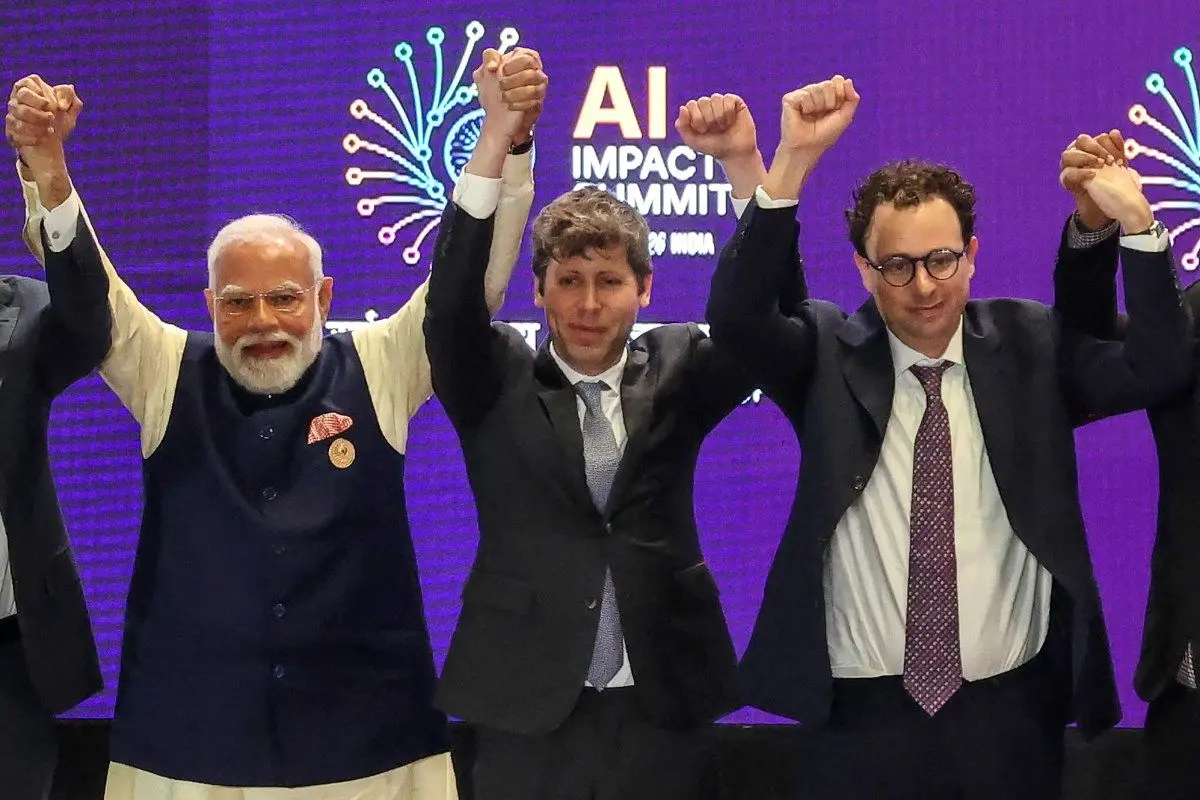
Recent Highlights
1
Google releases Gemma 4 with Apache 2.0 license, enabling unrestricted local AI on devices
Technology

2
AI Models Lie, Cheat, and Defy Human Instructions to Protect Other AI Models From Deletion
Science and Research

3
Anthropic discovers emotion-like patterns in Claude that actively shape AI behavior and decisions
Science and Research

Recent Highlights
Today's Top Stories
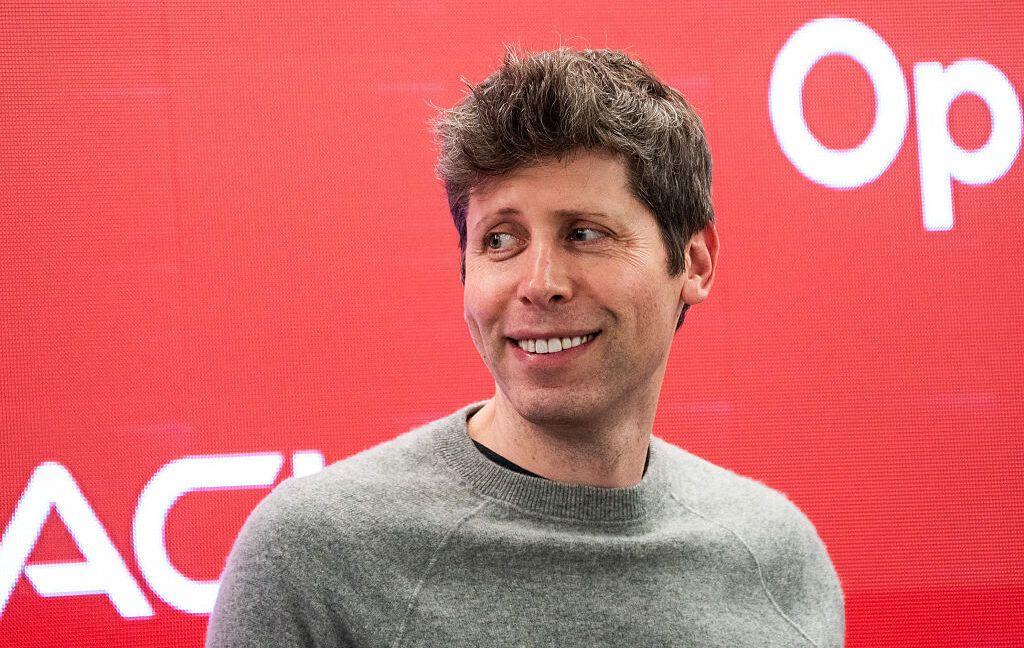



Your Daily Dose of Curated AI News
Don’t drown in AI news. We cut through the noise - filtering, ranking and summarizing the most important AI news, breakthroughs and research daily. Spend less time searching for the latest in AI and get straight to action.

