Jensen Huang Warns AI Leaders Against Fearmongering as Nvidia Pushes Optimistic Vision


10 Sources
[1]
Nvidia's Jensen Huang Urges AI Leaders to Avoid Fearmongering
Nvidia Corp. Chief Executive Officer Jensen Huang said tech leaders need to be careful not to scare people about artificial intelligence, in response to a question about how Anthropic PBC could have better handled messy contract negotiations with the Pentagon. "The desire to warn people about the
[2]
Nvidia CEO Wants Tech Execs to Stop Laying Off Workers and Scaring People
AI is having a major PR crisis, and Nvidia CEO Jensen Huang is really worried about it. As AI technology improves and leverages the underregulated space it inhabits to creep further into modern society, the risks it brings have become a major topic of public discussion over the past year or so.
[3]
'A lot of people are saying AI is coming, we're going to run out of jobs - I think the opposite': Nvidia CEO Jensen Huang says we don't need to fear AI
* Nvidia CEO Jensen Huang predicts AI will make us "feel superhuman" * Says he is "getting busier and busier" due to increased AI usage * Huang also warns of "scaring" people about AI, says we need to be "a little bit more humble" Jensen Huang has once again outlined his belief that harnessing
[4]
NVIDIA GTC keynote: AI gaming, agents, robots, and more
Do you want to build a snowman? Go to space? Construct a workforce out of 110 kinds of robot? Accelerate the entire timeline of Artificial Intelligence? If so, there was plenty of sizzle on offer from Jensen Huang, CEO of NVIDIA, at the company's two hour-long GTC keynote event in San Jose
[5]

Nvidia's CEO says AI adoption will be gradual, but when it does hit, we may all end up making robot clothing | Fortune
Nvidia CEO Jensen Huang doesn't foresee a sudden spike of AI-related layoffs, but that doesn't mean the technology won't drastically change the job market -- or even create new roles like robot tailors. The jobs that will be the most resistant to AI's creeping effect will be those that consist of
[6]

Nvidia CEO Jensen Huang says the next AI boom belongs to inference
Jensen Huang walked onto the SAP Center stage Monday for his GTC keynote address and did what he does best: turning a product keynote into a zoning hearing for the future. The Nvidia $NVDA founder and CEO opened the company's closely watched developers' conference by promising a tour through "every
[7]

Nvidia GTC 2026: Jensen Huang's Groq 'Mellanox moment' and the inference land grab - SiliconANGLE
Nvidia GTC 2026: Jensen Huang's Groq 'Mellanox moment' and the inference land grab Ahead of Nvidia Corp.'s GTC 2026, we reiterate our thesis that the center of gravity in AI is shifting from "how fast can you train?" to "how well can you serve?" Training has ushered in the modern AI era.
[8]
Nvidia just forecast $1 trillion in AI demand. So why isn't Jensen Huang a target of AI backlash? | Fortune
Clad in his trademark leather jacket, Nvidia CEO Jensen Huang took the stage yesterday at San Jose's SAP Center before nearly 20,000 people at the company's annual GTC conference, known in recent years as the Super Bowl of AI. Once again, Huang essentially declared a blowout, forecasting a
[9]

Nvidia's Huang says AI will create jobs, not cut them
STORY: :: Nvidia CEO Jensen Huang says AI will create more jobs, not eliminate them :: San Jose, California / March 17, 2026 "A lot of people say AI's coming, we're going to run out of our work, our jobs. It's exactly the opposite. The fact of the matter is PCs made us more busy. The internet
[10]

GTC 2026: Jensen Huang's AI future goes beyond just chat
Structured data will define trustworthy, enterprise-ready AI system Every year, like clock work, GTC keynotes are usually judged by NVIDIA's hardware flex. More CUDA, more cores, and more things named after scientists who definitely didn't imagine being turned into GPU roadmaps. However, at GTC
Share
Copy Link
Nvidia CEO Jensen Huang used the company's GPU Technology Conference to push back against AI doomerism, arguing that fear-based messaging poses the greatest national security risk. While defending AI's role in transforming jobs rather than eliminating them, Huang also predicted Anthropic could surpass $1 trillion in revenue by 2030 and unveiled plans for data centers in space.
Nvidia CEO Challenges AI Fearmongering at Major Tech Conference
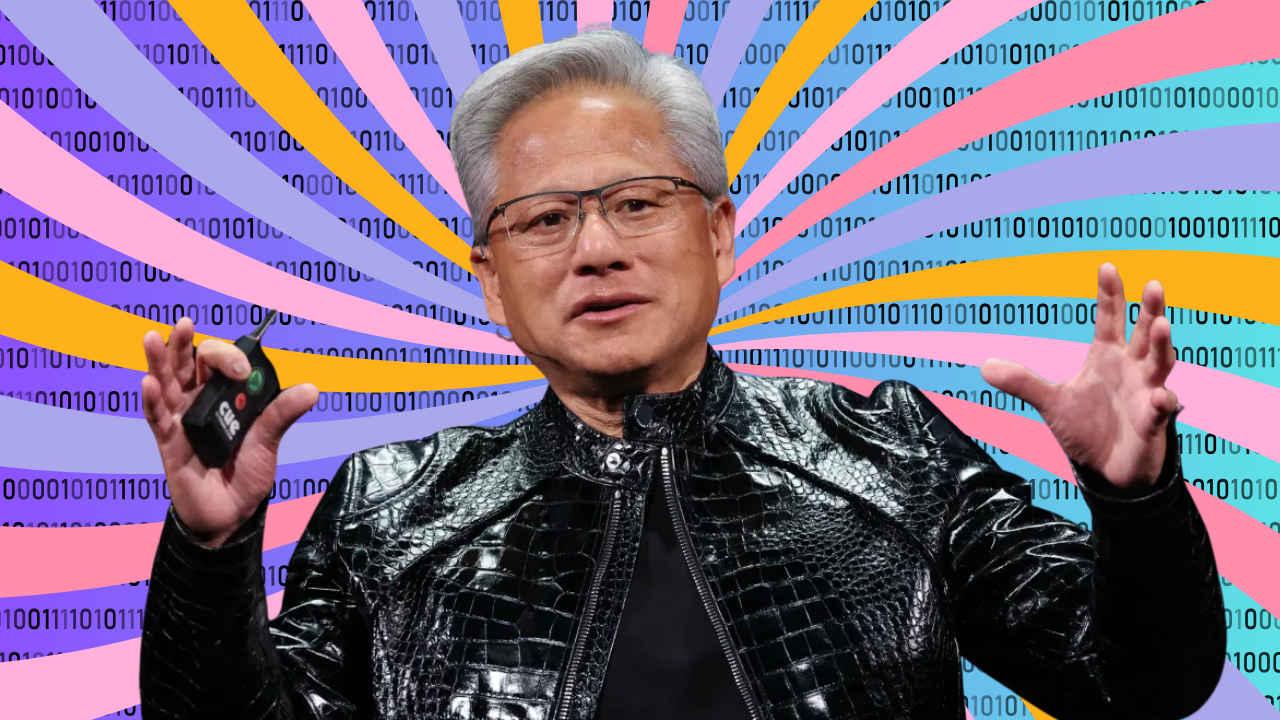
Jensen Huang delivered a pointed message to the artificial intelligence industry at Nvidia's GPU Technology Conference this week: stop scaring people about AI. Speaking during a panel that became an episode of the All-In podcast, the Nvidia CEO argued that "warning is good, scaring is less good, because this technology is too important to us"
1
. His comments came in direct response to questions about how Anthropic could have better handled contentious Pentagon contract negotiations that resulted in the Trump administration declaring the company a supply-chain risk1
.
Source: Digit
Huang's central concern centers on what he views as the greatest national security threat: that Americans become "so angry, fearful or paranoid" about artificial intelligence that the country adopts the technology slower than its rivals
1
. "We have to make sure that we continue to inform the policymakers and not allow doomerism and extremism to affect how policymakers think and understand about this technology," he told reporters2
. The Nvidia chief emphasized that AI "is not a biological being. It is not alien. It is not conscious. It is computer software," pushing back against what he characterized as extreme and catastrophic predictions lacking evidence1
.AI's Impact on the Job Market Requires Nuanced Understanding
Addressing widespread concerns about AI's impact on the job market, Huang offered a sharply different perspective from those predicting mass unemployment. In a conversation with CNBC's Jim Cramer, he said companies laying off workers to automate tasks with AI agents are "out of imagination"
2
. Instead, Huang envisions AI adoption as a gradual process that transforms rather than eliminates jobs. "A lot of people are saying AI is coming, we're going to run out of jobs - but it's exactly the opposite," he explained at a media Q&A session3
.The CEO shared his personal experience, revealing he finds himself "getting busier and busier" as AI processes speed up workflows across Nvidia. "Work is coming back to you much faster, and the number of projects are growing much faster," he noted
3
. Huang expects workers across sectors to use AI agents to "elevate" their capabilities, suggesting "every carpenter could now be an architect" and "every plumber will become an architect"2
. He even speculated about new industries emerging, including "robot apparel" as demand grows for customized robots5
.Productivity Gains Drive Different Vision Than Layoffs
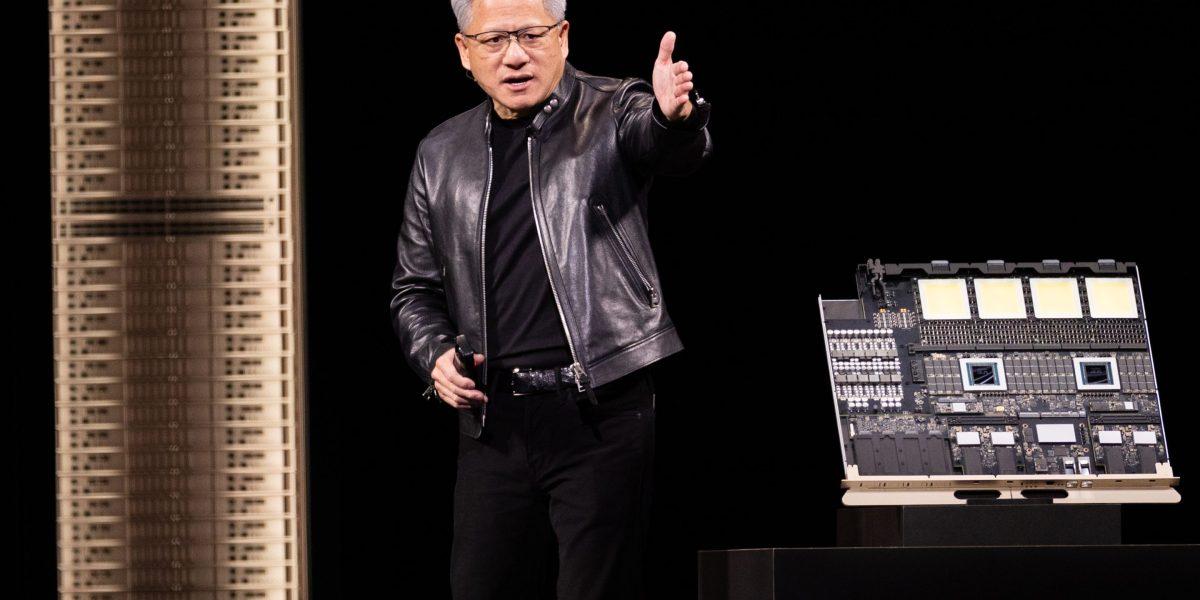
Huang outlined specific expectations for how companies should leverage AI to boost productivity without resorting to layoffs. "Let's say you have a software engineer or an AI researcher, and you pay them $500,000 a year," Huang said. "If that $500,000 engineer did not consume at least $250,000 worth of tokens, I'm going to be deeply alarmed"
2
. This vision positions AI as a tool to "do more with less" by automating mundane tasks while changing the nature of work itself2
.
Source: Fortune
Yet the reality facing workers tells a more complex story. While some companies report productivity increases, the actual returns remain heavily debated, with AI tools often hallucinating and requiring extensive vetting
2
. Experts have warned that widespread AI adoption could trigger white-collar unemployment crises, with early signs already visible in vulnerable sectors affecting early-career workers2
. An MIT report found that AI can adequately complete work equating to about 12% of U.S. jobs, representing about 151 million workers with more than $1 trillion in pay potentially at risk5
.AI Safety Requires Balance Between Warning and Scaring
When questioned about AI safety at the GPU Technology Conference, Huang emphasized the need for measured approaches. "AI shouldn't break the law...or promise functionality it shouldn't have," he stated, using the example of a car rated for 65 miles per hour that shouldn't fail at 50
3
. He called for technologists to be "more moderate," "balanced," and "thoughtful" in their predictions about AI's societal impact2
.The Nvidia CEO advocated for AI agents in cybersecurity, envisioning companies "surrounded by white blood cells" that could "respond instantly and swarm the intrusion" when detecting threats
3
. This practical application exemplifies his belief that "we need AI to do a lot of great things for us" rather than focusing on speculative risks3
.Anthropic Dispute and Trillion-Dollar Predictions
Despite criticizing how Anthropic handled Pentagon negotiations, Huang remains bullish on the company's financial prospects. He predicted Anthropic could surpass $1 trillion in revenue by 2030, adding that CEO Dario Amodei has been "conservative with his projections"
1
. The dispute began when Amodei insisted on contract terms barring products from domestic surveillance of Americans and fully autonomous weapons, leading to Anthropic being dropped from government work and subsequently challenging the decision in court1
.Related Stories

Nvidia Showcases Robotics and Agent Technology
At the two-hour GPU Technology Conference keynote in San Jose, Huang unveiled multiple initiatives including NVIDIA DLSS 5, an AI upscaling software update for gaming launching this fall, though it received immediate backlash from gamers who felt it was trying to fix what wasn't broken
4
. More significantly, Huang announced the company has reached an "inflection point for inference," with customers shifting from training large language models to deploying them through AI agents4
.Nvidia introduced Nemo Claw, adding security and stability layers to the popular OpenClaw AI assistant, along with an expansive NVIDIA AI Agent Toolkit for companies building their own models
4
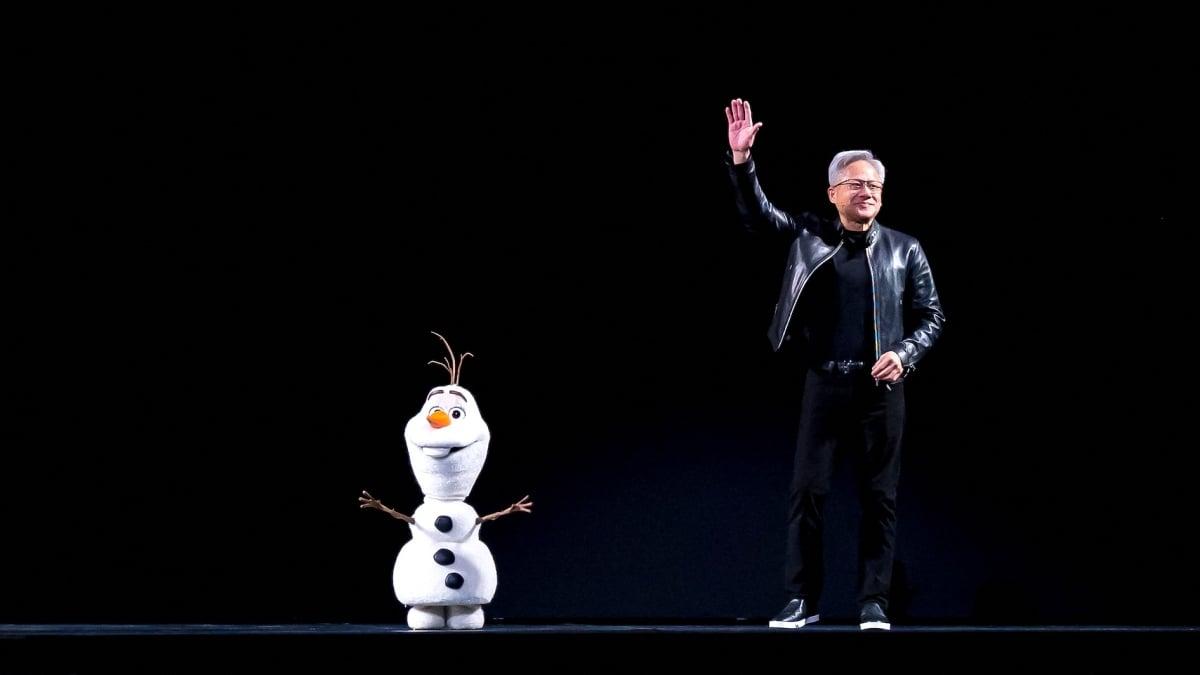
. The company also showcased 110 AI-powered robots from partnered companies, including a Disney Olaf robot that stumbled through conversation with Huang, raising questions about whether AI agents can deliver meaningful ROI or continue acting like "bumbling Olafs"4
.
Source: Mashable
Huang even floated the idea of Vera Rubin Space-1, which would be the first data center in space, though no timeline was provided
4
.Taiwan and Chip Manufacturing Strategy
Huang also addressed sensitive geopolitical issues, urging the U.S. not to provoke China over Taiwan. "Let's demonstrate restraint. Let's not push," said Huang, a U.S. citizen born in Taiwan
1
. Regarding chip manufacturing concentration risks, he advocated for diversifying the AI supply chain across South Korea, Japan, and U.S. locations. "We have to make sure we reindustrialize the U.S. as fast as we can," Huang emphasized, while praising Taiwanese expertise demonstrated through Taiwan Semiconductor Manufacturing Co. factories in Arizona1
.Looking Ahead: Nvidia's Ambitious Vision
Looking 10 years into the future, Huang envisions Nvidia employing 75,000 people "working with 7.5 million agents, working around the clock"
3
. He predicted that "distances will be shorter, everything will be wired because of robotics...and the amount of energy we use for anything will be reduced tremendously...and we will all feel superhuman"3
. With Nvidia's market cap doubling to $4.4 trillion over two years, Huang faces pressure to prove the AI boom isn't a bubble while navigating growing public resentment toward AI, including calls for chatbot boycotts and data center moratoriums4
2
.References
Summarized by

Navi
Related Stories
Nvidia CEO Jensen Huang Weighs In on AI's Impact on Jobs and Innovation
14 Jul 2025•Technology
Jensen Huang says AI job displacement fears miss the point: You'll lose to coworkers who use AI
20 Apr 2026•Business and Economy
Nvidia CEO Jensen Huang Pushes for Maximum AI Automation While Promising Job Security
25 Nov 2025•Business and Economy
Recent Highlights
1
Microsoft and Nvidia Launch Surface Laptop Ultra: A $2,599 AI-Ready PC With RTX Spark Chip
Technology

2
Google Unveils Gemini 4 Argon AI Model, Restricts Access to Trusted Cyber Defenders
Technology
3
Trump Consulted Grok AI Before Ordering Venezuela Invasion and Capture of Nicolás Maduro
Policy and Regulation

Recent Highlights
Today's Top Stories






Don’t drown in AI news. We cut through the noise - filtering, ranking and summarizing the most important AI news, breakthroughs and research daily. Follow topics that matter to you and stay ahead.


