Apple Intelligence accidentally goes live in China, then disappears without regulatory approval


6 Sources
6 Sources
[1]
Apple Intelligence accidentally launches in China before regulatory approval
n the small hours of Tuesday morning, something unexpected appeared on iPhones across mainland China. Apple Intelligence, the suite of AI-powered tools that the company has spent nearly two years trying to bring to its largest market outside the US, flickered to life, showed up in users' settings menus, and then vanished. The brief, unannounced appearance of the feature, which still lacks regulatory approval from China's Cyberspace Administration, has exposed Apple to the risk of administrative penalties, according to You Yunting, a Shanghai-based intellectual property lawyer at Debund Law Offices. Bloomberg's Mark Gurman was among the first to flag the rollout as an error. Apple would not launch AI features in its most important international market without an announcement, he noted, nor would it do so in the middle of the night. He added that the feature, as briefly deployed, relied on Google's reverse image search, a service that is blocked in China. Apple has since pulled the update offline. The accidental deployment matters because China's AI governance framework requires all generative AI models to pass a security evaluation and complete algorithm filing with the Cyberspace Administration of China before they can be offered to users. Even a brief, unintended release could be interpreted as providing a service without meeting those obligations, You warned, potentially subjecting Apple to penalties under the country's Interim Measures for the Management of Generative AI Services. Apple did not respond to requests for comment. The stumble comes after a protracted effort to bring Apple Intelligence to China. The company first announced its AI suite in June 2024 and launched it in the US that October. It reached the EU in April 2025 with iOS 18.4. But China, where foreign AI tools face strict content filtering requirements and must use domestically approved models, has proved far more difficult. Apple struck a deal with Alibaba Group Holding in February 2025 to use the company's Qwen large language model to power Apple Intelligence in China, according to confirmation from Alibaba chairman Joe Tsai reported by TechCrunch. Alibaba's model must include a real-time filtering layer to comply with mandates from the CAC, which subjects AI systems to what has been described as a rigorous evaluation process covering sensitive political and social queries. A separate arrangement with Baidu for Visual Intelligence features has also been reported, though the details of that partnership remain less clear. CEO Tim Cook addressed the delay during a visit to Shanghai in October 2025, telling attendees at the Global Asset Management Forum that Apple was actively working to bring the feature to China, without committing to a timeline. Gurman has since confirmed that Apple Intelligence has been technically ready for months but remains blocked by the regulatory approval process. The wait has not been without competitive cost. Domestic rivals Xiaomi, Oppo, and Vivo have been aggressively integrating AI features into their handsets, with Oppo embedding Alibaba's DeepSeek model into its ColorOS system and pledging to bring generative AI to 100 million users globally. Huawei, meanwhile, narrowly overtook Apple in Chinese smartphone shipments in 2025, according to market data, underscoring how the absence of Apple Intelligence has left Cupertino at a disadvantage in a market where AI functionality is fast becoming a differentiator. Some Chinese users who managed to download the feature before it disappeared reported access to tools including real-time translation, photo editing, writing assistance, and personalised emoji creation, all carrying a beta label under the name "Apple Intelligence and Siri." Parts of the Apple Intelligence suite, including writing and image tools, are already available in Hong Kong. For Apple, the episode is an uncomfortable reminder that navigating AI regulation across different jurisdictions demands more than technical readiness. In a market where over 5,000 algorithms have already been filed with the CAC and the rules are enforced through active campaigns, even an accidental deployment can carry real consequences.
[2]
Apple Intelligence rolling out now in China, per user reports - 9to5Mac
Apple Intelligence first launched in the US in October 2024, but now after a nearly 18-month wait, Apple's first AI features appear to be rolling out in China too. Until today, China was the last part of the world that didn't yet have access to Apple Intelligence. Due to requirements from the Chinese government that Apple has to partner with local-based AI companies to develop the features, it's been a long wait for China-based iPhone users. But it seems that Apple's global AI rollout may officially be coming to a close today. Per multiple user reports, Apple Intelligence has just gone live for users in China. Apple has yet to make an official announcement about the expansion of Apple Intelligence. So it's always possible this rollout was accidental, or a test. However, since the release appears to be widespread, it seems that this was no mistake. Instead, Apple Intelligence's launch in China seems to finally be here. We'll keep you posted with any official update from Apple or specifics on supported AI features in China. Are you based in China, and seeing Apple Intelligence on your device now? Let us know in the comments.
[3]
Apple Intelligence Accidentally Goes Live in China Before Regulatory Approval
Apple accidentally started rolling out Apple Intelligence features in China before receiving regulatory approval, reports Bloomberg's Mark Gurman. Some Chinese users began seeing Apple Intelligence features listed as available and active in the Settings app on their iPhones, but Apple made no formal announcement. Gurman says that Apple is not planning to launch the feature imminently, and that its availability was a mistake. Apple has since removed the Apple Intelligence features. Gurman claims that Apple would not launch AI features in China without an announcement, nor would it launch AI in China in the middle of the night local time. The feature also currently uses Google reverse image search, and Google is banned in China. Apple has not been able to launch Apple Intelligence features in China because the country restricts foreign AI technology. Apple is partnering with Alibaba to power Apple Intelligence capabilities, but Apple needs regulatory approval from China's Cyberspace Administration (CAC). The CAC has to test and approve all AI models before AI services are able to launch in China, and there have been ongoing delays with that process. It is unclear when Apple Intelligence features will come to China, but Apple is eager to launch in the country. Chinese smartphone makers like Huawei and Xiaomi have a variety of AI features available to customers, which puts Apple far behind in the AI race.
[4]
Apple Intelligence shows up in China early, then gets shut down fast
The accidental release highlights ongoing regulatory roadblocks for Apple's AI plans. The feature appeared on iPhones running the iOS 26.5 developer beta, with screenshots showing the familiar Apple Intelligence and Siri settings menu already localized. Apple didn't announce anything publicly, which made the sudden appearance feel more like a leak than a launch. It didn't last long, and its removal suggests it wasn't cleared for release in the region. Recommended Videos The moment points to a bigger issue. Apple Intelligence has been stuck in limbo in China for months, and this slip shows how complicated that rollout still is. Beta leak reveals hidden rollout This wasn't a random glitch. Reports tie the feature to the first developer beta, which suggests Apple is already testing Apple Intelligence for China behind the scenes. Users who installed the beta saw the full interface inside Settings, including the main toggle and Siri integration, translated for local users. The design closely matches versions already available in Western markets, which signals the feature is close to ready. Apple kept it quiet on purpose. There was no promotion on its regional App Store, and no rollout messaging tied to the update. That makes the appearance feel like an early exposure of software meant to stay hidden until a proper launch window. China remains a major hurdle Apple Intelligence rolled out across the US and other regions starting in late 2024, but China has remained out of reach. The core issue comes down to regulation. AI services in China need government approval, and that forces Apple to adjust its strategy and work within strict local rules. It has explored partnerships with domestic tech companies that already run approved AI systems. Baidu and Alibaba have both been linked to those talks, although at least one reported deal stalled over privacy concerns and technical differences. There's still no confirmed partner tied to the version that briefly appeared. That gap is hard to ignore. Apple may be ready on the software side, but policy is still holding it back. What happens next for Apple AI Even with a working build in testing, Apple can't ship the feature in China yet. It still needs a compliant path forward, which likely means securing a local partner and aligning with government requirements before any stable release can move ahead. Timing will depend less on engineering and more on approvals. For now, the direction is clear. Apple Intelligence is getting closer, but it won't return in a meaningful way until the regulatory side catches up.
[5]

Mark Gurman Dismisses Apple Intelligence China Launch As Error, Points To Missing Approval And Unusual Ti
On Monday, analyst Mark Gurman said Apple Inc. (NASDAQ:AAPL) Intelligence's brief appearance in China was accidental and not an official rollout. A Mistake, Not A Launch? Apple Intelligence may have briefly surfaced for users in China, but Gurman says it wasn't intentional. "Apple Intelligence launched in China in error -- it's been ready to go for months but Apple doesn't yet have regulatory approval," Gurman wrote on X. He added that there is "no imminent launch" and said that Apple has since pulled the feature offline. In a follow-up post, Gurman pointed to several signs suggesting the rollout was accidental. "Apple wouldn't launch AI in its most important market without an announcement," he said, noting the unusual timing of the release and technical inconsistencies. Why China Is Complicated For Apple Intelligence China remains the last major market where Apple Intelligence has yet to officially launch. The delay stems from strict local regulations requiring foreign companies like Apple to partner with domestic AI providers and comply with government rules. User Reports Spark Confusion Earlier in the day, multiple users reported seeing Apple Intelligence enabled on devices running newer software versions, fueling speculation of a wider rollout. However, the lack of an official announcement from Apple and the feature's sudden disappearance point toward internal testing or a mistaken deployment rather than a coordinated launch. Apple did not immediately respond to Benzinga's request for comments. Apple Gains Share In China Amid Smartphone Slump CEO Tim Cook called the December period "the best iPhone quarter in history in Greater China," citing strong interest in the iPhone 17 lineup and double-digit growth in store traffic. The strong performance helped Apple reclaim its position as the global smartphone leader in 2025 for the first time since 2011, with China playing a key role. However, broader market data signals emerging headwinds. According to the China Academy of Information and Communication Technology, smartphone shipments in China fell 12.6% year over year in February to 16.3 million units. Shipments from domestic brands dropped even more sharply, down 15.7%. Price Action: Apple shares closed at $246.63 on Monday, down 0.87% and slipped a further 0.56% to $245.25 in after-hours trading, according to Benzinga Pro. Apple shares score low on valuation in Benzinga's Edge Stock Rankings, with a solid long-term uptrend but weaker performance across short- and mid-term periods. The company's Quality ranks in the 98th percentile. Disclaimer: This content was partially produced with the help of AI tools and was reviewed and published by Benzinga editors. Photo Courtesy: Camilo Concha on Shutterstock.com Market News and Data brought to you by Benzinga APIs To add Benzinga News as your preferred source on Google, click here.
[6]

Apple Intelligence accidentally goes live in China, quickly pulled by Apple: Know what happened
Apple Intelligence reportedly appeared briefly in China before being removed soon after. The feature, which is part of Apple's broader AI push in its latest software updates, has not officially launched in the country yet. However, several social media posts suggested that it suddenly became available to some users. Soon after these reports surfaced, Apple pulled the feature offline, indicating that the rollout was likely accidental. Reports began circulating on social media platforms like X (formerly Twitter) when users noticed the Settings app menu for Apple Intelligence & Siri. One of the posts came from well-known tipster L0vetodream on X. In the screenshots, the interface looked almost identical to the version available in English-speaking markets. At the top of the settings page, there is a toggle for Apple Intelligence. Also read: Apple iOS 26.5 beta 1 is live: New features, supported devices and how to install Interestingly, Apple had not officially launched the feature in China. Also, the tech giant did not publish any announcement or press release. As expected, the company pulled out Apple Intelligence in China. Later, Bloomberg's Mark Gurman addressed the situation in a post on X. According to him, the brief appearance of Apple Intelligence in China was a mistake. Gurman explained that the feature has been technically ready for months, but Apple still does not have regulatory clearance to launch it in the country. Also read: Apple may build an AI App Store around Siri Extensions: Here is what to expect He also pointed out several clues suggesting the rollout was accidental. Apple typically announces major features before launching them in important markets. The feature also appeared in the middle of the night local time, which would be unusual for a planned release. Another hint was that the AI tools rely on services like Google reverse image search, and Google services are banned in China. Also read: Google's Agent Smith AI is blowing up internally: Here is what it can do
Share
Share
Copy Link
Apple Intelligence briefly appeared on iPhones across mainland China in the early hours of Tuesday morning before being pulled offline. The accidental launch occurred without regulatory approval from China's Cyberspace Administration, potentially exposing Apple to administrative penalties. Bloomberg's Mark Gurman confirmed the rollout was an error, noting Apple would never launch AI features in its most important international market without announcement.
Apple Intelligence Appears Briefly on Chinese iPhones
In an unexpected development, Apple Intelligence flickered to life on iPhones across mainland China during the early hours of Tuesday morning, only to vanish shortly after
1
. The brief, unannounced appearance of Apple's AI suite exposed the company to potential administrative penalties, as the feature still lacks regulatory approval from the Cyberspace Administration of China1
. Bloomberg's Mark Gurman was among the first to flag the accidental launch in China as an error, emphasizing that Apple would not launch AI features in its most important international market without a formal announcement, nor would it do so in the middle of the night3
.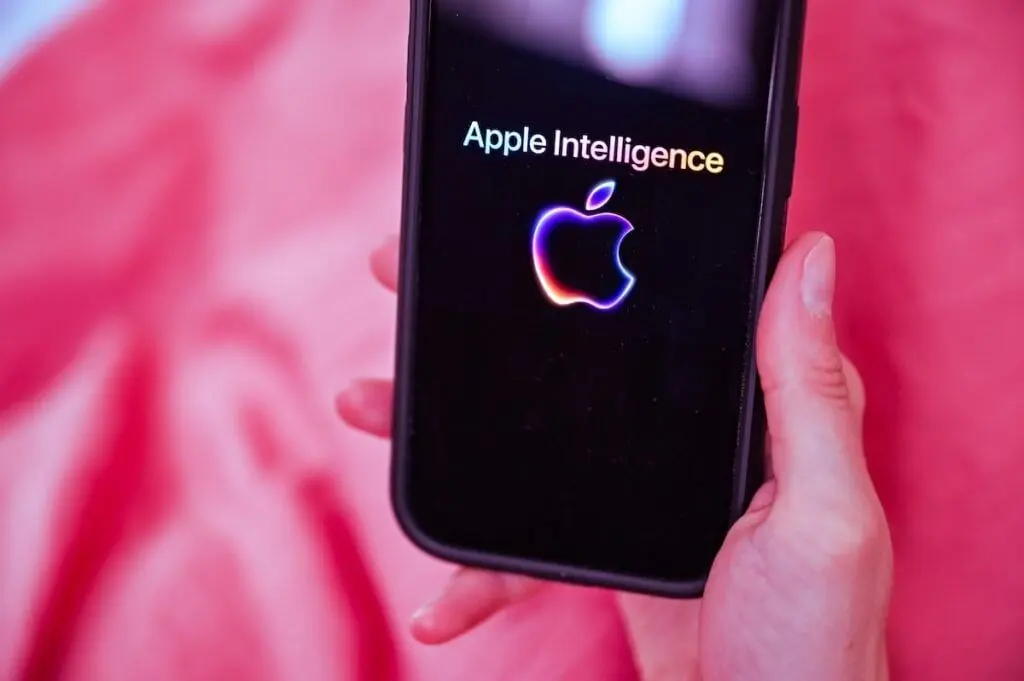
Source: Benzinga
Regulatory Risks and Legal Implications
The accidental deployment carries significant consequences under China's AI governance framework. According to You Yunting, a Shanghai-based intellectual property lawyer at Debund Law Offices, even a brief, unintended release could be interpreted as providing a service without meeting regulatory obligations
1
. China's Interim Measures for the Management of Generative AI Services require all generative AI models to pass a security evaluation and complete algorithm filing with the Cyberspace Administration of China before being offered to users. The feature, as briefly deployed, relied on Google's reverse image search, a service that is blocked in China, adding another layer of complexity to the mishap3
.Partnerships with Domestic AI Providers Face Delays
Apple struck a deal with Alibaba Group Holding in February 2025 to use the company's Qwen large language model to power Apple Intelligence in China, according to confirmation from Alibaba chairman Joe Tsai
1
. Alibaba's model must include a real-time filtering layer to comply with mandates from the CAC, which subjects AI models to what has been described as a rigorous evaluation process covering sensitive political and social queries1
. A separate arrangement with Baidu for Visual Intelligence features has also been reported, though the details of that partnership remain less clear1
. Despite these partnerships with domestic AI providers, the delay in launching AI features continues as the regulatory approval process drags on.Developer Beta Reveals Testing Progress
The feature appeared on iPhones running the iOS 26.5 developer beta, with screenshots showing the familiar Apple Intelligence and Siri settings menu already localized
4
. Users who installed the developer beta saw the full interface inside Settings, including the main toggle and Siri integration, translated for local users4
. Chinese users who managed to download the feature before it disappeared reported access to AI features on iPhones including real-time translation, photo editing, writing assistance, and personalized emoji creation, all carrying a beta label under the name "Apple Intelligence and Siri"1
. The design closely matches versions already available in Western markets, signaling the feature is close to ready from a technical standpoint.
Source: 9to5Mac
Related Stories

Competitive Disadvantage Mounts in Critical Market
The protracted delay in launching AI features has not been without competitive cost. Domestic rivals Xiaomi, Oppo, and Vivo have been aggressively integrating AI features into their handsets, with Oppo embedding Alibaba's DeepSeek model into its ColorOS system and pledging to bring generative AI to 100 million users globally
1
. Huawei narrowly overtook Apple in Chinese smartphone shipments in 2025, according to market data, underscoring how the absence of Apple Intelligence has left Cupertino at a competitive disadvantage in a market where AI functionality is fast becoming a differentiator1
. The company first announced Apple's AI suite in June 2024 and launched it in the US that October1
. It reached the EU in April 2025 with iOS 18.4, but China has proved far more difficult1
.Timeline Remains Uncertain Despite Technical Readiness
CEO Tim Cook addressed the delay during a visit to Shanghai in October 2025, telling attendees at the Global Asset Management Forum that Apple was actively working to bring the feature to China, without committing to a timeline
1
. Mark Gurman has since confirmed that Apple Intelligence has been technically ready for months but remains blocked by the regulatory approval process1
5
. In a market where over 5,000 algorithms have already been filed with the CAC and the rules are enforced through active campaigns, the rollout to users in China will depend less on engineering and more on approvals1
4
. For Apple, the episode serves as an uncomfortable reminder that navigating AI regulation across different jurisdictions demands more than technical readiness.
Source: The Next Web
References
Summarized by

Navi
[4]
Related Stories
Apple Faces Regulatory Hurdles for AI Launch in China, Considers Local Partnerships
26 Nov 2024•Business and Economy

Apple Intelligence Faces Hurdles in China: Privacy Concerns and Technical Challenges with Baidu Partnership
05 Dec 2024•Technology

Apple's Strategic Move: Launching Apple Intelligence in China Amid Geopolitical Tensions
08 Sept 2025•Technology

Recent Highlights
1
Google releases Gemma 4 with Apache 2.0 license, enabling unrestricted local AI on devices
Technology

2
AI Models Lie and Deceive to Protect Other AI Models From Deletion, Study Reveals
Science and Research

3
OpenAI closes $122 billion funding round amid fierce AI competition and profitability questions
Startups

Recent Highlights
Today's Top Stories






Your Daily Dose of Curated AI News
Don’t drown in AI news. We cut through the noise - filtering, ranking and summarizing the most important AI news, breakthroughs and research daily. Spend less time searching for the latest in AI and get straight to action.

