Arm to launch chip design school in South Korea, training 1,400 specialists for AI push


3 Sources
3 Sources
[1]
SoftBank's Arm plans to set up chip design facility in South Korea
South Korea and Arm have signed an agreement to boost the nation's semiconductor and AI capabilities, including a chip design school to train around 1,400 specialists. SoftBank's Masayoshi Son reiterated his belief in AI surpassing human intelligence. The deal aligns with South Korea's broader push to strengthen its AI and chip ecosystem. South Korea's industry ministry and SoftBank's chip unit, Arm Holdings, have signed an agreement to strengthen the country's semiconductor and Artificial Intelligence sectors, a presidential policy adviser said on Friday. The memorandum of understanding includes a plan for Arm to set up a chip design school in the country to tap its expertise in this area, Kim Yong-beom told reporters at a briefing. The programme aims to train about 1,400 high-level chip design specialists, a move that Kim said would help bolster the relatively weak system-semiconductor and fabless segments in Asia's fourth-biggest economy. British chip and software company Arm licenses its chip designs and earns funds through royalties. SoftBank CEO Masayoshi Son, who met with South Korean President Lee Jae Myung on Friday, said that demand for chips will rise dramatically as AI advances, Kim quoted Son as saying. Son repeated on Friday that he believes AI is set to surpass human intelligence and that Artificial Superintelligence would be "10,000 times smarter than people." He said it was time to move beyond the notion that humans could control, teach or manage AI, and instead consider how to live with it harmoniously. South Korea has ambitions to become one of the world's top three AI powers and Lee has recently also held talks with other global technology leaders including OpenAI CEO Sam Altman and Nvidia boss Jensen Huang. In October, South Korea's Samsung Electronics and SK Hynix signed letters of intent to supply memory chips for OpenAI's data centres. Nvidia said in late October that it would supply more than 260,000 of its most advanced AI chips to South Korea's government and some of the country's biggest businesses, including Samsung Electronics.
[2]
Arm Holdings To Open Chip School In South Korea To Train 1,400 Experts For AI - ARM Holdings (NASDAQ:ARM)
South Korea's industry ministry and SoftBank Group Corp.'s (OTC:SFTBY) (OTC:SFTBF) chip unit, Arm Holdings Plc (NASDAQ:ARM), signed an agreement to boost the country's semiconductor and artificial intelligence sectors, a presidential policy adviser announced Friday. * ARM Holdings stock is gaining positive traction. Why is ARM stock advancing? Under the memorandum of understanding, Arm will establish a chip design school in South Korea to leverage its expertise, official Kim Yong-beom told reporters. The program aims to train roughly 1,400 high-level chip design specialists, strengthening the country's relatively weak system-semiconductor and fabless segments, Reuters reported Friday. Also Read: Arm Becomes 'Power-Efficiency Engine' For AI, Wins Big With Amazon, Google And Meta Arm licenses its chip designs globally and earns revenue through royalties. SoftBank CEO Masayoshi Son, who met with South Korean President Lee Jae Myung on Friday, said rising AI demand will sharply increase chip requirements. He also highlighted the energy sector as a bottleneck limiting AI development in South Korea. Son reiterated that AI is poised to surpass human intelligence and that artificial superintelligence could be "10,000 times smarter than people," urging a shift from controlling AI to learning to coexist with it. South Korea aims to rank among the world's top three AI powers. President Lee has met with global tech leaders, including OpenAI CEO Sam Altman and Nvidia CEO Jensen Huang, to advance the goal. Nvidia confirmed it will supply more than 260,000 advanced AI chips to the South Korean government and major companies, including Samsung Electronics. South Korea, U.S. Tariffs: What's Going On? South Korea's geopolitical tensions eased with the U.S. following a tariff rate cut. In December, U.S. Commerce Secretary Howard Lutnick confirmed that the U.S. has cut its general tariff rate on imports from South Korea -- including autos -- to 15%, activating key provisions of the countries' trade deal after Seoul moved forward with its strategic-investment legislation. The tariff cut, retroactive to Nov. 1, 2025, aligns Korea's reciprocal rates with those of Japan and the EU and removes U.S. duties on airplane parts. South Korea's ruling party introduced legislation to honor its $350 billion investment pledge in U.S. sectors such as shipbuilding, a move Lutnick said strengthens mutual trust and deepens the economic partnership supporting U.S. industry and jobs. The U.S. had previously imposed a 25% tariff on South Korean imports, including Section 232 national-security auto duties and reciprocal tariffs under IEEPA. In October, Amazon.com Inc (NASDAQ:AMZN) Amazon Web Services committed to invest at least $5 billion in South Korea by 2031 to build new AI data centers, AWS CEO Matt Garman announced alongside President Lee at the APEC 2025 summit. AWS will place the facilities on Seoul's outskirts and fold the investment into a broader $40 billion plan spanning 14 non-U.S. APEC economies through 2028 -- a move Garman said will add $45 billion to U.S. GDP and deliver wider regional gains. Amazon joins six other companies pledging a combined $9 billion over five years as South Korea doubles down on AI infrastructure. Amazon's move followed Alibaba Group Holding's second Korean data center and OpenAI's partnership with Samsung Electronics and SK Hynix to build a dedicated AI facility. ARM Price Action: Arm Holdings stock is up 1.41% at $142.48 at publication on Friday. Read Next: SoftBank Says Skipping AI Is Riskier Than Betting Big Photo: Shutterstock ARMARM Holdings PLC$142.551.47%OverviewAMZNAmazon.com Inc$231.000.83%SFTBFSoftBank Group Corp$105.54-%SFTBYSoftBank Group Corp$61.655.67%Market News and Data brought to you by Benzinga APIs
[3]
ARM To Establish A Semiconductor Design School In South Korea To Train 1,400 "World-Class" Chip Design Professionals
ARM, a prolific designer of CPU cores and owned by Japan's SoftBank, is embarking on a major skill-building initiative in South Korea, one that would bolster the chip design expertise of the Asian powerhouse via a dedicated school that would train 1,400 individuals by 2030. South Korea's Ministry of Trade, Industry, and Energy has now signed a Memorandum of Understanding (MOU) with the chip designer ARM to strengthen the country's semiconductor and AI industries. As per the terms of the MOU, ARM will establish a dedicated chip design school in South Korea to train 1,400 "world-class" semiconductor design professionals by 2030. The move is expected to act as a major impetus for South Korea's so-called fabless semiconductor companies, including Silicon Works, ADTechnology, Telechips, Nextchip, as well as AI-focused firms such as Rebellions and FADU. The Ministry of Trade, Industry, and Energy also plans to establish specialized graduate schools for semiconductors. In a separate meeting between the South Korean President, Lee Jae-myung, and Softbank's Chairman, Masayoshi Son, the latter identified four key elements for achieving Artificial Superintelligence (ASI): Son went on to note: "Korea's critical weakness is its lack of sufficient energy." He then added: "Global companies are announcing many plans to build data centers in Korea, but in my view, the scale is very small." Do note that ARM already has a significant footprint in South Korea via its subsidiary, ARM Korea Ltd., which licenses intellectual property - primarily related to CPU cores - to various Korean companies.
Share
Share
Copy Link
SoftBank's Arm signed a deal with South Korea to establish a chip design school that will train 1,400 specialists by 2030. The initiative aims to strengthen the country's semiconductor and AI industries as South Korea positions itself among the world's top three AI powers.
Arm and South Korea Sign Deal to Build Chip Design Expertise
South Korea's Ministry of Trade, Industry, and Energy has signed a memorandum of understanding with SoftBank's Arm to establish a dedicated chip design school in the country, marking a significant step in bolstering the nation's semiconductor and AI industries
1
. The program aims to train 1,400 specialists in advanced chip design by 2030, addressing critical gaps in South Korea's system-semiconductor and fabless semiconductor segments3
. Presidential policy adviser Kim Yong-beom emphasized that the initiative would strengthen relatively weak areas of Asia's fourth-biggest economy, particularly as global demand for AI chips accelerates.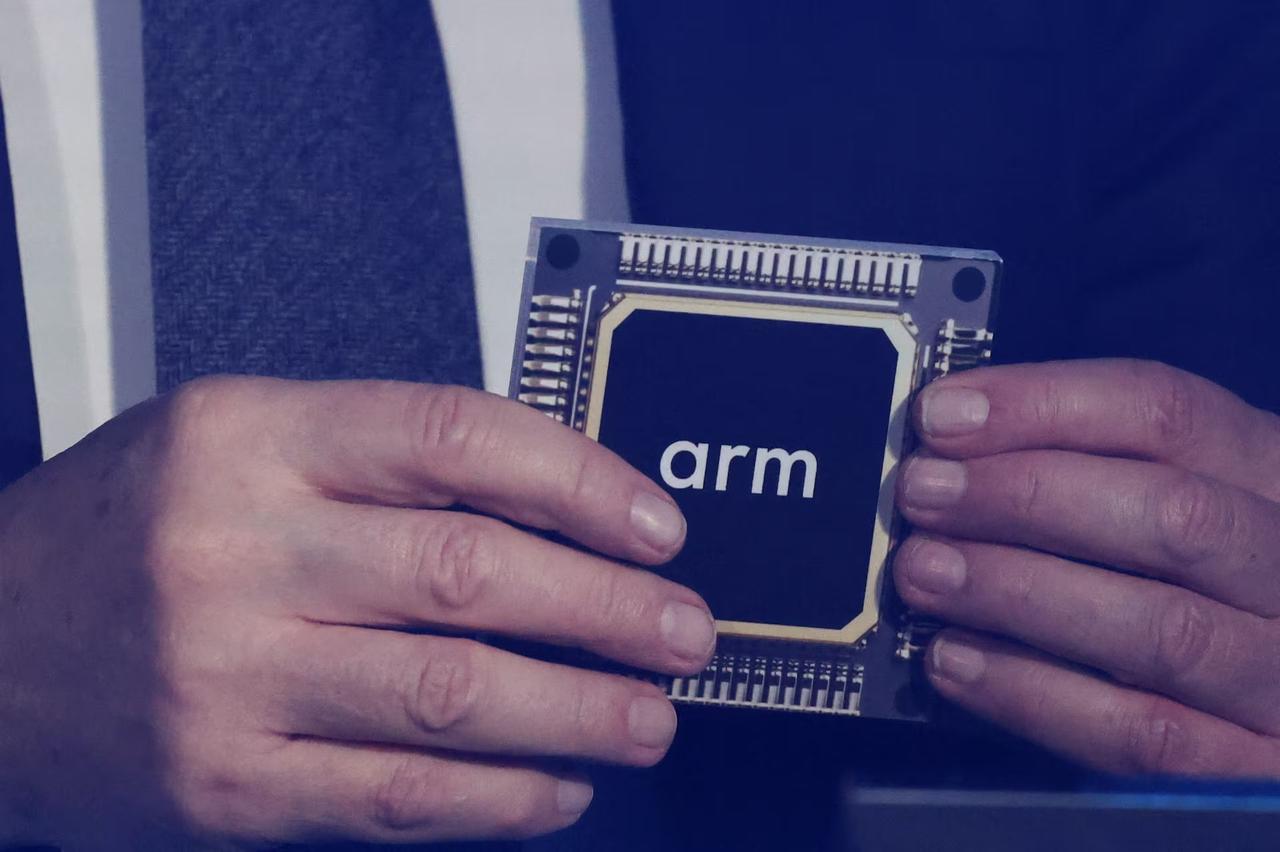
Source: Wccftech
SoftBank's Vision for Artificial Intelligence and Energy Challenges
During a meeting with South Korean President Lee Jae-myung on Friday, SoftBank CEO Masayoshi Son reiterated his belief that Artificial Intelligence is poised to surpass human intelligence, with Artificial Superintelligence potentially becoming "10,000 times smarter than people"
1
. Son stressed that rising AI demand will sharply increase chip requirements and identified energy infrastructure as a critical bottleneck limiting AI development in South Korea2
. He noted that while global companies are announcing plans to build data centers in the country, the scale remains insufficient for South Korea's ambitions3
.Strategic Partnerships Strengthen South Korea's AI Ecosystem
The Arm initiative fits within South Korea's broader strategy to rank among the world's top three AI powers. President Lee has engaged with prominent tech leaders including OpenAI CEO Sam Altman and Nvidia CEO Jensen Huang to advance this goal
1
. Nvidia confirmed plans to supply more than 260,000 advanced AI chips to the South Korean government and major companies, including Samsung Electronics2
. In October, Samsung Electronics and SK Hynix signed letters of intent to supply memory chips for OpenAI's data centers, while Amazon Web Services committed to invest at least $5 billion by 2031 to build new AI data centers near Seoul2
.
Source: ET
Related Stories

Impact on Fabless Companies and Chip Design Specialists
The chip design school is expected to provide crucial support for South Korea's fabless semiconductor companies, including Silicon Works, ADTechnology, Telechips, and Nextchip, as well as AI-focused firms such as Rebellions and FADU
3
. Arm, which licenses its chip designs globally and earns revenue through royalties, already maintains a significant presence in South Korea through its subsidiary ARM Korea Ltd.3
. The Ministry of Trade, Industry, and Energy also plans to establish specialized graduate schools for semiconductors to complement the training initiative3
. This coordinated approach signals South Korea's determination to build domestic expertise in chip design while attracting international partnerships that can accelerate its position in the global AI race.References
Summarized by

Navi
[2]
Related Stories
Arm's Strategic Shift: Launching In-House Chip with Meta as First Customer
14 Feb 2025•Technology

Arm Holdings Reports Strong Q3 Results Amid AI Boom, But Faces Valuation Concerns
06 Feb 2025•Business and Economy

Arm launches its first in-house chip after 35 years, targeting AI data center market with Meta
24 Mar 2026•Technology

Recent Highlights


Recent Highlights
Today's Top Stories






Your Daily Dose of Curated AI News
Don’t drown in AI news. We cut through the noise - filtering, ranking and summarizing the most important AI news, breakthroughs and research daily. Spend less time searching for the latest in AI and get straight to action.

