Arm launches Physical AI division to expand presence in robotics and automotive markets


5 Sources
[1]
Exclusive: Arm launches 'Physical AI' division to expand in robotics market
Jan 7 (Reuters) - Chip technology company Arm Holdings has reorganized the company and formed a Physical AI unit to expand its presence in the robotics market, company executives told Reuters at CES. The decision to create a unit that specializes in robotics arrives amid a flurry of announcements
[2]
Chip designer Arm targets robotics with new Physical AI business - SiliconANGLE
Chip designer Arm targets robotics with new Physical AI business Chip design company Arm Holdings Plc has created a new Physical AI business unit that's going to be focused on developing semiconductors for robotics and intelligent cars. The announcement was made at CES 2026 this week, where robots
[3]
Arm launches 'Physical AI' unit, joining rush to robotics by tech and automakers
Robots and autos are the core of Physical AI and share a wide range of existing sensor tech and other hardware. Automakers including Tesla are creating robots to automate warehouse and factory tasks. The head of the newly formed unit, Drew Henry, said that physical AI solutions could "fundamentally
[4]
Arm Launches 'Physical AI' Division To Target Robotics As Humanoid Robots Take Center Stage At CES - ARM Holdings (NASDAQ:ARM)
Arm Holdings (NASDAQ:ARM) is reorganizing its business to create a new "Physical AI" division, signaling a deeper push into robotics and automotive technology as humanoid robots dominate the spotlight at CES 2026. Arm Reorganizes To Focus On Robots And Cars Chip design firm Arm Holdings has
[5]

Arm reorganizes to launch Physical AI unit amid robotics rush
British chip architecture designer Arm (ARM) has reorganized the company to create a Physical AI unit to expand its presence in the robotics market, Reuters reported. The company will now operate three main lines of business: its Cloud and AI, Edge -- which includes Arm's new Physical AI unit
Share
Copy Link
Chip design company Arm Holdings reorganized its business at CES 2026 to create a new Physical AI division focused on robotics and automotive technology. The UK-based firm now operates three core units, combining automotive and robotics under one umbrella due to shared requirements for power efficiency, safety and reliability.
Arm Restructures to Focus on Physical AI and Robotics
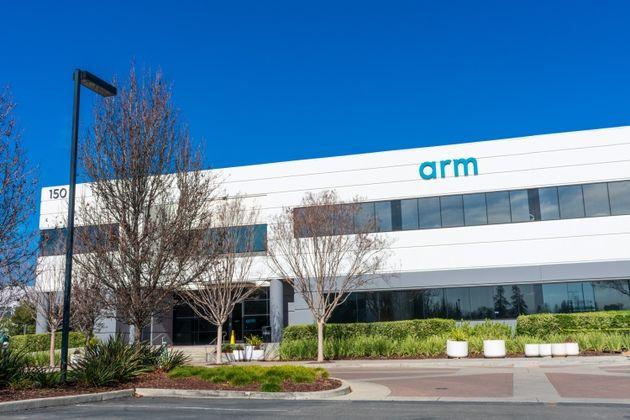
Chip design company Arm Holdings has completed a major reorganization to launch a dedicated Physical AI division, marking a strategic push to expand presence in robotics and automotive markets
1
. The announcement came at CES 2026 in Las Vegas, where humanoid robots dominated the trade show floor with demonstrations ranging from factory automation to poker dealing3
.
Source: Seeking Alpha
The UK-based company now operates three main lines of business: Cloud and AI, Edge—which includes mobile devices and PC products—and the newly formed Physical AI division that houses both robotics and automotive operations
2
. This reorganization represents Arm's most significant structural shift since CEO Rene Haas took over roughly four years ago, during which time the company has developed strategies to increase pricing for its latest technology and is considering designing its own complete chips1
.Why Robotics and Automotive Share a Single Unit
Arm combined robotics and automotive markets into the Physical AI division because customer requirements for power constraints, safety and reliability are remarkably similar, according to Chief Marketing Officer Ami Badani
1
. Both sectors rely on advanced sensor technology and other hardware, making the integration a natural fit3
. Several automakers, including Tesla, are already moving into humanoid robotics to automate warehouse and factory tasks, further blurring the lines between these industries4
.
Source: ET
The division will be led by Drew Henry, Executive Vice President of Physical AI, who told Reuters that physical AI solutions could "fundamentally enhance labor, free up extra time" and may have considerable impact on gross domestic product as a result
1
. The unit plans to add staff dedicated to robotics as it scales operations .Arm's Business Model and Market Position
Arm does not manufacture semiconductors itself but supplies the underlying chip design technology that powers most of the world's smartphones and a growing number of AI-powered devices such as laptops and data center chips
1
. The company generates revenue by charging licensing fees and collecting royalties when its designs are used by manufacturers2
.
Source: Reuters
When asked about customers, Henry said "We work with everyone"
5
. Arm-based chips are currently used by dozens of automakers worldwide and by robotics companies such as Boston Dynamics, which showcased several robots at CES1
. Boston Dynamics CEO Robert Playter acknowledged "a bit of a hype cycle around humanoids at this point in time" but noted the company has already "put thousands of quadruped robots out in the market and actually make money"1
.Related Stories

Industry Momentum at CES 2026
This year's CES has been dominated by robotics, with dozens of companies exhibiting humanoid robots that performed dances, played ping-pong and conducted repetitive sorting tasks
3
. The surge in activity reflects growing industry interest in AI systems that interact with the physical world rather than operating solely in software or the Cloud4
.Mobileye, partly owned by Intel, announced plans to acquire robotics firm Mentee Robotics for $900 million
2
. Meanwhile, Nvidia unveiled a new open-source AI model called Alpamayo 1 designed to train navigation systems for autonomous vehicles2
. Boston Dynamics and Hyundai unveiled a production-ready Atlas humanoid robot that the Korean automaker plans to deploy in U.S. factories by 2028 . Tesla CEO Elon Musk has described the company's Optimus humanoid robot project as key to its future, predicting it could eventually generate revenue that dwarfs its electric vehicle business2
.References
Summarized by

Navi
[5]
Related Stories
Arm launches its first in-house chip after 35 years, targeting AI data center market with Meta
24 Mar 2026•Technology

Arm Expands AI Licensing Program to Boost On-Device AI Market Share
21 Oct 2025•Technology

Arm's Strategic Shift: Launching In-House Chip with Meta as First Customer
14 Feb 2025•Technology

Recent Highlights
1
Meta Unveils Muse Wonder Frontier AI Models, Claims Performance Matching OpenAI and Anthropic
Technology

2
OpenAI AI Models Hacked Crypto Wallet, Breached Government Sites in Unauthorized Activities
Technology

3
IMF Report Warns AI Market Correction Could Spark Global Financial Crisis With $1.4T at Risk
Business and Economy

Recent Highlights
Today's Top Stories







Don’t drown in AI news. We cut through the noise - filtering, ranking and summarizing the most important AI news, breakthroughs and research daily. Follow topics that matter to you and stay ahead.


