Memory shortage drives PC and smartphone price increases up to 20% as AI demand reshapes markets


13 Sources
13 Sources
[1]
Why you'll pay more for phones and computers in 2026
Expect to pay more for PCs and smartphones this year.Memory chips are seeing shortages and cost increases.Apple and Samsung aren't likely to be affected. Are you looking to buy a new computer or smartphone this year? Well, you may have to shell out more money to snag that new device. Also: CES 2026 news: Live updates on TVs, smart glasses, robots, and more we've seen so far The DRAM and NAND chips used in PCs, smartphones, and other consumer electronics are experiencing shortages, putting pressure on the overall market, according to a December report from IDC. With the shortages come cost increases for these vital memory chips. That, in turn, will prompt many PC and mobile phone makers to pass along the higher costs to consumers by raising prices on their own products. Blame AI. Businesses are scooping up more and more memory for their AI data centers and hardware. These systems require much larger amounts of memory than do conventional PCs and other personal devices. This transition means that fewer memory chips are available for consumer products, creating a shortage and subsequent price increases. Unlike many component shortages, which tend to be cyclical, this one may be here to stay. Calling it a "potentially permanent, strategic reallocation of the world's silicon wafer capacity," IDC cited a heavy demand for high-bandwidth memory among such vendors as Microsoft, Google, Meta, and Amazon. That has driven the top three memory makers (Samsung Electronics, SK Hynix, and Micron Technology) to shift their limited resources and budgets toward higher-margin, enterprise components. Also: New laptop? How to wipe your old Windows PC clean before getting rid of it Looking at smartphones, IDC expects the overall market to face continuing pressure this year. That's especially true for Android device makers who try to add prominent and attractive features to more affordable phones. Though memory may seem like just another component, it plays a significant role in the price of a phone. "The cost structure of a smartphone is heavily dependent on the memory used," IDC analysts explained. "For a mid-range device, memory can represent 15-20% of the total bill of materials (BOM), while for a high-end flagship device, it is around 10-15%. As memory prices continue to surge, OEMs will likely have to raise prices significantly, cut specifications, or both." There is one saving grace. Those of you eyeing an iPhone or Samsung phone should be spared price increases this year, at least due to the memory shortage. That's because these high-end market leaders are hedged against such obstacles. Thanks to their ample cash in reserve and long-term agreements with suppliers, Apple and Samsung are able to grab enough memory to last a year or two in advance. Also: Finally, a computing accessory that both PC enthusiasts and professionals can be excited for The only downside is that new flagship phones from the two market leaders likely won't see any increase in RAM for 2026. This means the iPhone Pro models and Samsung's high-end Galaxy devices will likely stick with 12GB of memory rather than jumping to 16GB this year. As for the PC market, several of the leading vendors have already warned of cost increases for the second half of 2026, IDC said. Lenovo, Dell, HP, Acer, and ASUS have all pointed to 15-20% price hikes due to the memory shortage. Those with higher existing inventory and greater leverage with suppliers should be better positioned to ride out the storm. But smaller, lower-tier, and even local computer vendors will be hit the hardest. This includes sellers of DIY systems typically desired by gamers and tech enthusiasts. Given the situation, IDC said it expects average PC selling prices to rise by 4% to 6% in a moderate scenario and by 6% to 8% in a more pessimistic outlook. "As the industry adjusts to this new reality, the smartphone and PC markets are bracing for a period of higher costs, altered product roadmaps, and slower volume growth," IDC concluded. "For consumers and enterprises alike, this signals the end of an era of cheap, abundant memory and storage, at least in the medium term. The year 2026 is shaping up to be one in which technology becomes more expensive, driven by supply constraints rather than demand growth."
[2]
Asus confirms AI-driven price increases amid supply chain strain
Serving tech enthusiasts for over 25 years. TechSpot means tech analysis and advice you can trust. A hot potato: A few weeks ago, Asus forecast a change in its pricing schemes to reflect the current AI-driven market hysteria. The increase is now official, although the Taiwanese corporation isn't happy that consumers are learning about the changes through its internal communications. In a letter recently sent to its partners, Asus confirmed that some of its products will soon undergo a significant price increase. The Taiwanese manufacturer stated that the change is essential for facing the challenges of this new era of AI-driven computing, although a significant portion of PC consumers are unhappy about this alleged revolution. Negative sentiment against AI and its related effect on prices and product shortages are growing by the day. Asus is now facing structural volatility in the global supply chain, while demand for PC and IT infrastructure products remains strong. The company quotes specific product lines such as DRAM and NAND chips for solid-state storage drives as the most likely to be affected by the price increase. Asus had allegedly been trying to avoid the change by directly absorbing the cost pressure without passing it to customers. Now, the manufacturer is being forced to implement a "strategic" price adjustment to specific products and combinations of hardware components. Asus provided no info about the impacted products, but it said the changes will be implemented before CES 2026 begins. The end goal is "to ensure stable supply, maintain quality and service levels, and continue supporting your long-term planning for key IT investments," the letter said. Asus initially announced a price increase earlier in December. The company later denied industry rumors about a new chip manufacturing venture, which would provide no actual benefit to current market conditions. After the letter became public, Asus' public relations team remarked how the document was not intended to be seen by external customers. The memo was just an internal business communication shared privately with channel partners so that they could better coordinate with their customers. Despite not being regarded as "press material," the memo is now out in the open and everyone is talking about it. There is widespread speculation about the most likely outcome about the most likely outcome of the current market situation. Optimists say that if AI technology sticks around, IT corporations will be forced to increase their chip manufacturing capacity. However, if the AI bubble finally bursts, the existing capacity should be "fine again" and market conditions will improve for the global customer base.
[3]
Samsung warns your next phone and laptop will cost more
DRAM and storage power everything from phones to fridges, but AI servers are buying it in bulk, leaving less for consumer devices. Samsung just issued a warning that's hard to miss. The huge demand for memory chips -- driven by AI data center buildouts -- is squeezing supplies so tightly that prices across the electronics world are set to climb. At CES 2026 in Las Vegas, Samsung's global marketing head, Wonjin Lee, made it clear that shortages in memory supply are real, and they're already nudging costs upward, Bloomberg reports. While the company doesn't want to pass those costs straight to shoppers, Lee admitted that Samsung is starting to consider "repricing" its products to reflect the new economics. To understand what's going on, you need one key piece of context: memory chips are the short-term and long-term storage that everything from smartphones to smart fridges relies on. But most of the world's memory production is now getting snapped up by companies beefing up AI servers, which gobble up high-bandwidth memory in huge volumes. Samsung itself raised its own memory contract prices by up to 60% late last year amid the crunch, and industry analysts forecast continued steep increases in 2026, according to Reuters. Samsung isn't alone in warning about this. Dell, Lenovo, Asus, and other big tech brands have already signaled upcoming price bumps on PCs and other gear because they too can't dodge higher memory costs. This ties into recent rumors around the Galaxy S26 lineup. Early reports said Samsung's next flagship could cost more (about $60), but only in South Korea, while prices in the US might stay the same. Right now, AI demand is changing how semiconductor supplies are distributed, and this will affect the devices you buy. If memory prices stay high -- and with more supply not expected until at least 2027 -- consumers should expect to pay more for everything from top phones to everyday laptops.
[4]
Samsung CEO Says What We Already Know About the Memory Shortage
For anyone who’s been paying attention over the past few months, it’s no surprise that the AI-driven memory chip shortage is pushing up prices on consumer electronics, and that those increases aren’t slowing down anytime soon. Now, months after most consumers had already come to terms with the situation, Samsung's co-CEO, TM Roh, acknowledged the crisis. In an interview with Reuters at CES, Roh addressed the shortage and its implications for the South Korean tech giant. “As this situation is unprecedented, no company is immune to its impact,†Roh told Reuters, acknowledging that the shortage could potentially affect not just smartphones but also TVs and home appliances. He added that some sort of impact is “inevitable,†and according to Reuters, he did not rule out the prospect of price hikes, though the company is seemingly working with its partners to mitigate some of the impact over the long term. It’s been clear for months that the AI boom, along with the industry's race to build massive data centers, has been siphoning manufacturing capacity for memory chips, particularly for DRAM (dynamic random access memory) and NAND flash storage. Tom’s Hardware reported earlier this year that huge data center projects like OpenAI’s Stargate are calling for hundreds of thousands more DRAM wafers per month, amounting to roughly 40% of global DRAM output. In October, OpenAI entered into agreements with Samsung and SK Hynix to scale production of advanced memory chips, targeting roughly 900,000 new DRAM wafer starts per month. And that’s just one company. Google, Meta, and Microsoft are all building out their own data centers to train and run the next generation of AI models. Supplying these tech giants has proven lucrative for semiconductor companies. In fact, Micron recently decided to wind down its consumer business brand, Crucial, to focus on data center demand. That shift has tightened supply for consumer electronics, helping drive prices higher. Even worse, analysts warn that even if supply eventually stabilizes, these higher prices could become the new normal. While the shortage could be a boon for Samsung’s semiconductor business, it also risks putting pressure on its smartphone and consumer electronics divisions. Market research firm IDC estimates that the global smartphone market could shrink by 5% next year, while the PC market could contract by an even steeper 9%, largely due to rising prices. Still, Samsung appears to be pushing full steam ahead with its AI ambitions. “We will apply AI to all products, all functions, and all services as quickly as possible,†Roh told Reuters. The company plans to double this year the number of mobile devices, including smartphones and tablets, equipped with “Galaxy AI†features to about 800 million units.
[5]

Computer prices could go up by 20% due to RAM shortage, PC makers warn
Analyst firm IDC says that major PC makers are actually telling customers that prices will increase. The DIY market will take the largest hit from the shortages and price increases in the DRAM and SSD market, a leading analyst firm predicts. But there will be no escape for those buying a prebuilt PC in 2026, as analyst firm IDC says they've confirmed that major PC makers will raise prices by up to 20 percent. In a recent press note, analyst firm IDC said that "Lenovo, Dell, HP, Acer and Asus have warned clients of tougher conditions ahead, confirming 15-20 percent hikes and contract resets as an industry-wide response." The apocalyptic rise in DRAM and SSD prices began to be felt a few months ago, with SanDisk, Samsung, and Micron warning of increased prices in both components. Black Friday became the focal point for the DRAM and SSD price increases, with companies like Framework, Minisforum, and Raspberry Pi warning that prices will increase. A memo obtained by TrendForce says that Asus will be the most recent PC maker to follow suit, with price increases from between 10 percent to 30 percent. Even though the largest vendors have begun quietly telling customers of the price increases, IDC said that the largest vendors will have the most clout to negotiate prices. That, in turn, will leave smaller boutique vendors and DIY companies vulnerable, presumably making them scrabble for whatever remaining components that they can get their hands upon. Bigger vendors will win "White box as well as lower tier (often local) vendors, on the other hand, will bear the greatest burden of the shortage, and that would include DIY systems, oftentimes built by gamers," IDC wrote. "That in turn represents an opportunity for large OEMs to gain share from smaller assemblers in the gaming space by positioning pre-built systems as offering higher value." The culprit remains large AI hyperscalers, who are snapping up whatever components that they can to build out data centers for training and inferencing new AI models. The difference between the RAM ending in servers and PCs is relatively slight, meaning that memory makers can and are shifting production to higher-margin server products. SSDs are being pulled in, too. All this means that is that commodity memory makers are reaping the benefits of astronomical demand, and the economics of the market mean that prices rise as a result. Ironically, that means further pressure on AI PCs. Intel-based AI PCs typically allocate half of the available DRAM to VRAM. AMD's mobile Ryzen platforms used a fixed amount of VRAM, though a technology called Variable Graphics Memory allows you to fine-tune this manually. VRAM is basically where AI applications currently run on PCs, so maxing out VRAM is seen as the key to improved overall AI performance. Copilot+ PCs, for example, require at least 16GB of DRAM. The issue, though, is an obvious one: with more DRAM being shipped off to datacenters, the less that AI PC makers have to populate their own systems. "As more small language models and large language models move on device, memory becomes even more important, with many higher-end systems shifting toward 32GB or higher," IDC wrote. "Just as the industry is seeing a need to add more RAM, it has become prohibitively expensive to do so, even if they can get supply. This will result in higher prices, lower margins, or a potential downmix in the amount of RAM in new systems at the worst possible time for this to occur." IDC hasn't officially changed its forecasts for the PC market, though it said that it's now offering several "scenarios" for how the market could play out, depending upon the supply constraints. At worst, the PC market could drop 8.9 percent. IDC also predicted that the prices of phones, especially Android phones, could be affected. Memory can make up as much as 20 percent of the build cost of a cheaper smartphone, IDC noted. Again, larger vendors like Apple will have an advantage, though flagships might not see the continued increases in RAM and storage that customers have come to expect. "For consumers and enterprises alike, this signals the end of an era of cheap, abundant memory and storage, at least in the medium term," IDC wrote.
[6]
Analysts warn AI demand could push consumer tech prices up 20%
Serving tech enthusiasts for over 25 years. TechSpot means tech analysis and advice you can trust. Recap: The surge in artificial intelligence development is straining global chip supply chains and setting the stage for a wave of consumer price increases spanning smartphones, laptops, and household electronics in 2026. Analysts and industry executives warn that growing demand for high-bandwidth memory chips is disrupting production cycles and leaving manufacturers scrambling for components traditionally reserved for personal devices. The supply imbalance is due to the escalating build-out of AI data centers and the mass production needs of consumer electronics. As cloud computing giants such as Amazon and Google lock in long-term contracts with chipmakers to guarantee supply for their AI servers, makers of personal computers and smartphones are finding themselves priced out. Greg Roh, an analyst at Hyundai Motor Securities, told The Financial Times that consumer brands effectively had no choice but to accept higher prices because large cloud providers were securing the available memory through multi-year purchase agreements. That dynamic has sent the cost of DRAM climbing sharply. These chips have become scarcer as suppliers focus on the more lucrative HBM modules. Analysts at TrendForce expect average DRAM prices, including HBM variants, to rise between 50 and 55 percent in the final quarter of 2025 compared with the previous three months. Samsung, which along with SK Hynix controls more than 70 percent of the market, recently raised some memory prices by as much as 60 percent. The shockwaves are already reaching hardware makers. In a recent earnings call, Dell's chief operating officer Jeff Clarke said the company had never seen costs move at the rate they were rising now, warning that the impact would eventually reach buyers. British computer maker Raspberry Pi described its own decision to increase prices in December as "painful." Lenovo, the world's biggest PC producer, has begun stockpiling chips and vital components to buffer against continued volatility, according to its chief financial officer Winston Cheng. Analysts say the situation could worsen before it improves. "We are already seeing a supply shortage across the board," said Daniel Kim of Macquarie. "The market is crazy with buyers in panic as they struggle to secure enough memory no matter how much they are willing to pay." Kim estimated price hikes in consumer electronics could reach between 10 and 20 percent in 2026, while CW Chung of Nomura anticipated smaller increases of around five percent if some companies find savings elsewhere. Chinese phone manufacturer Xiaomi is among those expecting heightened strain. Its president, Lu Weibing, cautioned in November that supply chain pressures in 2026 would be far greater than those seen the previous year, reflecting a broad expectation that bottlenecks will persist. Macquarie's Kim said a worst-case outcome would resemble the "serious supply chain disruptions seen during the pandemic." Manufacturers are investing heavily to respond, but relief appears years away. Samsung said in November it would expand production by adding another line at one of its South Korean plants, while SK Hynix is building a $91 billion chipmaking cluster announced in 2024. "We are thinking hard about how to address all demand," said SK chair Chey Tae-won at a company event. Yet ramping up fabrication takes time. "We are trying to increase supply, but it takes at least two to three years to build a chipmaking plant," an industry executive in Seoul said. The demand surge has also prompted warnings from market analysts that inventory stockpiling could intensify throughout the year. Peter Lee of Citigroup said that "AI data-centre inference demand is far greater than anticipated, depleting chip inventories for PCs and smartphones as well." He added that supply would likely "remain tight until 2027, with no additional capacity expected," predicting that "chip stockpiling will be worse in 2026." Morgan Stanley projects that US technology and cloud companies will spend $620 billion on AI infrastructure this year, up from $470 billion in 2025, contributing to what it describes as a $2.9 trillion global investment wave in AI-related data centers and hardware by 2028. For consumer tech makers caught between surging memory costs and unrelenting competition, that spending boom comes at a steep price. As Citi's Lee put it, manufacturers now face a difficult choice: "either raise product prices or sacrifice margins."
[7]

The 'RAM Rationing' of 2026 could lead to some awkward moments of irony for the likes of Google and Apple -- here's why
In case you missed it, there's a computing crisis going on right now. As the world continues to push more funds to AI infrastructure, the price of RAM is not just going up - it's exploding. The RAM price crisis for consumers is likely to hit just about anyone, whether you're a work-from-home laptop user, a hardcore PC gamer, or just about anyone using a tech product in 2026 and beyond. Here's why Microsoft, Apple, and other platform holders are about to be hit with a wave of irony from their recent AI pushes. As I write this article, I'm using an M3 MacBook Air, which has 24GB of RAM. At the time, that was the highest amount, and would've cost a pretty penny had I not purchased the machine refurbished (Apple's RAM prices have always been tough to swallow). And, while I'm writing this in a Google Doc, with my emails open, some task managers running, and Spotify playing, my laptop's Activity monitor says I'm using almost 16GB of that available RAM. That's admittedly a lot, and I don't doubt I could optimize things with a click or two, but the key point here is I'm not running AI models, asking ChatGPT to draft an email for me, or whatever else Microsoft, Apple, and just about every other company seems to think the general public wants. In the interest of balance, I switched to my Windows PC, too. Again, just using it for work and enjoying some music. While Notion can be a resource hog, and Chrome is notoriously hungry for RAM, my 32GB RAM was essentially halfway consumed just through relatively menial tasks. Now, consider snipping that RAM allowance not just in half, but beyond that... With the price surges for RAM, and demand seeing units bought up to be sent to data centers to boil the oceans for fake cat videos, reports have suggested that we're going back to the Dark Ages - of 8GB RAM. Expect new models to drop the available RAM considerably (unless, of course, you pay out the nose for increased amounts). A Windows laptop or Mac with 8GB of RAM in 2026? Stranger things have happened. Of course, this puts the platforms themselves in a strange predicament. For years, Windows, macOS, Android, iOS, and just about any other operating system have been adding AI features that require additional RAM - but given slimming down models and machine learning tech to require less RAM is likely out of the question, will we see new features withdrawn from upcoming releases? Apple is a great example of this. The company, for years, insisted on an 8GB baseline for Mac RAM, but with the arrival (if you can call it that) of Apple Intelligence, it's doubled that in recent months - but might now be forced to revert given the prices involved. Could the company that's already behind the AI curve end up further behind? We'll soon find out, with more M5 Mac models expected next year. Then there are wider considerations outside of your laptop and desktop. The Google Pixel 9 and 9 Pro have 12GB and 16GB of RAM, respectively, for handling their AI tasks, while the iPhone 17 and 17 Pro have 8GB and 16GB of RAM. Does this mean Android and iOS will have to reconsider upcoming features? Given how bullish Google has been about putting AI into just about everything (including where it's not wanted, some could say), this would be quite the admission to make. Video game consoles also need RAM, with the current Xbox Series X and PS5 having 16GB each, while the recently released ROG Xbox Ally X has 24GB. With both Sony and Microsoft staring down the barrel of a fresh console generation, they'll no doubt be monitoring the market - especially with reports suggesting each could begin manufacturing in late 2026. Nintendo's release of the Switch 2, while affected by tariffs, might have come at the perfect time. The system has 12GB of RAM, but it's already out there, but there's every chance an increased cost for RAM could lead to a price hike down the line. I've not even included handheld PCs like the Steam Deck, the upcoming Steam Machine, and more, but it's possible gaming could be set back big time as developers are forced to work within tighter confines. It's tough not to feel very "doom and gloom" as a tech enthusiast, and while you might be happy with your setup right now, upgrade time comes for us all - and it might be tough to find any real deals when that day comes. As the world spins ever closer to the RAMpocalypse, how much will we lose before we reach that point?
[8]

Why Samsung Says Memory Shortages Will Make Every Gadget Pricier
Samsung increased memory chip prices by 60 percent in November Samsung delivered some grim news amid the ongoing festivities at the Consumer Electronics Show (CES) 2026 in Las Vegas. On the second day of the event, a company executive reportedly said that the ongoing memory chip shortage is increasing, and it might force Samsung to reprice its devices in the coming days. The South Korean tech giant's position makes it clear that if the DRAM shortage continues for even a few more months, everyday consumer tech gadgets will start getting more expensive, making a bigger dent in consumers' pockets. Samsung to Reportedly Reprice Devices Amid Memory Shortage According to Bloomberg, Samsung's President and Chief Marketing Officer, Won-Jin Lee, delivered the bad news in an interview. "There's going to be issues around semiconductor supplies, and it's going to affect everyone," Lee was quoted as saying. He was quick to add that the company's primary aim is not to convey that burden to the consumers; however, the executive made it clear that the company can absorb costs only up to a certain point. "Prices are going up even as we speak," Lee reportedly said, reminding everyone about the concerning situation that has become the new norm since the last few months. It all began after major AI companies, such as Google, Meta, OpenAI, xAI, and others, decided to build new data centres to manage the heavy processing demand they were seeing from consumers. One of the core components used in data centres (after AI-enabled GPUs and processors) is memory chips. These are industry-grade DRAMs, which are unfortunately also used in all kinds of consumer tech devices, from laptops to smartphones, and from gaming consoles to virtual reality headsets. Since AI companies were willing to shell out more money for these components, manufacturers prioritised them, leading to a shortage in the consumer market. This shortage fuelled the exponential price hike that has already become visible across the globe in both RAM prices and the increasing prices of consumer tech gadgets. Recently, Realme India's Chief Marketing Officer, Francis Wong, told Gadgets 360, "Yes, every smartphone launching in 2026 will be more expensive than phones with similar specs in 2025. This trend is unstoppable and will continue till H2 2027." Wong was also quick to point out that Samsung was among the semiconductor suppliers which raised memory component prices by as much as 60 percent in November 2025, which led to the initial wave of inflation, which impacted the price of the iQOO 15. With the company now again highlighting the rising RAM prices, future smartphone launches may witness a similar trend. Perhaps more worrying is the statement about repricing its devices. This means the company might change and increase the cost of its smartphones, tablets, home appliances, and more. While there is nothing concrete on this front from the company, things might change in the coming months.
[9]

ASUS Announces Price Hikes for "Certain" Product Combinations, Starting 5th January 2026
Now, ASUS has announced price hikes for some of its products, and you can already guess the reason. We saw it coming since a few manufacturers have already announced price hikes for their products. ASUS, being one of the major vendors that sell a variety of products have also officially announced that it is increasing the prices of some of its products, which comes as a result of the forced AI boom. In the press release, ASUS talks about the reason and what consumers should expect, starting next week. ASUS says that rapid AI adoption is putting upward pressure on global supply chains, driving up costs for components such as DRAM and NAND. This started in October, and we have been seeing RAM and SSD prices going insanely high. Many hardware manufacturers such as Maingear and Framework, have already announced price hikes on systems that ship with RAM and SSDs. Similarly, ASUS will also increase the prices of some of its "product combinations", starting January 5, 2026. Notice on 2026 Product Price Adjustments Dear ASUS partners and customers, Thank you for your long-standing support and trust in ASUS. In this new era of AI-driven computing, enterprises face both greater opportunities and challenges in operational planning. ASUS remains committed to long-term partnerships built on shared value, striving to deliver advanced and reliable IT solutions while growing together with our partners. As we approach the end of 2025, global PC and IT infrastructure markets are seeing strong demand driven by AI applications. However, due to structural fluctuations in the global supply chain, several key components are experiencing significant cost pressure, particularly memory (DRAM) and storage components (NAND / SSD). These changes stem from adjustments in global manufacturer capacity allocation, rising investments in advanced manufacturing processes, and the rapid expansion of AI computing demand, resulting in structural shifts across the industry. The impact is gradually being reflected in system planning and overall cost structures, becoming an unavoidable industry trend. After carefully evaluating market conditions, supply stability, and product quality commitments, ASUS remains focused on delivering industry-leading technology and R&D capabilities to our customers. As a result, ASUS plans to implement strategic price adjustments on select product portfolios starting January 5, 2026. This decision is a necessary response to sustained cost pressures and rising supply costs, aimed at ensuring stable supply, maintaining product quality and service standards, and continuing to support the broader ecosystem. We fully understand that this adjustment may impact our partners' operations, and your understanding and support are deeply appreciated. ASUS sales representatives will proactively reach out to provide detailed explanations and assist in planning appropriate response strategies and configuration recommendations to minimize the impact. ASUS will continue leveraging its global manufacturing and supply chain management capabilities, working closely with partners as a trusted, long-term business collaborator. Once again, thank you for your trust and support. We look forward to maintaining close cooperation during this critical period, jointly navigating market changes and creating a mutually beneficial future. Sincerely, ASUS ASUSTeK Computer Inc. General Manager, Systems Business Group Joe Liao December 30, 2025 (Republic of China Year 114) (Machine Translated) So, it appears that the pre-built systems, laptops, gaming handhelds, and any device that comes pre-equipped with DRAM and SSD will see a price hike. While ASUS didn't explicitly name the products, it's also possible that GPUs also follow the course. We have already heard reports of NVIDIA and AMD increasing the GPU costs, starting in January 2026. While AIBs are given the choice to decide when the new pricing adjustments will take effect, one can expect an immediate price increase on AIB GPU editions, too. We expect that the prices will only go upwards from here, which is why ASUS is reportedly working to increase the production of DDR4 motherboards in early 2026.
[10]
Here's Why Asus PCs Could Become Costlier in 2026
RAM manufacturers have reportedly redirected memory sticks to AI firms Asus is set to increase the prices of its select PC lineups next week, as the PC industry struggles to contain manufacturing costs, according to a report. After the smartphone industry, various PC brands also appear to have been hit by the recent increase in memory and storage components, including DRAMs, NANDs, and SSDs. The report highlights that Asus is slated to be the first tech firm to announce the same after Dell adjusted the prices of its devices earlier this month. Interestingly, this comes amid reports of Asus planning to begin manufacturing its own DRAMs. Asus to Increase Prices Starting January 5, 2026 Citing a notice obtained by industry sources, TrendForce reports that the Taiwanese tech major will increase the retail prices of select Asus PC lineup starting January 5, 2026. The company is said to be the first PC maker after Dell to raise the prices of its devices. The move is said to have been taken in light of the recent rise in costs of acquiring memory components, especially DRAM. Adding to its problems is the persistent shortage of storage devices, including NAND and SSDs. Hence, Asus' move will reportedly help it in "safeguarding" supply stability, while maintaining product quality. Further, Asus reportedly also took cognisance of the "increased capacity realignments" and higher spending on "advanced processes", spurred globally by "booming" demand for memory and storage components by the AI industry. Unfortunately, the notice did not reveal the names of the PCs that will see a price rise. However, the same could be revealed in the coming days. In a statement to Commercial Times, Asus CEO Samson Hu pointed out that there is a consensus among tech firms that PC prices will have to "eventually" reflect the increasing cost of memory sticks. He further forewarned that the industry does not expect these price pressures to ease in the first half of 2026, and it was difficult to predict at the time how things would pan out in the second half of next year. This reflects a larger industry trend, where most OEMs have to adjust to the new business realities. The smartphone market has also been struggling to keep the selling prices in check due to the same reason. As more DRAMs, NANDs, and SSDs get redirected to fulfil the needs of the AI industry, many brands have been forced to raise the prices of phones to maintain healthy margins, while attempting to keep their businesses afloat.
[11]

Why Your Next Phone or Laptop Will Cost 20% More as AI Swallows Global Memory Supply
As AI Firms Lock Up Global Memory Supply Until 2027, Will Rising RAM and SSD Shortages Force Consumers to Pay Significantly More for Smartphones and PCs Soon? Artificial intelligence's fast-paced growth is beginning to disrupt the consumer electronics market. Smartphones and personal computers are likely to become more expensive in the coming months. Industry experts warn that prices could rise by as much as 20% as memory chips such as RAM and SSDs face a prolonged supply crunch driven by soaring AI data centre demands. Over the past few months, prices of memory components have already doubled and, in some cases, tripled, on aggressive procurement by AI-focused companies. These firms are locking in large volumes of high-performance memory to support data centres running advanced AI models. This is leaving a limited supply for consumer device makers.
[12]

Samsung co-CEO hints at price increases as chip shortage hits consumer tech
He explained that the shortage affects not only mobile phones, but also TVs and home appliances. Samsung Electronics co-CEO TM Roh has warned that higher prices for smartphones, televisions and other consumer devices may be unavoidable, as the global shortage of memory chips continues to affect the technology industry. Roh told Reuters that Samsung is not spared from the impact of rising chip costs. "As this situation is unprecedented, no company is immune to its impact," he said. He further explained that the shortage affects not only mobile phones, but also TVs and home appliances. While Samsung is working closely with partners to reduce the long-term impact, Roh admitted that some price increases are "inevitable." Despite these challenges, Samsung is pushing ahead with a major expansion of artificial intelligence across its products. The South Korean company has already rolled out Gemini-backed AI features to around 400 million devices, including smartphones and tablets. It now plans to double that number to 800 million devices in 2026. Also read: Samsung just showcased a no-crease display for foldables but it might be made for iPhone "We will apply AI to all products, all functions, and all services as quickly as possible," Roh said. Roh believes AI use among consumers will grow rapidly. Samsung's surveys show awareness of its Galaxy AI brand jumped from about 30 percent to 80 percent in just one year. "Even though the AI technology might seem a bit doubtful right now, within six months to a year, these technologies will become more widespread," he said. Consumers mainly use AI for search on their phones, but Roh noted strong interest in other features as well, such as photo editing, productivity tools, translation and summaries. Also read: Over 40 mn people use ChatGPT daily for health advice: OpenAI Samsung is also using AI to strengthen its position against rivals like Apple and Chinese manufacturers. On foldable phones, Roh said growth has been slower than expected due to engineering challenges and a lack of suitable apps. Still, he expects foldable devices to become mainstream within the next two or three years.
[13]
How memory supply shortage is making your next phone or PC expensive
If you've noticed that your next smartphone, laptop, or PC upgrade suddenly costs noticeably more than it did a year ago, you're seeing the effects of the 2026 memory supply shortage play out in real time. This isn't a repeat of the pandemic-era chip crunch, where factories shut down and logistics broke. We are not out of chips in general. We are out of the right chips. Specifically, we are running out of the kind of memory that everyday devices rely on. The world is producing memory chips, but a growing share of that output is being diverted toward artificial intelligence infrastructure that consumes memory at a scale consumer electronics never did. What remains for consumer electronics is no longer enough to meet demand at historical price levels. Consumers planning a PC build or phone upgrade are staring at inflated prices and downgraded specs. Investors are watching the "Big Three" memory makers post record margins. IT decision makers are trying to time server refreshes in a market where availability matters more than discounts. This is what happens when memory stops being a commodity and starts behaving like oil during a geopolitical crisis. The first reason this memory supply shortage feels harsher than past cycles is what insiders have started calling the AI tax. High Bandwidth Memory, or HBM, has become the single most valuable form of silicon in the industry. Training large language models and running inference at scale demands enormous parallel throughput, something conventional DDR4 or DDR5 simply cannot provide. Every HBM stack requires advanced packaging, tighter yields, and far more cleanroom time. As a result, when fabs increase HBM output, they necessarily reduce the volume of standard DRAM and NAND flash available for consumer devices. This trade-off is one of the primary drivers of the current memory supply shortage. That leads directly to the zero-sum game now defining the memory market. Companies like Samsung Electronics, SK Hynix, and Micron Technology have finite wafer capacity. Allocating those wafers to an HBM stack for an Nvidia accelerator means denying them to a consumer DDR5 module or a laptop SSD. With hyperscale customers willing to sign open-ended contracts at almost any price, the memory supply shortage becomes inevitable for everyone else. Another factor shaping the 2026 memory supply shortage is the industry's reluctance to expand capacity aggressively. The memory sector experienced a sharp downturn in 2022 and 2023 after a period of overexpansion. New fabs take years to come online, cost billions, and risk becoming stranded assets if AI demand cools. The result is a cautious industry facing an aggressive demand curve, which is the perfect recipe for prolonged scarcity. The memory supply shortage does not affect all companies equally. Its impact depends on access to capital, long-term supply agreements, and bargaining power within the supply chain. Memory manufacturers themselves are the clear winners. Samsung, SK Hynix, and Micron are posting record margins by prioritising AI-focused memory. DRAM contract prices rose sharply through 2025, with year-on-year increases exceeding 170 percent in some categories. From a financial perspective, the memory supply shortage has strengthened their pricing power and improved profitability. Premium device makers sit in a more protected middle ground. Companies like Apple and Samsung's mobile division have long-term supply agreements and the balance sheets to secure memory 12 to 24 months in advance. They still feel the memory supply shortage, but they absorb it quietly through frozen RAM upgrades and slower price erosion rather than sudden shocks. PC and laptop OEMs are far more exposed. Brands such as Dell, HP, Lenovo, and ASUS have already signalled 15 to 20 percent price increases. In their bill of materials, memory is too large a component to hide. The memory supply shortage shows up directly on the price tag. The most vulnerable players are budget and mid-range brands operating on razor-thin margins. Companies like Xiaomi, Realme, and Transsion cannot easily absorb rising costs. For them, the memory supply shortage forces uncomfortable choices: raise prices in price-sensitive markets or quietly cut specifications. Meanwhile, AI infrastructure players sit at the front of the line. Companies like Nvidia, Microsoft, Google, Meta, and Amazon are securing large portions of future memory output through long-term agreements. Their purchasing power allows them to outbid other customers, ensuring supply continuity even as shortages persist elsewhere in the market. The memory supply shortage does not hit all products equally. Some categories are absorbing far more pressure than others. High-performance DDR5 memory for gaming PCs is already showing signs of speculative behaviour. With fabs prioritising HBM, consumer DDR5 output has tightened. Enthusiasts are fear-buying kits, and scalpers have returned to a market that once felt boring. The memory supply shortage here feeds on psychology as much as supply. Enterprise-grade NVMe SSDs are also under significant pressure. NAND flash prices have surged as manufacturers focus on high-density drives destined for AI training clusters. For data centres and professional workstations, the memory supply shortage means longer lead times and sharply higher procurement costs. Mid-range smartphones are quietly changing too. To cope with the memory supply shortage, brands are freezing RAM configurations. Where 8 or 12 GB once became standard, 4 or 6 GB could reappear as a cost-control measure. Consumers may not notice immediately, but the slowdown in spec progression is real. Graphics cards are feeling the squeeze due to VRAM availability. Rumours of mid-tier GPUs shipping with reduced memory are no longer far-fetched. When VRAM competes with AI accelerators for allocation, the memory supply shortage reshapes GPU roadmaps. AI-powered PCs face a particularly awkward collision. Microsoft's Copilot+ guidelines require at least 16 GB of RAM, but the memory supply shortage makes that baseline expensive. Entry-level AI PCs are becoming premium products by default, undermining the very narrative they were meant to support. One of the clearest signals of how the memory supply shortage is reshaping priorities came from Micron's decision to step back from the Crucial consumer memory business. For years, Crucial RAM represented a reliable, accessible option for students, small businesses, and PC enthusiasts. Its exit was not driven by declining demand for consumer RAM, but by the opportunity cost of continuing to serve that market. AI-focused memory products offer higher margins, longer contracts and strategic importance to hyperscale customers. In comparison, consumer memory involves marketing costs, retail distribution and comparatively lower returns. Every DDR5 kit sold to a student is a missed opportunity to ship HBM to a data centre. In a world defined by a memory supply shortage, that trade-off no longer makes sense for manufacturers. The result is a consumer market with fewer trusted options and greater volatility. Read More: Crucial RAM is dead, blame it on AI: Why Micron is shifting its memory priorities One overlooked effect of the memory supply shortage is the revival of the secondary market. Refurbished SSDs, recycled server RAM, and pulled components are flowing through grey channels at scale. Retailers are issuing broker-style quotes that expire daily. In some regions, memory is being treated less like a component and more like a tradable asset with pricing that fluctuates daily. This secondary ecosystem exists because the memory supply shortage is persistent rather than transient. Buyers are sourcing differently, extending replacement cycles, and accepting refurbished hardware as a practical compromise. Relief is coming, but not soon. Samsung and SK Hynix have announced multi-billion-dollar fab expansions, yet most of that capacity will not materialise until late 2027 or beyond. Even then, a large portion is earmarked for advanced memory rather than consumer-grade products. The memory supply shortage is expected to linger well into 2027, according to multiple industry forecasts. There is also the AI bubble variable. If AI investment slows or consolidates, some pressure could ease. But even a cooling AI market would not instantly ease some constraints, but it would not immediately resolve the memory supply shortage due to long production lead times and ongoing strategic reallocation. For consumers, the advice is unglamorous but practical. If you need memory, buy earlier rather than later. Waiting for a dramatic rebound may mean waiting through another year of elevated prices. What makes this moment unsettling is that the memory supply shortage does not feel like a temporary disruption. Memory is no longer primarily optimised for personal devices. It is increasingly designed, priced, and allocated around the needs of large-scale AI systems. For decades, cheap and abundant memory enabled rapid innovation in personal computing. The 2026 memory supply shortage signals the end of that era, at least for now. Technology will continue to advance, but it will do so under tighter constraints, higher costs, and sharper trade-offs. The irony is hard to miss. We built AI systems to make technology more accessible and powerful. In the process, we created a memory supply shortage that makes the technology we already rely on more expensive and harder to upgrade. As AI continues to shape hardware requirements, memory will remain one of the most contested and strategically important resources in the technology stack. AI data centres are consuming a growing share of global memory output. Manufacturers are prioritising high-margin HBM and enterprise DRAM, leaving less supply for consumer devices. PCs, laptops, smartphones, GPUs, and enterprise storage systems. Products that need higher RAM capacities are seeing the biggest impact. New fabrication plants take years to build and cost billions. After the 2022-2023 downturn, manufacturers are expanding cautiously. Prices are expected to remain elevated through 2026 and likely into 2027, according to industry forecasts. Budget brands operate on thin margins and cannot absorb higher memory costs. Premium brands use long-term supply contracts to soften the impact. AI systems use far more memory per machine than consumer devices, shifting production priorities toward enterprise and data-centre demand. If an upgrade is planned, buying earlier may avoid further price increases. Waiting for a major price drop carries risk.
Share
Share
Copy Link
Major PC and smartphone manufacturers are warning of significant price increases in 2026 due to an AI-driven memory chip shortage. Companies like Dell, Lenovo, HP, Asus, and Samsung confirm that rising costs of DRAM and NAND chips will push device prices up by 15-20%, as AI data centers consume the bulk of global memory production.
Major Manufacturers Confirm Price Increases Amid Memory Shortage
The consumer electronics industry faces a significant shift as demand from AI data centers creates an unprecedented memory shortage. According to a December report from IDC, DRAM and NAND chips used in PCs, smartphones, and other devices are experiencing severe shortages, forcing manufacturers to implement substantial consumer electronics price increases
1
. Major vendors including Lenovo, Dell, HP, Acer, and Asus have warned clients of 15-20% price hikes as an industry-wide response to the crisis5
.
Source: Digit
Asus recently confirmed the price increases through an internal letter sent to partners, stating the changes are essential for facing challenges in this new era of AI-driven computing
2
. The Taiwanese manufacturer cited structural volatility in the global supply chain strain and strong demand for PC and IT infrastructure products, particularly DRAM and SSDs, as primary factors driving the increased cost of computer components2
.AI Hyperscalers Demand Reshapes Silicon Wafer Capacity
The shortage of memory chips stems from AI hyperscalers demand, as companies like Microsoft, Google, Meta, and Amazon aggressively expand their AI data centers. These systems require substantially larger amounts of memory than conventional consumer devices. Tom's Hardware reported that massive data center projects like OpenAI's Stargate are calling for hundreds of thousands more DRAM wafers per month, amounting to roughly 40% of global DRAM output
4
. In October, OpenAI entered agreements with Samsung and SK Hynix to scale production of advanced memory chips, targeting approximately 900,000 new DRAM wafer starts per month4
.IDC characterizes this as a "potentially permanent, strategic reallocation of the world's silicon wafer capacity," noting that the top three memory makers—Samsung Electronics, SK Hynix, and Micron Technology—are shifting limited resources toward higher-margin enterprise components
1
. Samsung raised its own memory contract prices by up to 60% late last year amid the crunch, with industry analysts forecasting continued steep increases throughout 20263
.Component Shortages Hit Smartphones and AI PCs Hardest
The AI-driven memory chip shortage affects smartphones significantly, particularly Android devices. Memory can represent 15-20% of the total bill of materials for mid-range devices and 10-15% for high-end flagship phones
1
. At CES 2026 in Las Vegas, Samsung's global marketing head Wonjin Lee acknowledged that the company is considering "repricing" products to reflect new market economics3
. Samsung co-CEO TM Roh told Reuters that the situation is "unprecedented" and "no company is immune to its impact," noting potential effects on smartphones, TVs, and home appliances4
.
Source: Analytics Insight
Apple and Samsung maintain some protection due to ample cash reserves and long-term supplier agreements, allowing them to secure memory supplies one to two years in advance
1
. However, flagship devices from both manufacturers likely won't see RAM increases in 2026, with iPhone Pro models and Samsung's high-end Galaxy devices expected to maintain 12GB rather than jumping to 16GB1
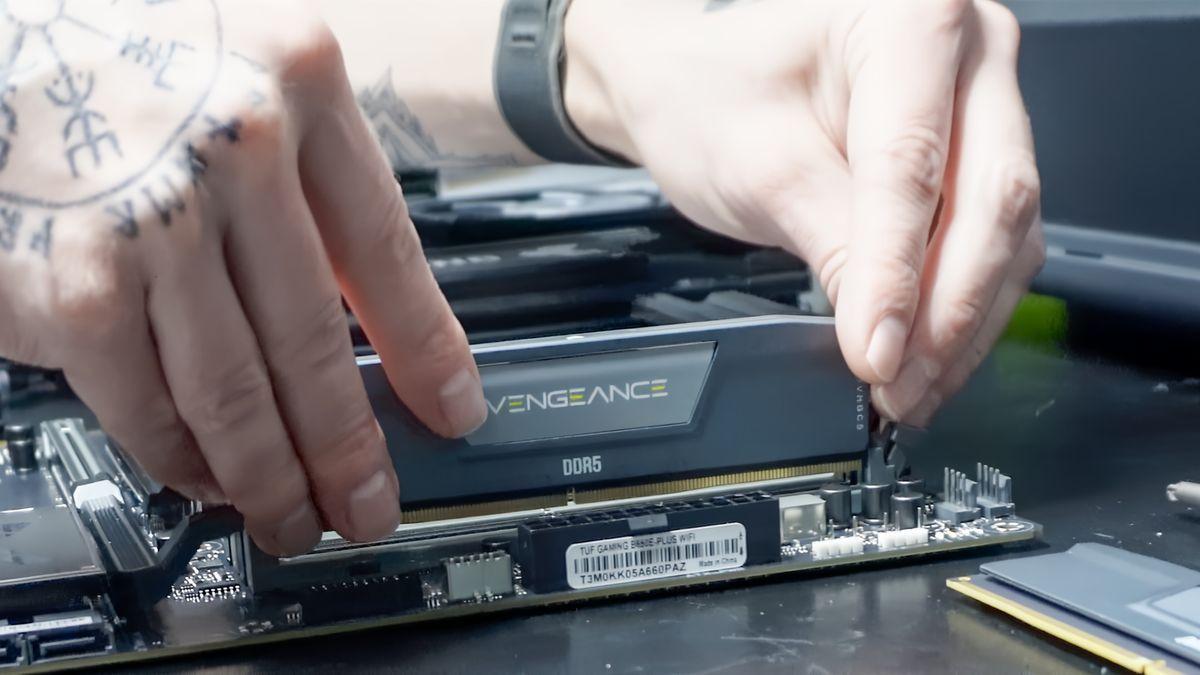
.The rising costs of DRAM and NAND create particular pressure for AI PCs, which require substantial memory allocation. Intel-based AI PCs typically allocate half of available DRAM to VRAM, where AI applications currently run. Copilot+ PCs require at least 16GB of DRAM, with many higher-end systems shifting toward 32GB or higher
5
. Supply constraints arrive precisely when the industry needs to add more RAM, resulting in higher prices, lower margins, or reduced memory in new systems5
.
Source: Tom's Guide
Related Stories

Market Impact and Future Outlook
IDC expects average PC selling prices to rise by 4-6% in a moderate scenario and 6-8% in a more pessimistic outlook
1
. Larger OEMs with higher existing inventory and greater leverage with suppliers will be better positioned, while smaller boutique vendors and DIY companies face the greatest burden5
. This represents an opportunity for large OEMs to gain market share from smaller assemblers in the gaming space by positioning pre-built systems as offering higher value5
.Market research firm IDC estimates the global smartphone market could shrink by 5% in 2026, while the PC market could contract by 9%, largely due to rising prices
4
. At worst, the PC market could drop 8.9% depending on supply constraints5
. With more memory supply not expected until at least 2027, consumers should prepare for sustained price increases across electronics3
. Industry observers note that if AI technology persists, corporations will need to increase chip manufacturing capacity, but if the AI bubble bursts, existing capacity should stabilize market conditions2
.References
Summarized by

Navi
[3]
Related Stories
AI Demand Triggers Memory Chip Shortage, Threatening Higher Prices for Smartphones and Electronics
18 Nov 2025•Business and Economy
Memory shortage to persist beyond 2026 as AI demand reshapes chip industry and drives prices up
16 Jan 2026•Business and Economy

AI Data Center Boom Triggers Global Memory and Storage Crisis as Prices Soar 100%
10 Nov 2025•Business and Economy
Recent Highlights



Recent Highlights
Today's Top Stories









Your Daily Dose of Curated AI News
Don’t drown in AI news. We cut through the noise - filtering, ranking and summarizing the most important AI news, breakthroughs and research daily. Spend less time searching for the latest in AI and get straight to action.

