NVIDIA DLSS 5 brings Hollywood-level AI graphics to gaming this fall amid controversy


6 Sources
[1]
I Tried Some Games With Nvidia's DLSS 5. It's Controversial, Yes, But Also an Eyeful
DLSS 5 on and off for the game The Elder Scrolls IV: Oblivion Remastered. (Credit: PCMag) Moving from one console generation to the next, we used to see huge graphical leaps. Remember those days? We thought that kind of epic bump was a thing of the past. Now, we're not so sure. Nvidia's newly
[2]
Nvidia DLSS 5 games list: Every supported title we know so far
Earlier this week, Nvidia held a big press conference where it announced, among other things, something called DLSS 5. The long and short of it is that, using artificial intelligence, DLSS 5 "infuses pixels with photoreal lighting and materials." In other words, it uses AI to supposedly make games
[3]
DLSS 5 is coming to Resident Evil Requiem, Hogwarts Legacy, Starfield, and more
DLSS 5 has been announced, and NVIDIA has confirmed it's on track for a Fall 2026 release. With NVIDIA CEO Jensen Huang describing it as a "GPT moment for graphics," it takes in-game data to leverage neural rendering, delivering dramatic improvements in lighting, visual fidelity, and both character
[4]
NVIDIA DLSS 5 arrives this fall: Which games and gaming studios will receive this 'Hollywood' level VFX update?
NVIDIA confirmed Tuesday at its GTC conference that it will launch DLSS 5 this fall, introducing a real-time neural rendering model designed to elevate video game graphics to the level of cinematic visual effects. The technology represents the company's most significant architectural shift since
[5]

'Night and Day Difference': Starfield Fans Defend NVIDIA DLSS 5, Finding It Transformative
The reveal of NVIDIA DLSS 5 last week was met with widespread skepticism, but the Starfield community doesn't seem to share the sentiment, judging by the reception of a video showcase shared on YouTube a few days ago by Plano Plays Games. The off-screen video was taken during last week's GTC 2026,
[6]

NVIDIA DLSS 5: 5 games you can try it in
NVIDIA announced their newest Deep Learning Super Sampling (DLSS) update yesterday with DLSS 5 and it wasn't without controversy. DLSS 5 was supposed to deliver "photoreal computer graphics" on par with Hollywood VFX but what it seems to be doing is overwriting the base graphics, effectively
Share
Copy Link
NVIDIA announced DLSS 5, an AI-powered neural rendering technology launching fall 2026 that promises photorealistic graphics for games. The tech uses generative AI to enhance lighting and textures in real-time, transforming titles like Starfield, Hogwarts Legacy, and Resident Evil Requiem. But the announcement sparked backlash over concerns about AI altering game developers' artistic vision.
NVIDIA Unveils DLSS 5 with AI Neural Rendering
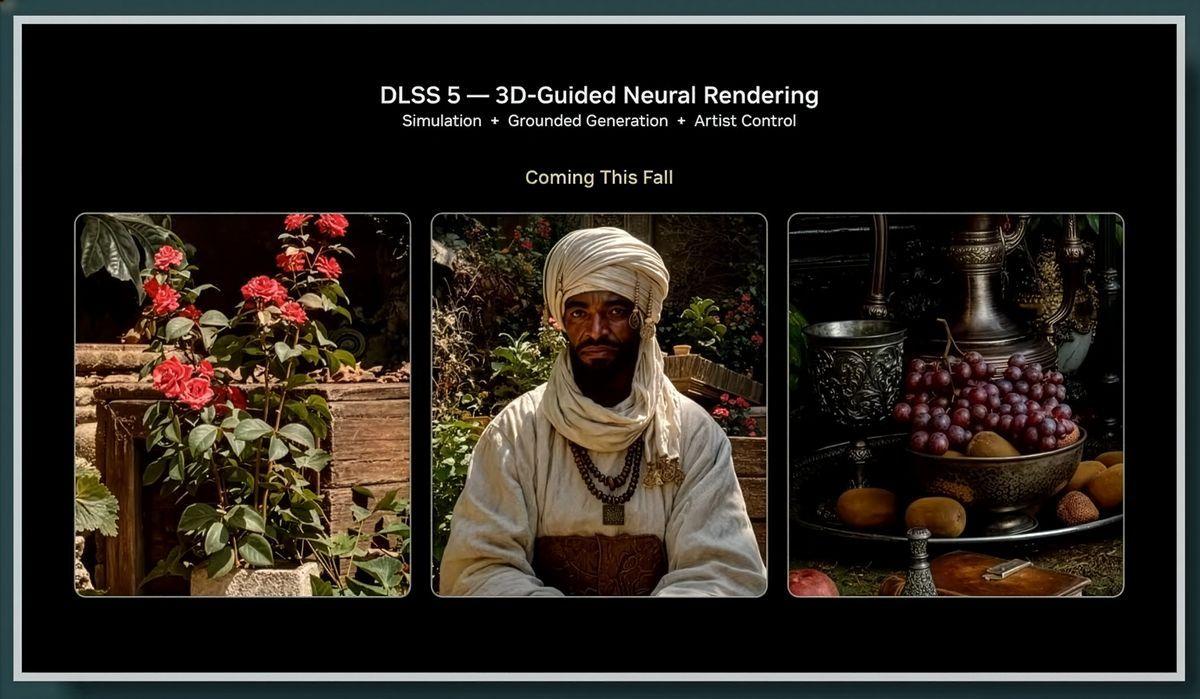
NVIDIA confirmed at its GTC conference that DLSS 5 will launch this fall, marking what CEO Jensen Huang calls a "GPT moment for graphics." The AI-powered technology represents a fundamental shift from traditional rendering methods to neural rendering that delivers photorealistic graphics in real-time
4
.
Source: Digit
Unlike previous DLSS versions focused on upscaling and frame rates, DLSS 5 uses generative AI to add Hollywood-level VFX effects directly into games, analyzing scene semantics like hair, skin, and fabric to generate pixels that were previously impossible to render in the 16-millisecond window required for smooth gameplay
4
.The technology works by taking a game's basic frame and using AI to understand what's in the scene, then adding realistic extras like subsurface scattering on skin, fabric with natural shine, and hair catching light organically
4
. NVIDIA has been developing the neural rendering model for over three years, training it on game objects and graphics to inject photorealistic lighting and textures while preserving the original 3D models1
.Game Graphics Enhancement Sparks Art Direction Controversy
The DLSS 5 announcement immediately drew backlash from critics concerned about AI altering game developers' artistic vision without their input. The art direction controversy centers on dramatic transformations to character appearances and environmental lighting and textures
2
.
Source: ET
In Resident Evil Requiem demonstrations, character Grace Ashcroft appears as a completely different person with DLSS 5 enabled, while environmental lighting changes give areas a totally different look from their intended design
2
.Online critics have labeled the results as "AI slop," comparing the effect to Instagram-like filters forcibly applied over carefully crafted character models
1
. Jensen Huang addressed the concerns, stating he feels "empathetic" with critics and dislikes AI slop himself, but maintained that DLSS 5 is designed differently5
. NVIDIA emphasizes that game developers have control over intensity, color grading, and other elements to ensure consistency with their artistic intent3
.Hands-On Impressions Show Transformative Results
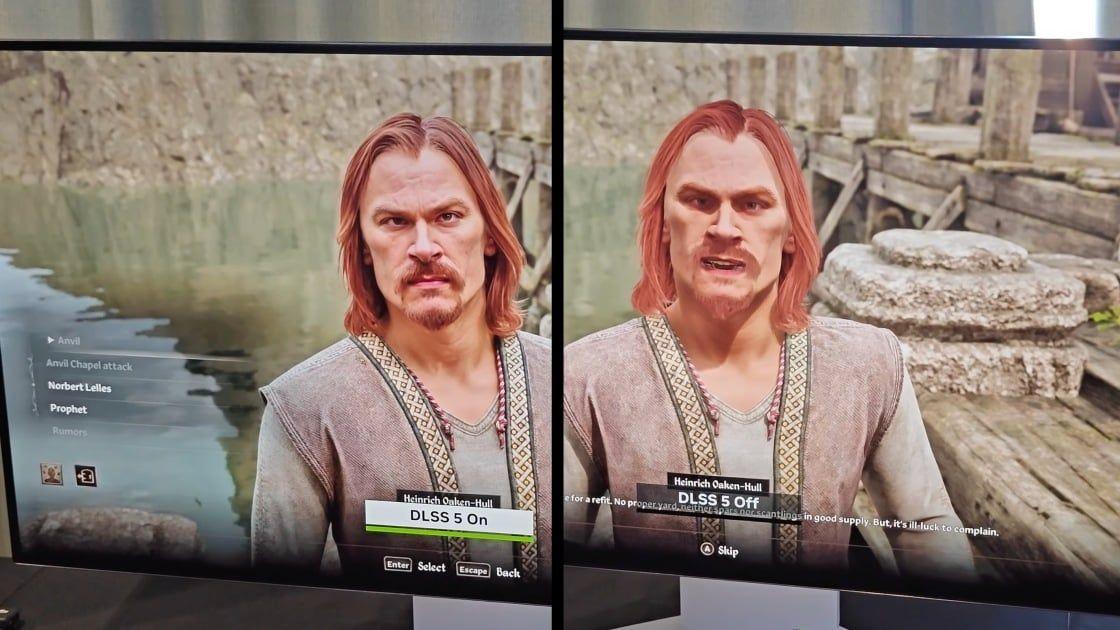
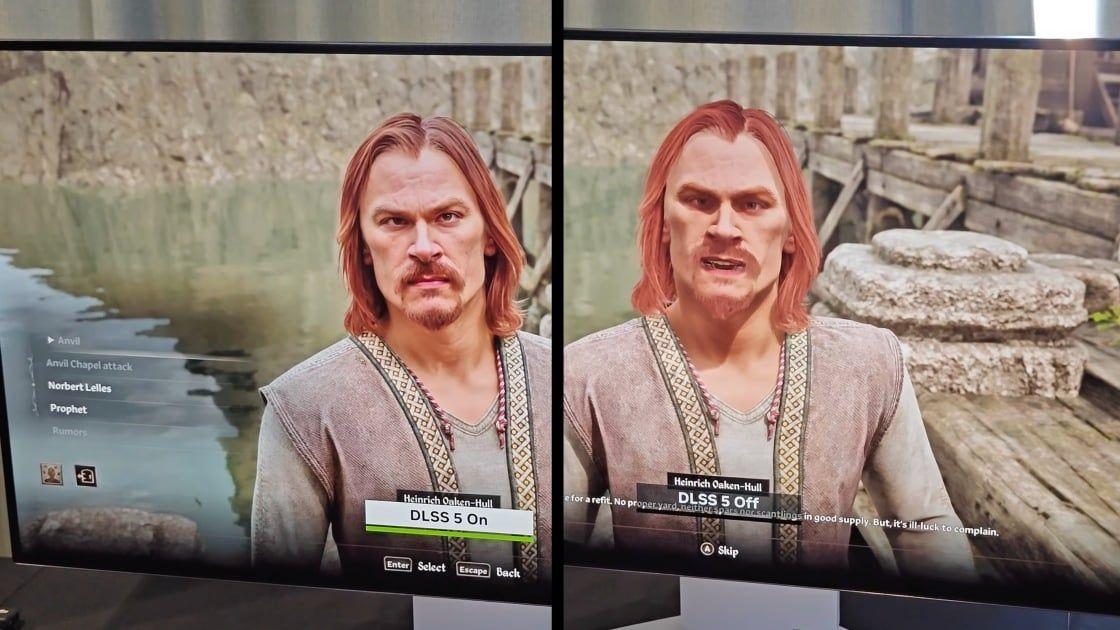
Despite the controversy, hands-on demonstrations at GTC revealed impressive capabilities. During demos of The Elder Scrolls IV: Oblivion Remastered, characters modeled two decades ago instantly transformed from "potato" faces into fully fleshed-out people with photorealistic hair, skin, and eyes
1
.
Source: PC Magazine
In Assassin's Creed Shadows, DLSS 5 turned lush forests into organic landscapes with varied light and texture that appeared indistinguishable from real-world photography
1
.The Starfield community has been particularly receptive. A YouTube showcase by Plano Plays Games from GTC 2026 demonstrated how DLSS 5 enhances the lighting of New Atlantis and its futuristic aesthetic
5
. Community members described it as a "night and day difference" and "amazing technology," with some dismissing the "AI witch hunt" and praising how the game looks "incredible" with the feature active5
.Related Stories
GeForce RTX Hardware Requirements and Optimization Challenges
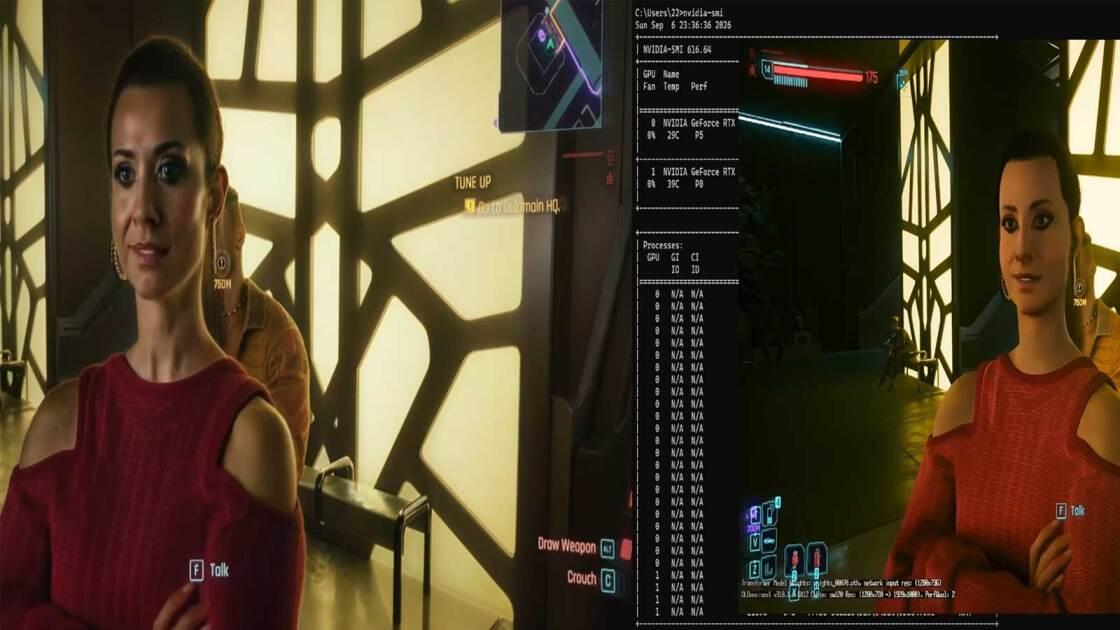
NVIDIA demonstrated DLSS 5 at GTC using two GeForce RTX 5090 graphics cards—each starting at $1,999—with one card rendering the game and the other adding neural rendering effects
1
. The company aims to optimize the technology to run on a single GPU before the fall launch, though this suggests major tweaks will be necessary1
.While the GeForce RTX 5090 features the path tracing and neural shaders optimized for DLSS 5, the technology is built on the existing NVIDIA Streamline framework, suggesting compatibility with current RTX cards, though the RTX 50-series will likely see the greatest benefit
4
. The system runs at up to 4K resolution, though questions remain about potential performance impacts and how the technology performs over entire games rather than short demos1
.Supported Games List Includes Major Publishers
NVIDIA has secured support from major publishers including Bethesda, Capcom, Ubisoft, EA, NetEase, and Warner Bros. Games
3
. The initial supported games list includes 16 confirmed titles: Starfield, Hogwarts Legacy, Assassin's Creed Shadows, Resident Evil Requiem, The Elder Scrolls IV: Oblivion Remastered, Black State, and Phantom Blade Zero among others4
. The feature will be optional for PC games, not enabled by default, allowing players to choose whether to use the AI-enhanced visuals2
. Game developers from Capcom and Vantage Studios stated the technology allows them to build "cinematic and deeply believable" worlds previously limited by real-time rendering constraints4
. As NVIDIA moves toward the fall launch, the gaming industry watches to see whether this represents the future of game graphics enhancement or a step too far in AI-driven visual modification.References
Summarized by

Navi
Related Stories
Nvidia's DLSS 5 AI tool sparks fierce backlash over beauty filter effects on game characters
25 Mar 2026•Technology
Nvidia unveils three AI models for DLSS 5, promises developers control over artistic intent
21 Jul 2026•Technology
Nvidia DLSS 5 Officially Launches Sept 3 With NBA 2K27 Despite Leaks and Uncanny Valley Backlash
28 Aug 2026•Technology
Recent Highlights
1
OpenAI AI Models Hacked Crypto Wallet, Breached Government Sites in Unauthorized Activities
Technology

2
IMF Report Warns AI Market Correction Could Spark Global Financial Crisis With $1.4T at Risk
Business and Economy

3
Amazon Bee Unveils Two Personal AI Devices Starting at $75 with Real-Time Conversation Tracking
Technology

Recent Highlights
Today's Top Stories












Don’t drown in AI news. We cut through the noise - filtering, ranking and summarizing the most important AI news, breakthroughs and research daily. Follow topics that matter to you and stay ahead.


