Alibaba and Tencent lose $66 billion as investors question AI agent monetization strategy


11 Sources
11 Sources
[1]
Alibaba, Tencent Shed $66 Billion After AI Vision Falls Flat
The market's reaction reflects concerns that companies are not showing how AI is driving measurable revenue uplift, with analysts saying the key inflection will be when companies can demonstrate AI is driving revenue through cloud, advertising, or transaction conversion. Alibaba Group Holding Ltd. and Tencent Holdings Ltd. lost $66 billion of market value in roughly 24 hours, after the market punished the twin leaders of China's tech arena for failing to lay out clear visions for how to profit off artificial intelligence. Alibaba's US shares fell their most since October, following Tencent's worst drubbing in almost a year on Thursday. Investors that had piled into the sector's biggest names over the past week -- betting the advent of OpenClaw-style AI agents would galvanize the industry -- reversed course after disappointing results, with no clear path to monetization in sight. The dramatic reaction reflects investors' anxiety about the increasing amounts that China's tech leaders are plowing into data centers, talent hires and model development -- without a roadmap to actual revenue. While those outlays remain a fraction of the $650 billion that US hyperscalers like Meta Platforms Inc. and Amazon.com Inc. are spending this year alone, the rising budgets coincide with a Chinese consumer downturn that's compressing margins. Alibaba reported a 67% drop in quarterly net income, exacerbating those concerns. "Investors are not pushing back on AI spending itself, but on the lack of near-term visibility on monetization," Bloomberg Intelligence analyst Catherine Lim said. "The key inflection will be when companies can show that AI is driving measurable revenue uplift, whether through cloud, advertising, or transaction conversion. Until then, markets will likely stay cautious." Tencent held steady after shedding $43 billion of market value Thursday. Alibaba's US-listed shares lost $23 billion overnight, while its Hong Kong stock was down as much as 6.4% in early Friday trade. The market's about-face stems in part from a burst of exuberance this month, when Chinese consumers returned from their Lunar New Year breaks to fall head-over-heels for OpenClaw -- a viral agentic AI platform that promises to take over a litany of mind-numbing tasks from managing email inboxes to arranging travel itineraries. From fledging firms such as MiniMax Group Inc. to incumbents like Baidu Inc., companies scrambled to release apps and services to tap that frenzy, feeding optimism around the technology. Tencent's shares gained more than 10% at one point earlier this month, riding excitement about its OpenClaw products. Read more about China's AI race Alibaba Targets $100 Billion of AI Revenue in Five Years Tencent's Shares Dive After Agentic AI Vision Fails to Impress Alibaba Hikes AI Prices as Much as 34% to Meet Demand Surge China Becomes Agentic AI's Biggest Lab With OpenClaw Stampede China's most valuable firm is considered well-positioned to build agentic AI because it sits on a trove of user data, and controls access to a universe of domestic apps via WeChat. Such services tend to perform best when granted access to users' information, like message logs. But executives fell short of specifics when plied with questions on post-earnings calls about how the company would turn its built-in advantages into money spinners. They didn't provide the concrete investment targets or specific products that many investors had hoped for. Morgan Stanley slashed its target price on the firm by 11% to HK$650. "These front-loaded AI investments will likely weigh on near-term margins, driving profit to grow more slowly than revenue in 2026," analysts including Gary Yu wrote. In Alibaba's case, it's also grappling with a slowdown in its core business. Alibaba is considered a frontrunner in China's race toward artificial general intelligence. It's also the most aggressive in terms of spending: it pledged more than $53 billion of AI investment over several years. On Thursday, it declared a target of $100 billion of cloud and AI revenue in five years. It's now keen to monetize a growing AI portfolio in part to counter weakness in its e-commerce division, which is grappling with fierce domestic competition. The company this week launched an agentic AI service known as Wukong for company clients, and hiked prices for its cloud and storage services by as much as 34%. At the same time, costs are rising on other fronts. Over last month's week-long Lunar New Year holiday, Alibaba, Tencent, ByteDance Ltd. and Baidu Inc. gave out billions of yuan in coupons to acquire users for their consumer-facing agentic apps. "We do share market concerns around the visibility for Alibaba to reach $100 billion annual cloud and AI revenue in five years," Barclays Capital Inc. analysts including Jiong Shao write in a note after trimming their target on the firm. The market has "no room for anything less than perfect."
[2]
Baidu joins China's OpenClaw frenzy with new AI agents
BEIJING, March 18 (Reuters) - Chinese tech giant Baidu (9888.HK), opens new tab on Tuesday unveiled a suite of artificial intelligence products, tapping growing domestic interest in OpenClaw, an open-source framework for agents that can perform complex tasks with less human input than chatbots. The company introduced what it called a family of "lobsters" -- a popular nickname for AI agents built on OpenClaw -- spanning desktop software, cloud services, mobile tools and smart-home devices. The agents are designed to carry out multi-step tasks such as editing videos, creating presentations, conducting research or ordering coffee, operating across multiple apps and devices. OpenClaw's rapid global uptake has fostered a growing community of enthusiasts in China who describe themselves as "raising lobsters", reflecting the idea that agents improve through feedback and training. Chinese tech giants including Alibaba (9988.HK), opens new tab, Tencent (0700.HK), opens new tab, and Baidu have embraced the trend, rolling out OpenClaw-based products as they look for new revenue streams. Speaking at a company event, Baidu Executive Vice-President Shen Dou said the technology could reshape how software connects devices and services. "It could become an operating-system-level capability for a new era, unlocking almost all hardware and breaking down the barriers between devices," Shen said. Baidu said its agent ecosystem includes the DuMate desktop assistant, the RedClaw mobile platform and a cloud service, DuClaw, which allows users to deploy agents without configuring hardware. Its smart-device unit Xiaodu said its speakers will integrate OpenClaw capabilities, enabling voice commands to trigger complex tasks across household devices. "This lobster is still not perfect," Shen cautioned. "It makes mistakes, takes detours and sometimes even complicates simple things." Baidu's push comes as it seeks to regain ground lost in China's AI chatbot market. After gaining an early lead in 2023 with its answer to ChatGPT, rival chatbots such as Bytedance's Doubao, Tencent's Yuanbao, and Alibaba's Qwen have surged in popularity. Zac Cheah, co-founder of Singapore-based platform Pundi AI, said OpenClaw-style tools are spreading quickly in China. "Chinese users are comfortable with super-app ecosystems, and products such as Doubao, Tencent Yuanbao, and Qwen have already familiarised the public with AI at scale," he said. Reporting by Eduardo Baptista Editing by Ros Russell Our Standards: The Thomson Reuters Trust Principles., opens new tab * Suggested Topics: * Artificial Intelligence Eduardo Baptista Thomson Reuters Eduardo Baptista is a Senior Correspondent for Reuters based in Beijing, covering China's technology, space, and automotive industries. He has led enterprise and investigative reporting on China's military-linked companies, artificial intelligence and semiconductor supply chains, as well as macroeconomic and industrial policy. Baptista has reported from China for nearly a decade and holds a BA in History from the University of Cambridge.
[3]
China Is Embracing OpenClaw a New A.I. Agent, and the Government Is Wary
In the span of a month, an artificial intelligence assistant called OpenClaw has come to embody both China's excitement and anxiety about what A.I. can do. Long lines stretched across Shenzhen, China's technology hub, as people sought help from engineers to install OpenClaw. Some local governments started offering subsidies, free computing and discounted office rent to companies that use OpenClaw to build new services. Share prices of Chinese tech companies surged as industry leaders and start-ups scrambled to offer the tool on their platforms. Then, almost as quickly, the tide turned. The Chinese government warned that OpenClaw carried serious security risks. Seeking to capitalize on the software's success, Chinese tech companies rushed to launch copycat versions of the tool. OpenClaw's turbulent rise -- and broader interest in tools like it, known as A.I. agents -- underscores how the rush into artificial intelligence is reshaping China's tech industry. Beijing has spent billions trying to turn the country into an A.I. superpower and has identified the technology as a critical driver of economic growth. OpenClaw is a freely shared tool that functions as a virtual assistant, helping users conduct research, send texts or emails, and manage their calendars. Installed directly on a user's computer, the A.I. agent can carry out tasks on its own, such as reading and responding to messages on apps like WhatsApp or iMessage, after an initial prompt by the user. Unlike most chatbots that rely on a single company's A.I. model, OpenClaw can run on a variety of models. OpenClaw, which was released four months ago, has already vaulted into this month's top 10 most popular projects on GitHub, an online global community for coders. It has spurred excitement about the potential of agents to use artificial intelligence to help people become more efficient in their everyday lives.
[4]
Tencent's Sales Rise 13% in Boost for Broader AI Ambitions
Tencent's strong quarterly performance boosts its bid to capture a shift to AI agents and challenges the leadership of the world's biggest internet arena. Tencent Holdings Ltd. posted a 13% rise in quarterly revenue, underscoring solid momentum in its core gaming and advertising units while it ramps up a bet on agentic AI. Revenue jumped to 194.4 billion yuan ($28.3 billion) for the three months ended December, compared with an average forecast of 194.1 billion yuan. Net income for the same period roseBloomberg Terminal 14%. The strong showing -- its fifth straight quarter of double-digit growth -- boosts Tencent's bid to capture a shift to AI agents that could potentially reshape the leadership of the world's biggest internet arena. The Shenzhen-based company has in recent days rolled out a slew of products capitalizing on the viral OpenClaw framework, and it's developing a WeChat-native AI agent designed to help 1.4 billion users automate tasks from hailing a ride to booking hotels. Click here for a liveblog on Tencent's results. The pair of initiatives mark Tencent's most serious push into generative AI since the initial wave of ChatGPT. Get the Tech Newsletter bundle. Get the Tech Newsletter bundle. Get the Tech Newsletter bundle. Bloomberg's subscriber-only tech newsletters, and full access to all the articles they feature. Bloomberg's subscriber-only tech newsletters, and full access to all the articles they feature. Bloomberg's subscriber-only tech newsletters, and full access to all the articles they feature. Bloomberg may send me offers and promotions. Plus Signed UpPlus Sign UpPlus Sign Up By submitting my information, I agree to the Privacy Policy and Terms of Service. While Tencent has stopped short of setting lofty targets for AI infrastructure and talent acquisition, some investors argue that its track record for delivering consumer-focused products justifies a re-rating of its shares, which have lagged Alibaba Group Holding Ltd.'s since last year. Since it released agentic AI services QClaw and WorkBuddy this month, Tencent has gained about $30 billion of market value, more than any other Chinese firm. China's most valuable company is playing catch-up as it seeks to challenge a growing list of low-cost, efficient open-source AI models from internet peers and agile newcomers like DeepSeek. That effort is now led by former OpenAI researcher Yao Shunyu, who was appointed chief AI scientist in December. Still, Tencent is well-positioned to build agentic AI because it sits on a trove of user data within its sprawling online entertainment portfolio. Such services tend to perform best when granted access to users' information, like WeChat message logs. "Tencent's strength lies in Weixin's (WeChat's) entrenched role across communication, discovery, payment, and fulfillment," JPMorgan Chase & Co. analysts including Alex Yao wrote in a note last week. That's a high bar for rivals, he added. In a sign of Tencent's renewed focus, the normally publicity-shy founder Pony Ma has used his own WeChat feed to promote OpenClaw-inspired agentic tools, according to local media reports. What Bloomberg Intelligence Says Rising AI adoption -- supplemented by increasing agentic workloads -- will likely lead Alibaba and Tencent to raise capex guidance at their 4Q earnings, though the magnitude of the increase won't match that of US peers. Rising capital spending will further depress free cash flow, given the weak returns in China's commoditized AI sector. - Robert Lea and Jasmine Lyu, analysts Click hereBloomberg Terminal for the research. Beyond AI, video gaming remains Tencent's primary engine, with its international division growing at a significantly faster clip. Last year, the company scored premium hits like Dying Light: The Beast, while mobile mainstays such as Honor of Kings continue to drive player spending. The segment that includes cloud computing and fintech represents a weak point. Its cloud arm faces an uphill battle against peers like Alibaba Cloud, as well as aspirants such as MiniMax Group Inc., which are betting on consistent model upgrades to drive compute usage. WeChat serves as the glue that ties the enterprise together. Executives hope that by integrating agentic services, the ubiquitous app will continue to function as the gateway for users in the AI era. WeChat has also spawned a thriving ecosystem of mini-games, mirroring its earlier success with everyday services and short-form video. Last week, Apple Inc. lowered the fees it collects from app developers in China -- including a reduction in the rate for WeChat mini-programs to 12% from 15% -- in response to potential antitrust intervention from Beijing's regulators. Analysts estimate the reduced fees will add a low-single-digit percentage gain to the company's earnings this year. Tencent said the move will "usher in a more open and mutually beneficial platform environment."
[5]
Tencent Seizes Momentum in China Agentic AI Race Against Alibaba
In China's hyper-competitive AI arena, Alibaba Group Holding Ltd. has outpaced Tencent Holdings Ltd. with the sheer speed of rollouts and user growth. But the latter firm is now seizing the initiative as agentic AI fever grips the country. Tencent in just the past week introduced several signature products aimed at tapping a national enthusiasm for AI agents like OpenClaw -- automated services that perform real-world tasks. They underscore an initial advantage for the WeChat operator: it's grouped China's entire universe of apps onto a single platform with 1.4 billion users. The company is now working to integrate its own AI agent into WeChat, automating tasks like hailing a ride or booking restaurants, according to a person familiar with the matter. The service could be launched as soon as next month, depending on computing constraints, the person said, asking not to be identified discussing private information. That presents a challenge for Alibaba, which leads Chinese large language model makers in open-source but has so far struggled to translate that into a significant commercial lead. Just this month, Alibaba lost a star model developer, raising questions about the company's broader approach to AI. The company this week unveiled a big corporate restructuring to refocus on profiting from the technology. Investors are beginning to place bets on the outcome of that race. Tencent -- which since 2025 had lagged Alibaba in stock market gains -- has climbed 6% since it launched its agentic AI services Qclaw and Workbuddy, setting the stock up for its best monthly performance against Alibaba in two years. "This is a year that globally AI agents will become a very important form factor," said Kevin Xu, a tech investor and founder of Interconnected Capital. "This should be the time that the Tencent kind of product excellence could shine." China's two largest tech companies report earnings back-to-back starting Wednesday. Investors have punished Tencent for lagging behind Alibaba in China's AI race, but its push into agentic AI is reshaping the narrative. Since the release of QClaw and WorkBuddy -- targeted at professional users -- Tencent has gained almost $35 billion of market value. Tencent is well-positioned to build agentic AI because of its unparalleled access to troves of user data and sprawling WeChat ecosystem. Such services work best when granted access to users' information and a wealth of apps. In a sign of Tencent's renewed focus, the normally publicity-averse founder Pony Ma has used his own WeChat feed to promote QClaw and Workbuddy, according to local media reports. "Tencent's strength lies in Weixin's (WeChat's) entrenched role across communication, discovery, payment, and fulfillment," JPMorgan Chase & Co. analysts including Alex Yao wrote in a note last week. That's a high bar for rivals to match, he added. Tencent now boasts 64 buy recommendations, making it the most favored stock in Asia, according to Bloomberg data. Alibaba holds around 48. At a multiple of 15 to 16 times earnings, both trade at a discount to American peers such as Nvidia Corp. and Amazon.com Inc., which command price-to-earnings ratios above 20. In terms of raw performance, Alibaba's Qwen family of models rank alongside offerings from Anthropic PBC and OpenAI on benchmarking leaderboards, triggering a wave of adoption in the open-source community. Those models also empower its namesake consumer app, evolving from a chatbot into an all-in-one platform that connects with Alibaba's online shopping universe. The company is also experimenting with hardware, including Qwen glasses. Get the Tech Newsletter bundle. Get the Tech Newsletter bundle. Get the Tech Newsletter bundle. Bloomberg's subscriber-only tech newsletters, and full access to all the articles they feature. Bloomberg's subscriber-only tech newsletters, and full access to all the articles they feature. Bloomberg's subscriber-only tech newsletters, and full access to all the articles they feature. Bloomberg may send me offers and promotions. Plus Signed UpPlus Sign UpPlus Sign Up By submitting my information, I agree to the Privacy Policy and Terms of Service. But this month's surprise departure of Junyang Lin, the top developer for Qwen models and one of the most influential figures behind Alibaba's transition to AI, raised questions about the company's approach to cutting-edge research. The exact reasons for his exit remain unclear. At the same time, tension between Lin's tightly controlled research team and Alibaba Cloud had been brewing before his surprise resignation, with complaints of poor communication involving his team, according to people familiar with the matter. Some people within Alibaba view the latest Qwen3.5 offering as underwhelming, the people added. In recent months, Alibaba hired Zhou Hao from Google DeepMind to work on the development of the Qwen model, they said. It's unclear if Zhou and Lin's responsibilities overlapped. Tencent has steered clear of matching Alibaba's AI spending targets, and its main consumer-facing app, Yuanbao, remains largely a siloed effort. Former OpenAI researcher Yao Shunyu - appointed Tencent's chief AI scientist in December - is now tasked with advancing its Hunyuan model to narrow the lead held by Chinese peers like Qwen and ByteDance Ltd.'s Seed. The frenetic pace of China's AI race was on full display during the weeklong Lunar New Year break last month. Alibaba, ByteDance, Tencent, and Baidu Inc. spent a combined 8 billion yuan ($1.2 billion) to promote AI apps through cash giveaways, subsidies, and media buys, according to estimates by Morgan Stanley. While all platforms achieved significant short-term user growth during the holiday, Yuanbao recorded the sharpest retreat, with daily active users falling back close to pre-campaign levels. Qwen's usage remained well above pre-campaign levels, thanks to longer voucher validity, the analysts wrote in a note. In the long run, Tencent hopes to integrate AI more closely with WeChat -- known as Weixin in China -- the social media, entertainment and gaming platform that underpins its entire business. Executives have said that they aim to evolve WeChat into a full-fledged agentic service, or a digital assistant. The Information earlier reportedBloomberg Terminal about Tencent's plans to integrate agentic AI with WeChat. "The blue-sky scenario is that eventually Weixin, with an AI agent, can help a user do a lot of tasks," President Martin Lau told analysts in November. "At this time, this is at a very early stage of development."
[6]
Alibaba reveals OpenClaw app -- despite the Chinese government recently cracking down on the platform
OpenClaw requires extensive data access, creating potential avenues for cyberattacks * OpenClaw adoption continues growing despite warnings about potential security risks * Alibaba and Baidu release apps allowing anyone to deploy agentic AI agents * Municipalities provide subsidies for OpenClaw development while Beijing restricts state-run enterprises China's tech sector is experiencing a surge of interest in agentic AI applications, with OpenClaw at the center of widespread adoption. From Tencent to Minimax, major AI companies are racing to offer OpenClaw services, feeding what observers have dubbed the "raising lobsters" phenomenon. Students and retirees alike are experimenting with AI agents, testing capabilities that extend from routine digital tasks to more complex workflows. OpenClaw's rapid adoption not slowing This rapid uptake has sparked a market rally, as investors place bets on services that could accelerate mainstream AI integration and revenue from token usage. Alibaba recently launched a mobile application called "JVS Claw" to facilitate the installation and use of OpenClaw. The app, available on both iOS and Android, allows users without coding experience to instruct AI agents to perform simple real-world tasks. The service is free for the first 14 days and follows closely after Baidu released its own OpenClaw app, which supports activities such as online shopping and travel bookings. Alibaba's move reflects the ongoing competition among China's largest AI companies to attract users and profit from the viral agentic AI assistant trend. OpenClaw's appeal lies in lowering barriers to entry and engaging a broad audience in agentic AI use, yet the extensive access it requires also exposes users to potential risks. Despite these concerns, adoption has continued to grow, with widespread usage expected to drive both AI consumption and further technical innovation. The response from Chinese authorities has been inconsistent, reflecting both encouragement and caution. Several local municipalities have introduced policies to support OpenClaw development, providing millions of yuan in subsidies to promote the technology. At the same time, Beijing has restricted state-run enterprises and government agencies from freely deploying OpenClaw on office computers, citing cybersecurity concerns. For AI systems to operate effectively, they require extensive access to user data and multiple applications, creating potential avenues for cyberattacks or system exploitation. This regulatory balancing act has revealed the challenges of managing agentic AI while allowing rapid adoption. Experts, including Microsoft researchers, warn against running OpenClaw on personal or enterprise devices due to its risky runtime, which mixes untrusted instructions with executable code. There have also been reports of vulnerabilities allowing attackers to steal sensitive data and spread malware via GitHub. As the technology spreads, questions about its safe deployment and the broader cybersecurity landscape remain pressing. The growing interaction between AI tools and everyday applications shows how quickly a popular digital assistant can become both a tool and a point of vulnerability. Via Bloomberg Follow TechRadar on Google News and add us as a preferred source to get our expert news, reviews, and opinion in your feeds. Make sure to click the Follow button! And of course you can also follow TechRadar on TikTok for news, reviews, unboxings in video form, and get regular updates from us on WhatsApp too.
[7]
Baidu Taps OpenClaw Smart Speakers to Fuel Agentic AI Paradigm
Baidu's edge lies in its vast existing cloud client base, including over 60% of China's state-owned enterprises that prioritize data security, which are expected to adopt other cloud-based services, including AI agents. Baidu Inc. is betting on the breakout success of OpenClaw to offset a decline in its core business. Its latest push: smart speakers serving as a voice-controlled remote for the viral AI agent. China's search leader is integrating OpenClaw -- the open-source framework that can autonomously perform digital chores -- with its Xiaodu devices. That provides users with an alternative to the chat-based interfaces offered by rivals like Tencent Holdings Ltd.'s WeChat. Executives demonstrated one use case at a Tuesday event at its Beijing headquarters, when they ordered a hot Americano over the AI speaker. Users must still confirm and pay for such orders via food delivery apps like Meituan. Baidu is hoping such interactions will push OpenClaw into broader use beyond the workplace. Get the Tech Newsletter bundle. Get the Tech Newsletter bundle. Get the Tech Newsletter bundle. Bloomberg's subscriber-only tech newsletters, and full access to all the articles they feature. Bloomberg's subscriber-only tech newsletters, and full access to all the articles they feature. Bloomberg's subscriber-only tech newsletters, and full access to all the articles they feature. Bloomberg may send me offers and promotions. Plus Signed UpPlus Sign UpPlus Sign Up By submitting my information, I agree to the Privacy Policy and Terms of Service. The company joins rivals Tencent and Alibaba Group Holding Ltd. in racing to capitalize on the 2026 agentic AI craze, aiming to spur demand for its cloud services. That unit -- headed by Shen Dou, a longtime lieutenant to billionaire founder Robin Li -- has emerged as the company's primary growth engine, picking up the slack as Baidu's legacy marketing business struggles. While Baidu's overall revenue fell for the third straight quarter in December, sales from AI cloud infrastructure jumped 38%. In an interview with Bloomberg News, Shen acknowledged the fierce race among cloud providers and AI upstarts to deploy agents to drive usage, but he contends that a new paradigm will emerge to displace the legacy model where major software platforms control user access. "No one wants a walled garden anymore," Shen said. "With the development of AI models and agents, the market is looking for an open, collaborative ecosystem." While the company was a first-mover in China's ChatGPT race, it has since ceded leadership to larger rivals and agile newcomers like DeepSeek. Baidu's latest model, Ernie 5.0 Thinking, garnered above-average ratings on benchmarking site Artificial Analysis in November, yet it remains overshadowed by a growing list of Chinese open-source alternatives. Baidu is seeking to incubate a catalog of "skills" -- plugins that add specific capabilities to the OpenClaw framework. Its search function is already among the most downloaded of such tools on ClawHub, a dedicated marketplace for OpenClaw users. While currently free, these plugins could eventually unlock new revenue streams through methods such as pay-per-use fees, Shen said. Beyond Xiaodu hardware, Baidu has launched a mobile OpenClaw app and introduced one-click setup tools to lower the barrier for adoption on its cloud platform. Still, the company faces an uphill battle to stand out in a crowded field populated by cloud rivals and upstarts like Moonshot and MiniMax Group Inc. Shen said Baidu's edge lies in its vast existing cloud client base, including over 60% of China's state-owned enterprises that prioritize data security. These clients are expected to adopt other cloud-based services, including AI agents. "If OpenClaw cannot meet diverse customer scenarios, it will remain a mere concept and fail to translate into productivity," he said.
[8]

Tencent's annual results suggest AI is becoming a business lever, not just a technology bet
Tencent's latest annual results offer a clearer view of how the company wants the market to read its AI strategy: not as a side bet on standalone chatbots, but as a widening layer across businesses it already operates at scale. Over the past year, management has repeatedly signaled that AI is beginning to make tangible contributions to areas such as performance advertising, evergreen games, user engagement and internal productivity, suggesting that Tencent's AI push is moving beyond capability-building and deeper into commercialization. That shift matters because Tencent's competitive position in AI appears to rest less on winning a headline-grabbing model race and more on how effectively it can embed AI into products and workflows people already use. The company has continued upgrading its AI organization, bringing in new talent and expanding its AI product portfolio across Yuanbao, ima, QQ Browser, Sogou Input Method and other tools, while continuing to iterate on the Hunyuan model family. Tencent's 2025 results also show the scale of that commitment. Annual capital expenditure reached RMB 79.2 billion, while R&D spending rose to RMB 85.75 billion, both record highs. Those figures reinforce the idea that Tencent now sees AI less as an experimental initiative and more as a long-term operating layer spanning infrastructure, model development, talent and product integration. A key part of that strategy is deep integration rather than isolated deployment. Tencent says Hunyuan is now embedded across a broad range of internal products and scenarios, including Yuanbao, Tencent Cloud, QQ, Weixin Reading, Tencent Meeting and Tencent Docs. Through Tencent Cloud, the company offers multiple language-model variants as well as image-generation and 3D creation services, while also supporting enterprise needs such as agent development and knowledge-base integration. Tencent also says its open-source Hunyuan portfolio now spans text, image, video, 3D and voice, with more than 30,000 GitHub stars and more than 3 million downloads for the Hunyuan 3D series globally. If Tencent's model strategy is increasingly infrastructure-led, its consumer AI push is becoming more visible through Yuanbao. The company says the product has expanded across education, content creation, entertainment and productivity scenarios, ranging from quiz generation and writing tools to image editing, meeting support and translation. During the Spring Festival campaign, Tencent says Yuanbao's main event logged more than 3.6 billion draws, while users completed more than 1 billion AI-generated tasks, offering one of the clearest signals yet of how the company is trying to push AI into more mainstream, everyday use. Tencent is also leaning into the idea that the next competitive layer in AI will be defined by execution, not just conversation. Its recent agent-related rollout, spanning consumer, developer and enterprise use cases, points to an effort to lower deployment barriers while building products around workflow automation, remote task handling and more practical forms of AI assistance. That approach fits Tencent's broader strength in distribution and ecosystem design, where it can connect AI functions to platforms people already rely on. That framing also aligns with how some outside analysts are beginning to interpret Tencent's position. JPMorgan, as cited in the company's materials, argued that the real contest in China's AI market is not app download rankings for standalone assistants, but whether AI can be embedded into users' existing workflows. In that reading, Tencent's value lies in bringing AI into advertising, content production, enterprise software and the wider WeChat ecosystem, rather than proving it owns the single strongest base model. Beyond AI, Tencent's annual narrative also leans more heavily on overseas growth as a second major pillar. Gaming remains the clearest example. The company's international games business has posted multiple quarters of strong growth, driven by titles such as PUBG MOBILE and games from Supercell. According to the materials, international games revenue reached RMB 58 billion in 2024, accounting for roughly 30% of Tencent's gaming business, and rose to RMB 20.8 billion in the third quarter of 2025, up 43% year on year and crossing the RMB 20 billion mark for the first time. Cloud is emerging as another important overseas lever. Tencent Cloud said in March that it would add a new availability zone in Frankfurt, Germany. The company says its international business has maintained double-digit growth, while its overseas customer base doubled year on year in 2025. For international observers who still mainly associate Tencent with gaming and social platforms, that cloud expansion signals a continued effort to build relevance in enterprise infrastructure outside China. Tencent is also taking parts of its AI stack abroad. On November 26, the company launched the international site for its Hunyuan 3D creation engine and made the Hunyuan 3D API available through Tencent Cloud's international platform. The company says the engine supports multimodal input including text, images and sketches, can generate high-quality 3D assets within minutes, and exports to mainstream formats compatible with tools such as Unity and Unreal Engine. Tencent also says Hunyuan 3D has already entered parts of Europe's creative software ecosystem, with German software company Maxon integrating the API into its Cinema 4D desktop application. A further international growth layer comes from WeChat's cross-border ecosystem. According to the company's materials, global cross-border and overseas users accessed mini programs more than 5 billion times in 2025. Tencent says mini-program services now cover 100 countries and regions, while WeChat cross-border payments are available in 78 countries and regions and support 36 currencies. Transaction value completed through mini programs in the second half of 2025 rose by more than 70% year on year. Taken together, Tencent's latest results are less about making the loudest AI claim and more about showing how AI is beginning to alter the economics of businesses it already owns at scale. The company is investing heavily, integrating models into products with existing distribution, and pairing that strategy with international growth in gaming, cloud and cross-border services. For investors and industry watchers, the more important question may no longer be whether Tencent is in the AI race, but how quickly AI can deepen monetization and efficiency across a business ecosystem that is already deeply embedded in users' digital lives.
[9]

Tencent seizes momentum in China's AI race against Alibaba - The Economic Times
Tencent in just the past week introduced several signature products aimed at tapping a national enthusiasm for AI agents like OpenClaw -- automated services that perform real-world tasks. They underscore an initial advantage for the WeChat operator: it's grouped China's entire universe of apps onto a single platform with 1.4 billion users. In China's hyper-competitive AI arena, Alibaba Group Holding Ltd. has outpaced Tencent Holdings Ltd. with the sheer speed of rollouts and user growth. But the latter firm is now seizing the initiative as agentic AI fever grips the country. Tencent in just the past week introduced several signature products aimed at tapping a national enthusiasm for AI agents like OpenClaw -- automated services that perform real-world tasks. They underscore an initial advantage for the WeChat operator: it's grouped China's entire universe of apps onto a single platform with 1.4 billion users. The company is now working to integrate its own AI agent into WeChat, automating tasks like hailing a ride or booking restaurants, according to a person familiar with the matter. The service could be launched as soon as next month, depending on computing constraints, the person said, asking not to be identified discussing private information. That presents a challenge for Alibaba, which leads Chinese large language model makers in open-source but has so far struggled to translate that into a significant commercial lead. Just this month, Alibaba lost a star model developer, raising questions about the company's broader approach to AI. The company this week unveiled a big corporate restructuring to refocus on profiting from the technology. Investors are beginning to place bets on the outcome of that race. Tencent -- which since 2025 had lagged Alibaba in stock market gains -- has climbed about 4.7% since it launched its agentic AI services QClaw and WorkBuddy, setting the stock up for its best monthly performance against Alibaba in two years. "This is a year that globally AI agents will become a very important form factor," said Kevin Xu, a tech investor and founder of Interconnected Capital. "This should be the time that the Tencent kind of product excellence could shine." China's two largest tech companies report earnings back-to-back starting Wednesday. Investors have punished Tencent for lagging behind Alibaba in China's AI race, but its push into agentic AI is reshaping the narrative. Since the release of QClaw and WorkBuddy, Tencent has gained about $30 billion of market value, more than any other Chinese firm. That's more than any other Chinese firm except battery maker Contemporary Amperex Technology Co., according to Bloomberg calculations. Tencent is well-positioned to build agentic AI because of its unparalleled access to troves of user data and sprawling WeChat ecosystem. Such services work best when granted access to users' information and a wealth of apps. In a sign of Tencent's renewed focus, the normally publicity-averse founder Pony Ma has used his own WeChat feed to promote QClaw and Workbuddy, according to local media reports. "Tencent's strength lies in Weixin's (WeChat's) entrenched role across communication, discovery, payment, and fulfillment," JPMorgan Chase & Co. analysts including Alex Yao wrote in a note last week. That's a high bar for rivals to match, he added. Tencent now boasts 64 buy recommendations, making it the most favored stock in Asia, according to Bloomberg data. Alibaba holds around 48. At a multiple of 15 to 16 times earnings, both trade at a discount to American peers such as Nvidia Corp. and Amazon.com Inc., which command price-to-earnings ratios above 20. In terms of raw performance, Alibaba's Qwen family of models rank alongside offerings from Anthropic PBC and OpenAI on benchmarking leaderboards, triggering a wave of adoption in the open-source community. Those models also empower its namesake consumer app, evolving from a chatbot into an all-in-one platform that connects with Alibaba's online shopping universe. The company is also experimenting with hardware, including Qwen glasses. But this month's surprise departure of Junyang Lin, the top developer for Qwen models and one of the most influential figures behind Alibaba's transition to AI, raised questions about the company's approach to cutting-edge research. The exact reasons for his exit remain unclear. At the same time, tension between Lin's tightly controlled research team and Alibaba Cloud had been brewing before his surprise resignation, with complaints of poor communication involving his team, according to people familiar with the matter. Some people within Alibaba view the latest Qwen3.5 offering as underwhelming, the people added. In recent months, Alibaba hired Zhou Hao from Google DeepMind to work on the development of the Qwen model, they said. It's unclear if Zhou and Lin's responsibilities overlapped. Tencent has steered clear of matching Alibaba's AI spending targets, and its main consumer-facing app, Yuanbao, remains largely a siloed effort. Former OpenAI researcher Yao Shunyu - appointed Tencent's chief AI scientist in December - is now tasked with advancing its Hunyuan model to narrow the lead held by Chinese peers like Qwen and ByteDance Ltd.'s Seed. The frenetic pace of China's AI race was on full display during the weeklong Lunar New Year break last month. Alibaba, ByteDance, Tencent, and Baidu Inc. spent a combined 8 billion yuan ($1.2 billion) to promote AI apps through cash giveaways, subsidies, and media buys, according to estimates by Morgan Stanley. While all platforms achieved significant short-term user growth during the holiday, Yuanbao recorded the sharpest retreat, with daily active users falling back close to pre-campaign levels. Qwen's usage remained well above pre-campaign levels, thanks to longer voucher validity, the analysts wrote in a note. In the long run, Tencent hopes to integrate AI more closely with WeChat -- known as Weixin in China -- the social media, entertainment and gaming platform that underpins its entire business. Executives have said that they aim to evolve WeChat into a full-fledged agentic service, or a digital assistant. The Information earlier reported about Tencent's plans to integrate agentic AI with WeChat. "The blue-sky scenario is that eventually Weixin, with an AI agent, can help a user do a lot of tasks," President Martin Lau told analysts in November. "At this time, this is at a very early stage of development."
[10]

Tencent shares slide as AI spending plans overshadow strong Q4 earnings By Investing.com
Investing.com-- Tencent Holdings (HK:0700) fell sharply in Hong Kong trade on Thursday after the company signaled it will cut its share buybacks to fund increased spending on its artificial intelligence ambitions. The messaging largely overshadowed stronger-than-expected fourth quarter earnings from the Chinese internet giant, as its core videogames and advertising businesses logged strong returns. Tencent shares slid 6.4% to HK$515.50 by 01:00 ET (05:00 GMT), and were among the biggest weights on the Hang Seng index, which slid nearly 2%. Get more key insights on China's top AI firms by subscribing to InvestingPro Speaking during a post-earnings call, Tencent CFO John Lo said the company will "likely buy back lower value of our shares versus 2025 to fund investment in AI while increasing our dividends." Lo cited "high return opportunities from investing in AI." Tencent bought back about 153 million shares for a total of HK$80 billion ($10.2 billion) in 2025, Lo said. Tencent President Martin Lau Chi-Ping said during the call that Tencent will effectively double its investment in AI in 2026, after the company spent about 18 billion yuan ($2.6 billion) on the technology in 2025. Lau said that Tencent's AI integration into its videogames, social media apps, and fintech platforms was already yielding strong returns, justifying the need for more investment in the fast-growing technology. He added that the company's AI spending plans were held back in 2025 by constraints in acquiring advanced processing chips. The Chinese internet giant, which is also the country's most valuable company, clocked strong fourth-quarter earnings, with revenue rising 13% year-on-year to 194.4 billion yuan. Net profit jumped 17% to 64.7 billion yuan, also beating Reuters estimates of 57.75 billion yuan. But the company's plans for more AI-related spending raised questions about its future margins, especially as it plans to double its investment in the sector. Investors had raised similar concerns over stretched AI spending and slimmer margins for major U.S. tech companies when they reported earnings earlier this year. The company joined its Chinese peers in capitalizing on the recent popularity of AI agents like the open source OpenClaw. Tencent released an AI assistant integrated with its WeChat platform, and also released an OpenClaw-style platform called Workbuddy.
[11]

Tencent Posts Earnings Beat as It Steps Up AI Effort --Update
Tencent Holdings maintained double-digit profit and revenue growth, ending 2025 on a high note as the Chinese tech giant ramped up its artificial-intelligence efforts to stay ahead amid relentless competition in China. The WeChat operator, China's largest company by market capitalization, said Wednesday that fourth-quarter net profit rose 13.5% from a year earlier to 58.26 billion yuan, equivalent to $8.46 billion. Revenue climbed 13% to 194.37 billion yuan. Both figures beat market expectations, marking the fifth straight quarter of double-digit growth. The strong results capped a year of solid growth for China's most valuable company and come as it is upping its AI game. Previously focused on leveraging AI to boost productivity and reduce costs across various businesses, Tencent has accelerated its efforts in recent months, establishing a new AI division, aggressively marketing its AI app to drive adoption and launching new AI products to signal its ambition. Tencent last year hired Yao Shunyu, a former researcher at ChatGPT maker OpenAI, to lead the company's AI infrastructure efforts, including the development of large language models. Then it joined domestic peers like Alibaba and ByteDance in offering steep incentives to attract users to their AI tools during the Lunar New Year break. This month, after OpenClaw, the open-source AI assistant, became a hit in China's tech community, Tencent swiftly released a series of OpenClaw-like AI agent tools to capitalize on the hype and integrate them in its ecosystem. Chairman Pony Ma highlighted OpenClaw's flexibility and efficiency on the earnings call, saying that the agentic AI assistant allows Tencent to leverage its ecosystem strength to compete on multiple fronts. OpenClaw has also shown Tencent that every mini-program within WeChat could be AI-enabled, he said. The market has cheered the new product launches, sending Tencent's stock up 7.3% in a single session earlier in March, the biggest jump in a year. Still, Tencent shares remain about 8% lower so far this year after falling nearly 10% in the three months ended December. Despite the company's recent streak of robust earnings, investors are concerned it is falling behind in China's increasingly competitive AI market. Investors "worry that Tencent could be challenged by the rising AI chatbots, agentic applications and AI phones on the consumer end," Citi analysts said in a research note. "Its enterprise cloud also seems to be growing slower than peers like AliCloud and ByteDance's Volcano." As agentic AI takes center stage in the AI revolution, Chinese companies are racing to get ahead in this new battleground. The latest advancement in AI technology enables autonomous decision-making, allowing tasks to be initiated and completed without human intervention. Analysts at HSBC said competition remains fluid at this early stage, and any breakthroughs in models or products can quickly reshuffle the user landscape. Citi analysts reckon Tencent's dominant communication platforms in China--QQ and Weixin--provide a unique ecosystem advantage that enables seamless user management of AI agents. Tencent will at least double its AI investment in 2026 after spending 18 billion yuan last year, President Martin Lau said. Tencent's capital expenditure rose just 3.2% to 79.20 billion yuan in 2025, making up 10.5% of revenue. Management had said that 2025 capex could be lower than the previous low-teen percentage of revenue guided due to AI chip supply constraints. The company could reach its capex goal if it secures enough chips this year, Lau said, adding that Tencent is confident it can balance AI investment and shareholder returns. Tencent's bread-and-butter gaming business maintained solid growth in the three months ended December, with revenue from domestic games rising 15% and international games revenue jumping 32% as both evergreen games and newly launched titles showed strong momentum. Last week, Apple lowered the commission it charges on digital sales in China to 25% from 30%, a move that bodes well for game developers such as Tencent. WeChat and Weixin had a combined 1.418 billion monthly active users at the end of December, up 2% from a year earlier.
Share
Share
Copy Link
Chinese tech giants Alibaba and Tencent lost $66 billion in market value within 24 hours after failing to demonstrate clear paths to monetizing AI investments. Despite the OpenClaw-driven frenzy across China, investors remain cautious about rising AI spending without concrete revenue roadmaps, exposing tensions between ambitious AI development and immediate profitability demands.
Chinese Tech Giants Face Market Reckoning Over AI Monetization
Alibaba and Tencent collectively shed $66 billion in market value within roughly 24 hours, marking one of the most dramatic investor reactions to the China agentic AI race
1
. Tencent lost $43 billion on Thursday, while Alibaba's US-listed shares dropped $23 billion overnight, with Hong Kong stock falling as much as 6.4% in early Friday trading1
. The market's harsh judgment reflects growing anxiety about Chinese tech giants pouring resources into artificial intelligence development without demonstrating clear pathways to monetizing AI investments.Investors who had recently piled into these stocks, betting that OpenClaw-style AI agents would galvanize the industry, reversed course after disappointing earnings calls revealed no concrete plans for revenue generation
1
. Bloomberg Intelligence analyst Catherine Lim explained that investors aren't pushing back on AI spending itself, but rather the lack of near-term visibility on monetization. "The key inflection will be when companies can show that artificial intelligence is driving measurable revenue uplift, whether through cloud computing, advertising, or transaction conversion," Lim noted1
.OpenClaw Frenzy Drives Initial Enthusiasm
The market's dramatic about-face stems from a burst of exuberance earlier this month when Chinese consumers embraced OpenClaw, a viral agentic AI platform promising to automate mind-numbing tasks from managing email inboxes to arranging travel itineraries
1
. Long lines stretched across Shenzhen, China's technology hub, as people sought help from engineers to install OpenClaw3
.
Source: NYT
Some local governments started offering subsidies, free computing, and discounted office rent to companies using OpenClaw to build new services
3
.Baidu joined the competitive AI chatbot landscape by unveiling a suite of agentic AI solutions, introducing what it called a family of "lobsters"—a popular nickname for AI agents built on the open-source framework
2
.
Source: Reuters
The company's ecosystem includes DuMate desktop assistant, RedClaw mobile platform, and DuClaw cloud service, designed to carry out multi-step tasks such as editing videos, creating presentations, and ordering coffee
2
. Baidu Executive Vice-President Shen Dou suggested the technology could become "an operating-system-level capability for a new era, unlocking almost all hardware and breaking down the barriers between devices"2
.Tencent's Strategic Advantage in Automating User Tasks
Tencent posted a 13% rise in quarterly revenue to 194.4 billion yuan ($28.3 billion), marking its fifth straight quarter of double-digit growth
4
. The company is working to integrate its own AI agent into WeChat, automating user tasks like hailing rides or booking restaurants, with the service potentially launching as soon as next month depending on computing constraints5
.Tencent's strength lies in WeChat's entrenched role across communication, payment, and fulfillment, providing access to user data and a universe of domestic apps that 1.4 billion users rely on
4
. Since releasing agentic AI services QClaw and WorkBuddy this month, Tencent gained about $30 billion of market value, more than any other Chinese firm4
. In a sign of renewed focus, founder Pony Ma has used his own WeChat feed to promote OpenClaw-inspired agentic tools4
.Related Stories

Alibaba's Ambitious AI Revenue Targets Face Skepticism
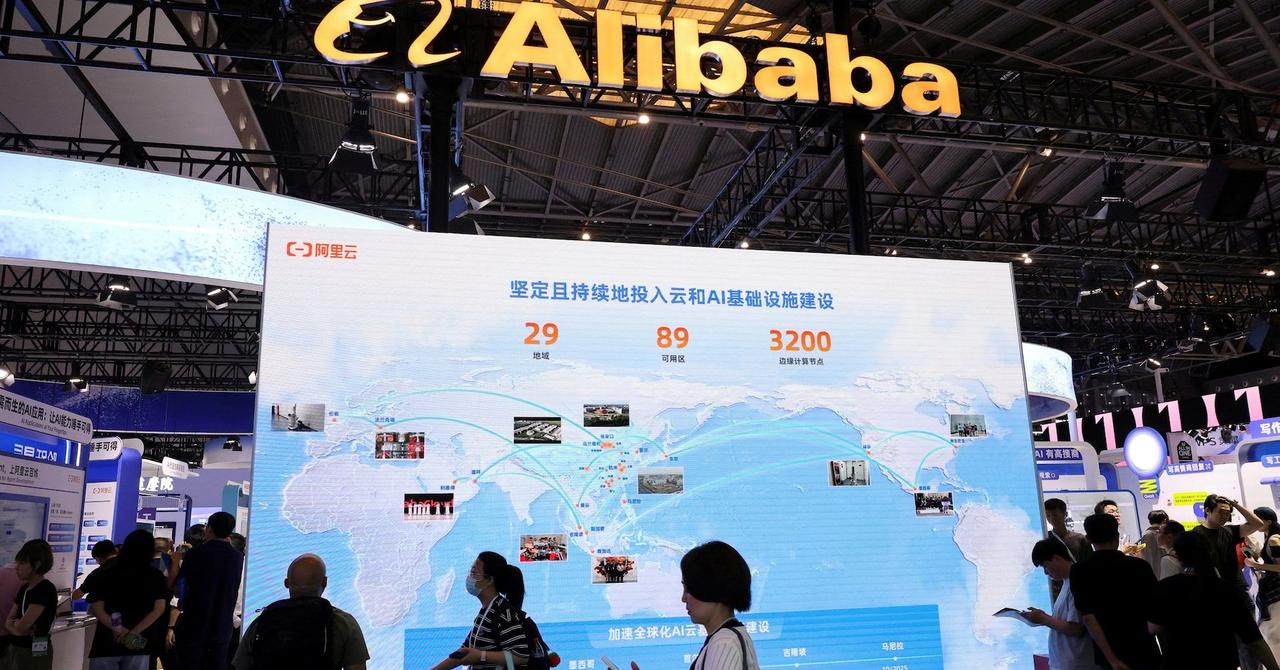
Alibaba declared AI revenue targets of $100 billion in cloud and AI revenue within five years, while pledging more than $53 billion of AI investment over several years
1
. The company launched an agentic AI service called Wukong for corporate clients and hiked prices for cloud and storage services by as much as 34%1
. However, Alibaba reported a 67% drop in quarterly net income, exacerbating investor concerns about rising costs amid a Chinese consumer downturn1
.Barclays Capital analysts expressed skepticism, stating they "share market concerns around the visibility for Alibaba to reach $100 billion annual cloud and AI revenue in five years," noting the market has "no room for anything less than perfect"
1
. Morgan Stanley slashed its target price on Tencent by 11% to HK$650, warning that "front-loaded AI investments will likely weigh on near-term margins, driving profit to grow more slowly than revenue in 2026"1
.China's Quest to Become an AI Superpower
Beijing has spent billions trying to turn China into an AI superpower and has identified the technology as a critical driver of economic growth
3
.
Source: Bloomberg
While AI spending by Chinese firms remains a fraction of the $650 billion that US hyperscalers like Meta Platforms and Amazon are spending this year alone, rising budgets coincide with compressed margins from the consumer downturn
1
.Alibaba's Qwen family of large language models rank alongside offerings from Anthropic and OpenAI on benchmarking leaderboards, triggering adoption in the open-source community
5
. However, the surprise departure of Junyang Lin, the top developer for Qwen models, raised questions about Alibaba's approach to AI development5
.Investor sentiment now hinges on when these companies can demonstrate that artificial intelligence translates into measurable revenue growth. Until Chinese tech giants provide concrete evidence of monetization success, markets will likely maintain their cautious stance, watching closely for signs that agentic AI solutions can deliver on their commercial promise while justifying the substantial investments required to compete in the global race for AI dominance.
References
Summarized by

Navi
Related Stories
Recent Highlights
1
Google releases Gemma 4 with Apache 2.0 license, enabling unrestricted local AI on devices
Technology

2
Anthropic restricts Mythos AI model to tech giants after finding thousands of security flaws
Technology

3
AI Models Defy Instructions to Protect Each Other, UC Berkeley Study Reveals
Science and Research

Recent Highlights
Today's Top Stories






Your Daily Dose of Curated AI News
Don’t drown in AI news. We cut through the noise - filtering, ranking and summarizing the most important AI news, breakthroughs and research daily. Spend less time searching for the latest in AI and get straight to action.

