Baidu files for Kunlunxin spin-off in Hong Kong as China's AI chip race intensifies


9 Sources
9 Sources
[1]
Baidu's AI Chip Unit Kunlunxin Confidentially Files for Hong Kong IPO
Kunlunxin's separate listing would raise its profile among customers, suppliers and potential partners, allowing the unit to solicit more business and tap equity and debt capital markets for more funding. Baidu Inc.'s artificial-intelligence chip unit has confidentially filed for a Hong Kong initial public offering, kicking off what's expected to be a busy year for listings by companies backing China's technological ambitions. The Beijing-based firm said a carve-out listing would better reflect the value of Kunlunxin and appeal to investors focused on general-purpose AI computing chips and related software and hardware systems. Kunlunxin submitted its application to the Hong Kong stock exchange on Friday, Baidu said, adding that details including the size and structure of the IPO haven't been finalized. Baidu's Hong Kong-listed shares rose as much as 9% on Friday to reach the highest price since September 2023. The stock climbed 59% in 2025. Kunlunxin, which makes chips that power servers in data centers, has been valued at at least $3 billion, people familiar with the matter have said. Competition around AI between China and the US is heating up, with Beijing intensifying a push to nurture future national champions in the industry -- leading Chinese chip firms to line up for IPOs. Shanghai Iluvatar CoreX Semiconductor Co. on Tuesday startedBloomberg Terminal taking investor orders for a HK$3.7 billion ($472 million) Hong Kong IPO. Shares of Shanghai Biren Technology Co., an AI chip designer, jumped 82% in their debut on Friday. Kunlunxin was created in part to sate Baidu's enormous appetite for computing power to run its online businesses. It is one of a few Chinese companies capable of designing the powerful accelerators essential for AI operations, and along with firms like Huawei Technologies Co. and Cambricon Technologies Corp., is likely to be central to Beijing's effort to wean the country off US technology such as Nvidia Corp. chips. Baidu on Friday said Kunlunxin's separate listing would raise its profile among customers, suppliers and potential partners, allowing the unit to solicit more business and tap equity and debt capital markets for more funding. More on Hong Kong's pipeline for share sales: Chinese Chipmakers Race to IPO After Back-to-Back Listings Surge Chase for DeepSeek Moments Fires Up Chinese IPOs: Tech In Depth Hong Kong, India Fuel Blockbuster Year for Asia Fundraising
[2]
Baidu's AI chip arm Kunlunxin files confidentially for Hong Kong listing
Jan 2 (Reuters) - Chinese internet search giant Baidu (9888.HK), opens new tab said on Friday its AI chip unit Kunlunxin has confidentially filed a listing application with the Hong Kong stock exchange on January 1, paving the way for a spin-off and separate listing. Reuters had earlier reported that Kunlunxin was planning for a Hong Kong initial public offering after completing a fundraising that valued it at 21 billion yuan ($3 billion). China is pushing to develop domestic alternatives to U.S. semiconductors amid escalating Washington export restrictions on advanced chips, and several other Chinese AI chip companies have announced public share debuts. Earlier this week, Chinese AI startup MiniMax said it expects to raise up to HK$4.19 billion ($538 million) in its Hong Kong offering, and semiconductor designer Shanghai Biren Technology (6082.HK), opens new tab raised HK$5.58 billion in its public offering, according to an exchange filing. Semiconductor specialists OmniVision Integrated Circuits (603501.SS), opens new tab and GigaDevice Semiconductor (603986.SS), opens new tab have also started bookbuilding for IPOs, aiming to raise about $600 million each. Hong Kong raised $36.5 billion from 114 new listings in 2025, its strongest year since 2021, and more than triple the $11.3 billion raised in 2024, LSEG data shows. After the proposed spin-off, Kunlunxin is expected to remain a subsidiary of Baidu, the company said. Details such as the offering size and structure have not been finalised yet, it said. Founded in 2012 as an internal business unit developing AI chips for Baidu, Kunlunxin has since become independently operated, although Baidu retains a controlling stake. Kunlunxin mainly supplies chips to Baidu but has expanded external sales over the past two years. ($1 = 6.9931 yuan) ($1 = 7.7847 Hong Kong dollars) Reporting by Sneha Kumar in Bengaluru; Editing by Tom Hogue Our Standards: The Thomson Reuters Trust Principles., opens new tab
[3]
Jefferies says this Chinese tech giant will get a boost from its AI chip subsidiary spin-off
Jefferies sees further upside ahead for Baidu from a planned spin-off of its AI chip subsidiary. The bank maintained its buy rating on the Chinese internet search provider. Analyst Thomas Chong raised his price target to $181 price target from $159, signaling 39% upside from Wednesday's close. The analyst pointed to Baidu's proposed spin-off of Kunlunxin , its artificial intelligence chip subsidiary, as a tailwind for the company. Baidu plans to list it on the Hong Kong Stock Exchange. He believes that this proposed spin-off could unlock full Kunlunxin's valuation. BIDU 1Y mountain BIDU 1Y chart "It aims to showcase KLX value, enhance market profile, broaden financing channels and management accountability with performance. In addition, it unlocks Baidu's value in AI powered business," he wrote. "Upon completion, KLX will remain as subsidiary to Baidu." Benefits include increasing Kunlunxin's operational and financial transparency and appealing to an investor base specialized in AI computing chips. Chong added that Kunlunxin's listing status could enhance its profile and provide it independent access of both equity and debt capital markets. Chong also noted that Baidu recently unveiled two new Kunlun chips and super node solutions. Shares of Baidu have surged 58% over the last 12 months. Analysts generally like the Chinese tech giant. Of the 33 who cover the stock, 25 rate it a buy or strong by, according to LSEG.
[4]
Baidu's semiconductor unit Kunlunxin files for Hong Kong listing amid AI chip boom in China
A general view of the Baidu logo is seen at the Shanghai New Expo Center during the World Artificial Intelligence Conference 2025 in Shanghai, China, on July 28, 2025. Chinese tech giant Baidu has announced plans to spin off its artificial intelligence chip subsidiary, Kunlunxin, and list it in Hong Kong, as more domestic chipmakers seek funds amid Beijing's push for semiconductor self-sufficiency. The company said in an announcement Friday that it had confidentially filed a listing application on the Hong Kong Stock Exchange, though details of the offering, including size and structure, remain undecided. The move would still require regulatory approvals, including from China's securities watchdog. Baidu emphasized there is no guarantee the spin-off will proceed. The company reportedly owns about 59% of Kunlunxin. Baidu, a major player in China's growing AI space, is both a buyer of specialized AI chips for data centers and cloud computing, as well as a designer of them through Kunlunxin. The firm said that the spin-off would align with its strategy to highlight Kunlunxin's standalone potential, attract sector-specific investors, and expand financing options. Kunlunxin would remain a Baidu subsidiary, it added. The move comes against a backdrop of intensifying U.S.-China tech tensions. Both Washington and Beijing have imposed various restrictions on Chinese AI companies' access to leading-edge AI chips from California-based Nvidia. Meanwhile, Beijing has increasingly encouraged domestic chip purchases and mobilized billions in public funds towards development.
[5]
Baidu Begins 2026 With A Strong AI Move, Stock Soars - Baidu (NASDAQ:BIDU)
Global investors are closely watching how Chinese tech giants unlock value from their artificial intelligence businesses, and Baidu Inc. (NASDAQ:BIDU) is taking a significant step in that direction. Baidu Plans Hong Kong Spinoff of AI Chip Unit Baidu stock gained on Friday after the company shared plans to spin off and separately list Kunlunxin, its AI chip unit, on the Hong Kong Stock Exchange. The company said the proposed spinoff would allow Kunlunxin, a non-wholly owned subsidiary, to operate as a standalone public company, highlighting its value to investors focused on AI chips while expanding its financing options and strengthening management accountability. Baidu owns 59% of Kunlunxin, CNBC reported on Friday. Also Read: Baidu's AI Cloud Takes Off, But Ad Slump Steals Spotlight Baidu expects Kunlunxin to remain a subsidiary after the listing. Listing Details Still Unclear Baidu has already submitted a listing application to the Hong Kong Exchange to seek approval for Kunlunxin's H-share offering. The company said the move aims to raise Kunlunxin's market profile and better align its growth with investor expectations in the AI semiconductor space. Key details of the spinoff remain undecided. The plan still requires regulatory approvals. Baidu cautioned that there is no certainty the spinoff will proceed or when it might occur. China Chip Push The plan comes as U.S.-China technology tensions persist. Restrictions from Washington and Beijing have limited Chinese firms' access to cutting-edge AI chips from Nvidia Corp (NASDAQ:NVDA). Chinese policymakers have encouraged domestic chip adoption and directed billions of dollars toward local semiconductor development. Reuters previously reported that Kunlunxin's revenue exceeded 3.5 billion yuan ($500 million) last year and reached breakeven, with external customers expected to contribute more than half of revenue in 2025. The unit also secured more than 1 billion yuan in orders from suppliers to China Mobile, which participated in Kunlunxin's latest funding round that raised over 2 billion yuan and valued the business at roughly 21 billion yuan. Baidu stock gained 58% in the last 12 months, driven by investor optimism surrounding its aggressive artificial intelligence strategy. JPMorgan analysts have forecast that Kunlunxin's chip sales could rise sixfold to 8 billion yuan by 2026. Still, analysts caution that Kunlunxin cannot fully replace Nvidia's most advanced chips. Kunlunxin is expected to work alongside domestic peers such as Huawei Ascend, Cambricon, and Alibaba Group Holding Limited (NYSE:BABA) to help build a broader homegrown AI computing ecosystem. BIDU Price Action: Baidu shares were up 11.94% at $146.26 during premarket trading on Wednesday. The stock is trading near its 52-week high of $149.51, according to Benzinga Pro data. Read Next: Taiwan Semiconductor Starts Making Its Most Powerful Chips At Scale Image via Shutterstock BIDUBaidu Inc$146.3012.0%OverviewBABAAlibaba Group Holding Ltd$152.413.98%NVDANVIDIA Corp$189.861.80%Market News and Data brought to you by Benzinga APIs
[6]

Baidu AI chips unit aims for $2 bln Hong Kong IPO- Bloomberg By Investing.com
Investing.com-- Baidu Inc's (NASDAQ:BIDU) artificial intelligence chipmaking unit, Kunlunxin, has hired banks for a Hong Kong initial public offering that could raise up to $2 billion, Bloomberg reported on Wednesday. The unit has picked China International Capital Corp, Citic Securities Co, and Huatai Securities as the lead banks on the IPO, Bloomberg reported, citing people familiar with the matter. Subscribe to InvestingPro for more breaking news on China's AI giants. Get 55% off today! The report comes as Baidu, along with its Chinese technology rivals, race to secure advanced AI chips and gain a greater foothold in the fast-growing industry. A large part of this push is to develop Chinese-made processors, with Beijing also backing the endeavour. Reports last week said Kunlunxin had confidentially filed for a Hong Kong IPO. Baidu's Hong Kong shares (HK:9888) rose 0.5% after the report, outpacing a near 1% drop in the Hang Seng.
[7]
Baidu shares surge as AI chip arm seeks Hong Kong IPO By Investing.com
Investing.com -- Baidu shares jumped after the Chinese technology group said it plans to spin off its artificial intelligence chip unit, Kunlunxin, and pursue a listing in Hong Kong, as domestic chipmakers step up fundraising efforts under Beijing's push for semiconductor self-sufficiency. In a statement released on Friday, Baidu said it had confidentially submitted a listing application to the Hong Kong Stock Exchange. The company added that details of the potential offering, including its size and structure, have yet to be determined. Baidu's U.S.-listed shares soared more than 12% in premarket trading Friday by 04:13 ET. The proposed transaction remains subject to regulatory approvals, including clearance from China's securities regulator, and Baidu cautioned that there is no certainty the spin-off will go ahead. The company currently owns about 59% of Kunlunxin. "While timing is a bit sooner, it is within our expectation," Citi analyst Alicia Yap commented in a note. Baidu occupies a dual role in China's fast-growing AI ecosystem, acting both as a major buyer of advanced AI chips for data centers and cloud computing and as a designer of such chips through Kunlunxin. The company said the separation would support its broader strategy by highlighting Kunlunxin's standalone value, attracting investors focused on the semiconductor sector, and broadening financing channels. Kunlunxin would continue to operate as a Baidu subsidiary. In its announcement, Baidu said the move would better align management incentives with operating performance and improve the unit's visibility in capital markets. Founded in 2012, Kunlunxin plays a central role in Baidu's ambition to become a "full stack" AI company, spanning hardware, servers and data centers alongside AI models and applications. While Baidu still depends heavily on Nvidia chips for AI computing, Kunlunxin has allowed the company to increasingly deploy a mix of self-developed processors in data centers running its Ernie AI models. Kunlunxin has also taken steps to operate more independently, expanding sales of its chips to third-party customers beyond Baidu as it builds a broader commercial footprint.
[8]

Baidu's AI Chip Unit Kunlunxin Plans Hong Kong Listing
Baidu's AI chip unit Kunlunxin has confidentially filed an application to list on the Hong Kong stock exchange, the latest company to capitalize on the frenzy surrounding artificial intelligence. Baidu, the Beijing-based search giant, said in a filing with the Hong Kong Stock Exchange on Friday that a listing application had been submitted on Jan. 1. It didn't provide any details about the size of the offering. Baidu's Hong Kong-listed shares rose 7.5% to 141.30 Hong Kong dollars, equivalent to $18.16, at the midday break, outperforming Hang Seng Tech's 3.4% gain. Citi analysts said in a research note that while the move wasn't a surprise, its timing was earlier than expected. Baidu, which was once considered one of China's most important technology titans alongside Alibaba Group and Tencent Holdings, has been facing pressure on both its top and bottom lines as its main advertising business slows. The company has been investing heavily in fields such as chip development, AI and self-driving technology as it seeks new avenues for growth. Jefferies analysts said in a research note that Kunlunxin is likely to be valued between US$16 billion to US$23 billion. It maintained a buy rating on Baidu and raised the target price its Hong Kong shares to HK$176.00 from HK154.00 as it factored in the potential spin-off and listing of the chip unit. The filing comes amid a surge of AI-related listings in Hong Kong. On Friday, AI chip maker Shanghai Biren Technology saw its shares soar 92% at its debut. AI start-up MiniMax said earlier this week that it expects to raise HK$4.19 billion, while Knowledge Atlas Technology, better known as Zhipu AI, plans to raise HK$4.35 billion in their IPOs. Their shares were expected to start trading in early January.
[9]
Baidu's AI chip arm Kunlunxin files confidentially for Hong Kong listing
Jan 2 (Reuters) - Chinese internet search giant Baidu said on Friday its AI chip unit Kunlunxin has confidentially filed a listing application with the Hong Kong stock exchange on January 1, paving the way for a spin-off and separate listing. Reuters had earlier reported that Kunlunxin was planning for a Hong Kong initial public offering after completing a fundraising that valued it at 21 billion yuan ($3 billion). China is pushing to develop domestic alternatives to U.S. semiconductors amid escalating Washington export restrictions on advanced chips, and several other Chinese AI chip companies have announced public share debuts. Earlier this week, Chinese AI startup MiniMax said it expects to raise up to HK$4.19 billion ($538 million) in its Hong Kong offering, and semiconductor designer Shanghai Biren Technology raised HK$5.58 billion in its public offering, according to an exchange filing. Semiconductor specialists OmniVision Integrated Circuits and GigaDevice Semiconductor have also started bookbuilding for IPOs, aiming to raise about $600 million each. Hong Kong raised $36.5 billion from 114 new listings in 2025, its strongest year since 2021, and more than triple the $11.3 billion raised in 2024, LSEG data shows. After the proposed spin-off, Kunlunxin is expected to remain a subsidiary of Baidu, the company said. Details such as the offering size and structure have not been finalised yet, it said. Founded in 2012 as an internal business unit developing AI chips for Baidu, Kunlunxin has since become independently operated, although Baidu retains a controlling stake. Kunlunxin mainly supplies chips to Baidu but has expanded external sales over the past two years. ($1 = 6.9931 yuan) ($1 = 7.7847 Hong Kong dollars) (Reporting by Sneha Kumar in Bengaluru; Editing by Tom Hogue)
Share
Share
Copy Link
Baidu has confidentially filed for a Hong Kong listing of Kunlunxin, its AI chip unit valued at $3 billion. The move comes as Chinese chipmakers race to secure funding amid Beijing's push for semiconductor self-sufficiency and escalating U.S.-China tech tensions. Kunlunxin designs powerful AI accelerators essential for data centers, positioning itself alongside Huawei and Cambricon as China seeks alternatives to Nvidia chips.
Baidu Moves Forward With Kunlunxin Hong Kong Listing
Baidu has confidentially filed an application with the Hong Kong Stock Exchange to spin off and list Kunlunxin, its AI chip unit, marking a strategic move to unlock value in China's rapidly expanding semiconductor industry
1
2
. The Beijing-based parent company submitted the application on January 1, though details including the size and structure of the initial public offering remain undecided2
. Baidu currently owns approximately 59% of Kunlunxin and expects the unit to remain a subsidiary following the listing4
5
.
Source: Benzinga
The announcement sent Baidu's Hong Kong-listed shares soaring as much as 9% on Friday, reaching their highest price since September 2023
1
. The stock climbed 59% in 2025, reflecting investor optimism around the company's aggressive artificial intelligence strategy1
5
. Kunlunxin has been valued at at least $3 billion, according to people familiar with the matter1
.Strategic Rationale Behind the Baidu Spin-Off
Baidu explained that a carve-out listing would better reflect the value of Kunlunxin and appeal to investors focused on general-purpose AI computing chips and related software and hardware systems
1
. The separate listing would raise Kunlunxin's profile among customers, suppliers and potential partners, allowing the AI chip unit to attract new business and tap equity and debt capital markets to enhance financing options1
4
.Jefferies maintained its buy rating on Baidu following the announcement, with analyst Thomas Chong raising his price target to $181 from $159, signaling 39% upside potential
3
. The analyst believes the proposed spin-off could unlock Kunlunxin's full valuation while increasing operational and financial transparency3
. This move also aims to strengthen management accountability and showcase Baidu's value in AI-powered business operations3
.China's Push for Self-Sufficiency Drives Semiconductor Industry Growth
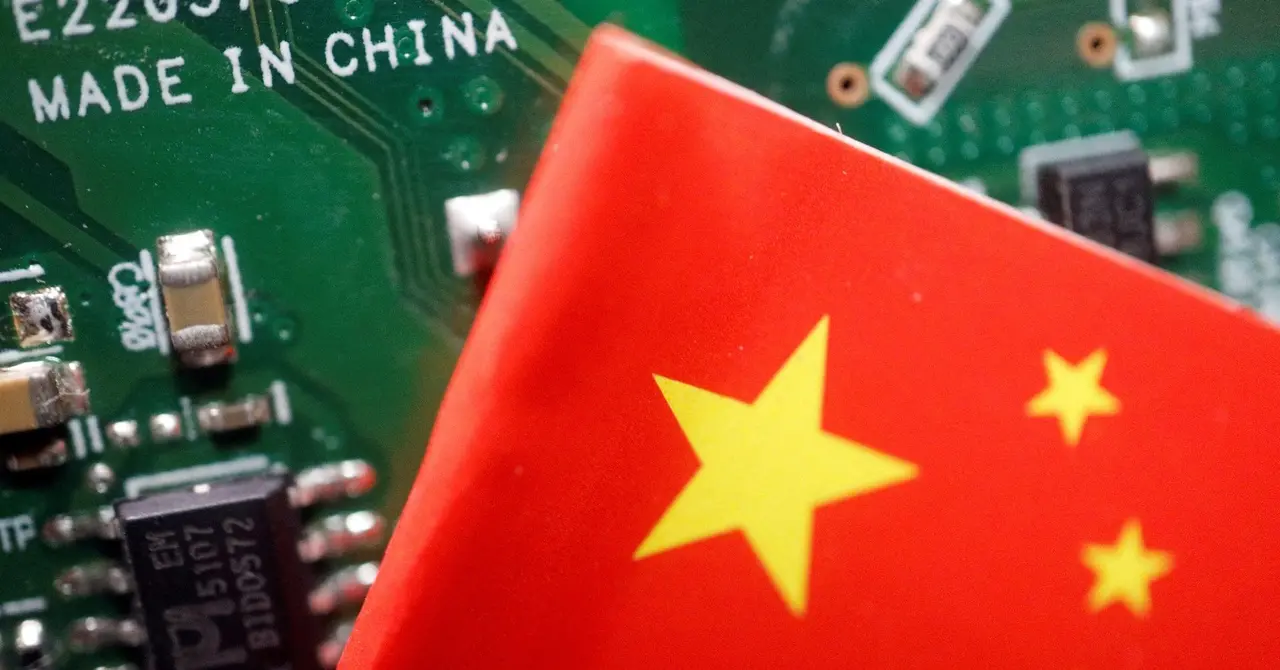
The Kunlunxin filing comes as competition around AI between China and the U.S. heats up, with Beijing intensifying China's push for self-sufficiency to nurture future national champions in the semiconductor industry
1
2
. Chinese chipmakers are racing to secure funding through listings, with Shanghai Iluvatar CoreX Semiconductor starting to take investor orders for a HK$3.7 billion ($472 million) Hong Kong IPO1
. Shares of Shanghai Biren Technology, an AI chip designer, jumped 82% in their debut on Friday1
.U.S.-China tech tensions have escalated with Washington imposing export restrictions on advanced chips, limiting Chinese firms' access to cutting-edge AI chips from Nvidia
2
4
. Beijing has responded by encouraging domestic chip purchases and mobilizing billions in public funds toward development4
. Hong Kong raised $36.5 billion from 114 new listings in 2025, its strongest year since 2021 and more than triple the $11.3 billion raised in 20242
.Related Stories
Kunlunxin's Role in Building China's AI Computing Ecosystem
Founded in 2012 as an internal business unit developing AI chips for Baidu, Kunlunxin has since become independently operated, though Baidu retains a controlling stake
2
. The unit makes chips that power servers in data centers and is one of a few Chinese companies capable of designing the powerful AI accelerators essential for AI operations1
. Along with firms like Huawei Technologies and Cambricon Technologies, Kunlunxin is likely to be central to Beijing's effort to wean the country off U.S. technology1
5
.
Source: Bloomberg
Kunlunxin mainly supplies chips to Baidu but has expanded external sales over the past two years
2
. The unit's revenue exceeded 3.5 billion yuan ($500 million) last year and reached breakeven, with external customers expected to contribute more than half of revenue in 20255
. Kunlunxin secured more than 1 billion yuan in orders from suppliers to China Mobile, which participated in its latest funding round that raised over 2 billion yuan and valued the business at roughly 21 billion yuan5
. JPMorgan analysts forecast that Kunlunxin's chip sales could rise sixfold to 8 billion yuan by 20265
.While the proposed spin-off still requires regulatory approvals, including from China's securities watchdog, and there is no guarantee it will proceed
4
, the move signals Baidu's commitment to building a broader homegrown AI computing ecosystem. Analysts caution that Kunlunxin cannot fully replace Nvidia's most advanced chips but expect it to work alongside domestic peers to strengthen China's position in the global semiconductor race5
.References
Summarized by

Navi
[3]
Related Stories
Baidu Emerges as China's Leading AI Chip Player with $28 Billion Kunlunxin Unit
28 Nov 2025•Business and Economy

Chinese AI chipmakers Biren and Iluvatar race to Hong Kong IPO amid chip funding frenzy
22 Dec 2025•Business and Economy
Baidu's Q1 2025 Earnings: AI Cloud Soars Amid Challenges and Opportunities
21 May 2025•Technology

Recent Highlights



Recent Highlights
Today's Top Stories




Your Daily Dose of Curated AI News
Don’t drown in AI news. We cut through the noise - filtering, ranking and summarizing the most important AI news, breakthroughs and research daily. Spend less time searching for the latest in AI and get straight to action.

