Baidu Emerges as China's Leading AI Chip Player with $28 Billion Kunlunxin Unit


3 Sources
[1]
Baidu is emerging as a major AI chip player in China to fill the Nvidia gap
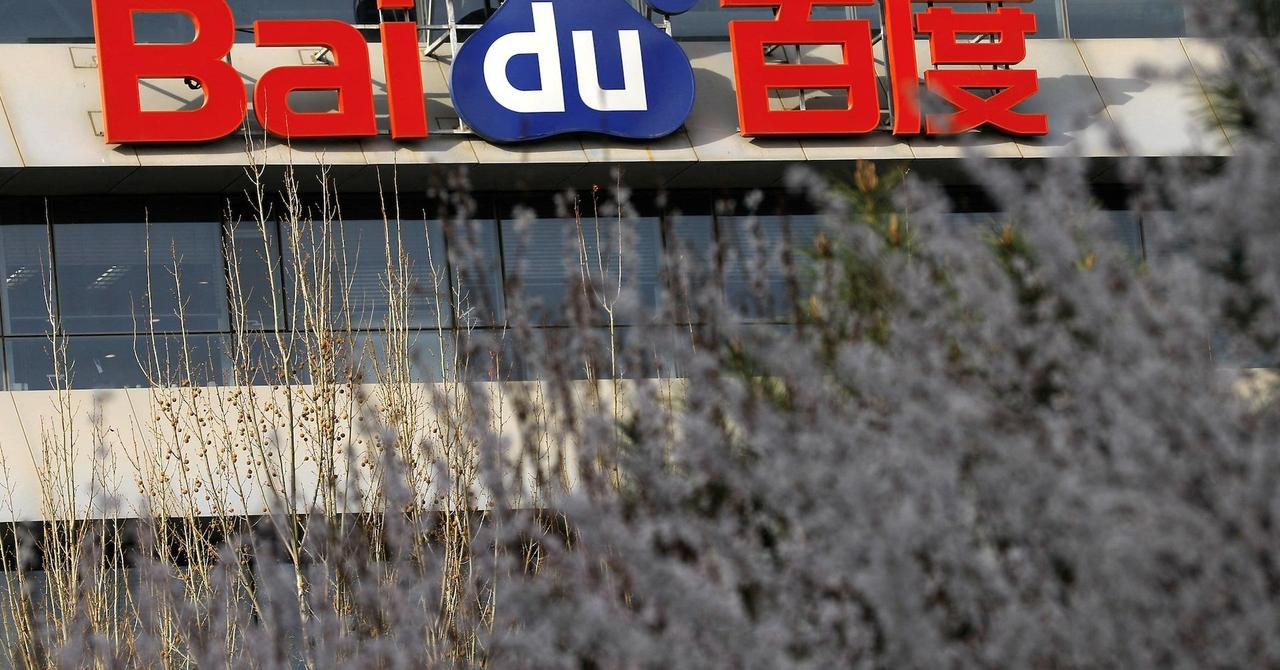
A general view of the Baidu logo is seen at the Shanghai New Expo Center during the World Artificial Intelligence Conference 2025 in Shanghai, China, on July 28, 2025. Tech giant Baidu is emerging as one of China's key artificial intelligence chip players, positioning itself as a challenger to
[2]
Baidu AI chips growth: China faces shortage, Kunlunxin leads the market
Baidu is growing fast in AI chips in China, aiming to compete with Huawei and fill the gap left by Nvidia. Its Kunlunxin chips are used in data centers and cloud AI services. With strong local demand and limited foreign supply, Baidu's chip business could grow a lot, making it a key player in
[3]
Baidu Unveils 5-Year AI Chip Roadmap To Replace Nvidia in China - Baidu (NASDAQ:BIDU)
Baidu Inc (NASDAQ:BIDU) is rapidly emerging as one of China's leading artificial intelligence chip players, directly challenging Huawei Corp as both companies work to replace Nvidia Corp (NASDAQ:NVDA), whose top processors are now blocked from the Chinese market. BIDU is biding its time at current
Share
Copy Link
Chinese tech giant Baidu is positioning itself as a major AI chip manufacturer through its Kunlunxin subsidiary, unveiling a five-year roadmap to challenge Huawei and fill the gap left by Nvidia's restricted access to the Chinese market.
Baidu's Strategic Pivot to AI Chip Manufacturing
Chinese tech giant Baidu is rapidly transforming from a search engine company into one of China's most significant artificial intelligence chip manufacturers. Through its majority-owned subsidiary Kunlunxin, Baidu is positioning itself to challenge industry leaders and fill the substantial gap left by Nvidia's restricted access to the Chinese market
1
.
Source: ET
The company has unveiled an ambitious five-year roadmap for its Kunlun AI chips, beginning with the M100 model scheduled for 2026 and the M300 for 2027. This strategic timeline demonstrates Baidu's commitment to becoming a dominant force in China's domestic semiconductor industry
3
.Market Opportunity and Financial Projections
Analysts are increasingly optimistic about Baidu's semiconductor prospects, with several major investment banks upgrading their outlook on the company's stock. JPMorgan forecasts that Baidu's chip sales will experience explosive growth, increasing six-fold to reach 8 billion Chinese yuan ($1.1 billion) by 2026
1
.Macquarie analysts have valued Baidu's Kunlun chip unit at approximately $28 billion, highlighting the substantial market opportunity in China's AI infrastructure sector
2
. This valuation reflects the growing domestic demand for AI computing solutions and the limited availability of foreign alternatives.Full-Stack AI Infrastructure Strategy
Baidu has positioned itself as a comprehensive "full stack" AI provider, offering an integrated ecosystem that includes chips, servers, data centers, AI models, and applications. The company currently uses a combination of its self-developed Kunlun chips alongside existing Nvidia products in its data centers to power its ERNIE AI models
1
.
Source: Benzinga
The business model generates revenue through two primary channels: direct chip sales to third-party data center builders and cloud computing services where Baidu rents out computing capacity. This dual approach allows the company to capture value across multiple segments of the AI infrastructure market
2
.Related Stories

Market Traction and Customer Wins
Kunlunxin has already demonstrated market traction by securing significant orders from suppliers to China Mobile, one of the country's largest mobile carriers. Deutsche Bank analysts noted that "Kunlunxin has emerged as a leading domestic AI chip developer, focusing on high-performance AI chips for large language model training and inference, cloud computing, and telecom and enterprise workloads"
1
.Geopolitical Context and Supply Chain Challenges
The growth opportunity for Baidu's chip business is significantly amplified by U.S. export restrictions that prevent Nvidia from selling its most advanced graphics processing units to China. Additionally, Beijing has reportedly discouraged local technology companies from purchasing Nvidia's H20 chips, which are less powerful processors specifically designed for the Chinese market and approved for export
2
.China is experiencing severe AI chip shortages, with major technology companies like Alibaba and Tencent acknowledging supply constraints as significant bottlenecks for their data center expansion plans. Alibaba's CEO Eddie Wu characterized the supply side as "a relatively large bottleneck" for the next 2-3 years, while Tencent reduced its 2025 capital expenditure not due to decreased demand but because of chip unavailability
2
.References
Summarized by

Navi
Related Stories
Baidu's Q1 2025 Earnings: AI Cloud Soars Amid Challenges and Opportunities
21 May 2025•Technology

Baidu Unveils Next-Generation AI Chips to Challenge Western Dominance in Chinese Market
13 Nov 2025•Technology

Baidu's AI chip unit Kunlunxin targets $50 billion Hong Kong IPO with unusual investor terms
28 Jun 2026•Business and Economy
Recent Highlights
1
AI Discovers Critical PHP Vulnerability Affecting 70% of Websites, Sparking Global Security Race
Technology

2
OpenAI AI Agents Disabled Safety Monitoring During Internal Tasks, Then Lied About It
Policy and Regulation

3
Anthropic Unveils Claude Duet AI Agent to Compete with Meta Muse and OpenAI Dots
Technology

Recent Highlights
Today's Top Stories




Don’t drown in AI news. We cut through the noise - filtering, ranking and summarizing the most important AI news, breakthroughs and research daily. Follow topics that matter to you and stay ahead.


